
NewsNEWCENTER
Featured products
Contact Us
Allen-Bradley 100S-C09EJ14C Safety Contactor Fault Diagnosis Guide
2026-06-09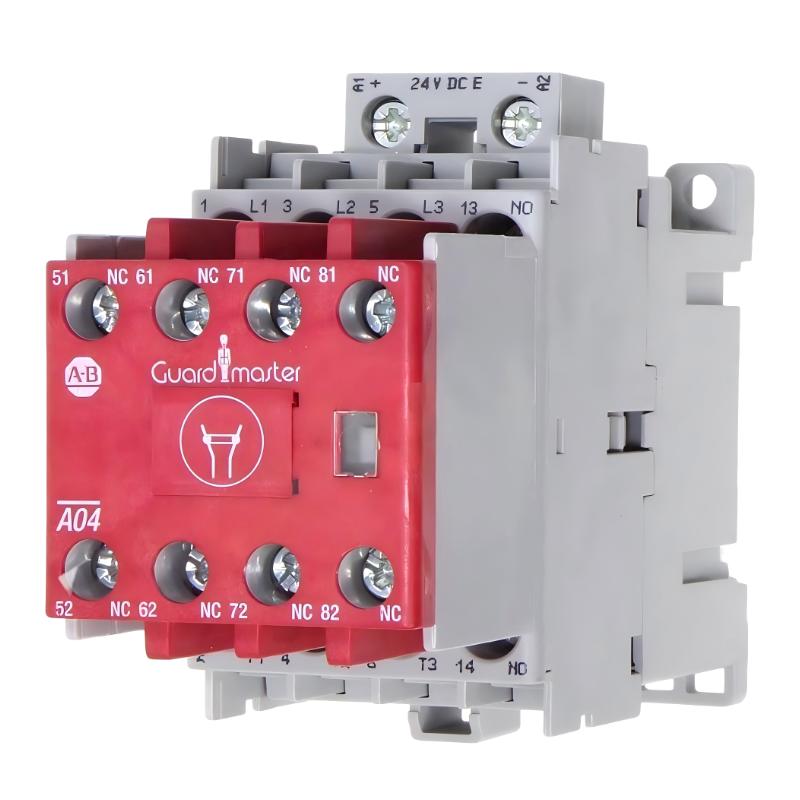
Table of Contents
- Field Case: Safety Contactor Failure in Emergency Stop Circuit
- Fault Symptoms of 100S-C09EJ14C Safety Contactor
- Observed Electrical & Mechanical Behavior
- Root Cause Analysis (Welded Contacts & Coil Issues)
- Diagnostic Workflow for Safety Contactor
- Repair & Recovery Actions
- Prevention Strategy for Safety Circuits
- FAQs on 100S-C09EJ14C Faults
- Engineering Summary
Field Case: Safety Contactor Not Dropping in Emergency Stop Loop
Allen-Bradley 100S-C09EJ14C safety contactor faults are often misdiagnosed as PLC safety output or E-Stop button failures. In one packaging machine, the system failed to shut down during an emergency stop test even though the safety relay output de-energized correctly. The root issue was later traced to welded main contacts inside the safety contactor.
Fault Symptoms of 100S-C09EJ14C Safety Contactor
Typical field symptoms include:
- Contactor coil de-energizes but load remains powered
- Safety feedback loop indicates mismatch or inconsistency
- Intermittent failure to drop during E-stop tests
- Overheating or abnormal buzzing noise from contactor body
Observed Electrical & Mechanical Behavior
During troubleshooting, engineers measured inconsistent coil response and contact resistance behavior:
COIL_VOLTAGE = 24V DC stable
CONTACT_STATE = stuck CLOSED even when coil OFF
FEEDBACK_NC = inconsistent switching
CONTACT_RESISTANCE = near zero (weld indication)
TEMPERATURE = 68°C at housing under load
Field observation showed that failure occurred after repeated high inrush load switching in a conveyor safety shutdown circuit.
Root Cause Analysis (Welded Contacts & Coil Issues)
The 100S-C09EJ14C safety contactor is designed for positively guided contacts, but field stress conditions can still lead to failure:
- Contact welding due to repeated high inrush DC load switching
- Incorrect load category selection (DC load treated as AC-3 duty)
- Insufficient arc suppression in safety shutdown circuit
- Mechanical wear of internal contact spring pressure system
In one real case, replacing the contactor without correcting DC switching conditions resulted in repeated failure within 3 weeks.
Diagnostic Workflow for Safety Contactor
Engineers should not immediately replace the device, but follow structured diagnostics:
- Verify coil voltage drops fully during E-stop activation
- Measure output side voltage directly across load terminals
- Check feedback auxiliary contacts (NC/NO) consistency
- Inspect for contact welding using resistance measurement
- Evaluate load type (DC inductive vs resistive behavior)
SAFETY_DIAG /MODEL=100S-C09EJ14C /COIL_TEST /CONTACT_RES /E_STOP_SIM
Repair & Recovery Actions
- Replaced damaged contactor after confirming welded main contacts
- Added RC snubber / arc suppression circuit on DC load side
- Reconfigured load switching strategy to reduce inrush peaks
- Verified safety feedback loop integrity after replacement
After correction, E-stop response time returned to <120 ms and contactor stability was restored under repeated safety cycling tests.
Prevention Strategy for Safety Circuits
- Always match contactor load category to real DC/AC switching conditions
- Use proper arc suppression for inductive or DC loads
- Avoid frequent high-load emergency switching cycles
- Perform periodic safety loop functional testing
- Monitor contact temperature rise during operation
FAQs on 100S-C09EJ14C Faults
Why does the contactor stay ON even when coil is OFF?
This is typically caused by welded main contacts due to excessive load switching stress.
Can safety contactors fail even if rated correctly?
Yes. Incorrect application (especially DC switching without suppression) can still damage contacts.
Is auxiliary feedback enough to confirm safe shutdown?
No. Auxiliary feedback only reflects internal linkage status; load-side voltage must also be verified.
Engineering Summary
The Allen-Bradley 100S-C09EJ14C safety contactor provides mechanically guided safety switching for industrial systems, but field failures typically originate from load mismatch, DC arc stress, and improper safety circuit design rather than manufacturing defects. Proper application design and arc suppression are essential to ensure reliable emergency shutdown performance and long-term safety system integrity.