
NewsNEWCENTER
Featured products
Contact Us
ABB to Supply More Than 1,700 Industrial Robots for BMW Neue Klasse Production in Germany and China
2026-11-26ABB Robotics Supports BMW’s Next-Generation Vehicle Manufacturing
ABB Robotics is strengthening its position in automotive manufacturing automation through a major supply project with the BMW Group. On November 11, 2026, ABB announced that it is supplying more than 1,700 large industrial robots to support the production of BMW’s next-generation Neue Klasse vehicles.
The robots are intended for body shop operations at two major BMW manufacturing locations: the company’s main plant in Munich, Germany, and the Tiexi plant in Shenyang, China.
The project forms part of BMW’s broader transition toward electric mobility and more flexible vehicle production. ABB’s industrial robots will perform demanding and repetitive manufacturing operations, including welding, gluing, riveting and assembly.
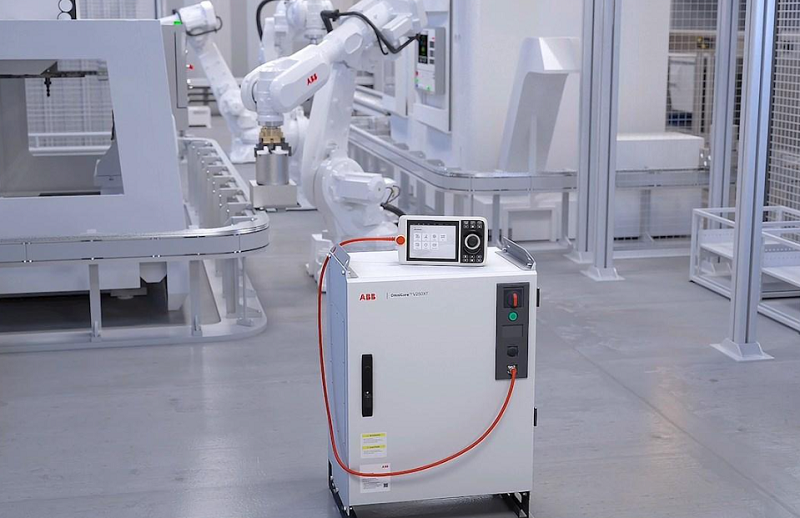
By combining high-payload industrial robots with its latest OmniCore control platform, ABB aims to help BMW improve manufacturing precision, production efficiency and energy performance.
More Than 1,700 Robots for Two Major Production Sites
The supply covers more than 1,700 large industrial robots from ABB’s latest robot portfolio. These systems are designed to meet the requirements of automotive body manufacturing, where accuracy, repeatability and production consistency are essential.
The two production locations have important roles in BMW’s Neue Klasse manufacturing program.
Munich, Germany
BMW’s main plant in Munich is undergoing manufacturing transformation to support the next generation of vehicles. ABB robots will be used in body shop operations, including the production of fully electric Neue Klasse models.
Tiexi, Shenyang, China
The Tiexi plant is part of BMW Brilliance Automotive’s manufacturing network in China. ABB robots will support body production operations at this facility, helping automate processes that require consistent positioning, joining and assembly.
Deploying industrial robots at both locations supports BMW’s need for advanced manufacturing capabilities across its international production network.
ABB has not disclosed the exact number of robots assigned to each plant or the complete delivery schedule.
Which ABB Industrial Robots Are Included?
According to ABB’s announcement, the supply includes the following robot families:
- ABB IRB 6720
- ABB IRB 6730
- ABB IRB 6740
- ABB IRB 7720
These robot families are designed for demanding industrial applications, particularly automotive body construction and heavy-duty material handling.
The portfolio includes configurations with payload capacities of up to 620 kg. This maximum capacity is configuration-dependent and should not be interpreted as the payload rating of every robot included in the project.
In automotive manufacturing, selecting the appropriate robot involves more than payload capacity. Engineers must also consider reach, working envelope, tool weight, cycle time, positioning accuracy and integration with surrounding production equipment.
The IRB 6720–6740 family and IRB 7720 provide different capabilities for different manufacturing tasks, allowing system designers to select suitable configurations for individual workstations.
Welding, Gluing, Riveting and Assembly: Key Applications
Automotive body manufacturing requires multiple joining processes to transform individual metal components into a complete vehicle body.
ABB’s robots will support several important operations.
1. Robotic Welding
Welding is a core process in body-in-white production. Industrial robots can execute programmed welding paths with consistent positioning and repeatability.
In automated body shops, robotic welding systems work with fixtures, welding equipment and material-handling systems to support continuous production.
Consistent robot motion and accurate positioning are important for maintaining process quality across repeated production cycles.
2. Automated Adhesive Application
Adhesive bonding is increasingly important in modern vehicle manufacturing. It can be used alongside mechanical joining methods to meet specific structural and assembly requirements.
Robotic adhesive application helps control the movement of dispensing equipment along programmed paths. Consistent application can support repeatable bead placement and manufacturing quality.
3. Robotic Riveting
Riveting is another joining method used in automotive body construction. Automated riveting systems can help manufacturers perform repetitive joining operations with controlled positioning and process sequences.
Robot integration also helps coordinate riveting equipment with fixtures and material-handling operations.
4. Automated Assembly and Material Handling
Large industrial robots can handle heavy components and position parts during body construction and assembly.
These operations require coordination between robot movements, production fixtures, conveyors and other manufacturing equipment.
The combination of different robotic applications helps create an integrated production environment rather than a collection of isolated automated workstations.
OmniCore Controllers: The Control Foundation Behind the Robots
A major part of ABB’s supply project is the use of its latest-generation OmniCore robot controllers.
OmniCore is ABB’s intelligent robotics control platform, designed to manage robot motion and support integration with manufacturing equipment and digital technologies.
Its role in an automotive production environment includes several important areas.
High-Performance Motion Control
The controller manages robot movement and coordinated operations. Accurate motion control is important when robots perform welding, adhesive application, riveting and assembly.
Integration with Manufacturing Equipment
Automotive robot cells typically contain more than the robot arm itself. Welding equipment, dispensing systems, sensors, cameras, conveyors and external axes may all need to work together.
OmniCore supports integration with sensors, cloud and edge technologies, as well as AI-related applications.
Energy Efficiency
ABB highlights energy-saving capabilities in its latest OmniCore platform, including energy recovery technology.
By recovering energy during certain robot movements and improving overall system efficiency, the platform is designed to reduce energy consumption. Actual savings depend on the robot configuration, application, operating cycle and production conditions.
Faster Commissioning
ABB also points to its control platform and commissioning system as ways to shorten the start-up phase of robotic installations.
For large automotive production projects, commissioning efficiency is important because robot programming, safety validation, process testing and line integration all affect the time required to bring production equipment into operation.
Why Robotics Automation Matters for BMW’s Neue Klasse
The Neue Klasse represents an important step in BMW’s next-generation vehicle strategy, particularly in the development of fully electric vehicles.
Producing a new vehicle generation requires manufacturers to adapt production processes, equipment configurations and manufacturing systems.
Robotic automation supports this transformation in several ways.
Flexible Production
Modern automotive plants must accommodate changing vehicle designs, components and production requirements. Programmable industrial robots provide manufacturers with the ability to adjust motion sequences and production processes when product requirements change.
Consistent Manufacturing Quality
Automated welding, adhesive application and riveting can help maintain repeatable process execution. Consistency is particularly important in body construction, where joining quality influences the overall manufacturing process.
Improved Production Efficiency
Robots can perform repetitive and physically demanding operations continuously within their designed operating conditions. Coordinated automation can help manufacturers improve workstation utilization and production flow.
Reduced Energy Consumption
ABB’s OmniCore controllers incorporate energy-saving technology. The actual environmental benefit will depend on operating conditions and the wider manufacturing system.
Digital Manufacturing Integration
The integration of robotics, sensors, control platforms and manufacturing software provides a foundation for more connected production environments.
These capabilities are relevant not only to electric vehicle manufacturing but also to the wider automotive industry’s transition toward flexible and digitally integrated factories.
Implications for Industrial Automation Suppliers and System Integrators
The ABB-BMW project demonstrates the continuing importance of large industrial robots in high-volume automotive manufacturing.
For automation suppliers and system integrators, projects of this scale involve several interconnected technologies:
- Industrial robot arms and robot controllers.
- Welding and adhesive dispensing equipment.
- Robotic tooling and end-of-arm tooling.
- Safety systems and production-cell interlocks.
- Sensors, cameras and inspection equipment.
- Conveyor systems and material-handling equipment.
- Industrial communication and manufacturing software.
The performance of a robotic production line depends on how these elements work together.
Robot selection must therefore consider the complete application, including payload, reach, cycle time, positioning requirements, tooling, safety standards and maintenance accessibility.
The use of ABB’s OmniCore platform also highlights the growing role of advanced robot controllers in coordinating equipment and supporting digital manufacturing integration.
For industrial automation companies, this creates continued demand for robotics engineering, system integration, commissioning, maintenance and lifecycle support.
Conclusion
ABB Robotics’ supply of more than 1,700 industrial robots to BMW represents a significant development in automotive manufacturing automation.
With deployments planned for BMW’s Munich and Tiexi plants, the project combines ABB’s IRB 6720–6740 and IRB 7720 robot families with the latest OmniCore controllers to support welding, gluing, riveting and assembly operations.
The project illustrates how large industrial robots and advanced control platforms are helping automotive manufacturers adapt to new vehicle architectures and increasingly demanding production requirements.
As BMW advances its Neue Klasse manufacturing strategy, ABB’s robotics technology will contribute to the automation infrastructure supporting the next generation of vehicle production in Germany and China.
SEO Keywords: ABB Robotics BMW, ABB 1700 Industrial Robots, BMW Neue Klasse Production, ABB IRB 6720, ABB IRB 6730, ABB IRB 6740, ABB IRB 7720, ABB OmniCore Controller, Automotive Manufacturing Automation, Industrial Robots for Automotive Industry, Robotic Welding Systems, Smart Manufacturing.