Product Overview
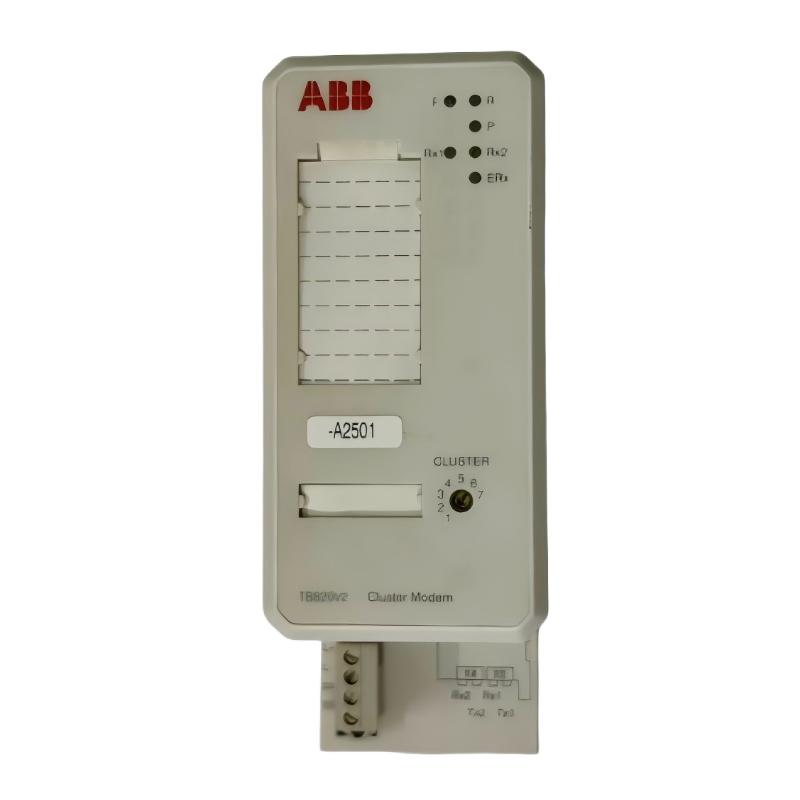
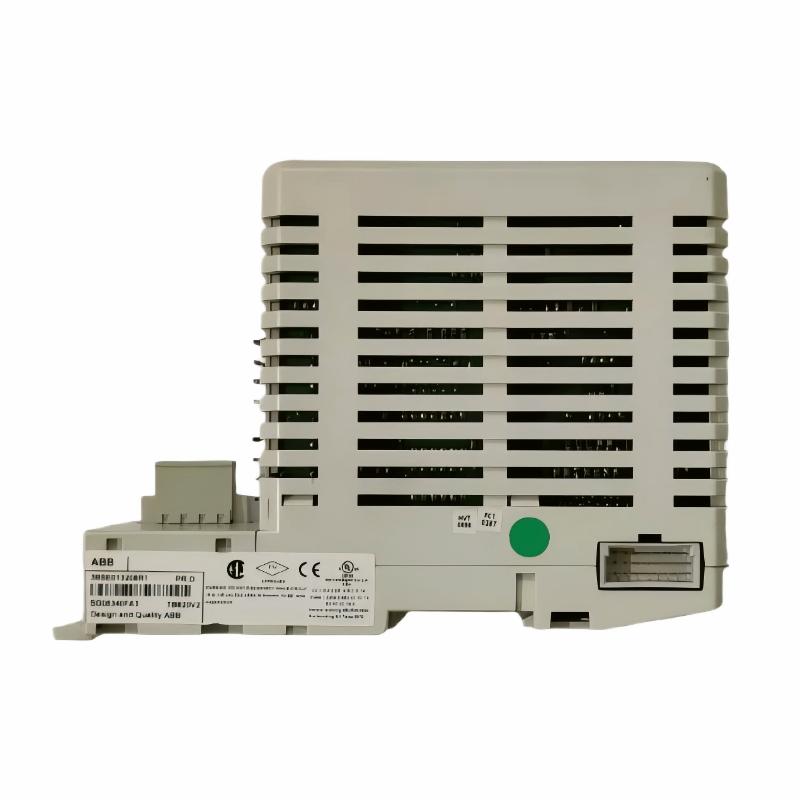
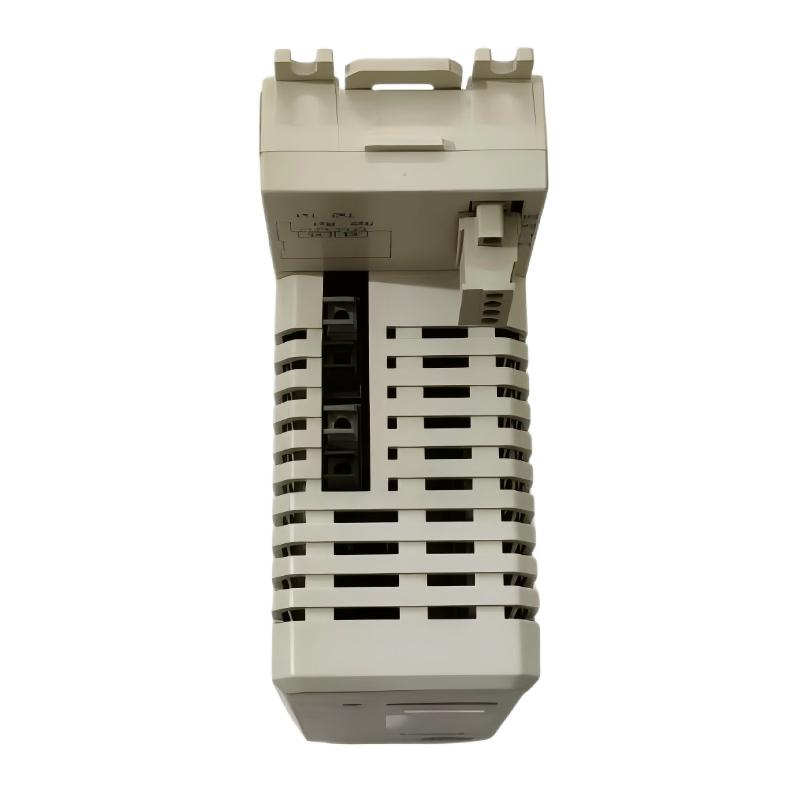
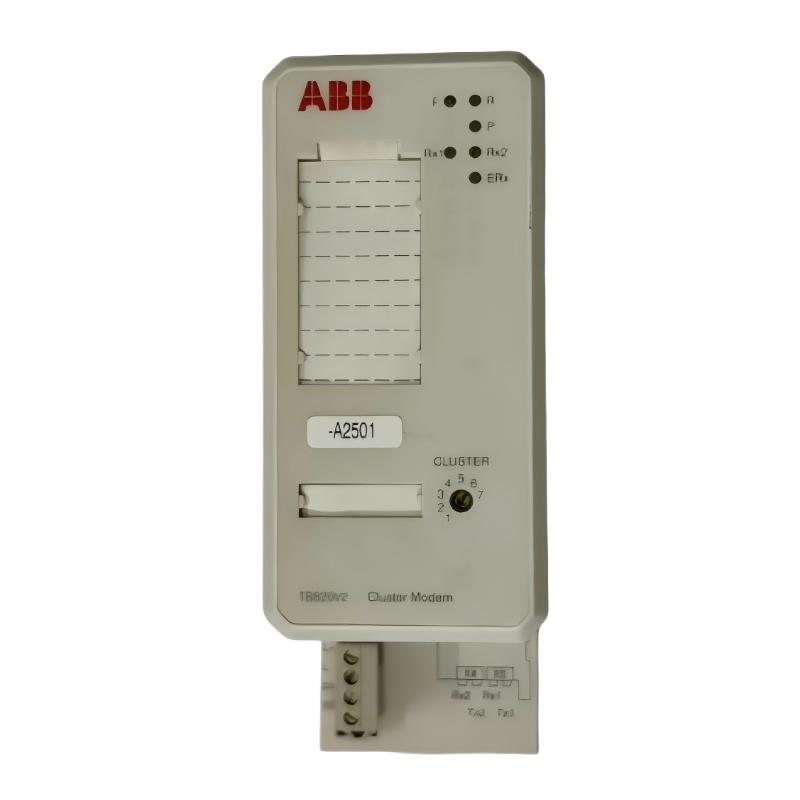
The ABB TB820V2 3BSE013208R1 Module Bus Fiber Optic Trunking Modem is a communication interface module designed for ABB S800 I/O distributed automation systems. It provides a reliable connection between electrical ModuleBus communication and optical ModuleBus communication, enabling flexible expansion of remote I/O clusters in industrial control applications.
The TB820V2 ModuleBus modem is mainly used to extend the communication distance between automation controllers and distributed I/O modules through fiber optic technology. By converting electrical ModuleBus signals into optical communication signals, it improves communication stability, reduces electromagnetic interference, and supports installation in complex industrial environments.
The module is designed for applications where I/O modules need to be distributed across different locations or where traditional electrical communication distance limitations must be overcome. It provides a flexible architecture for large-scale process automation systems and distributed control networks.
The ABB TB820V2 is widely used in:
- Process automation systems
- Distributed control systems
- Power generation facilities
- Oil and gas automation
- Chemical processing plants
- Water treatment systems
- Manufacturing automation
- Large industrial communication networks
With dimensions of 122 × 170 × 58 mm and a weight of 0.3 kg, the TB820V2 provides a compact and reliable communication expansion solution for industrial control cabinets.
Technical Specifications
| Parameter |
Details |
| Manufacturer |
ABB |
| Model |
TB820V2 |
| Part Number |
3BSE013208R1 |
| Product Type |
ModuleBus Fiber Optic Trunking Modem |
| Application |
ABB S800 I/O Communication Expansion |
| Communication Protocol |
ModuleBus |
| Communication Type |
Electrical and Optical ModuleBus |
| Fiber Optic Ports |
2 |
| Electrical ModuleBus Connection |
Supported |
| Optical ModuleBus Connection |
Supported |
| Maximum Electrical I/O Modules |
12 Modules |
| Maximum Optical Clusters |
7 Clusters |
| Power Supply |
24 VDC |
| Typical Power Consumption |
100 mA |
| Installation Method |
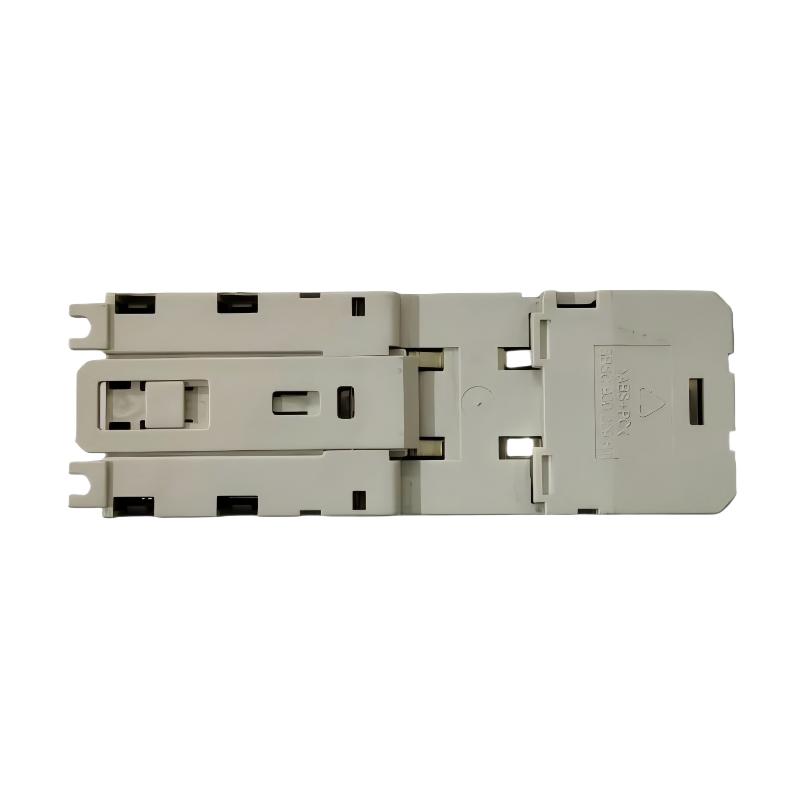
DIN Rail Mounting |
| Protection Class |
IP20 |
| Dimensions |
122 × 170 × 58 mm |
| Weight |
0.3 kg |
Function and Working Principle
The ABB TB820V2 ModuleBus Fiber Optic Trunking Modem works as a communication bridge between local electrical ModuleBus networks and remote optical ModuleBus clusters.
The main functions include:
- Electrical-to-optical signal conversion
- Fiber optic communication extension
- Distributed I/O cluster connection
- ModuleBus communication management
- Power supply monitoring
The operating process is as follows:
- The TB820V2 is installed inside an industrial control cabinet.
- Local S800 I/O modules are connected through the electrical ModuleBus interface.
- Fiber optic cables are connected to remote I/O clusters.
- The modem converts electrical communication signals into optical signals.
- Optical signals are transmitted through fiber cables.
- Remote I/O modules exchange process data with the control system.
This communication structure allows automation systems to distribute I/O modules over longer distances while maintaining stable and reliable data transmission.
Main Features
1. Fiber Optic ModuleBus Communication
The ABB TB820V2 provides fiber optic communication capability for distributed I/O applications.
Main advantages:
- Long-distance communication support
- Strong resistance to electromagnetic interference
- Improved signal stability
- Reliable operation in harsh industrial environments
Fiber optic technology makes the module suitable for large industrial facilities where equipment is physically separated.
2. Electrical and Optical ModuleBus Integration
The TB820V2 integrates both electrical and optical ModuleBus interfaces.
This allows:
- Connection with local I/O modules
- Expansion to remote I/O clusters
- Flexible system architecture
- Simplified industrial network design
The conversion between electrical and optical communication improves automation system flexibility.
3. Distributed I/O Expansion Capability
The module supports distributed I/O architectures by allowing multiple remote clusters to be connected through fiber optic communication.
Typical applications include:
- Large production plants
- Multi-area process systems
- Remote field monitoring
- Complex automation installations
This reduces the need for long-distance electrical wiring and improves system scalability.
4. Communication Monitoring Functions
The TB820V2 provides monitoring functions for ModuleBus communication and power supply status.
Benefits include:
- Faster fault detection
- Improved maintenance efficiency
- Better system availability
- Reduced unexpected downtime
Operators can quickly identify communication problems during system operation.
5. Compact Industrial Design
The TB820V2 features a compact structure suitable for industrial control cabinets.
Advantages include:
- Space-saving installation
- Easy integration into existing systems
- Simple wiring arrangement
- Reliable long-term operation
Industrial Applications
Process Automation Systems
The ABB TB820V2 is widely used in continuous process industries.
Typical applications:
- Chemical production
- Oil and gas facilities
- Pharmaceutical manufacturing
- Industrial processing systems
Fiber optic communication improves reliability in environments with electrical noise and long communication distances.
Power Generation Automation
The module is suitable for power industry control systems.
Applications include:
- Power plants
- Generator monitoring
- Electrical control systems
- Energy management applications
Reliable distributed I/O communication helps maintain stable equipment operation.
Water Treatment Systems
The TB820V2 can be applied in water and wastewater automation systems.
Common applications:
- Pump control stations
- Filtration systems
- Remote monitoring points
- Process control equipment
Manufacturing Automation
The module supports large-scale manufacturing automation networks.
Applications include:
- Production lines
- Automated equipment
- Machine monitoring systems
- Factory control networks
Installation Guide
Mechanical Installation
Recommended installation steps:
- Install the TB820V2 securely on a DIN rail.
- Confirm the mounting position is stable.
- Connect the electrical ModuleBus interface.
- Connect fiber optic communication cables.
- Check cable routing and cabinet conditions.
- Confirm all connections before startup.
Proper installation ensures reliable communication performance.
Electrical and Fiber Optic Wiring
Before operation, check:
- 24 VDC power connection
- ModuleBus wiring
- Fiber optic cable connection
- Grounding condition
- Connector installation
Recommended practices:
- Avoid excessive bending of fiber optic cables.
- Keep communication cables away from strong interference sources.
- Protect fiber connectors from dust and damage.
- Inspect connections regularly.
Commissioning Procedure
Typical commissioning steps:
- Install the TB820V2 module.
- Connect the power supply.
- Connect electrical ModuleBus devices.
- Connect optical ModuleBus fiber cables.
- Configure cluster settings.
- Check communication status.
- Test I/O module operation.
Correct commissioning ensures stable distributed I/O communication.
Common Fault Symptoms and Troubleshooting
| Fault Symptom |
Possible Cause |
Recommended Solution |
| Fiber communication failure |
Damaged fiber cable |
Check and replace fiber cable |
| Remote I/O cluster unavailable |
Incorrect cluster configuration |
Verify cluster settings |
| ModuleBus communication error |
Loose connection |
Check ModuleBus wiring |
| Power indicator not active |
Power supply problem |
Check 24 VDC input |
| Communication interruption |
Fiber connector contamination |
Clean fiber connectors |
| I/O modules not detected |
Incorrect installation |
Check module connections |
| Unstable communication |
Environmental interference |
Check installation conditions |
Maintenance Recommendations
To ensure long-term reliable operation:
- Inspect fiber optic connections regularly
- Keep optical connectors clean
- Check ModuleBus connections
- Verify power supply stability
- Monitor communication status
- Maintain proper cabinet conditions
Regular maintenance helps reduce communication failures and improves automation system availability.
Advantages of ABB TB820V2
- Designed for ABB S800 I/O systems
- Electrical and optical ModuleBus integration
- Fiber optic communication support
- Distributed I/O expansion capability
- Strong electromagnetic interference resistance
- Compact DIN rail installation
- Reliable industrial communication performance
- Suitable for large-scale process automation systems
Technical FAQs
What is ABB TB820V2?
The ABB TB820V2 is a ModuleBus fiber optic modem designed for ABB S800 I/O distributed automation systems.
What is the main function of TB820V2?
The main function of TB820V2 is to convert electrical ModuleBus communication into optical ModuleBus communication for remote I/O expansion.
How many fiber optic ports does TB820V2 have?
The TB820V2 provides two fiber optic communication ports.
How many I/O clusters can TB820V2 support?
The TB820V2 supports multiple optical ModuleBus clusters, making it suitable for large distributed automation systems.
Conclusion
The ABB TB820V2 3BSE013208R1 Module Bus Fiber Optic Trunking Modem is a reliable communication expansion module designed for ABB S800 I/O distributed control systems.
With fiber optic communication capability, electrical-to-optical ModuleBus conversion, distributed I/O expansion support, and robust industrial design, it provides an effective solution for modern automation networks.
For process industries, power plants, manufacturing facilities, and large distributed control applications, the ABB TB820V2 helps engineers build flexible, stable, and high-performance industrial communication architectures.