
NewsNEWCENTER
Featured products
Contact Us
ABB Robotics Accelerates Physical AI and Intelligent Automation for the Future of Manufacturing
2026-09-08Next-Generation Robotics, Digital Twins and AI Are Transforming Smart Factory Operations
The global manufacturing industry is entering a new era where robotics are no longer limited to repetitive, pre-programmed tasks. Instead, manufacturers are adopting intelligent automation systems capable of learning, adapting and collaborating with human workers in increasingly complex production environments. ABB Robotics is driving this transformation by expanding its investment in physical AI, digital simulation and autonomous robotics, helping manufacturers build smarter and more flexible factories.
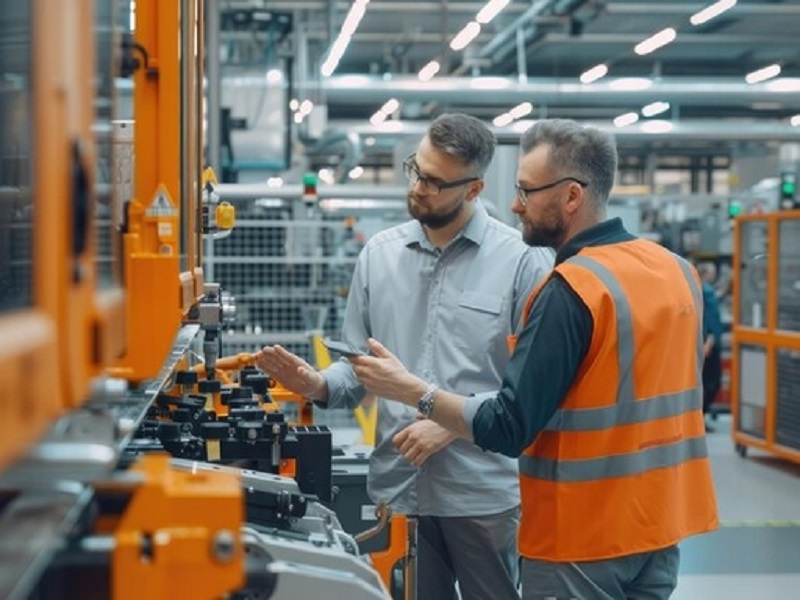
One of the biggest changes in industrial automation is the emergence of physical AI. Traditional industrial robots follow predefined programs and repeat the same movements with high precision. While this approach remains highly effective for many production processes, modern manufacturing often requires greater flexibility to handle product variations, changing production schedules and mixed manufacturing environments.
Physical AI combines machine vision, artificial intelligence, advanced sensing and digital simulation, allowing robots to better understand their surroundings and respond to changing conditions. Instead of simply executing fixed instructions, intelligent robots can recognize objects, adjust movements and improve performance through continuous learning.
Digital twin technology is playing an equally important role in this evolution. Engineers can create virtual models of production cells, robotic workstations and complete manufacturing lines before physical installation begins. These digital environments allow production scenarios to be tested, optimized and validated, reducing commissioning time while minimizing engineering risks.
ABB has continued to expand its RobotStudio platform by integrating advanced simulation technologies that bridge virtual engineering with real-world robotic operations. This enables manufacturers to train robotic applications in simulated environments before deploying them on production lines, significantly improving engineering efficiency.
Collaborative robots are also becoming increasingly popular across many industries. Unlike conventional industrial robots that typically operate inside safety enclosures, collaborative robots are designed to work alongside human operators in shared workspaces.
These robots assist with repetitive assembly, machine tending, inspection, packaging and material handling while allowing employees to focus on higher-value production activities. Improved sensing technology and intelligent motion control help create safer and more flexible manufacturing environments.
Another growing trend is the integration of autonomous mobile robots with robotic workstations. Mobile platforms can transport materials between production areas while robotic arms perform assembly, inspection or packaging operations. Together, these systems improve production flow, reduce manual transportation tasks and increase manufacturing flexibility.
Artificial intelligence is also enhancing robot programming. Instead of requiring extensive manual coding for every application, AI-assisted software can simplify configuration, optimize robot paths and reduce engineering effort. Manufacturers can deploy new production processes more quickly while maintaining high levels of accuracy and repeatability.
Machine vision continues to expand the capabilities of industrial robots. High-resolution cameras combined with intelligent image processing allow robots to identify product orientation, inspect components and perform precision assembly even when workpieces vary slightly in position. This capability is particularly valuable in electronics, automotive manufacturing, logistics and consumer goods production.
Predictive maintenance is another important advantage of connected robotics. Modern robotic systems continuously monitor motor performance, gearbox condition, operating temperature and cycle counts. Maintenance teams can identify developing issues before failures occur, reducing unplanned downtime and extending equipment life.
Energy efficiency remains a major priority for manufacturers. New robotic technologies are being designed to consume less power while maintaining high production performance. Intelligent motion planning, optimized drive control and efficient standby operation help reduce electricity consumption without affecting productivity.
Open industrial communication is becoming increasingly important as factories connect robots with PLCs, HMIs, manufacturing execution systems and cloud-based analytics platforms. Standardized communication protocols enable seamless data exchange across production environments, allowing managers to monitor performance, analyze production trends and optimize operations from centralized control systems.
Looking ahead, physical AI, digital twins and autonomous robotics will continue to reshape industrial manufacturing. Future production facilities will increasingly rely on intelligent robots capable of adapting to changing production requirements while working safely alongside people and other automated equipment.
As manufacturers continue investing in digital transformation, ABB Robotics is helping define the next generation of industrial automation through advanced robotics, AI-driven software and intelligent engineering technologies that improve productivity, flexibility and long-term operational performance.