

ProductPRODUCT
Featured products

Contact Us
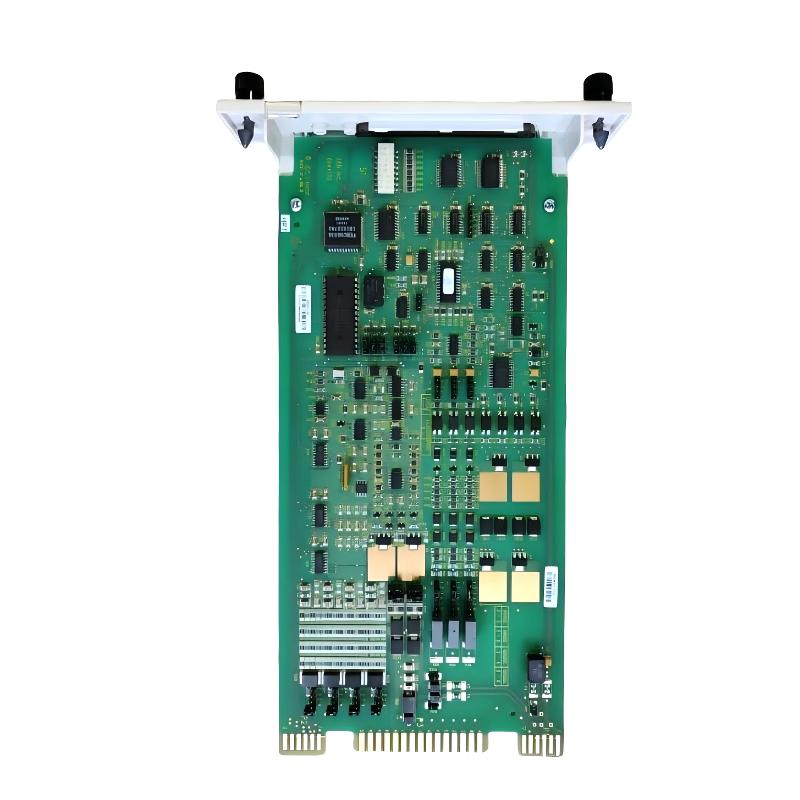
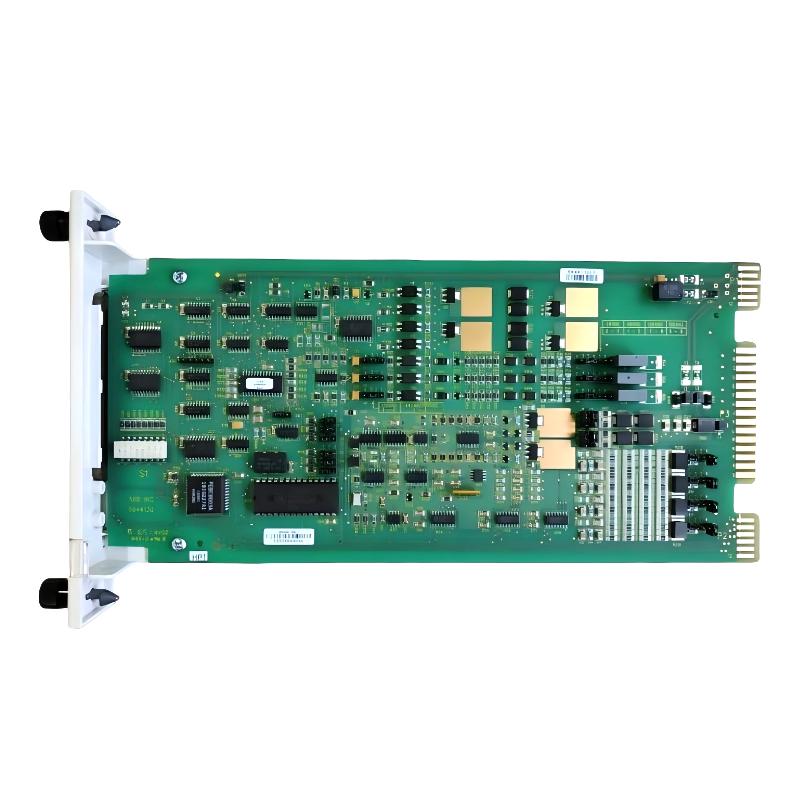
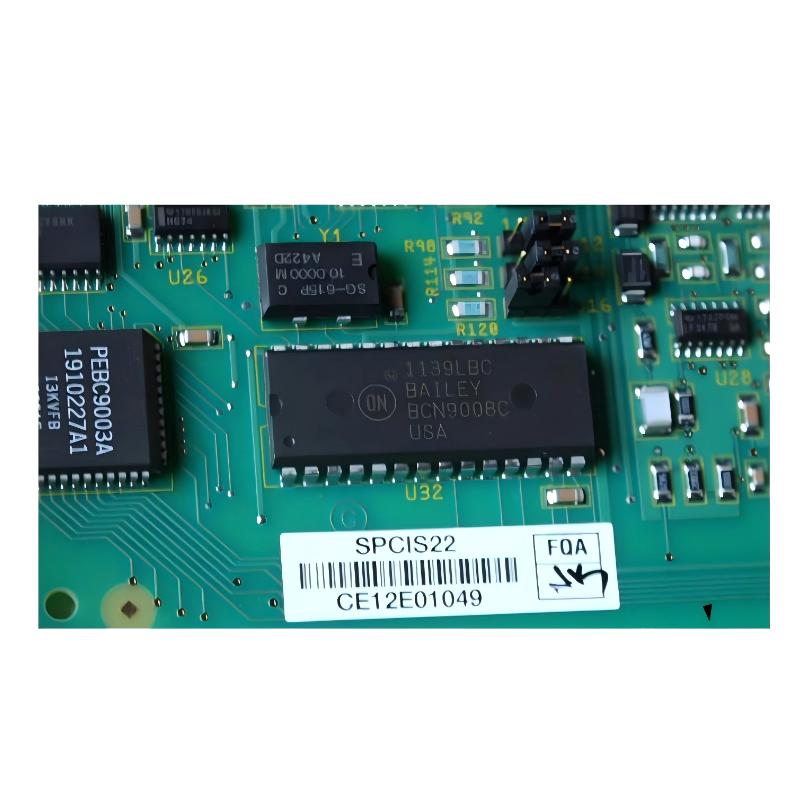
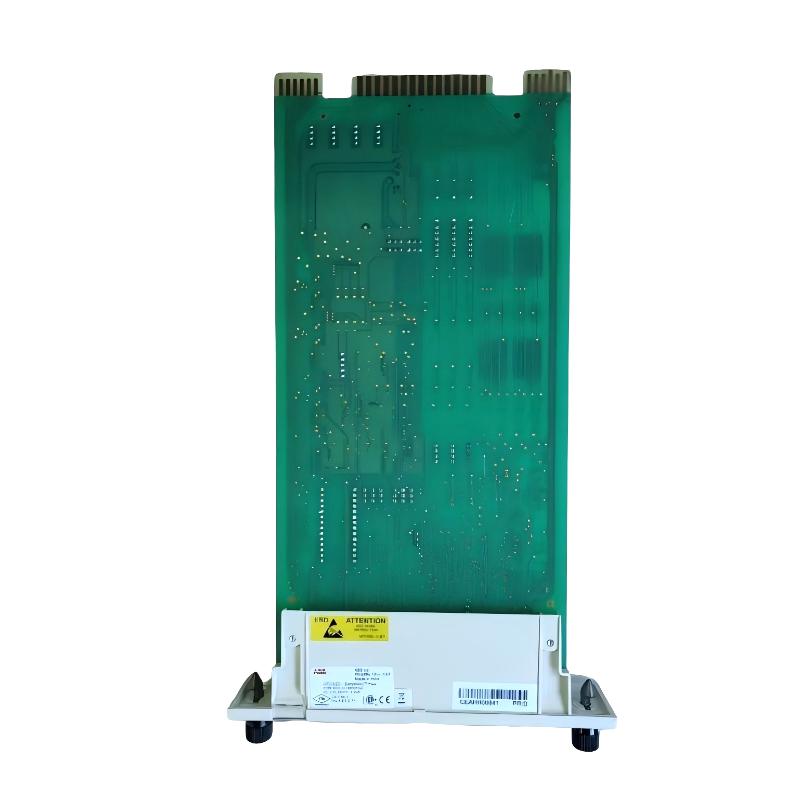
- ABB Bailey
- SPCIS22
- Control I/O Module
- Germany
- 350 × 70 × 260 mm
- 0.45 kg
- Xiamen, China
- New & In Stock
- T/T, PayPal, Western Union
- 1 Year
- 1-3 Working Days
- DHL, UPS, TNT, FedEx and EMS.
- 24-Hour Service
- COO
- 52
Our advantage

Global Logistics
We have a 10-year logistics and express cooperation agreement, so our products can be shipped to any place in the world.

Brand new and original
Our products are imported in bulk from the place of origin. Because of the cooperative relationship, our products are all original and 100% new.

24-hour service
We provide 7*24 hours service to our customers. We will be there whenever you need us.

Price advantage
All our products are priced very favorably because we have our own warehouse and supply.
| Company Information | |||
| [email protected] | |||
| Mobile | +8615980777398 | ||
| +8615980777398 | |||
| 15980777398 |
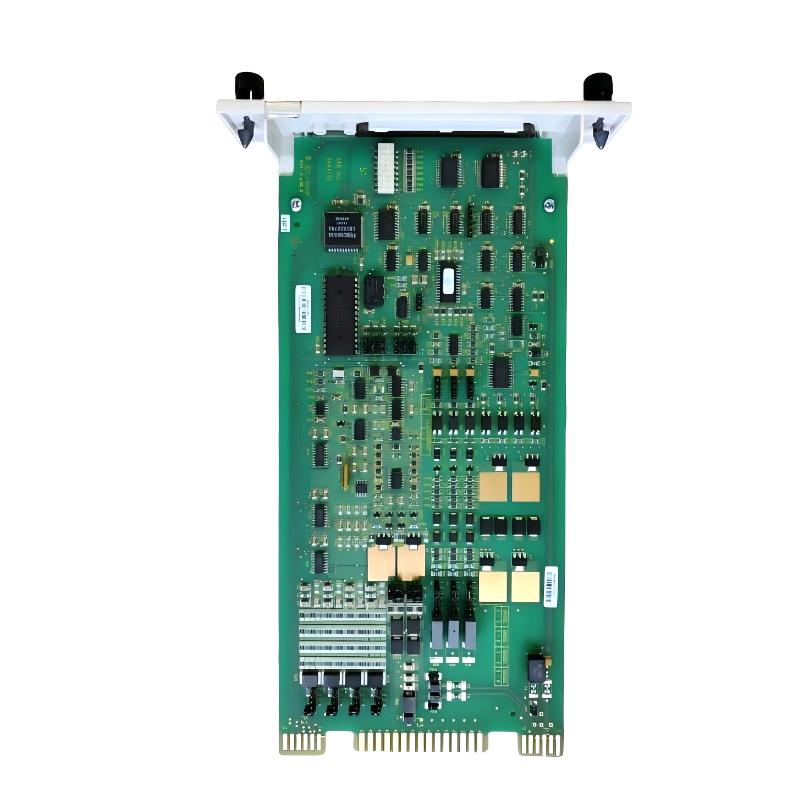
Product Overview
The ABB Bailey SPCIS22 Control I/O Module is an I/O component used in ABB Bailey industrial process-control systems to connect control-system functions with field-level signals and devices. It belongs to the I/O side of the control architecture, where process information is acquired and control commands are transferred between the controller and field equipment.
In a typical Bailey installation, the control system needs a dependable interface between its processing logic and the actual plant. The SPCIS22 serves this interface role, allowing the control architecture to work with connected instrumentation, control devices, and other field equipment.
Unlike a dedicated analog input or output module, a Control I/O Module is associated with broader control-system I/O functions. Its application therefore depends on the specific Bailey system architecture, associated I/O components, and the way the control strategy has been engineered.
For replacement work, the complete system configuration should be checked rather than selecting the module solely from its physical format.
Technical Specifications
| Parameter | Specification |
|---|---|
| Manufacturer | ABB Bailey |
| Model | SPCIS22 |
| Product Type | Control I/O Module |
| Main Function | Control System I/O Interface |
| Application | Industrial Process Control |
| System | ABB Bailey Control System |
| Dimensions | 350 × 70 × 260 mm |
| Weight | 0.45 kg |
Product Features
The SPCIS22 is intended for use within ABB Bailey control architectures where control-system I/O functions need to be connected with the plant-level process.
Key characteristics include:
- ABB Bailey Control I/O Module
- Designed for industrial process-control systems
- Provides an interface between control logic and field-level equipment
- Suitable for distributed control architectures
- Supports integration of I/O functions into the Bailey system
- Applicable to process monitoring and control applications
- Suitable for industrial control cabinet installations
- Works as part of a larger control-system configuration
- Intended for integration with associated Bailey hardware
- Dimensions of 350 × 70 × 260 mm
- Weight of 0.45 kg
The actual I/O function should be verified against the installed system documentation and associated hardware before commissioning.
Working Principle
The SPCIS22 operates as part of the signal path between the control-system processing layer and field equipment.
A simplified architecture can be represented as:
Field Devices → Control I/O → Bailey Controller → Control Logic → Output / Field Equipment
The controller processes information received from the I/O subsystem and executes the programmed control strategy. Depending on the overall system configuration, I/O signals can be used for process monitoring, control decisions, interlocks, alarms, or equipment commands.
For example, a process instrument can provide information to the control system, while a controller uses that information to determine whether a valve, motor, or other plant device should change state.
The SPCIS22 should therefore be viewed as one part of the complete control path rather than as an isolated controller. Proper operation depends on the associated controller, I/O architecture, field wiring, power supply, and system configuration.
Role in an ABB Bailey Control Architecture
The SPCIS22 provides an I/O interface within the Bailey control environment.
A representative architecture is:
Process Equipment → Field Wiring → SPCIS22 → Bailey Control System → Control Logic → Field Output
This arrangement allows field information to participate in the plant’s control strategy.
Typical functions supported by the surrounding I/O architecture can include:
- Process status acquisition
- Equipment status monitoring
- Control commands
- Interlock signals
- Alarm-related signals
- Instrumentation interfaces
- Actuator control
- Process sequence information
The exact signal allocation depends on how the SPCIS22 is incorporated into the particular Bailey system.
Industrial Applications
The SPCIS22 can be used in process-control installations where ABB Bailey equipment provides the central automation architecture.
| Application | Typical Use |
|---|---|
| Power Generation | Equipment and process control |
| Oil & Gas | Process I/O integration |
| Chemical Processing | Plant instrumentation and control |
| Petrochemical | Process monitoring and equipment control |
| Water Treatment | Pump and process-system control |
| Pulp & Paper | Distributed process automation |
| Industrial Utilities | Equipment status and control |
| Process Skids | Local I/O integration |
| Manufacturing | Machine and process control |
| Plant Modernization | Existing Bailey system expansion |
Its value is particularly apparent in large control architectures where field devices are distributed throughout the plant and need to communicate with centralized or distributed control functions.
Installation and Maintenance
Installation should be performed with reference to the complete ABB Bailey system architecture. The module’s electrical and system interfaces should be verified before it is installed as a replacement.
Recommended checks include:
- Confirm the complete SPCIS22 part number.
- Verify compatibility with the existing Bailey system.
- Check the associated I/O mounting arrangement.
- Confirm connected field devices.
- Verify terminal and wiring assignments.
- Check system power requirements.
- Confirm controller configuration.
- Verify I/O addressing where applicable.
- Inspect signal wiring.
- Check grounding and shielding arrangements.
- Review system diagnostics.
- Perform point-to-point checks during commissioning.
When troubleshooting, first determine whether the problem affects a single I/O point, the entire module, or communication with the wider control system. This distinction can significantly narrow the fault location.
For example, a single abnormal field value may indicate an instrument or wiring problem, whereas simultaneous loss of multiple I/O points may indicate a module, power, communication, or system-level issue.
Related Components
The SPCIS22 normally operates alongside other components in the ABB Bailey control environment.
| Component | Function |
|---|---|
| ABB Bailey Controller | Executes control logic |
| Analog Input Module | Acquires continuous process measurements |
| Analog Output Module | Sends variable control commands |
| Digital Input Module | Acquires discrete equipment states |
| Digital Output Module | Controls discrete field devices |
| I/O Termination Assembly | Provides field wiring connections |
| Power Supply | Supplies required system power |
| Communication Interface | Connects I/O and control-system components |
| Field Instrumentation | Provides process measurements |
| Actuators | Execute control commands |
The final configuration depends on the specific Bailey system generation and the application for which the SPCIS22 is being used.
Recommended Related Models
For ABB Bailey control-system applications, related modules can be considered according to the required signal type and control function.
| Model | Product Type | Main Function | Typical Application |
|---|---|---|---|
| ABB Bailey SPCIS22 | Control I/O Module | Control-system I/O interface | Process control |
| ABB Bailey SPASI23 | Analog Input Module | Analog signal acquisition | Process measurement |
| ABB Bailey IMASI23 | Analog Input Module | Analog input processing | Instrumentation |
| ABB Bailey NIAI01 | Analog Input Module | Analog signal acquisition | Distributed I/O |
| ABB Bailey IMDSO14 | Digital Output Module | Discrete output control | Actuators and relays |
| ABB Bailey SPBRC410 | Controller with Modbus TCP | Control and Ethernet integration | Third-party device communication |
When selecting a replacement or complementary module, the required I/O function should be confirmed first. The module’s physical compatibility alone does not establish electrical or system compatibility.
Key Advantages
- ABB Bailey Control I/O Module
- Suitable for industrial process-control architectures
- Provides an interface between control logic and field equipment
- Supports distributed I/O applications
- Suitable for process monitoring and control
- Can be integrated with broader Bailey control architectures
- Applicable to plant modernization and expansion
- Supports organized field-level I/O integration
- Suitable for long-term industrial control installations
- Dimensions of 350 × 70 × 260 mm
- Weight of 0.45 kg
Technical FAQs
What distinguishes the SPCIS22 from a dedicated analog input module such as the SPASI23?
The SPCIS22 is identified as a Control I/O Module, giving it a broader system-level I/O role, while the SPASI23 is specifically associated with analog input acquisition. The two should not be treated as interchangeable simply because both belong to the Bailey I/O environment.
What should be verified before using an SPCIS22 as a replacement module?
The existing Bailey system architecture, module position, associated I/O hardware, wiring arrangement, controller configuration, and the required I/O function should all be checked. The replacement must match the system’s electrical and architectural requirements, not just the mechanical installation position.
How can an engineer distinguish a module fault from a field-device fault?
A useful approach is to trace the signal from the field device toward the control system. Check the field instrument first, then the wiring and termination, followed by the I/O point and module status. If multiple unrelated points fail simultaneously, the investigation should expand to module power, communication, and system-level conditions.
Why is point-to-point testing important after installing the SPCIS22?
Point-to-point testing confirms that the physical field connection corresponds to the correct control-system point. It can identify reversed wiring, incorrect termination, wrong channel assignment, or configuration errors before the equipment is returned to automatic operation.