

ProductPRODUCT
Featured products
Contact Us
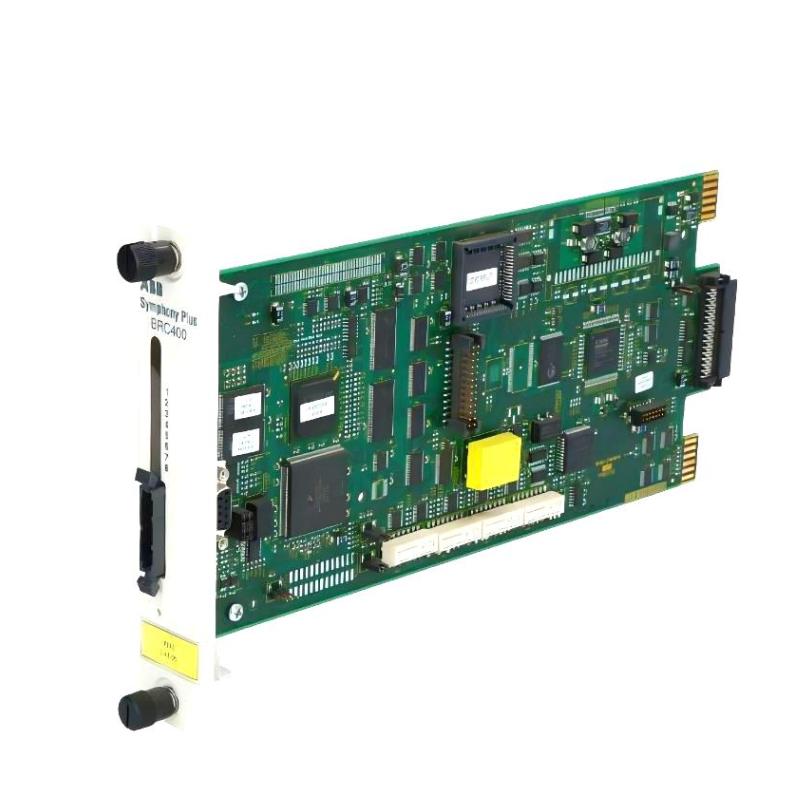
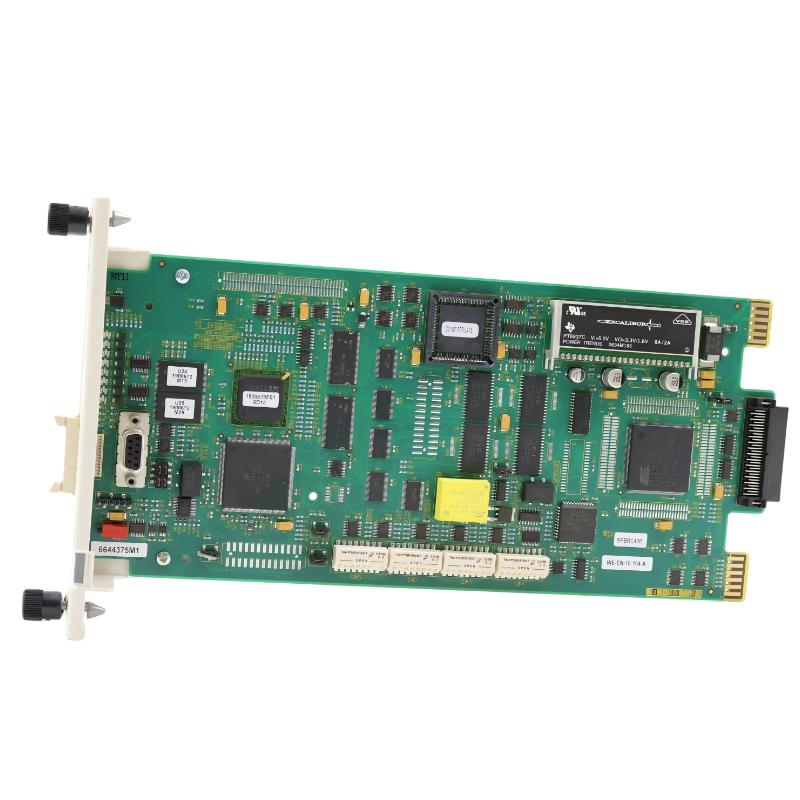
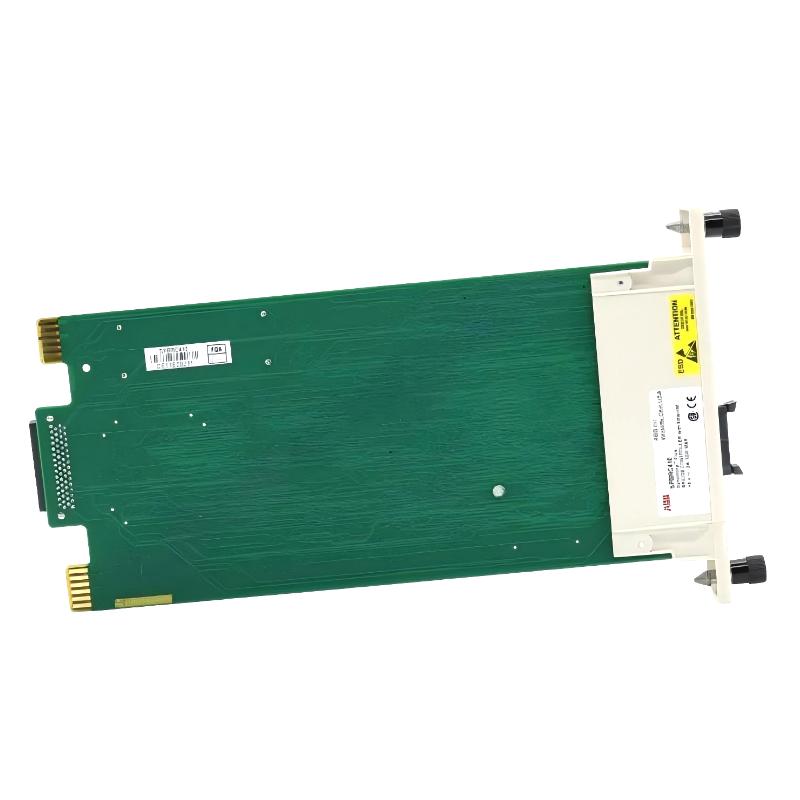
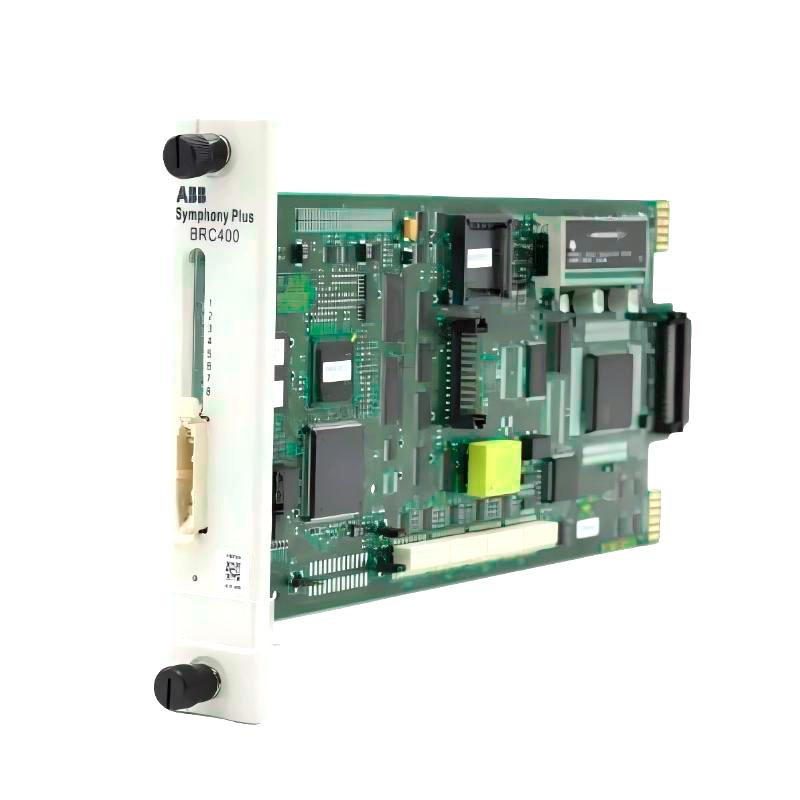
- ABB Bailey
- SPBRC400
- Harmony Bridge Controller
- Germany
- 71.12 × 358.14 × 271.78 mm
- 0.499 kg
- Xiamen, China
- New & In Stock
- T/T, PayPal, Western Union
- 1 Year
- 1-3 Working Days
- DHL, UPS, TNT, FedEx and EMS.
- 24-Hour Service
- COO
- 68
Our advantage

Global Logistics
We have a 10-year logistics and express cooperation agreement, so our products can be shipped to any place in the world.

Brand new and original
Our products are imported in bulk from the place of origin. Because of the cooperative relationship, our products are all original and 100% new.

24-hour service
We provide 7*24 hours service to our customers. We will be there whenever you need us.

Price advantage
All our products are priced very favorably because we have our own warehouse and supply.
| Company Information | |||
| [email protected] | |||
| Mobile | +8615980777398 | ||
| +8615980777398 | |||
| 15980777398 |
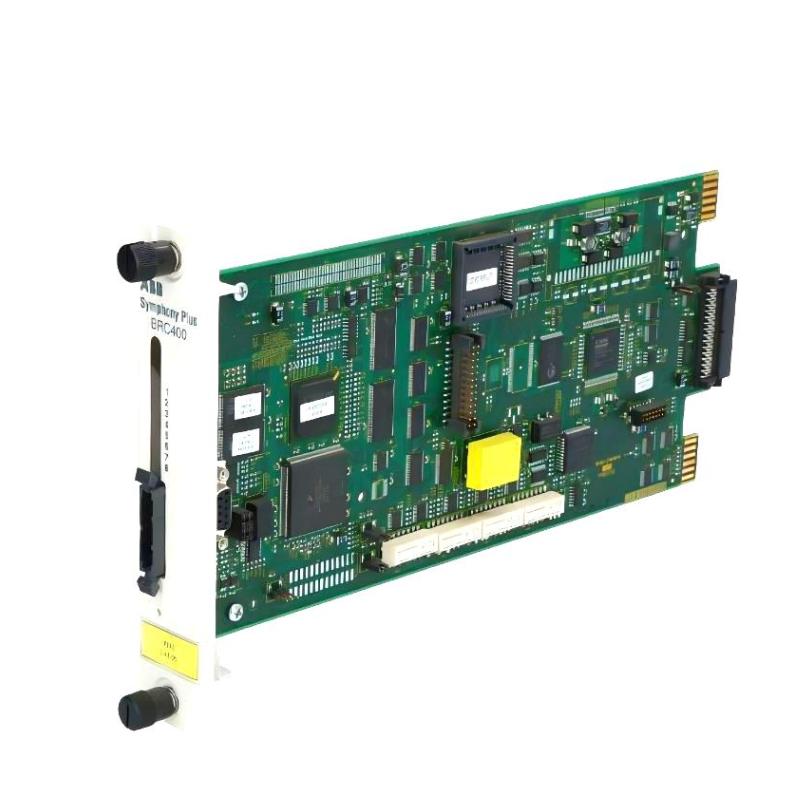
Product Overview
The ABB Bailey SPBRC400 Symphony Plus Harmony Bridge Controller is a controller used within ABB Bailey process automation architectures to provide control and communication between Harmony-family system components and the broader Symphony Plus control environment.
Unlike a conventional I/O module, the SPBRC400 has a system-level role. It sits between control-system elements and helps integrate existing Harmony control resources into a Symphony Plus architecture. This makes it particularly relevant to brownfield projects where an established ABB Bailey control installation needs to be expanded, modernized, or integrated without completely replacing the existing control infrastructure.
In practical plant applications, the controller can be part of the bridge between legacy and newer control-system components. The engineering objective is usually to maintain existing process-control functions while providing a suitable path for system-level integration.
The SPBRC400 should therefore be evaluated as part of the complete Symphony Plus/Harmony architecture rather than as an independent PLC or standalone communication converter.
Technical Specifications
| Parameter | Specification |
|---|---|
| Manufacturer | ABB Bailey |
| Model | SPBRC400 |
| Product Family | Symphony Plus |
| Product Type | Harmony Bridge Controller |
| Main Function | Harmony / Symphony Plus System Integration |
| Application | Process Control System Architecture |
| Dimensions | 71.12 × 358.14 × 271.78 mm |
| Weight | 0.499 kg |
Product Features
The SPBRC400 is focused on controller-level integration within ABB Bailey process automation systems.
Key characteristics include:
- ABB Bailey Symphony Plus Harmony Bridge Controller
- Intended for Harmony-to-Symphony Plus integration
- Suitable for process automation architectures
- Supports system modernization projects
- Useful for brownfield control-system upgrades
- Designed to work within a larger ABB Bailey control environment
- Provides a bridge between different generations or sections of the control architecture
- Suitable for centralized and distributed process-control applications
- Supports continued use of existing control-system resources where applicable
- Dimensions of 71.12 × 358.14 × 271.78 mm
- Weight of 0.499 kg
The controller should be selected according to the existing Symphony Plus and Harmony architecture, communication requirements, controller configuration, and system revision.
Working Principle
The SPBRC400 operates at the system integration level rather than directly controlling field signals.
A simplified architecture can be represented as:
Harmony Control System → SPBRC400 → Symphony Plus Architecture → Controllers / I/O / Operator Stations
In a modernization project, existing Harmony-based control resources may still be responsible for established plant functions. The bridge controller provides a means of integrating those resources into the newer system environment.
The important distinction is that the SPBRC400 does not simply convert an individual analog or digital signal. Its purpose is associated with system-level control and communication integration.
In an operating plant, this architecture can allow engineers to introduce newer Symphony Plus capabilities while retaining selected existing control-system assets. This approach can reduce the need for a complete plant-wide replacement and allows modernization to be performed in stages.
The exact communication path and system behavior depend on the installed Symphony Plus/Harmony configuration and the associated system hardware.
Role in a Symphony Plus Control System
The SPBRC400 serves as a bridge controller between Harmony-based control resources and the Symphony Plus environment.
A typical modernization architecture may look like:
Existing Harmony Controllers / I/O → SPBRC400 → Symphony Plus System → Operator / Engineering / Supervisory Layer
Its role is particularly relevant when a plant contains a mixture of existing and newer control-system hardware.
For system engineers, this can provide a practical migration path where the objective is to modernize the control architecture without unnecessarily disturbing proven field-level control functions.
The controller may therefore be involved in:
- Harmony system integration
- Symphony Plus migration projects
- Brownfield modernization
- Control-system expansion
- System-level communication
- Existing control-resource integration
- Plant-wide process-control architectures
The bridge function should be considered together with the actual controller generations, communication architecture, I/O configuration, and Symphony Plus engineering environment being used at the site.
Industrial Applications
The SPBRC400 is particularly relevant to continuous-process industries where control systems often remain in service for many years and modernization must be carefully staged.
| Application | Typical Use |
|---|---|
| Power Generation | Harmony-to-Symphony Plus modernization |
| Oil & Gas | Brownfield control-system integration |
| Chemical Processing | Process-control system upgrades |
| Petrochemical Plants | Legacy control-system migration |
| Water Treatment | Control architecture modernization |
| Pulp & Paper | Existing Bailey system integration |
| Industrial Utilities | Expansion of established control systems |
| Process Manufacturing | Integration of legacy and newer controls |
| Large Process Plants | Phased control-system migration |
| Plant Revamp Projects | Retaining existing control assets |
The strongest use case is generally not a new standalone control panel, but an existing industrial facility where the control architecture must evolve while maintaining operational continuity.
Installation and Maintenance
Installation of a bridge controller requires more system-level planning than the installation of a conventional I/O module.
Before replacement or commissioning, engineers should verify:
- Complete SPBRC400 model and hardware revision.
- Existing Harmony system architecture.
- Symphony Plus system configuration.
- Associated controller and communication hardware.
- Network topology and communication paths.
- System firmware and engineering compatibility.
- Power supply arrangement.
- Mounting and cabinet requirements.
- Existing control-system configuration and database.
- Controller addressing and communication parameters.
- Backup of the existing system configuration before replacement.
During maintenance, communication status should be checked together with controller diagnostics. A bridge-controller problem can affect communication between larger sections of the control architecture, so troubleshooting should begin by identifying whether the fault is local to the SPBRC400 or originates from the connected Harmony/Symphony Plus system.
For migration projects, configuration backups and change records are particularly important. Any modification to a bridge controller should be documented because an apparently small configuration change can affect system-level communication.
Related Components
The SPBRC400 normally works with multiple components within an ABB Bailey control architecture.
| Component | Function |
|---|---|
| ABB Bailey Harmony Controllers | Existing control-system processing |
| Symphony Plus Controllers | Newer control architecture |
| Harmony I/O Modules | Field signal acquisition and control |
| Symphony Plus I/O | Distributed field interface |
| Communication Network | Transfers system data |
| Engineering Station | System configuration and maintenance |
| Operator Station | Process monitoring and operation |
| System Power Supply | Provides controller power |
| Control Network Infrastructure | Connects control-system nodes |
| Process Control Database | Stores system configuration and control information |
The exact associated hardware depends on the specific Symphony Plus/Harmony installation. For this reason, the SPBRC400 should be matched using the site’s existing system architecture and hardware revision rather than relying on the model name alone.
Recommended Related Models
For ABB Bailey control-system projects, related products can be considered according to the required controller, I/O, communication, and migration function.
| Model | Product Type | Main Function | Typical Application |
|---|---|---|---|
| ABB Bailey SPBRC400 | Harmony Bridge Controller | Harmony / Symphony Plus integration | Brownfield modernization |
| ABB Bailey SPASI23 | Analog Input Module | Analog process acquisition | Process measurement |
| ABB Bailey IMASI23 | Analog Input Module | Analog input processing | Process instrumentation |
| ABB Bailey NIAI01 | Analog Input Module | Analog signal acquisition | Distributed process I/O |
| ABB Bailey IMDSO14 | Digital Output Module | Discrete output control | Actuator control |
| ABB Bailey INNIS01 | Network Interface Module | System communication | Industrial control networking |
The SPBRC400 should not be selected as a direct substitute for a conventional controller or network interface without checking the intended system function. Its primary value lies in its bridge-controller role within the Symphony Plus/Harmony architecture.
Key Advantages
- Designed for ABB Bailey Symphony Plus architectures
- Provides Harmony system integration capability
- Suitable for brownfield modernization
- Supports phased control-system migration
- Helps integrate existing control-system resources
- Suitable for long-life process automation installations
- Useful when complete system replacement is impractical
- Supports system-level control architecture integration
- Applicable to large continuous-process plants
- Compact controller form factor for system installation
- Dimensions of 71.12 × 358.14 × 271.78 mm
- Weight of 0.499 kg
Technical FAQs
What makes the SPBRC400 different from a conventional Bailey I/O module?
The SPBRC400 operates at the system integration and controller level, while an I/O module primarily handles field signal acquisition or output. Its purpose is to bridge Harmony-related control resources with the Symphony Plus environment rather than directly process individual field channels.
Why would a plant use a Harmony Bridge Controller during modernization?
A bridge controller can be useful when a facility needs to introduce newer Symphony Plus capabilities while retaining selected existing Harmony control assets. This supports a phased modernization strategy instead of requiring every part of the control system to be replaced simultaneously.
What should be checked before replacing an SPBRC400?
The most important checks include the existing Harmony and Symphony Plus architecture, controller revisions, communication topology, firmware compatibility, system configuration, addressing, and backup files. A bridge-controller replacement should be treated as a system-level maintenance task rather than a simple module swap.
What is a sensible first step when communication through the SPBRC400 is lost?
First determine whether the fault affects only the bridge controller or an entire section of the control network. Check controller status, power, communication connections, network diagnostics, and the status of the connected Harmony and Symphony Plus components. This helps distinguish a local hardware problem from a wider network or configuration fault.