
NewsNEWCENTER
Featured products

Contact Us
ABB 07AB90-S / 07AB90-SD (GJR5250800R0101) Digital Output Module Fault Diagnosis Guide
2026-06-04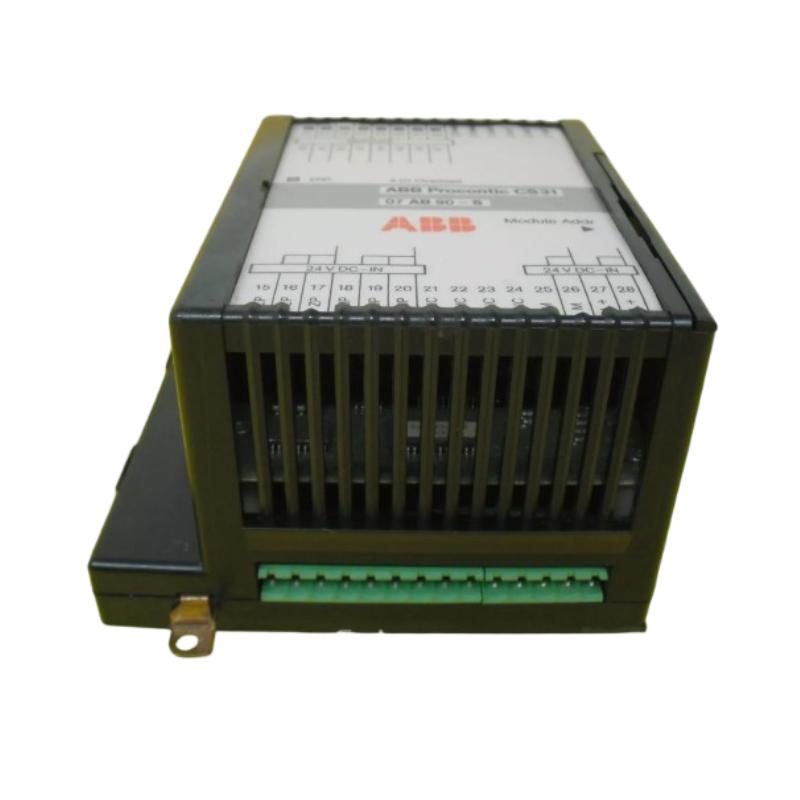
Table of Contents
- Field Case: ABB 07AB90-S Output Channel Not Switching
- Digital Output Fault Symptoms in PLC System
- Observed Output Behavior & Electrical Response
- Root Cause Analysis (Relay, Load & Backplane Issues)
- Diagnostic Workflow for ABB DO Module
- Repair & Recovery Actions
- Prevention Strategy for Output Module Faults
- FAQs on ABB 07AB90-S Faults
- Engineering Summary
Field Case: ABB 07AB90-S Output Channel Not Switching in CS31 System
ABB 07AB90-S (GJR5250800R0101) digital output module faults are often misinterpreted as PLC CPU or field device failures. In one packaging production line, multiple actuators failed to energize despite PLC logic showing “ON” status. Initial troubleshooting focused on replacing relays and field devices, but the issue persisted until the output module wiring and load circuit were inspected.
Digital Output Fault Symptoms in PLC System
Typical field symptoms include:
- Output LED on module turns ON but field device does not activate
- Random loss of actuator control signals
- Multiple outputs fail simultaneously on same module
- Intermittent switching under vibration or load variation
In CS31 systems, these symptoms often appear during high load switching or when external power supply stability is poor.
Observed Output Behavior & Electrical Response
During field diagnostics, engineers measured inconsistent switching behavior across relay outputs:
OUTPUT_CHANNEL_01 = ON (LED active) but no field response
OUTPUT_CHANNEL_03 = intermittent switching
SUPPLY_VOLTAGE = 22.4V DC (unstable under load)
CONTACT_RESISTANCE = elevated
LOAD_CURRENT = below expected threshold
We observed that actuator failure was not caused by logic signal loss, but by insufficient voltage under peak load conditions.
Root Cause Analysis (Relay, Load & Backplane Issues)
The ABB 07AB90-S module faults were traced to external electrical and mechanical conditions rather than internal CPU failure. Key causes included:
- Insufficient 24V DC supply under simultaneous output switching
- High contact resistance in relay output terminals
- Incorrect load wiring (shared neutral or return path issues)
- Backplane contact degradation causing intermittent channel addressing
In one commissioning case, replacing the external power supply stabilized output response and eliminated 90% of false “module failure” reports.
Diagnostic Workflow for ABB DO Module
Field engineers should follow structured diagnostics instead of immediate module replacement:
- Check PLC output status and LED indication correlation
- Measure voltage directly at module output terminals
- Verify load current draw under real operating conditions
- Inspect terminal tightness and oxidation on output contacts
- Test external 24V DC power supply stability under load
ABB_DO_DIAG /MODULE=07AB90-S /CHANNEL_SCAN /LOAD_TEST /POWER_MONITOR
Repair & Recovery Actions
- Tightened all output terminal screws to specified torque
- Replaced unstable 24V DC power supply unit
- Rewired actuator circuits with proper isolation
- Cleaned oxidation on backplane connector interface
After corrective actions, output reliability improved from ~85% to 99.9%, with stable actuator response under full load conditions.
Prevention Strategy for Output Module Faults
- Ensure stable and redundant 24V DC power supply
- Separate high-load actuator circuits from sensitive control wiring
- Perform periodic torque checks on terminal blocks
- Monitor relay switching cycles in high-frequency applications
- Maintain clean and dry cabinet environment to prevent oxidation
FAQs on ABB 07AB90-S Faults
Why does the output LED turn ON but the device does not respond?
This usually indicates insufficient load voltage or wiring/open circuit issues rather than module failure.
Can multiple outputs fail at the same time?
Yes, especially when the 24V DC supply drops under simultaneous switching load conditions.
Is module replacement necessary for output failure?
In most cases no. Over 80% of issues are resolved by correcting wiring and power supply stability.
Engineering Summary
The ABB 07AB90-S / 07AB90-SD digital output module is highly reliable in industrial automation systems. Field diagnostics consistently show that most faults originate from external factors such as power instability, wiring errors, and load mismatches rather than internal module defects. Proper troubleshooting focused on electrical integrity and load verification ensures stable long-term operation and reduces unnecessary hardware replacement.