

ProductPRODUCT
Featured products
Contact Us
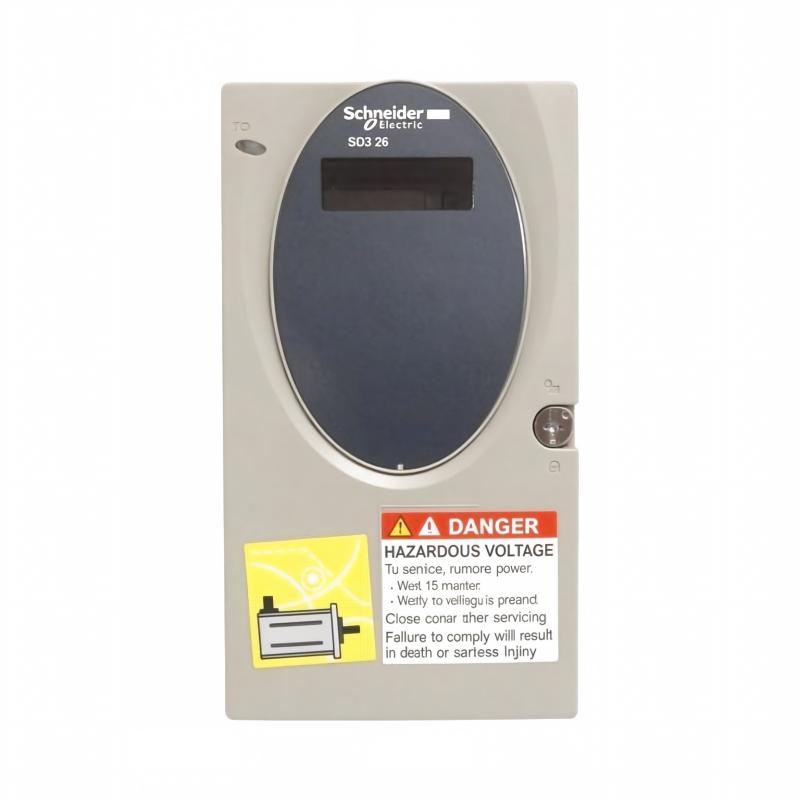
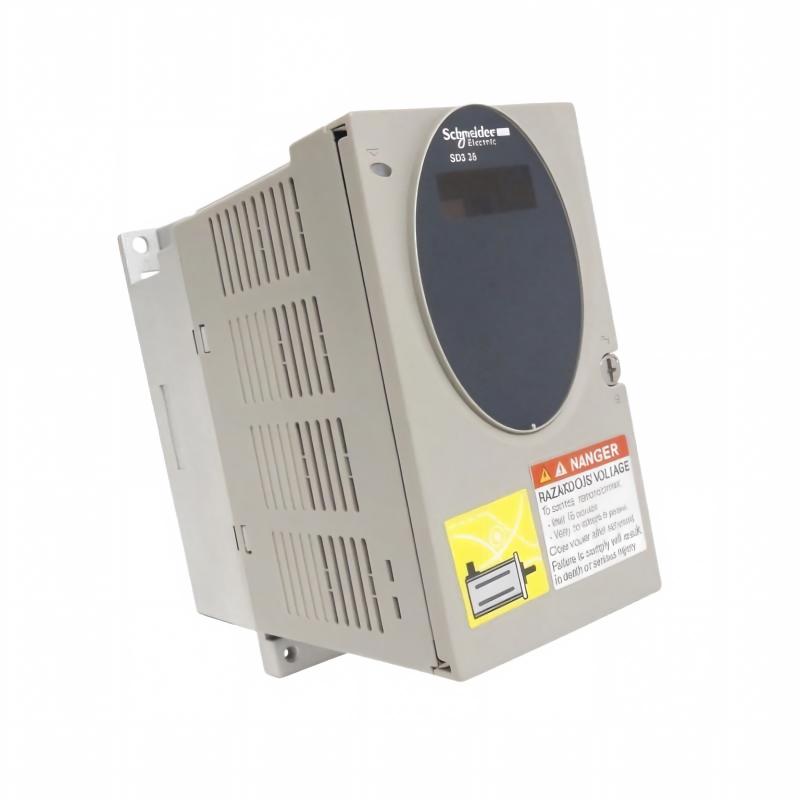
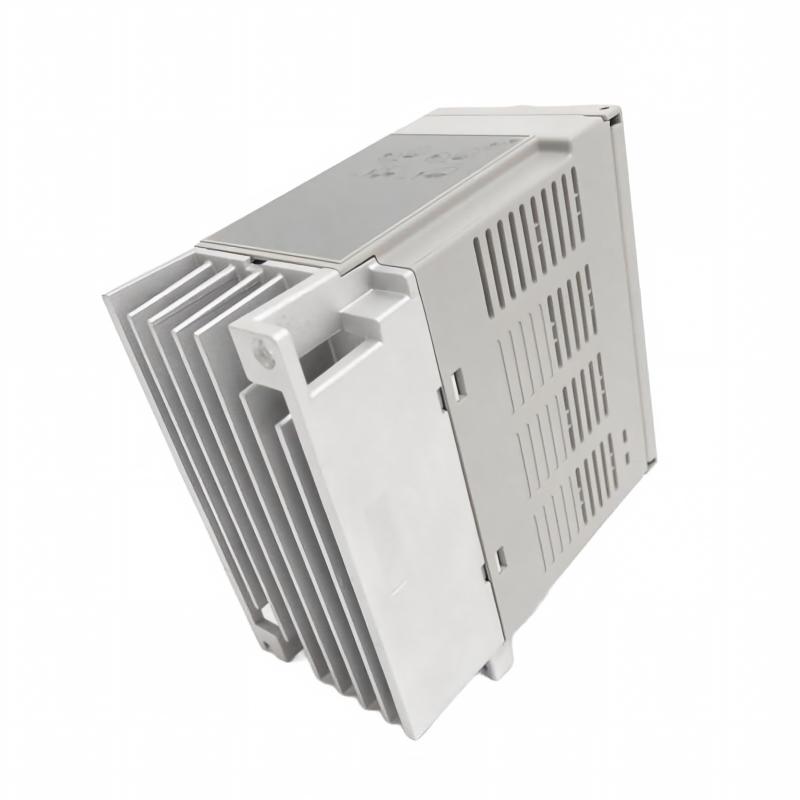
- Schneider
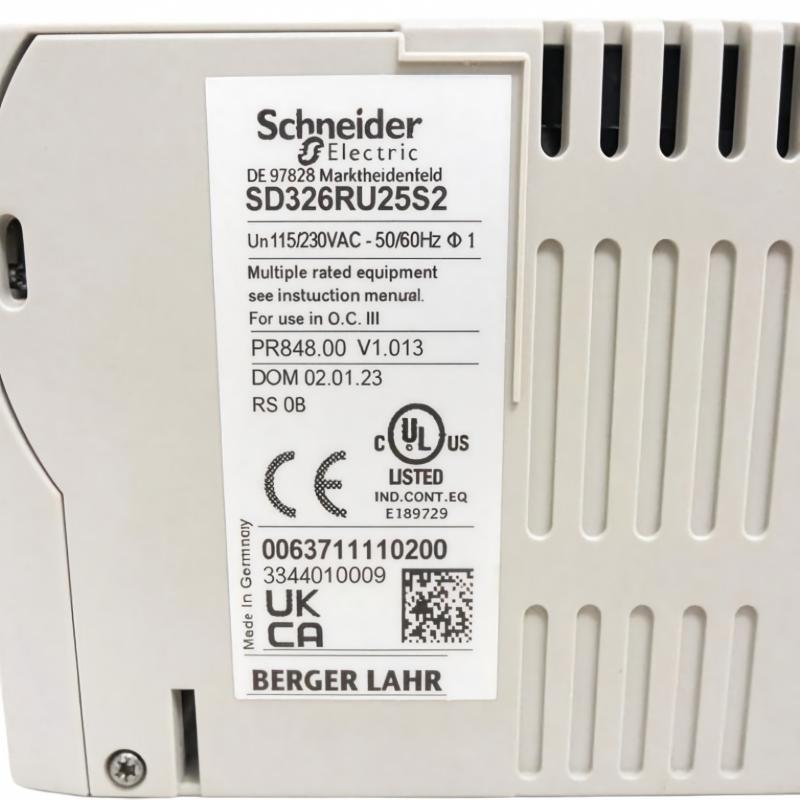
- SD326RU25S2
- Motion Control Stepper Motor Driver
- France
- 145 x 72 x 140 mm
- 1.1 kg
- Xiamen, China
- New & In Stock
- T/T, PayPal, Western Union
- 1 Year
- 1-3 Working Days
- DHL, UPS, TNT, FedEx and EMS.
- 24-Hour Service
- COO
- 8
Our advantage

Global Logistics
We have a 10-year logistics and express cooperation agreement, so our products can be shipped to any place in the world.

Brand new and original
Our products are imported in bulk from the place of origin. Because of the cooperative relationship, our products are all original and 100% new.

24-hour service
We provide 7*24 hours service to our customers. We will be there whenever you need us.

Price advantage
All our products are priced very favorably because we have our own warehouse and supply.
| Company Information | |||
| [email protected] | |||
| Mobile | +8615980777398 | ||
| +8615980777398 | |||
| 15980777398 |
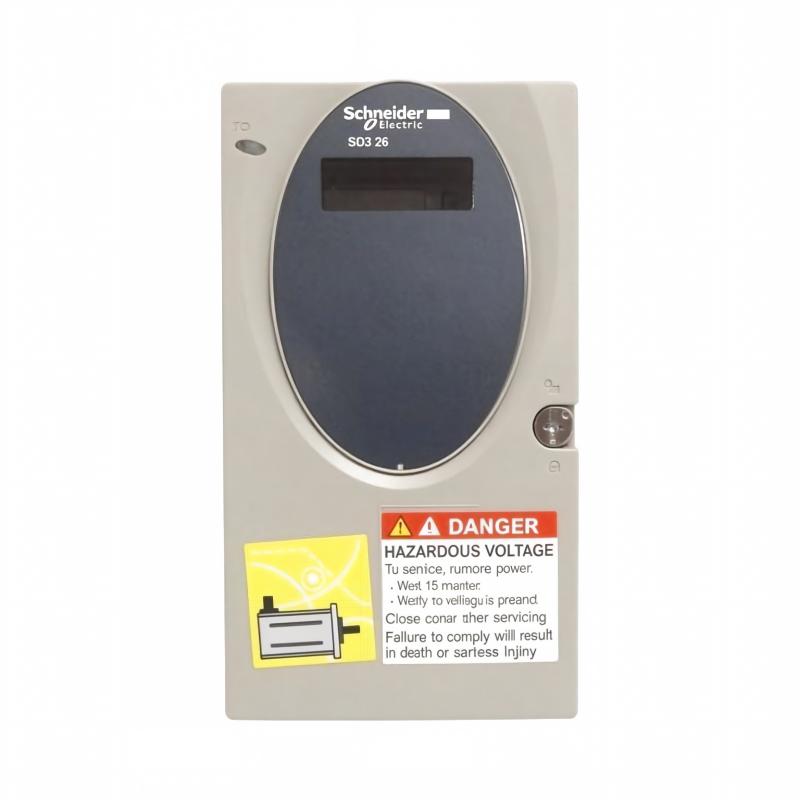
Product Overview
The Schneider Electric SD326RU25S2 is a motion control stepper motor drive from the Lexium SD3 product family. Designed for industrial positioning and motion-control applications, it provides controlled operation of compatible stepper motors through an integrated pulse/direction interface.
Stepper motor drives are widely used in automation systems where repeatable movement, controlled rotation, and accurate positioning are important. They receive command signals from a motion controller, PLC, or other control device and regulate the electrical current supplied to the motor. The drive’s output determines how the motor responds to the requested movement.
The SD326RU25S2 supports single-phase AC power supplies in the 100–120 V and 200–240 V ranges. Its maximum motor phase current is 2.5 A, with nominal power ratings of 180 W at 115 V and 270 W at 230 V. These characteristics make it suitable for compatible stepper motor applications in packaging, labeling, handling, printing, and other automated machinery.
The drive uses an integrated pulse/direction communication interface. This allows a controller to send movement commands through pulse signals and specify the direction of rotation through a separate direction signal. The configuration also supports rotation monitoring and holding-brake monitoring functions.
With a compact block design, natural convection cooling, and industrial mounting provisions, the SD326RU25S2 can be installed in suitable control cabinets and machine-control enclosures. Its electrical ratings and motor compatibility must be checked carefully before commissioning.
The model is part of Schneider Electric’s Lexium SD3 range. Schneider Electric lists the SD326RU25S2 as discontinued from March 17, 2026, so users maintaining existing machinery should verify stock availability and evaluate replacement compatibility before purchasing.
Technical Specifications
| Parameter | Specification |
|---|---|
| Brand | Schneider Electric |
| Product Series | Lexium SD3 |
| Model | SD326RU25S2 |
| Device Short Name | SD326 |
| Product Type | Motion Control Stepper Motor Drive |
| Control Interface | Integrated Pulse/Direction |
| Supply Voltage | 100–120 V AC / 200–240 V AC |
| Supply Phase | Single-phase |
| Supply Frequency | 50–60 Hz |
| Maximum Motor Phase Current | 2.5 A |
| Nominal Power at 115 V | 180 W |
| Nominal Power at 230 V | 270 W |
| Cooling Method | Natural convection |
| Maximum Mechanical Speed | 3000 rpm |
| Rotation Monitoring | Supported |
| Holding Brake Monitoring | Supported |
| Control Voltage | 24 V DC |
| Input Signal Type | 5 V and 24 V optocoupler signals |
| Maximum Pulse Input Frequency | 200 kHz for pulse inputs |
| Feedback Signal Input | ENC_A / ENC_B, up to 400 kHz |
| Protection Rating | IP20; IP40 on upper part under specified conditions |
| Mounting | Panel mounting; DIN-rail mounting with suitable adapter |
| Dimensions | 145 × 72 × 140 mm |
| Weight | 1.1 kg |
| Product Lifecycle | Discontinued |
| Typical Application | Stepper motor positioning and motion control |
Technical specifications should be checked against the drive’s nameplate and the applicable Schneider Electric documentation before installation.
Function and Working Principle
The SD326RU25S2 operates as the power-control interface between a motion controller and a compatible stepper motor. It receives command signals, processes movement instructions, and controls the motor phase current to produce the requested movement.
1. Pulse/Direction Command Processing
The drive uses an integrated pulse/direction interface. In this control method, the pulse signal represents movement increments, while the direction signal determines the direction of rotation.
A motion controller generates the pulse sequence according to the required position or speed. The drive interprets these signals and supplies the corresponding electrical current to the motor.
The relationship between command pulses and mechanical movement depends on the motor’s step angle, configuration, and any additional mechanical transmission.
2. Motor Phase Current Regulation
Stepper motors require controlled current in their windings to generate torque and maintain position. The drive regulates this current according to the motor’s operating requirements.
The SD326RU25S2 supports a maximum motor phase current of 2.5 A. The actual current setting must be matched to the motor’s rated specifications. Incorrect settings can result in overheating, reduced torque, or unreliable operation.
3. Speed and Position Control
The frequency of incoming pulse commands determines the commanded movement rate. By adjusting the pulse frequency, the motion controller can change the motor’s operating speed.
Position is controlled through the number of pulses sent to the drive, subject to the motor’s mechanical characteristics and system configuration.
For applications requiring precise positioning, the controller and drive must be configured together. Mechanical backlash, load inertia, motor selection, and acceleration settings can all influence actual positioning performance.
4. Rotation Monitoring
The SD326RU25S2 includes rotation monitoring functionality. This can help the control system evaluate motor movement and identify certain operating problems.
Monitoring functions should be configured and tested as part of the complete motion-control system. They do not replace application-specific safety devices or independent position-verification requirements where those are necessary.
5. Holding Brake Monitoring
The drive also supports holding-brake monitoring. This is relevant to applications where a motor uses a holding brake to maintain its position when motion is not commanded.
The brake, motor, and control sequence must be compatible. Correct timing and interlocking are important to prevent the motor from being commanded to move while the brake remains engaged.
Role in Industrial Automation Systems
The SD326RU25S2 is generally used as one component in a motion-control architecture. A controller generates movement commands, the drive regulates motor current, and the stepper motor produces mechanical movement.
PLC and Motion Controller Integration
A PLC or motion controller can generate pulse and direction signals according to the machine’s operating sequence. These commands may be based on sensor inputs, product positions, operator settings, or programmed production cycles.
The controller determines the requested movement, while the SD326RU25S2 handles the electrical control of the connected stepper motor.
Before integration, engineers should verify the controller’s signal voltage, pulse frequency, electrical interface, and common-reference requirements.
Sensor Coordination
Sensors can provide information about product presence, machine position, limit conditions, and other process events. The PLC or motion controller uses this information to determine when movement should begin, stop, or change speed.
For example, a photoelectric sensor may detect a product at a packaging station. The controller can then issue a pulse sequence to move a feeder or positioning mechanism to the next required location.
Operator Interface
An HMI can provide operators with access to machine settings, operating status, alarms, and production parameters. It typically communicates with the PLC or motion controller rather than directly controlling motor phase current.
This arrangement separates operator-level commands from the lower-level motor-control functions performed by the drive.
Multi-Axis Machine Design
In machines with several independent motion axes, each axis may use a dedicated drive and motor. The controller coordinates the movement commands to achieve the required sequence.
The SD326RU25S2 can be considered for an individual stepper motor axis when its current, power, interface, and performance characteristics meet the application requirements.
Industrial Applications
The Lexium SD3 family is intended for stepper motor motion-control applications. The SD326RU25S2 can be used in machinery requiring controlled rotation and repeatable movement, provided the motor and load are correctly matched.
1. Packaging Machinery
Packaging machines often use stepper motors for film feeding, product positioning, indexing, and material handling.
The pulse/direction interface allows the controller to command movement according to the packaging sequence. Repeatable motor movement can help coordinate feeding and positioning operations.
2. Labeling Equipment
Labeling systems require controlled movement to position labels and products accurately. A stepper motor drive can regulate the movement of feeding mechanisms and other auxiliary axes.
The controller can adjust pulse frequency and pulse count according to product speed and label placement requirements.
3. Printing Machinery
Printing and marking equipment may use stepper motors for paper feeding, positioning, and auxiliary motion.
The SD326RU25S2 can support compatible motor axes where the required torque, speed, and positioning performance fall within its operating capabilities.
4. Material Handling
Small automated handling systems may use stepper motors to move components, position trays, or operate feeding mechanisms.
A pulse/direction drive allows a motion controller to coordinate movement with sensors and other machine components.
5. Textile Equipment
Textile machinery may require controlled movement for feeding, winding, adjustment, or positioning operations.
Stepper motor control can provide repeatable movement in suitable mechanisms. Motor torque and thermal performance should be evaluated according to the operating cycle.
6. Food and Beverage Machinery
Food and beverage equipment may use stepper motors in dispensing, packaging, indexing, and product-handling mechanisms.
The drive should be installed in a suitable enclosure with protection against moisture, dust, and cleaning-related contaminants. Its IP20 protection rating does not permit direct exposure to liquids.
Installation and System Integration
Correct installation is important for stable motor operation, electrical safety, and long-term reliability.
1. Verify the Power Supply
The SD326RU25S2 supports single-phase supplies in the 100–120 V and 200–240 V ranges.
Before connecting power, confirm the actual supply voltage, frequency, protective-device requirements, and wiring arrangement. Do not assume that a three-phase supply is required simply because the device is used in industrial motion-control equipment.
2. Check Motor Compatibility
Verify the connected stepper motor’s rated phase current, voltage requirements, winding configuration, torque characteristics, and thermal limits.
The drive’s maximum motor phase current is 2.5 A. The configured current must not exceed the permitted rating of the connected motor.
Motor selection should also account for load inertia, required acceleration, maximum speed, and holding torque.
3. Mounting and Cabinet Layout
The supplied dimensions are 145 × 72 × 140 mm, and the net weight is 1.1 kg.
The drive should be mounted securely using the manufacturer’s recommended mounting arrangement. A suitable DIN-rail adapter may be required where DIN-rail installation is planned.
Provide the required clearances around the drive. The manufacturer’s documentation specifies mounting-distance and temperature-related conditions that should be followed during panel design.
4. Cooling and Environmental Conditions
The SD326RU25S2 uses natural convection cooling. Air must be able to circulate around the unit, and nearby heat-generating components should not obstruct ventilation.
The documented operating ambient temperature range is generally 0 to 50 °C, with additional current derating requirements under certain conditions above 40 °C.
The drive has an IP20 protection rating, with IP40 protection on its upper part under specified conditions. It should be installed in a suitable cabinet when additional protection from dust, moisture, or physical contact is required.
5. Pulse and Direction Wiring
Connect the pulse and direction signals according to the controller’s electrical interface and the drive’s terminal documentation.
The SD326 supports 5 V and 24 V optocoupler input signals. Confirm signal polarity, voltage levels, common connections, and pulse frequency before commissioning.
Incorrect signal wiring may prevent the drive from recognizing movement commands or may cause unexpected motor operation.
6. Configure Motor and Motion Parameters
Set the motor current, command input configuration, acceleration and deceleration behavior, and relevant monitoring functions according to the application.
Where encoder signals or holding-brake monitoring are used, verify the corresponding wiring and parameter settings.
7. Commissioning and Functional Testing
Before normal production, test the motor at a controlled speed and confirm its rotation direction. Check pulse response, stopping behavior, acceleration, operating temperature, and fault indications.
Verify that sensors, limit switches, emergency-stop circuits, and controller interlocks function correctly within the machine’s safety design.
Record the final settings so maintenance personnel can reproduce the intended operating configuration.
Compatible System Components
The SD326RU25S2 is intended to work with compatible stepper motors and motion-control equipment.
| Component | Function | Integration Considerations |
|---|---|---|
| Compatible stepper motor | Converts electrical commands into mechanical movement | Verify phase current, voltage, torque, and winding configuration |
| PLC | Coordinates machine sequences | Must provide compatible pulse/direction outputs or use a suitable motion interface |
| Motion controller | Generates positioning and speed commands | Verify pulse frequency, signal levels, and axis configuration |
| 24 V DC control supply | Supplies compatible control circuits | Confirm current capacity and electrical reference |
| Encoder or feedback device | Provides movement-related feedback where supported | Check signal type and the drive’s feedback input requirements |
| Holding brake | Maintains motor position when required | Verify brake voltage, control sequence, and monitoring arrangement |
| Limit switches | Detect travel limits | Integrate with the controller and machine safety design |
| HMI | Provides operator interface | Typically communicates through the PLC or motion controller |
| Control cabinet | Protects and supports installed equipment | Provide suitable mounting, cooling, and environmental protection |
The components listed above are examples of equipment used in a complete motion-control system. They are not necessarily included with the SD326RU25S2.
Alternative Models and Replacement Considerations
The SD326RU25S2 was discontinued on March 17, 2026, and Schneider Electric’s product information does not identify a direct replacement.
When planning a replacement, engineers should compare the complete motion-control requirements rather than selecting another drive solely because it has a similar current rating.
| Related Product or Option | Replacement Considerations |
|---|---|
| Schneider Electric SD326RU68S2 | Related Lexium SD3 drive variant; verify current rating, power, and exact electrical configuration |
| Schneider Electric SD326DU25S2 | Related SD326 variant with a different catalog configuration; verify supply and hardware details |
| Schneider Electric SD328 series | A related Lexium SD3 stepper-drive family with different communication options depending on the model |
| Current-generation stepper motor drive | May be suitable for an upgrade, subject to motor, controller, and electrical compatibility |
| Integrated motion-control solution | May be considered when redesigning an axis or replacing a discontinued control architecture |
Before approving a replacement, compare:
- Supply voltage and phase requirements.
- Maximum motor phase current.
- Nominal output power.
- Motor winding and connection requirements.
- Pulse/direction signal voltage and frequency.
- Encoder or feedback requirements.
- Holding-brake control and monitoring.
- Mounting dimensions and cooling conditions.
- Controller hardware and software compatibility.
- Required machine safety and commissioning procedures.
A replacement with a similar current rating may still require changes to wiring, controller configuration, mounting, or motion parameters.
Key Advantages
Integrated Pulse/Direction Interface
The built-in pulse/direction interface allows the drive to receive movement commands from a compatible controller without requiring a separate communication interface for basic pulse-based control.
2.5 A Maximum Motor Phase Current
The drive supports motor phase current up to 2.5 A, making it suitable for compatible stepper motor applications within its electrical and thermal limits.
Flexible Supply Voltage
The supported 100–120 V and 200–240 V single-phase supply ranges provide flexibility for different electrical installations.
Rotation Monitoring
Rotation monitoring functionality can help the automation system evaluate motor operation and identify certain movement-related problems.
Holding-Brake Monitoring
Support for holding-brake monitoring is useful in applications where a motor brake is part of the positioning and holding arrangement.
Compact Industrial Design
The block-style construction and 1.1 kg net weight support installation in suitable industrial control cabinets.
Natural Convection Cooling
Natural convection cooling avoids the need for a dedicated internal cooling fan. Adequate cabinet ventilation and installation clearance are still necessary.
Technical FAQs
1. What is the Schneider Electric SD326RU25S2?
It is a Lexium SD3 motion control stepper motor drive designed to operate compatible stepper motors through an integrated pulse/direction interface.
2. What is the maximum motor phase current?
The maximum motor phase current is 2.5 A. The actual current setting must be selected according to the connected motor’s specifications.
3. What input voltage does the SD326RU25S2 support?
It supports single-phase AC supplies in the 100–120 V and 200–240 V ranges. Confirm the actual supply configuration before installation.
4. What is its nominal power rating?
The nominal power is 180 W at 115 V and 270 W at 230 V.
5. Does the drive support pulse/direction control?
Yes. It has an integrated pulse/direction interface for receiving movement commands from a compatible motion controller or PLC.
6. Can it work with a PLC?
Yes, provided the PLC or motion controller can generate compatible pulse and direction signals. Signal voltage, frequency, wiring, and common-reference requirements must be verified.
7. What cooling method does this drive use?
It uses natural convection cooling. Sufficient airflow and mounting clearance must be maintained inside the control cabinet.
8. Does it support encoder feedback?
The product documentation identifies ENC_A and ENC_B signal inputs. The exact feedback arrangement and electrical interface should be checked against the drive’s connection documentation.
9. Is the SD326RU25S2 still available from Schneider Electric?
Schneider Electric lists the model as discontinued from March 17, 2026. Availability through distributors or industrial spare-parts suppliers may vary.
10. What are the dimensions and weight?
The dimensions are 145 × 72 × 140 mm, and the net weight is 1.1 kg.
Procurement and Maintenance Recommendations
When purchasing the Schneider Electric SD326RU25S2, confirm the complete model number and compare it with the nameplate of the installed drive. Pay particular attention to the supply voltage, motor phase current, pulse/direction interface, and any feedback or holding-brake requirements.
Since the model is discontinued, buyers should verify stock status and equipment condition before placing an order. For used or surplus units, request clear photographs of the nameplate, terminals, and enclosure. Where possible, obtain functional test information and confirm the supplier’s warranty and return conditions.
During maintenance, inspect electrical connections, signal wiring, mounting hardware, and cabinet ventilation. Check that the drive remains within its specified operating temperature range and that natural convection is not obstructed.
Keep a record of motor parameters, controller pulse settings, wiring assignments, and commissioning results. This information can reduce troubleshooting time and support a more controlled replacement process.
If an alternative drive is required, review the motor and controller as a complete system. A newer drive may have different signal interfaces, parameter structures, or mounting requirements, so replacement should include appropriate engineering review and functional testing.
Conclusion
The Schneider Electric SD326RU25S2 Lexium SD3 Motion Control Stepper Motor Drive is designed for pulse/direction-based stepper motor control in industrial automation equipment. It supports single-phase 100–120 V and 200–240 V supplies, a maximum motor phase current of 2.5 A, and nominal power ratings of 180 W at 115 V and 270 W at 230 V.
Its integrated pulse/direction interface, rotation monitoring, holding-brake monitoring, and natural convection cooling make it suitable for compatible positioning and motion-control applications. With dimensions of 145 × 72 × 140 mm and a net weight of 1.1 kg, it can be installed in appropriately designed industrial control cabinets.
As the model is discontinued, accurate identification and careful compatibility checks are important when sourcing spare units or selecting a replacement for an existing machine.