

ProductPRODUCT
Featured products
Contact Us
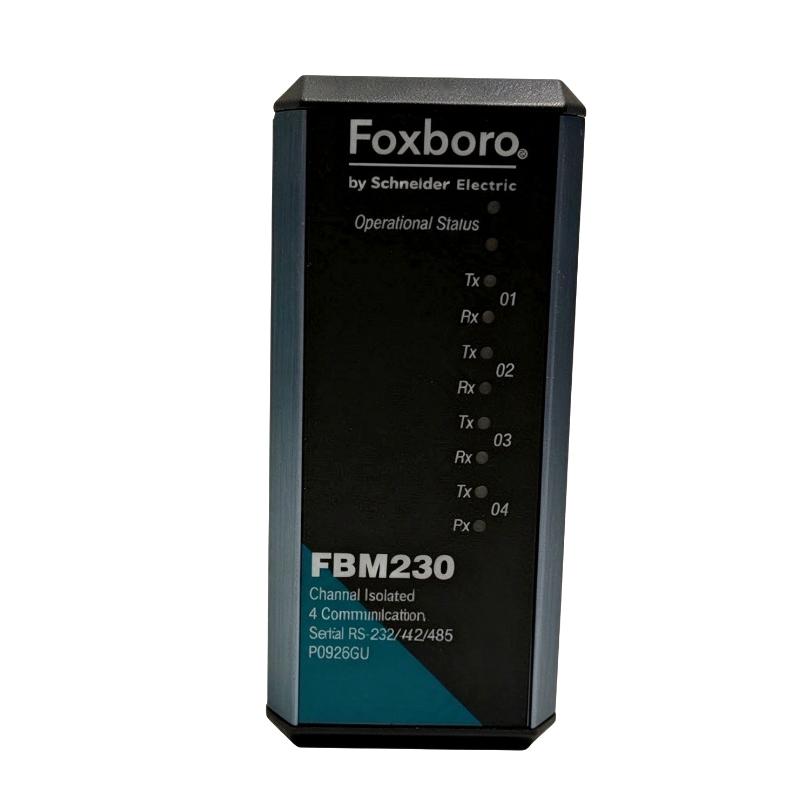
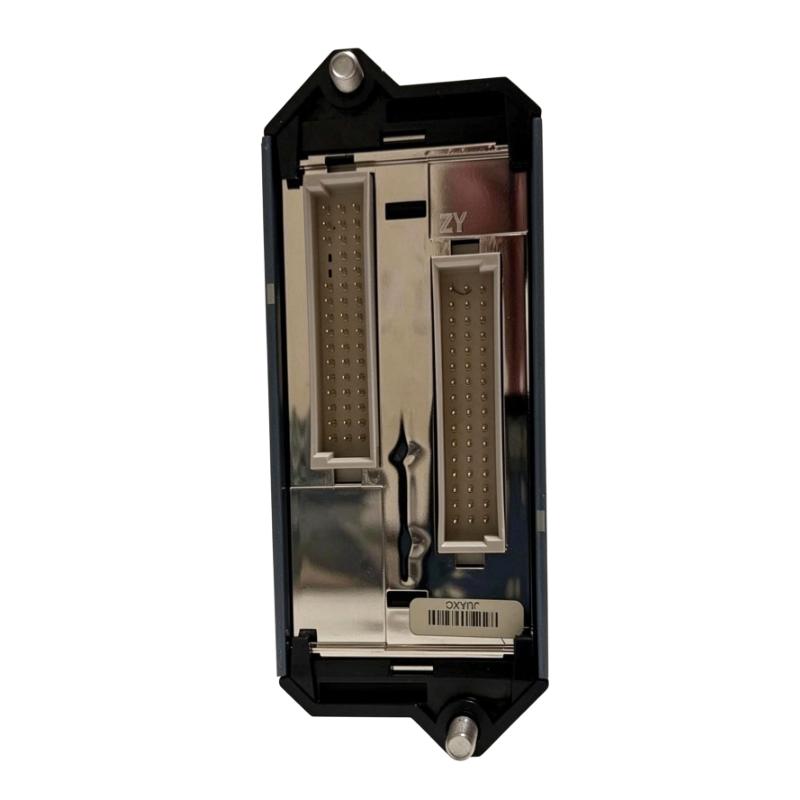
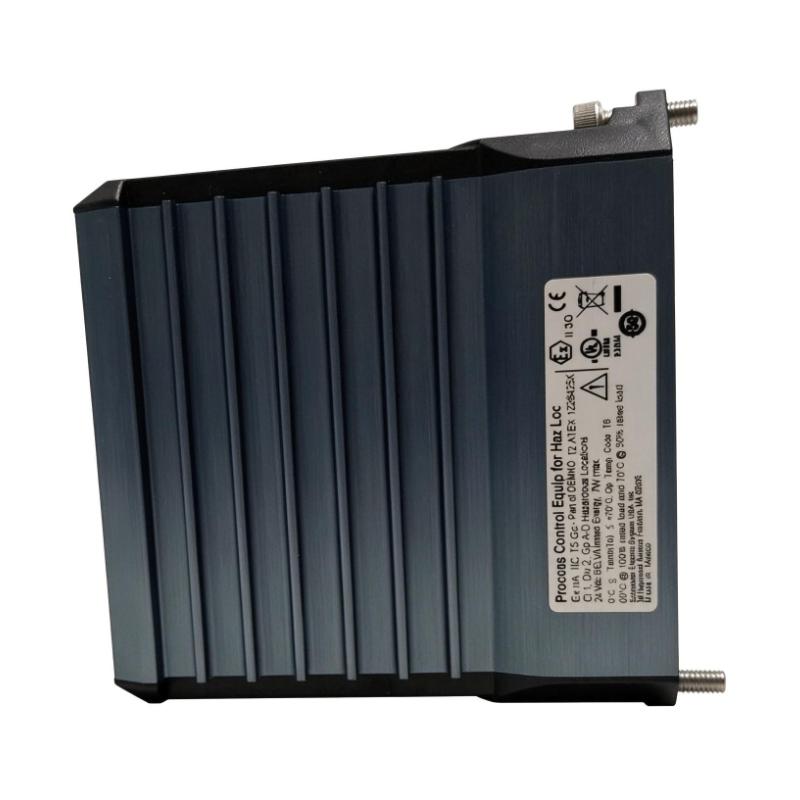
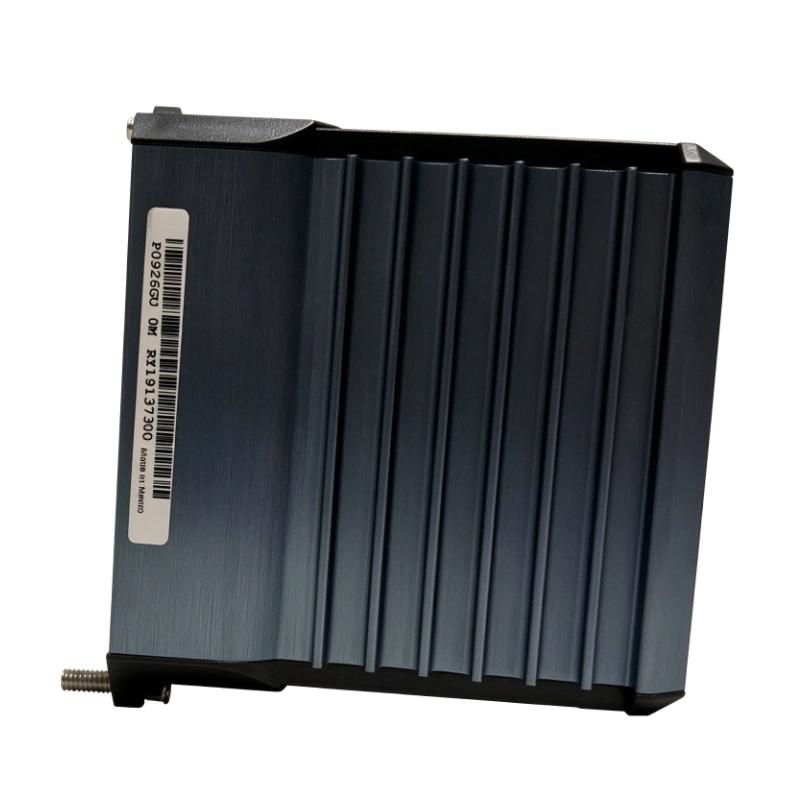
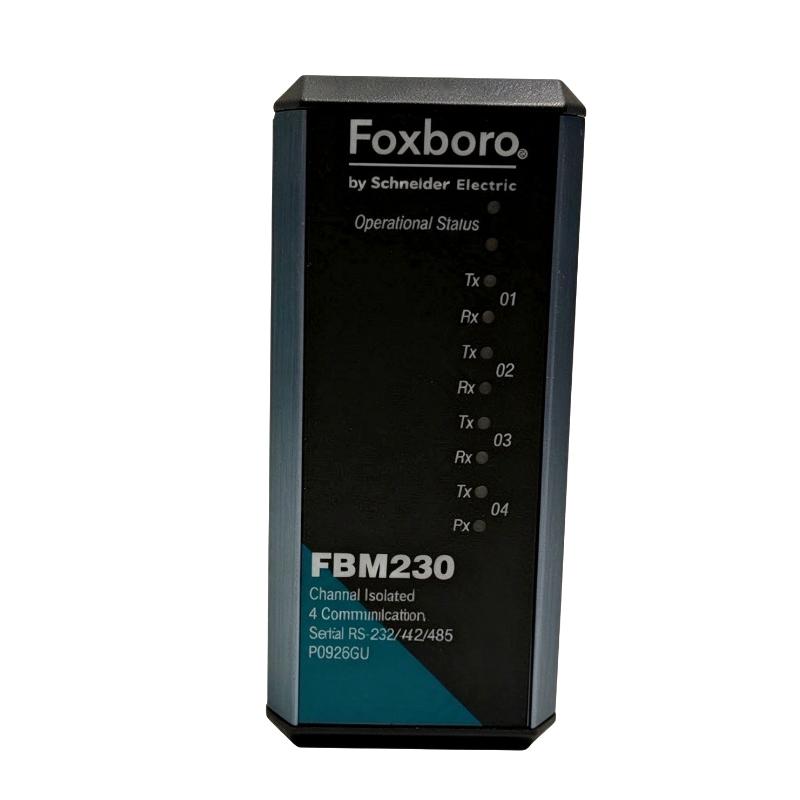
- Foxboro
- FBM230 P0926GU
- Field Device System Integration Module
- USA
- 114 x 45 x 104 mm
- 0.284 kg
- Xiamen, China
- New & In Stock
- T/T, PayPal, Western Union
- 1 Year
- 1-3 Working Days
- DHL, UPS, TNT, FedEx and EMS.
- 24-Hour Service
- COO
- 7
Our advantage

Global Logistics
We have a 10-year logistics and express cooperation agreement, so our products can be shipped to any place in the world.

Brand new and original
Our products are imported in bulk from the place of origin. Because of the cooperative relationship, our products are all original and 100% new.

24-hour service
We provide 7*24 hours service to our customers. We will be there whenever you need us.

Price advantage
All our products are priced very favorably because we have our own warehouse and supply.
| Company Information | |||
| [email protected] | |||
| Mobile | +8615980777398 | ||
| +8615980777398 | |||
| 15980777398 |
Product Overview
The Foxboro FBM230 P0926GU Field Device System Integrator Module is a serial communication interface designed for industrial distributed control systems. It belongs to the Foxboro I/A Series and provides a connection between serial field devices and the DCS communication architecture.
In industrial facilities, field instruments and intelligent devices may use different serial communication interfaces. These devices often need to exchange measurement values, operating status, alarms, and diagnostic information with a central control system. The FBM230 provides four configurable serial ports to support this type of integration.
Each serial port can be configured for RS-232, RS-422, or RS-485 communication through the appropriate software configuration. This flexibility allows the module to connect different types of serial equipment within one control-system installation. Depending on the communication interface and network arrangement, the module can support up to 64 RS-485 devices or up to four directly connected RS-232/RS-422 devices.
The FBM230 communicates with associated Foxboro control-system components through a 2 Mbps module Fieldbus. Its design supports integration with compatible communication and controller modules, including FCM100E, FCM100ET, FCP270, and FCP280 configurations.
The P0926GU is the module’s part number. It is designed for installation on a compatible modular baseplate and uses a separate termination assembly and cable arrangement for field connections. Correct selection of the termination assembly and cable is important when planning a new installation or replacing an existing module.
Unlike conventional analog or digital I/O modules, the FBM230 is primarily a serial device integration module. Its main purpose is to provide communication between supported field devices and the Foxboro DCS rather than directly measuring standard analog signals or switching field loads.
Technical Specifications
| Parameter | Specification |
|---|---|
| Brand | Foxboro |
| Manufacturer | Schneider Electric |
| Model | FBM230 |
| Part Number | P0926GU |
| Product Type | Field Device System Integrator Module |
| System Platform | Foxboro I/A Series DCS |
| Serial Ports | 4 |
| Serial Interfaces | RS-232, RS-422, RS-485 |
| Port Configuration | Individually software-configurable |
| Maximum RS-485 Device Capacity | Up to 64 devices |
| Direct RS-232/RS-422 Device Capacity | Up to 4 devices |
| DCI Block Connections | Up to 200 |
| Module Fieldbus | 2 Mbps |
| Fieldbus Architecture | Redundant module Fieldbus |
| Associated Components | FCM100E, FCM100ET, FCP270, FCP280 |
| Input Voltage Range | 24 V DC, +5% / -10%, redundant |
| Maximum Power Consumption | 7 W |
| Maximum Heat Dissipation | 7 W |
| Operating Temperature | -20°C to +70°C |
| Storage Temperature | -40°C to +70°C |
| Relative Humidity | 5% to 95%, non-condensing |
| Environmental Classification | ISA S71.04 Class G3 |
| Mounting | Compatible Foxboro modular baseplate |
| Dimensions | 114 × 45 × 104 mm, including mounting lugs |
| Weight | 0.284 kg |
| Termination Cable | Type 5 |
| Module-to-TA Cable Length | 1 m to 5 m |
The supplied dimensions of 114 × 45 × 104 mm include the mounting lugs. The module body itself is approximately 102 mm high. The listed weight refers to the module only and excludes the termination assembly and connecting cables.
Function and Working Principle
The FBM230 acts as an interface between serial field devices and the Foxboro distributed control system. It receives information from connected devices through its serial ports and makes supported data available to the DCS through the module Fieldbus.
Its communication functions can be understood through several operating stages.
1. Serial Device Connection
The module provides four serial communication ports. Each port can be configured independently for RS-232, RS-422, or RS-485 operation.
This arrangement allows engineers to connect different types of serial equipment without requiring a separate communication module for every interface type.
For example, an industrial installation may contain a controller using RS-232, an instrument network using RS-485, and another device using RS-422. The FBM230 can support these different physical interfaces through its configurable ports, provided the required software drivers and communication settings are available.
2. Serial Communication Processing
The module exchanges information with connected devices using the selected serial communication interface and the appropriate device communication configuration.
The communication process depends on the connected equipment, supported protocol, baud rate, addressing arrangement, and other serial parameters.
For reliable operation, both the FBM230 configuration and the field-device settings must match. Incorrect communication parameters can cause intermittent communication, missing data, or device timeouts.
3. RS-232, RS-422, and RS-485 Flexibility
The three supported serial interfaces serve different connection requirements.
- RS-232: Commonly used for direct communication between a control module and an individual device over relatively short cable distances.
- RS-422: Supports differential signaling and can be suitable for longer-distance point-to-point communication.
- RS-485: Supports differential communication and multidrop network arrangements, allowing multiple devices to share a communication bus.
The appropriate interface should be selected according to the field device, cable arrangement, electrical environment, and network topology.
4. DCS Fieldbus Communication
After communicating with the connected field devices, the FBM230 exchanges supported data with its associated Foxboro system components through the 2 Mbps module Fieldbus.
This connection allows field-device information to become available to the wider control system. Controllers and operator stations can then use the configured data for monitoring, alarms, control logic, and process supervision.
5. Device Data Integration
The FBM230 supports DCI block connections for integrating serial device information into the Foxboro control environment.
The configured data can include operating values, device status, and other supported information. The actual data structure depends on the selected device driver and the field device’s communication capabilities.
The module’s role is to provide a communication path and data integration capability. It does not automatically make every serial device compatible with the DCS; the required driver and configuration must be available.
Role in Industrial Control Systems
The FBM230 is useful in industrial control architectures where field devices use serial communication instead of directly connecting through conventional analog or digital I/O.
Integration with Foxboro DCS Controllers
The module communicates through the Foxboro module Fieldbus and can work with compatible system components such as FCP270 and FCP280 controllers.
This arrangement allows serial field-device data to be incorporated into the DCS environment. Control engineers can configure the relevant data points and use them within the broader process-control strategy.
Connection to Serial Field Instruments
Industrial plants frequently use instruments and equipment with serial communication interfaces. The FBM230 provides a structured way to connect supported devices to the control system.
Examples may include intelligent instruments, analyzers, packaged equipment controllers, and other serial communication devices.
The actual connection depends on the supported protocol, driver availability, electrical interface, and device configuration.
Centralized Monitoring
Once device data is integrated into the DCS, operators can monitor relevant information through the control-system interface.
This can reduce the need to access every field device individually for routine operational checks. It also helps maintenance personnel identify communication problems and investigate abnormal device conditions.
Supporting Legacy Equipment Integration
Many industrial facilities operate equipment installed over several generations of automation upgrades. Some of these devices use serial communication interfaces that remain operational even when the wider control system is modernized.
The FBM230 can provide a communication interface for compatible legacy devices, helping engineering teams integrate existing equipment into a Foxboro I/A Series environment.
Industrial Applications
The FBM230 can be used in process-control environments where serial field-device information must be integrated into a distributed control system.
1. Oil and Gas Processing
Oil and gas facilities contain instruments, analyzers, packaged systems, and auxiliary controllers that may communicate through serial interfaces.
The FBM230 can provide a communication path for compatible devices, allowing relevant operating information to be incorporated into the DCS.
Typical integration requirements include equipment status monitoring, process measurement communication, and device diagnostics.
2. Chemical and Petrochemical Plants
Chemical production facilities often contain equipment from different manufacturers. Serial communication is commonly used by packaged equipment and intelligent field devices.
The FBM230 can help connect supported devices to the Foxboro control environment, improving access to operating information and reducing the need for isolated monitoring arrangements.
3. Power Generation
Power plants use distributed monitoring and control equipment throughout boilers, auxiliary systems, water-treatment facilities, and other plant areas.
Where compatible serial devices are installed, the FBM230 can help transfer their information into the DCS for monitoring and operational coordination.
4. Water and Wastewater Treatment
Water-treatment facilities may use intelligent analyzers, equipment controllers, and communication-enabled instruments.
The module can integrate supported serial devices into the DCS, allowing operators to monitor available device information from a centralized control environment.
5. Manufacturing and Process Automation
Manufacturing facilities often combine process instruments with packaged machines and auxiliary controllers.
The FBM230 can support communication with compatible serial equipment, helping integrate information from different equipment sections into the plant control architecture.
Installation and System Integration
Correct installation is essential for reliable communication between the FBM230 and connected field devices.
1. Verify the Module Part Number
Before installation, confirm that the module is identified as FBM230 with part number P0926GU.
Do not confuse it with related Foxboro modules such as FBM231. Although these products share similar physical dimensions and communication functions, their hardware configurations and part numbers are different.
2. Install on a Compatible Modular Baseplate
The FBM230 mounts on a compatible Foxboro modular baseplate.
The baseplate can be installed horizontally or vertically on a DIN rail. It can also be mounted horizontally in a 19-inch rack when the appropriate mounting kit is used.
Before installation, verify that the baseplate, mounting arrangement, and system hardware are compatible with the existing I/A Series configuration.
3. Select the Correct Termination Assembly
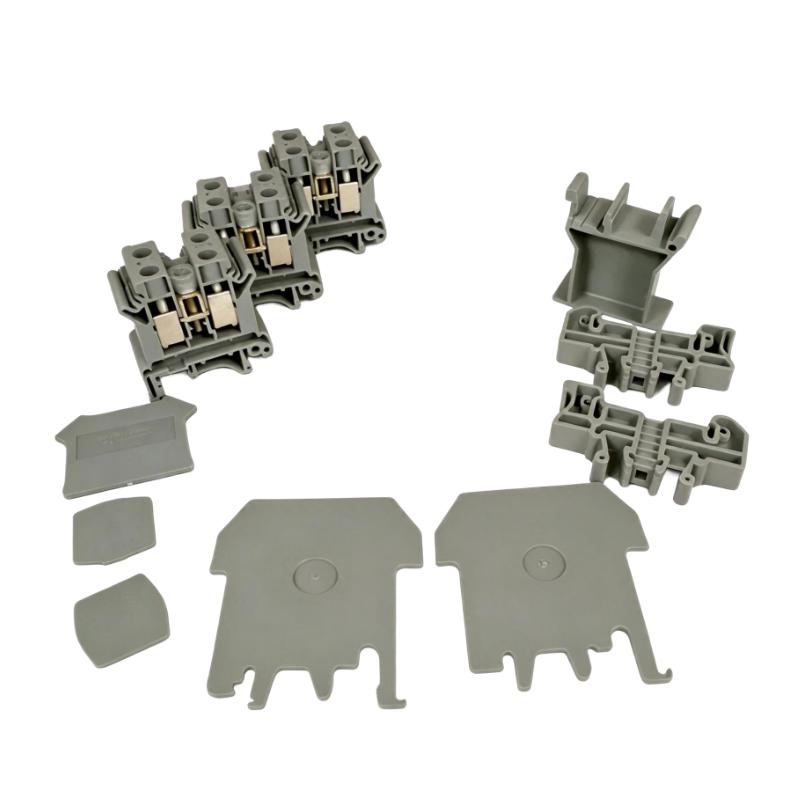
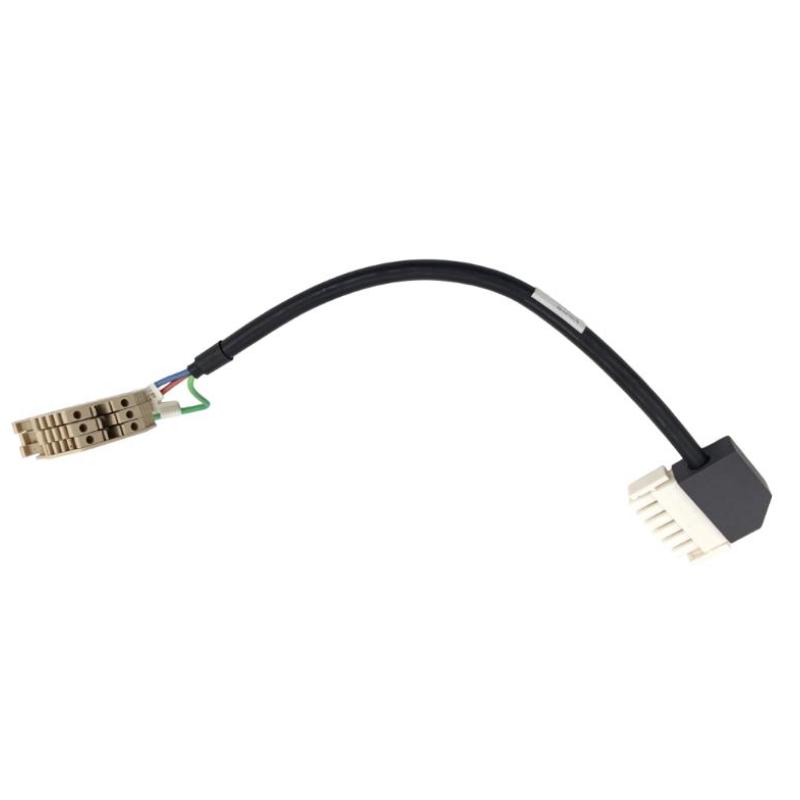
The FBM230 uses a separate termination assembly for field wiring.
Associated termination assembly options include:
- P0926PA ring-lug termination assembly.
- RH926GH compression-screw termination assembly.
The termination assembly should be selected according to the required field wiring method and the installation design.
4. Connect the Module-to-Termination Cable
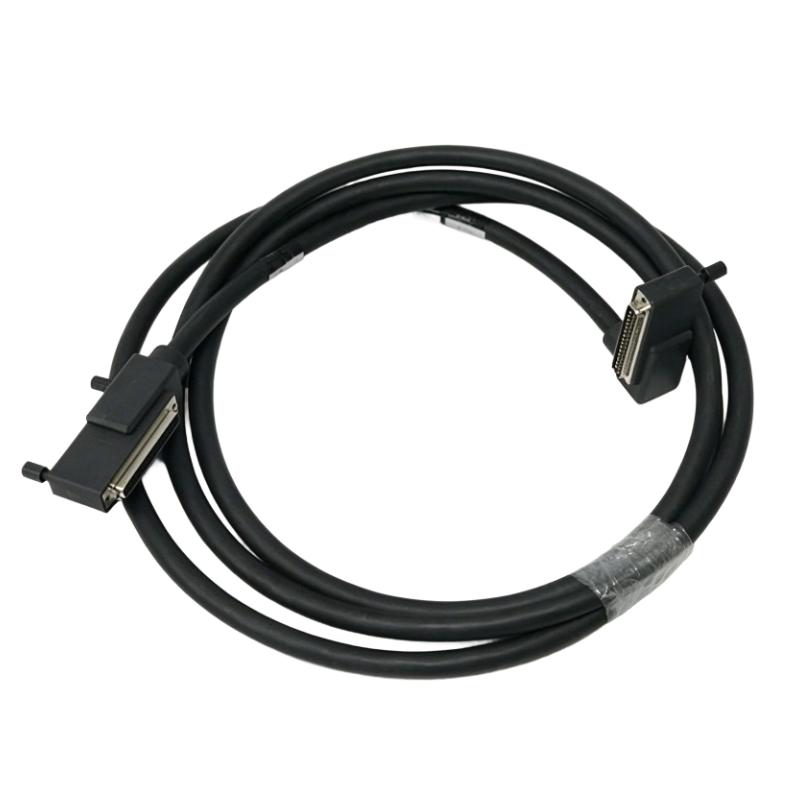
The connection between the FBM230 and its termination assembly uses a Type 5 termination cable.
Documented cable lengths range from 1 m to 5 m. Select a cable length suitable for the physical arrangement of the control cabinet and termination equipment.
Avoid unnecessary cable routing near high-power conductors or sources of electrical interference.
5. Configure the Serial Ports
Each serial port should be configured according to the connected field device.
Important parameters may include:
- Communication interface: RS-232, RS-422, or RS-485.
- Baud rate.
- Data bits.
- Stop bits.
- Parity.
- Device address.
- Communication timeout.
- Device-specific software driver.
The configuration must match the field device’s communication requirements. Incorrect settings can prevent successful communication even when the physical wiring is correct.
6. Check Cable Distance and Network Topology
Cable distance depends on the selected serial interface and installation conditions.
For the documented FBM230 connection arrangements, custom RS-232 DB-25 connections to external equipment may extend up to 15 m, while RS-422 and RS-485 connections may extend up to 1200 m.
Actual allowable distances depend on cable characteristics, data rate, termination, grounding, and electrical noise. Follow the relevant interface standards and equipment documentation.
7. Test Communication and DCS Data
After wiring and configuration, verify that each connected device communicates correctly.
Check port status, communication errors, device addressing, and the availability of expected data points within the DCS. Confirm that configured values and status information are updated as expected.
Record the final port configuration and device settings for future maintenance.
Compatible System Components
The FBM230 operates as part of a Foxboro control-system installation. Its associated components must be selected according to the system architecture and hardware revision.
| Component | Function | Integration Considerations |
|---|---|---|
| Foxboro FCM100E | Communication component for the module Fieldbus | Verify system configuration and hardware compatibility |
| Foxboro FCM100ET | Associated communication component | Confirm the required fieldbus arrangement |
| Foxboro FCP270 | Foxboro control processor | Verify supported system revision and configuration |
| Foxboro FCP280 | Foxboro control processor | Confirm compatibility with the installed DCS architecture |
| Foxboro Modular Baseplate | Provides module mounting and system connections | Must be suitable for the FBM230 |
| P0926PA | Ring-lug termination assembly | Used where the applicable field wiring arrangement requires ring-lug connections |
| RH926GH | Compression-screw termination assembly | Used for the corresponding compression-screw wiring arrangement |
| Type 5 Termination Cable | Connects the FBM230 to its termination assembly | Select an approved cable length between 1 m and 5 m |
| RS-232 Device | Provides serial communication with an individual device | Confirm electrical interface and communication settings |
| RS-422 Device | Supports differential serial communication | Verify wiring and point-to-point requirements |
| RS-485 Device Network | Supports multidrop serial communication | Confirm addressing, termination, and network topology |
The listed components are associated system equipment or examples of compatible connection arrangements. They are not necessarily included with the FBM230 module.
Alternative Models and Replacement Considerations
When replacing an FBM230, the most important consideration is the exact communication function required by the existing system.
| Alternative or Related Model | Description | Replacement Considerations |
|---|---|---|
| Foxboro FBM231 P0926GV | Four-port redundant Field Device System Integrator Module | Different hardware architecture; not an automatic substitute |
| Foxboro FBM232 P0926GW | Ethernet field-device communication module | Uses a different communication interface and requires architecture review |
| Foxboro FBM233 P0926GX | Ethernet Field Device System Integrator Module | Intended for Ethernet-based device integration rather than the FBM230 serial arrangement |
| Foxboro FCM100E | Associated communication component | Not a direct replacement for the FBM230 |
| Foxboro FCM100ET | Associated communication component | Performs a different role within the system architecture |
Before selecting a replacement, compare:
- Complete module part number.
- Number of communication ports.
- RS-232, RS-422, and RS-485 requirements.
- Serial device driver availability.
- Device address and communication settings.
- Module Fieldbus compatibility.
- Baseplate and termination assembly requirements.
- Controller and system software compatibility.
- Redundancy requirements.
- Physical dimensions and mounting arrangement.
A module with a similar appearance may not support the same communication functions. Replacing the FBM230 with an Ethernet-based module, for example, may require changes to the field-device interface and control-system configuration.
Key Advantages
Four Independent Serial Ports
The FBM230 provides four configurable serial ports, allowing multiple supported field devices to connect through one module.
Flexible Serial Interfaces
Support for RS-232, RS-422, and RS-485 provides flexibility when integrating equipment with different communication interfaces.
Multi-Device Integration
The module can support up to 64 RS-485 devices or up to four direct-connect RS-232/RS-422 devices, subject to the applicable communication configuration.
Foxboro DCS Integration
Its module Fieldbus connection allows supported serial device data to be integrated into the Foxboro I/A Series control environment.
Reduced Interface Complexity
Using one four-port module can simplify the hardware arrangement for applications that require multiple serial device connections.
Industrial Environmental Capability
The module is specified for operation in industrial environments, with an operating temperature range of -20°C to +70°C and a Class G3 contamination classification.
Flexible Mounting Options
The modular baseplate arrangement supports DIN-rail or suitable 19-inch rack installation, depending on the mounting hardware used.
Technical FAQs
1. What is the Foxboro FBM230 P0926GU?
The FBM230 P0926GU is a four-port Field Device System Integrator Module for the Foxboro I/A Series DCS. It connects supported serial field devices to the control system.
2. How many serial ports does the FBM230 have?
It has four serial communication ports. Each port can be configured for RS-232, RS-422, or RS-485 operation.
3. Can the FBM230 communicate with RS-485 devices?
Yes. It supports RS-485 communication and can connect up to 64 RS-485 devices, subject to the supported device configuration and network arrangement.
4. Can it connect directly to RS-232 devices?
Yes. The module supports up to four directly connected RS-232 or RS-422 devices, with one direct connection per port.
5. Which Foxboro systems are associated with the FBM230?
The FBM230 is designed for the Foxboro I/A Series DCS architecture. Its associated system components include FCM100E, FCM100ET, FCP270, and FCP280 configurations.
6. What power supply does the FBM230 require?
The documented redundant input voltage range is 24 V DC, with a tolerance of +5% and -10%. Maximum power consumption is 7 W.
7. What is the operating temperature range?
The specified operating temperature range is -20°C to +70°C. The documented storage temperature range is -40°C to +70°C.
8. Does the FBM230 include a termination assembly?
The FBM230 module and its termination assembly are separate components. Compatible termination assembly options include P0926PA and RH926GH. Confirm the supplied accessories when purchasing.
9. What is the weight of the FBM230 P0926GU?
The approximate weight of the module itself is 0.284 kg. This does not include the termination assembly or connecting cable.
10. Is the FBM230 an analog input or output module?
No. The FBM230 is a serial field-device integration module. Its main function is to communicate with supported serial devices and integrate their data into the Foxboro DCS, rather than directly handling conventional analog or digital I/O signals.
Procurement and Maintenance Recommendations
When purchasing the Foxboro FBM230 P0926GU, verify the complete model and part number against the existing equipment documentation. The FBM230 and FBM231 are related products, but their hardware configurations are different and should not be treated as interchangeable without engineering verification.
For replacement projects, check the module’s physical condition, connector condition, identification label, and compatibility with the installed modular baseplate. Confirm whether the termination assembly and Type 5 cable are included or need to be ordered separately.
For used or surplus modules, request clear photographs of the front panel, connectors, and product label. Where possible, obtain functional test information and confirm the supplier’s warranty and return conditions.
During maintenance, inspect the module mounting, termination connections, serial cabling, and grounding arrangement. Communication problems should be investigated by checking the serial interface selection, device address, baud rate, parity, and other communication parameters.
Keep an updated record of the field-device configuration and associated DCS data points. This information can significantly reduce troubleshooting time when a communication module or connected field device needs to be replaced.
Conclusion
The Foxboro FBM230 P0926GU Field Device System Integrator Module provides four configurable serial communication ports for integrating compatible field devices into a Foxboro I/A Series distributed control system. Supporting RS-232, RS-422, and RS-485 interfaces, it provides a flexible communication solution for industrial installations containing multiple types of serial equipment.
With support for up to 64 RS-485 devices, a 2 Mbps module Fieldbus connection, and compatibility with associated Foxboro communication and controller components, the FBM230 can serve an important role in industrial device integration.
For maintenance and replacement applications, verify the exact P0926GU part number, termination assembly, cable type, serial configuration, and DCS compatibility before installation. Correct hardware identification and communication configuration are essential for reliable operation.