

ProductPRODUCT
Featured products
Contact Us
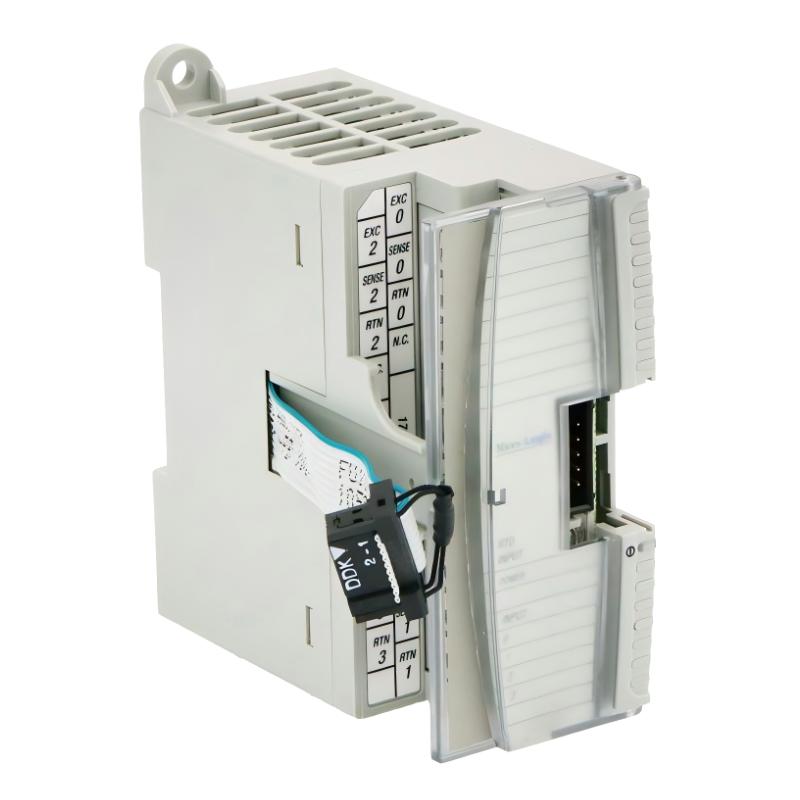
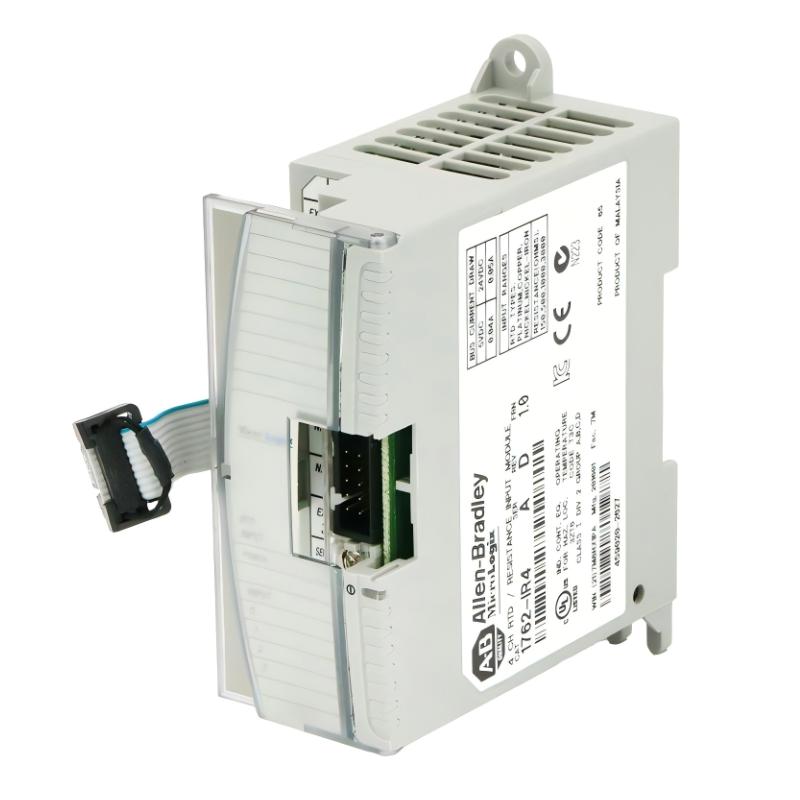
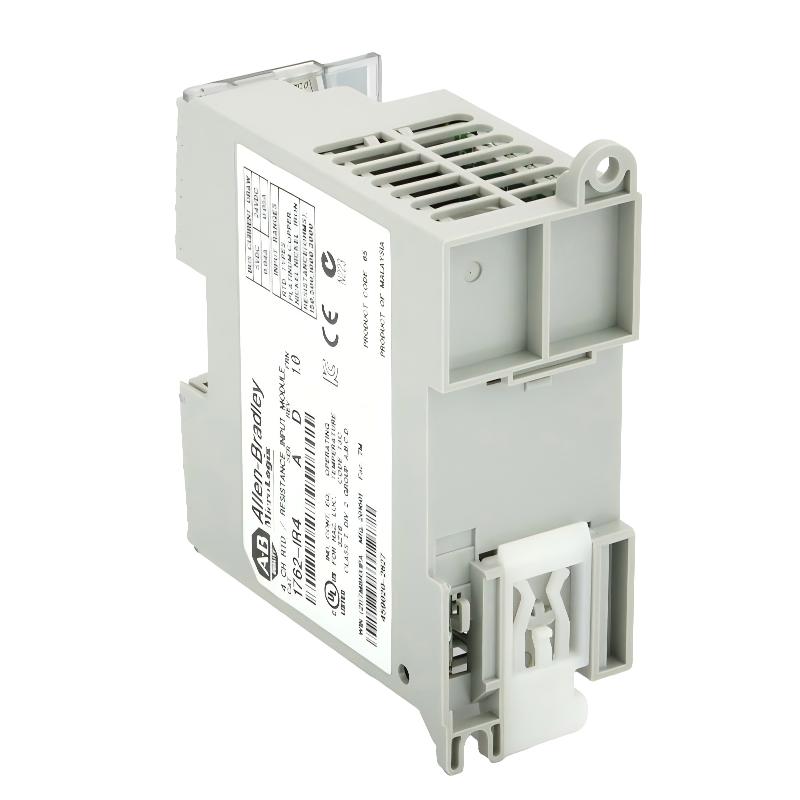
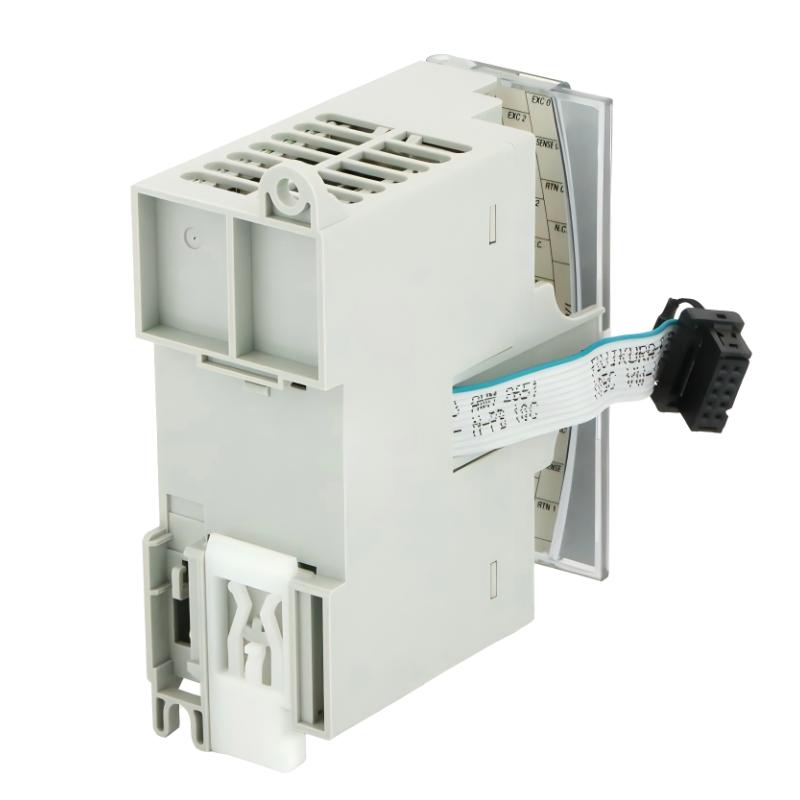
- Allen Bradley
- 1762-IR4
- MicroLogix 1200 RTD/Resistor Input Module
- USA
- 90 x 40 x 87 mm
- 0.26 kg
- Xiamen, China
- New & In Stock
- T/T, PayPal, Western Union
- 1 Year
- 1-3 Working Days
- DHL, UPS, TNT, FedEx and EMS.
- 24-Hour Service
- COO
- 4
Our advantage

Global Logistics
We have a 10-year logistics and express cooperation agreement, so our products can be shipped to any place in the world.

Brand new and original
Our products are imported in bulk from the place of origin. Because of the cooperative relationship, our products are all original and 100% new.

24-hour service
We provide 7*24 hours service to our customers. We will be there whenever you need us.

Price advantage
All our products are priced very favorably because we have our own warehouse and supply.
| Company Information | |||
| [email protected] | |||
| Mobile | +8615980777398 | ||
| +8615980777398 | |||
| 15980777398 |
Product Overview
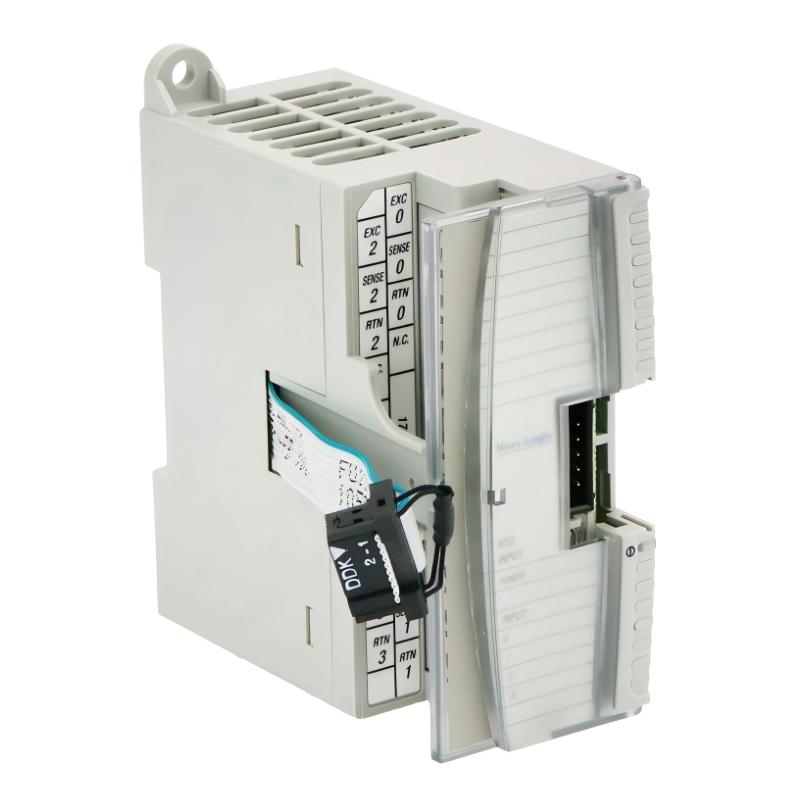
The Allen-Bradley 1762-IR4 MicroLogix 1200 RTD/Resistance Input Module is a four-channel analog input expansion module designed for temperature measurement and resistance monitoring in industrial automation systems. Manufactured by Rockwell Automation, it belongs to the MicroLogix 1200 expansion I/O family and enables a compatible controller to collect signals from resistance temperature detectors (RTDs) and other resistance-based devices.
Temperature measurement is an important part of industrial process control. Equipment such as heaters, ovens, pumps, compressors, production lines, and thermal processing systems often require continuous monitoring to maintain stable operating conditions. The 1762-IR4 provides a direct interface between supported RTD or resistance sensors and a MicroLogix control system.
The module accepts up to four input channels, with each channel configurable for an individual sensor or resistance input. It converts incoming analog measurements into digital data that can be processed by the controller program. This allows PLC logic to monitor temperature values, compare measurements with configured limits, generate alarms, and coordinate control actions.
The 1762-IR4 supports multiple RTD types, including platinum, nickel, nickel-iron, and copper sensors, as well as direct resistance measurements. Its selectable excitation current helps limit sensor self-heating, while channel diagnostics provide information about open-circuit, short-circuit, and out-of-range conditions.
Designed for integration with the MicroLogix 1200 expansion system, the module is suitable for industrial applications that require several temperature or resistance measurement points without installing a separate temperature controller for every sensor.
Technical Specifications
| Parameter | Specification |
|---|---|
| Brand | Allen-Bradley |
| Manufacturer | Rockwell Automation |
| Model | 1762-IR4 |
| Product Series | MicroLogix 1200 |
| Product Type | RTD/Resistance Input Module |
| Number of Channels | 4 |
| Input Type | RTD and resistance |
| Sensor Compatibility | Platinum, nickel, nickel-iron, copper RTDs and supported resistance devices |
| RTD Wiring | 2-wire and 3-wire; compatible with 4-wire sensors with one sense wire unused |
| Excitation Current | Selectable 0.5 mA or 1.0 mA per channel |
| Resistance Ranges | 150 Ω, 500 Ω, 1,000 Ω, and 3,000 Ω |
| Input Isolation | Isolated input group |
| Channel Diagnostics | Open circuit, short circuit, overrange, and underrange |
| Conversion Method | Delta-Sigma A/D conversion |
| Configuration | Programming software or supported user-program configuration |
| Maximum Bus Current at 24 V DC | 50 mA |
| Maximum Bus Current at 5 V DC | 40 mA |
| Heat Dissipation | 1.5 W |
| Operating Temperature | 0 to 55°C |
| Operating Humidity | 5–95%, non-condensing |
| Connection Type | Screw terminals |
| Recommended Cable | Shielded cable, such as Belden 8761 |
| Dimensions | 90 × 40 × 87 mm |
| Weight | 0.26 kg |
| Typical Application | Industrial temperature and resistance monitoring |
Specifications should be checked against the hardware series and applicable installation documentation before system commissioning.
Function and Working Principle
The 1762-IR4 receives low-level signals from RTD sensors and resistance devices. Its internal measurement circuitry converts these signals into digital values that the MicroLogix controller can use in its control program.
1. RTD Temperature Measurement
A resistance temperature detector changes its electrical resistance according to temperature. The module supplies a controlled excitation current to the connected sensor and measures the resulting electrical response.
Using the configured RTD type and measurement range, the module converts the sensor signal into a digital temperature value. The controller can then use this value for monitoring, alarm generation, sequencing, or other process-control functions.
Supported sensor types include different platinum, nickel, nickel-iron, and copper RTDs. The correct sensor type must be selected in the module configuration to obtain meaningful temperature readings.
2. Four Independent Input Channels
The module provides four measurement channels. Each channel can be configured individually for the connected input device.
This arrangement allows one module to monitor several locations within the same machine or process. For example, a production system may use separate sensors to measure the temperature of a heater, motor housing, cooling circuit, and process chamber.
Independent channel configuration also provides flexibility when different sensor types or resistance ranges are used within the same installation.
3. Selectable Excitation Current
The 1762-IR4 provides selectable excitation current values of 0.5 mA and 1.0 mA per channel.
The excitation current is used to measure sensor resistance. Selecting an appropriate current helps balance measurement performance and sensor self-heating.
The correct setting depends on the connected RTD or resistance device and its supported measurement range. Configuration should follow the sensor specifications and the module’s technical documentation.
4. Resistance Measurement
In addition to RTD temperature measurement, the module supports direct resistance inputs. This makes it useful for applications involving resistance-based devices such as potentiometers or other compatible resistive sensors.
Supported resistance ranges include 150 Ω, 500 Ω, 1,000 Ω, and 3,000 Ω. The selected range determines the measurement characteristics and available resolution.
When configured for direct resistance measurement, the module reports resistance values rather than automatically treating every input as a temperature sensor.
5. Digital Signal Conversion
The module uses a Delta-Sigma analog-to-digital conversion method. Incoming sensor signals are processed and converted into digital values for the controller.
The controller can use different available data formats, including raw or proportional values, engineering units, scaled-for-PID values, and percentage of full scale.
This allows programmers to select a representation appropriate for the control application and the requirements of the PLC program.
6. Channel Diagnostics
Each input channel provides diagnostic information for abnormal signal conditions. These include open-circuit, short-circuit, overrange, and underrange conditions.
Such diagnostics help maintenance personnel identify wiring problems, disconnected sensors, or measurements outside the configured range. The PLC program can use diagnostic status to trigger alarms or initiate predefined responses.
Role in Industrial Control Systems
The 1762-IR4 acts as the temperature and resistance acquisition interface within a MicroLogix-based automation system. It collects sensor information and makes the resulting data available to the controller for process monitoring and control.
PLC Temperature Monitoring
A MicroLogix controller can read the module’s four input channels and use the values in its control logic. Depending on the application, the program may compare measured temperatures with operating limits, activate alarms, or control heating and cooling equipment.
For example, a PLC may monitor several temperature points in a machine and prevent production from continuing if a critical measurement exceeds its permitted range.
Process Control and Equipment Protection
Temperature measurements can support process regulation and equipment protection. The controller can use the acquired values to coordinate fans, heaters, pumps, cooling valves, or other actuators.
The 1762-IR4 provides the measurement interface, while the actual control response is determined by the PLC program and the connected control equipment.
HMI Integration
A human-machine interface can display temperature readings, alarm conditions, and equipment status. In a typical installation, the HMI communicates with the PLC, which obtains measurement data from the 1762-IR4.
Operators can use these values to monitor process conditions and identify abnormal temperature trends.
Data Logging and Process Records
Temperature measurements may also be used for production records, quality monitoring, and maintenance analysis. When the PLC system is connected to a suitable supervisory platform, the acquired data can support historical trending and process review.
Industrial Applications
The 1762-IR4 is suitable for industrial systems that require multiple RTD or resistance measurement points. Its four-channel arrangement supports compact installations where several temperature signals must be collected by one controller.
1. Industrial Heating Systems
Industrial heaters, ovens, and thermal processing equipment require temperature monitoring to maintain operating conditions.
The 1762-IR4 can collect measurements from several RTD sensors positioned at different points in the heating system. The PLC can use these readings to monitor temperature conditions and coordinate heating equipment.
2. Manufacturing Equipment
Production machinery often contains motors, bearings, heating elements, and other components that generate heat during operation.
By monitoring selected temperature points, the control system can identify abnormal operating conditions and support maintenance planning.
3. Pump and Compressor Systems
Pumps and compressors may require temperature monitoring at bearings, motor housings, lubrication systems, or process connections.
The module can collect supported RTD measurements and provide the data to the PLC for equipment monitoring and alarm logic.
4. Chemical and Process Industries
Industrial process systems often require temperature monitoring at multiple stages of production. Examples include storage vessels, heating circuits, process lines, and thermal treatment equipment.
The four-channel structure allows several measurement points to be integrated into a MicroLogix control system. Sensor selection and installation must account for the process medium, temperature range, and environmental conditions.
5. HVAC and Utility Systems
Heating, ventilation, and utility installations use temperature measurements to monitor air, water, and equipment conditions.
The module can collect compatible RTD signals for use in control logic that coordinates pumps, fans, heaters, and other equipment.
6. Industrial Resistance Monitoring
In addition to temperature measurement, the 1762-IR4 can be configured for supported resistance-based inputs. This provides additional flexibility for applications that use potentiometers or other compatible resistive devices.
The input type and resistance range must be selected correctly for each channel.
Installation and System Integration
Proper installation and configuration are essential for obtaining reliable temperature measurements. Because RTD signals are relatively low-level signals, wiring practices and sensor compatibility can significantly affect measurement quality.
1. Controller and Expansion Compatibility
The 1762-IR4 is an expansion I/O module for the MicroLogix 1200 system. Before installation, confirm that the controller and expansion arrangement support the module.
Check the available expansion positions, power-supply capacity, module placement limits, and system configuration. The module must be installed according to the applicable MicroLogix 1200 installation instructions.
2. Sensor Selection
Select an RTD or resistance device that is supported by the module. Confirm the sensor type, nominal resistance characteristics, operating temperature range, and wiring configuration.
The sensor type selected in the module configuration must match the connected device. An incorrect sensor setting can result in inaccurate readings.
3. RTD Wiring
The module supports 2-wire and 3-wire RTD connections. It is also compatible with 4-wire RTD sensors, but the fourth sense wire is not used.
Three-wire wiring can compensate for lead resistance and is generally preferred where measurement accuracy is important. Follow the manufacturer’s terminal diagrams and wiring instructions for the selected sensor arrangement.
4. Shielded Cable and Grounding
Use suitable shielded cable for RTD and resistance signals. The manufacturer’s documentation recommends Belden 8761 or an equivalent suitable cable.
Keep sensor wiring away from high-voltage conductors, motor cables, and other sources of electrical interference. Connect the cable shield according to the manufacturer’s grounding instructions and the system’s grounding design.
5. Channel Configuration
Configure each input channel for the correct RTD type or resistance range. Select the appropriate excitation current and input filter settings.
Configuration can be performed through the supported programming software or through a user program where the relevant configuration method is supported.
After configuration, verify that each channel reports a reasonable value before using the measurement in control logic.
6. Commissioning and Testing
During commissioning, check the sensor wiring, terminal connections, channel settings, and controller communication.
Compare measured values with a suitable reference instrument where appropriate. Test open-circuit and other diagnostic conditions in a controlled maintenance environment to confirm that the PLC program responds correctly.
Document sensor assignments, channel configuration, scaling, and alarm limits for future maintenance.
Compatible System Components
The 1762-IR4 is designed to work as part of a MicroLogix expansion I/O system. The following components represent typical elements of a compatible temperature-monitoring installation.
| Component | Function | Integration Considerations |
|---|---|---|
| MicroLogix 1200 Controller | Processes input data and executes control logic | Confirm controller and expansion compatibility |
| 1762 Expansion I/O System | Provides the module mounting and communication arrangement | Follow expansion layout and power requirements |
| RTD Sensors | Measure temperature through resistance changes | Confirm sensor type and wiring |
| Platinum RTD | Provides temperature measurement using platinum resistance characteristics | Select the correct Pt curve and range |
| Nickel RTD | Provides temperature measurement using nickel resistance characteristics | Verify supported sensor type |
| Copper RTD | Provides temperature measurement using copper resistance characteristics | Check supported range and configuration |
| Potentiometer | Provides a direct resistance input | Select a supported resistance range |
| Shielded Signal Cable | Carries low-level sensor signals | Use appropriate cable and grounding practices |
| HMI | Displays temperature and diagnostic information | Usually communicates through the PLC |
| Programming Software | Configures channels and PLC logic | Use a version compatible with the controller |
These are examples of system components and accessories. They are not necessarily supplied with the 1762-IR4 module.
Alternative Models and Replacement Considerations
When replacing a 1762-IR4, the input type, channel count, controller family, wiring, and measurement requirements should be checked carefully.
| Alternative or Related Model | Product Type | Replacement Considerations |
|---|---|---|
| Allen-Bradley 1762-IT4 | Thermocouple/mV Input Module | Designed for thermocouple and millivolt signals rather than the same RTD/resistance input function |
| Allen-Bradley 1762-IF4 | Analog Input Module | Supports different analog input signals; not a direct RTD replacement |
| Allen-Bradley 1769-IR6 | CompactLogix RTD/Resistance Input Module | Different controller family and six-channel architecture |
| Allen-Bradley 1756-IR6I | ControlLogix RTD Input Module | Different platform, chassis, and integration requirements |
Before selecting an alternative, compare:
- RTD and resistance sensor compatibility.
- Number of input channels.
- Supported sensor wiring arrangements.
- Resistance measurement ranges.
- Excitation current and measurement accuracy.
- Input isolation and diagnostic functions.
- Controller family and expansion architecture.
- Wiring terminals and cable requirements.
- PLC program changes and scaling requirements.
A module from another Allen-Bradley product family should not be considered a direct replacement simply because it performs temperature measurement. Different platforms use different mounting, communication, power, and configuration arrangements.
Key Advantages
Four Independent Measurement Channels
The 1762-IR4 provides four configurable input channels, allowing multiple RTD or resistance signals to be collected through one expansion module.
RTD and Resistance Compatibility
Support for multiple RTD types and direct resistance devices makes the module suitable for different measurement applications.
Selectable Excitation Current
The 0.5 mA and 1.0 mA excitation settings provide flexibility when configuring different sensor types and measurement ranges.
Integrated Channel Diagnostics
Open-circuit, short-circuit, overrange, and underrange indications help maintenance personnel identify sensor and wiring problems.
Digital Measurement Data
The module converts incoming analog signals into digital values that can be processed by the MicroLogix controller.
MicroLogix Expansion Integration
The module expands the measurement capabilities of a compatible MicroLogix 1200 control system without requiring a separate standalone temperature controller for every input point.
Compact Installation
Its compact dimensions of 90 × 40 × 87 mm allow it to be incorporated into appropriately designed industrial control panels.
Technical FAQs
1. What is the Allen-Bradley 1762-IR4?
The 1762-IR4 is a four-channel RTD/Resistance Input Module for the MicroLogix 1200 expansion I/O system. It collects temperature and resistance signals and converts them into digital data for the PLC.
2. How many input channels does the 1762-IR4 provide?
It provides four independently configurable input channels. Each channel can be configured for a supported RTD type or resistance input.
3. Which RTD sensors are supported?
The module supports several RTD types, including platinum, nickel, nickel-iron, and copper sensors. The exact sensor selection and temperature range must be checked against the module’s specifications.
4. Can the 1762-IR4 measure resistance directly?
Yes. It supports direct resistance measurement in addition to RTD temperature measurement. Available resistance ranges include 150 Ω, 500 Ω, 1,000 Ω, and 3,000 Ω.
5. Does the module support 3-wire RTD sensors?
Yes. It supports 2-wire and 3-wire RTD connections. It is also compatible with 4-wire sensors, but the fourth sense wire is not used.
6. What is the purpose of selectable excitation current?
The module provides 0.5 mA and 1.0 mA excitation current settings for measuring resistance. Selecting an appropriate current helps balance measurement requirements and sensor self-heating.
7. Can the module detect a broken RTD wire?
Yes. The module provides open-circuit diagnostics. It also reports short-circuit and overrange or underrange conditions through channel diagnostic information.
8. Which PLC system is the 1762-IR4 designed for?
It is designed for the Allen-Bradley MicroLogix 1200 expansion I/O system. Confirm the controller configuration and expansion arrangement before installation.
9. What cable should be used for the sensor connections?
The manufacturer recommends shielded cable such as Belden 8761. Cable routing, shielding, and grounding should follow the installation instructions to reduce electrical interference.
10. What are the dimensions and weight of the 1762-IR4?
The supplied dimensions are 90 × 40 × 87 mm, and the listed weight is 0.26 kg. The manufacturer’s published mechanical data identifies approximately 260 g as the shipping weight with carton.
Procurement and Maintenance Recommendations
When purchasing the Allen-Bradley 1762-IR4, verify the complete catalog number and confirm that the module is suitable for the existing MicroLogix 1200 system. Check the hardware condition, terminal block, housing, mounting features, and visible signs of damage.
For used or refurbished modules, request clear photographs and available functional test information. Where the module is used in a critical temperature-monitoring application, verify its measurement performance and channel diagnostics before returning it to service.
During maintenance, inspect sensor wiring, terminal connections, cable shielding, and grounding. Check that the configured sensor types and resistance ranges match the connected devices. If a temperature value appears abnormal, investigate the sensor, cable, channel configuration, and PLC scaling before replacing the module.
Keep a record of channel assignments, RTD types, excitation-current settings, filter settings, and alarm thresholds. This information helps reduce troubleshooting time and supports consistent replacement and commissioning.
Conclusion
The Allen-Bradley 1762-IR4 MicroLogix 1200 RTD/Resistance Input Module provides four configurable measurement channels for RTD sensors and supported resistance devices. With selectable excitation current, digital signal conversion, and integrated channel diagnostics, it supports temperature monitoring and resistance acquisition in industrial automation systems.
Its compatibility with the MicroLogix 1200 expansion I/O platform makes it a practical component for applications that require multiple temperature measurement points. Correct sensor selection, wiring, channel configuration, and controller compatibility are essential for reliable operation.