

ProductPRODUCT
Featured products
Contact Us
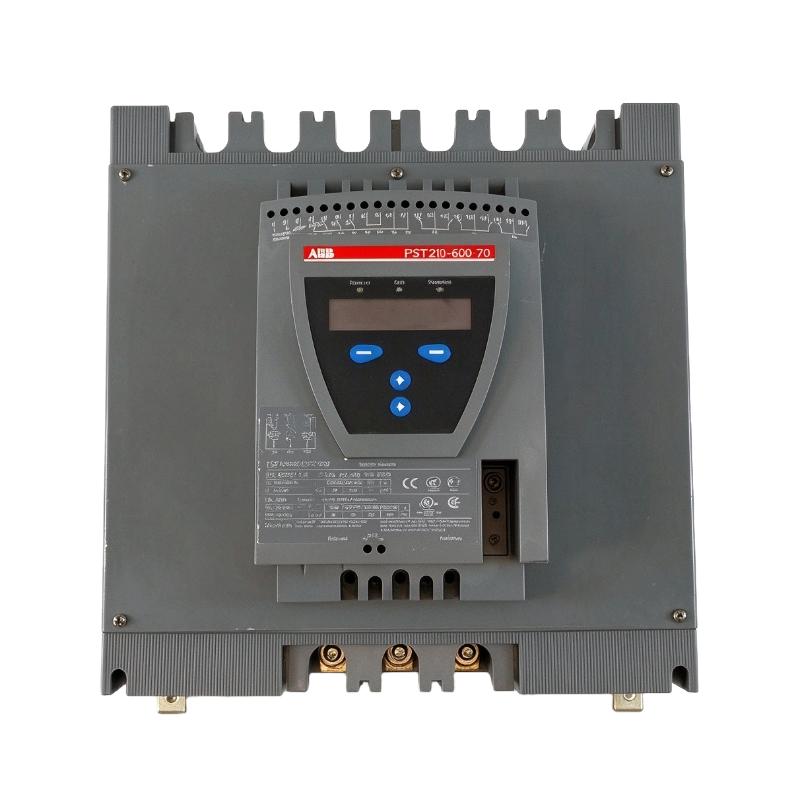
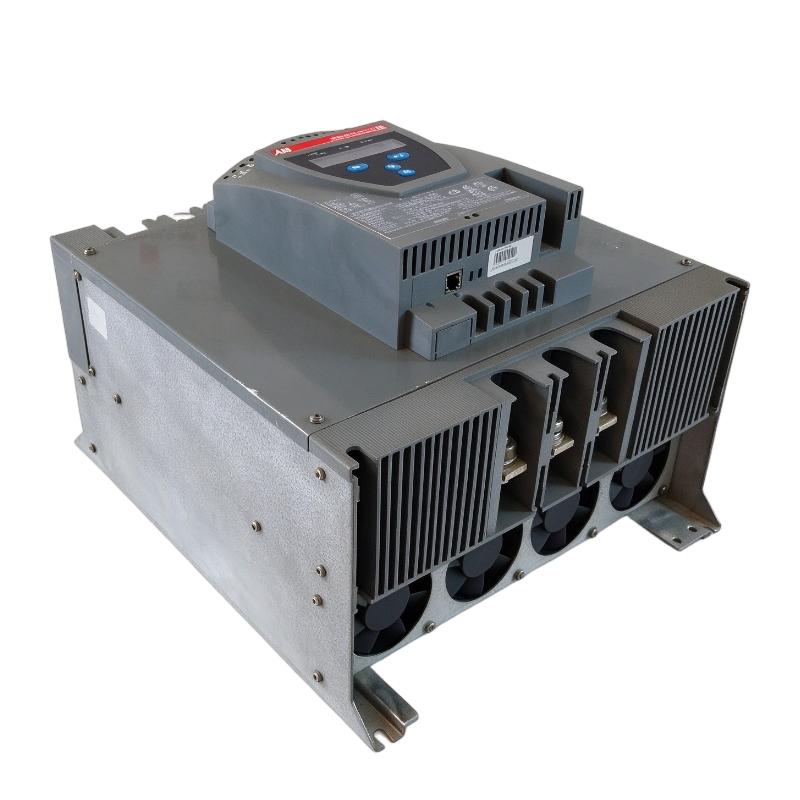
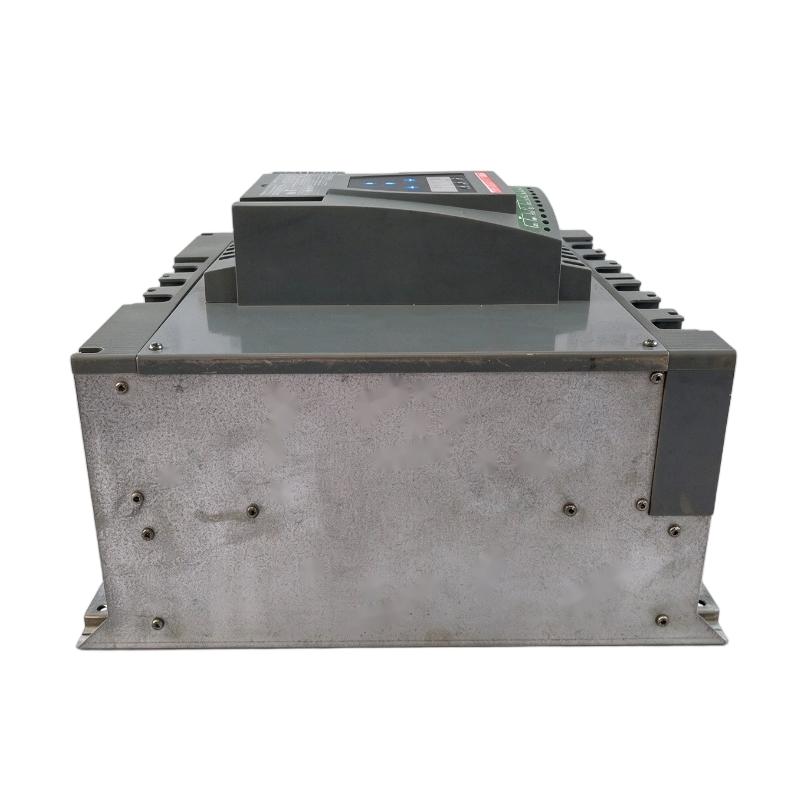
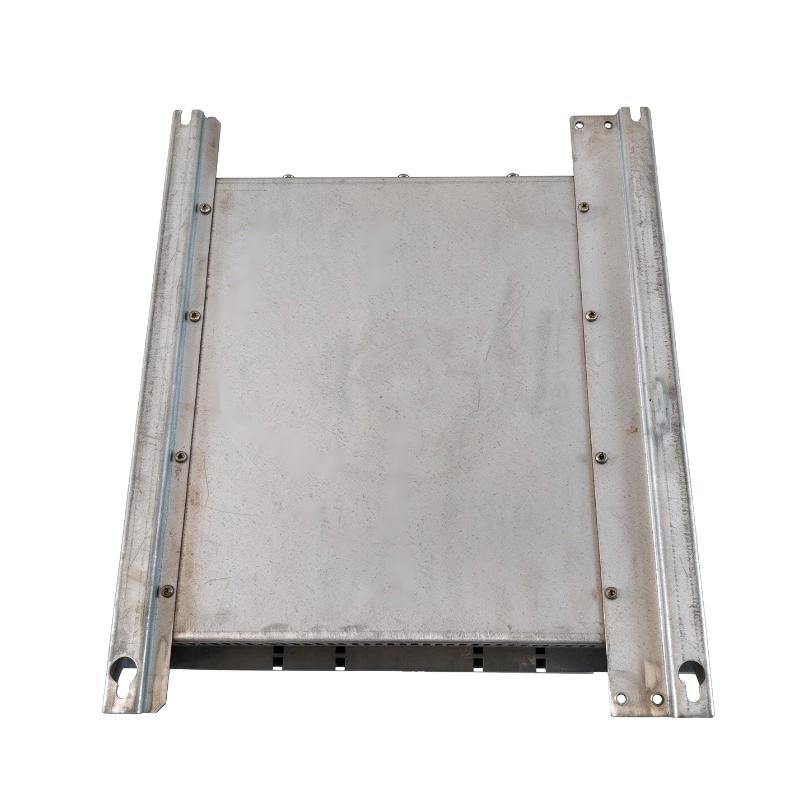
- ABB
- PST210-600-70 1SFA894012R7000
- Soft Starter
- Sweden (SE)
- 420 x 270 x 360 mm
- 21.5 kg
- Xiamen, China
- New & In Stock
- T/T, PayPal, Western Union
- 1 Year
- 1-3 Working Days
- DHL, UPS, TNT, FedEx and EMS.
- 24-Hour Service
- COO
- 2
Our advantage

Global Logistics
We have a 10-year logistics and express cooperation agreement, so our products can be shipped to any place in the world.

Brand new and original
Our products are imported in bulk from the place of origin. Because of the cooperative relationship, our products are all original and 100% new.

24-hour service
We provide 7*24 hours service to our customers. We will be there whenever you need us.

Price advantage
All our products are priced very favorably because we have our own warehouse and supply.
| Company Information | |||
| [email protected] | |||
| Mobile | +8615980777398 | ||
| +8615980777398 | |||
| 15980777398 |
Product Overview
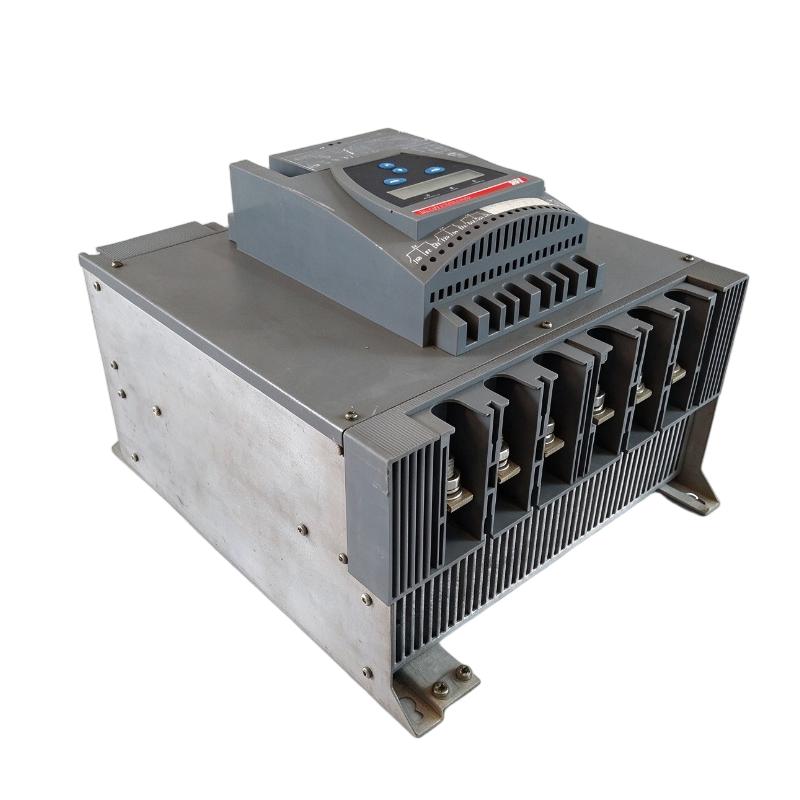
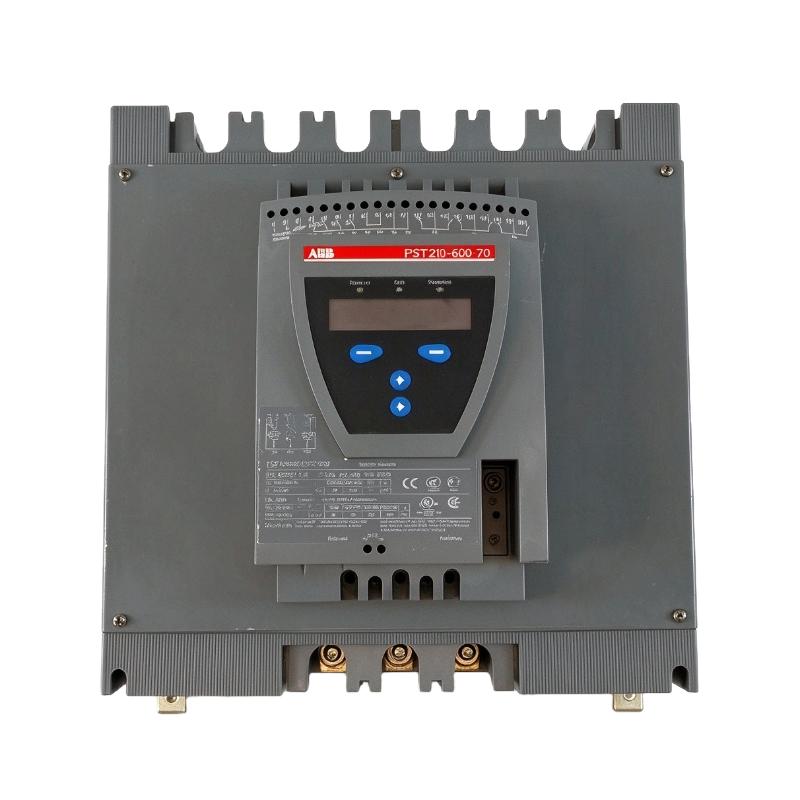
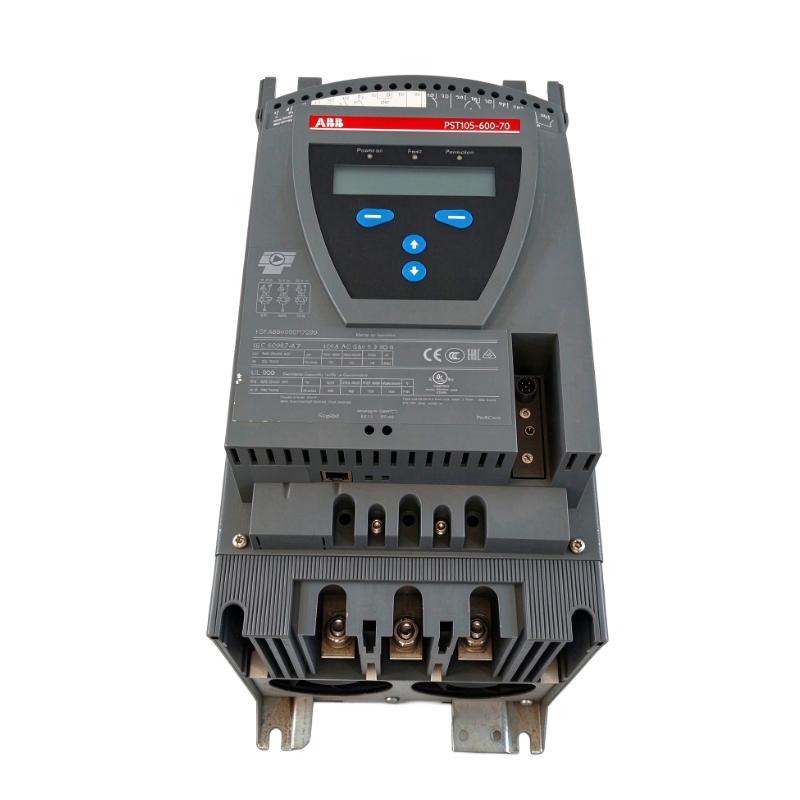
The ABB PST210-600-70 1SFA894012R7000 Soft Starter is an advanced motor-starting device designed to control the acceleration and deceleration of three-phase AC motors. Part of ABB’s PST advanced soft starter family, it helps reduce the electrical and mechanical stresses associated with direct-on-line motor starting.
When a large motor starts directly across the supply, it can draw a high inrush current and produce sudden torque. These effects may cause voltage disturbances, mechanical shock, belt slippage, pressure surges, and unnecessary wear on connected equipment. A soft starter addresses these challenges by controlling the voltage applied to the motor during starting and stopping.
The PST210-600-70 supports main-circuit operating voltages from 208 to 600 V AC and has an in-line rated operational current of 210 A. It also supports inside-delta connection, with a rated operational current of 360 A when the motor and installation are correctly configured for this arrangement.
At 400 V, its rated motor power is 110 kW for in-line connection and 184 kW for inside-delta connection. These ratings make it suitable for a range of industrial motor applications, including pumps, fans, compressors, and material-handling equipment.
The unit uses a separate control supply rated at 100–250 V AC and supports a 24 V DC control circuit. Its advanced control functions include adjustable starting and stopping parameters, electronic motor overload protection, programmable signal relays, and fieldbus communication capabilities.
The PST210-600-70 is designed for industrial control panels where controlled motor acceleration, reduced starting stress, and coordinated equipment operation are important. Correct motor selection, wiring, protection, and parameter configuration are essential to achieving reliable performance.
Technical Specifications
| Parameter | Specification |
|---|---|
| Brand | ABB |
| Product Series | PST Advanced Soft Starter |
| Model | PST210-600-70 |
| Order Number | 1SFA894012R7000 |
| Product Type | Soft Starter |
| Main Circuit Operating Voltage | 208–600 V AC |
| Rated Control Supply Voltage | 100–250 V AC |
| Control Circuit Voltage | 24 V DC |
| Rated Frequency | 50/60 Hz |
| In-Line Rated Operational Current | 210 A |
| Inside-Delta Rated Operational Current | 360 A |
| Rated Power at 400 V, In-Line | 110 kW |
| Rated Power at 500 V, In-Line | 132 kW |
| Rated Power at 400 V, Inside Delta | 184 kW |
| Rated Power at 500 V, Inside Delta | 250 kW |
| Starting Capacity | 3 × Ie for 15 seconds |
| Starting Ramp Time | 0–120 seconds |
| Stopping Ramp Time | Adjustable, according to configuration |
| Overload Protection | Integrated electronic motor overload protection |
| Signal Relays | Three programmable signal relays |
| Communication | Fieldbus communication capability |
| Service Factor | 115% |
| Dimensions Provided | 420 × 270 × 360 mm |
| Net Weight | 21.5 kg |
| Typical Applications | Pumps, fans, compressors, and industrial machinery |
Note: The supplied dimensions are presented as height × depth × width. ABB’s product data lists 420 mm height, 270 mm depth, and 360 mm width. Confirm terminal clearances and installation requirements using the product documentation.
Function and Working Principle
The PST210-600-70 controls motor starting and stopping by regulating the voltage supplied to the motor. Instead of applying full supply voltage immediately, it increases the motor voltage progressively according to the selected starting parameters.
This controlled voltage adjustment helps manage motor current and torque during the starting process.
1. Controlled Motor Starting
During a direct-on-line start, a motor can draw several times its rated current. The resulting electrical demand may affect the supply network and other connected equipment.
The PST210-600-70 gradually increases the voltage applied to the motor. This provides a controlled acceleration process and can reduce the starting-current peak compared with direct-on-line starting.
The actual current reduction depends on motor characteristics, load torque, selected starting parameters, and supply conditions.
2. Adjustable Starting Ramp
The soft starter provides an adjustable starting ramp, allowing engineers to set the time over which the motor accelerates.
A longer ramp can be useful for equipment that requires gradual acceleration, while a shorter ramp may be appropriate for applications that need a faster start.
The selected settings should provide sufficient motor torque to accelerate the connected load without exceeding the permitted current and thermal limits.
3. Soft Stopping
In applications where abrupt stopping can cause mechanical or process problems, a controlled stopping function can gradually reduce the motor voltage.
For pump systems, controlled stopping may help reduce pressure transients and water hammer. In certain conveyor and process applications, it can also reduce sudden mechanical changes.
Soft stopping is not the same as a frequency-controlled deceleration function. A conventional soft starter does not provide the same continuous speed regulation as a variable frequency drive.
4. Electronic Motor Overload Protection
The PST210-600-70 includes electronic motor overload protection. This function monitors motor operating conditions according to configured protection parameters.
Correct motor-current settings are essential. The overload protection must be configured according to the motor nameplate and the application’s operating requirements.
It should be coordinated with upstream short-circuit protection and any additional protection required by local electrical regulations.
5. Programmable Relay Outputs
The soft starter provides three programmable signal relays. These outputs can be used to communicate operating states or selected status conditions to external control equipment.
Depending on the configuration, relay signals may be used by a PLC, alarm circuit, or control panel to coordinate other equipment.
6. Fieldbus Communication
Fieldbus communication capabilities allow the soft starter to participate in a wider industrial automation system when the required communication interface and configuration are available.
This can support remote monitoring and coordination with PLC-based control systems. The specific protocol, interface hardware, and network configuration should be confirmed for the installed unit.
Role in Industrial Control Systems
The PST210-600-70 commonly operates as part of a motor-control center or industrial control cabinet. It is installed between the incoming power supply and the motor, while its control terminals connect to the machine-control system.
PLC Integration
A programmable logic controller can issue start and stop commands to the soft starter and monitor available operating signals.
For example, a PLC may start a pump after receiving a low-pressure signal, stop the pump when a tank reaches its target level, or coordinate several motors according to a production sequence.
Fieldbus communication can provide another integration method when the required interface and protocol are supported by the installed configuration.
HMI and Operator Control
A human-machine interface can provide operators with access to motor-control commands, operating status, and alarms.
In a typical installation, the HMI communicates with the PLC or the soft starter through the configured control interface. This allows operators to monitor motor operation without accessing the electrical cabinet directly.
Motor Protection Coordination
The soft starter’s electronic overload protection forms part of the motor-protection strategy. It should be coordinated with upstream circuit breakers, fuses, contactors, and other protective devices.
Correct coordination is particularly important for high-current motors, where the starting profile and fault-current characteristics must be considered together.
Equipment Sequencing
The soft starter can be used in systems where several motors operate in a defined sequence. PLC logic and relay signals can coordinate starting conditions, process interlocks, and equipment status.
This is useful in pump stations, production lines, compressor systems, and other installations where motor operation is linked to process conditions.
Industrial Applications
The ABB PST210-600-70 is designed for industrial motor applications where controlled starting and stopping are required.
1. Pumping Systems
Pumps are common applications for soft starters. Sudden starting and stopping can create pressure fluctuations in pipelines and impose stress on valves, couplings, and pipework.
The PST210-600-70 can provide controlled motor acceleration and stopping, helping reduce mechanical and hydraulic disturbances when correctly configured.
Typical applications include:
- Industrial water supply systems
- Cooling-water circulation
- Process-water pumping
- Wastewater treatment equipment
- Large industrial transfer pumps
2. Industrial Fans and Blowers
Large fans and blowers may have considerable rotational inertia. Direct starting can produce high current and mechanical stress on the motor and transmission system.
A soft starter can help provide a controlled acceleration period, reducing sudden torque changes during startup.
It may be used in ventilation systems, industrial exhaust equipment, air-handling installations, and process ventilation machinery.
3. Air Compressors
Industrial compressors often require reliable motor starting under demanding operating conditions. A controlled starting process can help reduce the electrical and mechanical impact of motor startup.
The suitability of the PST210-600-70 depends on the compressor design, unloading arrangement, starting torque, and motor characteristics.
4. Conveyor Systems
Conveyors used in manufacturing and bulk-material handling can experience mechanical stress when started abruptly.
A soft starter can help reduce sudden acceleration and improve the transition from standstill to normal operating speed. It may be applied to belt conveyors and other compatible motor-driven material-handling equipment.
5. Industrial Processing Machinery
The PST210-600-70 can also be considered for compatible industrial machines that use large three-phase motors.
Examples include selected mixers, agitators, material-processing machines, and auxiliary production equipment. Motor ratings and load characteristics must be evaluated before installation.
Installation and System Integration
Correct installation is essential for safe operation and reliable motor starting.
1. Verify the Main Supply
The main circuit operating voltage must fall within the specified 208–600 V AC range.
Before connecting the unit, verify the supply voltage, frequency, phase configuration, and motor nameplate information. The soft starter’s current rating must also match the motor and application requirements.
2. Confirm the Connection Method
The PST210-600-70 supports both in-line and inside-delta motor connections.
These connection methods have different current and power ratings. The in-line rating is 210 A, while the inside-delta rating is 360 A.
Inside-delta installation requires a compatible motor winding arrangement and correct wiring. It should not be selected simply because it offers a higher current rating. Follow the manufacturer’s connection diagrams and verify the motor’s terminal configuration.
3. Provide the Correct Control Supply
The rated control supply voltage is 100–250 V AC. The control circuit also supports 24 V DC operation.
Verify the required control-supply connections and signal references before wiring external PLC or relay circuits. Incorrect control voltage can cause malfunction or damage.
4. Check Cabinet Dimensions and Ventilation
The supplied dimensions are 420 × 270 × 360 mm, and the product net weight is 21.5 kg.
The cabinet must provide sufficient space for the soft starter, power cables, control wiring, and maintenance access. Adequate ventilation is important because the power electronics generate heat during operation.
The main terminals are identified as IP00 in product information. They require appropriate protection within the final electrical installation. Do not treat the soft starter as a fully enclosed, touch-safe device.
5. Configure Motor Protection
Enter the correct motor rated current and configure the electronic overload protection according to the motor nameplate and application.
Protection settings should account for the motor’s duty, starting frequency, ambient conditions, and thermal characteristics.
The soft starter must be coordinated with upstream short-circuit protection and any required isolation equipment.
6. Set Starting and Stopping Parameters
Configure the starting ramp and initial voltage according to the load’s torque requirements.
If the motor accelerates too slowly, it may remain in a high-current starting condition for longer than necessary. If the ramp is too short, the motor may experience unnecessary mechanical shock.
For pump applications, evaluate stopping settings according to the pipeline and hydraulic system characteristics.
7. Test the Complete Control Sequence
Before returning the equipment to normal service, check:
- Main power connections and grounding
- Control supply voltage
- Motor terminal wiring
- PLC start and stop commands
- Starting and stopping behavior
- Electronic overload settings
- Relay output functions
- Fieldbus communication, where installed
- Emergency and process interlocks
Record the final settings and retain them with the machine documentation.
Compatible System Components
The PST210-600-70 is designed to operate as part of a complete industrial motor-control installation.
| Component | Function | Integration Considerations |
|---|---|---|
| Three-phase AC motor | Converts electrical power into mechanical movement | Verify rated voltage, current, power, and connection method |
| PLC | Controls motor operation and process sequencing | Confirm available control signals and communication interface |
| HMI | Provides operator commands and monitoring | Configure according to the selected control architecture |
| Circuit breaker or fuses | Provides upstream short-circuit protection | Select according to ABB coordination recommendations |
| Main contactor | Provides switching and isolation functions | Coordinate with the soft starter’s operating requirements |
| 24 V DC control supply | Supplies compatible control circuits | Confirm voltage, current capacity, and signal references |
| Fieldbus interface | Supports network communication | Verify protocol and interface availability |
| Motor overload protection | Protects the motor against sustained overload | Coordinate settings with motor nameplate data |
| Industrial control cabinet | Houses and protects electrical components | Provide suitable ventilation and terminal protection |
The components listed above are examples of equipment used in a complete installation. They are not necessarily included with the soft starter.
Alternative Models and Replacement Considerations
The ABB PST210-600-70 belongs to the PST advanced soft starter family. When selecting an alternative, compare the current rating, voltage range, motor power, connection method, control supply, communication requirements, and physical installation.
| Alternative Model | General Description | Replacement Considerations |
|---|---|---|
| ABB PST175-600-70 | Lower-current PST soft starter | Check motor current and starting duty |
| ABB PST250-600-70 | Higher-current PST soft starter | Verify motor and installation requirements |
| ABB PST300-600-70 | Higher-current PST soft starter | Confirm connection method and overload requirements |
| ABB PSE210-600-70-1 | Soft starter in the PSE family | Different control functions and configuration; not a direct equivalent |
| ABB PSTX210-600-70 | PSTX soft starter family | Evaluate control features, wiring, dimensions, and parameter compatibility |
A replacement should not be selected by current rating alone. Engineers should compare:
- Main-circuit operating voltage
- In-line and inside-delta current ratings
- Motor power at the applicable voltage
- Control supply and control circuit voltage
- Starting capacity and ramp settings
- Overload protection functions
- Relay outputs and communication options
- Cabinet dimensions and ventilation
- Upstream protection and contactor coordination
- PLC logic and commissioning requirements
Even when two devices have similar current ratings, their control functions and wiring arrangements may differ.
Key Advantages
Controlled Motor Acceleration
The PST210-600-70 increases motor voltage progressively during startup, helping reduce the abrupt electrical and mechanical effects associated with direct-on-line starting.
Reduced Mechanical Stress
Controlled acceleration can reduce sudden torque changes and mechanical shock on motors, couplings, belts, and driven equipment.
Flexible Connection Options
The soft starter supports in-line and inside-delta configurations, allowing engineers to select an appropriate arrangement for a compatible motor and installation.
Integrated Electronic Overload Protection
Built-in electronic overload protection supports motor protection when correctly configured and coordinated with the rest of the electrical installation.
Adjustable Starting and Stopping Parameters
The available ramp settings allow engineers to adapt the starting and stopping process to the load and application.
Programmable Relay Outputs
Three programmable signal relays support integration with external control circuits, alarms, and automation equipment.
Industrial Automation Integration
Fieldbus communication capability and control inputs allow the soft starter to participate in PLC-based industrial automation systems when the appropriate interface is configured.
Technical FAQs
1. What is the ABB PST210-600-70?
It is an advanced ABB soft starter designed to control the starting and stopping of three-phase AC motors. Its order number is 1SFA894012R7000.
2. What is the rated current of the PST210-600-70?
Its rated operational current is 210 A for in-line connection and 360 A for inside-delta connection. The correct rating depends on the motor wiring arrangement and installation.
3. What is its operating voltage range?
The main circuit supports 208–600 V AC. The control supply voltage is 100–250 V AC.
4. What is the rated motor power at 400 V?
The rated power is 110 kW for in-line connection and 184 kW for inside-delta connection. These ratings should be applied according to the manufacturer’s installation requirements.
5. Does it support 24 V DC control?
Yes. The control circuit supports 24 V DC operation. Verify the relevant terminals and wiring instructions before connecting external control equipment.
6. Does the PST210-600-70 have overload protection?
Yes. It includes integrated electronic motor overload protection. The motor-current setting must be configured correctly according to the motor nameplate and application.
7. Can it communicate with a PLC?
Yes. The PST advanced family supports fieldbus communication capabilities. Confirm the required interface, protocol, and network configuration for the specific installation.
8. What is the difference between in-line and inside-delta connection?
In-line connection places the soft starter in series with the motor supply lines. Inside-delta connection places it within the motor’s delta winding circuit and requires a compatible motor and correct wiring. The two arrangements have different current ratings and installation requirements.
9. What is the weight of the ABB PST210-600-70?
The product net weight is 21.5 kg. The shipping weight may be higher because of packaging and accessories.
10. What should be checked before replacing an existing PST210-600-70?
Verify the complete order number, main voltage, motor current, connection method, control supply, wiring, communication interface, protection settings, and cabinet dimensions. Also confirm that the replacement provides the functions required by the original application.
Procurement and Maintenance Recommendations
When purchasing the ABB PST210-600-70, confirm both the model designation and order number, 1SFA894012R7000. Check the product label, terminal condition, housing, control interface, and available documentation.
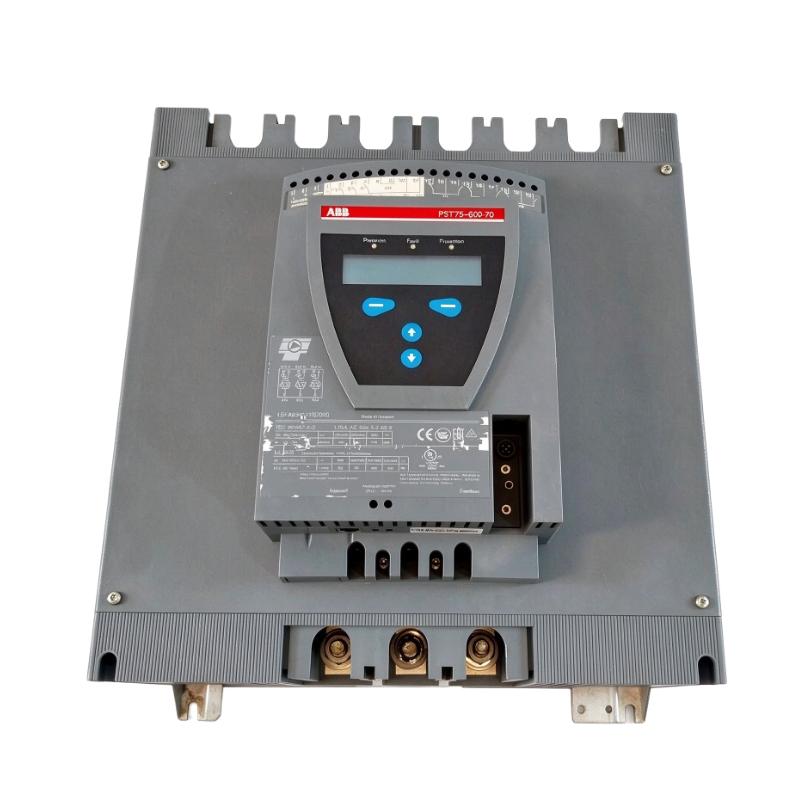
For used or surplus equipment, request clear photographs and confirm whether the unit has been tested. Verify the condition of the power terminals and control connections, and establish the applicable warranty and return terms before purchase.
During maintenance, inspect electrical connections, cabinet ventilation, signs of overheating, and the condition of connected cables. Check the motor overload settings and review any stored alarms or fault information where available.
Keep a record of the starting and stopping parameters, motor-current settings, and PLC control sequence. This documentation can reduce commissioning time if the soft starter needs to be replaced.
For critical equipment, confirm that a proposed replacement matches the motor’s electrical requirements and the machine’s control architecture. A different ABB soft starter family may require wiring changes, revised parameter settings, or PLC program modifications.
Conclusion
The ABB PST210-600-70 1SFA894012R7000 is an advanced soft starter designed for industrial three-phase AC motor applications. It supports 208–600 V AC main-circuit operation, 210 A in-line current, and 360 A inside-delta current, with rated power values of 110 kW and 184 kW respectively at 400 V.
With adjustable starting and stopping parameters, integrated electronic overload protection, programmable signal relays, and fieldbus communication capabilities, it can support controlled motor operation in pumping, ventilation, compressor, and manufacturing systems.
For maintenance and replacement projects, checking the complete model number, motor ratings, connection method, control supply, and installation requirements is essential to ensuring reliable integration into an industrial automation system.