

ProductPRODUCT
Featured products
Contact Us
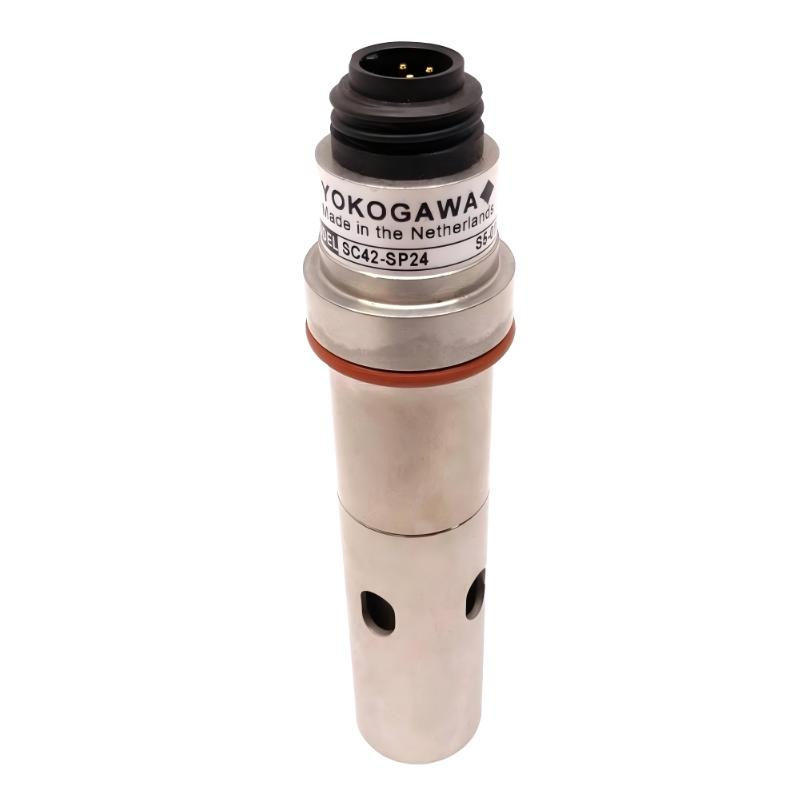
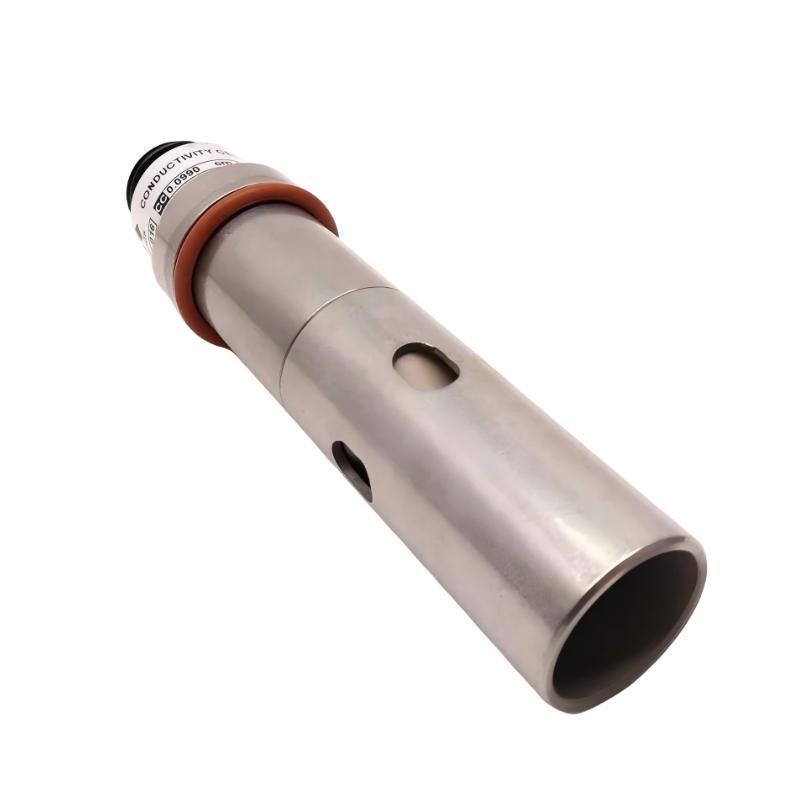
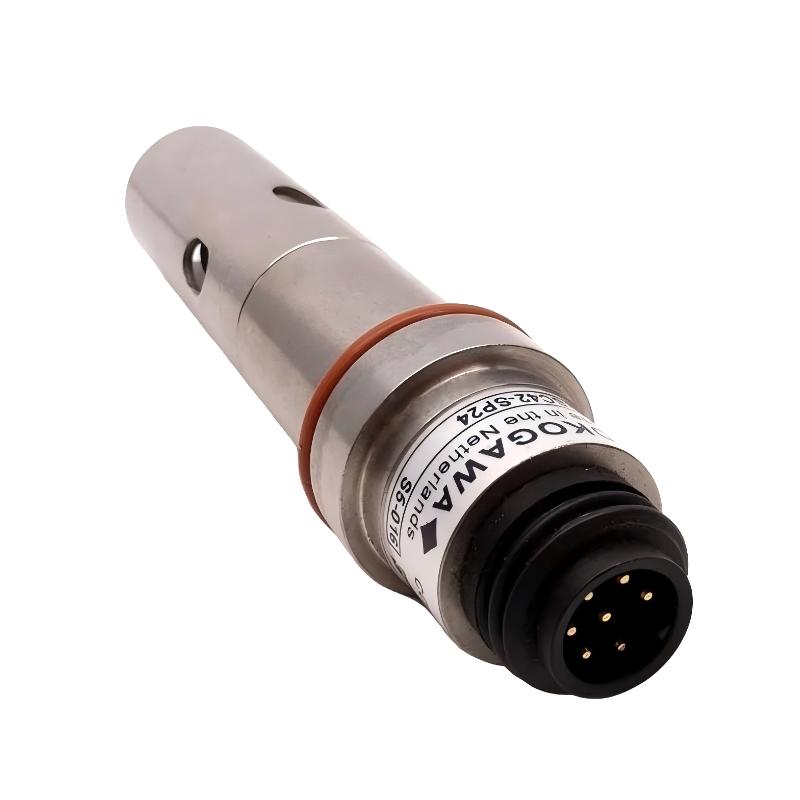
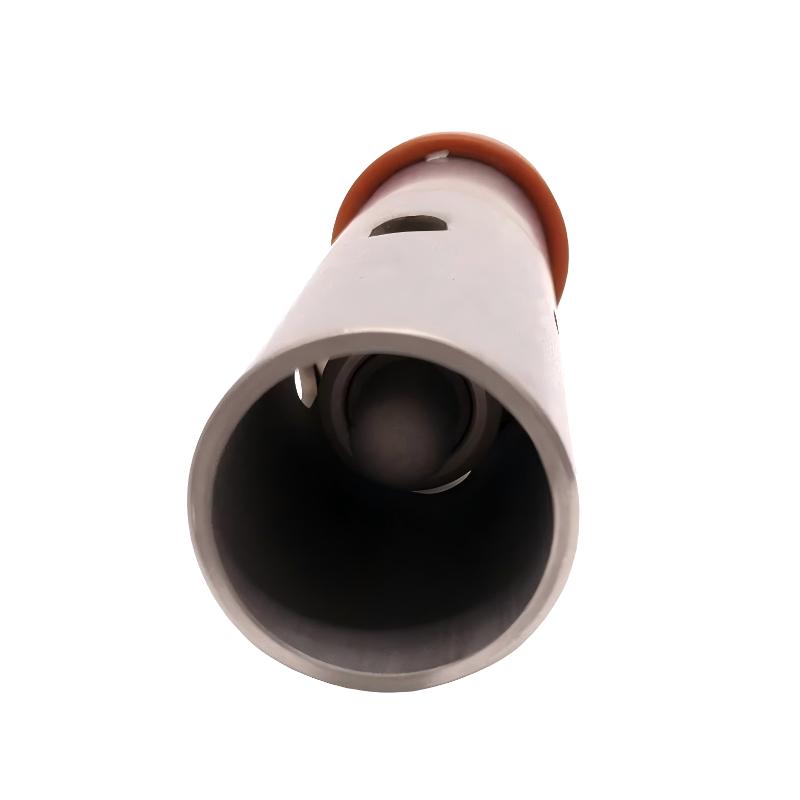
- Yokogawa
- SC42-SP24
- Contact Conductivity Sensor
- Japan
- 141 mm
- 0.8 kg
- Xiamen, China
- New & In Stock
- T/T, PayPal, Western Union
- 1 Year
- 1-3 Working Days
- DHL, UPS, TNT, FedEx and EMS.
- 24-Hour Service
- COO
- 19
Our advantage

Global Logistics
We have a 10-year logistics and express cooperation agreement, so our products can be shipped to any place in the world.

Brand new and original
Our products are imported in bulk from the place of origin. Because of the cooperative relationship, our products are all original and 100% new.

24-hour service
We provide 7*24 hours service to our customers. We will be there whenever you need us.

Price advantage
All our products are priced very favorably because we have our own warehouse and supply.
| Company Information | |||
| [email protected] | |||
| Mobile | +8615980777398 | ||
| +8615980777398 | |||
| 15980777398 |
Product Overview
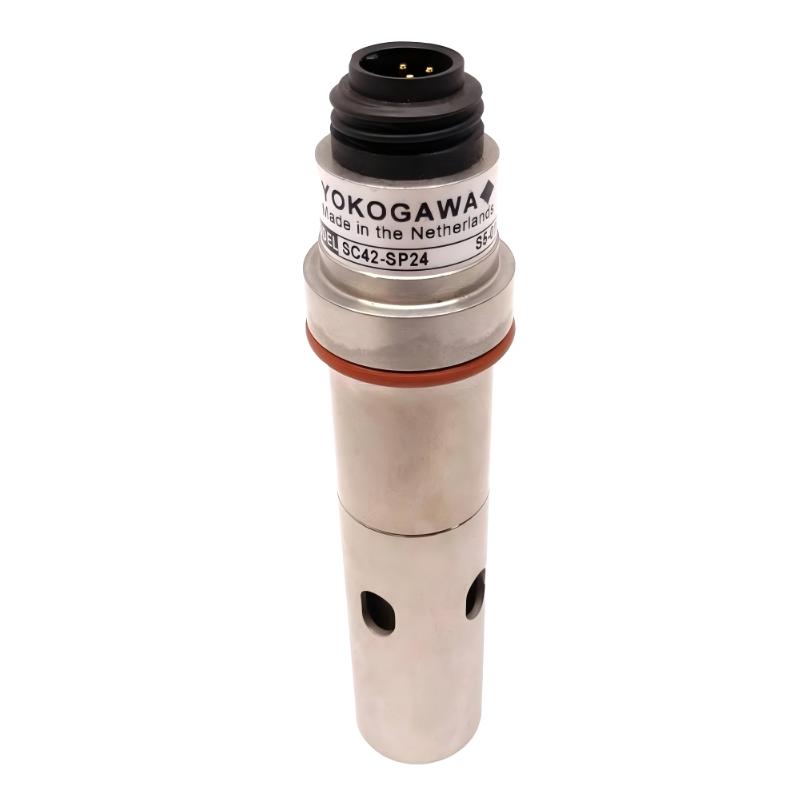
The Yokogawa SC42-SP24 Contact Conductivity Sensor is an industrial analytical sensor designed to measure the electrical conductivity of liquids in process monitoring and water-quality applications. It belongs to Yokogawa’s SC42 series of contacting conductivity sensors and is designed for applications that require reliable measurement of relatively low-conductivity solutions.
Electrical conductivity indicates how effectively a liquid can carry an electric current. It is influenced by the concentration and mobility of dissolved ions. Monitoring this parameter helps operators evaluate water quality, identify changes in process-liquid composition, and maintain consistent operating conditions in industrial systems.
The SC42-SP24 uses a two-electrode measuring arrangement with a nominal cell constant of 0.1 cm⁻¹. Its stainless-steel construction and integrated Pt1000 temperature element make it suitable for applications where conductivity measurement and temperature compensation are both important.
The sensor is particularly relevant to water-treatment systems, boiler feedwater monitoring, condensate systems, and other industrial processes involving relatively low-conductivity liquids. Its design supports installation in compatible flow or immersion fittings, allowing it to be incorporated into different process measurement arrangements.
The SC42-SP24 is intended to operate with a compatible conductivity transmitter or analyzer. The sensor provides the measurement element, while the connected instrument processes the electrical signal, applies temperature compensation, and displays or transmits the conductivity value.
When selecting this model, users should verify the complete model designation, connector arrangement, mounting dimensions, and process conditions. These details are important for ensuring that the sensor is compatible with the existing analyzer and installation.
Technical Specifications
| Parameter | Specification |
|---|---|
| Brand | Yokogawa |
| Model | SC42-SP24 |
| Product Type | Contact Conductivity Sensor |
| Product Series | SC42 |
| Measurement Principle | Contacting conductivity measurement |
| Electrode Configuration | Two-electrode system |
| Nominal Cell Constant | 0.1 cm⁻¹ |
| Electrode Material | Stainless Steel AISI 316L |
| Sensor Body | Stainless Steel AISI 316L |
| Insulation Material | PEEK |
| Temperature Element | Pt1000 |
| Temperature Compensation | Supported through compatible analyzer |
| Standard Operating Temperature | 0°C to 150°C |
| Standard Pressure Rating | Up to 10 bar |
| Temperature Response Time | Less than 3 minutes (t90) |
| Typical Applications | Boiler feedwater, surface water, low-conductivity liquids |
| Supplied Length | 141 mm (user-provided listing value; verify against the exact configuration) |
| Supplied Weight | 0.8 kg (user-provided listing value; verify against the actual unit) |
Important dimensional note: Published SC42-SP24 documentation identifies a standard immersion length of approximately 110 mm and a sensor weight of approximately 440 g. The supplied listing values of 141 mm and 0.8 kg may refer to a different measurement basis, accessory configuration, or product variant. Confirm the actual unit before publication and installation.
Function and Working Principle
The SC42-SP24 measures the electrical conductivity of a liquid by evaluating the electrical response between two electrodes in contact with the process medium.
1. Contacting Conductivity Measurement
The sensor contains two electrodes that come into direct contact with the liquid. A compatible conductivity analyzer applies an electrical measuring signal through the electrodes and evaluates the resulting conductance.
The electrical behavior of the liquid changes according to its dissolved ionic content. Solutions containing more mobile ions generally conduct electricity more effectively than solutions with fewer dissolved ions.
The analyzer uses the measured conductance and the sensor’s cell constant to calculate the conductivity value.
2. Two-Electrode Measuring System
The SC42-SP24 uses a two-electrode configuration. This arrangement is suitable for applications within the sensor’s intended conductivity range.
The electrode geometry determines the nominal cell constant, which is an important factor in converting measured conductance into conductivity.
For this model, the nominal cell constant is 0.1 cm⁻¹. This makes it suitable for applications such as boiler feedwater and surface-water monitoring, where relatively low conductivity may need to be measured.
3. Temperature Compensation
Liquid conductivity changes with temperature. A conductivity reading taken at one temperature may differ from a reading taken at another temperature, even when the liquid composition remains unchanged.
The SC42-SP24 incorporates a Pt1000 temperature element. This element measures the sensor’s temperature so that a compatible analyzer can apply the appropriate temperature compensation.
The Pt1000 element is intended for measurement compensation and indication. It should not be treated as a process-temperature control sensor.
4. Cell Constant and Measurement Accuracy
The cell constant describes the relationship between the electrode geometry and the electric field within the measurement area. It is used by the analyzer to convert measured conductance into conductivity.
Correct sensor selection and configuration are essential. Using an incorrect cell constant in the analyzer can result in inaccurate conductivity readings.
Individual calibration information and the applicable sensor documentation should be checked when commissioning or replacing the sensor.
Role in Industrial Process Control Systems
The Yokogawa SC42-SP24 is a measurement component within an industrial analytical instrumentation system. It provides conductivity and temperature-related measurement information to a compatible transmitter or analyzer.
1. Integration with Conductivity Analyzers
The sensor must be connected to a compatible conductivity analyzer. The analyzer processes the sensor signal, applies the configured cell constant and temperature compensation, and provides a readable conductivity measurement.
Yokogawa instruments such as compatible EXA and FLXA series analyzers may be considered depending on the exact sensor connection and system configuration.
Before installation, verify the supported sensor type, wiring arrangement, connector, and analyzer input specifications.
2. PLC and DCS Integration
In automated plants, conductivity measurements are often transmitted from the analyzer to a PLC or distributed control system.
The control system can use the measurement for:
- Monitoring water quality.
- Generating high- or low-conductivity alarms.
- Recording process trends.
- Supporting water-treatment control strategies.
- Providing measurement data to a central operator station.
The sensor itself does not directly replace a PLC analog input module. The analyzer normally provides the required process signal or communication interface.
3. HMI and Process Monitoring
An HMI or SCADA system can display conductivity values received from the analyzer. Operators can monitor changes over time, compare readings against process limits, and investigate abnormal conditions.
For example, an unexpected increase in boiler feedwater conductivity may indicate a change in water quality or a problem in an upstream treatment process.
4. Process Quality Management
Conductivity monitoring provides useful information about the ionic content of liquids. In water-treatment and utility systems, this measurement can help operators identify changes in water quality and evaluate the performance of treatment equipment.
Conductivity is not a direct measurement of every individual dissolved chemical. It should be used alongside other process measurements where specific chemical identification or comprehensive water analysis is required.
Industrial Applications
The SC42-SP24 is designed for low-conductivity liquid measurement and can be applied in a range of industrial water and process-monitoring systems.
1. Boiler Feedwater Monitoring
Boiler feedwater quality is important for protecting steam-generation equipment. Dissolved ionic substances can contribute to corrosion, deposits, and other operating problems.
A conductivity sensor can help monitor changes in feedwater quality and provide early indication of abnormal conditions.
The SC42-SP24’s 0.1 cm⁻¹ cell constant makes it relevant to suitable low-conductivity boiler-water applications.
2. Condensate Monitoring
Condensate systems are commonly used in industrial steam and power-generation facilities. Monitoring conductivity can help identify contamination entering the condensate return system.
A change in conductivity may indicate the presence of dissolved contaminants or an abnormal process condition.
The sensor should be installed at an appropriate sampling or process location, with pressure and temperature conditions kept within its permitted limits.
3. Water Treatment Plants
Industrial water-treatment systems use conductivity measurements to monitor changes in water composition.
The SC42-SP24 may be used in suitable low-conductivity applications, including treated water and surface-water monitoring.
Conductivity readings can support process evaluation and help operators determine whether additional investigation or treatment adjustments are required.
4. Demineralized Water Systems
Demineralized water systems are used in power generation, manufacturing, and other industrial facilities where dissolved ionic substances need to be controlled.
Conductivity monitoring can provide information about the quality of treated water and help identify changes in the performance of purification equipment.
The correct sensor cell constant and analyzer range should be selected according to the expected conductivity level.
5. Industrial Utility Systems
Many factories operate utility systems that require continuous monitoring of water quality. These systems may include cooling-water preparation, boiler auxiliaries, and general process-water distribution.
A contacting conductivity sensor can provide measurement information for routine monitoring, maintenance planning, and process-quality evaluation.
Installation and System Integration
Correct installation is important for obtaining stable measurement results and maintaining the sensor’s service life.
1. Verify the Sensor Model
Before installation, confirm that the sensor is the SC42-SP24 and not another SC42 variant.
The SC42 series includes models with different cell constants, electrode arrangements, materials, and mounting dimensions. A sensor with a different cell constant may not be suitable for the same measurement range.
Check the complete model designation and the analyzer’s configuration before connecting the sensor.
2. Confirm Process Conditions
The standard SC42-SP24 specifications include a temperature range of 0°C to 150°C and a pressure rating of up to 10 bar.
These limits should be checked against the actual operating conditions. The allowable pressure and temperature may also depend on the installation arrangement and process conditions.
Do not operate the sensor beyond the applicable manufacturer’s limits.
3. Select the Correct Installation Fitting
The sensor is designed for use with compatible flow or immersion fittings.
The installation should ensure that the electrodes are properly exposed to the process liquid and that the sensor is positioned according to the fitting manufacturer’s instructions.
Avoid arrangements that allow air pockets, deposits, or trapped contaminants to interfere with the measuring electrodes.
4. Connect the Sensor to the Analyzer
Use the correct cable and connector arrangement for the sensor and analyzer combination.
Ensure that the electrical connection is secure and that the wiring follows the instrument’s installation instructions. Incorrect wiring or an incompatible connection can cause unstable readings or prevent the analyzer from recognizing the sensor correctly.
5. Configure the Cell Constant
Set the analyzer to the correct nominal cell constant of 0.1 cm⁻¹.
Verify the sensor’s calibration information and any instrument-specific configuration requirements. Incorrect cell-constant settings can introduce systematic measurement errors.
6. Verify Temperature Compensation
Confirm that the analyzer recognizes the Pt1000 temperature element and that the appropriate temperature compensation settings are configured.
Temperature compensation should reflect the characteristics of the measured liquid and the requirements of the process.
7. Commission and Validate the Measurement
After installation, inspect the mechanical mounting and electrical connections. Confirm that the sensor is properly exposed to the process liquid and that the analyzer displays a stable measurement.
Compare the reading with an appropriate reference or calibration solution where required. Record the commissioning settings and establish a routine inspection schedule.
Compatible System Components
The SC42-SP24 normally operates as part of a complete conductivity measurement system.
| Component | Function | Integration Considerations |
|---|---|---|
| Yokogawa conductivity analyzer | Processes the sensor signal and calculates conductivity | Confirm sensor compatibility and input configuration |
| Yokogawa FLXA series analyzer | Provides analytical measurement and process output | Verify the exact supported sensor and connection |
| Yokogawa EXA series analyzer | Supports industrial analytical measurement | Check model-specific sensor compatibility |
| Pt1000 temperature element | Provides temperature measurement for compensation | Integrated into the SC42-SP24 |
| Sensor connection cable | Connects the sensor to the analyzer | Use the specified cable and connector arrangement |
| Flow fitting | Holds the sensor in a process flow installation | Verify dimensions, pressure, and temperature limits |
| Immersion fitting | Supports installation in a tank or open process vessel | Confirm immersion depth and mounting arrangement |
| PLC | Receives process data from the analyzer | Integration is generally through the analyzer’s output |
| DCS | Monitors conductivity as part of plant-wide process control | Configure suitable signal scaling and alarm limits |
| HMI or SCADA system | Displays measurements and alarms | Receives data through the analyzer or control system |
The listed components are examples of equipment used in a conductivity measurement system. They are not necessarily included with the sensor.
Alternative Models and Replacement Considerations
The SC42 series includes several sensor variants designed for different conductivity ranges and installation requirements.
| Model | General Configuration | Application Considerations |
|---|---|---|
| SC42-SP24 | Two-electrode stainless-steel sensor, 0.1 cm⁻¹ | Low-conductivity water applications |
| SC42-SP34 | Two-electrode stainless-steel sensor, 0.01 cm⁻¹ | Very low-conductivity liquids |
| SC42-EP14 | Contacting conductivity sensor | Higher conductivity measurement range |
| SC42-EP15 | Contacting conductivity sensor | Application-specific conductivity measurement |
| SC42-EP18 | Contacting conductivity sensor | Higher conductivity range |
| SC42-FP series | Contacting conductivity sensor | Requires model-specific process and material checks |
These models should not be treated as direct substitutes without engineering review.
When selecting an alternative, compare:
- Nominal cell constant.
- Electrode configuration.
- Conductivity measurement range.
- Sensor body and electrode materials.
- Process temperature and pressure limits.
- Mounting dimensions and immersion length.
- Connector and cable arrangement.
- Temperature element compatibility.
- Analyzer compatibility.
- Calibration and commissioning requirements.
The cell constant is especially important. A replacement sensor with a different cell constant may require a different analyzer configuration and may not provide the required measurement performance in the existing process.
Key Advantages
Stainless-Steel Construction
The SC42-SP24 uses stainless-steel wetted components, making it suitable for compatible industrial water and process-liquid applications.
Two-Electrode Measurement Design
Its two-electrode arrangement provides a practical solution for the low-conductivity applications for which the sensor is designed.
Integrated Pt1000 Temperature Element
The built-in temperature element supports temperature measurement and compensation through a compatible analyzer.
Defined Cell Constant
The nominal 0.1 cm⁻¹ cell constant provides a clear basis for configuring the analyzer and selecting the appropriate measurement range.
Industrial Installation Compatibility
The sensor is designed for use with compatible flow and immersion fittings, supporting integration into different process arrangements.
Application in Water Quality Monitoring
The sensor can support monitoring of boiler feedwater, surface water, condensate, and other suitable low-conductivity liquids.
Integration with Process Instrumentation
When connected to a compatible analyzer, the sensor can supply measurement data to PLC, DCS, HMI, and SCADA systems.
Technical FAQs
1. What is the Yokogawa SC42-SP24?
The SC42-SP24 is a contacting conductivity sensor designed to measure the electrical conductivity of liquids. It uses a two-electrode arrangement and has a nominal cell constant of 0.1 cm⁻¹.
2. What is the cell constant of the SC42-SP24?
Its nominal cell constant is 0.1 cm⁻¹. This value is used by the connected analyzer to calculate conductivity from the measured electrical conductance.
3. Does the sensor include temperature measurement?
Yes. The SC42-SP24 incorporates a Pt1000 temperature element. A compatible analyzer uses this information for temperature compensation and indication.
4. What materials are used in the sensor?
The standard SC42-SP24 construction uses AISI 316L stainless steel for the sensor body and electrodes, with PEEK insulation. Sealing materials and connector details should be checked against the applicable product documentation.
5. What is the operating temperature range?
The standard SC42-SP24 specification lists an operating temperature range of 0°C to 150°C. Actual allowable conditions must be checked against the installation and process requirements.
6. What is the pressure rating?
The standard published pressure rating is up to 10 bar. The actual allowable pressure depends on the operating conditions and installation arrangement.
7. What applications are suitable for this model?
Typical applications include boiler feedwater, surface water, condensate, demineralized water, and other suitable low-conductivity liquids.
8. Can the SC42-SP24 connect directly to a PLC?
It is normally connected to a compatible conductivity analyzer rather than directly to a standard PLC input. The analyzer processes the sensor signal and provides measurement data to the PLC or DCS.
9. How should the sensor be maintained?
Inspect the electrodes for deposits, contamination, or physical damage. Clean the sensor using a method compatible with its materials and the measured liquid. Verify the analyzer configuration and check measurement performance against an appropriate reference when required.
10. Is the supplied 141 mm length the standard immersion length?
Published technical information identifies a standard immersion length of approximately 110 mm for the SC42-SP24. The supplied 141 mm value should be checked against the actual product or assembly before it is treated as the sensor’s standard immersion length.
Procurement and Maintenance Recommendations
When purchasing a Yokogawa SC42-SP24, verify the complete model designation and confirm that the sensor’s cell constant, measuring range, materials, and connection arrangement match the existing analytical system.
For replacement projects, check the analyzer model and its supported sensor configurations. A sensor with a similar appearance may have a different cell constant or immersion length, which can affect measurement performance and mechanical compatibility.
For new or surplus inventory, request clear photographs of the product label, sensor body, connector, and electrode section. Confirm the physical condition and whether any installation accessories or cables are included.
The supplied listing dimensions and weight should also be verified. Published information for the standard SC42-SP24 identifies an immersion length of approximately 110 mm and a weight of approximately 440 g. The listing values of 141 mm and 0.8 kg may reflect a different measurement basis or supplied assembly.
For routine maintenance, inspect the sensor at appropriate intervals according to process conditions. Remove deposits carefully, avoid damaging the electrodes or insulation, and confirm that the analyzer’s cell constant and temperature compensation settings remain correct.
Conclusion
The Yokogawa SC42-SP24 Contact Conductivity Sensor is an industrial two-electrode sensor designed for measuring the conductivity of suitable low-conductivity liquids. Its 0.1 cm⁻¹ nominal cell constant, stainless-steel construction, and integrated Pt1000 temperature element make it relevant to boiler feedwater monitoring, condensate systems, surface-water measurement, and industrial water treatment.
For reliable operation, the sensor must be matched with a compatible conductivity analyzer and installed within the specified process conditions. Verifying the cell constant, mounting dimensions, connector arrangement, and temperature and pressure limits is essential when selecting or replacing the SC42-SP24.