

ProductPRODUCT
Featured products
Contact Us
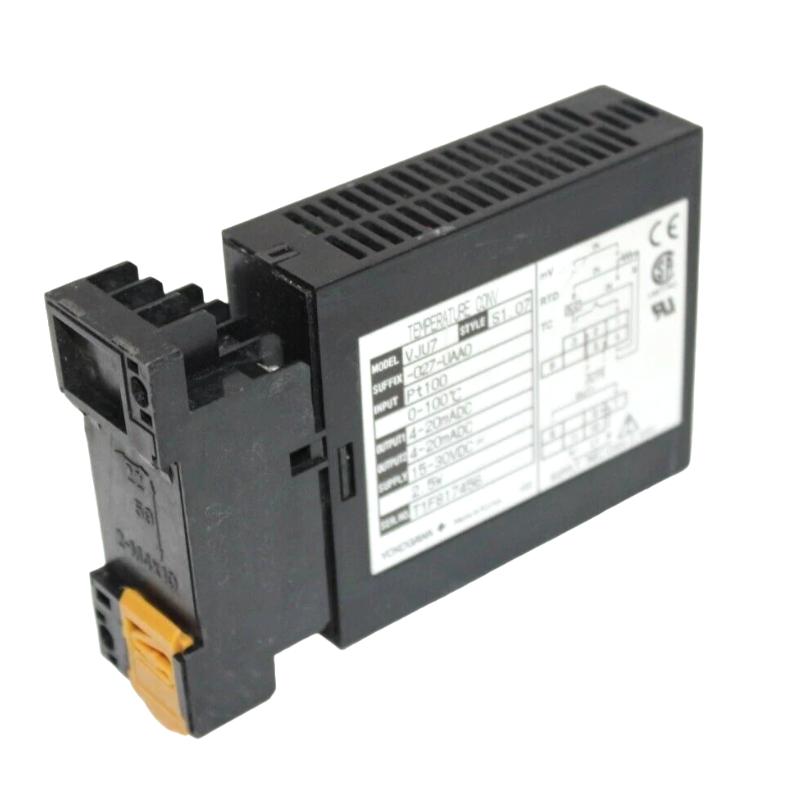
- Yokogawa
- VJU7-027-UAA0
- Universal Temperature Converter
- Japan
- 124.5 × 29.5 × 76 mm
- 0.1 kg
- Xiamen, China
- New & In Stock
- T/T, PayPal, Western Union
- 1 Year
- 1-3 Working Days
- DHL, UPS, TNT, FedEx and EMS.
- 24-Hour Service
- COO
- 9
Our advantage

Global Logistics
We have a 10-year logistics and express cooperation agreement, so our products can be shipped to any place in the world.

Brand new and original
Our products are imported in bulk from the place of origin. Because of the cooperative relationship, our products are all original and 100% new.

24-hour service
We provide 7*24 hours service to our customers. We will be there whenever you need us.

Price advantage
All our products are priced very favorably because we have our own warehouse and supply.
| Company Information | |||
| [email protected] | |||
| Mobile | +8615980777398 | ||
| +8615980777398 | |||
| 15980777398 |
Product Overview
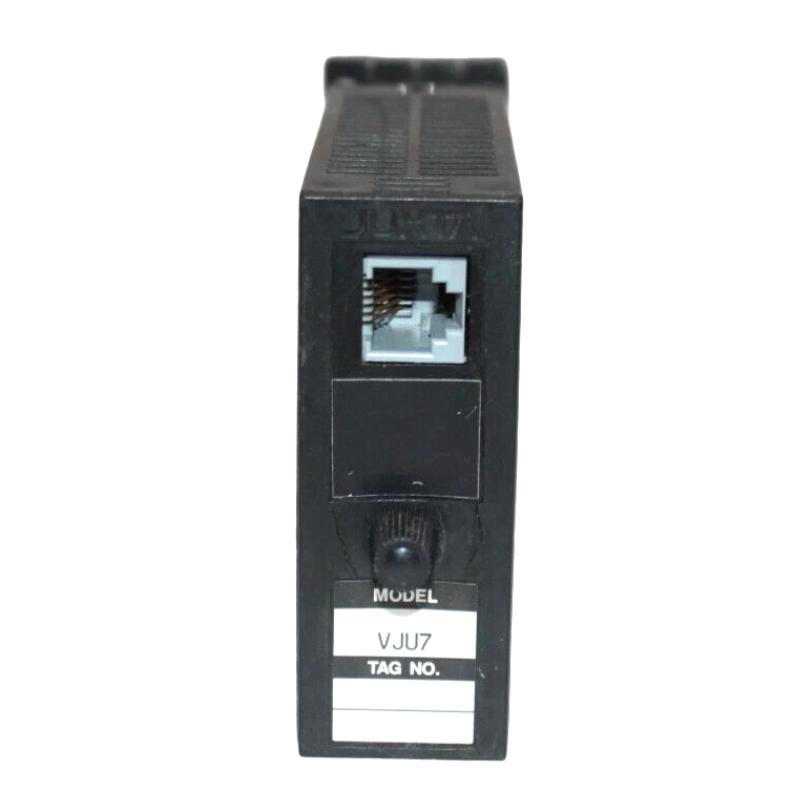
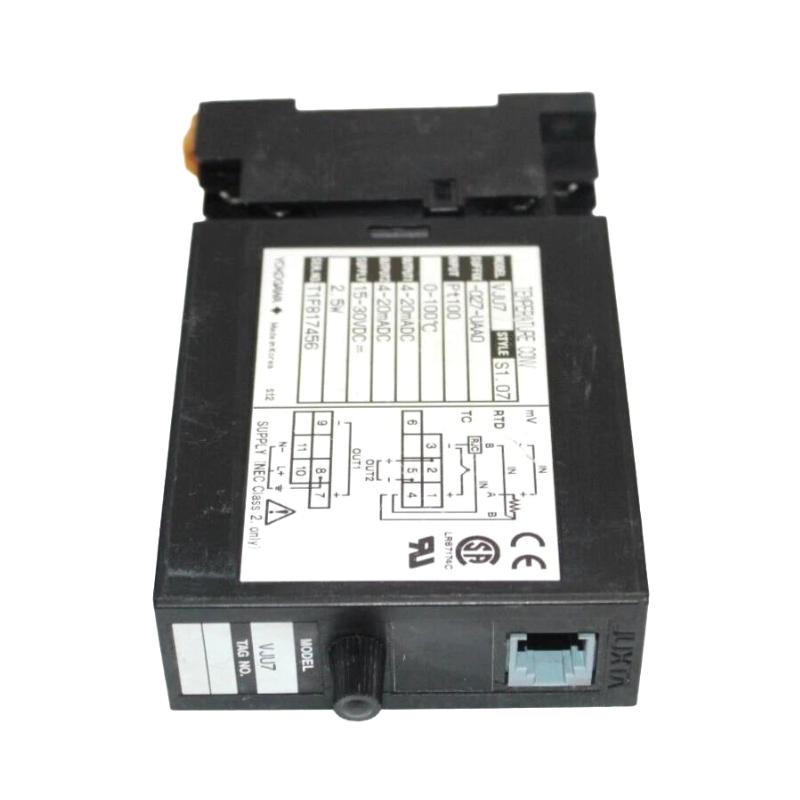
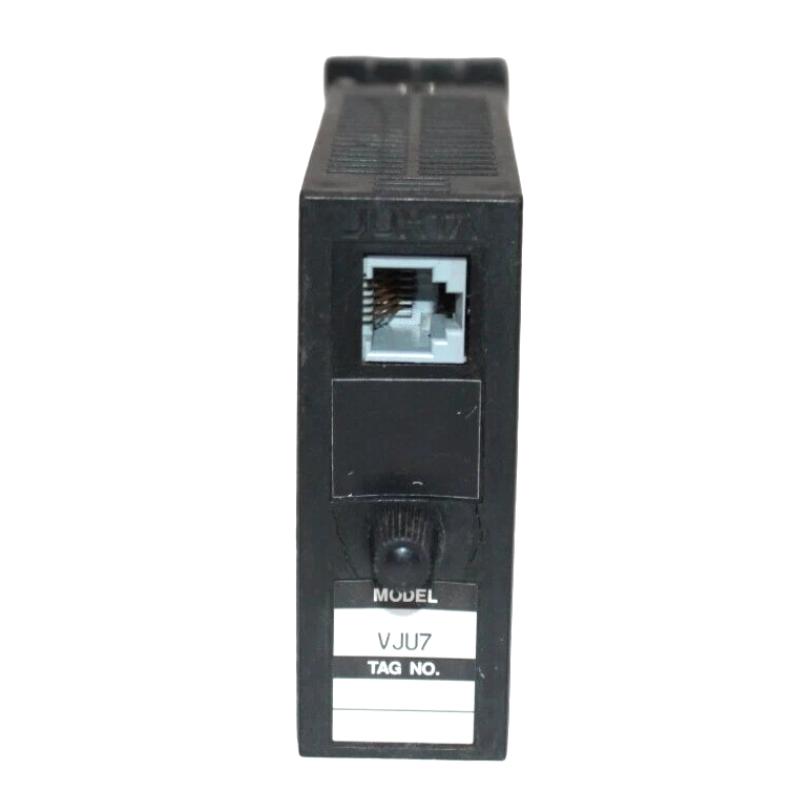
The Yokogawa VJU7-027-UAA0 is a universal temperature converter from the JUXTA VJ Series. It is a microprocessor-based signal conditioning device for converting temperature-related input signals into isolated analog output signals for use in control and monitoring systems.
The VJU7 accepts thermocouple, RTD, or mV signals. This universal input arrangement allows one converter platform to handle different temperature sensing methods, which is useful when field instrumentation and control-system input requirements vary between applications.
The converter can be used between field temperature sensors and a PLC, DCS, recorder, indicator, or other receiving device. Signal isolation separates the field input from the output side and helps maintain the required signal interface within the instrumentation loop.
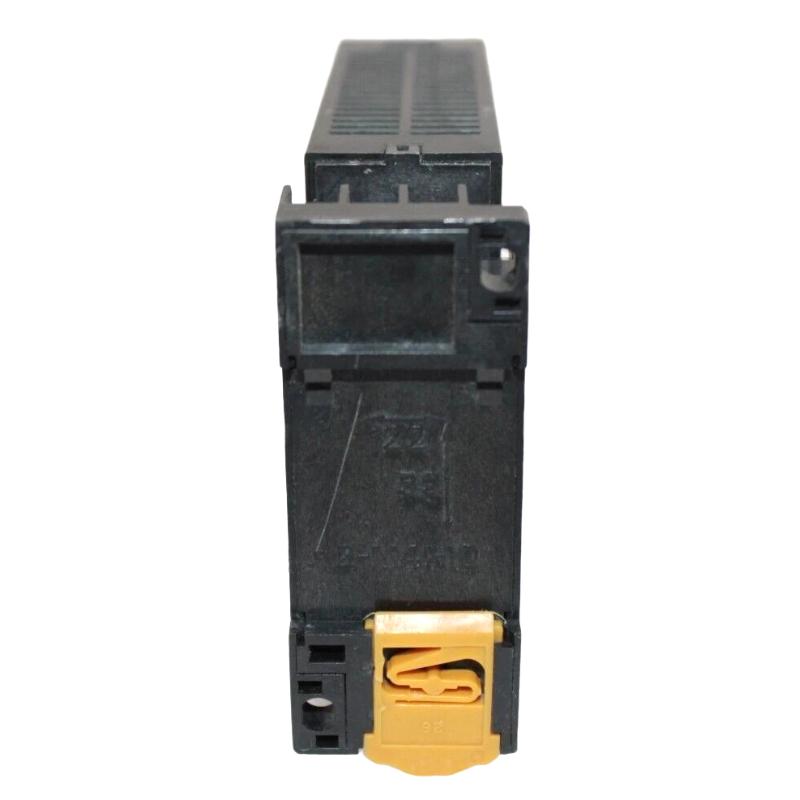
The VJ Series uses a compact plug-in construction with a separate socket. The VJU7 can be mounted on a wall, DIN rail, or dedicated VJ mounting base, making it suitable for control panels and instrumentation cabinets where space is limited.
Technical Specifications
| Parameter | Specification |
|---|---|
| Series | JUXTA VJ Series |
| Model | VJU7-027-UAA0 |
| Product Type | Universal Temperature Converter |
| Input Type | Thermocouple, RTD, mV signal |
| Input Configuration | Universal Input |
| Output Type | Analog Output |
| Output 1 | 4 to 20 mA DC |
| Output 2 | 4 to 20 mA DC |
| Power Supply | 15 to 30 V DC |
| Isolation | Isolated Input and Output |
| Configuration | Field Configurable |
| Communication Option | RS-485 MODBUS |
| Alarm Option | High/Low Alarm Relay Output |
| Mounting | Wall, DIN Rail, or Dedicated VJ Mounting Base |
| Connection | M3 Screw Terminal |
| Withstand Voltage | 2000 V AC |
| Dimensions | 124.5 × 29.5 × 76 mm |
| Weight | 0.1 kg |
Product Features
- Universal temperature input for thermocouple, RTD, and mV signals.
- Converts temperature sensor signals into standardized analog signals.
- Isolated signal conversion between the field input and control-system output.
- Microprocessor-based operation supports configurable input and output parameters.
- Compact plug-in construction for instrumentation panels and control cabinets.
- Supports field configuration using the VJ77 parameter setting tool.
- Optional second isolated output can be used for additional analog signal transmission.
- Optional RS-485 MODBUS communication can be used alongside the analog output.
- Optional high/low alarm relay output is available for applications requiring local limit monitoring.
- Compatible with wall, DIN rail, and dedicated VJ mounting arrangements.
Working Principle
The VJU7 receives a temperature-related electrical signal from a field sensor. Depending on the configured input, the signal can originate from a thermocouple, RTD, or mV source.
The converter processes the incoming signal according to the configured input range and temperature characteristics. The microprocessor-based circuitry converts the measured value into the required output representation.
The conditioned signal is then transmitted through an isolated analog output, typically as a standardized current or voltage signal for the receiving control system. Electrical isolation separates the input and output circuits so that the temperature measurement loop can interface with downstream instrumentation without directly coupling the field signal to the receiving circuit.
For installations requiring additional signal handling, the VJU7 family supports a second isolated output as an option. Depending on the selected configuration, RS-485 MODBUS communication or high/low alarm relay functions can also be incorporated into the signal-conditioning arrangement.
Role in a Temperature Measurement and Control Architecture
| System Layer | Typical Component | Role |
|---|---|---|
| Field Sensor Layer | Thermocouple or RTD | Measures process temperature |
| Signal Conditioning Layer | VJU7-027-UAA0 | Converts and isolates the temperature signal |
| Analog Transmission Layer | 4 to 20 mA or voltage output | Sends the conditioned measurement to the control system |
| Control Layer | PLC, DCS, or Controller | Processes the temperature value and executes control logic |
| Monitoring Layer | HMI, Recorder, or Indicator | Displays and records the measured temperature |
| Alarm Layer | Optional Relay Output | Provides high/low temperature limit indication |
Industrial Applications
| Application | Use of VJU7-027-UAA0 |
|---|---|
| Process Temperature Monitoring | Converts thermocouple or RTD signals for PLC or DCS input |
| Industrial Heating Systems | Provides isolated temperature feedback for temperature control |
| Machinery Temperature Measurement | Interfaces temperature sensors with control equipment |
| Plant Instrumentation | Conditions field temperature signals before transmission to a control system |
| Control Panels | Provides compact temperature signal conversion inside instrumentation cabinets |
| Distributed Measurement Systems | Converts different sensor types into standardized control-system signals |
| Process Recording | Supplies conditioned temperature signals to recorders and monitoring equipment |
Installation and Maintenance
- Confirm the input sensor: Verify that the connected thermocouple, RTD, or mV source matches the configured VJU7 input type.
- Check the model code: Confirm the complete VJU7-027-UAA0 specification before installation, particularly the power supply, input, and output configuration.
- Install the socket correctly: The VJ converter uses a plug-in construction, so the dedicated socket must be securely installed before inserting the main unit.
- Select the mounting method: Use the appropriate wall, DIN rail, or dedicated VJ mounting arrangement for the control cabinet layout.
- Check terminal wiring: Tighten the M3 screw terminals correctly and verify the polarity of the input, output, and power connections.
- Verify power supply: Confirm that the supplied DC voltage is within the specified operating range before energizing the converter.
- Configure the input range: Set the appropriate sensor type and measurement range before placing the temperature loop into service.
- Check the output signal: Verify that the analog output corresponds correctly to the measured temperature and configured range.
- Maintain signal separation: Keep field sensor wiring and output wiring arranged according to the control-panel wiring requirements to minimize unwanted interference.
- Check isolation: Investigate unexpected ground loops or abnormal signal behavior by checking the input, output, power, and grounding circuits.
- Use field configuration when required: The VJ77 parameter setting tool can be used to configure or modify applicable VJU7 parameters during commissioning or maintenance.
- Inspect the complete loop: During maintenance, check the sensor, wiring, VJU7 converter, power supply, output circuit, and receiving PLC or DCS channel together rather than testing the converter in isolation.
Compatible System Components
| Component | Function |
|---|---|
| Thermocouple Sensor | Provides temperature measurement input |
| RTD Sensor | Provides resistance-based temperature measurement |
| VJ77 Parameter Setting Tool | Used for applicable VJ Series configuration |
| VJ Mounting Base | Provides the mounting and connection arrangement for VJ converters |
| PLC Analog Input Module | Receives the conditioned analog temperature signal |
| DCS Analog Input Channel | Interfaces the VJU7 output with a process control system |
| Temperature Recorder | Records the conditioned temperature signal |
| HMI | Displays temperature information from the control system |
Recommended Related Models
| Model | Product | Application |
|---|---|---|
| VJU7 | Universal Temperature Converter | Universal thermocouple, RTD, and mV temperature signal conversion |
| VJT6 | Thermocouple Converter | Dedicated thermocouple signal conversion |
| VJR6 | RTD Converter | Dedicated RTD signal conversion |
| VJA7 | Distributor, Multi-function | Multi-function signal distribution and conditioning |
| VJH7 | Isolator, Multi-function | Multi-function signal isolation |
| VJCE | VJ Mounting Base | Mounting and connection for VJ Series units |
Key Advantages
- Universal input for thermocouple, RTD, and mV signals.
- Isolated temperature signal conversion.
- Compact plug-in VJ Series construction.
- Configurable input and output parameters.
- Supports additional output and communication options.
- Suitable for PLC, DCS, recorder, and instrumentation applications.
Technical FAQs
What input signals can the Yokogawa VJU7 accept?
The VJU7 is a universal temperature converter that can be configured for thermocouple, RTD, or mV input signals. The applicable sensor type and measurement range need to be configured for the specific application.
Can the VJU7 provide more than one output?
Yes. The VJU7 family is available in isolated single-output and dual-output configurations. A second isolated current or voltage output can be specified as an option.
Can the VJU7 be configured in the field?
Yes. Applicable VJU7 parameters can be configured or modified using Yokogawa’s VJ77 parameter setting tool. This allows the converter to be adjusted during commissioning or maintenance without changing the basic hardware.
What is the difference between the VJU7 and dedicated VJ temperature converters such as the VJT6 and VJR6?
The VJU7 is a universal temperature converter that can accept thermocouple, RTD, or mV signals. The VJT6 is intended specifically for thermocouple input, while the VJR6 is intended for RTD input. The VJU7 is therefore more suitable when different temperature sensor types need to be accommodated within the same converter platform.