

ProductPRODUCT
Featured products
Contact Us
- Woodward
- 8237-1246
- Overspeed Protection Device
- USA
- 482.6 x 66.8 x 330.2 mm
- 12 kg
- Xiamen, China
- New & In Stock
- T/T, PayPal, Western Union
- 1 Year
- 1-3 Working Days
- DHL, UPS, TNT, FedEx and EMS.
- 24-Hour Service
- COO
- 51
Our advantage

Global Logistics
We have a 10-year logistics and express cooperation agreement, so our products can be shipped to any place in the world.

Brand new and original
Our products are imported in bulk from the place of origin. Because of the cooperative relationship, our products are all original and 100% new.

24-hour service
We provide 7*24 hours service to our customers. We will be there whenever you need us.

Price advantage
All our products are priced very favorably because we have our own warehouse and supply.
| Company Information | |||
| [email protected] | |||
| Mobile | +8615980777398 | ||
| +8615980777398 | |||
| 15980777398 |
Product Overview
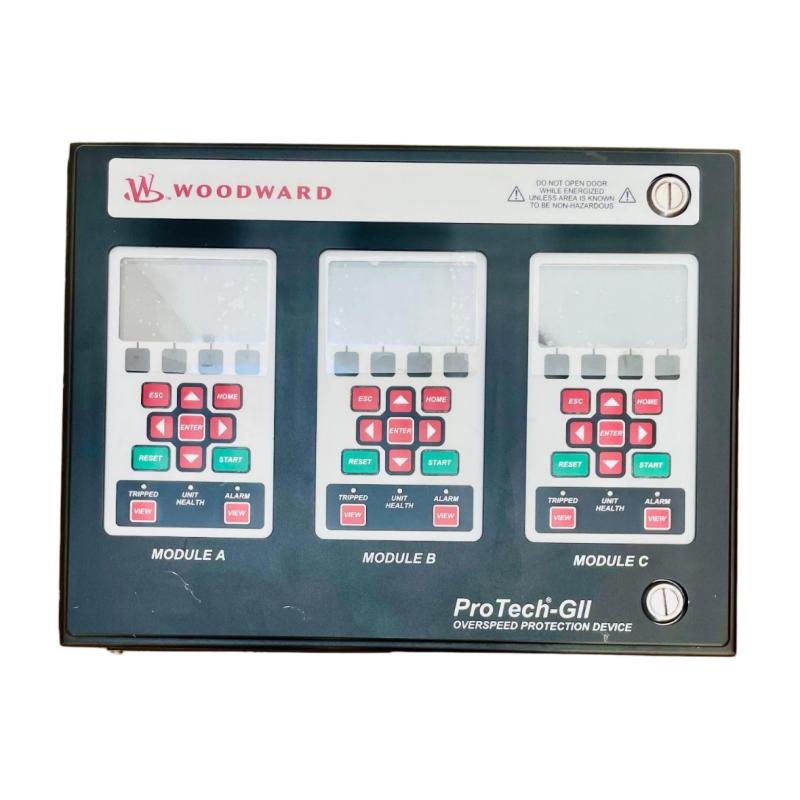
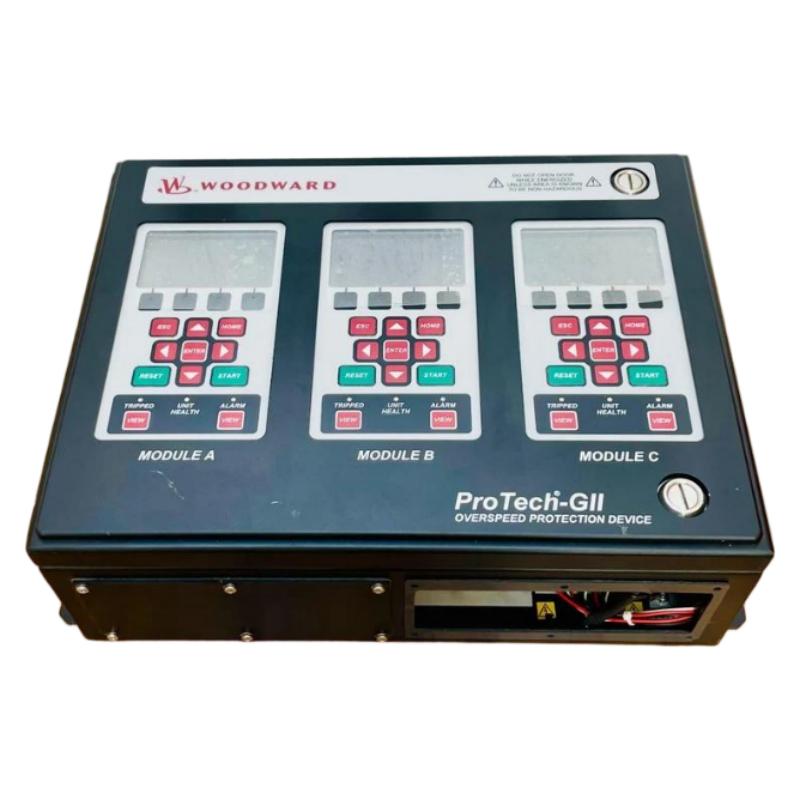
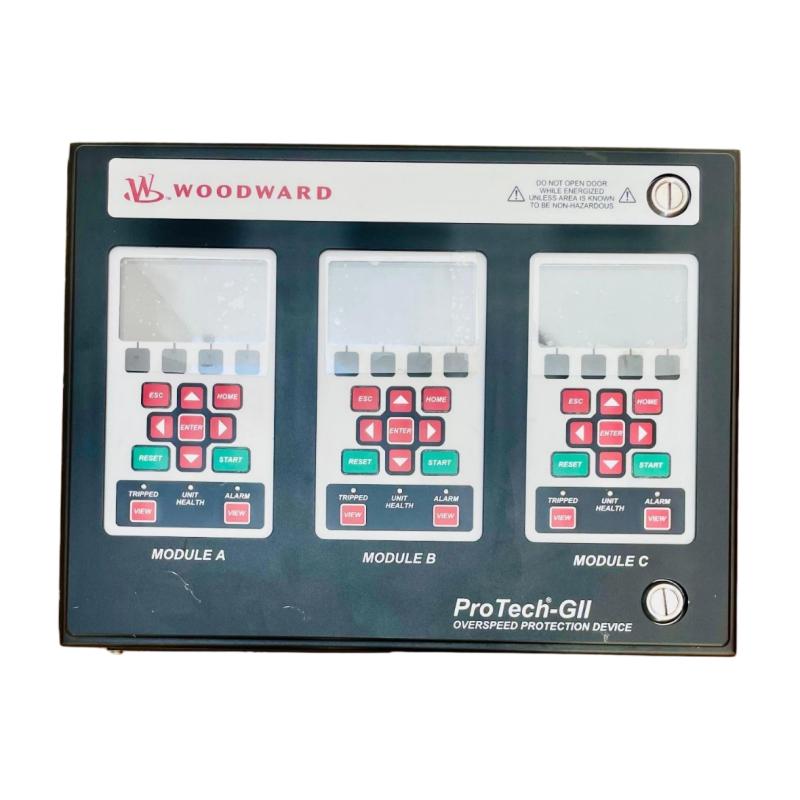
The Woodward 8237-1246 ProTech-GII Overspeed Protection Device is an industrial safety protection system designed to monitor the rotational speed of critical machinery and initiate a shutdown when an unsafe overspeed condition is detected. It is primarily used in applications involving steam turbines, gas turbines, hydro turbines, compressors, and other high-speed rotating equipment.
Overspeed protection is an essential function in turbine and rotating machinery installations. When a prime mover operates beyond its permitted speed, excessive centrifugal forces can place significant stress on rotating components. If the condition is not detected and controlled, it may lead to equipment damage, production interruptions, or serious safety hazards.
The 8237-1246 belongs to Woodward’s ProTech-GII product family. Its architecture consists of three independent protection modules that use a two-out-of-three voting arrangement. This design allows the system to evaluate speed information through separate channels and determine whether a trip condition exists.
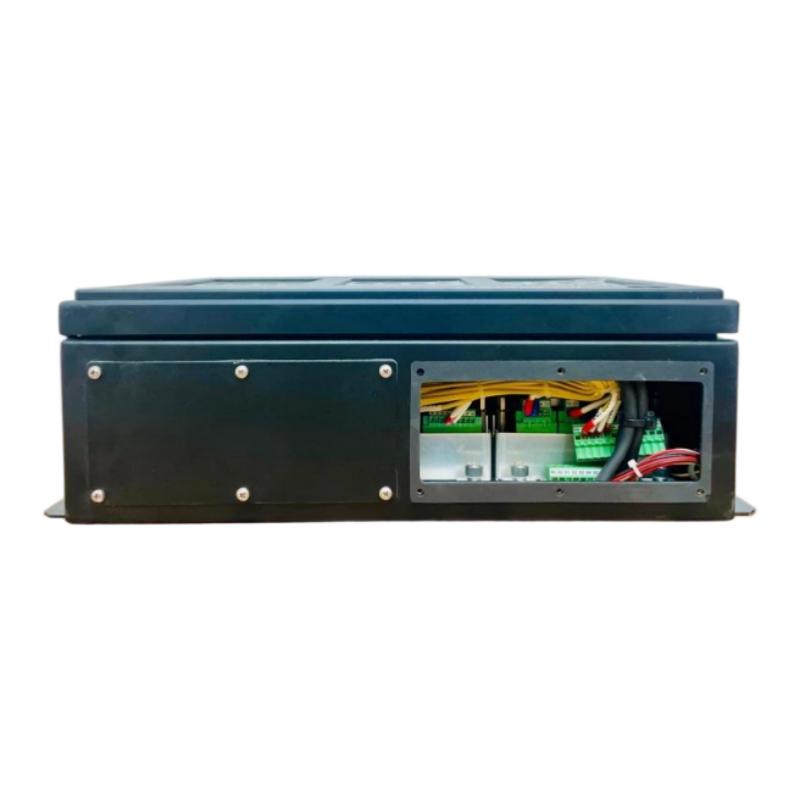
The 8237-1246 is specifically identified as a bulkhead-mount, high-voltage/low-voltage (HV/LV), voted-relay configuration. Each of its three modules has its own speed input and power connections. The voted relay outputs provide the shutdown signals required by the machinery protection system.
The device is designed for critical protection applications where both equipment safety and operating availability are important. Its independent modules and voting architecture help reduce dependence on a single measurement or decision channel.
The 8237-1246 is a legacy ProTech-GII catalog number. It is important to verify the complete model number, hardware revision, wiring arrangement, and replacement documentation before purchasing or installing a unit.
Technical Specifications
| Parameter | Specification |
|---|---|
| Brand | Woodward |
| Model | 8237-1246 |
| Product Family | ProTech-GII |
| Product Type | Overspeed Protection Device |
| Mounting Type | Bulkhead Mount |
| System Architecture | Three independent protection modules |
| Voting Logic | Two-out-of-three (2oo3) |
| Power Configuration | HV/LV |
| High-Voltage Input | 90–264 V AC, 47–63 Hz, or 100–150 V DC |
| Low-Voltage Input | 18–32 V DC |
| Module Power Rating | 30 W per module |
| Speed Sensor Inputs | One independent input per module; three total |
| Passive Speed Input | 100 Hz–32 kHz, 1–35 Vrms |
| Active Speed Input | 0.5 Hz–25 kHz, 24 V probe |
| Speed Accuracy | ±0.04% of current speed at -20 to +60°C |
| Trip Output | Two simultaneous voted output channels |
| Relay Contact Configuration | Form C, dual SPDT |
| Trip Contact Rating | 8 A at 220 V AC or 8 A at 24 V DC |
| Analog Output | Isolated 4–20 mA per module |
| Analog Output Resolution | 12-bit |
| Maximum Analog Output Load | 500 ohms |
| Operating Temperature | -20 to +60°C |
| Enclosure Protection | IP56 |
| Dimensions Provided | 482.6 × 66.8 × 330.2 mm |
| Weight Provided | 12 kg |
| Product Lifecycle | Legacy / obsolete catalog number |
Important: The supplied dimensions differ from commonly published dimensions for the 8237-1246. A commonly listed enclosure size is approximately 330 × 486 × 153 mm. Confirm the actual unit and mounting drawing before using dimensions for installation or replacement planning. The 12 kg supplied weight is close to the approximately 12.2 kg figure found in product documentation.
Function and Working Principle
The Woodward 8237-1246 monitors rotational speed and provides an independent overspeed protection function. Its operating principle combines speed sensing, individual module processing, voting logic, and relay-based shutdown signaling.
1. Rotational Speed Measurement
Each ProTech-GII module receives a speed signal from its own speed sensor. The system supports compatible passive magnetic pickup (MPU) sensors and active proximity probes.
A passive MPU detects changes in magnetic flux as rotating teeth or other suitable targets pass the sensor. The resulting electrical signal provides information about rotational speed.
An active probe uses an externally powered sensing arrangement. Its output is evaluated by the corresponding protection module.
The speed input must be configured for the actual sensor type, signal range, target geometry, and operating speed. Incorrect sensor configuration can lead to unreliable speed measurement.
2. Independent Protection Modules
The 8237-1246 contains three independent protection modules, commonly identified as Modules A, B, and C.
Each module evaluates its own speed input and determines whether the monitored speed exceeds the configured protection threshold.
The independent module arrangement helps prevent a single measurement or processing fault from automatically determining the overall trip decision. Each channel can be monitored and tested according to the manufacturer’s procedures.
3. Two-Out-of-Three Voting Logic
The device uses a two-out-of-three voting arrangement. In simplified terms, a trip decision is made when two of the three independent protection channels indicate that the configured trip condition has occurred.
This architecture is designed to balance protection reliability and equipment availability. It reduces the likelihood that a single channel fault or erroneous signal will unnecessarily initiate a system-wide shutdown.
The exact trip behavior, relay configuration, fault handling, and bypass restrictions must be understood from the installed system’s approved safety design.
4. Relay-Based Shutdown Output
The 8237-1246 provides two simultaneous voted trip output channels. These relay outputs are intended to interface with the machinery shutdown circuit.
When the required voting condition is satisfied, the trip relays change state to initiate the configured protective action.
The relay outputs are not ordinary process-control outputs. Their connection to the turbine trip system, shutdown valves, or other final elements must follow the approved protection-system design.
5. Speed Monitoring and Analog Output
Each module provides an isolated 4–20 mA analog speed output. This signal can be used by compatible monitoring equipment to display or record rotational speed.
The analog output is useful for operational monitoring, but it should not be confused with the independent voted trip function. The protective shutdown decision is handled by the device’s protection architecture.
Role in Industrial Control and Machinery Protection Systems
The 8237-1246 is designed to serve as an independent machinery protection device rather than a general-purpose programmable controller.
In a typical turbine installation, the main turbine control system regulates normal operation, including speed, load, and operating conditions. The overspeed protection system provides a separate protective layer that monitors speed and initiates a trip if an unsafe condition occurs.
Independent Protection from the Main Control System
An important principle in turbine safety engineering is that the overspeed shutdown function should be independent of the normal prime mover control system.
The Woodward ProTech-GII provides a dedicated protection architecture for this purpose. Its independent modules continuously evaluate speed inputs and make trip decisions according to the configured protection logic.
The actual separation between control and protection systems must be confirmed through the complete electrical design, wiring, power supplies, and shutdown logic.
Integration with Turbine Control Equipment
The 8237-1246 may operate alongside:
- Turbine control systems
- Programmable logic controllers
- Distributed control systems
- Speed sensors and magnetic pickups
- Proximity probes
- Shutdown solenoids and trip valves
- Alarm and annunciation systems
- Plant monitoring and data acquisition equipment
These systems have different functions. The ProTech-GII provides overspeed protection, while the turbine controller and plant automation system manage normal operation and process coordination.
Alarm and Diagnostic Functions
The ProTech-GII architecture provides module-level monitoring and diagnostic capabilities. These functions help maintenance personnel identify channel faults, sensor problems, and abnormal operating conditions.
Diagnostic information can support troubleshooting and planned maintenance, but it does not replace functional proof testing of the complete protection system.
Industrial Applications
The Woodward 8237-1246 is intended for machinery where excessive rotational speed can create significant mechanical and operational risks.
1. Steam Turbine Protection
Steam turbines are used in power generation, industrial steam systems, and mechanical drive applications. Their rotational speed must remain within defined operating limits.
The 8237-1246 can monitor turbine speed and initiate a protective trip when the configured overspeed condition is detected.
It can form part of a turbine protection arrangement that includes speed probes, trip relays, shutdown valves, and associated electrical circuits.
2. Gas Turbine Protection
Gas turbines operate at high rotational speeds and are used in power generation and industrial drive applications.
Overspeed protection is important because abnormal acceleration can place substantial stress on the rotor and connected equipment.
The ProTech-GII’s independent modules and voted trip logic provide a dedicated protection function for compatible gas turbine installations.
3. Hydro Turbine Protection
Hydro turbines convert water energy into mechanical rotation. Changes in electrical load, hydraulic conditions, or control-system operation may affect rotational speed.
An independent overspeed protection device can help detect unsafe speed increases and initiate the required shutdown action.
The sensor arrangement and protection settings must be matched to the turbine design and its operating characteristics.
4. Industrial Compressors
Large compressors and compressor trains may operate with critical rotating machinery. Excessive speed can affect rotor integrity, bearings, seals, and connected mechanical components.
The 8237-1246 may be applied where an independent overspeed protection system is required as part of the machinery safety design.
5. Reciprocating Engines and Other Rotating Machinery
Overspeed protection is also relevant to certain engine-driven systems and other industrial prime movers.
Application suitability depends on the required speed range, sensor characteristics, trip response, and the machinery’s safety requirements.
The 8237-1246 should only be applied where its documented configuration and approved engineering design meet the equipment’s protection requirements.
Installation and System Integration
The installation of an overspeed protection device requires careful attention to sensor wiring, power supplies, relay circuits, grounding, and the complete shutdown path.
Because this is a safety-related device, installation, configuration, testing, and maintenance should be performed by qualified personnel following the manufacturer’s documentation and the site’s approved procedures.
1. Verify the Model and Hardware Revision
Before installation, confirm that the device is the 8237-1246 bulkhead-mount HV/LV voted-relay configuration.
Check the nameplate, hardware revision, connector arrangement, mounting requirements, and applicable installation documentation.
The ProTech-GII family includes models with different mounting methods, power configurations, and relay arrangements. A similar model number does not necessarily indicate identical functionality.
2. Verify Power Supply Connections
The 8237-1246 uses an HV/LV power configuration.
The high-voltage input supports 90–264 V AC at 47–63 Hz or 100–150 V DC. The low-voltage input supports 18–32 V DC.
Each module has its own power inputs. The HV and LV sources do not internally share their load. Both power inputs may be used to support availability, but their protection and wiring must follow the manufacturer’s instructions.
Check the supply ratings, protective devices, polarity where applicable, grounding, and power-source independence before energizing the equipment.
3. Configure Independent Speed Sensors
Each of the three modules requires its own speed sensor input.
Do not assume that a single probe can be shared among all three channels. Independent speed sensing is part of the protection architecture and helps maintain channel independence.
Verify the probe type, mounting position, air gap, target geometry, signal amplitude, frequency range, and wiring condition.
4. Confirm the Sensor Operating Mode
The device supports passive and active speed-sensing arrangements.
For passive MPU inputs, confirm that the sensor signal meets the documented frequency and voltage requirements across the operating speed range.
For active probes, confirm the correct probe supply, signal characteristics, and input configuration.
Incorrect selection of the sensor mode may result in unreliable measurements or diagnostic alarms.
5. Connect the Voted Trip Relays
The two voted relay output channels must be connected to the approved shutdown circuit.
Verify the contact arrangement, normal operating state, required trip action, load characteristics, and final shutdown-element compatibility.
The contact ratings must be respected for both voltage and current. Switching power and other applicable limits must also be considered.
Do not modify safety trip wiring or bypass protective functions without an approved engineering procedure.
6. Verify the Enclosure and Environment
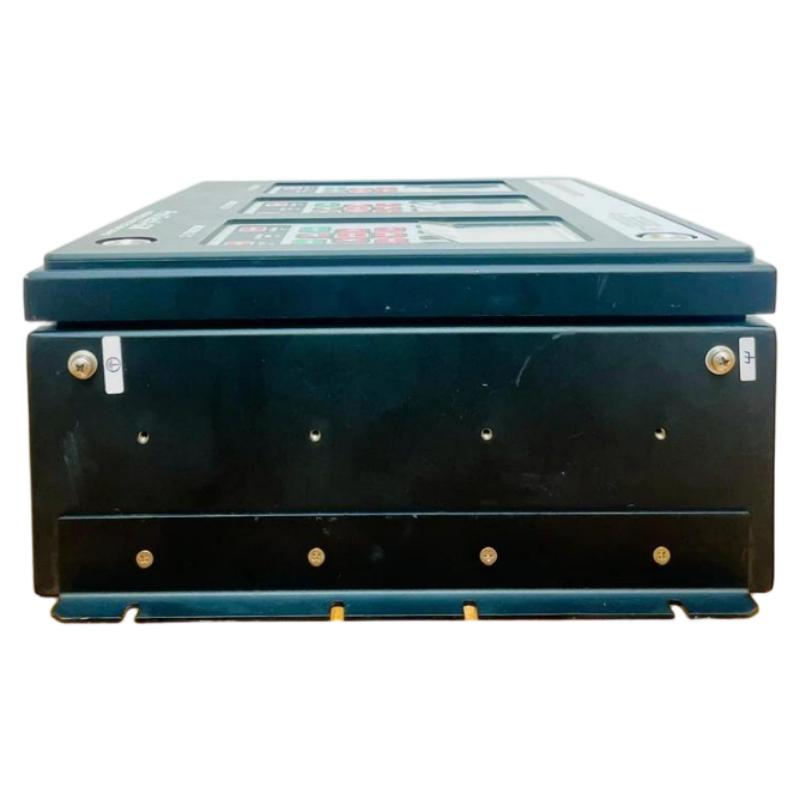
The 8237-1246 is a bulkhead-mount device with an IP56 enclosure rating.
Select a suitable mounting location that meets the manufacturer’s requirements for temperature, vibration, accessibility, and cable routing.
The supplied dimensions should not be used as final cabinet or mounting dimensions until they have been checked against the exact unit’s installation drawing.
7. Perform Commissioning and Proof Testing
Commissioning should verify the complete protection function, not simply confirm that the device powers up.
Testing should be performed under an approved procedure and should address:
- Correct module identification and configuration
- Independent sensor signal verification
- Speed measurement accuracy
- Configured overspeed and acceleration thresholds
- Module fault and diagnostic indications
- Two-out-of-three voting behavior
- Relay contact operation
- Final shutdown circuit response
- Restoration of all test conditions and bypasses
The system should only be returned to service after authorized personnel confirm that the protection functions are operating correctly.
Compatible System Components
The 8237-1246 operates as part of a complete machinery protection system. Its associated components must be selected according to the actual turbine or rotating-equipment design.
| Component | Function | Integration Considerations |
|---|---|---|
| Passive Magnetic Pickup (MPU) | Detects rotational speed | One independent sensor input per module |
| Active Proximity Probe | Provides an active speed signal | Confirm probe voltage and supported frequency range |
| HV Power Supply | Provides high-voltage module power | Verify input voltage, frequency, and protection |
| 24 V DC Power Supply | Provides low-voltage module power | Confirm 18–32 V DC input requirements |
| Turbine Control System | Manages normal turbine operation | Maintain appropriate separation from the independent protection function |
| Shutdown Solenoid | Operates a protective shutdown mechanism | Verify relay interface and electrical load |
| Trip Valve | Stops or isolates the prime mover | Confirm final-element response and shutdown design |
| Alarm System | Indicates faults and abnormal conditions | Use the approved alarm interface and signal assignments |
| DCS or Monitoring System | Collects operating and diagnostic information | Treat monitoring signals separately from the safety trip path |
| Grounding and Shielding Components | Help reduce electrical interference | Follow the manufacturer’s wiring and grounding instructions |
The components listed above are examples of equipment that may be used in a complete protection installation. They are not necessarily included with the 8237-1246 device.
Alternative Models and Replacement Considerations
Woodward’s ProTech-GII family includes multiple configurations. Replacement selection must consider mounting type, power input arrangement, relay configuration, hardware revision, and the approved machinery protection design.
| Model | Configuration | Replacement Considerations |
|---|---|---|
| 8237-1244 | Bulkhead mount, HV/LV, independent relays | Different relay arrangement from the 8237-1246 |
| 8237-1245 | Bulkhead mount, HV/HV, independent relays | Different power and relay configuration |
| 8237-1247 | Bulkhead mount, HV/HV, voted relays | Voted-relay arrangement but different power configuration |
| 8237-1369 | Panel mount, HV/LV, voted relays | Similar power and relay configuration with different mounting type |
| 8237-1596 | ProTech-GII bulkhead mount, HV/LV, voted relays | Identified in legacy replacement information as a direct replacement for certain 8237-1246 revisions |
| 8237-2596 | ProTech-GII bulkhead mount, HV/LV, voted relays | Newer catalog reference listed in Woodward’s product documentation; verify the complete replacement requirements |
The 8237-1246 was inactivated in 2020 according to legacy product lifecycle information. Replacement planning should use current manufacturer documentation and confirm the applicable product change notice, revision compatibility, and installed system configuration.
A replacement should not be approved solely because the product belongs to the ProTech-GII family. Differences in relay configuration, power inputs, mounting, wiring, and hardware revision may affect the complete safety function.
Key Advantages
Triple-Module Architecture
The device uses three independent protection modules to evaluate speed signals. This architecture supports redundant protection and channel-level monitoring.
Two-Out-of-Three Voting
The 2oo3 voting arrangement helps prevent a single channel from automatically determining the overall trip decision, while maintaining a defined protective response to overspeed conditions.
Independent Speed Inputs
Each module receives its own speed signal, supporting separation between the three measurement channels.
HV/LV Power Configuration
The model supports high-voltage and low-voltage power inputs for each module. This provides a flexible supply arrangement when designed and wired according to the manufacturer’s requirements.
Voted Relay Outputs
The two voted trip output channels provide relay interfaces for the machinery shutdown circuit.
Speed Monitoring Outputs
Isolated 4–20 mA analog outputs provide speed information for compatible monitoring and display equipment.
Industrial Enclosure Design
The bulkhead-mount IP56 enclosure is intended for industrial installation environments when used within the specified environmental limits.
Critical Machinery Protection
The ProTech-GII platform is designed for applications where overspeed protection and equipment availability are important considerations.
Technical FAQs
1. What is the Woodward 8237-1246?
The Woodward 8237-1246 is a ProTech-GII overspeed protection device. It is a bulkhead-mount model with HV/LV power inputs and voted relay outputs.
2. What is the main function of the 8237-1246?
Its primary function is to monitor rotational speed and initiate a protective trip when the configured overspeed condition is detected.
3. What does two-out-of-three voting mean?
Two-out-of-three voting means that two of the three independent protection channels must indicate the configured trip condition for the voted trip decision to occur.
4. How many speed sensors does the device support?
The system has three independent speed input channels, one for each protection module. Each module should receive its own compatible speed sensor signal.
5. What power supply does the 8237-1246 require?
Its HV input supports 90–264 V AC at 47–63 Hz or 100–150 V DC. Its LV input supports 18–32 V DC.
6. Does the 8237-1246 support MPU sensors?
Yes. It supports compatible passive magnetic pickup inputs. The documented passive input range is 100 Hz–32 kHz with a signal amplitude of 1–35 Vrms.
7. Does it support active proximity probes?
Yes. The active input supports a 24 V probe and a documented frequency range of 0.5 Hz–25 kHz. The probe type and operating mode must be configured correctly.
8. What type of trip outputs does it provide?
The 8237-1246 provides two simultaneous voted output channels using Form C, dual-SPDT relay contacts.
9. Can the device be integrated with a DCS or PLC?
It can be used alongside PLC and DCS equipment for monitoring and plant integration. However, the overspeed trip function must retain the independence required by the approved safety design. Monitoring communication should not replace the dedicated protective trip path.
10. Is the Woodward 8237-1246 still available as a current product?
The 8237-1246 is a legacy model that was inactivated in 2020. Availability may depend on existing inventory and specialist spare-parts suppliers. Confirm the hardware revision and replacement compatibility before purchasing.
11. What should be checked before purchasing a replacement?
Verify the complete model number, hardware revision, mounting type, HV/LV power arrangement, voted relay configuration, sensor connections, and shutdown wiring. Request photographs of the nameplate and connectors when purchasing surplus or refurbished equipment.
12. Can another ProTech-GII model replace the 8237-1246?
Not automatically. Models in the same product family can have different power inputs, relay configurations, and mounting arrangements. Replacement approval requires a review of the manufacturer’s documentation and the installed protection-system design.
Procurement and Maintenance Recommendations
The Woodward 8237-1246 is a legacy overspeed protection device used in critical rotating machinery applications. Procurement should therefore focus on exact identification, hardware revision, condition, and technical compatibility.
When sourcing the device, verify the complete 8237-1246 part number and compare the offered unit with the installed equipment. Request clear photographs of the nameplate, connectors, enclosure, and visible hardware revision.
For used or refurbished equipment, confirm the inspection and test status, storage history where available, warranty terms, and whether the unit includes all required accessories. Do not assume that a unit described as compatible is a direct replacement without reviewing the manufacturer’s documentation.
For maintenance, inspect sensor wiring, terminal connections, power supplies, grounding, enclosure condition, and module diagnostic indications. Follow the approved proof-test schedule and document all testing and maintenance activities.
Because this device performs a safety-related protection function, configuration changes, replacement, bypassing, and commissioning must be managed through the site’s safety management procedures. The final trip path must be verified before the protected machine is returned to operation.
Conclusion
The Woodward 8237-1246 ProTech-GII Overspeed Protection Device is a triple-module machinery protection system designed for overspeed detection and voted shutdown applications. Its bulkhead-mount HV/LV configuration, independent speed inputs, two-out-of-three voting logic, and voted relay outputs make it suitable for appropriately engineered turbine and rotating-equipment protection systems.
The model’s exact configuration is important when selecting spare parts or planning a replacement. Since the 8237-1246 is a legacy catalog number, buyers and maintenance engineers should verify its hardware revision, mounting details, power arrangement, sensor wiring, and relay configuration against the installed protection system and current manufacturer documentation.