
NewsNEWCENTER
Featured products


Contact Us
GE Aerospace Completes More Than 1,000 Hours of High-Speed Low-Pressure Turbine Testing for CFM RISE Open Fan Program
2026-11-02GE Aerospace Reports a Major Testing Milestone for Next-Generation Aircraft Engine Technology
GE Aerospace has announced a significant development milestone for the CFM Revolutionary Innovation for Sustainable Engines (RISE) technology demonstration program. On October 27, 2026, the company confirmed that engineers had completed its first testing campaign of a high-speed, low-pressure turbine (LPT) designed for the Open Fan engine architecture.
The testing campaign accumulated more than 1,000 hours of operation and was conducted at the Polonia Aero laboratory in Zielonka, Poland. The work began in 2025 and focused on validating the turbine’s aerodynamic design and aerothermal performance.
The milestone represents progress in the development of next-generation aircraft propulsion technologies. It also highlights the importance of advanced testing, measurement, and engineering validation in the aerospace industry.
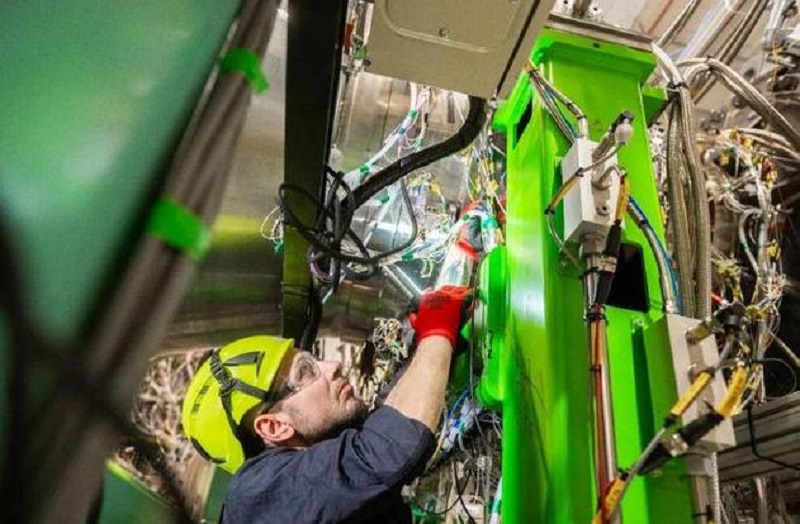
More Than 1,000 Hours of Low-Pressure Turbine Testing
The high-speed low-pressure turbine is an important component of the Open Fan propulsion architecture being developed through the CFM RISE program.
Its role is to help drive the fan system. Because the Open Fan design differs significantly from conventional ducted turbofan engines, the performance of its individual components must be carefully evaluated under representative operating conditions.
During the testing campaign, engineers examined two major technical areas:
Aerodynamic performance: The tests evaluated whether the turbine’s aerodynamic design could deliver the intended airflow and operating characteristics.
Aerothermal performance: Engineers assessed the interaction between airflow and temperature-related conditions within the turbine, helping evaluate its behavior under demanding operating environments.
To support the campaign, a customized test rig was developed. It enabled engineers to precisely control airflow, temperature, and pressure, allowing different operating conditions to be reproduced in a controlled laboratory environment.
The data collected during the tests will be used to further mature the Open Fan engine architecture and support future development activities, including planned flight testing later this decade.
Understanding the CFM RISE Open Fan Engine Architecture
The CFM RISE program was introduced in 2021 by CFM International, a 50:50 joint venture between GE Aerospace and Safran Aircraft Engines.
RISE stands for Revolutionary Innovation for Sustainable Engines. It is a technology demonstration program designed to develop propulsion technologies for future commercial aircraft.
One of its most distinctive concepts is the Open Fan architecture.
Unlike a conventional turbofan, which has a fan enclosed by a nacelle, the Open Fan concept removes the traditional fan casing. This design allows the use of a larger fan and aims to improve propulsive efficiency while reducing the aerodynamic drag associated with a conventional ducted configuration.
The architecture is intended to deliver substantial fuel-efficiency improvements while maintaining the safety, durability, and operational performance required for commercial aviation.
CFM has set a target of improving fuel burn by more than 20% compared with commercial engines currently in service. This is a development target, not a performance result already demonstrated by a commercially operating Open Fan engine.
The technology program also includes work on a compact engine core, hybrid-electric propulsion, advanced materials, and other technologies intended to support future aircraft propulsion systems.
Why the High-Speed Low-Pressure Turbine Matters
The low-pressure turbine is an essential part of an aircraft engine’s mechanical power system. It extracts energy from expanding combustion gases and transfers mechanical power through a shaft to drive the fan and other components, depending on the engine architecture.
For an Open Fan engine, the turbine must operate in coordination with the fan system while meeting demanding requirements for efficiency, durability, and mechanical reliability.
Testing the turbine independently provides engineers with an opportunity to examine its aerodynamic and thermal characteristics before progressing to more integrated system-level evaluations.
The 1,000-hour test campaign is therefore an important component-development milestone. It provides test data that can help engineers refine designs, evaluate operating behavior, and identify areas requiring further development.
However, component-level testing should not be confused with full-engine qualification. Additional integration, ground testing, durability assessment, and flight testing are necessary before a new propulsion architecture can be considered ready for commercial service.
Poland Plays an Important Role in GE Aerospace’s Engineering Development
The testing campaign took place at Polonia Aero, a research laboratory operated by Avio Aero, a GE Aerospace company.
Located in Zielonka, Poland, the facility specializes in experimental testing of low-pressure turbines, particularly work related to aerodynamic performance.
The laboratory is part of GE Aerospace’s wider engineering, research, manufacturing, and maintenance network in Poland. Its specialized testing capabilities support the company’s development of advanced turbine technologies.
The project also draws on external funding in Poland and several European Clean Aviation-related initiatives, including OFELIA, TAKE OFF, HYDEA, and AMBER.
This work demonstrates how specialized engineering facilities and regional research capabilities contribute to the development of complex aerospace technologies.
The Importance of Testing, Measurement, and Industrial Control Technologies
Although the RISE program focuses on aircraft propulsion rather than conventional factory automation, its development process illustrates several engineering principles that are also important in industrial control systems.
High-performance testing facilities depend on accurate measurement, reliable instrumentation, and controlled operating conditions.
For example, a turbine test rig must monitor and regulate multiple operating variables, including:
- Airflow: Maintaining and measuring the required airflow conditions during testing.
- Temperature: Monitoring thermal conditions to evaluate component behavior.
- Pressure: Controlling and measuring pressure across relevant test sections.
- Operating stability: Maintaining repeatable test conditions throughout extended campaigns.
- Data acquisition: Collecting test measurements for engineering analysis and design validation.
These requirements are closely related to the functions performed by industrial sensors, data acquisition systems, programmable logic controllers (PLCs), distributed control systems (DCS), and industrial monitoring equipment.
In aerospace research environments, instrumentation and control systems help engineers maintain repeatable experimental conditions and collect reliable operating data. Similar principles are used in power generation, chemical processing, manufacturing, and other industries where equipment performance must be carefully monitored.
For industrial automation professionals, the RISE testing milestone is another example of how precise measurement and control contribute to advanced engineering development.
What Comes Next for the CFM RISE Program?
The completion of the high-speed LPT testing campaign is one part of a broader technology development effort.
CFM International continues to advance several technology areas, including Open Fan components, compact engine core technologies, and hybrid-electric propulsion systems.
According to the companies’ published program information, RISE has involved approximately 500 test campaigns across its different technology areas. These activities include component evaluations, endurance testing, aerodynamic research, and other engineering demonstrations.
The next development stages will involve further testing and integration to mature the technologies for future ground and flight demonstrations.
It is important to note that RISE remains a technology demonstration program. It is not a commercially available engine product, and the completion of the turbine test does not mean the entire Open Fan engine has completed certification or entered commercial operation.
Conclusion
GE Aerospace’s completion of more than 1,000 hours of high-speed low-pressure turbine testing marks an important milestone in the development of the CFM RISE Open Fan technology.
Conducted at the Polonia Aero laboratory in Poland, the campaign validated the turbine’s aerodynamic design and aerothermal performance under controlled test conditions. The results will support further development of the Open Fan architecture as CFM continues to advance next-generation aircraft propulsion technologies.
Beyond the aerospace sector, this milestone also highlights the importance of precise instrumentation, process control, and reliable data acquisition in complex engineering environments. As advanced propulsion systems become more sophisticated, accurate measurement and testing will remain essential to improving performance, durability, and operational reliability.
SEO Keywords: GE Aerospace RISE Program, CFM RISE Open Fan, high-speed low-pressure turbine, 1000-hour turbine test, GE Aerospace Poland, Polonia Aero laboratory, Open Fan engine technology, aircraft engine development, low-pressure turbine testing, aerospace engineering, industrial instrumentation and control systems.