

ProductPRODUCT
Featured products
Contact Us
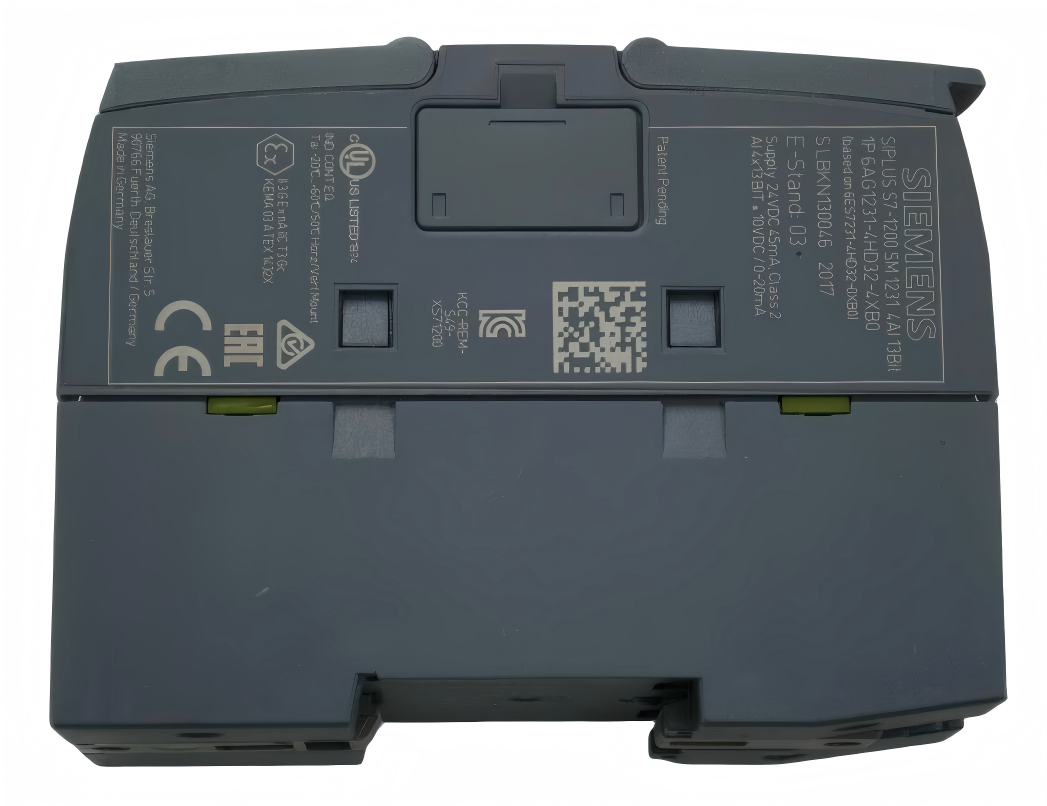
- Siemens
- 6AG1231-5PA30-5XB0
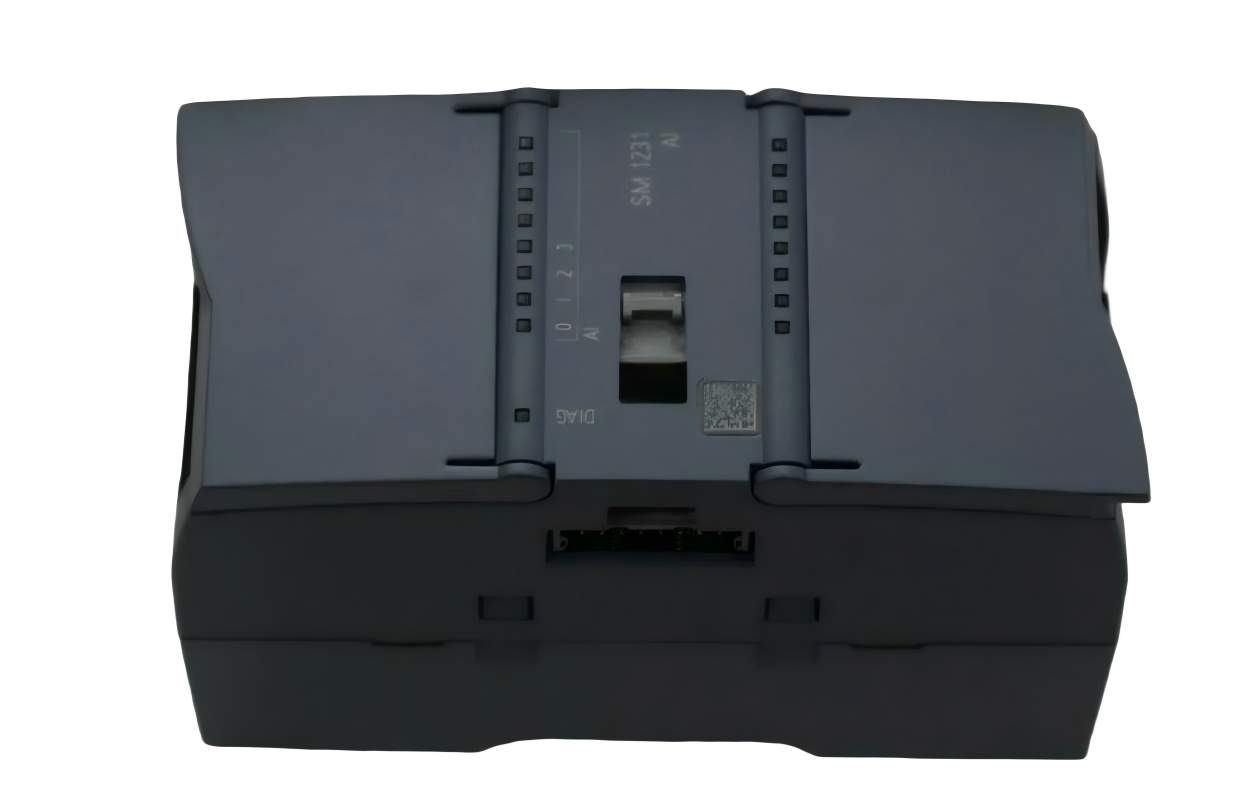
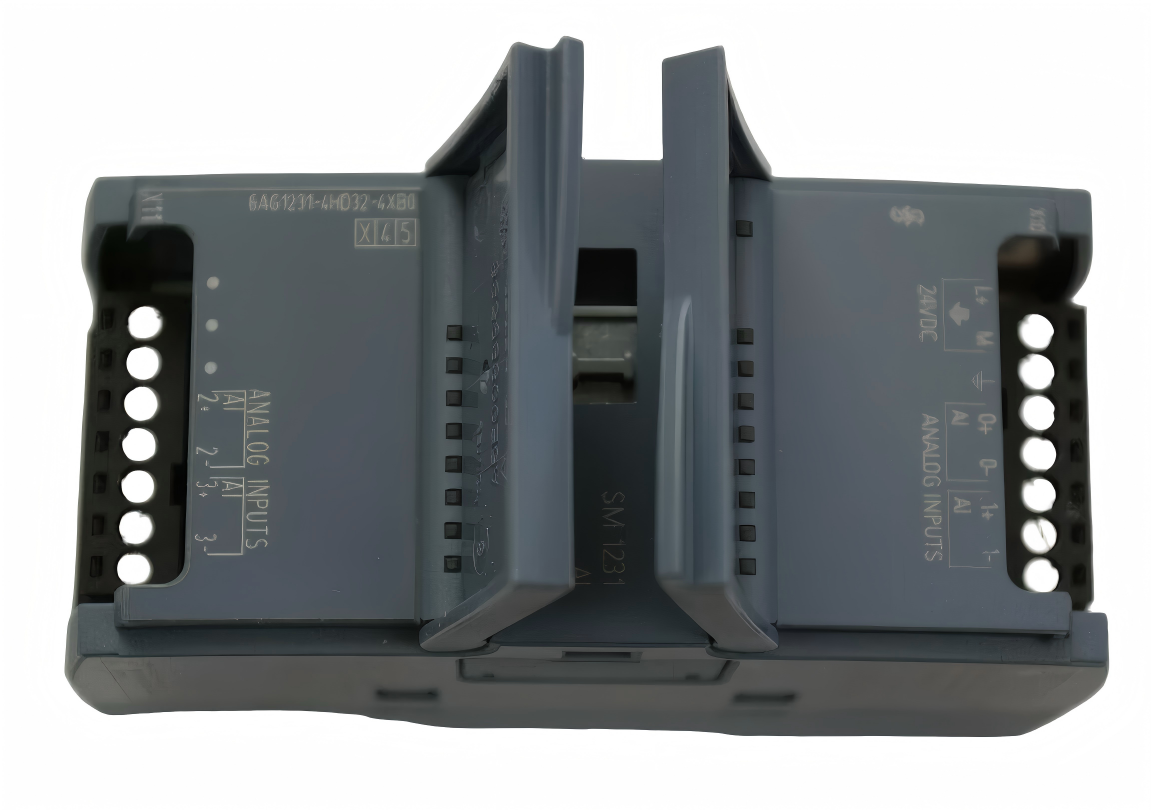
- SIPLUS S7-1200 SM 1231
- Germany
- 80 × 50 × 30 mm
- 0.03kg
- Xiamen, China
- New & In Stock
- T/T, PayPal, Western Union
- 1 Year
- 1-3 Working Days
- DHL, UPS, TNT, FedEx and EMS.
- 24-Hour Service
- COO
- 4
Our advantage

Global Logistics
We have a 10-year logistics and express cooperation agreement, so our products can be shipped to any place in the world.

Brand new and original
Our products are imported in bulk from the place of origin. Because of the cooperative relationship, our products are all original and 100% new.

24-hour service
We provide 7*24 hours service to our customers. We will be there whenever you need us.

Price advantage
All our products are priced very favorably because we have our own warehouse and supply.
| Company Information | |||
| [email protected] | |||
| Mobile | +8615980777398 | ||
| +8615980777398 | |||
| 15980777398 |
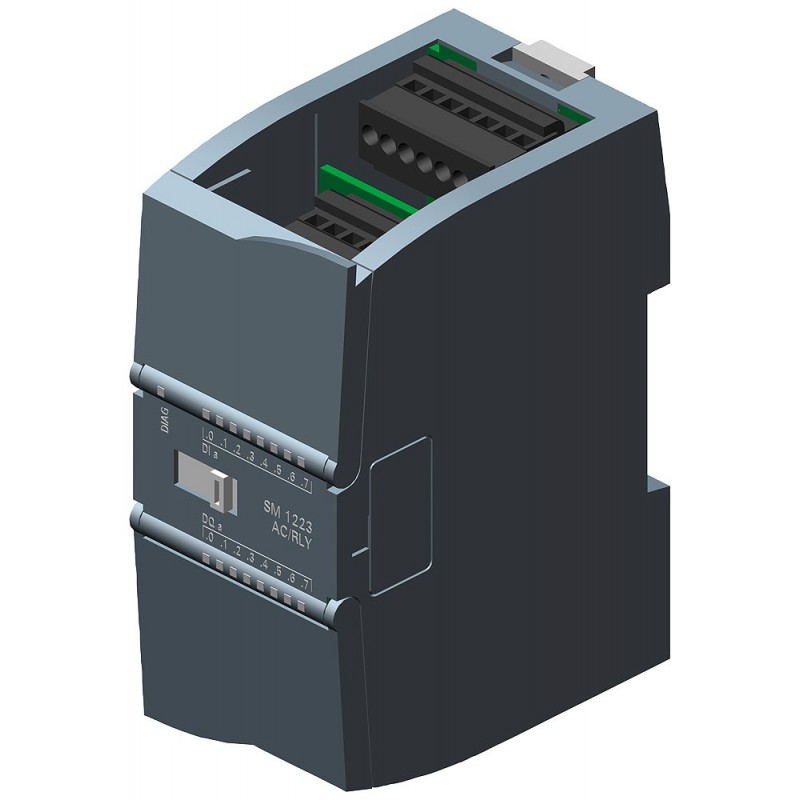
6AG1231-5PA30-5XB0 — SIPLUS S7-1200 SB 1231 RTD Temperature Input Signal Board
1. Product Overview
The 6AG1231-5PA30-5XB0 is a SIPLUS S7-1200 SB 1231 RTD signal board designed for industrial temperature measurement. It provides one resistance temperature detector (RTD) input and allows a compatible S7-1200 programmable logic controller (PLC) to acquire temperature measurements from supported resistance-based sensors.
Unlike a conventional analog input module designed primarily for voltage and current signals, this signal board is specifically intended for RTD measurement. It supports Pt100, Pt200, Pt500, and Pt1000 resistance temperature sensors, making it suitable for applications that require direct measurement of temperature through compatible resistance sensors.
The board is designed to plug directly into a compatible CPU, providing a compact way to add temperature measurement capability without installing a separate full-size expansion module.
The SIPLUS version is based on the standard 6ES7231-5PA30-0XB0 signal board and features conformal-coated electronics for additional protection against specified environmental influences. Its extended environmental capabilities make it suitable for selected industrial applications where temperature variation, condensation, or exposure to contaminants must be considered.
Typical applications include machinery temperature monitoring, industrial equipment supervision, process temperature measurement, and temperature acquisition in compact automation systems.
2. Basic Product Information
| Parameter | Specification |
|---|---|
| Model Number | 6AG1231-5PA30-5XB0 |
| Brand | Siemens |
| Product Family | SIPLUS S7-1200 |
| Product Series | SB 1231 |
| Product Type | RTD temperature input signal board |
| Functional Category | Analog temperature measurement |
| Number of Inputs | 1 RTD input |
| Supported Sensor Types | Pt100, Pt200, Pt500, Pt1000 |
| Measurement Principle | Resistance-based temperature measurement |
| Resolution | 15 bits plus sign bit; marketed as a 16-bit resolution signal board |
| Standard Base Model | 6ES7231-5PA30-0XB0 |
| Installation Method | Direct installation on a compatible S7-1200 CPU |
| Environmental Protection | Conformal-coated electronic assemblies |
| Operating Temperature | -40°C to +60°C |
| Minimum Startup Temperature | -25°C |
| Supply Arrangement | Powered through the compatible CPU/interface arrangement; confirm the exact system requirements |
| Number of Voltage Input Channels | 0 dedicated general-purpose voltage inputs |
| Number of Current Input Channels | 0 dedicated general-purpose current inputs |
| Number of Analog Outputs | 0 |
| Physical Board Dimensions | Verify exact bare-board dimensions for the ordering version |
| Approximate Listed Package Dimensions | 80 × 50 × 30 mm |
| Approximate Listed Weight | 0.032 kg |
| Protection Rating | Verify the applicable rating for the complete installed assembly |
| Typical Applications | RTD temperature measurement and industrial monitoring |
The listed dimensions of 80 × 50 × 30 mm should be treated as approximate package dimensions, not as confirmed bare-board dimensions. The listed weight of 0.032 kg is an approximate product-listing value; confirm the exact net weight and physical dimensions if these are required for engineering drawings, shipping calculations, or procurement records.
3. Detailed Technical Parameters
3.1 Electrical and Functional Specifications
| Parameter | Technical Specification |
|---|---|
| Model Number | 6AG1231-5PA30-5XB0 |
| Module Type | SB 1231 RTD signal board |
| Number of Inputs | 1 |
| Input Signal Type | Resistance temperature detector |
| Supported RTD Type 1 | Pt100 |
| Supported RTD Type 2 | Pt200 |
| Supported RTD Type 3 | Pt500 |
| Supported RTD Type 4 | Pt1000 |
| Measurement Method | Resistance measurement with temperature conversion |
| Resolution Classification | 15 bits plus sign bit |
| Nominal Resolution Description | 16-bit class |
| General-Purpose Voltage Input | Not provided |
| General-Purpose Current Input | Not provided |
| Analog Output | Not provided |
| Installation | Direct CPU-mounted signal board |
| Standard Base Model | 6ES7231-5PA30-0XB0 |
| Environmental Treatment | Conformal coating |
| Operating Temperature | -40°C to +60°C |
| Startup Temperature | -25°C minimum |
| Physical Board Dimensions | Verify exact specification |
| Approximate Listed Package Dimensions | 80 × 50 × 30 mm |
| Approximate Listed Weight | 0.032 kg |
The module is intended for resistance temperature sensors. It should not be treated as a general-purpose voltage/current analog input module.
3.2 Supported Temperature Sensor Types
| Sensor Type | Nominal Resistance at 0°C | Compatibility |
|---|---|---|
| Pt100 | 100 Ω | Supported |
| Pt200 | 200 Ω | Supported |
| Pt500 | 500 Ω | Supported |
| Pt1000 | 1000 Ω | Supported |
RTD sensors operate by changing electrical resistance as temperature changes. The signal board measures the sensor resistance and makes the resulting temperature information available to the PLC.
The nominal resistance values shown above apply at 0°C. Actual resistance changes with temperature according to the sensor’s resistance-temperature characteristic.
Correct sensor configuration is important. The PLC project and signal-board settings must correspond to the installed sensor type and the required measurement range.
3.3 Environmental Specifications
| Parameter | Specification |
|---|---|
| Model Number | 6AG1231-5PA30-5XB0 |
| Minimum Operating Temperature | -40°C |
| Maximum Operating Temperature | +60°C |
| Minimum Startup Temperature | -25°C |
| Environmental Design | SIPLUS version |
| Conformal Coating | Yes |
| Condensation/Frost Capability | Specified under defined environmental test conditions |
| Installation Orientation | Follow the applicable CPU and signal-board installation requirements |
| Exposure to Contaminants | Additional protection against specified environmental influences |
| Protection Against Direct Water Exposure | Do not assume waterproof protection |
| Physical Board Dimensions | Verify exact specification |
| Approximate Package Dimensions | 80 × 50 × 30 mm |
| Approximate Weight | 0.032 kg |
The extended environmental specifications are a distinguishing feature of the SIPLUS version. They do not mean that the board can be installed without considering the enclosure, condensation, wiring, and operating conditions of the complete system.
3.4 Dimensions and Weight
| Parameter | Value |
|---|---|
| Model Number | 6AG1231-5PA30-5XB0 |
| Bare-Board Width | Verify exact specification |
| Bare-Board Height | Verify exact specification |
| Bare-Board Depth | Verify exact specification |
| Physical Board Dimensions | Verify exact specification |
| Approximate Listed Package Width | 80 mm |
| Approximate Listed Package Height | 50 mm |
| Approximate Listed Package Depth | 30 mm |
| Approximate Listed Package Dimensions | 80 × 50 × 30 mm |
| Approximate Listed Weight | 0.032 kg |
Because this is a compact CPU-mounted signal board rather than a full-size expansion module, its physical dimensions differ from those of a conventional SM module.
For control-panel design, verify the CPU-mounted clearance requirements and the dimensions of the complete assembly. For logistics and shipping, distinguish the package dimensions and shipping weight from the bare-board dimensions and net weight.
4. Product Introduction and Working Principle
The 6AG1231-5PA30-5XB0 adds RTD temperature measurement to a compatible S7-1200 automation system.
An RTD sensor measures temperature through a predictable change in electrical resistance. As the temperature changes, the resistance of the sensor element changes accordingly. The signal board measures this resistance and converts it into a value that can be used by the PLC.
For example, a Pt100 sensor has a nominal resistance of 100 Ω at 0°C. As the temperature rises, its resistance increases. The signal board acquires the resistance measurement and provides temperature-related data to the control program.
The PLC can use this data to display the temperature, compare it with operating limits, trigger an alarm, or adjust a process through suitable control equipment.
The signal board provides one RTD input, making it appropriate for applications that need a single additional temperature measurement point. Its direct installation arrangement can be particularly useful when the control system has limited space or when a full-size expansion module would be unnecessary.
The SIPLUS version incorporates conformal coating to improve protection of the electronic assemblies against specified environmental influences. This is useful in selected industrial environments where ordinary indoor operating conditions cannot always be guaranteed.
5. Main Product Features
5.1 Dedicated RTD Temperature Measurement
The signal board is specifically designed for resistance temperature detectors.
This makes it suitable for applications where temperature needs to be measured using compatible Pt100, Pt200, Pt500, or Pt1000 sensors.
Using a dedicated RTD interface avoids treating the sensor as an ordinary voltage or current transmitter and allows the temperature measurement to be handled through the intended sensor interface.
5.2 Support for Four RTD Sensor Types
The board supports four common nominal RTD resistance types: Pt100, Pt200, Pt500, and Pt1000.
This gives the system designer flexibility when choosing a compatible temperature sensor for a particular installation.
The selected sensor type must be configured correctly. A mismatch between the installed sensor and the configured input can result in incorrect temperature readings.
5.3 Compact Direct Installation
The board can be plugged directly into a compatible S7-1200 CPU.
This arrangement allows temperature acquisition to be added without requiring a separate full-size signal module, making it useful in compact machines and control cabinets.
The CPU’s compatibility and the available signal-board installation position should be checked before installation.
5.4 High-Resolution Temperature Acquisition
The signal board is specified as a 15-bit-plus-sign RTD input, also described as a 16-bit resolution class.
This provides a detailed digital representation of the measured resistance and derived temperature value.
The effective measurement accuracy depends on the sensor, wiring arrangement, configured measurement range, electrical noise, and the complete measurement system. Nominal resolution alone does not define total system accuracy.
5.5 Conformal-Coated Electronics
The SIPLUS version includes conformal coating on the electronic assemblies.
This protective treatment is intended to improve resistance to specified environmental influences encountered in industrial applications.
It is especially relevant when the equipment may be exposed to environmental conditions beyond those normally found in a clean indoor control cabinet.
The coating does not make the board waterproof, and it does not eliminate the need for appropriate installation and environmental controls.
5.6 Extended Operating Temperature Range
The specified operating temperature range is -40°C to +60°C, with startup permitted from -25°C.
This makes the board suitable for selected applications in which the equipment may experience lower ambient temperatures than conventional indoor automation equipment.
The startup restriction is important: the minimum operating temperature should not be interpreted as permission to power up the board at every temperature within the operating range.
5.7 Simple Integration into Temperature Monitoring
The temperature data can be used by the PLC application for display, logging, alarm handling, and process control.
This provides a convenient way to integrate a temperature measurement point into an existing automation system without adding a separate controller dedicated to the sensor.
6. Product Applications
6.1 Industrial Equipment Temperature Monitoring
The board can be used to monitor the temperature of industrial equipment through a compatible RTD sensor.
The PLC can display the measured value and compare it with configured operating limits. If the temperature rises above or falls below a specified threshold, the program can generate an alarm or initiate an appropriate control response.
Typical targets include equipment housings, process components, and other measurement points where an RTD installation is suitable.
6.2 Machine Temperature Monitoring
Industrial machinery may require temperature measurement to confirm that components are operating within their intended range.
A Pt100 or Pt1000 sensor can be installed at a suitable measurement point, with the signal board supplying the measurement data to the PLC.
The application can use the result for operator indication, maintenance records, or operating-limit checks.
6.3 Process Temperature Measurement
Some industrial processes require continuous monitoring of temperature to maintain consistent operating conditions.
The signal board can acquire a compatible RTD signal and make the temperature data available to the PLC for monitoring and control.
The actual suitability depends on the process temperature, sensor construction, sensor mounting method, and the permitted measurement range of the complete sensor system.
6.4 Temperature Monitoring in Packaging Equipment
Packaging machinery may contain heaters, temperature-controlled components, or process stages where temperature information is useful.
A suitable RTD sensor can provide feedback to the PLC, allowing the program to display temperature and evaluate whether the process remains within the configured limits.
If automatic temperature regulation is required, the control algorithm and suitable output equipment must be provided separately.
6.5 Environmental Temperature Monitoring
In selected industrial installations, a compatible RTD sensor can be used to measure ambient or enclosure temperature.
The PLC can use the measurement to monitor equipment conditions or provide an alarm if the temperature exceeds the desired range.
The sensor itself must be suitable for the location and environmental exposure.
6.6 Temperature Monitoring in Fluid Systems
RTD sensors are frequently used to measure the temperature of liquids and other process media through suitable protective fittings or thermowells.
The signal board can acquire the sensor measurement when the sensor installation and electrical configuration meet the requirements of the application.
Examples include fluid circulation equipment, process tanks, and industrial heating or cooling systems.
6.7 Industrial Maintenance and Equipment Supervision
Temperature measurements can provide useful information about changes in equipment operating conditions.
The PLC may record temperature trends or compare current values with configured thresholds to help identify abnormal conditions.
However, a single RTD input does not provide a complete predictive-maintenance system by itself. Additional sensors, data processing, and application logic may be required.
6.8 Compact Automation Systems
The direct CPU-mounted design makes the board suitable for smaller automation installations where only one additional RTD measurement point is needed.
It can reduce the need for a separate full-size expansion module when the application requires only a single compatible temperature input.
6.9 Applications with Demanding Environmental Conditions
The conformal-coated design and specified extended operating temperature range make the SIPLUS version relevant to selected industrial environments.
The actual suitability depends on the installation conditions, including temperature, condensation, airborne contaminants, cabinet design, and the sensor’s own environmental rating.
7. Product Advantages
7.1 Dedicated RTD Interface
The board is designed for RTD temperature measurement rather than general-purpose voltage or current acquisition.
This makes it suitable for applications using supported resistance temperature sensors and simplifies the signal-interface requirements for a single temperature measurement point.
7.2 Four Common Sensor Types
Support for Pt100, Pt200, Pt500, and Pt1000 provides flexibility when selecting a compatible sensor.
This is useful when an application has an existing RTD sensor type or when the sensor must be selected according to wiring, sensitivity, and measurement requirements.
7.3 Space-Saving Design
The signal board installs directly on a compatible CPU.
This helps conserve control-panel space and avoids installing a separate full-size expansion module when only one RTD input is required.
7.4 Extended Environmental Capability
The SIPLUS version is designed for specified environmental conditions that may be more demanding than those of ordinary indoor installations.
The conformal coating provides an additional layer of protection for the electronic assemblies, while the specified operating temperature range supports selected low-temperature applications.
7.5 Direct Integration with PLC Logic
The acquired temperature information can be used by the PLC application for monitoring, alarms, logging, and process control.
This makes it possible to integrate the temperature reading into the existing control strategy rather than managing it through a separate standalone controller.
7.6 Suitable for Single-Point Measurement
The single-input arrangement is appropriate for applications that require one additional RTD measurement point.
It avoids the need to install a larger module when the application does not require multiple temperature inputs.
7.7 Support for Temperature-Based Alarms
The PLC can compare the measured temperature with configured thresholds.
For example, the application can identify an excessive temperature rise or a measurement that falls outside the normal operating range.
Alarm handling and automatic responses depend on the PLC program and the complete control-system design.
7.8 Simplified Expansion
Because the board can be installed directly on a compatible CPU, it can provide a straightforward way to add temperature measurement to an existing system.
Before expansion, verify CPU compatibility, available installation positions, firmware requirements, and the engineering software configuration.
8. Brand and Product Series
| Parameter | Description |
|---|---|
| Model Number | 6AG1231-5PA30-5XB0 |
| Brand | Siemens |
| Automation Platform | SIMATIC S7-1200 |
| Product Family | SIPLUS |
| Product Series | SB 1231 |
| Product Subtype | RTD Signal Board |
| Main Function | Resistance temperature measurement |
| Number of Inputs | 1 RTD input |
| Supported Sensor Types | Pt100, Pt200, Pt500, Pt1000 |
| Standard Base Model | 6ES7231-5PA30-0XB0 |
| Installation Method | Direct CPU-mounted installation |
| Environmental Design | Conformal-coated electronics |
| Operating Temperature | -40°C to +60°C |
| Minimum Startup Temperature | -25°C |
| Approximate Listed Weight | 0.032 kg |
| Physical Board Dimensions | Verify exact specification |
The SB 1231 series is intended for temperature measurement using supported RTD sensors. It differs from the SM 1231 analog input modules that are primarily used for general-purpose voltage and current signals.
When selecting between signal-board and full-size module options, consider the required number of inputs, sensor type, installation space, environmental conditions, and the capabilities of the existing CPU.
9. Installation and Configuration Considerations
9.1 Confirm the Sensor Type
Before installation, verify that the sensor is a supported Pt100, Pt200, Pt500, or Pt1000 RTD.
Do not assume that a thermocouple or an arbitrary resistance sensor can be connected directly. Sensor compatibility must be confirmed before wiring.
9.2 Configure the Correct RTD Type
The configured sensor type must match the actual installed sensor.
An incorrect sensor setting can cause the reported temperature to be inaccurate, even if the physical connection is correct.
9.3 Check Wiring Requirements
Follow the signal-board and sensor wiring instructions.
The wiring arrangement, cable resistance, electrical interference, and connection quality can affect the overall measurement. Use suitable industrial wiring practices and observe the sensor manufacturer’s recommendations.
9.4 Verify CPU Compatibility
Confirm that the selected CPU supports the SB 1231 signal board and that the required installation position is available.
Also check the applicable firmware and engineering software requirements before adding the board to the hardware configuration.
9.5 Observe Environmental Limits
The operating temperature range is -40°C to +60°C, with startup permitted from -25°C.
The board should not be started below the specified startup temperature. The installation must also comply with the applicable requirements for condensation, frost, airborne contaminants, and enclosure protection.
9.6 Test the Temperature Reading
After installation, compare the PLC reading with a known or independently measured temperature where practical.
Verify the configured RTD type and the displayed engineering units. Check that any alarm thresholds or temperature-related control logic respond as intended.
10. Five Related or Same-Series Model Recommendations
The following models cover closely related temperature-input and analog signal acquisition functions. The first recommendation is the standard base model corresponding to the main product. The remaining options are intended for different measurement requirements and should not be assumed to be direct replacements.
| No. | Model Number | Product Type | Main Parameters | Dimensions (W × H × D) | Weight (kg) |
|---|---|---|---|---|---|
| 1 | 6ES7231-5PA30-0XB0 | Standard SB 1231 RTD signal board | 1 RTD input; Pt100, Pt200, Pt500, Pt1000; 15-bit plus sign resolution | Verify exact specification | Verify exact specification |
| 2 | 6AG1231-4HD32-4XB0 | SIPLUS SM 1231 analog input module | 4 analog inputs; voltage/current measurement; verify exact supported ranges | Verify exact specification | Verify exact specification |
| 3 | 6AG1231-4HF32-4XB0 | SIPLUS SM 1231 analog input module | 8 analog inputs; intended for applications requiring more analog measurement channels | Verify exact specification | Verify exact specification |
| 4 | 6ES7231-5ND32-0XB0 | Standard SM 1231 analog input module | 4 analog inputs; voltage, current, and supported resistance measurement | Verify exact specification | Verify exact specification |
| 5 | 6ES7232-4HA30-0XB0 | Standard SB 1232 analog output signal board | 1 analog output; used for compatible voltage output applications; verify the required range | Verify exact specification | Verify exact specification |
These models cover different functions. The SB 1231 RTD signal board is intended for RTD temperature input, while general-purpose analog input modules acquire supported voltage and current signals. An analog output board serves the opposite direction by providing a control signal to compatible external equipment.
For a direct replacement, the standard 6ES7231-5PA30-0XB0 is the first model to evaluate. For additional measurement channels, compare the relevant analog input modules. For applications requiring a voltage or current control output, an analog output board may be appropriate, but it cannot replace an RTD input board.
11. Five Popular Models from the Same Brand
The following models represent common controller and I/O categories in industrial automation. They are complementary products for building or expanding a compatible automation system rather than direct replacements for the RTD signal board.
| No. | Model Number | Product Type | Main Parameters | Dimensions (W × H × D) | Weight (kg) |
|---|---|---|---|---|---|
| 1 | 6ES7214-1AG40-0XB0 | S7-1200 CPU 1214C | PLC CPU with integrated digital I/O; verify exact supply and hardware version | Verify exact specification | Verify exact specification |
| 2 | 6ES7215-1AG40-0XB0 | S7-1200 CPU 1215C | PLC CPU with integrated I/O and communication functions; verify exact version | Verify exact specification | Verify exact specification |
| 3 | 6ES7221-1BH32-0XB0 | SM 1221 digital input module | Digital input expansion for discrete field signals; verify channel count and electrical characteristics | Verify exact specification | Verify exact specification |
| 4 | 6ES7222-1BH32-0XB0 | SM 1222 digital output module | Digital output expansion; verify output type, channel count, and load rating | Verify exact specification | Verify exact specification |
| 5 | 6ES7231-4HF32-0XB0 | SM 1231 analog input module | 8 analog inputs; designed for supported voltage and current measurement | Verify exact specification | Verify exact specification |
11.1 CPU Modules
CPU modules execute the PLC program and coordinate the automation system.
The appropriate CPU depends on the number of I/O points, program complexity, communication requirements, processing capacity, and planned expansion.
The RTD signal board must be paired with a CPU that supports the board and its installation arrangement.
11.2 Digital Input Modules
Digital input modules collect discrete signals from switches, pushbuttons, and compatible sensors.
They complement an RTD signal board because they serve different purposes: digital inputs record discrete states, while an RTD signal board measures temperature through resistance.
11.3 Digital Output Modules
Digital output modules allow the PLC to control compatible external devices.
Depending on the specific module, these devices may include indicator lamps, interface relays, or other control components. The output voltage, current rating, and load characteristics must be checked before connection.
11.4 General-Purpose Analog Input Modules
General-purpose analog input modules are useful when the system needs to acquire voltage or current signals from instruments such as pressure transmitters, flow transmitters, or level transmitters.
They are complementary to the RTD signal board but are not necessarily substitutes for it. A temperature sensor must be connected through an interface that supports its specific signal type.
12. Product Selection Guide
| Selection Factor | Recommendation |
|---|---|
| Model Number | 6AG1231-5PA30-5XB0 |
| Required Function | RTD temperature input |
| Number of Inputs | 1 |
| Supported RTD Types | Pt100, Pt200, Pt500, Pt1000 |
| Resolution | 15 bits plus sign bit |
| Standard Base Model | 6ES7231-5PA30-0XB0 |
| Installation Method | Direct installation on a compatible CPU |
| Operating Temperature | -40°C to +60°C |
| Minimum Startup Temperature | -25°C |
| Environmental Protection | Conformal-coated electronics |
| Physical Board Dimensions | Verify exact specification |
| Approximate Listed Package Dimensions | 80 × 50 × 30 mm |
| Approximate Listed Weight | 0.032 kg |
| Controller Compatibility | Confirm CPU, firmware, and hardware configuration |
| Sensor Compatibility | Confirm the RTD type and wiring arrangement |
| Future Expansion | Consider whether additional RTD or general-purpose analog inputs are required |
The most important selection factor is the sensor interface. If the application uses a Pt100 or Pt1000 RTD and needs one additional temperature measurement point, this signal board is a relevant option.
If the sensor instead produces a 4–20 mA or voltage signal, a general-purpose analog input module may be more appropriate. If several temperature sensors must be connected, evaluate a suitable multi-channel temperature input solution.
13. Summary
The 6AG1231-5PA30-5XB0 is a SIPLUS S7-1200 SB 1231 RTD signal board designed for one-point temperature measurement using supported resistance temperature sensors.
Its principal characteristics include compatibility with Pt100, Pt200, Pt500, and Pt1000 sensors, a resolution of 15 bits plus sign, direct installation on a compatible CPU, and conformal-coated electronic assemblies.
The board operates within a specified ambient temperature range of -40°C to +60°C, with startup permitted from -25°C. Its compact CPU-mounted design is useful for installations that require a single additional RTD input without a full-size expansion module.
Typical applications include machinery temperature monitoring, industrial process supervision, temperature measurement in fluid systems, packaging equipment, and compact automation systems.
Its main advantages are dedicated RTD measurement, support for several common sensor types, compact installation, integration with PLC logic, and additional environmental protection.
The approximate listed package dimensions are 80 × 50 × 30 mm, and the approximate listed weight is 0.032 kg. These values should not be treated as confirmed bare-board dimensions and net weight without checking the exact product specification.
Before purchasing or replacing the board, confirm the RTD sensor type, CPU compatibility, operating conditions, physical dimensions, and weight for the intended installation.