

ProductPRODUCT
Featured products
Contact Us
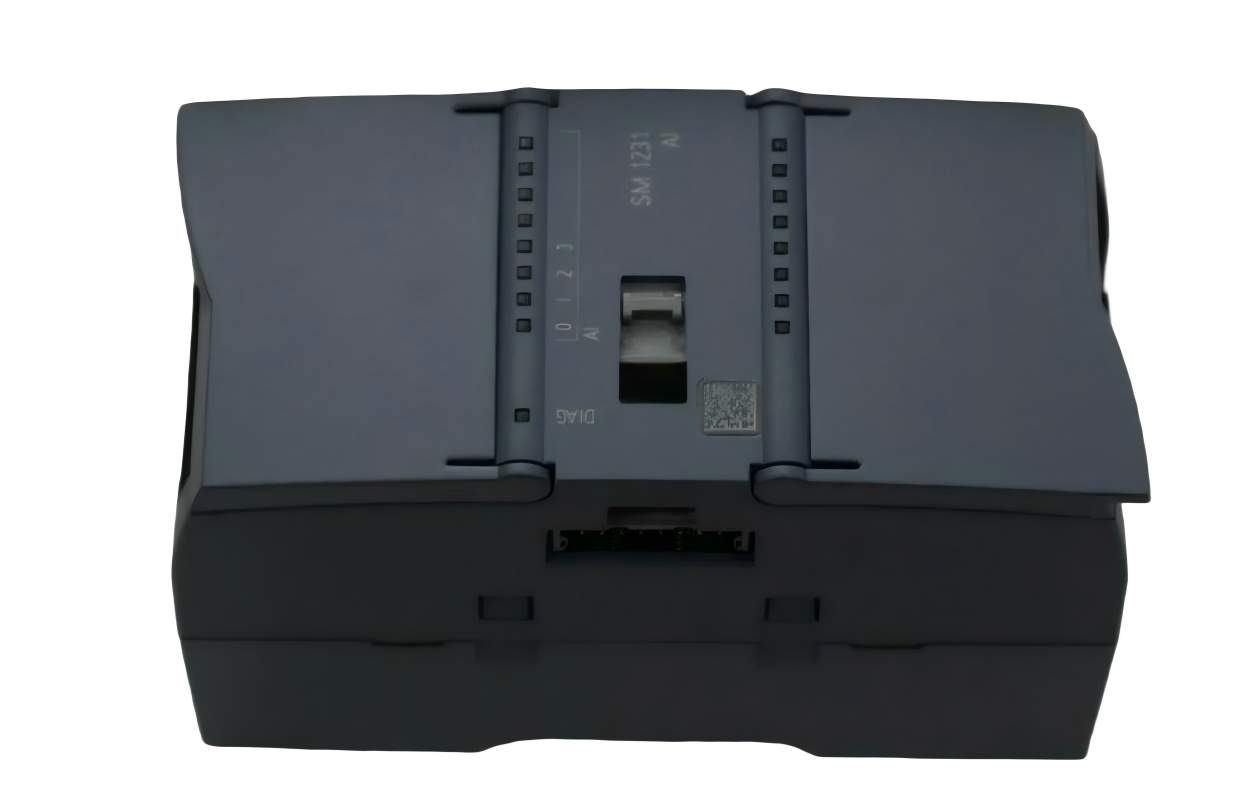
- Siemens
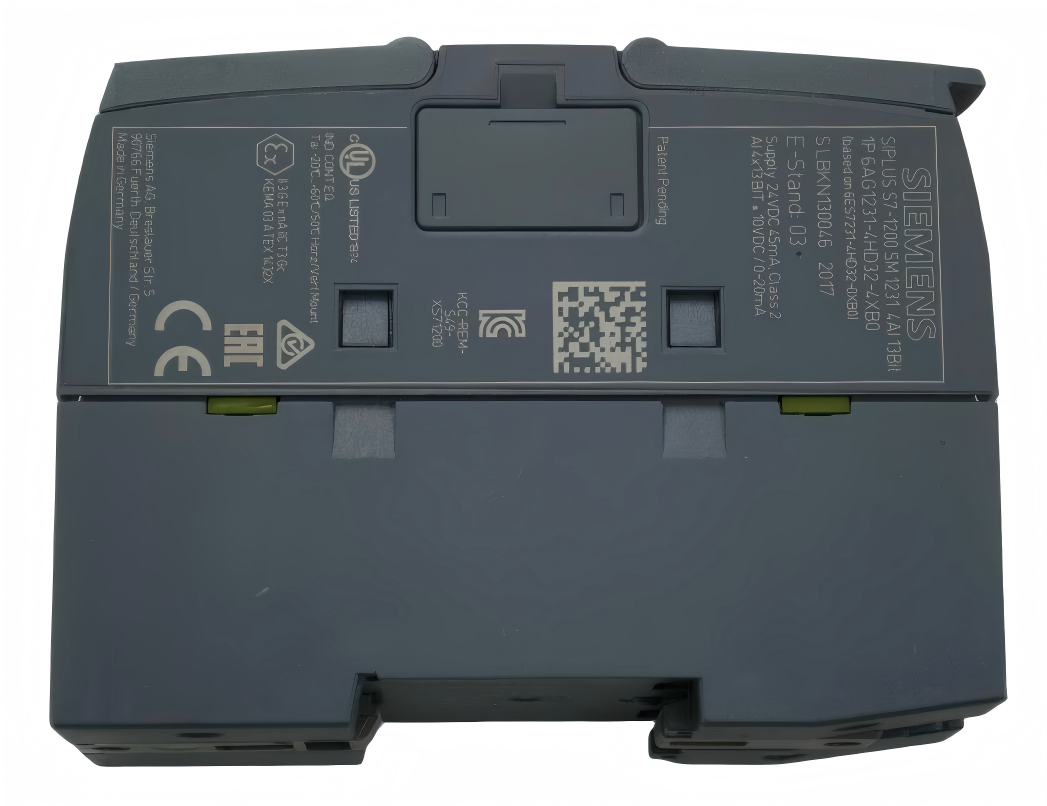
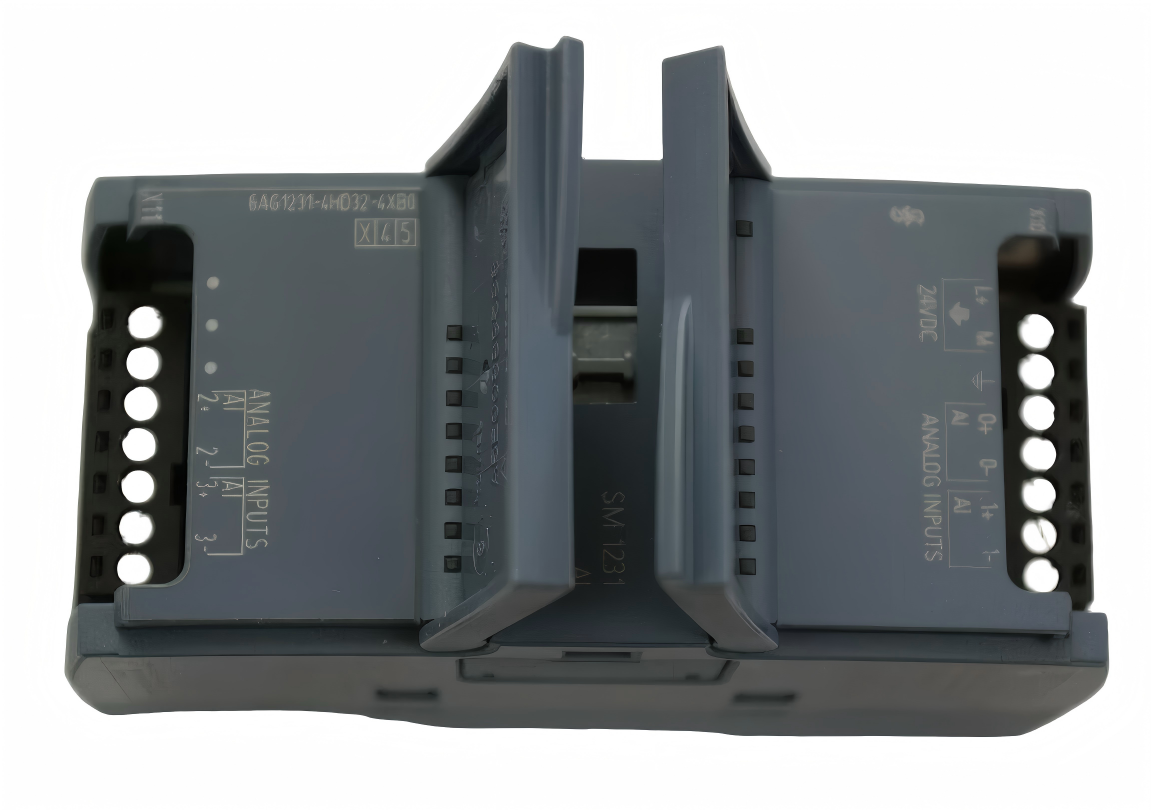
- 6AG1231-4HD32-4XB0
- SIPLUS S7-1200 SM 1231
- Germany
- 45 × 100 × 75 mm
- 0.18kg
- Xiamen, China
- New & In Stock
- T/T, PayPal, Western Union
- 1 Year
- 1-3 Working Days
- DHL, UPS, TNT, FedEx and EMS.
- 24-Hour Service
- COO
- 4
Our advantage

Global Logistics
We have a 10-year logistics and express cooperation agreement, so our products can be shipped to any place in the world.

Brand new and original
Our products are imported in bulk from the place of origin. Because of the cooperative relationship, our products are all original and 100% new.

24-hour service
We provide 7*24 hours service to our customers. We will be there whenever you need us.

Price advantage
All our products are priced very favorably because we have our own warehouse and supply.
| Company Information | |||
| [email protected] | |||
| Mobile | +8615980777398 | ||
| +8615980777398 | |||
| 15980777398 |
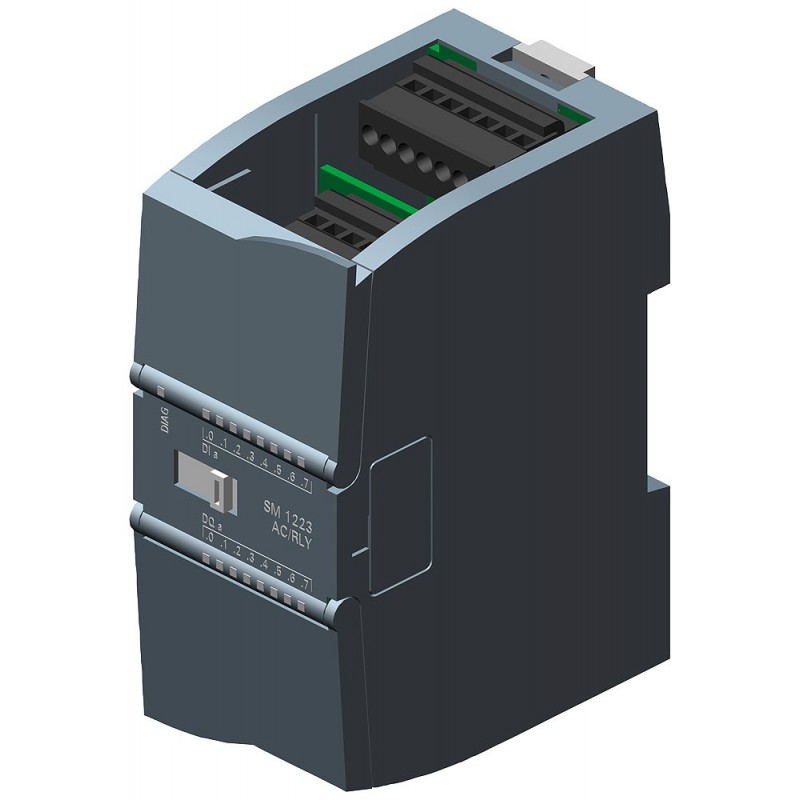
Siemens 6AG1231-4HD32-4XB0 Analog Input Module
Product Introduction, Technical Specifications, Applications, Advantages, and Related Models
1. Product Overview
The 6AG1231-4HD32-4XB0 is a SIPLUS S7-1200 SM 1231 analog input module designed for industrial automation and process monitoring applications. It provides four analog input channels for collecting voltage and current signals from field instruments and transmitting the measured values to a compatible programmable logic controller (PLC) for processing.
The module is designed for applications that require reliable analog signal acquisition in industrial environments. It supports several commonly used voltage and current measurement ranges, making it suitable for connecting a variety of sensors, transmitters, and measuring instruments.
As part of the SIPLUS S7-1200 product family, this model is based on the corresponding standard SM 1231 analog input module and incorporates conformal coating for additional protection of its electronic assemblies against environmental influences.
The module is suitable for use in machinery, process equipment, production lines, monitoring systems, and other automation installations that require analog measurements to be incorporated into PLC control logic.
2. Product Basic Information
| Parameter | Description |
|---|---|
| Model Number | 6AG1231-4HD32-4XB0 |
| Brand | Siemens |
| Product Family | SIPLUS S7-1200 |
| Product Series | SM 1231 Analog Input Modules |
| Product Type | Analog Input Module |
| Module Function | Analog signal acquisition |
| Number of Analog Inputs | 4 |
| Analog Input Types | Voltage and current |
| Input Configuration | Differential analog inputs |
| Resolution | 12-bit plus sign bit; 13-bit ADC classification |
| Supported Voltage Ranges | ±10 V, ±5 V, ±2.5 V |
| Supported Current Range | 0–20 mA |
| Typical Industrial Signal | 4–20 mA |
| Base Standard Model | 6ES7231-4HD32-0XB0 |
| Environmental Protection Feature | Conformal coating |
| Operating Temperature | Approximately -20°C to +60°C |
| Extended Temperature Consideration | Operation up to +70°C is subject to the specified input-loading restrictions |
| Installation Type | S7-1200 expansion-module installation |
| Dimensions (W × H × D) | 45 × 100 × 75 mm |
| Approximate Weight | 0.180 kg |
| Typical Application | Industrial analog signal monitoring and PLC measurement |
The temperature limits and channel-loading restrictions should be considered together. When operating above +60°C, the specified restrictions on the number of simultaneously active inputs apply. The precise installation conditions should be checked against the equipment’s technical documentation.
3. Detailed Technical Parameters
The following table summarizes the main electrical, functional, mechanical, and environmental characteristics of the 6AG1231-4HD32-4XB0.
| Parameter | Technical Specification |
|---|---|
| Model Number | 6AG1231-4HD32-4XB0 |
| Module Category | Analog input signal module |
| Controller Platform | S7-1200 |
| Module Series | SM 1231 |
| Number of Input Channels | 4 analog inputs |
| Number of Analog Outputs | 0 |
| Input Signal Types | Voltage and current |
| Voltage Measuring Ranges | ±10 V, ±5 V, ±2.5 V |
| Current Measuring Range | 0–20 mA |
| Common Transmitter Signal | 4–20 mA |
| Input Signal Connection | Differential inputs |
| Analog Conversion | Analog-to-digital conversion |
| Resolution Classification | 13-bit ADC, including sign bit |
| Effective Measurement Resolution | Depends on the selected measuring range and conversion characteristics |
| Channel Configuration | Configurable analog input channels |
| Sensor Compatibility | Compatible voltage-output sensors and suitable current transmitters |
| Temperature Sensor Direct Input | Not intended as a dedicated thermocouple or resistance-temperature-detector module |
| Analog Output Function | Not available |
| Digital Input Function | Not available |
| Digital Output Function | Not available |
| Signal Processing | Analog values are converted into PLC-readable data |
| Diagnostics | Diagnostic functions depend on the configured signal and supported module functions |
| Wire-Break Monitoring | Available for supported configurations and signal conditions |
| Electrical Isolation | Check the exact channel-to-channel and channel-to-system isolation specifications before installation |
| Protective Design | Conformal-coated electronic assemblies |
| Operating Temperature | Approximately -20°C to +60°C |
| Extended Operating Temperature | Up to +70°C under specified channel-loading restrictions |
| Storage Temperature | Confirm the exact permitted range for the installed version |
| Installation Position | According to the S7-1200 installation requirements |
| Front Connector | Required; select the compatible connector type |
| Enclosure Material | Plastic |
| Protection Rating | Confirm the complete assembly’s applicable protection rating |
| Width | 45 mm |
| Height | 100 mm |
| Depth | 75 mm |
| Dimensions (W × H × D) | 45 × 100 × 75 mm |
| Approximate Weight | 0.180 kg |
| Mounting Considerations | Allow adequate wiring access, ventilation, and clearance |
| Application Environment | Industrial automation and process measurement |
| Compatible Controller | Compatible S7-1200 CPU, subject to configuration and firmware requirements |
3.1 Analog Input Channels
The module provides four analog input channels. These channels allow a PLC to collect multiple measurement signals without requiring a separate analog input module for each instrument.
Typical signals include pressure transmitter outputs, flow measurement signals, liquid-level transmitters, and other industrial instruments that provide supported voltage or current signals.
The number of channels makes this module particularly useful for compact machines and control panels with several measurement points but limited installation space.
3.2 Voltage Input Capability
The supported voltage ranges include ±10 V, ±5 V, and ±2.5 V. These ranges provide flexibility when integrating sensors, signal conditioners, and other measurement devices with different voltage-output characteristics.
The selected range must correspond to the instrument’s output. An incorrect range or an improperly wired input can result in inaccurate readings or an out-of-range measurement.
Before connecting a sensor, verify its signal type, polarity, output range, wiring method, and grounding requirements.
3.3 Current Input Capability
The module supports current measurement within the 0–20 mA range. This makes it suitable for many industrial transmitter applications, including instruments using a 4–20 mA output.
Current-loop signals are widely used in industrial environments because they are convenient for transmitting measurement information from field instruments to centralized control equipment.
When using a 4–20 mA transmitter, the PLC program should scale the raw input value into the engineering units required by the application, such as bar, °C, metres, litres per minute, or percentage.
3.4 Resolution and Measurement Processing
The module is described as a 13-bit analog input module, including the sign bit. The effective measurement resolution depends on the selected input range and the module’s conversion characteristics.
The PLC receives a digital representation of the measured analog signal. The application program can then perform scaling, comparison, alarm evaluation, trend monitoring, data recording, and closed-loop control calculations.
For applications requiring particularly high accuracy, the overall measurement performance should be evaluated using the sensor accuracy, signal conditioning, wiring, noise conditions, and module specifications together.
3.5 Environmental Protection
The SIPLUS version incorporates conformal coating on the electronic assemblies. This coating is intended to improve protection against certain environmental contaminants and influences that can occur in industrial installations.
It is useful in applications where ordinary indoor control-panel conditions cannot always be guaranteed. However, conformal coating does not make the module waterproof or eliminate the need for appropriate cabinet design.
Protection against condensation, corrosive substances, excessive dust, vibration, and direct liquid exposure must still be considered as part of the complete installation.
3.6 Dimensions and Weight
The nominal module dimensions are approximately 45 mm wide, 100 mm high, and 75 mm deep. Its approximate weight is 0.180 kg.
The compact form factor supports installation in space-constrained control panels and modular S7-1200 automation systems. When designing the panel, the module dimensions should not be treated as the only space requirement.
Additional room should be provided for the front connector, cable bending radius, wiring ducts, adjacent modules, maintenance access, and any required ventilation clearance.
The listed weight is an approximate module value. Packaging dimensions and shipping weight may differ from the physical dimensions and net weight of the installed component.
4. Product Introduction and Operating Principle
The 6AG1231-4HD32-4XB0 is intended to bridge the gap between analog field instruments and the digital processing environment of a PLC.
Many industrial instruments measure physical quantities in the real world. Their outputs may be represented by a changing voltage or current rather than a simple on/off signal. A suitable analog input module converts those electrical measurements into digital values that the PLC can process.
For example, a pressure transmitter may produce a 4–20 mA signal corresponding to a pressure range of 0–10 bar. The analog input module acquires the signal, and the PLC program converts the resulting input value into a pressure reading that can be displayed on an operator panel or used by a control algorithm.
The same general principle applies to liquid-level measurement, flow monitoring, temperature measurement through a suitable transmitter, and other industrial measurement tasks.
Because this module provides four input channels, several measurement points can be handled by one expansion module. This helps simplify the overall control-panel layout and reduces the need for multiple separate analog input modules.
The module is an input device rather than a controller or output device. It does not independently operate motors, valves, or actuators. Instead, it supplies measurement data to the PLC, which determines the appropriate response according to the application program.
5. Main Applications
5.1 Industrial Process Monitoring
The module can collect analog signals from process instruments used to monitor pressure, flow, liquid level, and other measurable operating conditions.
The PLC can use the input values to display real-time process information, compare measurements with configured limits, activate alarms, and record operating data.
This arrangement is useful in process equipment where operators need continuous information about the status of the machine or production system.
5.2 Pressure Measurement Systems
Pressure transmitters frequently provide voltage or current outputs that can be acquired by an analog input module.
In a pressure monitoring application, the PLC receives the transmitter signal and converts it into an engineering value. The control program can then check whether the pressure remains within the required operating range.
Potential applications include pump monitoring, hydraulic equipment, pneumatic systems, filtration equipment, and industrial fluid-handling machinery.
The selected transmitter and its output signal must match the module’s supported input range.
5.3 Liquid-Level Monitoring
Suitable level transmitters can be connected to the module to monitor tanks, reservoirs, process vessels, and storage systems.
The PLC can use the measured value to indicate the current liquid level, trigger high- or low-level alarms, and coordinate filling or draining operations.
Where automatic filling or draining is required, the actual switching and control of pumps or valves must be handled by suitable PLC outputs and associated control equipment.
5.4 Flow Measurement
Flow instruments with compatible analog outputs can supply measurement signals to the module.
The PLC can use these values to monitor water flow, industrial fluid circulation, chemical dosing, or other process flows.
The application program can calculate accumulated quantities, identify abnormal flow conditions, or coordinate the operation of pumps and valves.
For accurate results, the flow transmitter’s scaling, signal range, and engineering units must be configured correctly.
5.5 Machine Automation
Manufacturing machines often contain several analog measurement points. Examples include pressure sensors, force-monitoring devices with suitable signal conditioning, analog position transmitters, and process measurement instruments.
The module allows these signals to be integrated into the machine’s PLC program.
This can improve process visibility, support automatic adjustment, and help operators identify abnormal operating conditions before they cause production interruptions.
5.6 Packaging and Assembly Equipment
Packaging and assembly systems may use analog instruments to monitor pressure, tension, temperature through a transmitter, or other process variables.
The input values can be used to verify operating conditions and support consistent machine operation.
For example, a PLC can compare a pressure signal with a configured operating range and issue an alarm if the measurement moves outside acceptable limits.
5.7 Water and Wastewater Equipment
In suitable installations, the module can acquire signals from pressure transmitters, flow transmitters, and level-measuring instruments used in water-handling equipment.
The PLC can process these signals for pump control, tank monitoring, flow supervision, and alarm management.
For installations exposed to demanding environmental conditions, the coated design can provide an additional layer of protection for the electronics. Cabinet protection and the suitability of all connected equipment must still be evaluated.
5.8 Energy and Utility Monitoring
Industrial utility systems may require analog measurement of pressure, flow, or other process variables.
The module can bring compatible instrument signals into the PLC for local monitoring and supervisory control.
It is important to distinguish this function from direct electrical energy metering. The module is not, by itself, a dedicated power meter or electrical energy analyzer.
5.9 Equipment Condition Monitoring
Some equipment-monitoring instruments provide voltage or current outputs proportional to a measured physical condition.
Where the instrument’s signal characteristics are compatible, the module can acquire those values for trend analysis and alarm logic.
The suitability of the input module depends on the output signal supplied by the monitoring instrument. Specialized vibration probes, thermocouples, resistance temperature detectors, and other sensors may require dedicated signal-conditioning equipment or a different module.
6. Main Product Advantages
6.1 Four Analog Channels in One Module
The four-channel configuration allows multiple measurement signals to be connected to one module.
This can simplify system architecture when a machine has several analog instruments but does not require a large number of input channels.
It also provides a convenient way to expand an existing S7-1200 control system without redesigning the entire automation arrangement.
6.2 Flexible Voltage and Current Measurement
Support for multiple voltage ranges and current input makes the module suitable for a broad range of standard industrial instruments.
This flexibility is valuable in systems that use different types of transmitters or combine voltage-output and current-output devices.
The actual signal range should be configured according to the connected instrument, rather than assuming that every channel can accept every signal type simultaneously without configuration.
6.3 Compact Installation
The module’s nominal dimensions of 45 × 100 × 75 mm make it suitable for modular control-panel layouts.
A compact module can help reduce the space required for analog signal acquisition and make it easier to organize the PLC, power supply, signal wiring, and related equipment.
The overall installation must still provide enough clearance for wiring and servicing.
6.4 Conformal-Coated Electronics
The conformal coating is a key distinguishing feature of the SIPLUS version.
It provides additional protection for the electronic assemblies against certain environmental influences and can be useful in industrial installations where environmental conditions are more demanding than those in a clean indoor control room.
The coating should be viewed as an additional protective measure, not a substitute for suitable enclosures, environmental controls, or correct installation practices.
6.5 Integration with the S7-1200 Platform
The module is designed for the S7-1200 automation platform, allowing its analog input values to be integrated into a compatible PLC application.
This supports a consistent approach to signal acquisition, control logic, operator displays, alarms, and production monitoring.
Compatibility should be confirmed for the exact CPU, hardware configuration, firmware version, and engineering software being used.
6.6 Support for Process Scaling
The digital measurement values can be converted by the PLC program into meaningful engineering units.
For example, the raw input can be scaled into pressure, flow, liquid level, or percentage values. These values can then be displayed, stored, compared with thresholds, or used in control calculations.
Correct scaling is essential. An incorrect scaling formula can result in misleading readings even when the electrical connection is correct.
6.7 Simplified Multi-Point Monitoring
Four input channels allow several instruments to be monitored within a single expansion module.
This can help reduce the number of separate modules required in smaller automation systems and provide a straightforward solution for machines with a limited number of analog measurements.
6.8 Suitable for Industrial Measurement Tasks
The combination of analog input functionality, voltage and current measurement, and coated electronics makes the module a practical option for industrial measurement applications.
Its suitability should be judged against the actual process requirements, including measurement accuracy, signal type, environmental exposure, required channel count, and expected operating temperature.
6.9 Support for Monitoring and Alarm Logic
The module supplies analog measurement information to the PLC. The application program can use that information to detect values above or below configured limits.
Examples include high pressure, low tank level, abnormal flow, or a process value moving outside the normal operating range.
Alarm behavior depends on the PLC program and system design; it is not a replacement for a dedicated safety function where one is required.
6.10 Modular System Expansion
A modular automation platform allows the control system to be adapted as the number of measurement points changes.
The 6AG1231-4HD32-4XB0 can be considered when adding analog monitoring to an existing compatible system, provided that the CPU configuration, expansion limits, power requirements, and engineering environment support the installation.
7. Brand and Product Series
| Item | Description |
|---|---|
| Model Number | 6AG1231-4HD32-4XB0 |
| Brand | Siemens |
| Automation Platform | SIMATIC S7-1200 |
| Enhanced Product Family | SIPLUS |
| Module Series | SM 1231 |
| Functional Category | Analog Input |
| Channel Configuration | 4 Analog Inputs |
| Main Function | Voltage and current signal acquisition |
| Product Design | Conformal-coated electronics |
| Standard Base Model | 6ES7231-4HD32-0XB0 |
| Typical System Role | Expansion module for analog measurements |
The SM 1231 series is intended for analog signal acquisition within compatible S7-1200 automation systems.
The broader SIPLUS family includes versions developed for applications where additional environmental protection is required. The precise environmental capabilities depend on the particular model and its specified operating conditions.
8. Installation and Configuration Considerations
8.1 Verify the Sensor Output
Before connecting a field instrument, confirm whether its output is voltage or current and verify the exact output range.
The instrument’s electrical characteristics must correspond to the input configuration selected for the module.
8.2 Confirm Wiring and Polarity
Analog measurements can be affected by incorrect wiring, poor shielding, grounding problems, or electrical interference.
Follow the module’s terminal assignment and the sensor manufacturer’s wiring instructions. Use suitable cable routing practices, especially when analog signals run near motor cables, switching devices, or other sources of electrical noise.
8.3 Configure the Measurement Range
Select the appropriate input range for each measurement application.
The PLC program must interpret the acquired input value according to the configured range and convert it into the engineering units required by the process.
8.4 Check the Operating Environment
Although the module has conformal-coated electronics, the control-panel environment remains important.
Evaluate temperature, condensation, corrosive substances, dust, vibration, and any other environmental conditions that may affect the installation.
8.5 Confirm CPU and Software Compatibility
Before adding the module to an existing PLC system, verify that the CPU and engineering software support the selected hardware configuration.
Check firmware requirements, available expansion capacity, system power limits, and the intended configuration of the analog channels.
8.6 Test the Completed Installation
After wiring and configuration, test the channels using known signal values where practical.
Confirm that the PLC readings correspond to the expected engineering values, and verify the behavior of alarms, limits, and control logic before placing the equipment into normal production.
9. Five Related or Same-Series Model Recommendations
The following models are useful candidates when designing, expanding, or maintaining an S7-1200 automation system. Some are direct functional alternatives, while others perform complementary input, output, or controller functions.
| No. | Model Number | Product Type | Main Parameters or Function | Relationship to the Main Model |
|---|---|---|---|---|
| 1 | 6AG1231-4HF32-4XB0 | SIPLUS SM 1231 analog input module | 8 analog inputs; intended for applications requiring more measurement channels; confirm exact signal ranges and resolution | Related analog input option for higher channel density |
| 2 | 6ES7231-4HD32-0XB0 | Standard SM 1231 analog input module | 4 analog inputs; voltage and current measurement; standard version corresponding to the base design | Closest standard-product counterpart |
| 3 | 6ES7231-4HF32-0XB0 | Standard SM 1231 analog input module | 8 analog inputs; designed for compatible S7-1200 configurations; confirm exact electrical specifications | Useful when more analog channels are required |
| 4 | 6AG1231-7KF00-4XB0 | SIPLUS analog input module | Temperature-measurement-oriented module variant; verify supported sensor types and exact compatibility before selection | Related option for applications requiring a different sensor interface |
| 5 | 6ES7231-5PF32-0XB0 | S7-1200 analog input module | Alternative analog measurement module; verify input type, channel count, and system compatibility | Additional candidate when evaluating analog input requirements |
The models in this table are not interchangeable in every application. In particular, the number of channels, signal types, electrical ranges, environmental rating, and hardware compatibility may differ.
For a direct replacement of the 6AG1231-4HD32-4XB0, begin by checking the standard base model and the corresponding SIPLUS variant. If the project requires more channels or a different type of sensor input, compare the full technical specification before selecting an alternative.
10. Five Popular Models from the Same Brand
The following models represent common controller and I/O categories within the same automation ecosystem. They are included as broader system recommendations rather than direct replacements for the four-channel analog input module.
| No. | Model Number | Product Type | Main Parameters or Function | Typical Application |
|---|---|---|---|---|
| 1 | 6ES7214-1AG40-0XB0 | S7-1200 CPU 1214C | Compact PLC CPU with integrated digital I/O; verify the exact supply and I/O configuration | General machine control and automation |
| 2 | 6ES7215-1AG40-0XB0 | S7-1200 CPU 1215C | PLC CPU with integrated I/O and additional communication capabilities; verify exact hardware version | Medium-complexity machine control |
| 3 | 6ES7221-1BH32-0XB0 | SM 1221 digital input module | Digital input expansion; verify channel count and electrical characteristics | Pushbuttons, switches, and digital sensors |
| 4 | 6ES7222-1BH32-0XB0 | SM 1222 digital output module | Digital output expansion; verify output type and load requirements | Indicator lamps, relays, and compatible control devices |
| 5 | 6ES7231-4HF32-0XB0 | SM 1231 analog input module | 8-channel analog input option; confirm exact input ranges and resolution | Multi-point analog measurement |
10.1 Controller Models
The S7-1200 CPU models provide the processing and control functions required to run the automation program. A suitable CPU can collect measurements from analog input modules, execute control logic, and coordinate compatible output modules and communication devices.
The choice of CPU depends on the number of I/O points, program complexity, communication requirements, processing capacity, and expansion needs.
10.2 Digital Input Modules
Digital input modules are used for signals that have discrete states, such as a switch being open or closed, a sensor being active or inactive, or a machine limit switch changing state.
They complement the 6AG1231-4HD32-4XB0 because analog and digital inputs serve different purposes. Analog modules acquire continuously varying measurements, whereas digital modules acquire discrete signal states.
10.3 Digital Output Modules
Digital output modules allow the PLC to control compatible external devices. Depending on the particular module, these may include indicator lamps, interface relays, and other control components.
The exact output technology, voltage, current rating, and load requirements must be checked before connecting field equipment.
10.4 Higher-Channel-Count Analog Modules
An eight-channel analog input module may be more suitable when a machine requires additional measurement points.
Using a higher-channel-count module can reduce the number of separate modules required, but the signal ranges, resolution, environmental protection, and system compatibility must be compared carefully.
11. Product Selection Guide
When selecting an analog input module for an industrial project, the following considerations are particularly important.
| Selection Factor | What to Check |
|---|---|
| Model Number | 6AG1231-4HD32-4XB0 |
| Required Channel Count | Four analog channels are provided |
| Sensor Output | Confirm voltage or current output |
| Voltage Range | Check whether the required range is supported |
| Current Range | Confirm compatibility with the instrument’s output |
| Resolution | Ensure that the conversion characteristics meet the measurement requirements |
| Measurement Accuracy | Evaluate the module together with the sensor, wiring, and signal conditioning |
| Environmental Conditions | Confirm temperature, humidity, contamination, and enclosure requirements |
| Installation Space | Allow for the module and the required wiring clearance |
| Weight | Approximately 0.180 kg |
| Dimensions | Approximately 45 × 100 × 75 mm |
| Controller Compatibility | Verify the CPU, firmware, configuration, and expansion limits |
| Engineering Software | Confirm support for the intended hardware configuration |
| Replacement Requirements | Compare the full part number, revision, and electrical specifications |
| Future Expansion | Consider whether additional analog channels will be required |
A suitable module should satisfy both the electrical requirements of the connected instruments and the environmental requirements of the installation.
For a replacement project, matching the product family alone is not sufficient. The complete model number and its technical characteristics should be compared with those of the existing module.
12. Summary
The 6AG1231-4HD32-4XB0 is a four-channel analog input module for compatible S7-1200 automation systems. It is designed to collect voltage and current signals from industrial instruments and make the resulting measurement data available to the PLC program.
Its main characteristics include four analog input channels, multiple voltage measurement ranges, support for current signals, a compact installation format, and conformal-coated electronics intended to provide additional environmental protection.
The module can be used in process monitoring, pressure measurement, liquid-level monitoring, flow measurement, machine automation, packaging equipment, and other applications requiring analog data acquisition.
The principal advantages are its four-channel configuration, flexible input options, integration with a compatible PLC platform, and additional protective coating. Its suitability for a particular project still depends on the actual signal requirements, measurement performance, operating temperature, wiring arrangement, and controller compatibility.
For a straightforward four-channel analog input application, this model is a practical candidate. Where more measurement points or specialized sensor inputs are needed, related SM 1231 variants may be worth evaluating. Before ordering or replacing a module, verify the exact part number, dimensions, weight, electrical ratings, and environmental specifications for the intended version.