

ProductPRODUCT
Featured products
Contact Us
- Siemens
- 6AG1223-3BD30-5XB0
- SIPLUS S7-1200 SB 1223 2DI/2DQ
- Germany
- 300 mm x 200 mm x 150 mm
- 0.03kg
- Xiamen, China
- New & In Stock
- T/T, PayPal, Western Union
- 1 Year
- 1-3 Working Days
- DHL, UPS, TNT, FedEx and EMS.
- 24-Hour Service
- COO
- 4
Our advantage

Global Logistics
We have a 10-year logistics and express cooperation agreement, so our products can be shipped to any place in the world.

Brand new and original
Our products are imported in bulk from the place of origin. Because of the cooperative relationship, our products are all original and 100% new.

24-hour service
We provide 7*24 hours service to our customers. We will be there whenever you need us.

Price advantage
All our products are priced very favorably because we have our own warehouse and supply.
| Company Information | |||
| [email protected] | |||
| Mobile | +8615980777398 | ||
| +8615980777398 | |||
| 15980777398 |
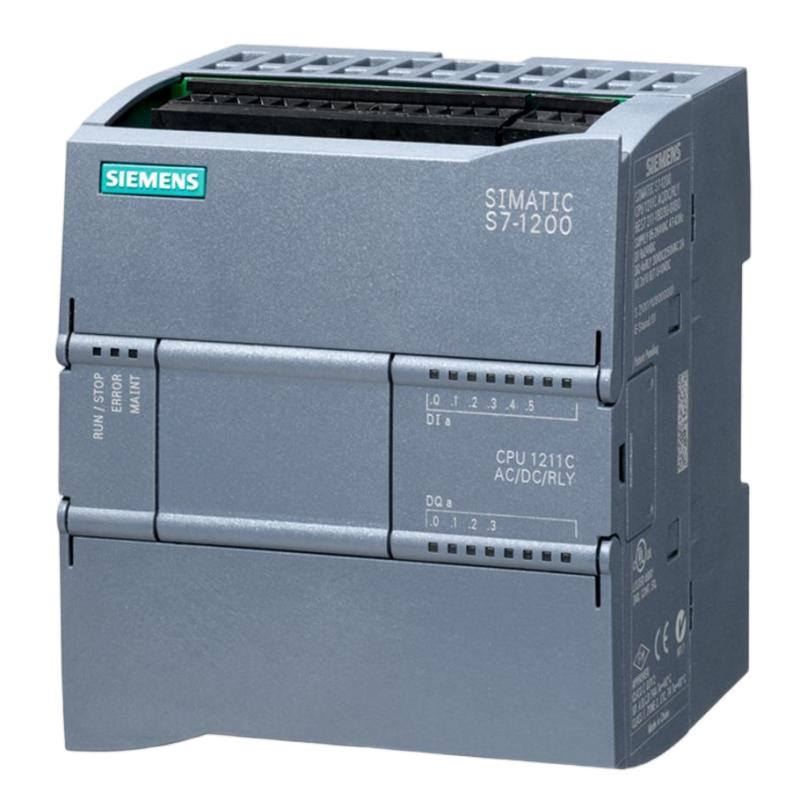
Siemens 6AG1223-3BD30-5XB0 Product Description, Technical Specifications, Applications, Advantages, and Related Models
1. Product Overview
The 6AG1223-3BD30-5XB0 is a compact digital signal module associated with the SIMATIC S7-1200 automation platform. It is intended for industrial control applications that require digital signal acquisition and switching functions in a limited installation space.
Modules in this product category are commonly used to connect field devices, such as switches, sensors, push buttons, indicator lamps, and control relays, to a programmable logic controller (PLC). They allow a controller to receive discrete status signals and issue corresponding control commands to external equipment.
The SIPLUS designation indicates a version intended for applications that require enhanced environmental resistance compared with standard automation modules. The exact environmental ratings, electrical configuration, and supported functions depend on the specific article number.
Important specification note: The exact electrical configuration of 6AG1223-3BD30-5XB0 cannot be independently verified here. The tables below distinguish between general product-family information and details that require confirmation. Exact dimensions, weight, channel counts, and electrical ratings should not be treated as confirmed values until checked against the module’s nameplate or technical documentation.
2. Product Parameters
| Parameter | Description |
|---|---|
| Model | 6AG1223-3BD30-5XB0 |
| Product category | Industrial automation signal module |
| Automation platform | SIMATIC S7-1200 family |
| Product series | SIPLUS S7-1200 |
| Module type | Digital signal module; exact input/output configuration requires verification |
| Main function | Interface between a PLC and discrete field signals |
| Signal type | Digital signals; exact input and output arrangement requires verification |
| Input voltage | Confirm against the module’s exact technical specification |
| Output voltage | Confirm against the module’s exact technical specification |
| Number of input channels | Verify exact configuration |
| Number of output channels | Verify exact configuration |
| Output technology | Verify whether the specific model uses transistor or relay outputs |
| Communication interface | Normally communicates through the host PLC backplane or expansion interface, depending on the module design |
| Installation method | Designed for integration into a compatible automation system |
| Programming environment | Compatible engineering environment depends on the host controller and hardware configuration |
| Environmental protection | SIPLUS product designation; exact temperature and environmental ratings require verification |
| Operating temperature | Verify exact rated range |
| Storage temperature | Verify exact rated range |
| Dimensions (W × H × D) | Exact dimensions not confirmed |
| Weight (kg) | Exact weight not confirmed |
| Application environment | Industrial control panels, machinery, equipment automation, and process control |
| Product condition | Depends on the individual unit and supplier |
| Accessories | Depends on the complete installation; terminal and mounting requirements must be checked |
Understanding the Main Parameters
Model number
The complete article number is the most important identifier when selecting or replacing an automation module. Even when two modules have similar names, their electrical ratings, channel arrangements, environmental characteristics, and compatibility may differ.
For purchasing, maintenance, or replacement work, the complete model number should be matched rather than relying solely on the product family.
Product category
Digital signal modules allow a PLC to exchange discrete signals with external equipment. A digital input receives a state such as ON or OFF, while a digital output controls an external load or switching device.
The exact balance between input and output channels depends on the module’s configuration.
Dimensions and weight
Physical dimensions and weight matter when planning a control cabinet, arranging wiring ducts, calculating installation clearances, or replacing an existing module.
The exact dimensions and weight of 6AG1223-3BD30-5XB0 have not been established in this response. They should be confirmed before preparing a cabinet layout or shipping specification.
Environmental characteristics
SIPLUS products are associated with applications that require enhanced environmental robustness. However, the designation alone does not establish the exact temperature range, permissible humidity, condensation resistance, or coating characteristics of a particular model.
For installations in cold environments, high-humidity areas, or locations with demanding ambient conditions, the precise ratings of the individual module must be checked.
3. Product Introduction
The 6AG1223-3BD30-5XB0 belongs to the category of compact automation components used to connect PLC-based control systems with field-level electrical signals.
In an automated machine, the controller must receive information about equipment status before it can make decisions. For example, a sensor may indicate that a workpiece has arrived, a limit switch may report that a mechanism has reached its endpoint, or a push button may request that an operator start a process.
The signal module provides the electrical interface needed to incorporate these discrete signals into the control system.
On the output side, a PLC may need to activate an indicator, command a switching device, or control another suitable field component. A digital signal module provides the relevant switching function when the connected load and electrical characteristics fall within its rated limits.
Compact Integration
Compact signal modules are useful where the control cabinet has limited space. They help organize field wiring and allow the controller to handle the required signals without relying on a separate, oversized interface assembly for every function.
The suitability of a particular module depends on its channel count, electrical ratings, installation arrangement, and compatibility with the host controller.
Integration with an Automation System
A signal module is normally one component of a larger automation system. The complete installation may include a PLC CPU, power supply, digital and analog modules, sensors, actuators, protective devices, terminal blocks, and an operator interface.
Correct operation depends on the compatibility of all these components.
Before installation, the engineer should confirm the module’s hardware compatibility, electrical connection requirements, wiring arrangement, and any configuration requirements specified for the host controller.
Industrial Environmental Requirements
Some automation installations operate in environments where ordinary industrial electronics may not provide sufficient environmental tolerance. Equipment may be exposed to temperature extremes, humidity, or other demanding ambient conditions.
The SIPLUS product family is relevant to this type of application, but the permissible operating conditions must be established for the exact article number rather than inferred from the family name alone.
4. Main Applications
4.1 Industrial Machinery
Digital signal modules are commonly used in production machinery that requires the monitoring and switching of discrete electrical signals.
Typical applications include packaging equipment, assembly stations, material-handling machines, and automated production cells.
A module can form part of the interface between the controller and devices such as position switches, operator push buttons, and suitable control outputs.
4.2 Manufacturing Automation
In manufacturing systems, multiple sensors and control devices must communicate their states to a central controller.
The module can support this arrangement by providing digital signal interfaces for appropriate field devices. The PLC program can then use these signals to coordinate machine sequences, monitor operating conditions, and trigger predefined actions.
The precise number and type of supported signals depend on the verified module configuration.
4.3 Conveyor and Material-Handling Systems
Conveyor systems often use discrete signals to identify the presence of products, monitor mechanical positions, and coordinate the operation of different sections of a production line.
Digital signal interfaces can be used to connect suitable sensors and switching devices to the PLC.
In these applications, correct wiring and signal timing are important for reliable coordination between moving equipment and the control program.
4.4 Packaging Equipment
Packaging machines commonly rely on discrete signals from photoelectric sensors, position switches, push buttons, and other field devices.
A PLC processes these signals to coordinate feeding, positioning, sealing, cutting, and other machine operations.
A compatible digital signal module can support this type of control architecture, provided that its electrical ratings and channel configuration meet the application requirements.
4.5 Environmental-Demanding Installations
A SIPLUS module may be considered when an installation requires enhanced environmental resistance.
Examples may include equipment installed in locations with demanding ambient temperatures or other environmental conditions addressed by the specific product variant.
The exact suitability of the module must be assessed against the actual operating environment and its documented ratings.
4.6 Equipment Upgrades and Maintenance
During equipment upgrades, maintenance teams may need to replace a faulty module or modify an existing control system.
The full article number, hardware compatibility, electrical characteristics, wiring arrangement, and physical dimensions should all be checked before a replacement is selected.
A similar-looking module should not automatically be considered an equivalent replacement.
5. Product Advantages
5.1 Integration into a Compact Control System
Compact automation modules help organize control equipment within a cabinet or machine enclosure.
This can simplify the overall layout and make it easier to arrange signal wiring, power distribution, and connections to other control components.
5.2 Digital Signal Interface
Digital signal interfaces are suitable for applications in which equipment states are represented by discrete ON/OFF conditions.
This approach is widely used in machine control because many industrial functions, including position detection, operator commands, and status monitoring, can be represented by discrete signals.
5.3 Modular Automation Architecture
A modular control system can be arranged according to the signal requirements of the application.
This allows engineers to select compatible control components for a particular machine or process instead of designing every system around a single fixed hardware configuration.
The benefits depend on the compatibility and expansion capabilities of the selected controller and module.
5.4 Potential Suitability for Demanding Environments
The SIPLUS designation makes the product family relevant to installations where enhanced environmental characteristics are important.
However, the actual benefit depends on the exact version and its specified environmental limits. Temperature tolerance, humidity performance, and other environmental characteristics should be verified individually.
5.5 Easier Maintenance Planning
Using clearly identified modules can help maintenance teams document equipment, identify replacement parts, and manage spare inventories.
Recording the full article number and relevant hardware information reduces the likelihood of selecting a module with an incompatible electrical configuration.
5.6 Support for Automated Production
Digital signal modules can help a PLC coordinate sensors and control devices within an automated process.
When correctly selected and installed, they form part of the electrical interface needed for consistent machine sequencing, equipment monitoring, and automated operation.
5.7 Flexible System Design
A modular automation platform can support different machine designs and signal requirements.
Engineers can choose compatible components according to the number of signals, required functions, installation conditions, and future expansion needs.
The exact flexibility available depends on the host controller and the module’s documented capabilities.
6. Installation and Selection Considerations
Before purchasing or installing 6AG1223-3BD30-5XB0, the following points should be checked.
| Check item | What to confirm | Why it matters |
|---|---|---|
| Model identification | Full article number on the label | Prevents confusion between similar models |
| Channel configuration | Number and type of digital inputs and outputs | Ensures the module supports the required signals |
| Electrical ratings | Input voltage, output voltage, current, and load requirements | Prevents electrical incompatibility |
| Output technology | Transistor or relay, if applicable | Determines load compatibility and switching behavior |
| Controller compatibility | Supported CPU and expansion arrangement | Ensures correct system integration |
| Wiring | Terminal assignment and required wiring method | Reduces installation errors |
| Environmental limits | Operating temperature and other relevant ratings | Helps ensure suitability for the installation |
| Dimensions | Width, height, and depth | Supports cabinet layout and replacement planning |
| Weight (kg) | Actual product weight | Supports shipping, inventory, and handling records |
| Replacement suitability | Hardware and electrical equivalence | Reduces the risk of unexpected system changes |
For replacement work, the most reliable method is to compare the complete article number and the verified technical data of the existing and proposed modules.
7. Five Related Models in the Same or a Related Product Family
The following table lists five models associated with the broader S7-1200 automation ecosystem. They are potential reference points for system design or component selection, not confirmed direct replacements for 6AG1223-3BD30-5XB0.
The exact specifications of each model should be checked before purchasing or using it in a production system.
| Model | Product category | Main function | Electrical specifications | Dimensions (W × H × D) | Weight (kg) | Selection notes |
|---|---|---|---|---|---|---|
| 6ES7223-3BD30-0XB0 | Digital signal module | Digital signal interface | Verify exact input/output configuration and electrical ratings | Verify exact dimensions | Verify exact weight | A related standard-series model number; do not assume full equivalence |
| 6ES7223-3AD30-0XB0 | Digital signal module | Digital signal interface | Verify channel count, voltage, and output characteristics | Verify exact dimensions | Verify exact weight | Another related model number; confirm the configuration before substitution |
| 6ES7221-1BH32-0XB0 | Digital input module | Receives discrete field signals | Verify input count and rated input voltage | Verify exact dimensions | Verify exact weight | Relevant when the application primarily requires digital inputs |
| 6ES7222-1BH32-0XB0 | Digital output module | Switches compatible external loads | Verify output type, channel count, voltage, and current | Verify exact dimensions | Verify exact weight | Relevant when the application primarily requires digital outputs |
| 6ES7223-1BL32-0XB0 | Combined digital signal module | Provides digital input and output functions | Verify input/output arrangement and electrical ratings | Verify exact dimensions | Verify exact weight | May be worth evaluating when both input and output signals are required |
How to Choose Among These Models
For combined input and output functions
A combined digital signal module may be appropriate when the application requires both the acquisition of discrete signals and the switching of external loads.
The number of inputs and outputs must match the machine’s actual signal list.
For input-only applications
A digital input module may be more appropriate when the principal requirement is to monitor switches, sensors, and other discrete status signals.
This can help avoid selecting an output function that the application does not require.
For output-only applications
A digital output module may be suitable when the primary requirement is to switch compatible loads or send discrete control commands to external equipment.
Output type and current capacity are especially important in this case.
For environmentally demanding applications
If the existing installation requires a SIPLUS variant, replacing it with a standard-series model should not be considered a like-for-like substitution without evaluating the environmental requirements.
A standard model may not provide the same environmental characteristics as the original variant.
For direct replacement
The model number alone is insufficient to establish interchangeability. Confirm electrical specifications, mechanical dimensions, terminal assignment, controller compatibility, and environmental ratings before selecting a replacement.
8. Five Popular Models from the Same Brand’s Broader Automation Portfolio
The following models are examples of widely used component types in the broader SIMATIC automation portfolio. They cover different functions and are not all direct alternatives to the target signal module.
| Model | Product category | Main function | Key parameters to verify | Dimensions (W × H × D) | Weight (kg) | Typical applications |
|---|---|---|---|---|---|---|
| 6ES7214-1AG40-0XB0 | PLC CPU | Main controller for an automation system | Supply voltage, onboard inputs and outputs, memory, communication interfaces | Verify exact dimensions | Verify exact weight | Machine control and compact automation |
| 6ES7215-1AG40-0XB0 | PLC CPU | Controller for applications with broader control requirements | Supply voltage, onboard I/O, communication, memory, expansion support | Verify exact dimensions | Verify exact weight | Automated production equipment and machine systems |
| 6ES7221-1BH32-0XB0 | Digital input module | Acquires discrete signals | Input count, input voltage, electrical isolation, wiring configuration | Verify exact dimensions | Verify exact weight | Sensor monitoring and machine-status acquisition |
| 6ES7222-1BH32-0XB0 | Digital output module | Provides discrete output switching | Output count, output type, rated voltage, permissible current | Verify exact dimensions | Verify exact weight | Actuator control and status indication |
| 6ES7231-4HF32-0XB0 | Analog input module | Acquires analog signals | Supported signal types, measurement range, resolution, channel count | Verify exact dimensions | Verify exact weight | Process monitoring and measurement applications |
Model Selection Guide
PLC CPU models
A CPU performs the main control functions of the automation system. It executes the user program, processes input data, manages output commands, and communicates with compatible devices.
The correct CPU depends on the required program capacity, communication interfaces, integrated I/O, expansion requirements, and control performance.
Digital input modules
Digital input modules are useful when the controller must monitor a large number of discrete field signals.
Examples include limit switches, proximity sensors, push buttons, and equipment status contacts.
Digital output modules
Digital output modules are used to control compatible external devices.
Before selecting an output module, check the output technology, rated current, load type, switching frequency where relevant, and any additional protection required by the connected equipment.
Analog input modules
Analog input modules are appropriate when the control system needs to measure continuously varying electrical signals rather than simple ON/OFF states.
Depending on the module, these signals may represent quantities such as temperature, pressure, flow, or level through a compatible transmitter.
The supported signal ranges and measurement characteristics must be checked for the exact model.
9. Comparison of the Main Product Categories
| Product category | Primary purpose | Typical signal type | Main selection criteria | Dimensions | Weight (kg) |
|---|---|---|---|---|---|
| Digital input module | Receives field status signals | Discrete input | Input voltage, channel count, wiring | Model-specific | Model-specific |
| Digital output module | Sends switching commands | Discrete output | Output technology, voltage, current, load | Model-specific | Model-specific |
| Combined digital signal module | Provides input and output functions | Discrete input and output | Channel arrangement, electrical ratings, controller compatibility | Model-specific | Model-specific |
| Analog input module | Measures varying electrical signals | Analog input | Signal range, resolution, accuracy, channel count | Model-specific | Model-specific |
| PLC CPU | Executes the automation program | Internal processing and communication | Processing capacity, memory, interfaces, integrated I/O | Model-specific | Model-specific |
The key difference is the function each module performs within the automation system. Digital input and output modules handle discrete states, analog input modules measure varying signals, and the CPU executes the control logic.
These product categories complement one another, but they are not interchangeable.
10. Purchasing Recommendations
When evaluating 6AG1223-3BD30-5XB0, it is advisable to establish the actual application requirements before selecting the module or an alternative.
Confirm the Electrical Configuration
Identify the required number of input and output channels, the field voltage, the output load characteristics, and the connection method.
These details determine whether the module can support the intended devices.
Confirm the Environmental Requirements
If the installation operates under demanding environmental conditions, verify the exact permissible temperature range and any other relevant environmental ratings.
Do not rely solely on the product-family designation.
Confirm the Mechanical Specifications
Obtain the exact width, height, depth, and product weight in kilograms before planning a replacement or preparing shipping documentation.
Dimensions and weight should be based on the exact article number, not on an estimate from a related model.
Confirm Compatibility
For an existing installation, compare the proposed model with the current module’s full article number, electrical specifications, wiring arrangement, and host-controller compatibility.
A product that belongs to the same broad family may still differ in important ways.
Confirm the Product’s Condition
For replacement purchases, check whether the unit is new, unused surplus, refurbished, or used.
The supplied accessories, packaging, and documentation may also differ according to the product’s condition and the seller’s inventory.
11. Final Summary
The 6AG1223-3BD30-5XB0 is identified here as a module associated with the SIPLUS S7-1200 automation family. Its intended role is within a PLC-based control architecture, where signal modules provide interfaces between the controller and field-level equipment.
Its potential application areas include machine automation, production equipment, material handling, packaging machinery, and installations where environmental characteristics are important.
The main considerations when evaluating the product are its exact digital input/output configuration, electrical ratings, controller compatibility, environmental limits, dimensions, and weight.
Five related models and five additional automation models have been listed to provide a starting point for component selection. They should be treated as candidates for evaluation rather than confirmed substitutes.
Technical data limitation: The exact dimensions and weight in kilograms for the target model and the listed alternatives have not been verified in this response. Rather than inventing numerical values, the tables identify these values as requiring confirmation. For a purchase specification, equipment replacement, or engineering document, the exact dimensions, weight, channel count, and electrical ratings should be filled in only after they have been confirmed for each complete article number.