

ProductPRODUCT
Featured products
Contact Us
- Siemens
- 6AG1223-3AD30-5XB0
- SIPLUS S7-1200 SB 1223 2DI/2DQ
- Germany
- 38 × 62 × 21 mm
- 0.03kg
- Xiamen, China
- New & In Stock
- T/T, PayPal, Western Union
- 1 Year
- 1-3 Working Days
- DHL, UPS, TNT, FedEx and EMS.
- 24-Hour Service
- COO
- 4
Our advantage

Global Logistics
We have a 10-year logistics and express cooperation agreement, so our products can be shipped to any place in the world.

Brand new and original
Our products are imported in bulk from the place of origin. Because of the cooperative relationship, our products are all original and 100% new.

24-hour service
We provide 7*24 hours service to our customers. We will be there whenever you need us.

Price advantage
All our products are priced very favorably because we have our own warehouse and supply.
| Company Information | |||
| [email protected] | |||
| Mobile | +8615980777398 | ||
| +8615980777398 | |||
| 15980777398 |
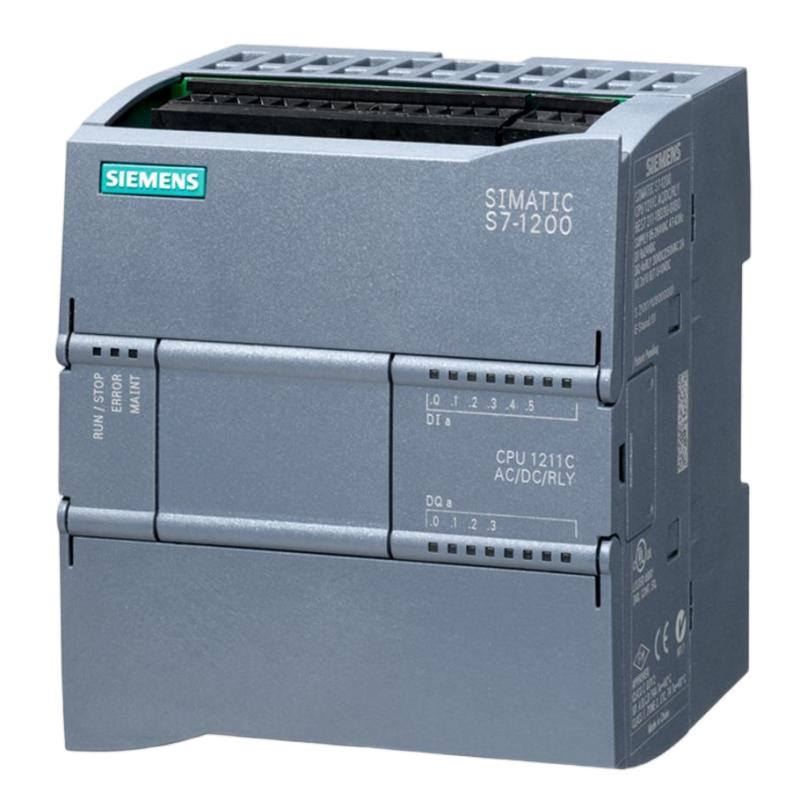
6AG1223-3AD30-5XB0 Digital Input/Output Signal Board
Product Introduction, Technical Specifications, Applications, Advantages, Product Series, and Recommended Models
1. Product Overview
The 6AG1223-3AD30-5XB0 is a compact digital input/output signal board belonging to the SIPLUS S7-1200 automation product family. It is designed to expand the digital signal-handling capabilities of a compatible programmable logic controller (PLC).
The product combines two digital inputs and two digital outputs in a compact electronic assembly. It is intended for applications that require a small number of additional signal channels without installing a larger expansion module.
The signal board supports a 5 V DC digital interface and is designed for applications requiring rapid signal transitions. Its high-speed capability makes it worth considering for selected pulse-monitoring, counting-related, and digital control applications, provided that the controller and connected equipment support the required operating conditions.
The product also incorporates conformal coating to provide additional protection for electronic assemblies. This feature can be beneficial in industrial environments where electronic components may be exposed to certain contaminants or changing environmental conditions.
With its compact dimensions, low weight, and combined input/output functionality, the module can help simplify hardware arrangements in space-constrained automation systems.
The product is based on the standard 6ES7223-3AD30-0XB0 design. However, the standard version and the SIPLUS version should not automatically be regarded as interchangeable because their environmental specifications and protective features may differ.
2. Basic Product Information
| Parameter | Specification |
|---|---|
| Product model | 6AG1223-3AD30-5XB0 |
| Brand | Siemens |
| Product family | SIPLUS S7-1200 |
| Product series | SB 1223 |
| Product type | Digital input/output signal board |
| Functional category | Combined digital input/output |
| Standard design reference | 6ES7223-3AD30-0XB0 |
| Number of digital inputs | 2 |
| Number of digital outputs | 2 |
| Input signal type | Digital |
| Input signal voltage | 5 V DC |
| Output signal type | Digital |
| Output signal voltage | 5 V DC |
| Output technology | Solid-state output |
| High-speed capability | Up to 200 kHz under specified conditions |
| Electronic protection | Conformal coating |
| Operating ambient temperature | -40°C to +60°C |
| Permitted startup temperature | -25°C under specified conditions |
| Typical power loss | Approximately 0.5 W |
| Supply arrangement | Through the compatible controller interface |
| Width | Approximately 38 mm |
| Height | Approximately 62 mm |
| Depth | Approximately 21 mm |
| Approximate net weight | 0.036 kg |
| Mounting arrangement | Direct installation on a compatible controller |
| Main application | Compact industrial digital signal acquisition and control |
Specification note: The dimensions, weight, electrical characteristics, and environmental limits listed above should be confirmed against the exact product revision before formal procurement or engineering use. The 5 V DC interface is particularly important: this module should not be treated as a conventional 24 V DC digital I/O module.
3. Detailed Technical Parameters
3.1 Digital Input Specifications
| Parameter | Specification |
|---|---|
| Product model | 6AG1223-3AD30-5XB0 |
| Number of digital inputs | 2 |
| Signal type | Digital |
| Rated signal voltage | 5 V DC |
| Input technology | Electronic digital input |
| Input channels | 2 |
| High-speed signal capability | Up to 200 kHz under specified conditions |
| Typical signal applications | Pulse monitoring, digital status detection, and compatible counting-related tasks |
| Input filtering | Depends on the supported configuration |
| Signal compatibility | Must match the specified 5 V DC interface |
| Wiring requirements | Follow the applicable terminal and signal-interface specifications |
The two digital inputs allow a compatible PLC to receive digital signals from external electronic equipment.
Depending on the application, these signals may represent switching events, pulse sequences, equipment states, or other discrete information required by the control program.
The 5 V DC input interface is an important consideration when selecting field devices. Many industrial sensors use 24 V DC outputs, so compatibility must be established before connecting them to this signal board.
Where the voltage levels do not match, an appropriate signal converter or interface circuit may be necessary.
For high-speed applications, signal quality is equally important. Cable length, shielding, grounding, electrical interference, input configuration, and controller processing capabilities can all influence the actual performance of the system.
3.2 Digital Output Specifications
| Parameter | Specification |
|---|---|
| Product model | 6AG1223-3AD30-5XB0 |
| Number of digital outputs | 2 |
| Output signal type | Digital |
| Signal voltage | 5 V DC |
| Output technology | MOSFET solid-state output |
| Maximum output current | Verify the applicable specification; approximately 0.1 A for the stated resistive-load condition |
| High-speed capability | Up to 200 kHz under specified conditions |
| Output load | Must comply with the specified electrical limits |
| Switching method | Electronic switching |
| Typical applications | Pulse output and compatible low-current digital control |
| Load protection | External protection may be necessary depending on the connected circuit |
The two digital outputs are intended for compatible low-voltage electronic circuits.
Solid-state outputs can be useful in applications requiring frequent switching because they do not use moving mechanical contacts. This makes them relevant to certain pulse-generation and digital signal-transmission tasks.
However, these outputs should not be treated as general-purpose power outputs. Their current rating, voltage range, and load characteristics must be verified before connecting external equipment.
Loads such as motors, solenoids, and contactor coils may require separate driver circuits or interface devices.
3.3 Power Supply and Consumption
| Parameter | Specification |
|---|---|
| Product model | 6AG1223-3AD30-5XB0 |
| Signal voltage | 5 V DC |
| Power arrangement | Through the compatible controller interface |
| Typical power loss | Approximately 0.5 W |
| Backplane current consumption | Confirm the exact product specification |
| External power requirements | Depend on the system and connected field devices |
| Installation consideration | Confirm controller compatibility and available power capacity |
The signal board is designed to operate as part of a compatible controller configuration.
Its power requirements should be considered alongside those of the PLC and other installed modules. The overall system must have sufficient power capacity to support all components under normal operating conditions.
The 5 V DC signal interface should not be confused with the 24 V DC power supplies commonly used in industrial control cabinets.
3.4 Dimensions and Weight
| Parameter | Specification |
|---|---|
| Product model | 6AG1223-3AD30-5XB0 |
| Width | Approximately 38 mm |
| Height | Approximately 62 mm |
| Depth | Approximately 21 mm |
| Approximate net weight | 0.036 kg |
| Approximate net weight in grams | 36 g |
| Mounting type | Direct signal-board installation |
| Installation space | Compact |
| Wiring clearance | Depends on the controller and installation arrangement |
| Cabinet planning | Allow adequate space for installation and maintenance |
The compact dimensions make the signal board suitable for applications where space is limited and only a small number of additional I/O channels are required.
Its approximate net weight of 0.036 kg is also relatively low, which can be useful when preparing component lists and calculating equipment weights.
The final cabinet layout should nevertheless allow sufficient room for wiring, access to connections, heat dissipation, and maintenance.
3.5 Environmental Specifications
| Parameter | Specification |
|---|---|
| Product model | 6AG1223-3AD30-5XB0 |
| Operating ambient temperature | -40°C to +60°C |
| Permitted startup temperature | -25°C under specified conditions |
| Electronic protection | Conformal coating |
| Intended environment | Compatible industrial automation installations |
| Product construction | Compact electronic signal board |
| Water protection | Do not assume waterproof protection |
| Outdoor installation | Requires a suitable protective enclosure and environmental assessment |
| Installation requirements | Follow the applicable product and controller specifications |
The conformal coating provides additional protection for electronic assemblies against certain environmental contaminants.
This feature can be useful in industrial installations where electronic components require additional protection. However, the coating does not make the entire module waterproof or suitable for unrestricted exposure to moisture, condensation, or corrosive substances.
The operating temperature range must also be considered alongside the limits of the controller and other components in the same installation.
4. Product Structure and Operating Principle
4.1 Compact Signal Board Design
The SB 1223 is a signal board designed to add digital I/O functionality to a compatible S7-1200 controller.
Unlike a conventional expansion module, it is installed directly on a compatible controller rather than occupying a separate expansion position.
This design can reduce the space required for additional I/O and simplify the hardware arrangement in compact control cabinets.
The two-input, two-output configuration is particularly useful when the main controller already provides most of the required I/O capacity and only a few additional signal channels are needed.
4.2 Digital Signal Acquisition
The input section receives compatible digital signals from external devices.
These signals can be used by the PLC program to determine whether a particular operating condition has occurred.
For example, an input may represent a switching event, a pulse signal, or a status condition from another electronic device.
The actual application depends on the input voltage, signal characteristics, controller functions, and programming configuration.
4.3 Digital Signal Output
The output section provides two digital output channels for compatible low-voltage signal circuits.
The PLC program can control these outputs according to operating conditions, sequence logic, timing requirements, or other programmed instructions.
Because the outputs use solid-state switching technology, they may be suitable for certain applications requiring frequent signal transitions.
The connected circuit must remain within the permitted electrical limits of the output.
4.4 High-Speed Signal Processing
The module supports high-speed digital signal handling up to 200 kHz under specified conditions.
This feature may be relevant when the system needs to detect or generate rapid signal transitions.
However, the signal board’s maximum capability does not guarantee that the entire control system can process all signals at that frequency. The controller, software configuration, wiring, signal quality, and application requirements must also be considered.
4.5 Conformal-Coated Electronics
The electronic assemblies have conformal coating to provide additional protection against certain environmental contaminants.
This can be advantageous in selected industrial environments where a standard uncoated electronic assembly may require additional environmental consideration.
The coating should be regarded as one component of the overall environmental protection strategy, rather than a replacement for an appropriate enclosure and installation design.
5. Main Product Applications
5.1 Industrial Machinery
The signal board can be considered for compact industrial machines that require a small number of additional digital signals.
Potential applications include:
- Packaging equipment.
- Small assembly machines.
- Automated inspection equipment.
- Compact production machinery.
- Machine status monitoring.
- Digital signal exchange between compatible electronic devices.
The board can help expand the available signal channels without introducing a larger expansion module when the application only needs a few additional inputs and outputs.
5.2 High-Speed Pulse Monitoring
The high-speed signal capability makes the product relevant to selected pulse-monitoring applications.
Possible uses include monitoring compatible pulse sources, detecting rapid switching events, and collecting digital signals used by counting-related control functions.
The suitability of the board depends on the pulse voltage, signal frequency, signal shape, controller configuration, and the required processing accuracy.
For applications involving specialized encoder interfaces or complex motion-control functions, a dedicated technology module may be more appropriate.
5.3 Compact Automation Systems
Small automation systems often have limited space and a relatively modest number of I/O requirements.
A compact signal board can provide additional channels without requiring a larger module arrangement.
This may be useful in laboratory automation equipment, compact machine controllers, test fixtures, and other installations where only a few extra digital signals are needed.
5.4 Electronic Signal Interfaces
The board may be suitable for exchanging compatible digital signals between a PLC and other electronic devices.
Potential applications include status signaling, pulse transmission, and selected low-current control interfaces.
Because the interface uses 5 V DC signals, electrical compatibility must be checked carefully before connecting external devices.
5.5 Industrial Installations with Variable Temperatures
The specified operating temperature range of -40°C to +60°C may make the product relevant to selected installations where ambient temperatures vary significantly.
Potential examples include industrial cabinets in unheated areas and equipment installed in facilities with changing environmental conditions.
The temperature limits of the complete system must still be evaluated, including the controller, power supply, communication equipment, and other installed components.
5.6 Control Cabinet Space Optimization
The signal board’s compact size can help reduce the space needed for additional I/O functionality.
This can be particularly valuable when the existing cabinet has limited room for expansion or when the design requires a compact controller assembly.
The board may also simplify the arrangement of hardware where only two additional inputs and two outputs are required.
6. Product Advantages
6.1 Compact Size
The approximate dimensions of 38 × 62 × 21 mm make the signal board suitable for space-constrained installations.
Its small footprint can help preserve cabinet space for wiring, power supplies, communication equipment, and other automation components.
6.2 Combined Digital Inputs and Outputs
The module provides two digital inputs and two digital outputs in one component.
This arrangement allows a designer to add both input and output functionality without selecting separate components for each signal direction.
6.3 High-Speed Digital Capability
The supported high-speed capability of up to 200 kHz under specified conditions makes the product relevant to selected applications requiring rapid digital transitions.
Potential uses include pulse monitoring, compatible counting-related functions, and electronic signal transmission.
Actual performance depends on the entire control system, not only the signal board.
6.4 Solid-State Output Technology
The solid-state output design avoids the mechanical contact movement associated with relay outputs.
This can be useful for compatible electronic circuits requiring frequent switching.
The output current and voltage limitations must be observed, particularly when connecting devices that require more current than the signal board can provide.
6.5 Conformal Coating
The conformal coating provides additional protection for electronic assemblies against certain environmental contaminants.
This can help the product meet the requirements of selected industrial installations where environmental protection is an important consideration.
It does not eliminate the need for proper enclosure design and maintenance.
6.6 Extended Operating Temperature Range
The specified operating ambient temperature range of -40°C to +60°C provides flexibility for applications with changing temperatures.
The permitted startup temperature is -25°C under specified conditions.
These limits should be assessed together with the temperature ratings of the controller and other equipment in the installation.
6.7 Integration with a Compatible PLC
The signal board is intended for use with compatible S7-1200 controllers.
This can simplify hardware expansion when an existing control system needs only a few additional digital channels.
Controller compatibility should always be confirmed before purchase.
6.8 Reduced Hardware Requirements
A compact signal board may reduce the need for a larger expansion module when only a small number of channels are required.
Depending on the system design, this can help simplify hardware arrangements and preserve cabinet space.
6.9 Straightforward I/O Organization
The two-input, two-output configuration provides a clearly defined group of digital signals.
This can make it easier to document I/O assignments, organize wiring, and identify signals during commissioning and maintenance.
6.10 Suitable for Dedicated Digital Signal Tasks
The product is best suited to applications that need a small number of compatible digital signal channels.
It is not intended to replace a dedicated analog module, a high-current output module, or a safety-rated device when those functions are required.
7. Brand and Product Series
| Category | Description |
|---|---|
| Brand | Siemens |
| Automation family | SIPLUS S7-1200 |
| Product series | SB 1223 |
| Product category | Signal Board |
| Main function | Digital input/output expansion |
| Standard design reference | 6ES7223-3AD30-0XB0 |
| Digital inputs | 2 |
| Digital outputs | 2 |
| Signal voltage | 5 V DC |
| High-speed capability | Up to 200 kHz under specified conditions |
| Electronic protection | Conformal coating |
| Operating temperature | -40°C to +60°C |
| Dimensions | Approximately 38 × 62 × 21 mm |
| Approximate net weight | 0.036 kg |
The SB 1223 designation identifies the product as a combined digital input/output signal board.
The SIPLUS version is intended for applications that require the specified environmental characteristics and additional protection of electronic assemblies.
A signal board differs from a conventional expansion module in its installation arrangement and intended channel capacity. This distinction is important when planning a new system or selecting a replacement component.
8. Five Recommended Models from the Same Series or Related Product Range
The following models are potential candidates for comparison when selecting compact digital I/O hardware. They cover related signal-board functions and different signal-interface requirements.
The model numbers alone do not establish that every listed product has the exact configuration described below. Verify the complete article number and technical specifications before purchasing.
8.1 Related Model Comparison Table
| No. | Model | Product Type | Digital Inputs | Digital Outputs | Signal Interface | Dimensions (W × H × D) | Weight (kg) |
|---|---|---|---|---|---|---|---|
| 1 | 6ES7223-3AD30-0XB0 | Standard SB 1223 | 2 | 2 | 5 V DC | Approx. 38 × 62 × 21 mm | Approx. 0.036 |
| 2 | 6AG1223-0BD30-5XB0 | SIPLUS SB 1223-related model | Verify exact variant | Verify exact variant | Verify exact variant | Verify exact specification | Verify exact specification |
| 3 | 6AG1223-3BD30-5XB0 | SIPLUS SB 1223-related model | Verify exact variant | Verify exact variant | Verify exact variant | Verify exact specification | Verify exact specification |
| 4 | 6AG1221-3AD30-5XB0 | SIPLUS SB 1221-related model | Verify exact variant | 0 | Verify exact variant | Verify exact specification | Verify exact specification |
| 5 | 6AG1222-1AD30-5XB0 | SIPLUS SB 1222-related model | 0 | Verify exact variant | Verify exact variant | Verify exact specification | Verify exact specification |
Note: Exact dimensions and weights for the related article numbers should be confirmed before procurement. Where the electrical configuration is not established with sufficient certainty, it is deliberately marked for verification rather than presented as a confirmed specification.
8.2 Model 1: 6ES7223-3AD30-0XB0
This standard SB 1223 signal board is the closest functional comparison to the target model.
It is designed to provide two digital inputs and two digital outputs using a 5 V DC signal interface.
The principal difference to evaluate is the environmental specification. The target model belongs to the SIPLUS range and includes conformal coating, while the standard version should not automatically be assumed to provide equivalent environmental protection.
This model may be worth considering when the application requires a similar I/O arrangement but does not need the environmental characteristics of the SIPLUS version.
Before selecting it as a replacement, compare the operating temperature range, controller compatibility, electrical interface, and installation requirements.
8.3 Model 2: 6AG1223-0BD30-5XB0
This model is included as a related SIPLUS SB 1223 candidate.
Its exact input and output characteristics should be confirmed before use. Particular attention should be paid to the signal voltage, number of channels, output technology, and maximum permissible current.
It may be relevant when evaluating alternative signal-board configurations for a compact automation system.
It should not be treated as a direct substitute until its technical characteristics have been compared with the target model.
8.4 Model 3: 6AG1223-3BD30-5XB0
This model is another candidate for comparison within the broader SIPLUS signal-board range.
Before selecting it, confirm the exact digital input configuration, output configuration, signal voltage, high-speed capabilities, and environmental specifications.
If the application involves high-frequency pulse signals, the supported signal frequency and the controller’s corresponding functions should be reviewed together.
The final choice should be based on verified electrical compatibility rather than model-number similarity.
8.5 Model 4: 6AG1221-3AD30-5XB0
The SB 1221 product category is associated with digital input functions.
An input-focused signal board may be suitable when the system needs additional input channels but does not require extra outputs from the same component.
Potential applications include digital status monitoring, compatible switching signals, and selected pulse-acquisition tasks.
The required input voltage and signal characteristics must be confirmed before selecting this model.
8.6 Model 5: 6AG1222-1AD30-5XB0
The SB 1222 product category is associated with digital output functions.
An output-focused signal board may be considered when the main requirement is to add output channels rather than a combined input/output arrangement.
Potential applications include compatible digital control signals and low-current electronic interfaces.
The output voltage, maximum current, load characteristics, and switching frequency must be verified before connecting external equipment.
9. Five Popular Models from the Same Brand
The following table presents five commonly encountered types of PLC and I/O products within the same broader automation ecosystem.
They serve different functions and should not be treated as direct replacements for the target signal board.
9.1 Popular Model Comparison Table
| No. | Model | Product Category | Main Function | Typical Configuration | Dimensions (W × H × D) | Weight (kg) |
|---|---|---|---|---|---|---|
| 1 | 6ES7214-1AG40-0XB0 | S7-1200 CPU | PLC processing and control | CPU with integrated I/O; verify exact variant | Verify exact specification | Verify exact specification |
| 2 | 6ES7215-1AG40-0XB0 | S7-1200 CPU | PLC processing and automation control | CPU with integrated I/O and communication functions; verify exact variant | Verify exact specification | Verify exact specification |
| 3 | 6ES7221-1BH32-0XB0 | SM 1221 digital input module | Digital signal acquisition | 16 digital inputs; verify exact electrical version | Approx. 45 × 100 × 75 mm | Approx. 0.15–0.20 |
| 4 | 6ES7222-1BH32-0XB0 | SM 1222 digital output module | Digital signal switching | 16 digital outputs; verify exact electrical version | Approx. 45 × 100 × 75 mm | Approx. 0.15–0.20 |
| 5 | 6ES7231-4HF32-0XB0 | SM 1231 analog input module | Analog signal acquisition | Analog inputs; verify exact channel configuration | Approx. 45 × 100 × 75 mm | Approx. 0.15–0.25 |
Technical note: The dimensions and weights shown above are preliminary planning estimates where provided. They should not be treated as guaranteed product specifications. For formal procurement, confirm the complete article number, product revision, dimensions, net weight, and electrical configuration.
9.2 Model 1: 6ES7214-1AG40-0XB0
This model belongs to the S7-1200 CPU family.
The CPU acts as the central processing unit of a PLC system. It executes the control program, evaluates input information, processes data, and coordinates output actions.
It may be suitable for machine automation, compact production equipment, and general industrial control applications.
Unlike the target signal board, the CPU performs the main control function rather than simply adding a small number of digital I/O channels.
When selecting a CPU for use with the target signal board, verify compatibility with the required hardware configuration and supported signal-board interfaces.
9.3 Model 2: 6ES7215-1AG40-0XB0
This model is another CPU option to consider when evaluating an S7-1200 control system.
The appropriate CPU depends on the application requirements, including program size, processing needs, communication functions, integrated I/O, and expansion requirements.
For systems that include additional signal boards or expansion modules, the complete hardware configuration should be checked before the CPU is selected.
9.4 Model 3: 6ES7221-1BH32-0XB0
This model belongs to the SM 1221 digital input module category.
Its main purpose is to acquire digital signals from compatible field devices and transfer the input states to the PLC.
Typical applications include monitoring switches, sensors, auxiliary contacts, and other discrete signals.
It may be useful when a system needs more input channels than are available from the CPU’s integrated I/O or existing expansion modules.
The input voltage and electrical interface should be verified before selecting it for an application.
9.5 Model 4: 6ES7222-1BH32-0XB0
This model belongs to the SM 1222 digital output module category.
It is intended to provide additional digital output channels for compatible automation systems.
Potential applications include controlling indicator circuits, interface devices, and other compatible output loads.
The exact output technology must be checked. Relay outputs and transistor outputs have different electrical and switching characteristics, and they cannot automatically replace each other.
The selected module must be suitable for the voltage, current, load type, and switching frequency required by the application.
9.6 Model 5: 6ES7231-4HF32-0XB0
This model belongs to the SM 1231 analog input module category.
Unlike the target digital signal board, an analog input module is intended to acquire continuously varying electrical signals.
Depending on the exact variant, analog input modules can be used with compatible process instruments and measurement devices.
Potential applications include pressure monitoring, level measurement, process-variable acquisition, and other industrial measurement tasks.
The supported signal types, channel count, measurement range, resolution, and wiring requirements must be confirmed for the exact article number.
10. Comparison Between the Target Signal Board and Conventional Expansion Modules
| Comparison Item | Target Signal Board | Conventional Expansion Module |
|---|---|---|
| Product model | 6AG1223-3AD30-5XB0 | Depends on the selected model |
| Product category | SB 1223 signal board | SM-series expansion module |
| Main purpose | Add a small number of digital I/O channels | Add additional or specialized I/O capacity |
| Number of channels | 2 inputs and 2 outputs | Depends on the module |
| Signal voltage | 5 V DC | Depends on the module |
| High-speed capability | Up to 200 kHz under specified conditions | Depends on the module |
| Mounting arrangement | Direct installation on a compatible controller | Separate module installation |
| Space requirement | Compact | Generally requires more installation space |
| Environmental protection | Conformal-coated electronic assemblies | Depends on the selected model |
| Typical application | A few additional digital signals | Larger channel counts or specialized functions |
| Selection priority | Signal compatibility and controller support | Channel capacity and required I/O functionality |
A signal board is often suitable when the existing controller already provides most of the required signal channels.
A conventional expansion module may be preferable when the application requires more channels, different signal voltages, analog measurements, or specialized functions.
11. Installation and Commissioning Considerations
11.1 Confirm Controller Compatibility
Before installing the signal board, verify that the selected controller supports the exact model.
Mechanical fit alone is not enough to establish compatibility. The controller’s hardware configuration and supported signal-board options must also be checked.
11.2 Check the Signal Voltage
The target model uses a 5 V DC digital signal interface.
Verify that every connected device provides compatible signals. Do not connect a 24 V DC field signal directly unless the applicable interface specification explicitly permits it.
Where necessary, use a suitable signal converter or interface circuit.
11.3 Verify High-Speed Operation
If the application requires rapid pulse acquisition or output switching, confirm the supported operating mode and maximum frequency.
The signal board’s high-speed capability must be considered alongside the controller’s processing functions and program configuration.
Signal quality, wiring, grounding, and electrical interference can also affect performance.
11.4 Plan Wiring and Cabinet Layout
Although the board is compact, adequate space should be provided for installation, wiring, and maintenance.
High-speed signal wiring may require particular attention to shielding, grounding, cable routing, and separation from power conductors.
11.5 Test Each Signal During Commissioning
Before placing the equipment into normal operation, verify each input and output.
Confirm that the physical signals correspond to the intended PLC addresses and that the control program responds correctly.
For high-speed applications, test the system under realistic operating conditions to confirm that the required signal frequency and response are achieved.
11.6 Review Environmental Conditions
The specified operating ambient temperature range is -40°C to +60°C, with startup permitted from -25°C under the stated conditions.
Check the temperature limits of the controller and other equipment installed in the same enclosure.
Conformal coating provides additional protection for electronic assemblies, but it does not replace an appropriate enclosure or proper installation practices.
12. Purchasing Checklist
| Check Item | Required Confirmation | Reason |
|---|---|---|
| Complete model number | 6AG1223-3AD30-5XB0 | Avoid confusion with similar product variants |
| Product family | SIPLUS S7-1200 SB 1223 | Confirms the general product category |
| Controller compatibility | Verify the exact controller | Ensures that the signal board can be installed and configured |
| Input voltage | 5 V DC | Prevents electrical interface mismatches |
| Output voltage | 5 V DC interface | Ensures compatibility with the connected circuit |
| Output current | Confirm the exact permitted rating | Prevents overloading |
| Signal frequency | Up to 200 kHz under specified conditions | Determines suitability for high-speed applications |
| Environmental range | -40°C to +60°C | Helps establish operating suitability |
| Startup temperature | -25°C under specified conditions | Important for low-temperature startup |
| Conformal coating | Confirm the required protection | Supports environmental selection |
| Dimensions | Approximately 38 × 62 × 21 mm | Supports mechanical planning |
| Net weight | Approximately 0.036 kg | Supports logistics and component-list preparation |
| Programming compatibility | Verify the applicable controller configuration | Reduces commissioning issues |
| Replacement suitability | Compare electrical and mechanical specifications | Prevents incompatible substitutions |
13. Final Product Summary
The 6AG1223-3AD30-5XB0 is a compact digital input/output signal board from the SIPLUS S7-1200 SB 1223 product family.
It provides two digital inputs and two digital outputs using a 5 V DC interface. Its high-speed capability makes it relevant to selected pulse-monitoring and digital signal-control applications, while its conformal-coated electronic assemblies provide an additional environmental protection feature.
The product has approximate dimensions of 38 × 62 × 21 mm and an approximate net weight of 0.036 kg. Its specified operating ambient temperature range is -40°C to +60°C, with startup permitted from -25°C under the stated conditions.
The module is particularly relevant when a compatible PLC system requires a small number of additional digital signal channels without installing a larger expansion module.
The most important selection factors are the input voltage, output voltage, current rating, supported signal frequency, controller compatibility, environmental requirements, and installation dimensions.
For the closest functional comparison, consider the standard 6ES7223-3AD30-0XB0. For applications requiring different signal voltages or additional I/O capacity, compare the relevant signal-board and expansion-module variants carefully before selecting a replacement.