

ProductPRODUCT
Featured products
Contact Us
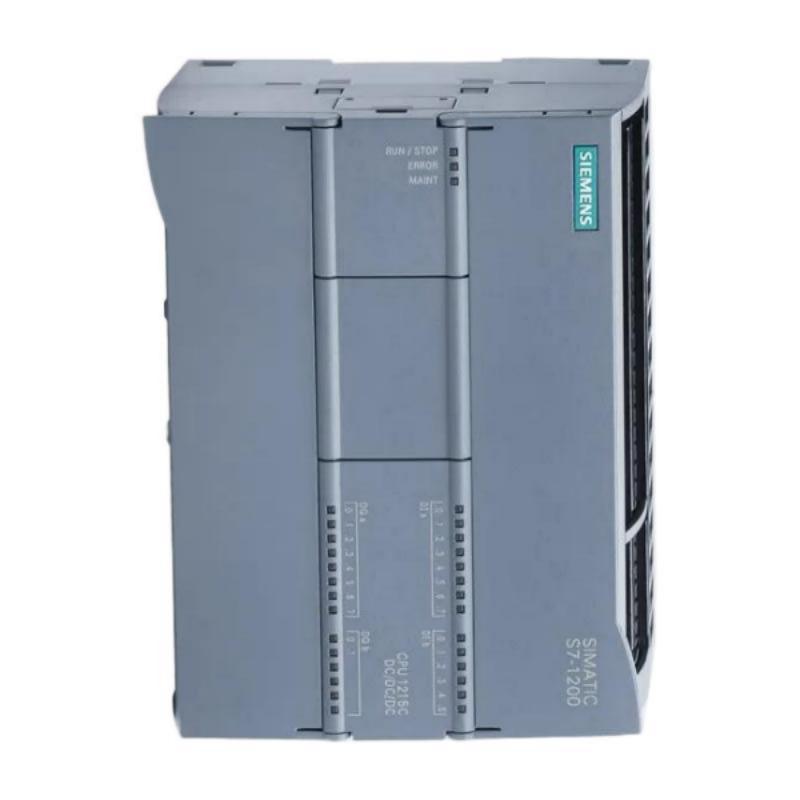
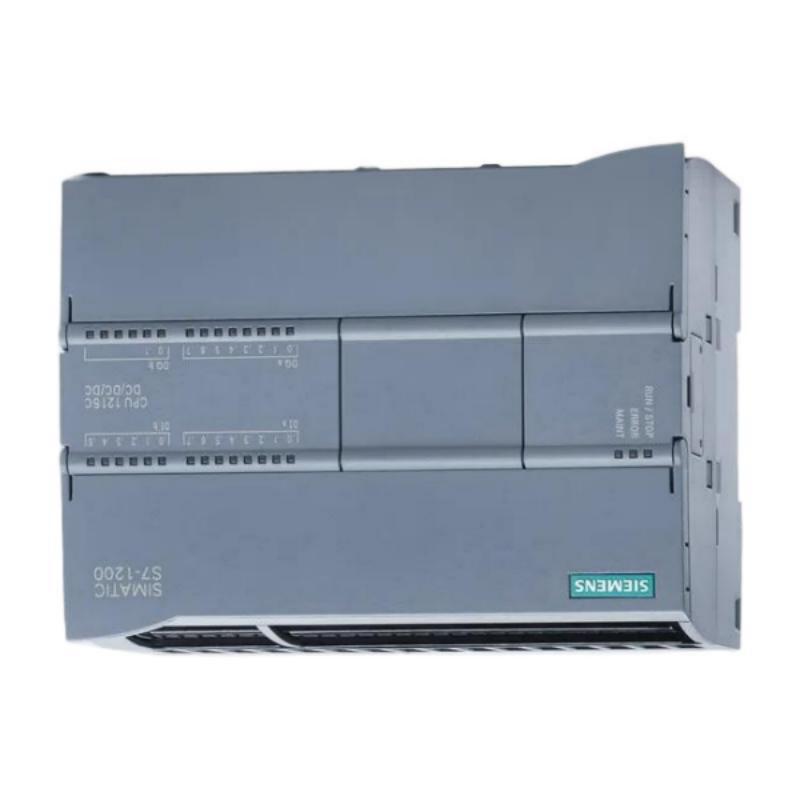
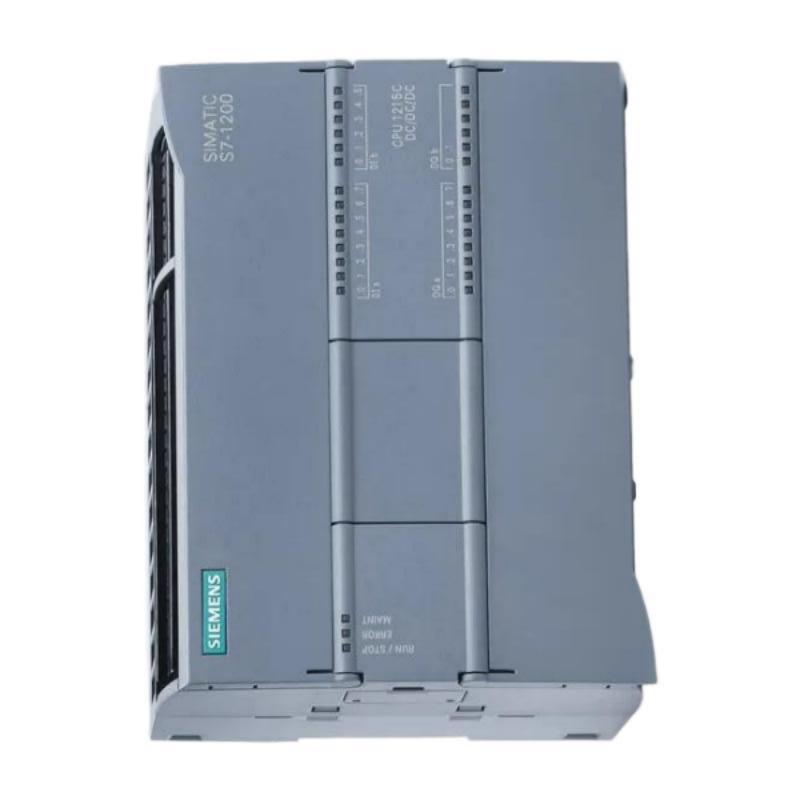
- Siemens
- 6AG1222-1XF32-4XB0
- SIPLUS S7-1200 SM 1222 8DQ RLY
- Germany
- 110 × 100 × 75 mm
- 0.32kg
- Xiamen, China
- New & In Stock
- T/T, PayPal, Western Union
- 1 Year
- 1-3 Working Days
- DHL, UPS, TNT, FedEx and EMS.
- 24-Hour Service
- COO
- 7
Our advantage

Global Logistics
We have a 10-year logistics and express cooperation agreement, so our products can be shipped to any place in the world.

Brand new and original
Our products are imported in bulk from the place of origin. Because of the cooperative relationship, our products are all original and 100% new.

24-hour service
We provide 7*24 hours service to our customers. We will be there whenever you need us.

Price advantage
All our products are priced very favorably because we have our own warehouse and supply.
| Company Information | |||
| [email protected] | |||
| Mobile | +8615980777398 | ||
| +8615980777398 | |||
| 15980777398 |
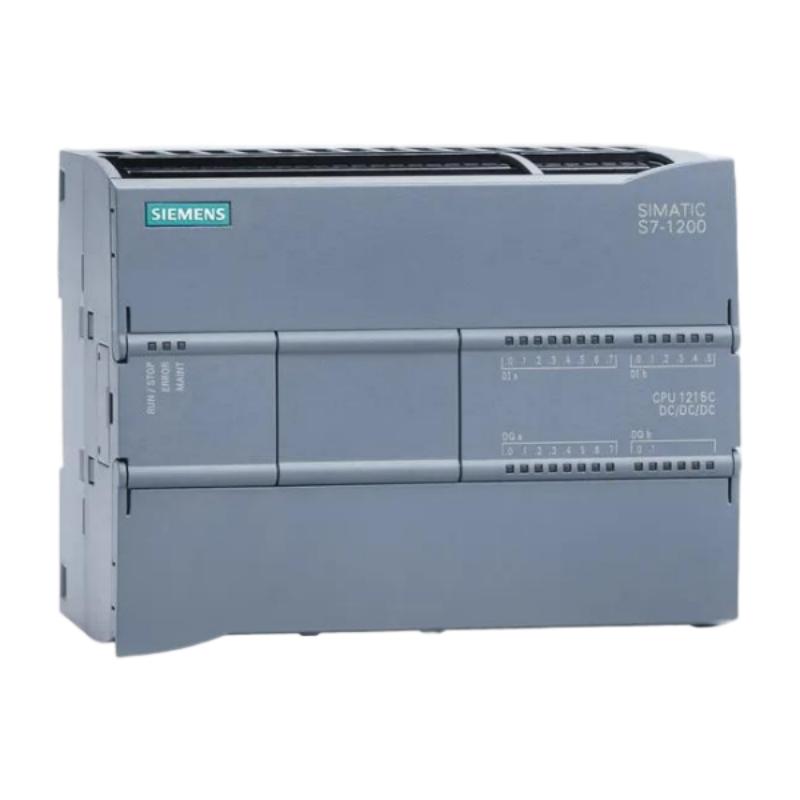
Siemens 6AG1222-1XF32-4XB0 — Product Description, Technical Specifications, Applications, Advantages, and Related Models
1. Product Overview
The Siemens 6AG1222-1XF32-4XB0 is a SIPLUS S7-1200 series digital output module designed for industrial automation systems that require dependable switching of electrical loads under demanding operating conditions. It belongs to the SIPLUS range, which is intended for applications where environmental resilience is an important consideration.
The module expands the output capabilities of a programmable logic controller (PLC), allowing control signals from the automation program to operate external devices such as relays, contactors, indicator lamps, solenoid valves, and other compatible electrical loads. Its relay-based output design supports switching circuits across a range of AC and DC applications, subject to the specified contact ratings and load characteristics.
This model is particularly relevant to industrial control panels, machine automation, production equipment, and installations where reliable output switching and resistance to challenging environmental conditions are important design requirements.
When integrating the module, engineers should confirm the precise hardware revision, load type, wiring arrangement, supply requirements, and permitted switching ratings. The final selection should be based on the complete product specification for the exact order number rather than on the general capabilities of the S7-1200 family alone.
2. Product Identification
| Item | Description |
|---|---|
| Product model | 6AG1222-1XF32-4XB0 |
| Brand | Siemens |
| Product family | SIPLUS |
| Automation platform | SIMATIC S7-1200 |
| Product series | SM 1222 digital output modules |
| Module category | Digital output expansion module |
| Output technology | Relay output |
| Main function | Switching external electrical loads in response to PLC control logic |
| Typical installation | Industrial control cabinet |
| Typical system role | Output expansion for a compatible PLC system |
| Environmental design | SIPLUS industrial environmental-resilience range |
| Primary application area | Industrial automation and machine control |
3. Product Introduction
The 6AG1222-1XF32-4XB0 is intended to provide an additional set of discrete output channels within an S7-1200 automation system. A PLC uses digital outputs to turn external devices on or off according to programmed conditions, process states, sensor signals, timing sequences, and operator commands.
For example, when a machine reaches a specified position, the PLC program may activate an output to energize an external relay or operate a valve. When the process reaches its next stage, the output can be deactivated to stop the device or initiate another operation. The output module provides the electrical interface between the PLC’s control logic and the external circuit.
Relay outputs are useful when the control design requires contact-based switching. Unlike a transistor output, a relay output uses mechanical contacts to connect or disconnect an external circuit. This can make relay modules suitable for certain AC and DC switching tasks, provided that the voltage, current, load type, switching frequency, and electrical life remain within the rated limits.
The SIPLUS designation is also significant. Industrial automation equipment may be installed in locations exposed to temperature variations, condensation risks, contamination, or other environmental stresses. SIPLUS products are developed for selected applications requiring enhanced environmental suitability compared with standard automation products. The actual permitted environmental conditions must nevertheless be checked against the exact variant’s technical documentation.
The module should be regarded as one part of a complete automation solution. Its performance depends on correct PLC configuration, suitable external power supplies, appropriate circuit protection, compliant wiring, adequate cabinet ventilation, and correct selection of the connected loads.
4. Detailed Technical Specifications
The following table summarizes the principal technical characteristics of the 6AG1222-1XF32-4XB0. For cabinet planning, distinguish the module’s physical dimensions from its packaging dimensions; the weight listed below is the product’s net weight.
| Parameter | Technical specification |
|---|---|
| Model | 6AG1222-1XF32-4XB0 |
| Brand | Siemens |
| Series | SIPLUS S7-1200 |
| Module type | SM 1222 digital output module |
| Number of digital outputs | 8 |
| Output technology | Relay |
| Relay contact arrangement | Changeover contact |
| Relay coil rated supply | 24 V DC |
| Permissible relay coil supply range | 20.4–28.8 V DC |
| Permitted switched voltage | 5–30 V DC or 5–250 V AC, subject to load and rating requirements |
| Maximum output current | Up to 2 A per output under specified conditions |
| Maximum lamp load | 30 W DC / 200 W AC, subject to the specified operating conditions |
| Output switching delay | Approximately 10 ms |
| Output status indication | LED status indication |
| Diagnostic capability | Diagnostic functions supported |
| Short-circuit protection | No integrated electronic short-circuit protection for the relay contacts; external circuit protection is required |
| Printed circuit board protection | Conformal coating |
| Operating temperature | -20°C to +60°C |
| Degree of protection | IP20 |
| Width | 45 mm |
| Height | 100 mm |
| Depth | 75 mm |
| Dimensions (W × H × D) | 45 × 100 × 75 mm |
| Net weight | Approximately 0.310 kg |
| Weight including typical packaging | Varies by packaging configuration; do not use as the module’s net weight |
| Mounting environment | Industrial control cabinet or suitable protected enclosure |
| Intended system | Compatible SIMATIC S7-1200 PLC system |
Important Electrical Considerations
The 24 V DC figure refers to the relay coil supply, not to a requirement that every switched load must operate at 24 V DC. The relay contacts can switch permitted AC or DC circuits within their specified limits. Actual suitability depends on the load current, voltage, inrush current, power factor, inductive characteristics, and switching frequency.
The maximum current rating should not be interpreted as permission to operate every output continuously at 2 A under every possible combination of loads. Designers must observe the applicable per-channel and group limits, ambient-temperature restrictions, and wiring requirements.
Relay contacts are mechanical components. Their service life depends on the electrical load and the number of switching operations. Switching a resistive load is generally less demanding than switching an inductive load with significant inrush current or a load that produces arcing when disconnected. Appropriate suppression components may be needed for inductive loads.
5. Dimensions and Installation Requirements
The nominal module dimensions are 45 mm wide, 100 mm high, and 75 mm deep. The module occupies a compact footprint in an automation cabinet, allowing it to be installed alongside compatible PLC CPUs and other expansion modules.
| Physical parameter | Value |
|---|---|
| Model | 6AG1222-1XF32-4XB0 |
| Width | 45 mm |
| Height | 100 mm |
| Depth | 75 mm |
| Overall dimensions | 45 × 100 × 75 mm |
| Net weight | Approximately 0.310 kg |
| Installation type | PLC expansion-module installation |
| Protection rating | IP20 |
| Installation location | Protected control cabinet or enclosure |
Before installation, allow adequate space for wiring, terminal access, maintenance, and heat dissipation. The cabinet layout should also consider the bend radius of field wiring, separation between power and signal cables where required, and accessibility for troubleshooting.
The IP20 rating means the module is intended for protected installation rather than direct exposure to water, dust, or outdoor weather. The conformal coating contributes to environmental robustness, but it does not make the module waterproof or eliminate the need for a suitable enclosure.
The product’s stated operating range is -20°C to +60°C. The cabinet’s internal temperature should remain within this range, and engineers should consider heat generated by neighboring equipment, ventilation, cabinet density, and the installation orientation permitted by the product documentation.
6. Product Applications
6.1 Industrial Machine Control
The module can be used to operate discrete devices in automated machinery. A PLC program may switch outputs according to machine position, cycle completion, operator commands, or interlock conditions.
Typical examples include controlling auxiliary relays, machine status lamps, selected solenoid valves, and other compatible loads. The module’s eight relay outputs can help reduce the need for separate output expansion hardware when eight suitable switching channels are sufficient.
6.2 Production-Line Automation
Production lines often contain multiple stations that perform different tasks, such as loading, positioning, clamping, transferring, and unloading. Digital outputs are used to issue discrete commands to equipment at each station.
The module can provide output channels for selected control functions, helping the PLC coordinate equipment operation. The final channel assignment depends on the machine design, electrical load requirements, and the number of outputs already available in the PLC system.
6.3 Control Cabinets and Electrical Panels
The module is suitable for use as part of a properly designed industrial control panel. It can switch compatible external circuits and interface the PLC program with field devices.
Its compact size helps with cabinet space planning, while the relay contacts can provide flexibility for selected AC and DC circuits. External terminal arrangements, protective devices, and wiring should be designed according to the relevant electrical standards and the equipment manufacturer’s installation instructions.
6.4 Packaging and Material-Handling Equipment
Packaging and material-handling systems use discrete control signals to operate stops, gates, diverters, warning lamps, and other mechanisms. Where the electrical characteristics of the connected loads are suitable, the module can provide switching channels for these functions.
For high-speed switching or very frequent repetitive operation, relay life and response time should be evaluated carefully. A transistor output module may be more appropriate where the application requires rapid switching or a high number of operations.
6.5 HVAC and Building Equipment Interfaces
In selected control-panel applications, relay outputs can be used to command compatible auxiliary relays or control circuits associated with ventilation, pumping, and other building equipment.
The module should not be connected directly to a load that exceeds its rated voltage or current. Where the field load is too large, has a high inrush current, or requires specialized protection, an appropriately rated intermediate relay or contactor should be used.
6.6 Environmental and Industrial Utility Systems
The SIPLUS version is intended for applications that need enhanced environmental suitability compared with a standard module. Potential uses include selected industrial utility installations and control cabinets in environments where temperature variation or contamination risks need additional consideration.
Environmental suitability must be assessed against the actual site conditions. The -20°C to +60°C operating range should be treated as a design limit, not as a guarantee of suitability for every harsh environment.
7. Main Product Advantages
7.1 Eight Relay Output Channels
Eight output channels provide a practical level of switching capacity for many small and medium-sized automation tasks. Multiple devices can be controlled from one module, provided that each load and the overall wiring arrangement meet the electrical requirements.
This can simplify output allocation and make the PLC system easier to organize. It also allows the control program to manage several discrete functions within the same expansion module.
7.2 Flexible AC and DC Switching
Relay contacts can support selected AC and DC switching applications. This is useful when a control system must interface with different types of electrical circuits rather than using only a single low-voltage DC output format.
The flexibility comes with a responsibility to observe the applicable contact ratings. AC and DC switching performance are not interchangeable, and inductive or high-inrush loads may require additional design measures.
7.3 Environmental Protection Through Conformal Coating
The conformal coating is a key characteristic of this SIPLUS model. It helps protect electronic assemblies against certain forms of environmental contamination and supports use in applications where environmental robustness is important.
It should not be treated as a substitute for a suitable enclosure, correct installation, or compliance with the stated temperature and humidity limits.
7.4 Integration with the S7-1200 Platform
The module is part of the S7-1200 automation ecosystem. In a compatible configuration, it can expand the discrete output capability of a PLC system without requiring a separate standalone controller for each additional switching function.
This approach can help keep the control architecture organized and provide a consistent structure for PLC programming, commissioning, maintenance, and future expansion.
7.5 Compact Cabinet Footprint
With dimensions of 45 × 100 × 75 mm, the module can fit into many standard industrial control-cabinet layouts designed for compatible S7-1200 modules.
A compact module can make it easier to plan the placement of PLC components, terminal blocks, protective devices, and wiring ducts. The actual space requirement must include installation clearances and cable access.
7.6 Diagnostic and Status Information
Diagnostic functions and output status indicators can help maintenance personnel investigate the state of the module during commissioning or troubleshooting.
LED indication is useful for checking commanded output states, but it should not be treated as proof that the external load is operating correctly. Field wiring, external power, protective devices, and the load itself must also be checked when diagnosing a fault.
7.7 Mechanical Relay Isolation
Relay contacts provide a physical switching interface between the control-side electronics and the switched circuit, subject to the module’s isolation specifications.
This can be advantageous for certain interface designs. However, the permitted potential differences and insulation requirements must be observed, and the relay contacts must never be assumed to provide safety-rated isolation unless the relevant documentation explicitly confirms it.
7.8 Practical Maintenance and Replacement
Using a module from an established PLC product family can help standardize spare-parts planning and maintenance procedures. Where the installation uses multiple compatible modules from the same family, technicians may already be familiar with the mounting arrangement, wiring approach, and diagnostic workflow.
Replacement must still be based on the exact order number and hardware compatibility. Similar-looking modules may have different output technologies, channel counts, electrical ratings, temperature ranges, or terminal arrangements.
8. Five Related Models in the Same Series or Product Family
The following models are relevant alternatives for engineers comparing output technology, environmental specifications, and output-channel capacity. Similar model numbers do not necessarily indicate identical electrical characteristics, so the exact order number should always be checked before purchase or replacement.
| Model | Product description | Key technical parameters | Dimensions (W × H × D) | Weight (kg) |
|---|---|---|---|---|
| 6AG1222-1XF32-2XB0 | SIPLUS S7-1200 SM 1222, 8 relay outputs | 8 relay changeover outputs; 24 V DC relay supply; up to 2 A per output under specified conditions; enhanced temperature range of -40°C to +70°C; conformal coating | 45 × 100 × 75 mm | Approx. 0.355 |
| 6ES7222-1XF32-0XB0 | Standard S7-1200 SM 1222 relay output module | 8 relay changeover outputs; 24 V DC relay supply; up to 2 A per output under specified conditions; standard environmental version | 45 × 100 × 75 mm | Approx. 0.310 |
| 6AG1222-1BF32-4XB0 | SIPLUS S7-1200 SM 1222, 8 transistor outputs | 8 transistor outputs; 24 V DC output; rated output current of 0.5 A per channel; conformal coating; intended for DC loads | 45 × 100 × 75 mm | Approx. 0.162 |
| 6AG1222-1BH32-4XB0 | SIPLUS S7-1200 SM 1222, 16 transistor outputs | 16 transistor outputs; 24 V DC; rated output current of 0.5 A per channel; conformal coating; higher channel density than an 8-output module | 45 × 100 × 75 mm | Approx. 0.206 |
| 6ES7222-1BF32-0XB0 | Standard S7-1200 SM 1222, 8 transistor outputs | 8 transistor outputs; 24 V DC; rated output current of 0.5 A per channel; suitable for compatible DC switching applications | 45 × 100 × 75 mm | Approx. 0.150–0.180 |
Dimensions are nominal module dimensions. Weights may vary by product revision and catalog convention; values shown as approximate should be confirmed against the exact order number before procurement.
How to Choose Between These Related Models
Choose 6AG1222-1XF32-2XB0 when the application requires relay changeover contacts and a wider specified operating-temperature range than the -20°C to +60°C version. It is a particularly relevant comparison for applications where lower-temperature operation or higher-temperature ambient conditions matter.
Choose 6ES7222-1XF32-0XB0 when the required relay-output functionality is similar but the standard environmental version is suitable for the installation. This can be a practical option for conventional control cabinets maintained within the standard operating limits.
Choose 6AG1222-1BF32-4XB0 when the application uses 24 V DC loads and transistor switching is preferable to mechanical relay contacts. Transistor outputs are often a better fit for frequent switching, though they cannot be used as a universal replacement for relay contacts in AC circuits.
Choose 6AG1222-1BH32-4XB0 when the control design requires more output points in a compact module. Its 16-channel configuration can help reduce the number of modules required, but the electrical ratings and wiring plan must be evaluated for the intended loads.
Choose 6ES7222-1BF32-0XB0 when a standard 8-channel transistor output module is sufficient. It is a relevant comparison for DC control systems that prioritize frequent switching and do not require relay contacts.
9. Five Additional Popular Models from the Same Brand
The following products are widely recognizable components within the S7-1200 automation family. They cover CPU control, digital output expansion, mixed input/output expansion, and analog signal acquisition. They are not all direct replacements for the target relay module; their suitability depends on the function required by the application.
| Model | Product description | Key technical parameters | Dimensions (W × H × D) | Weight (kg) |
|---|---|---|---|---|
| 6ES7214-1AG40-0XB0 | SIMATIC S7-1200 CPU 1214C | Compact PLC CPU; integrated digital inputs and outputs; Ethernet communication; supports compatible S7-1200 expansion modules | Approx. 110 × 100 × 75 mm | Approx. 0.320 |
| 6ES7212-1AE40-0XB0 | SIMATIC S7-1200 CPU 1212C | Compact PLC CPU; integrated digital I/O; Ethernet communication; suitable for small machine-control systems | Approx. 90 × 100 × 75 mm | Approx. 0.295 |
| 6ES7223-1PH32-0XB0 | SIMATIC S7-1200 SM 1223 digital input/output module | Mixed digital input and output expansion; relay output variant; useful when an application needs both input and output channels in one module | Approx. 45 × 100 × 75 mm | Approx. 0.180–0.250 |
| 6ES7231-4HF32-0XB0 | SIMATIC S7-1200 SM 1231 analog input module | Analog input expansion; used for compatible analog sensors and instrumentation signals; channel configuration and supported ranges depend on the exact variant | Approx. 45 × 100 × 75 mm | Approx. 0.180 |
| 6ES7222-1BH32-0XB0 | SIMATIC S7-1200 SM 1222, 16 transistor outputs | 16 digital transistor outputs; 24 V DC output class; rated current typically 0.5 A per channel under specified conditions; intended for compatible DC loads | Approx. 45 × 100 × 75 mm | Approx. 0.180–0.220 |
The table is intended for preliminary model comparison. Dimensions and weights are approximate for several related products and must be verified against the exact product revision. CPU variants can differ in integrated I/O configuration, and analog or mixed-I/O modules must be checked for their exact channel counts and signal ratings.
Additional Model Notes
6ES7214-1AG40-0XB0 — CPU 1214C
This CPU is a controller rather than an output expansion module. It executes the automation program, processes input data, manages control logic, and communicates with compatible expansion modules. It is suitable when the project needs a central controller with integrated I/O and room for expansion.
6ES7212-1AE40-0XB0 — CPU 1212C
The CPU 1212C is aimed at compact automation applications. It may be suitable for small machines or equipment with a moderate number of control points. Selection should account for the integrated I/O count, communication needs, program capacity, and expansion requirements.
6ES7223-1PH32-0XB0 — Mixed Digital I/O Module
A mixed digital input/output module combines input monitoring and output control in one expansion device. It can help reduce module count when the application needs both types of discrete signals. The exact input count, output count, and output-contact arrangement must be confirmed for this specific variant.
6ES7231-4HF32-0XB0 — Analog Input Module
An analog input module is useful when the PLC must monitor continuously varying signals rather than only on/off states. Common applications include compatible temperature transmitters, pressure transmitters, level instruments, and other process sensors. The selected module must support the signal type and measurement range of the field instrument.
6ES7222-1BH32-0XB0 — 16-Channel Transistor Output Module
This module is an alternative where more output points are required and the loads are compatible with transistor switching. Compared with relay output hardware, transistor outputs are generally better suited to rapid, repetitive switching of DC loads. They are not direct replacements where AC switching or changeover contacts are required.
10. Comparison: Relay Outputs Versus Transistor Outputs
One of the most important decisions when choosing an S7-1200 output module is whether the application needs relay contacts or transistor outputs.
| Comparison item | Relay output module | Transistor output module |
|---|---|---|
| Switching principle | Mechanical relay contacts | Electronic semiconductor switching |
| Typical use | Compatible AC or DC loads within contact ratings | Compatible DC loads |
| AC switching | Possible when the contact rating permits it | Generally not suitable for direct AC load switching |
| Switching frequency | Limited by mechanical operating life and switching characteristics | Usually better for frequent switching |
| Switching speed | Relatively slower | Generally faster |
| Mechanical wear | Contact wear occurs over time | No mechanical contact wear |
| Inductive loads | May require contact protection and suppression | Requires suitable load and transient protection |
| Output leakage | Depends on contact state and contact characteristics | Small leakage current may be present depending on the design |
| Best fit | Flexible contact-based switching | Repetitive or higher-frequency DC switching |
| Direct replacement for the target model | Depends on exact relay variant | No; verify load type and electrical compatibility |
The 6AG1222-1XF32-4XB0 is a relay output model. If the system must switch both AC and DC circuits, relay outputs may be useful, but every circuit must remain within the specified switching limits. If the application only switches 24 V DC loads and operates frequently, a transistor output module may offer better switching performance.
11. Product Selection and Engineering Considerations
Electrical Load Compatibility
Before selecting the module, prepare a list of every load connected to its outputs. Record the operating voltage, steady-state current, inrush current, load type, switching frequency, and expected number of switching cycles.
A contact rating alone does not establish that a module is suitable for every load. Inductive loads such as solenoid valves and contactor coils can generate voltage transients when switched. Suitable suppression devices may be required to protect the contacts and reduce electrical interference.
External Protection
The relay contacts do not provide integrated electronic short-circuit protection for the external load circuit. Appropriate fuses or circuit-protection devices should therefore be selected for the wiring and connected equipment.
Protection should be designed so that a fault in one branch does not unnecessarily affect unrelated branches. The selection of protective devices must account for the supply voltage, available fault current, conductor size, and load characteristics.
Environmental Conditions
The target model’s stated operating temperature is -20°C to +60°C. The ambient temperature inside the cabinet may be higher than the room temperature because of heat generated by the PLC, power supply, drives, and other equipment.
The conformal coating improves environmental robustness but does not remove all installation restrictions. The product should remain within the permitted environmental conditions, with suitable protection against water ingress, conductive dust, corrosive substances, and mechanical damage.
PLC Compatibility
Before installation, confirm that the target module is supported by the specific CPU and firmware configuration. Verify the permitted expansion arrangement, module addressing, engineering software configuration, and any relevant system limits.
The module should be configured correctly in the PLC engineering environment. After installation, test each output channel under controlled conditions and confirm that the corresponding field device responds as expected.
Maintenance and Spare-Parts Planning
For maintenance planning, keep the full order number, wiring information, terminal assignment, and relevant configuration details with the equipment documentation. A spare module with a similar name may differ in environmental range, output technology, contact arrangement, or channel count.
Where the application depends on environmental resilience, replacing a SIPLUS model with a standard model should not be done solely because the basic output function appears similar. The environmental specification is part of the equipment selection.
12. Summary of the Target Product
The Siemens 6AG1222-1XF32-4XB0 is an eight-channel relay digital output module in the SIPLUS S7-1200 SM 1222 family. Its principal characteristics are relay changeover contacts, a 24 V DC relay coil supply, switching capability for specified AC and DC loads, and conformal coating for enhanced environmental suitability.
Its principal advantages are the flexibility of relay-based switching, the ability to control multiple discrete loads from one module, compact installation dimensions, and compatibility with an appropriately configured S7-1200 automation system.
The most important selection points are the electrical characteristics of the connected loads, contact ratings, switching frequency, external circuit protection, operating temperature, and exact compatibility with the existing PLC configuration. For applications requiring a different environmental range, higher output density, or frequent DC switching, the related models listed above provide useful alternatives to evaluate.
For procurement and engineering use, treat the dimensions and weights identified as approximate as preliminary planning values, and verify the precise order number and technical data before finalizing a design or placing an order.