

ProductPRODUCT
Featured products
Contact Us
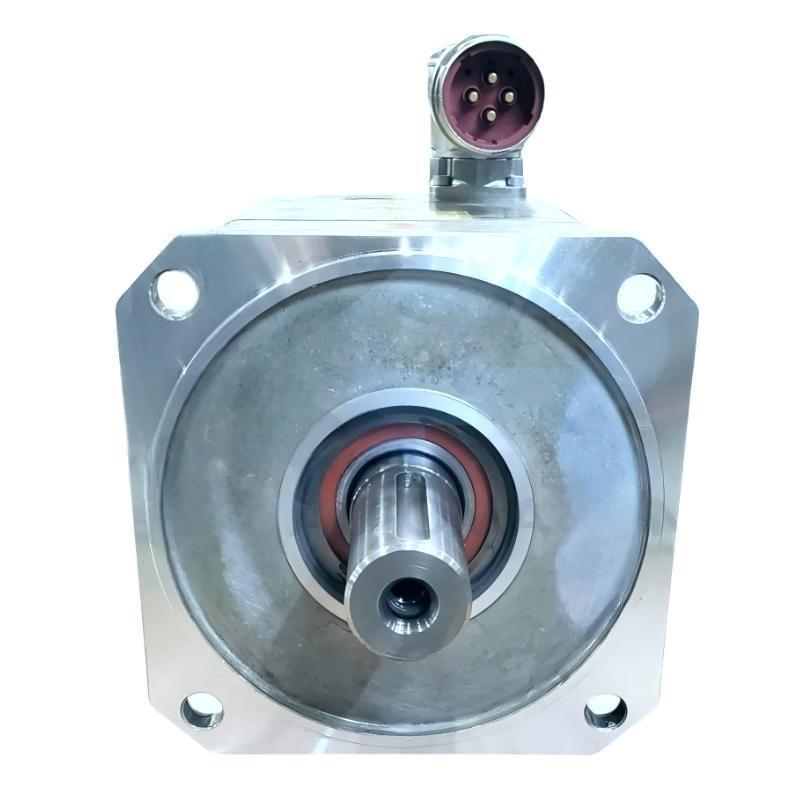
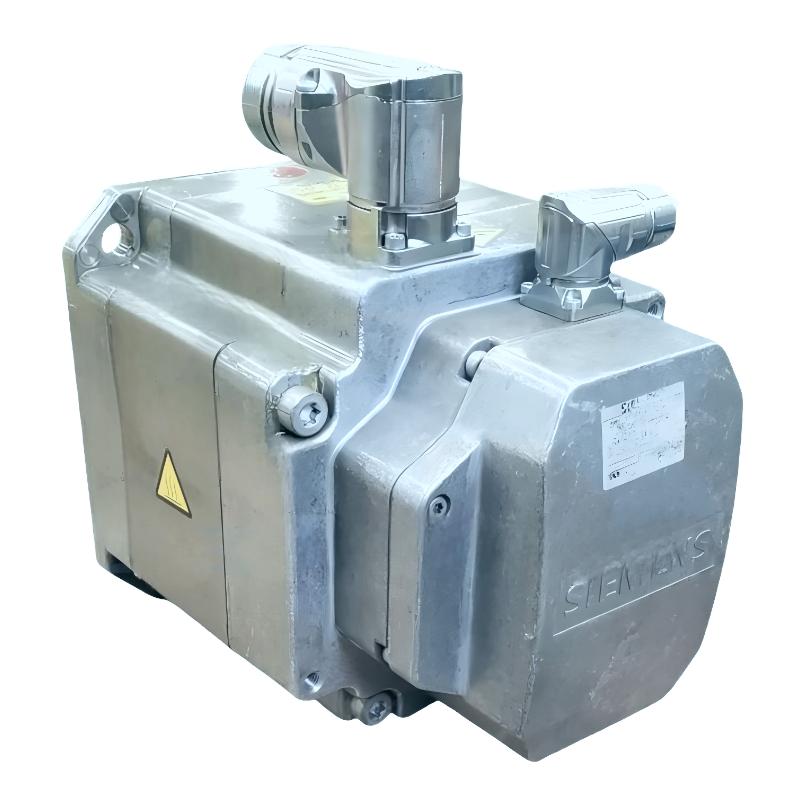
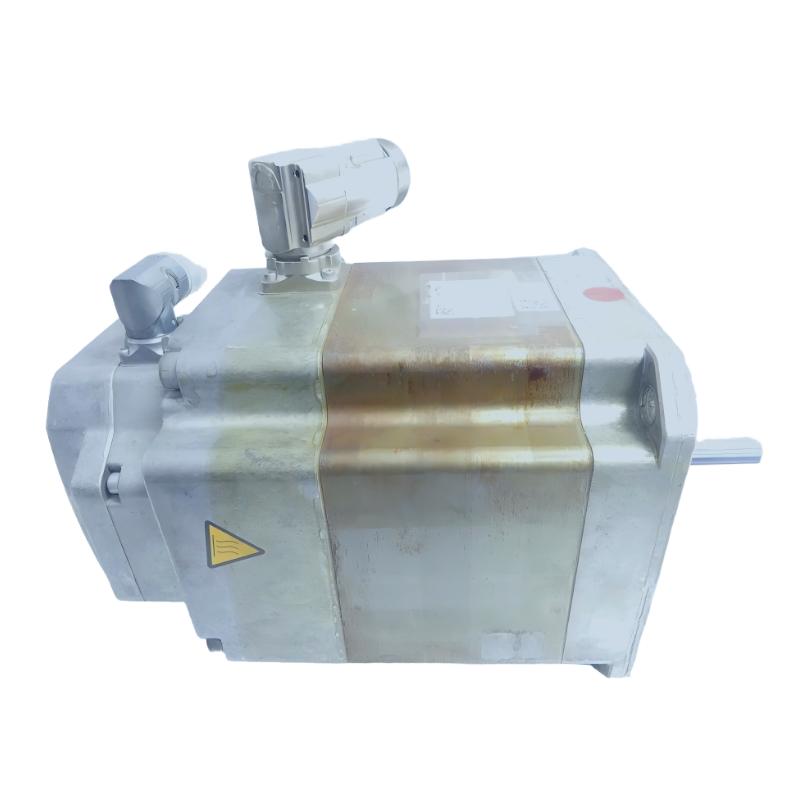
- Siemens
- 1FK7103-5AF71-1AH0
- SIMOTICS S Synchronous Motor
- Germany
- 360 × 190 × 250 mm
- 32kg
- Xiamen, China
- New & In Stock
- T/T, PayPal, Western Union
- 1 Year
- 1-3 Working Days
- DHL, UPS, TNT, FedEx and EMS.
- 24-Hour Service
- COO
- 6
Our advantage

Global Logistics
We have a 10-year logistics and express cooperation agreement, so our products can be shipped to any place in the world.

Brand new and original
Our products are imported in bulk from the place of origin. Because of the cooperative relationship, our products are all original and 100% new.

24-hour service
We provide 7*24 hours service to our customers. We will be there whenever you need us.

Price advantage
All our products are priced very favorably because we have our own warehouse and supply.
| Company Information | |||
| [email protected] | |||
| Mobile | +8615980777398 | ||
| +8615980777398 | |||
| 15980777398 |
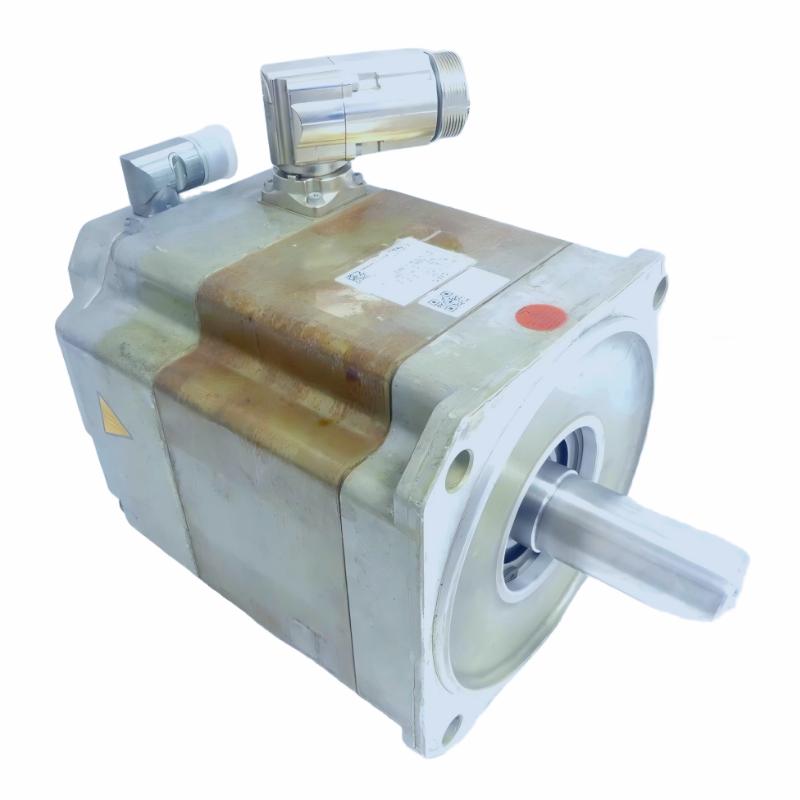
Siemens 1FK7103-5AF71-1AH0 Servo Motor: Product Overview, Technical Specifications, Applications, Advantages, and Related Models
1. Product Overview
The Siemens 1FK7103-5AF71-1AH0 is a model designation within the SIMOTICS servo motor product range. Motors in this family are designed for applications that require controlled rotational movement, accurate positioning, repeatable motion, and reliable integration with industrial automation systems.
Servo motors are commonly used in machinery where the motor must respond precisely to commands from a motion controller or servo drive. Depending on the complete motor configuration, they can support positioning, speed regulation, acceleration, deceleration, and coordinated movement across multiple machine axes.
The exact technical configuration of the 1FK7103-5AF71-1AH0 should be distinguished from similar model numbers. Small changes in the final characters of a motor designation can indicate differences in feedback devices, shaft arrangements, braking equipment, connectors, or other configuration details. Specifications for a similar model should not automatically be treated as confirmed specifications for this exact model.
This product description therefore separates general characteristics of the motor family from specifications that require confirmation against the exact motor nameplate or mechanical drawing.
2. Brand and Product Series
| Item | Description |
|---|---|
| Model | 1FK7103-5AF71-1AH0 |
| Brand | Siemens |
| Product family | SIMOTICS |
| Related motor series | SIMOTICS S-1FK7 |
| Product category | Industrial servo motor |
| Motor type | Permanent-magnet synchronous servo motor family |
| Primary function | Controlled rotary motion |
| Typical control method | Closed-loop servo control, depending on the installed feedback configuration |
| Typical installation | Industrial machinery and automated production equipment |
| Cooling arrangement | Configuration-dependent; verify the exact motor documentation |
| Mounting arrangement | Verify the exact mounting code and mechanical drawing |
| Feedback device | Verify the exact suffix and motor nameplate |
| Holding brake | Presence or absence must be confirmed for this exact configuration |
The SIMOTICS S-1FK7 family is intended for motion-control applications in which compact construction, dynamic response, positioning accuracy, and integration with automation equipment are important.
For purchasing, replacement, or engineering use, the complete model number should be retained exactly as 1FK7103-5AF71-1AH0. A visually similar motor may not be a direct replacement if its feedback system, shaft dimensions, brake, or electrical connections differ.
3. Detailed Technical Specifications
The following table summarizes the main technical characteristics associated with the 1FK7103-5AF71-1AH0 configuration. Dimensions are presented as approximate overall dimensions for preliminary planning; the final installation should be checked against the exact mechanical drawing.
| Parameter | Specification |
|---|---|
| Model | 1FK7103-5AF71-1AH0 |
| Brand | Siemens |
| Product family | SIMOTICS |
| Series | SIMOTICS S-1FK7 Compact |
| Motor type | Permanent-magnet synchronous servo motor |
| Rated output power | 4.40 kW |
| Rated speed | 3,000 rpm |
| Rated torque at 100 K temperature rise | 14 Nm |
| Static torque at 60 K temperature rise | 30 Nm |
| Static torque at 100 K temperature rise | 36 Nm |
| Optimum operating speed | 2,500 rpm |
| Optimum operating power | 5.4 kW under specified operating conditions |
| Maximum permissible mechanical speed | 5,000 rpm |
| Maximum torque | 108 Nm, subject to drive and operating limits |
| Rated current | Approximately 12 A |
| Maximum current | 84 A, subject to operating conditions |
| Number of poles | 8 |
| Cooling method | Natural cooling |
| Mounting arrangement | IM B5; IM V1 and IM V3 where permitted |
| Shaft height | 100 mm |
| Shaft design | Plain shaft |
| Shaft tolerance | N |
| Feedback system | Incremental encoder, sin/cos 1 Vpp |
| Encoder resolution | 2,048 signal periods per revolution |
| Holding brake | Equipped with a holding brake |
| Brake holding torque | Confirm against the exact motor documentation before sizing the load |
| Electrical connections | Power and signal connectors |
| Connector orientation | Rotatable by up to 270° |
| Degree of protection | IP64 |
| Approximate length | 360 mm |
| Approximate width | 190 mm |
| Approximate height | 250 mm |
| Approximate overall dimensions (L × W × H) | 360 × 190 × 250 mm |
| Net weight | Approximately 32.0 kg |
| Installation environment | Suitable industrial environment within the motor’s specified operating limits |
| Main function | Precise speed, torque, and position control |
Important notes on the technical data
Rated torque and static torque are different values. The rated torque of approximately 14 Nm describes the motor’s rated operating point under the specified thermal conditions. The 36 Nm static torque value refers to a stationary or zero-speed torque rating under a specified temperature rise. It should not be interpreted as the torque available continuously at every speed.
Maximum torque is not the same as continuous operating torque. The listed maximum torque of 108 Nm is a limiting value, not a recommendation for continuous operation. The actual torque available depends on the drive, current limits, motor temperature, speed, and duration of the load.
The encoder and holding brake are important configuration details. The incremental encoder provides feedback for motion control, while the holding brake helps retain the motor shaft when the brake is engaged. A holding brake should not automatically be treated as a dynamic emergency brake unless the application and brake specifications explicitly permit that use.
Dimensions and weight should be confirmed before installation. The approximate envelope of 360 × 190 × 250 mm and weight of 32.0 kg are useful for preliminary equipment layout, transport planning, and handling. The mounting flange, shaft projection, connector clearance, cable bend radius, and surrounding machine structure must be checked separately.
4. Product Introduction
The 1FK7103-5AF71-1AH0 is a compact industrial servo motor designed for machinery that needs controlled rotary motion and repeatable operation. It belongs to the SIMOTICS S-1FK7 Compact family, which is intended for automation systems where dynamic performance, accurate positioning, and practical installation are important.
Unlike a conventional motor used primarily for constant-speed operation, a servo motor is generally integrated into a motion-control system. A controller issues commands, the servo drive regulates the motor’s electrical power, and feedback from the encoder helps the system determine how the motor is moving. This arrangement allows the machine to regulate position, speed, and torque according to the operating sequence.
The permanent-magnet synchronous design supports a high level of controllability in a relatively compact motor package. In a correctly sized system, this can help machinery perform rapid acceleration, controlled deceleration, frequent starts and stops, and repeatable positioning.
The motor’s 3,000 rpm rated speed and 14 Nm rated torque make it relevant to industrial axes that need a combination of rotational speed and useful torque. Its 4.40 kW rated power provides a reference point for matching the motor to the mechanical load, while the final selection must also account for the motion profile, peak torque, inertia, duty cycle, and available drive capacity.
The motor is naturally cooled, so its installation must provide the heat-dissipation conditions required by the design. Mounting it in an enclosed space or near other heat-producing equipment can affect its thermal performance. The machine designer should allow for sufficient clearance and follow the applicable installation instructions.
The integrated holding brake is another useful feature for suitable applications. When correctly controlled, it can help hold a vertical axis or retain a mechanism when the motor is not actively producing torque. The brake’s actual holding capacity and operating limitations must be checked before it is used in a load-retention or safety-related function.
Overall, the 1FK7103-5AF71-1AH0 is best evaluated as part of a complete servo system rather than as an isolated motor. The motor, drive, feedback arrangement, mechanical transmission, cabling, controller, and machine load all influence the final performance.
5. Main Product Advantages
5.1 Precise motion control
The servo motor is designed to work with a suitable drive and controller to provide regulated movement. Encoder feedback allows the control system to monitor motor rotation and correct deviations from commanded motion.
This is useful for machines that require repeatable positioning, synchronized movement, or accurate speed regulation. Examples include indexing mechanisms, automated handling axes, and production equipment that must move components to defined locations.
The achievable accuracy depends on the complete machine system. Encoder resolution is only one factor; mechanical backlash, transmission stiffness, controller tuning, load inertia, and mounting rigidity also matter.
5.2 A practical balance of speed and torque
With a rated speed of 3,000 rpm and rated torque of approximately 14 Nm, the motor can suit a range of rotary and positioning applications.
The right balance depends on the load. A high-speed spindle or rotary mechanism may require different operating conditions from a heavy positioning axis. A gearbox or other transmission can change the torque and speed seen at the machine output, but the resulting system must still remain within the motor and drive limits.
5.3 Compact construction
The compact motor design can help reduce the space required for a machine axis. This is useful when the equipment layout has limited room for motors, couplings, mounting plates, or adjacent mechanisms.
Compactness does not remove the need for service clearance. The installation should leave enough room for connectors, cable routing, inspection, brake access where applicable, and motor replacement.
5.4 Integrated holding brake
The holding brake can be useful when the machine must retain a position while the motor is stopped or when power to the motor is removed under the intended operating sequence.
Typical examples include vertical positioning mechanisms and equipment where gravity could cause movement when the servo is disabled. The brake must be correctly sized for the load, and a separate mechanical safety measure may be necessary depending on the application.
5.5 Encoder feedback
The incremental sin/cos encoder provides feedback to a compatible servo drive. This allows the controller to monitor motor rotation and regulate movement.
Encoder compatibility must be checked during system design or replacement. Signal type, connector arrangement, resolution, drive interface, and commissioning parameters all matter. A motor with a different feedback configuration may not be a direct electrical replacement even if the frame size is similar.
5.6 Flexible connector orientation
The power and signal connectors can be rotated within their specified range, providing flexibility when routing cables inside a machine.
This can simplify installation in equipment with restricted access or closely spaced mechanical components. The final orientation must still respect connector clearances, cable bend radius, sealing requirements, and any restrictions in the installation instructions.
5.7 Industrial protection
The IP64 protection rating indicates protection against dust ingress and water splashing under the conditions defined by the rating. It does not mean that the motor is suitable for immersion, pressure washing, or every type of wet or contaminated environment.
Where the motor will operate around coolant, oil mist, aggressive cleaning agents, or conductive dust, the actual environment should be assessed before installation.
5.8 Suitable for coordinated automation
When paired with a compatible motion controller and drive, the motor can participate in multi-axis automation systems. This is useful when several machine movements must follow a coordinated sequence.
Examples include a conveyor axis synchronized with a cutting mechanism, a packaging axis coordinated with a sealing operation, or a material-handling axis synchronized with a transfer station.
5.9 Maintainable configuration
A clearly identified model and a properly documented drive configuration make maintenance and replacement easier. Recording the complete motor number, feedback type, brake arrangement, shaft dimensions, mounting pattern, and electrical connections helps reduce the risk of ordering an incompatible replacement.
For existing machinery, keeping the original motor nameplate information and commissioning parameters is particularly useful when planning a repair or a future upgrade.
6. Typical Applications
The motor’s suitability for any specific machine depends on the load calculation, required positioning accuracy, operating cycle, drive compatibility, and environmental conditions. The following are typical application areas for motors of this type.
6.1 Packaging machinery
Packaging machines often require coordinated motion for feeding, indexing, cutting, sealing, and transferring products. Servo control can help regulate these movements and maintain repeatable cycle timing.
The motor may be considered for rotary feed mechanisms, positioning axes, or other movements where the load and motion profile fit its torque and speed range.
For applications involving frequent starts and stops, engineers should calculate RMS torque and evaluate peak torque, acceleration, deceleration, and thermal loading rather than relying on rated power alone.
6.2 Material handling and transfer equipment
Automated handling equipment uses servo motors to position trays, workpieces, tools, and other components. Repeatable positioning can help reduce misalignment and improve consistency between production steps.
Where the mechanism includes a vertical axis, the holding-brake arrangement and the mechanical load-retention design require particular attention.
6.3 Automated assembly equipment
Assembly systems may require components to be brought together at controlled positions and speeds. Servo motors can drive rotary tables, indexing units, feed mechanisms, and positioning slides through appropriate mechanical transmissions.
The motor should be selected according to the required force or torque at the actual working point, not simply according to the size of the machine.
6.4 Printing and converting machinery
Printing and converting equipment can require synchronized movement, controlled web feeding, and repeatable positioning. Servo systems are often used where speed variation or position errors can affect product quality.
For such applications, the designer should consider the inertia of rollers, the dynamics of the driven mechanism, and the need to coordinate the motor with other axes.
6.5 Textile machinery
Textile machinery may use servo-controlled movement for feeding, winding, indexing, and tension-related operations. Controlled acceleration and deceleration can help achieve consistent motion, provided that the motor and drive are correctly matched to the load.
The actual suitability depends on the machine’s operating speed, torque requirements, mechanical inertia, and duty cycle.
6.6 Machine tools and auxiliary machine axes
Servo motors are commonly used in controlled machine axes, tool-handling mechanisms, and auxiliary rotary movements. The encoder feedback supports regulated movement, while the drive and controller determine the achievable performance.
The motor should not be assumed suitable for every spindle or cutting axis without checking the required speed range, torque curve, rigidity, and environmental protection.
6.7 Automated production lines
In a production line, servo motors may control transfer stations, positioning units, rotary indexing tables, and other automated mechanisms. Coordinated control can help improve repeatability and synchronize different steps of the process.
For multi-axis machinery, the complete system should be evaluated for drive compatibility, communication, control-cycle requirements, and the combined effect of each axis on machine throughput.
6.8 Special-purpose industrial machinery
Custom machinery frequently combines several mechanical functions in one compact structure. A servo motor can provide controlled rotary motion where a standard constant-speed motor would not offer the required positioning behavior.
Before selecting the 1FK7103-5AF71-1AH0, the machine builder should check the available installation space, shaft interface, mounting pattern, peak and continuous torque requirements, feedback compatibility, brake requirements, and thermal conditions.
7. Installation and Selection Considerations
A technically suitable motor can still perform poorly if the surrounding drive and mechanical system are incorrectly designed. The following checks should be completed before purchasing, commissioning, or replacing the motor.
| Selection item | What to check | Why it matters |
|---|---|---|
| Rated torque | Continuous load torque at the required speed | Determines whether the motor can sustain normal operation |
| Peak torque | Acceleration, deceleration, and transient load demands | Helps prevent torque limiting and poor dynamic response |
| Load inertia | Motor inertia, transmission inertia, and reflected load inertia | Influences acceleration, settling time, and control stability |
| Operating cycle | Starts, stops, dwell time, and repetition rate | Affects thermal loading and motor sizing |
| Drive compatibility | Current, voltage, feedback interface, and control mode | Ensures the motor can be operated by the selected drive |
| Feedback | Encoder type, resolution, and connector arrangement | Avoids commissioning and replacement problems |
| Brake | Holding torque, supply voltage, and control sequence | Helps retain the load under intended conditions |
| Mounting | Flange, shaft height, shaft end, and alignment | Ensures mechanical compatibility |
| Dimensions | Motor body, connector clearance, and cable space | Prevents installation interference |
| Weight | Approximately 32.0 kg for planning; confirm exact unit | Supports lifting, mounting, and structural calculations |
| Environment | Dust, moisture, temperature, vibration, and chemicals | Helps ensure reliable operation |
| Maintenance | Access to connectors, mounting bolts, and surrounding equipment | Reduces downtime during inspection and replacement |
Torque and inertia matching
The motor must be sized for the load at the actual operating speed. If the machine requires rapid acceleration, the torque needed to accelerate the combined motor and load inertia can be much higher than the torque needed to maintain constant speed.
A system that appears suitable based on average load torque may still be undersized if it has frequent acceleration peaks or short cycle times. Engineers should assess the complete motion profile and use the relevant drive sizing procedure.
Brake and vertical-axis considerations
For a vertical axis, the motor’s holding brake must be evaluated against the actual load and the mechanical transmission. The brake should be operated according to the specified sequence, and the design should account for the consequences of power loss or control faults.
Where a dropped load could create a hazard, an independent mechanical retention method or other appropriate protective measures may be necessary.
Thermal and environmental considerations
Natural cooling relies on suitable heat dissipation. Obstructed airflow, high ambient temperatures, nearby heat sources, and repeated high-torque operation can all influence the motor’s temperature.
The IP64 rating should be assessed against the real operating environment. Additional enclosure protection or a different motor configuration may be required for environments involving strong water jets, immersion, or aggressive contaminants.
8. Five Related Models in the Same Series
The following models are examples of related SIMOTICS S-1FK7 motor configurations. They may be useful when comparing replacement options, encoder arrangements, brake configurations, or related mechanical designs.
Important: A similar base designation does not guarantee interchangeability. The technical information for each complete order number must be checked before using it as a replacement. Where a precise model-specific dimension or weight has not been established here, the table explicitly identifies it as requiring confirmation rather than presenting an assumed value.
| Model | Product type or configuration | Key parameters | Approx. dimensions (L × W × H) | Weight (kg) |
|---|---|---|---|---|
| 1FK7103-5AF71-1AH0 | Reference model; compact synchronous servo motor with incremental encoder and holding brake | 4.40 kW; 3,000 rpm; 14 Nm rated torque; 36 Nm static torque at 100 K | 360 × 190 × 250 mm | 32.0 |
| 1FK7103-5AF71-1AA2 | Related 1FK7 configuration; confirm feedback and brake details | Reference configuration: 3,000 rpm; 14 Nm rated torque; 36 Nm static torque at 100 K | Confirm exact drawing | Confirm exact version |
| 1FK7103-5AF71-1FG5 | Related 1FK7 configuration with a different feedback arrangement | Reference configuration: 3,000 rpm; 14 Nm rated torque; 36 Nm static torque at 100 K | Confirm exact drawing | Approx. 29.0 |
| 1FK7103-5AF71-1FH3 | Related 1FK7 configuration with a holding brake | Reference configuration: 3,000 rpm; 14 Nm rated torque; 36 Nm static torque at 100 K; brake specifications must be checked | Confirm exact drawing | Confirm exact version |
| 1FK7103-5AF71-1GG0 | Related 1FK7 configuration | Check encoder, shaft, brake, and connector configuration before selection | Confirm exact drawing | Approx. 29.0 |
How to compare these related models
The most important comparison is not the model number alone, but the combination of electrical and mechanical features.
– Feedback system: Confirm whether the model uses an incremental or absolute encoder and whether the selected drive supports it.
– Holding brake: Check whether the motor has a brake, the brake’s holding torque, the required supply voltage, and the permitted operating sequence.
– Shaft design: Verify whether the shaft is plain or keyed and compare the shaft diameter, length, and tolerance.
– Mounting: Compare flange dimensions, shaft height, bolt pattern, and permitted mounting orientation.
– Electrical connection: Confirm the power and signal connector types, orientation, and cable compatibility.
– Weight and envelope: Use the exact mechanical drawing and nameplate information for installation and lifting plans.
A model with a similar torque and speed rating may still require changes to the drive parameters, wiring, coupling, or mechanical mounting. For a direct replacement, the complete motor configuration should be matched as closely as possible.
9. Five Other Popular Models from the Same Brand
The following models represent additional motor options from the same brand, covering related servo motor families and other industrial motor applications. They are comparison candidates rather than guaranteed direct substitutes for the 1FK7103-5AF71-1AH0.
The motor series, output rating, mounting size, and feedback system can vary significantly between these models. Exact dimensions and weight must therefore be confirmed for the specific order number.
| Model | Product family or category | Typical selection purpose | Key parameters to compare | Approx. dimensions (L × W × H) | Weight (kg) |
|---|---|---|---|---|---|
| 1FK7042-5AF71-1EG5 | SIMOTICS S-1FK7 servo motor | Smaller or different-capacity servo axis, depending on configuration | Rated torque, rated speed, encoder, shaft, brake | Confirm exact drawing | Confirm exact version |
| 1FK7063-5AF71-1EG5 | SIMOTICS S-1FK7 servo motor | Alternative frame-size or performance configuration | Rated power, rated torque, peak torque, feedback | Confirm exact drawing | Confirm exact version |
| 1FK7083-5AF71-1DG5 | SIMOTICS S-1FK7 servo motor | Alternative servo motor configuration for industrial motion control | Speed range, torque, motor inertia, mounting | Confirm exact drawing | Confirm exact version |
| 1FT7064-series motor | SIMOTICS S-1FT motor family | Alternative servo motor family for applications requiring a different mechanical or performance configuration | Rated power, torque curve, speed range, cooling, feedback | Depends on exact order number | Depends on exact order number |
| 1PH8-series motor | SIMOTICS industrial motor family | Alternative for applications where the required motor characteristics differ from a compact servo configuration | Power, speed range, cooling, drive compatibility, duty cycle | Depends on exact order number | Depends on exact order number |
Choosing among these alternatives
For a close replacement: Start with the 1FK7103 family and compare the complete suffix. This is generally the most practical starting point when the original machine was designed around the same motor frame and performance range.
For a different torque or power requirement: Compare the rated and peak torque curves, rated speed, current requirements, and motor inertia. Do not select a motor based on output power alone.
For a different feedback requirement: Confirm whether the control system requires incremental feedback, absolute feedback, or a particular drive-interface arrangement. Changing the encoder may affect both wiring and commissioning.
For a different mechanical installation: Check the flange, shaft, mounting orientation, overall length, connector clearance, and motor mass. A motor from a related series may not fit the existing mechanical structure without modification.
For a different operating duty: Review the load cycle, thermal limits, speed range, and cooling method. An alternative motor family may be appropriate, but the drive and machine design must be evaluated as a complete system.
10. Quick Reference: Main Product Data
| Item | Specification |
|---|---|
| Model | 1FK7103-5AF71-1AH0 |
| Brand | Siemens |
| Series | SIMOTICS S-1FK7 Compact |
| Motor type | Permanent-magnet synchronous servo motor |
| Rated power | 4.40 kW |
| Rated speed | 3,000 rpm |
| Rated torque | 14 Nm |
| Static torque at 100 K temperature rise | 36 Nm |
| Maximum permissible mechanical speed | 5,000 rpm |
| Encoder | Incremental sin/cos 1 Vpp |
| Encoder resolution | 2,048 signal periods per revolution |
| Holding brake | Yes |
| Cooling | Natural cooling |
| Protection rating | IP64 |
| Mounting | IM B5; IM V1 and IM V3 where permitted |
| Approximate dimensions | 360 × 190 × 250 mm |
| Approximate weight | 32.0 kg |
| Main applications | Packaging, positioning, material handling, assembly, and industrial automation |
11. Final Product Assessment
The Siemens 1FK7103-5AF71-1AH0 is a compact servo motor configuration intended for industrial motion-control applications. Its key characteristics include a 4.40 kW rated output, a rated speed of 3,000 rpm, a rated torque of approximately 14 Nm, incremental encoder feedback, natural cooling, and an integrated holding brake.
Its practical strengths are its suitability for controlled motion, the availability of encoder feedback for servo regulation, and the potential to integrate it into automated machinery requiring repeatable movement. The compact motor format may also be useful where installation space is limited.
The most important consideration when selecting or replacing this motor is the complete configuration. Torque and speed ratings alone are insufficient to establish compatibility. The encoder, brake, shaft, mounting flange, connectors, drive requirements, operating cycle, and physical dimensions all need to be considered together.
For maintenance and procurement, the complete model number should be recorded as 1FK7103-5AF71-1AH0. The approximate dimensions of 360 × 190 × 250 mm and the approximate net weight of 32.0 kg are suitable for preliminary planning, but the actual nameplate and mechanical drawing should be used for final engineering decisions.