

ProductPRODUCT
Featured products
Contact Us
- Schneider
- TSX3722101
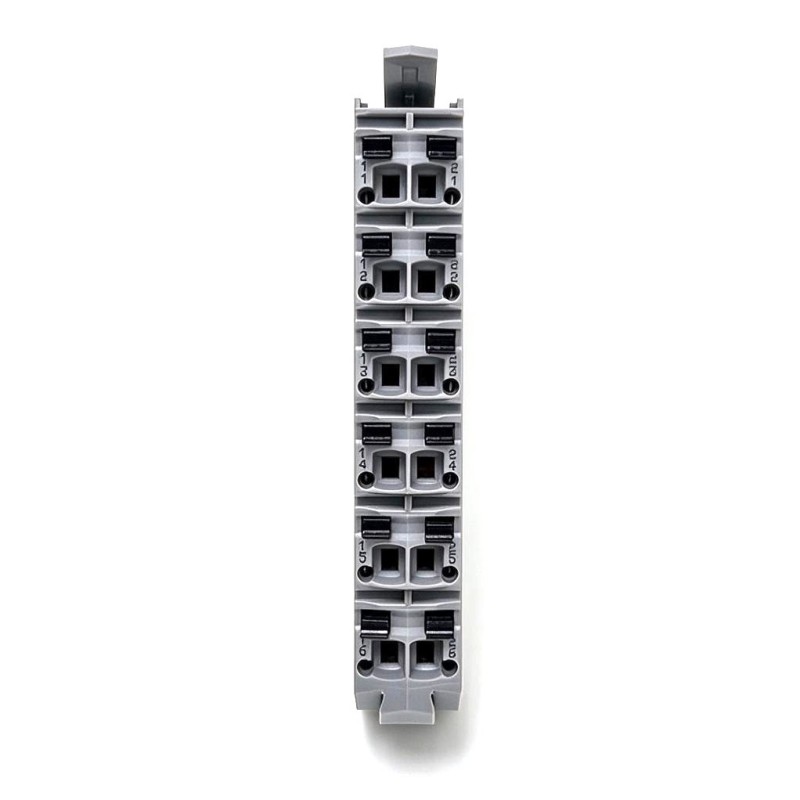
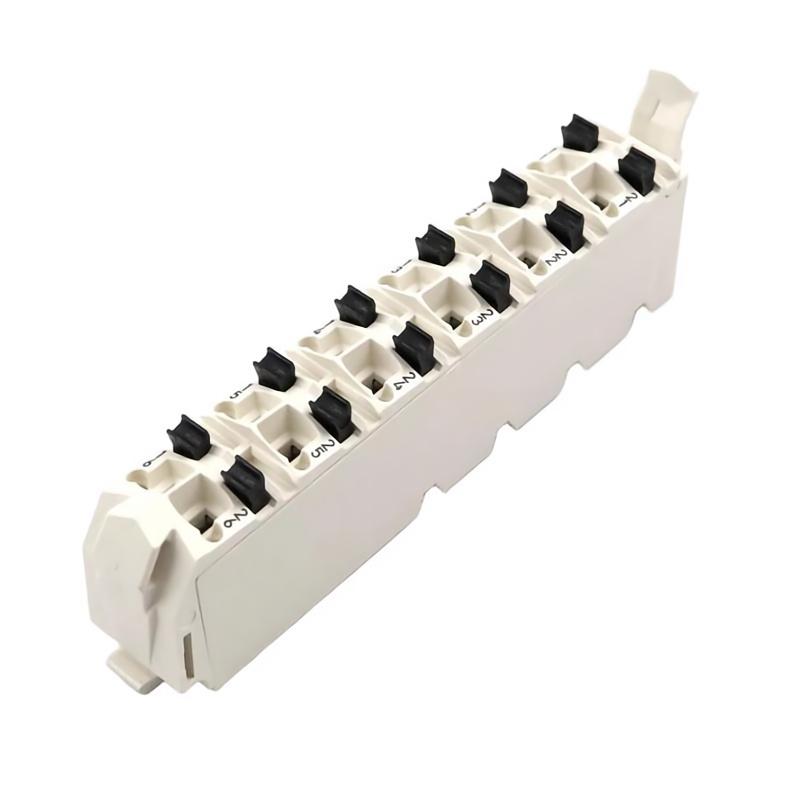
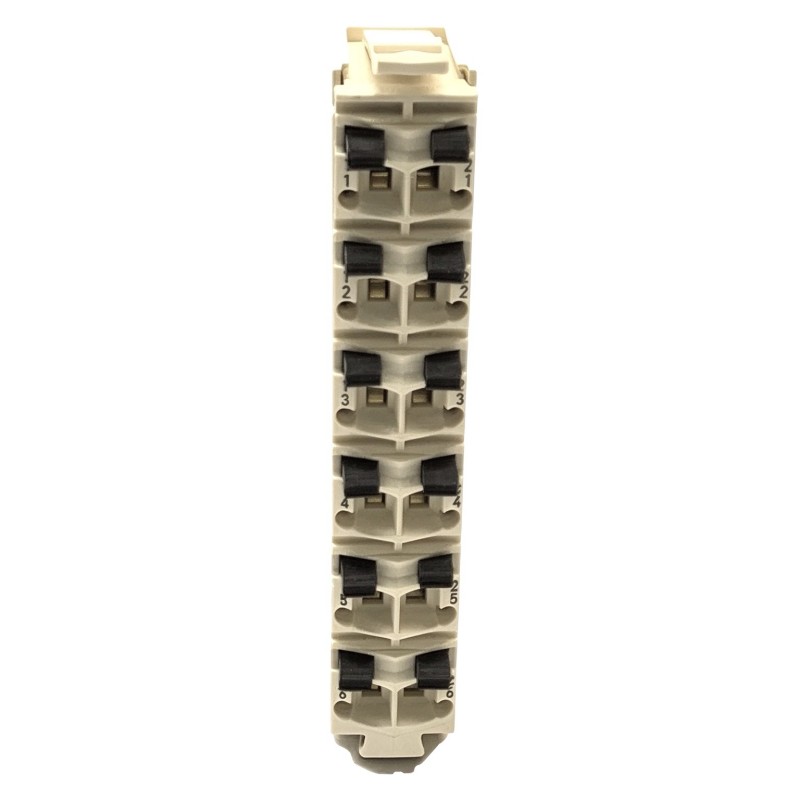
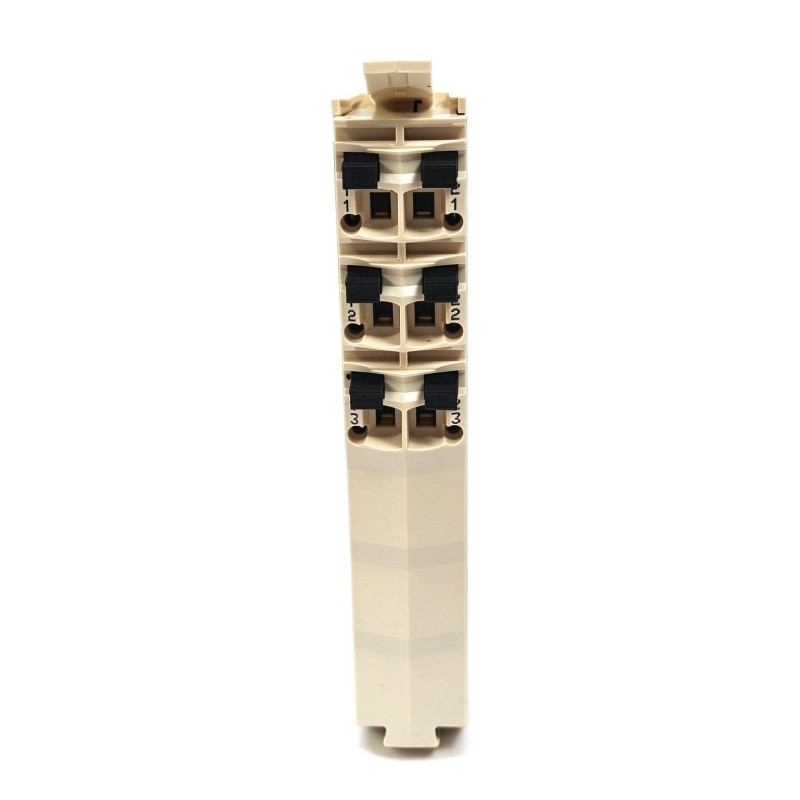
- Modular Controller Base
- France
- 341.4 x 152 x 151 mm
- 1.75 kg
- Xiamen, China
- New & In Stock
- T/T, PayPal, Western Union
- 1 Year
- 1-3 Working Days
- DHL, UPS, TNT, FedEx and EMS.
- 24-Hour Service
- COO
- 6
Our advantage

Global Logistics
We have a 10-year logistics and express cooperation agreement, so our products can be shipped to any place in the world.

Brand new and original
Our products are imported in bulk from the place of origin. Because of the cooperative relationship, our products are all original and 100% new.

24-hour service
We provide 7*24 hours service to our customers. We will be there whenever you need us.

Price advantage
All our products are priced very favorably because we have our own warehouse and supply.
| Company Information | |||
| [email protected] | |||
| Mobile | +8615980777398 | ||
| +8615980777398 | |||
| 15980777398 |
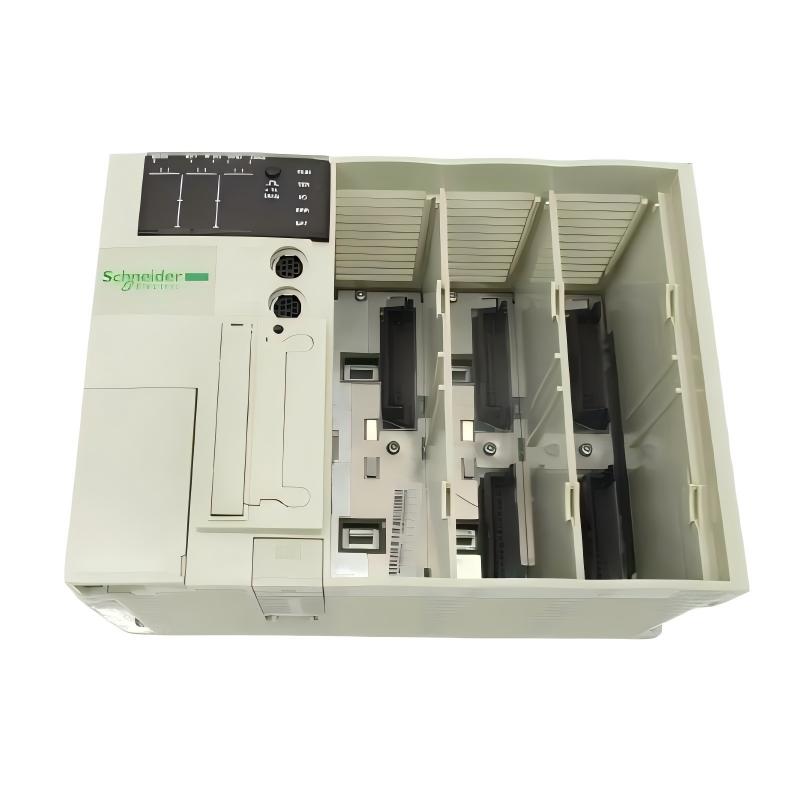
Product Overview
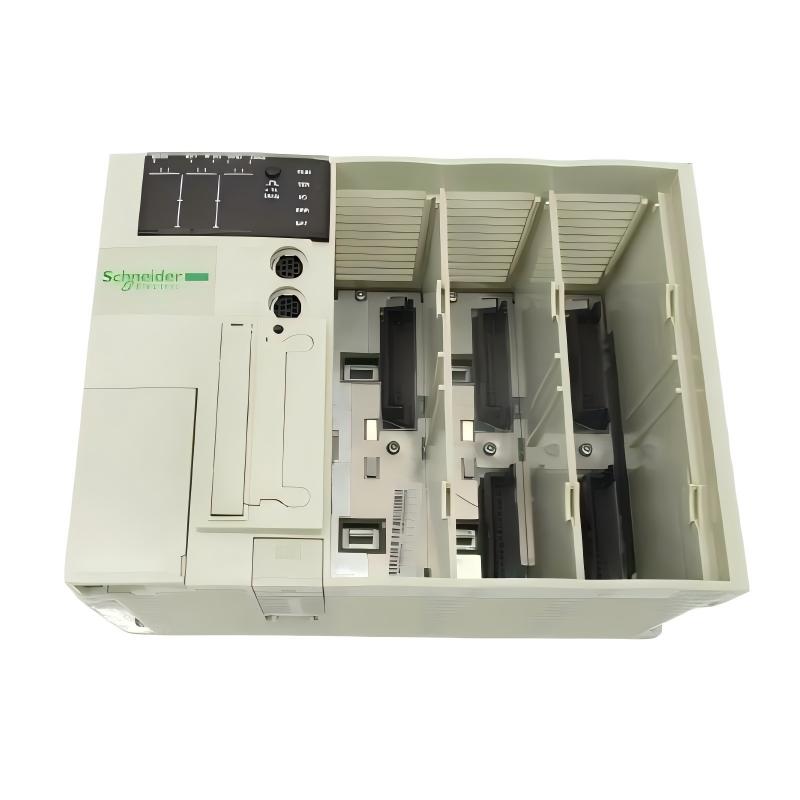
The Schneider Electric TSX3722101 Modicon TSX Micro Modular Controller Base is a programmable logic controller (PLC) designed for industrial automation and machine-control applications. Part of the Modicon TSX Micro platform, this controller combines processing, memory, communication interfaces, and integrated I/O functions in a compact base unit.
PLCs are essential components in industrial control systems. They execute programmed logic, process input signals, coordinate outputs, and manage equipment sequences according to defined operating conditions. By integrating these functions into a single controller, the TSX3722101 can support automation tasks in machinery, manufacturing equipment, and industrial process applications.
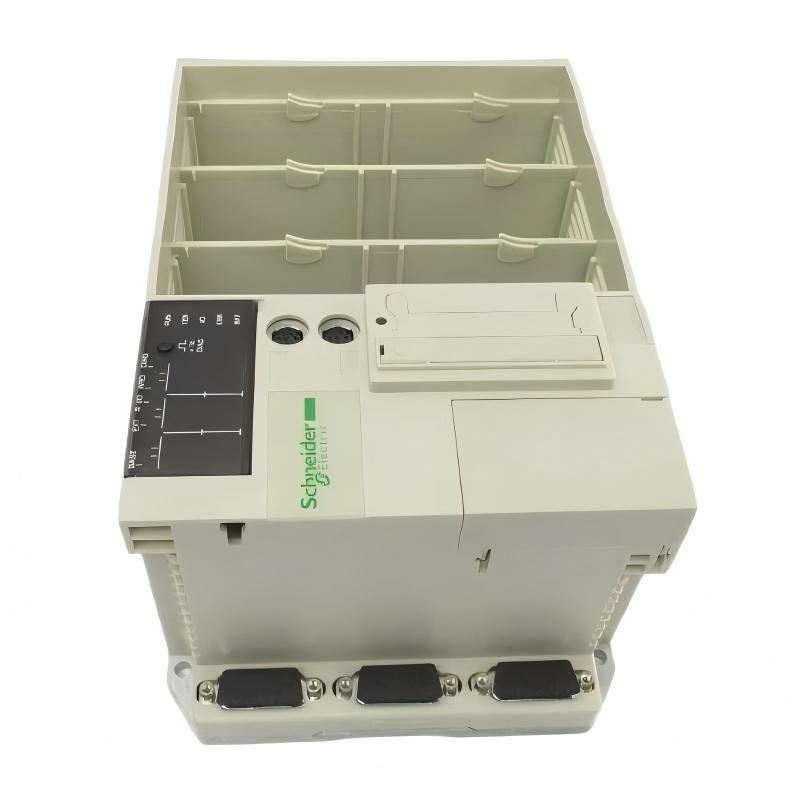
The TSX3722101 operates from a 24 V DC supply, with a specified operating range of 19.2–30 V DC. It provides three module slots and incorporates analog input, analog output, counting, and serial communication capabilities. Its integrated communication interfaces support Modbus RTU and Uni-Telway, both operating at 19.2 kbit/s in the documented configuration.
The controller also includes a real-time clock and internal memory for application data and program storage. Depending on the installed memory configuration, additional storage and program capacity may be available through a compatible PCMCIA memory card.
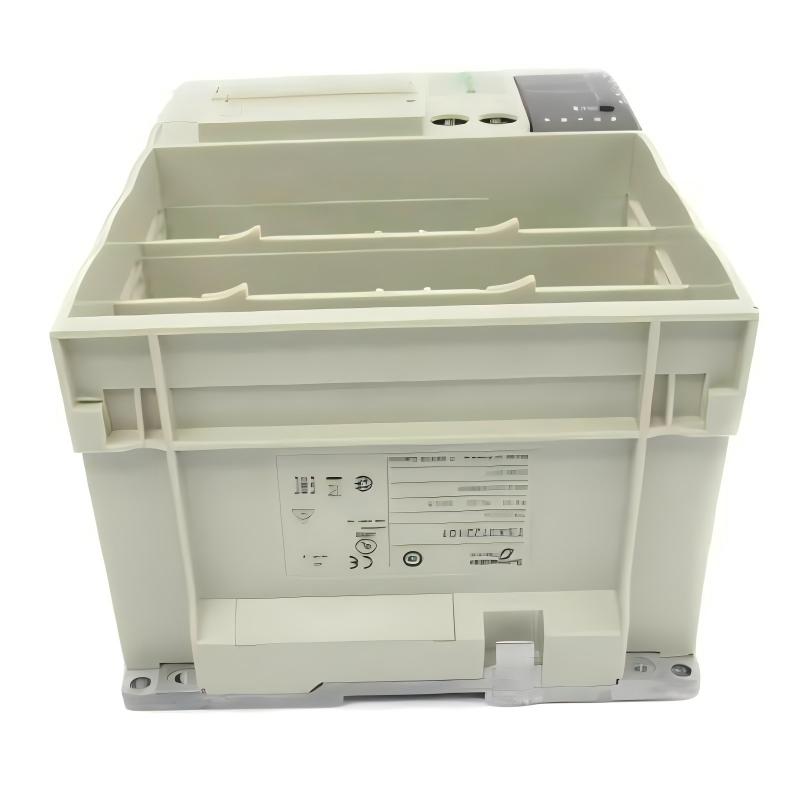
With dimensions of 341.4 × 152 × 151 mm and a supplied weight of 1.75 kg, the TSX3722101 is designed for installation within industrial control panels. Its integrated functionality can help reduce the need for separate components in applications that match its I/O capacity and processing capabilities.
The TSX3722101 is a legacy automation product and has been discontinued. It may remain relevant to maintenance teams operating existing Modicon TSX Micro systems, especially when replacing a failed controller or maintaining established machinery. Before procurement, engineers should verify the exact reference, installed configuration, communication requirements, and compatibility with the existing control program.
Technical Specifications
| Parameter | Specification |
|---|---|
| Brand | Schneider Electric |
| Product Family | Modicon TSX Micro |
| Model | TSX3722101 |
| Product Type | Modular Base Controller / PLC |
| Primary Supply Voltage | 24 V DC |
| Operating Voltage Range | 19.2–30 V DC |
| Number of Slots | 3 |
| Analog Input Type | 0–10 V |
| Analog Input Capacity | 8 channels |
| Analog Output Type | 0–10 V |
| Analog Output Capacity | 1 channel |
| Counting Function | Incremental counting |
| Counting Frequency | 10 Hz, according to the published configuration |
| Serial Communication | Modbus RTU and Uni-Telway |
| Communication Speed | 19.2 kbit/s |
| Real-Time Clock | Integrated |
| Flash Memory | 15 Kwords |
| Internal RAM | 20 Kwords |
| Additional Memory | Compatible PCMCIA card configuration, subject to system requirements |
| Protection Functions | Short-circuit and overload protection |
| Useful Secondary Power | 16 W |
| Dimensions | 341.4 × 152 × 151 mm |
| Weight | 1.75 kg |
| Product Status | Discontinued |
| Typical Application | Industrial machine automation and PLC-based control |
Note: Confirm the exact I/O configuration, memory arrangement, and installed accessories against the unit’s documentation before designing a replacement system.
Function and Working Principle
The TSX3722101 operates as the central control unit of a PLC-based automation system. It receives signals from field devices, executes the user program, evaluates process conditions, and updates the relevant control outputs.
1. PLC Processing
A PLC executes a control program stored in its memory. The program may contain logic operations, comparisons, timers, counters, arithmetic calculations, and sequencing instructions.
For example, a machine may use sensor inputs to detect a product, verify a safety interlock, and activate an output when the required conditions are satisfied. The controller repeatedly evaluates these conditions so that the machine can respond to changing operating states.
The TSX3722101 provides processing and memory resources for applications suited to the TSX Micro platform. Its suitability for a particular machine depends on program size, execution requirements, I/O demand, and communication needs.
2. Analog Signal Processing
The controller’s documented configuration includes eight 0–10 V analog inputs and one 0–10 V analog output.
Analog inputs allow a control program to monitor continuously varying signals from compatible instruments. Depending on the system design, these may represent pressure, temperature, level, position, or another measured process variable.
The analog output can provide a voltage reference to compatible external equipment, such as a device with a 0–10 V command input. The connected device’s electrical specifications and signal scaling must be checked before integration.
Correct signal wiring, grounding, and scaling are important for accurate measurement and stable control.
3. Counting Functions
The TSX3722101 includes an incremental counting function documented for a 10 Hz signal frequency. Counting functions can be used to track pulses from compatible sensors or encoders in applications such as product counting, machine-cycle monitoring, and basic movement tracking.
The specified counting capability should not be confused with a high-speed counter. Applications involving fast encoders or high-frequency pulse signals require a careful review of the controller’s documented limits and may need a dedicated counter module.
4. Serial Communication
The controller supports Modbus RTU and Uni-Telway serial communication at 19.2 kbit/s in the published configuration.
Modbus RTU can be used to exchange data with compatible devices, such as selected instruments or controllers. Uni-Telway supports communication within compatible Schneider Electric automation environments.
Actual communication depends on the correct interface, cable, protocol settings, device addressing, and application configuration. Before connecting third-party equipment, confirm protocol support and the appropriate physical interface.
5. Memory and Real-Time Clock
The controller includes flash memory and internal RAM for program and data storage. The documented configuration lists 15 Kwords of flash memory and 20 Kwords of internal RAM, with additional memory arrangements possible when compatible PCMCIA hardware is used.
An integrated real-time clock can support time-related functions within the control application. Depending on the program, this may include time-based sequencing, event recording, or scheduled machine operations.
Memory capacity and clock behavior should be verified against the installed hardware and the requirements of the existing PLC application.
Role in Industrial Control Systems
The TSX3722101 can serve as the main controller in a compact industrial automation system. It coordinates field devices, processes operating conditions, and exchanges information with compatible equipment.
PLC-Based Machine Control
In a machine-control installation, the controller receives signals from sensors, evaluates programmed logic, and commands output devices. This may include coordinating motors, valves, indicator lamps, and auxiliary equipment through appropriate I/O or connected control devices.
The controller’s three-slot configuration provides a defined hardware expansion capacity. Engineers should verify the exact supported modules and system configuration before adding hardware.
Process Monitoring
The analog inputs can support monitoring of compatible voltage-output instruments. A control program can compare measured values against configured limits and initiate actions when a process variable moves outside the permitted range.
The analog output may provide a reference signal to compatible external equipment. However, the controller should not be assumed to provide every form of closed-loop control automatically; the required logic, signal conditioning, and actuator interfaces must be engineered for the application.
Equipment Communication
The Modbus RTU and Uni-Telway interfaces allow the controller to exchange data with compatible devices. Communication may support equipment status monitoring, parameter exchange, or coordination between controllers.
Network topology, serial settings, protocol compatibility, and cable requirements should be checked before connecting the controller to an existing system.
Legacy System Maintenance
The TSX Micro family is relevant to older industrial installations where the original PLC program and control architecture remain in service. Maintaining the TSX3722101 may help preserve established machine behavior when a complete control-system upgrade is not immediately practical.
Because the product is discontinued, spare-part sourcing and replacement planning should include a review of software compatibility, hardware condition, and long-term support requirements.
Industrial Applications
The TSX3722101 can be used in industrial applications whose control requirements fit its processing capacity, integrated I/O functions, and communication interfaces.
1. Manufacturing Machinery
Manufacturing machines often use PLCs to coordinate sensors, actuators, machine sequences, and operator commands. The TSX3722101 can support suitable applications that require discrete logic, analog monitoring, and serial communication.
Examples include small production machines, auxiliary equipment, and established manufacturing systems that already use the Modicon TSX Micro platform.
2. Material Handling
Material-handling equipment may require product detection, sequence control, counting, and coordination between machine sections. The controller’s counting function and PLC processing can support compatible low-frequency counting and basic sequencing applications.
The motor-control hardware and field devices must be selected separately where they are not part of the controller itself.
3. Process Monitoring
Industrial processes may use voltage-output transmitters or signal-conditioning equipment to provide analog information to the PLC. The TSX3722101 can process compatible 0–10 V signals and use the programmed logic to respond to changing conditions.
The input signal range and electrical characteristics of each instrument must be confirmed before connection.
4. Packaging Equipment
Packaging machinery may use PLC logic to coordinate feeding, counting, product detection, and machine-cycle timing. The TSX3722101 can be considered for legacy equipment whose program requirements and I/O capacity remain within the controller’s capabilities.
Applications requiring high-speed motion control, advanced networking, or extensive I/O may need a different architecture.
5. Auxiliary Industrial Systems
The controller may also be found in auxiliary equipment that monitors operating conditions and coordinates basic machine functions. Its serial interfaces can provide communication with compatible devices where the application has been designed for Modbus RTU or Uni-Telway.
The exact application should be assessed against the controller’s processing speed, memory, signal capacity, and lifecycle status.
Installation and System Integration
Proper installation is essential for reliable controller operation and for maintaining compatibility with the existing automation system.
1. Verify the Power Supply
The TSX3722101 uses a nominal 24 V DC supply and has a specified operating range of 19.2–30 V DC. Verify the supply voltage, polarity, wiring, and available current before installation.
The supply should remain within the documented range during normal operation and expected load changes. Poor power quality or an incorrectly sized supply may lead to controller resets or unstable operation.
2. Plan Mounting and Panel Space
The supplied dimensions are 341.4 × 152 × 151 mm, and the listed product weight is 1.75 kg.
Confirm the mounting drawing and clearances for the actual configuration, including connected terminal blocks and cables. Allow sufficient space for wiring access, ventilation, and maintenance.
The controller should be installed in an enclosure appropriate for the environmental conditions. Protect it from excessive moisture, conductive dust, corrosive substances, and temperatures outside its specified operating range.
3. Connect Field I/O Correctly
Before connecting analog instruments, verify that each signal is compatible with the controller’s 0–10 V input or output specification.
Use appropriate wiring practices to reduce interference and prevent grounding problems. Separate sensitive signal cables from power wiring where necessary, and follow the installation requirements for connected sensors and actuators.
Do not connect a current-loop signal directly to a voltage input unless suitable signal-conditioning equipment is provided.
4. Configure Serial Communication
For Modbus RTU or Uni-Telway communication, verify the required physical interface, communication parameters, device addresses, and protocol configuration.
The documented communication speed is 19.2 kbit/s. The actual network must use settings supported by the connected devices. Check the required cable and connector type before connecting the controller to an existing serial network.
5. Load and Verify the PLC Program
Before replacing an existing controller, obtain a valid backup of the PLC program and associated configuration data wherever possible.
Confirm that the application is compatible with the replacement hardware and that the correct software tools are available. Verify memory configuration, I/O mapping, communication settings, and program execution after installation.
Do not assume that a replacement unit will contain the original application program.
6. Test the System Before Operation
After installation, check the supply voltage, terminal connections, grounding, and connected devices. Test each relevant input and output, verify analog scaling, confirm serial communication, and exercise the required machine sequences.
For equipment controlling hazardous motion or industrial processes, verify interlocks and safety functions independently according to the machine’s safety design.
Compatible System Components
The TSX3722101 is designed to work with compatible components in the Modicon TSX Micro automation environment. Actual compatibility depends on the hardware revision, installed accessories, software configuration, and application requirements.
| Component | Function | Compatibility Considerations |
|---|---|---|
| 24 V DC power supply | Provides operating power | Maintain the specified 19.2–30 V DC input range |
| Compatible TSX Micro expansion modules | Extend available I/O or system functions | Confirm supported modules and the permitted configuration |
| Analog voltage-output instruments | Supply process measurements | Verify 0–10 V signal range and electrical requirements |
| Compatible analog-output devices | Receive the controller’s voltage reference | Confirm input impedance, signal scaling, and wiring |
| Modbus RTU devices | Exchange serial data | Check physical interface, baud rate, addressing, and protocol support |
| Uni-Telway-compatible devices | Communicate within a compatible automation system | Verify interface hardware, cable, and network configuration |
| PCMCIA memory hardware | Provides additional memory options | Confirm supported card type and software requirements |
| Industrial control cabinet | Protects and supports installed equipment | Provide suitable environmental protection and wiring clearance |
| Sensors and actuators | Supply inputs and carry out control actions | Match signal type, electrical ratings, and application requirements |
These are system-level component categories, not a statement that the accessories are included with the controller. Verify the bill of materials and hardware compatibility before procurement.
Alternative Models and Replacement Considerations
Schneider Electric identifies the TSX3722101 as discontinued and does not specify a direct replacement. Consequently, a replacement should be selected through a system-level compatibility review rather than by choosing a controller with similar dimensions alone.
| Replacement Approach | Key Considerations |
|---|---|
| Another TSX3722101 unit | Check hardware condition, reference, program retention, and configuration |
| A compatible TSX Micro controller | Verify supply type, I/O arrangement, memory, communication, and software compatibility |
| A related TSX Micro base controller | Compare the complete model number; similar family names do not guarantee identical functionality |
| A modern Modicon PLC | May support a longer-term upgrade but can require program conversion, rewiring, and recommissioning |
| A different industrial PLC platform | Requires a broader assessment of I/O, communication, control logic, panel layout, and maintenance procedures |
Before selecting a replacement, review:
- Supply voltage and power requirements.
- Integrated analog and discrete I/O capacity.
- Counting and timing requirements.
- Memory capacity and program compatibility.
- Modbus RTU and Uni-Telway communication requirements.
- Expansion-module compatibility.
- Mounting dimensions and terminal layout.
- Software availability and programming tools.
- Machine safety and process-control requirements.
- Spare-parts availability and long-term maintenance strategy.
A newer controller may offer improved processing performance or communications, but it should not be treated as a direct substitute until the complete control system has been evaluated.
Key Advantages
Integrated Control Functions
The TSX3722101 combines PLC processing, analog I/O, counting functionality, memory, and serial communication in one base controller. This integration can simplify suitable automation installations.
Flexible Serial Communication
Support for Modbus RTU and Uni-Telway enables communication with compatible devices in established automation systems.
Analog Monitoring and Output
The integrated 0–10 V analog interfaces can support applications that require voltage-based process measurements and reference signals.
Internal Memory and Real-Time Clock
Flash memory, RAM, and an integrated real-time clock support application execution, data handling, and time-dependent logic within the documented system capabilities.
Compact Base-Controller Design
The three-slot architecture offers a defined foundation for compatible TSX Micro expansion hardware and associated control functions.
Useful for Legacy Equipment Maintenance
For existing TSX Micro installations, accurate identification of the TSX3722101 can help maintenance teams source replacement equipment and preserve an established control architecture.
Technical FAQs
1. What is the Schneider Electric TSX3722101?
The TSX3722101 is a modular base controller in the Modicon TSX Micro PLC family. It integrates processing, memory, analog I/O, counting functionality, and serial communication.
2. What power supply does it require?
It uses a nominal 24 V DC supply, with a documented operating range of 19.2–30 V DC.
3. How many slots does the TSX3722101 have?
The base controller has three slots. Before adding expansion hardware, verify the permitted system configuration and compatibility of the intended modules.
4. Does it support analog signals?
Yes. Its documented configuration includes eight 0–10 V analog inputs and one 0–10 V analog output. Connected devices must use compatible signal ranges and electrical interfaces.
5. Which communication protocols are supported?
The published configuration includes Modbus RTU and Uni-Telway serial communication at 19.2 kbit/s. Confirm the physical interface, cable, and protocol settings required for the specific installation.
6. Does it include memory?
Yes. The published specifications list 15 Kwords of flash memory and 20 Kwords of internal RAM. Additional memory options may be available through compatible PCMCIA hardware.
7. Is the TSX3722101 discontinued?
Yes. Schneider Electric lists the product as discontinued. The manufacturer’s lifecycle information indicates an end-of-service date of December 31, 2027, so buyers should confirm current support availability before planning long-term maintenance.
8. Can it replace another TSX Micro controller?
Not automatically. Compare the full catalog number, supply requirements, I/O configuration, memory, communications, and program compatibility before substituting another controller.
9. What should be checked when purchasing a used unit?
Confirm the exact model, physical condition, terminal integrity, power-up behavior, available test information, and program-retention status. For critical machinery, request appropriate functional testing and verify the supplier’s warranty and return terms.
10. What is the product’s listed size and weight?
The supplied specifications are 341.4 × 152 × 151 mm and 1.75 kg. These values match published product data, but the installed configuration and packaging should be checked when calculating panel space or shipping weight.
Procurement and Maintenance Recommendations
Because the TSX3722101 is a discontinued controller, procurement should begin with exact model identification and an assessment of the existing system. Confirm the catalog number, power-supply requirements, installed expansion hardware, communication settings, and the PLC program before ordering a replacement.
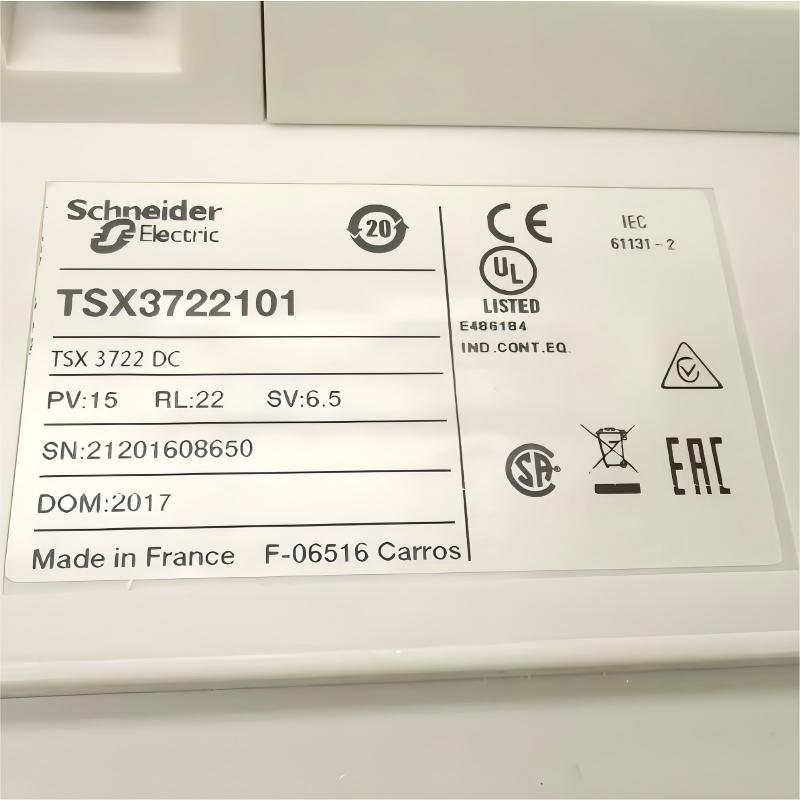
For new-old-stock, used, or refurbished units, request clear photographs of the nameplate and terminals. Confirm the unit’s condition, whether it has been functionally tested, and whether the original program or memory card is included. The presence of a controller does not guarantee that the original application program is available.
During maintenance, inspect terminal connections, power-supply stability, wiring, grounding, and the surrounding cabinet environment. Keep a verified backup of the PLC program and document communication parameters and I/O assignments.
For longer-term projects, evaluate the cost and risk of continuing to maintain the legacy platform against the effort required for a modern PLC migration. A migration may involve program conversion, replacement I/O, new communication interfaces, revised wiring, and system recommissioning.
Conclusion
The Schneider Electric TSX3722101 Modicon TSX Micro Modular Controller Base is a legacy PLC controller designed for industrial machine automation and process monitoring. It operates from a nominal 24 V DC supply, provides three slots, and integrates analog I/O, counting functions, memory, a real-time clock, and Modbus RTU and Uni-Telway serial communication.
With dimensions of 341.4 × 152 × 151 mm and a listed weight of 1.75 kg, it can serve as a replacement component in compatible existing TSX Micro installations. Since the model is discontinued and has no manufacturer-designated direct replacement, careful verification of hardware, program compatibility, communication requirements, and lifecycle support is essential for reliable maintenance and procurement.