

ProductPRODUCT
Featured products
Contact Us
- Schneider
- VIA0701D12A0000
- Servo Motor
- France
- 70 mm
- 3.63 kg
- Xiamen, China
- New & In Stock
- T/T, PayPal, Western Union
- 1 Year
- 1-3 Working Days
- DHL, UPS, TNT, FedEx and EMS.
- 24-Hour Service
- COO
- 5
Our advantage

Global Logistics
We have a 10-year logistics and express cooperation agreement, so our products can be shipped to any place in the world.

Brand new and original
Our products are imported in bulk from the place of origin. Because of the cooperative relationship, our products are all original and 100% new.

24-hour service
We provide 7*24 hours service to our customers. We will be there whenever you need us.

Price advantage
All our products are priced very favorably because we have our own warehouse and supply.
| Company Information | |||
| [email protected] | |||
| Mobile | +8615980777398 | ||
| +8615980777398 | |||
| 15980777398 |
Product Overview
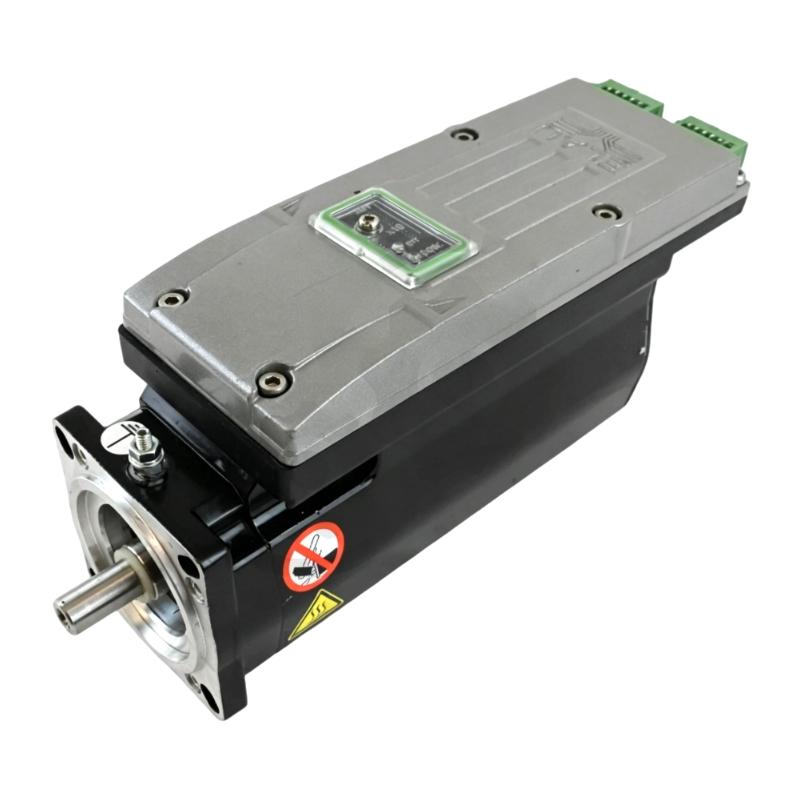
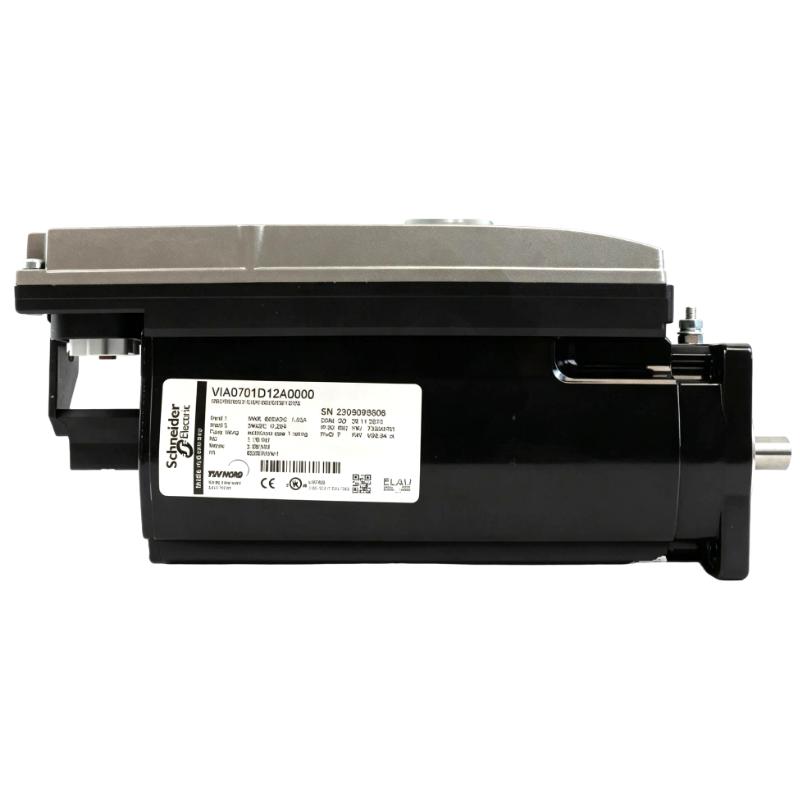
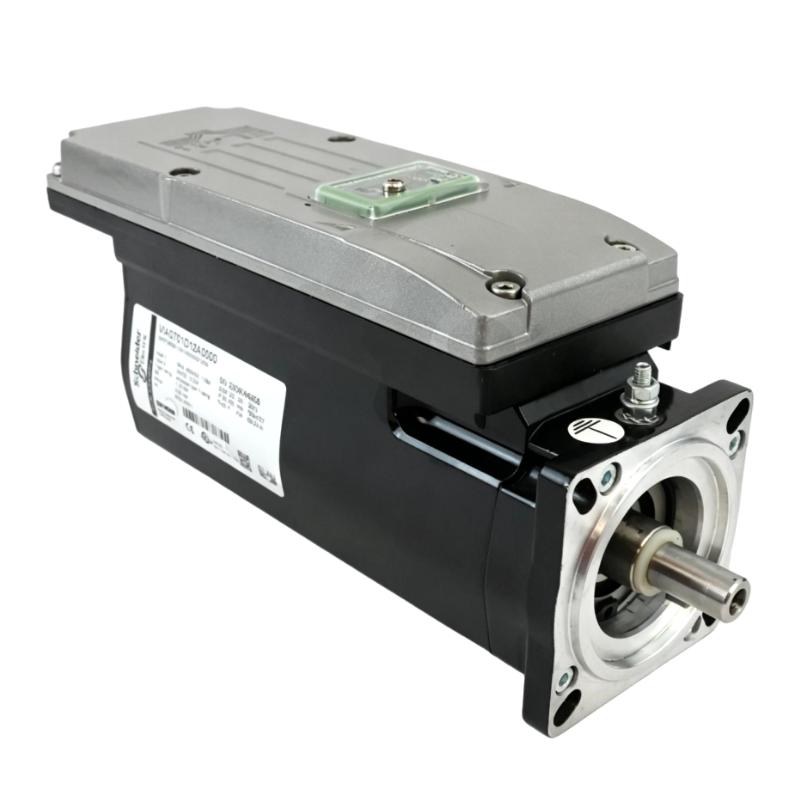
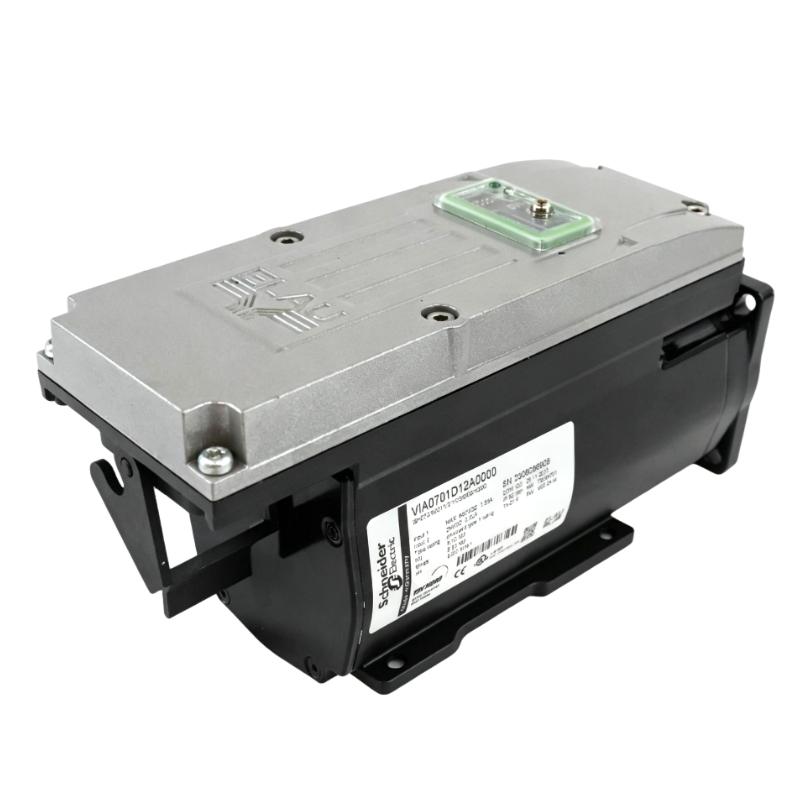
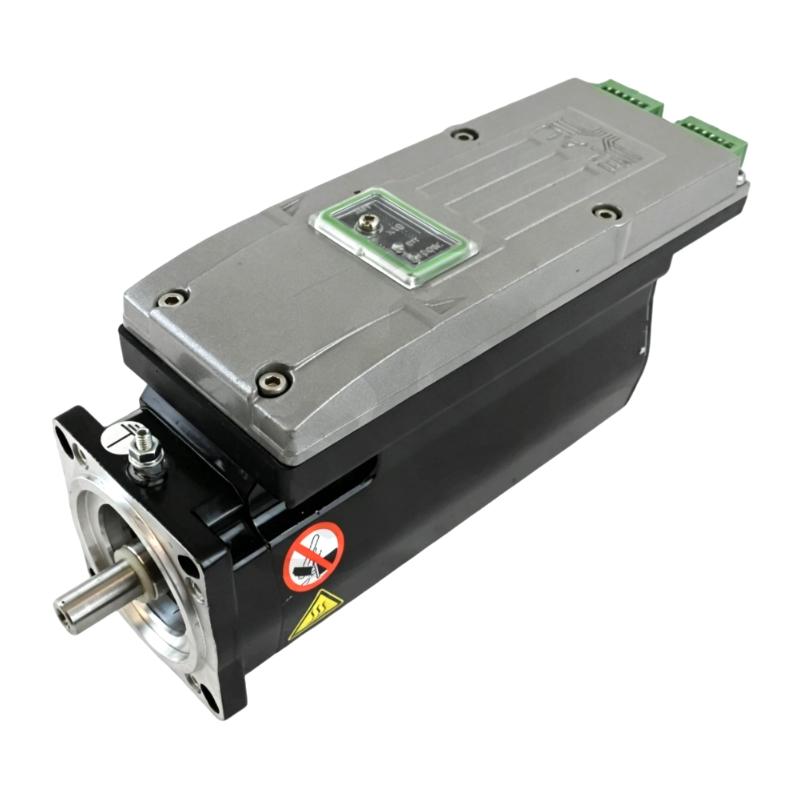
The Schneider Electric VIA0701D12A0000 Servo Motor is an industrial motion-control component from the former ELAU PacDrive iSH series. It is designed for applications requiring controlled rotational motion, accurate speed regulation, and integration with automated machinery. The model is associated with the iSH070/60011/0/1/00/0/00/10/00 motor configuration.
Servo motors are widely used in industrial automation because they provide controlled motion in response to commands from a compatible servo drive or integrated drive system. They are commonly applied in packaging machines, material-handling equipment, assembly systems, and other applications where motor speed and torque must be coordinated with a production sequence.
The VIA0701D12A0000 configuration is specified with a 70 mm flange, a rated speed of up to 6000 rpm, and a listed standstill torque of 1.1 N·m. It uses a SinCos SKM 36 encoder for motion feedback and has a keyed shaft. The documented configuration does not include a holding brake.
The model is also described in product listings as a servo motor with an integrated drive. This distinction matters when checking the equipment architecture: buyers should confirm the exact electrical connections, power-stage requirements, and compatible control system before installing a replacement.
Because this product has been discontinued, maintenance teams and equipment purchasers should verify the complete catalog number and physical condition before ordering. A motor with the same flange size may not have the same encoder, shaft arrangement, electrical ratings, or mechanical interface.
Technical Specifications
| Parameter | Specification |
|---|---|
| Brand | Schneider Electric |
| Original Product Brand | ELAU |
| Model Number | VIA0701D12A0000 |
| Associated Motor Type | iSH070/60011/0/1/00/0/00/10/00 |
| Product Series | PacDrive iSH |
| Product Type | Servo Motor |
| Flange Size | 70 mm |
| Standstill Torque | 1.1 N·m |
| Rated Speed | Up to 6000 rpm |
| Power-Stage Voltage | 680 V DC, as listed for this configuration |
| Listed Current | 1.55 A |
| Encoder Type | SinCos SKM 36 |
| Shaft Type | Keyed shaft |
| Holding Brake | Not included |
| Protection Rating | IP50 |
| Dimensions | Confirm from the actual unit and mechanical drawing |
| Weight Provided | 3.63 kg |
| Lifecycle Status | Discontinued |
| Typical Application | Industrial servo motion control |
Note: The 3.63 kg weight is the supplied listing value. Confirm the actual motor and packaging weight before arranging shipping. Electrical ratings and interface details should be verified against the unit’s nameplate and applicable technical documentation.
Function and Working Principle
The VIA0701D12A0000 is intended for controlled motion within an industrial automation system. Servo operation generally combines a motor, a compatible power stage, feedback devices, and a controller that determines the required motion.
1. Electrical-to-Mechanical Energy Conversion
The motor converts electrical energy into rotational movement. When the compatible drive supplies controlled electrical power to the motor windings, electromagnetic forces produce torque at the shaft.
The shaft then transfers rotational movement to the connected mechanism, such as a conveyor roller, feed mechanism, rotary table, or packaging assembly.
The resulting motion depends on the motor’s electrical characteristics, the drive configuration, the load, and the control commands.
2. Speed Control
The documented motor configuration supports speeds of up to 6000 rpm. This provides a range of operating possibilities for suitable high-speed industrial mechanisms.
The maximum listed speed should not be interpreted as the required operating speed for every application. Actual speed limits depend on the drive configuration, mechanical load, thermal conditions, and system design.
During commissioning, engineers should establish appropriate speed limits and acceleration profiles for the machine.
3. Torque Production
The listed standstill torque is 1.1 N·m. Standstill torque describes torque associated with a stationary operating condition and should not automatically be treated as the continuous rated torque across the complete speed range.
For an application requiring sustained torque, frequent acceleration, or high dynamic performance, the applicable torque-speed curve and motor thermal limits should be checked.
Correct sizing helps prevent excessive heating, unstable motion, and premature component wear.
4. Encoder Feedback
The VIA0701D12A0000 is specified with a SinCos SKM 36 encoder. Encoder feedback provides information about motor position and movement to the compatible control electronics.
Depending on the system architecture, this feedback can support speed regulation and motion supervision. The controller uses feedback information to compare actual motion with the commanded motion and adjust motor operation accordingly.
The encoder interface must be compatible with the connected drive. Substituting a motor with a different encoder type may require changes to hardware, configuration, or commissioning procedures.
5. Coordinated Motion
In automated machinery, servo motors often operate as part of a coordinated sequence. A controller may command a motor to accelerate, reach a target speed, maintain movement during processing, and decelerate at a defined point.
The achievable accuracy and response depend on the complete motion-control system, including the motor, drive, encoder, mechanical transmission, and control parameters.
Role in Industrial Control Systems
The VIA0701D12A0000 can serve as a motion-control component in machinery that requires regulated rotational movement. Its role depends on the original PacDrive architecture and the controller and drive hardware used in the installation.
Servo Drive and Controller Integration
A compatible drive supplies controlled electrical power to the motor and interprets motion commands. A motion controller or PLC coordinates those commands with sensors, machine states, and production logic.
Before installation, engineers should verify whether the specific unit uses an integrated power stage or requires a separate compatible drive. They should also check the connector arrangement, feedback interface, and applicable wiring diagrams.
Encoder Feedback Integration
The SinCos SKM 36 encoder is an important part of the specified motor configuration. The feedback interface must match the connected drive’s requirements for signal type, connector pinout, and supported feedback hardware.
Incorrect feedback wiring or incompatible drive settings can prevent the motor from operating correctly or generate motion-control faults.
PLC and HMI Coordination
A PLC may coordinate the motor with conveyors, sensors, pneumatic actuators, and other machine components. An HMI can provide operators with access to production settings, alarms, and machine status.
In many systems, the PLC or motion controller manages the motor through the compatible servo drive. The exact control architecture should be established from the original machine documentation rather than assumed from the motor’s model number alone.
Mechanical System Integration
The motor’s flange, shaft, coupling, and mounting arrangement determine how it connects to the machine. The 70 mm flange size is an important mounting reference, but it is not sufficient on its own to establish mechanical interchangeability.
Shaft diameter, shaft length, key dimensions, mounting-hole pattern, and allowable loads should also be checked.
Industrial Applications
Servo motors are used where controlled rotational movement is needed. The suitability of the VIA0701D12A0000 depends on its torque-speed characteristics, mechanical interface, encoder compatibility, and the requirements of the original control system.
1. Packaging Machinery
Packaging machines use controlled motion for feeding materials, transporting products, and coordinating mechanical operations. A compatible servo system can regulate motor speed according to the production cycle.
In a packaging application, the motor must be matched to the required cycle rate, acceleration, torque, and positioning performance.
2. Material-Handling Systems
Servo motors can operate rollers, feed mechanisms, and auxiliary motion axes in material-handling equipment. Controlled acceleration and deceleration can help coordinate movement with sensors and downstream processes.
The mechanical load and transmission ratio should be evaluated to ensure that the motor operates within its permitted torque and speed range.
3. Automated Assembly Equipment
Assembly machinery often requires repeatable movement of fixtures, feeding mechanisms, or rotary components. A servo system can coordinate these movements with the machine sequence.
Where precise positioning is required, the controller, feedback device, and mechanical assembly must be considered together. The motor alone does not determine overall positioning accuracy.
4. Printing and Converting Machinery
Printing, labeling, and converting equipment may use servo-controlled axes to synchronize material movement and machine operations.
The encoder feedback and speed capabilities can be relevant to these applications, provided that the drive, controller, and mechanical system support the required performance.
5. General Industrial Automation
The motor may be used in other compatible machinery requiring controlled rotational motion. However, it should not be selected solely because its flange size or speed rating appears suitable.
Engineers should confirm the electrical interface, torque requirements, feedback type, mounting arrangement, and operating environment before approving it for an application.
Installation and System Integration
Correct installation is essential for reliable servo operation. A suitable motor must be mechanically mounted, electrically connected, and configured for the exact drive and controller used by the machine.
1. Verify the Complete Model Number
Confirm that the motor label reads VIA0701D12A0000 and compare it with the original equipment documentation.
The associated motor designation is iSH070/60011/0/1/00/0/00/10/00. This full designation can help distinguish the motor from other models with similar flange sizes or speed ratings.
Check whether the replacement has the same encoder, shaft arrangement, brake configuration, and electrical requirements.
2. Check Mechanical Mounting
The supplied flange size is 70 mm. Before installation, verify the mounting-hole pattern, pilot diameter, shaft diameter, shaft length, key dimensions, and required alignment.
The motor should be securely mounted to a rigid surface. Misalignment between the motor shaft and the driven mechanism can cause vibration, bearing wear, coupling damage, and reduced service life.
Do not use the shaft to force the motor into position or compensate for incorrect mechanical alignment.
3. Verify Electrical Compatibility
Confirm the power-stage requirements and the interface supported by the connected drive. The listed 680 V DC value relates to the power-stage specification for this configuration and should not be treated as a universal direct connection instruction.
Use the applicable manufacturer wiring diagrams and verify connector pin assignments before connecting power or feedback cables.
Only qualified personnel should perform installation and electrical testing, following appropriate isolation and discharge procedures.
4. Connect the Encoder Correctly
The SinCos SKM 36 encoder requires a compatible feedback interface. Check the cable, connector, shielding, grounding, and pinout against the drive documentation.
Keep feedback wiring routed appropriately in relation to motor power cables to reduce electrical interference. Incorrect encoder connections can cause feedback faults or improper motion response.
5. Configure and Commission the Motor
After installation, verify the motor parameters, feedback settings, direction of rotation, and operating limits in the compatible drive or controller.
Start with conservative motion settings and conduct controlled tests before returning the machine to normal production. Verify acceleration, deceleration, speed response, and any position-control functions required by the application.
Document the final settings so that they can be restored after maintenance or replacement.
6. Confirm the Holding-Brake Requirement
The documented VIA0701D12A0000 configuration does not include a holding brake. If the application requires the shaft to remain stationary when power is removed, the machine’s mechanical design must provide an appropriate solution.
Do not assume that a motor without a brake can safely hold a vertical or gravity-loaded axis. Evaluate the mechanical risks and required safety measures separately.
Compatible System Components
The VIA0701D12A0000 must be integrated with components that match its electrical, feedback, and mechanical requirements.
| Component | Function | Compatibility Considerations |
|---|---|---|
| Compatible servo drive or integrated drive system | Supplies controlled power to the motor | Verify the original system architecture and exact electrical interface |
| PacDrive motion controller | Coordinates motion commands | Confirm supported motor and drive configuration |
| PLC | Coordinates machine sequences and interlocks | Check control architecture and available motion-control functions |
| SinCos encoder interface | Receives motor feedback | Must support the SKM 36 encoder signals and connector arrangement |
| Feedback cable | Carries encoder signals | Verify pinout, shielding, length, and connector compatibility |
| Motor power cable | Supplies electrical power | Confirm voltage, current, connector, and cable specifications |
| Mechanical coupling | Connects the motor to the driven mechanism | Check shaft and key dimensions, alignment, and torque capacity |
| Motor mounting bracket or flange | Secures the motor to the machine | Verify the 70 mm flange interface and mounting pattern |
| HMI | Provides operator access to machine settings and status | Integration is determined by the controller and system architecture |
These components are examples of equipment that may be needed in a complete installation. They are not necessarily included with the motor.
Alternative Models and Replacement Considerations
The VIA0701D12A0000 is discontinued, so replacement selection requires more than matching the flange size. The replacement must satisfy the electrical, mechanical, feedback, and control requirements of the original machine.
| Alternative or Related Option | Replacement Considerations |
|---|---|
| Identical VIA0701D12A0000 unit | Preferred for a like-for-like replacement if its condition and configuration are verified |
| Another ELAU PacDrive iSH070 motor | Compare the complete motor designation, torque, speed, encoder, shaft, and brake configuration |
| A related Schneider Electric PacDrive motor | Requires confirmation of drive compatibility, feedback interface, mounting, and electrical ratings |
| A current Schneider Electric servo motor | May be suitable for an upgrade but could require a compatible drive, cabling, and controller changes |
| A motor from another manufacturer | Requires a full engineering assessment of mechanical, electrical, and control compatibility |
Before selecting a substitute, compare:
- Full catalog number and associated motor designation.
- Flange dimensions and mounting-hole pattern.
- Shaft diameter, length, and key dimensions.
- Torque requirements across the operating speed range.
- Maximum speed and acceleration requirements.
- Power-stage and auxiliary electrical specifications.
- Encoder type and feedback interface.
- Holding-brake requirements.
- Motor and drive connector arrangements.
- Controller configuration and commissioning requirements.
A replacement motor should not be approved based only on similar dimensions or nominal speed. Differences in encoder signals, torque characteristics, and drive compatibility may prevent direct substitution.
Key Advantages
Compact Mounting Interface
The 70 mm flange provides a defined mounting reference for machinery designed around this motor size. The complete mechanical interface must still be verified before replacement.
High-Speed Operation
The listed maximum speed of 6000 rpm supports applications requiring relatively high rotational speed, subject to the motor’s operating limits and mechanical load.
Encoder-Based Feedback
The SinCos SKM 36 encoder provides feedback for a compatible motion-control system. This supports closed-loop control when the connected drive and controller are configured appropriately.
Industrial Motion-Control Capability
The motor can be incorporated into automated equipment that requires controlled rotational movement, speed regulation, and coordination with a production sequence.
Established PacDrive Integration
The model is associated with the ELAU PacDrive iSH product family, making the full motor designation important for identifying compatible legacy equipment.
Defined Mechanical Configuration
The keyed shaft and 70 mm flange help identify important mechanical characteristics for installation and maintenance planning.
Technical FAQs
1. What is the Schneider Electric VIA0701D12A0000?
It is a servo motor from the former ELAU PacDrive iSH series, associated with the iSH070/60011/0/1/00/0/00/10/00 configuration.
2. What is the flange size?
The supplied product information specifies a 70 mm flange. Verify the mounting-hole pattern and other mechanical dimensions before installation.
3. What is the rated speed?
The associated product specifications list a speed of up to 6000 rpm. Actual operating speed depends on the drive configuration, mechanical load, and application requirements.
4. What is the torque rating?
The listed standstill torque is 1.1 N·m. This should not be confused with continuous rated torque throughout the speed range. Consult the applicable torque-speed data for detailed motor sizing.
5. Which encoder does this motor use?
The documented configuration uses a SinCos SKM 36 encoder. The connected drive must support the encoder’s feedback interface.
6. Does the motor include a holding brake?
No. The specified VIA0701D12A0000 configuration does not include a holding brake. Applications requiring holding torque after power removal need an appropriate mechanical or braking solution.
7. Is the VIA0701D12A0000 still in production?
The model is listed as discontinued. Availability may depend on remaining inventory, surplus stock, or refurbished equipment.
8. Can I replace it with another 70 mm servo motor?
Not automatically. The replacement must match or appropriately support the torque, speed, encoder, shaft, mounting, electrical interface, and drive requirements of the original system.
9. What should be checked when purchasing a used motor?
Inspect the nameplate, shaft, mounting face, connectors, cable interfaces, and visible signs of damage. Where possible, obtain test results for insulation condition, encoder feedback, and operational performance using a compatible test setup.
10. Is 3.63 kg the confirmed manufacturer weight?
The 3.63 kg figure is the supplied listing weight. Public reseller records report different weights for this model, so confirm the physical unit’s weight and distinguish the motor’s net weight from its packaged shipping weight.
Procurement and Maintenance Recommendations
Because the VIA0701D12A0000 is discontinued, procurement should focus on exact model identification and verified condition.
When requesting a quotation, provide the complete catalog number and associated motor designation. Ask the supplier to confirm the encoder type, shaft arrangement, brake configuration, and physical condition. If the motor is used or refurbished, request relevant inspection or test information and clarify the warranty and return terms.
For maintenance planning, keep the motor and surrounding equipment clean and inspect the shaft, mounting hardware, connectors, and cables for wear or damage. Monitor vibration, operating temperature, unusual noise, and changes in motion performance. Investigate recurring feedback faults before replacing components.
For a replacement project, compare the motor with the original equipment documentation and verify compatibility with the existing drive and controller. If an alternative motor is selected, assess whether mechanical adapters, different cables, parameter changes, or controller modifications will be required.
Finally, confirm the actual unit dimensions and shipping weight before arranging transport or updating inventory records. Accurate product identification reduces the risk of receiving a motor that fits mechanically but cannot operate correctly with the installed control system.
Conclusion
The Schneider Electric VIA0701D12A0000 is a discontinued ELAU PacDrive iSH-series servo motor associated with a 70 mm flange, 1.1 N·m standstill torque, speed capability up to 6000 rpm, and a SinCos SKM 36 encoder. The documented configuration uses a keyed shaft and does not include a holding brake.
For industrial automation maintenance and spare-parts procurement, the complete model designation is essential. Verify the motor’s mechanical interface, electrical requirements, feedback compatibility, and condition before purchasing or installing a replacement.