

ProductPRODUCT
Featured products
Contact Us

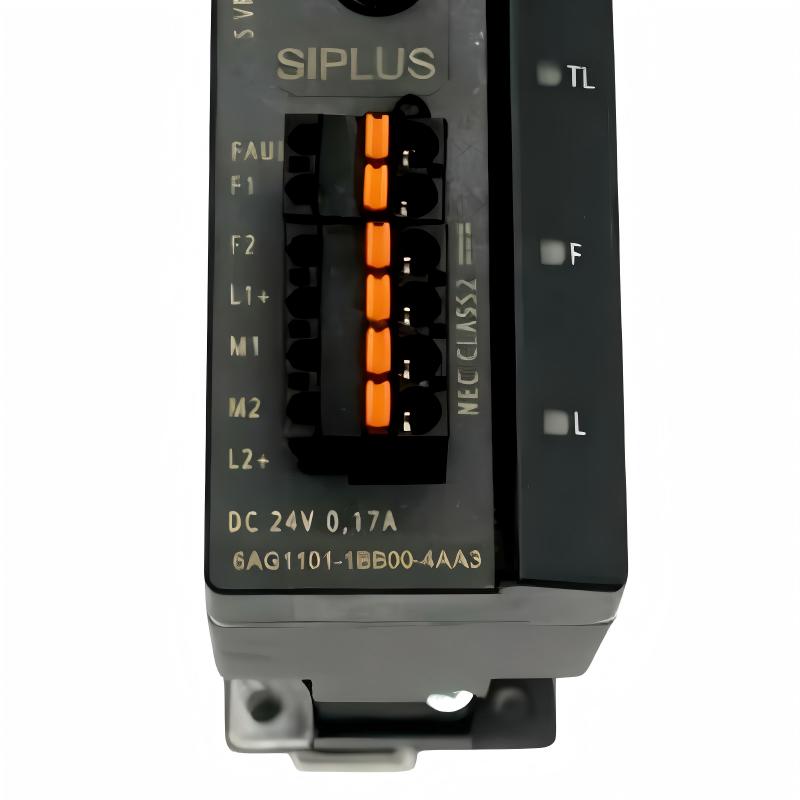
- Siemens
- 6AG1101-1BB00-4AA3
- Industrial Ethernet Media Converter
- Germany
- 40 × 125 × 124 mm
- 0.55kg
- Xiamen, China
- New & In Stock
- T/T, PayPal, Western Union
- 1 Year
- 1-3 Working Days
- DHL, UPS, TNT, FedEx and EMS.
- 24-Hour Service
- COO
- 7
Our advantage

Global Logistics
We have a 10-year logistics and express cooperation agreement, so our products can be shipped to any place in the world.

Brand new and original
Our products are imported in bulk from the place of origin. Because of the cooperative relationship, our products are all original and 100% new.

24-hour service
We provide 7*24 hours service to our customers. We will be there whenever you need us.

Price advantage
All our products are priced very favorably because we have our own warehouse and supply.
| Company Information | |||
| [email protected] | |||
| Mobile | +8615980777398 | ||
| +8615980777398 | |||
| 15980777398 |
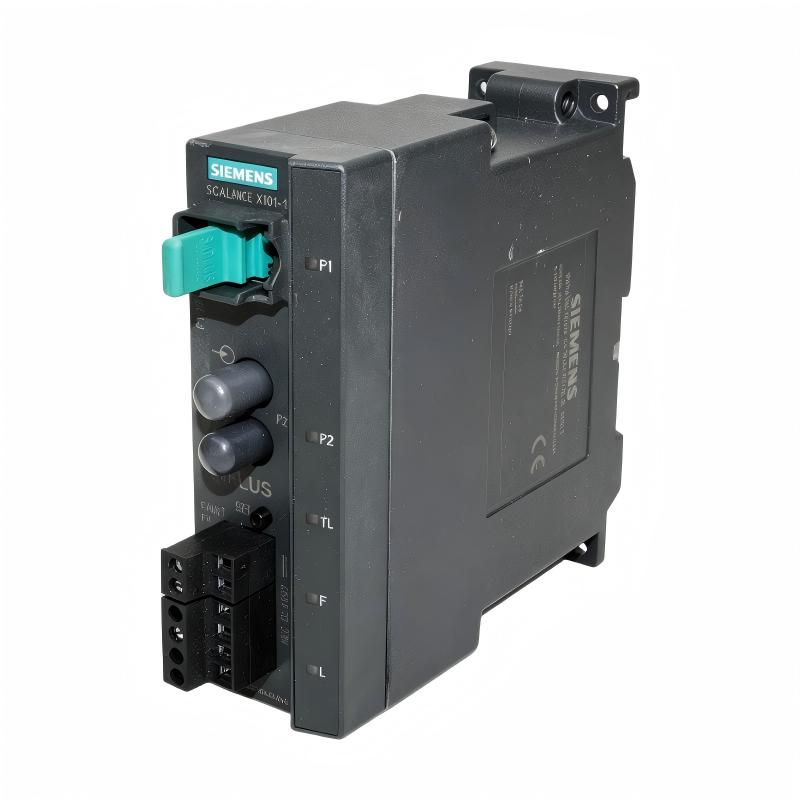
Siemens 6AG1101-1BB00-4AA3 — Product Overview, Technical Specifications, Applications, Advantages, and Related Models
1. Product Overview
The 6AG1101-1BB00-4AA3 is an industrial automation training-equipment model associated with the SIMATIC training and educational product family. Equipment in this category is intended to help users develop practical skills in programmable logic controllers (PLCs), industrial control, electrical wiring, and automation-system commissioning.
A training-system product should be distinguished from a standalone PLC or an individual automation component. Depending on its exact configuration, it may be supplied as part of a teaching workstation, a modular training panel, or an educational equipment package containing multiple components.
The most important point when evaluating this model is to establish the exact hardware configuration associated with the complete order code. Without confirming the model-specific equipment description, it would be misleading to assign a particular PLC CPU, I/O count, communication interface, or physical dimension as a verified specification.
The following profile therefore distinguishes the general technical characteristics of the associated training-equipment category from specifications that require confirmation for this exact model.
2. Brand and Product Series
| Item | Details |
|---|---|
| Brand | Siemens |
| Product category | Industrial automation training equipment |
| Associated automation family | SIMATIC |
| Model number | 6AG1101-1BB00-4AA3 |
| Typical application area | PLC training, industrial control education, and automation-system demonstrations |
| Primary purpose | Practical training in automation hardware and control procedures |
| Potential system components | PLC, digital or analog I/O, communication interfaces, power supply, and training panel, depending on configuration |
| Equipment format | Must be confirmed for the exact order code |
| Standalone operating capability | Depends on the supplied components and configuration |
| Installation environment | Technical training laboratories, automation workshops, and educational facilities |
The SIMATIC family covers programmable controllers and related automation products. Training equipment built around this family can help users understand how controllers receive input signals, execute programmed logic, and control outputs connected to industrial devices.
However, the exact relationship between 6AG1101-1BB00-4AA3 and a specific SIMATIC training kit should be confirmed before purchasing or using the product as a replacement part.
3. Detailed Technical Specifications
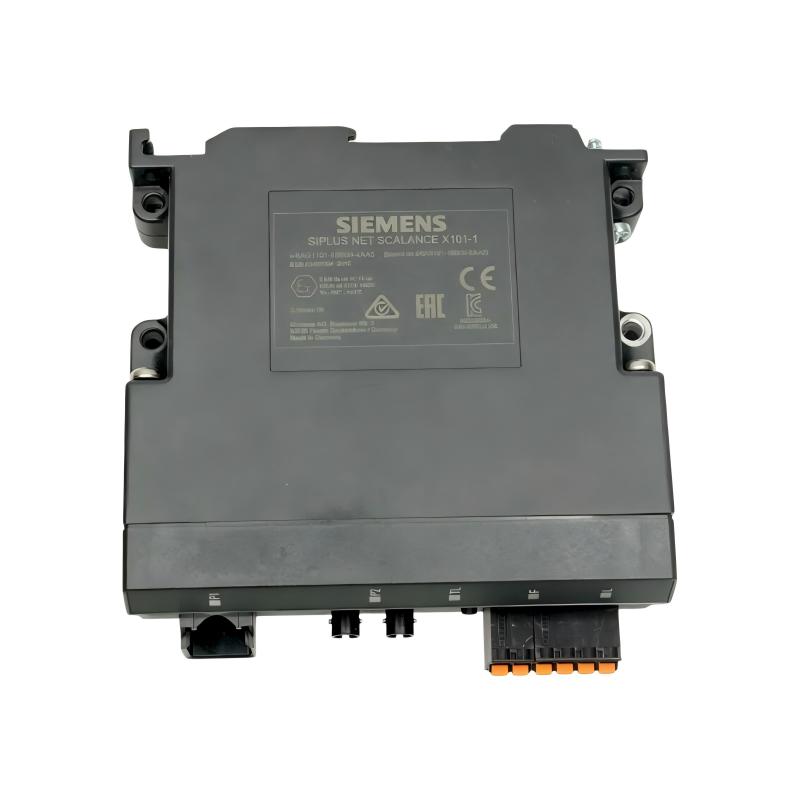
The 6AG1101-1BB00-4AA3 is a SIPLUS NET SCALANCE X101-1 industrial Ethernet media converter. Its purpose is to convert between an electrical Ethernet connection and a multimode fiber-optic connection, allowing compatible Ethernet devices to communicate across an optical link.
Unlike a PLC, this device does not execute a control program. It operates at the network-connection level, converting the physical transmission medium while allowing Ethernet communication to pass between the connected interfaces.
| Parameter | Technical specification |
|---|---|
| Model number | 6AG1101-1BB00-4AA3 |
| Product family | SIPLUS NET SCALANCE X-100 |
| Product type | Unmanaged industrial Ethernet media converter |
| Base model | 6GK5101-1BB00-2AA3 |
| Main function | Conversion between electrical Ethernet and multimode fiber |
| Electrical Ethernet port | 1 × 10/100 Mbps Ethernet |
| Fiber-optic port | 1 × 10/100 Mbps multimode fiber, BFOC connector |
| Ethernet data rate | 10/100 Mbps |
| Fiber interface | BFOC fiber-optic connection |
| Power supply | 24 V DC |
| Network management | Unmanaged; no managed-switch configuration functions |
| Operating temperature | -10°C to +60°C |
| Protection rating | IP30 |
| Housing | Compact industrial enclosure |
| Width | 40 mm |
| Height | 125 mm |
| Depth | 124 mm |
| Overall dimensions (W × H × D) | 40 × 125 × 124 mm |
| Net weight | 0.55 kg |
| Mounting options | 35 mm DIN rail, S7-300 rail, or wall mounting |
| Conformal coating | Yes |
| Intended environment | Industrial Ethernet installations exposed to more demanding environmental conditions |
| Typical application | Fiber extension of an industrial Ethernet connection |
| Network topology | Suitable for compatible point-to-point connections and network arrangements supported by the connected equipment |
| Configuration requirement | No managed-switch configuration is required for basic media conversion |
| Power and grounding | Must follow the specified installation and wiring requirements |
| Product status consideration | Check availability and lifecycle status before planning a new installation |
Understanding the main specifications
Electrical Ethernet interface: The electrical port supports 10/100 Mbps Ethernet. It connects to compatible equipment using an appropriate Ethernet cable.
Fiber-optic interface: The optical interface uses a BFOC connector and is designed for multimode fiber. The connector type and fiber specification must match the installed cable and the equipment at the other end of the optical link.
Power supply: The unit uses a 24 V DC supply. The supply must meet the device’s electrical requirements, including suitable protection and correct polarity where applicable.
Operating temperature: The specified range of -10°C to +60°C makes the unit relevant to installations where the ambient temperature may exceed the range normally encountered in an office environment. Actual suitability also depends on enclosure conditions, ventilation, mounting, and other environmental factors.
Conformal coating: The coated electronics are intended to provide additional protection against certain environmental influences. This does not mean the device is waterproof or suitable for every corrosive or dusty environment.
Dimensions and weight: The equipment measures 40 × 125 × 124 mm and has a listed net weight of 0.55 kg. These figures refer to the device itself, not its shipping carton or packaging accessories.
4. Product Introduction
4.1 Purpose and operating principle
The 6AG1101-1BB00-4AA3 is designed to connect an electrical Ethernet segment to a compatible multimode fiber-optic segment. It is useful when an industrial network needs to extend beyond the practical limits of a copper Ethernet cable or when optical transmission is preferred for the link.
A conventional Ethernet connection carries electrical signals through copper conductors. A fiber-optic connection carries data as light through an optical fiber. The media converter translates the signal between these two transmission media, allowing compatible Ethernet devices on either side to communicate.
The converter does not act as a PLC, protocol gateway, or managed network switch. Its main job is to provide the physical-layer conversion required by the connection.
4.2 Industrial Ethernet connectivity
Industrial Ethernet networks are used to connect programmable controllers, operator panels, remote I/O, industrial computers, drives, and other automation equipment.
In some installations, copper Ethernet is sufficient for all connections. In others, the network must cross a longer distance, pass between electrical cabinets, or connect areas where fiber is a more appropriate transmission medium.
The 6AG1101-1BB00-4AA3 addresses this requirement by providing an electrical Ethernet interface and a multimode fiber-optic interface in one compact device.
4.3 SIPLUS environmental design
The SIPLUS version is designed for industrial conditions that may be more demanding than those found in a standard office network installation. Its conformal coating and specified operating temperature range are relevant when selecting equipment for an industrial cabinet or automation environment.
Environmental protection must still be considered as part of the complete installation. The device’s IP30 rating does not provide protection against direct water exposure, and the specified temperature range does not eliminate the need to consider condensation, ventilation, and cabinet temperature.
4.4 Unmanaged operation
The converter is an unmanaged device. It does not require the user to configure VLANs, routing, managed-switch features, or other advanced network-management functions.
This makes it relatively straightforward to install when the connected equipment and network design are already compatible. The user must still confirm the optical interface, cable type, power supply, and link requirements before commissioning.
4.5 Compact industrial mounting
The enclosure measures 40 × 125 × 124 mm and supports DIN-rail and wall mounting arrangements.
Its narrow format can be helpful in control cabinets where available space is limited. The metal enclosure and industrial mounting options also make it suitable for integration into a fixed automation installation.
5. Main Applications
5.1 Extending an industrial Ethernet link over fiber
The primary application is to bridge an electrical Ethernet connection to a multimode fiber-optic connection.
For example, an Ethernet device inside one control cabinet may need to communicate with another compatible device in a separate cabinet. A fiber link can be used between the two areas, with a media converter at the electrical-to-optical transition point.
This arrangement can help reduce the amount of copper Ethernet cabling needed for the relevant segment.
5.2 Connecting separate control cabinets
Industrial production lines often contain multiple control cabinets positioned along a machine or process. Fiber-optic links can be useful when communication must pass between these cabinets.
The converter provides a practical connection point between copper Ethernet equipment and a suitable optical cable. Both ends of the fiber link must use compatible optical interfaces.
5.3 Factory automation networks
The device can be used in industrial Ethernet installations connecting compatible controllers, operator interfaces, industrial computers, and other networked automation equipment.
Its function is limited to the physical transmission link. The connected devices remain responsible for their own automation logic and application-level communication.
5.4 Networks in electrically noisy environments
Fiber-optic communication is not susceptible to electromagnetic interference in the same way as electrical copper cabling. For this reason, an optical segment can be useful in installations with large motors, variable-frequency drives, contactors, and other sources of electrical noise.
The converter does not make the copper section immune to interference. The electrical Ethernet cable, grounding arrangement, and installation practices must still be appropriate for the industrial environment.
5.5 Communication between different areas of a facility
Fiber links may be appropriate when connecting equipment located in separate production areas, technical rooms, or cabinets.
The choice of multimode fiber depends on the required link distance, optical characteristics, and the equipment at both ends. The maximum supported distance must be confirmed for the specific interface and fiber type rather than assumed from the data rate alone.
5.6 Upgrading an existing network
A media converter may help when an existing installation uses electrical Ethernet but a section of the network needs to be changed to fiber.
The converter can provide the required media transition without necessarily replacing every connected device. However, it is not a universal substitute for an Ethernet switch: if the network needs multiple ports, traffic management, or additional switching functions, another device may be required.
5.7 Industrial maintenance and replacement
The unit may be used as a replacement component in an existing compatible installation. This is particularly important where the original design specifies the SIPLUS version and its environmental characteristics.
When replacing the device, verify the original part number, optical connector, fiber type, data rate, power requirements, mounting, and temperature range. A converter with a similar appearance may not be electrically or optically compatible.
6. Product Advantages
6.1 Converts between copper Ethernet and fiber
The main advantage is the ability to connect compatible electrical Ethernet equipment to a multimode fiber-optic link.
This allows an industrial network designer to choose the appropriate transmission medium for different parts of the installation instead of using copper cabling everywhere.
6.2 Compact enclosure
The 40 mm width makes the unit suitable for installations where cabinet space is limited.
Its compact format can also simplify the layout of a small control cabinet, provided adequate room remains for the Ethernet connector, fiber connector, power wiring, and maintenance access.
6.3 Industrial environmental suitability
The SIPLUS design, conformal coating, and -10°C to +60°C operating temperature range provide useful characteristics for suitable industrial installations.
These features can help when selecting equipment for conditions that are more demanding than a controlled office environment. The final selection should nevertheless account for the actual environmental exposure.
6.4 Simple unmanaged operation
Because the device does not require managed-switch configuration, it can be straightforward to commission in a compatible point-to-point connection.
This is useful for installations where the network topology has already been designed and only a physical-media conversion is needed.
6.5 Flexible mounting options
Support for DIN-rail, S7-300 rail, and wall mounting provides flexibility when integrating the converter into an existing control cabinet or industrial enclosure.
The appropriate mounting arrangement depends on the cabinet layout and the available installation hardware.
6.6 Optical transmission for suitable network segments
Using fiber for a section of an industrial network can help reduce susceptibility to electromagnetic interference along that section and can support longer links than those typically used for copper Ethernet.
The actual distance capability depends on the fiber type, optical specifications, and equipment at both ends.
6.7 Suitable for existing installations
Where a system was originally designed around this particular media converter, an exact replacement can help preserve the intended network architecture.
For maintenance work, matching the original model and optical interface is often more important than selecting a newer device with a superficially similar description.
7. Five Related Models
The following options cover the original base model and related industrial Ethernet equipment. They serve different purposes, so they should be treated as alternatives for evaluation rather than direct, interchangeable replacements.
| Model | Product description | Main parameters | Dimensions (W × H × D) | Weight (kg) |
|---|---|---|---|---|
| 6GK5101-1BB00-2AA3 | SCALANCE X101-1 base model | Unmanaged media converter; 1 × 10/100 Mbps electrical Ethernet port; 1 × 10/100 Mbps multimode fiber interface; BFOC connector; 24 V DC | 40 × 125 × 124 mm | Approx. 0.55 |
| 6GK5005-0BA00-1AB2 | SCALANCE XB005 industrial Ethernet switch | Unmanaged switch; 5 × 10/100 Mbps electrical Ethernet ports; compact industrial design | Verify exact hardware version | Verify exact hardware version |
| 6GK5008-0BA10-1AB2 | SCALANCE XB008 industrial Ethernet switch | Unmanaged switch; 8 × 10/100 Mbps electrical Ethernet ports; suitable for small industrial networks | Verify exact hardware version | Verify exact hardware version |
| 6GK5208-0BA00-2AC2 | SCALANCE X208 industrial Ethernet switch | Industrial Ethernet switching; multiple copper Ethernet ports; managed network functions depend on the exact version | Verify exact hardware version | Verify exact hardware version |
| 6GK5206-2BB00-2AC2 | SCALANCE X206-2 industrial Ethernet switch | Industrial Ethernet switch with copper and optical connectivity; intended for compatible network architectures | Verify exact hardware version | Verify exact hardware version |
Dimensions and weights are deliberately marked for verification where exact figures have not been confirmed. The original model’s specifications should not be transferred automatically to the related models.
7.1 6GK5101-1BB00-2AA3 — Base media-converter model
This is the base model associated with the SIPLUS version. It is the most relevant point of comparison when the main requirement is electrical-to-optical Ethernet conversion.
The SIPLUS variant adds the environmental design characteristics specified for 6AG1101-1BB00-4AA3. When selecting between the two, compare operating temperature, conformal coating, environmental requirements, and the installation conditions.
7.2 6GK5005-0BA00-1AB2 — Five-port industrial Ethernet switch
This model is worth considering when the application needs to connect several Ethernet devices rather than convert a single electrical link to fiber.
An unmanaged switch forwards Ethernet traffic among connected ports. It does not perform the same function as a dedicated media converter, so the choice depends on whether the network needs additional copper ports or a copper-to-fiber transition.
7.3 6GK5008-0BA10-1AB2 — Eight-port industrial Ethernet switch
The eight-port option is more appropriate when several controllers, operator interfaces, or other Ethernet devices must be connected in one location.
It can simplify the local wiring arrangement, but it should not be selected as a direct replacement if the original design requires the BFOC multimode optical interface of the X101-1.
7.4 6GK5208-0BA00-2AC2 — Industrial Ethernet switch
A switch in this category is relevant when the network design needs switching functions beyond basic media conversion.
Before choosing this model, check the number and type of ports, management features, supported network functions, and power requirements. Exact hardware specifications should be matched to the intended installation.
7.5 6GK5206-2BB00-2AC2 — Industrial switch with optical connectivity
This model is a possible candidate for an installation that requires both electrical and optical network connections in a switching device.
It may reduce the need for a separate converter in some network designs, but this depends on its exact port configuration and compatibility with the installed fiber system.
8. Five Other Popular Models from the Same Brand
The following selection covers commonly used automation components. They are not all media converters, but they may be relevant when planning or upgrading an industrial Ethernet and automation system.
| Model | Product family / description | Main parameters | Dimensions (W × H × D) | Weight (kg) |
|---|---|---|---|---|
| 6GK5005-0BA00-1AB2 | SCALANCE XB005 Ethernet switch | 5 × 10/100 Mbps copper Ethernet ports; unmanaged switching | Verify exact hardware version | Verify exact hardware version |
| 6GK5008-0BA10-1AB2 | SCALANCE XB008 Ethernet switch | 8 × 10/100 Mbps copper Ethernet ports; unmanaged switching | Verify exact hardware version | Verify exact hardware version |
| 6ES7214-1AG40-0XB0 | SIMATIC S7-1200 PLC | Programmable controller; onboard I/O and communication capabilities depend on the exact CPU version | Verify exact hardware version | Verify exact hardware version |
| 6ES7511-1AK02-0AB0 | SIMATIC S7-1500 PLC | Programmable controller for machine automation and industrial control | Verify exact hardware version | Verify exact hardware version |
| 6EP1333-2BA20 | SITOP industrial power supply | Industrial 24 V DC control-power supply; verify the exact rated current and electrical version | Verify exact hardware version | Verify exact hardware version |
These products serve different roles in an industrial installation. The SCALANCE switches provide Ethernet connectivity, the SIMATIC controllers execute automation logic, and the SITOP unit provides control power. The correct choice depends on the overall system design rather than on the model number alone.
How to choose the right alternative
– Choose 6GK5101-1BB00-2AA3 when the requirement is for a base-model X101-1 media converter and its standard environmental specification is suitable.
– Choose 6GK5005-0BA00-1AB2 when a small unmanaged switch with five copper Ethernet ports is needed.
– Choose 6GK5008-0BA10-1AB2 when more copper Ethernet connections are required in a compact industrial network.
– Choose 6GK5208-0BA00-2AC2 when the design calls for a switching device with the required network-management capabilities.
– Choose 6GK5206-2BB00-2AC2 only after confirming that its optical and electrical interfaces match the intended network.
– Choose 6ES7214-1AG40-0XB0 or 6ES7511-1AK02-0AB0 when the project also needs a programmable controller. Neither PLC replaces the media converter’s physical-layer conversion function.
– Choose 6EP1333-2BA20 when the system needs a compatible control-power supply. Confirm its output rating and the electrical requirements of the connected equipment before selection.
9. Installation and Maintenance Considerations
9.1 Check the fiber type and connector
The optical interface is intended for multimode fiber and uses a BFOC connector. Confirm the connector, fiber specification, and optical characteristics at both ends of the link.
Do not assume that a connector that looks similar will provide a compatible optical connection.
9.2 Confirm the power supply
Use a compatible 24 V DC supply and follow the specified wiring and protection requirements.
Incorrect power wiring or an unsuitable supply can prevent the unit from operating and may damage the hardware.
9.3 Consider the operating environment
The specified operating range is -10°C to +60°C. Ensure that the temperature around the installed device remains within its permitted limits.
The IP30 rating does not provide protection against direct water exposure. If the equipment is installed in an enclosure, the enclosure itself must provide the environmental protection required by the site.
9.4 Keep unused interfaces protected
Follow the specified instructions for unused connectors and protective covers. Appropriate covers should remain fitted where required by the installation documentation.
This is especially important when the unit is used in an environment with dust or other potentially damaging contaminants.
9.5 Inspect the optical link
If communication fails, check the fiber cable, connector cleanliness, connector seating, link indicators, power supply, and compatibility of the device at the other end.
Optical connectors should be handled carefully. Contamination or damage to the optical interface can cause link failures even when the electrical Ethernet side appears normal.
9.6 Distinguish conversion problems from network problems
A media converter does not correct every network fault. Incorrect IP addressing, incompatible network settings, damaged cables, and faults in connected devices can still interrupt communication.
A systematic troubleshooting process should examine power, physical connections, link status, optical compatibility, and the wider network configuration.
9.7 Verify product lifecycle status
When planning a new installation, check whether the exact part number is still available and whether a suitable successor is recommended.
For an existing installation, an exact replacement may be preferable if the network architecture depends on the original optical interface and environmental specification. A newer model should be evaluated for port compatibility, fiber type, temperature range, mounting, and power requirements before substitution.
10. Final Assessment
The 6AG1101-1BB00-4AA3 is an industrial Ethernet media converter in the SIPLUS NET SCALANCE X-100 family. Its main purpose is to convert between an electrical 10/100 Mbps Ethernet connection and a compatible multimode fiber-optic link.
Its key characteristics are:
-
Product type: Unmanaged industrial Ethernet media converter.
-
Electrical interface: 1 × 10/100 Mbps Ethernet port.
-
Optical interface: 1 × 10/100 Mbps multimode fiber port with BFOC connector.
-
Power supply: 24 V DC.
-
Operating temperature: -10°C to +60°C.
-
Protection rating: IP30.
-
Dimensions: 40 × 125 × 124 mm.
-
Net weight: 0.55 kg.
-
Mounting: DIN rail, S7-300 rail, or wall mounting.
The product is most appropriate when an existing or planned industrial Ethernet installation needs a compact, unmanaged copper-to-fiber conversion device with the environmental characteristics of the SIPLUS version.
If the requirement is to connect several copper Ethernet devices, an industrial switch may be more appropriate. If the requirement is specifically to bridge an electrical Ethernet segment to the original multimode fiber interface, the exact X101-1 model remains the more relevant choice.