

ProductPRODUCT
Featured products
Contact Us
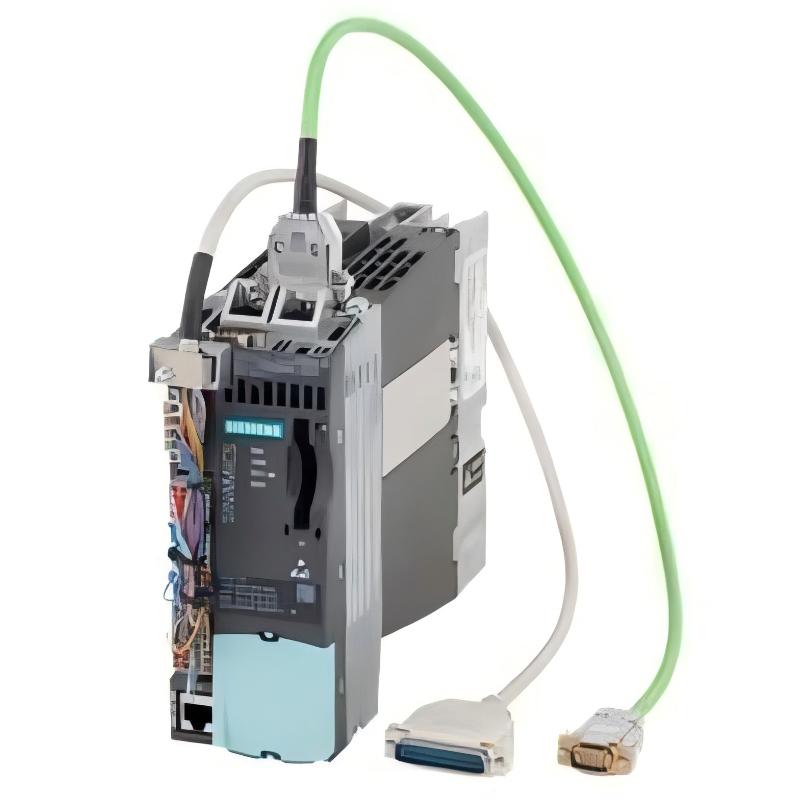
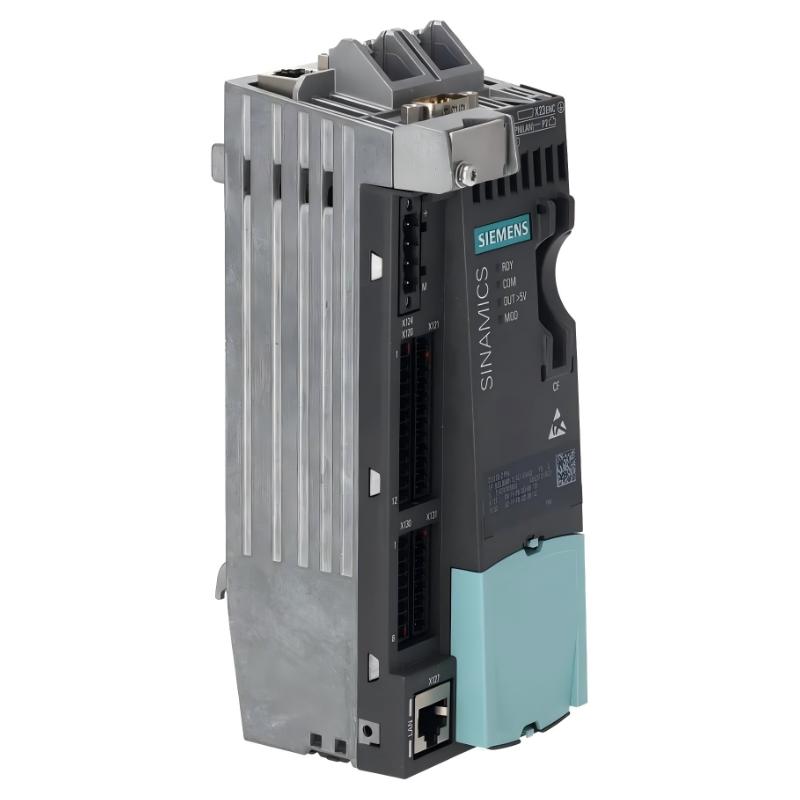
- Siemens
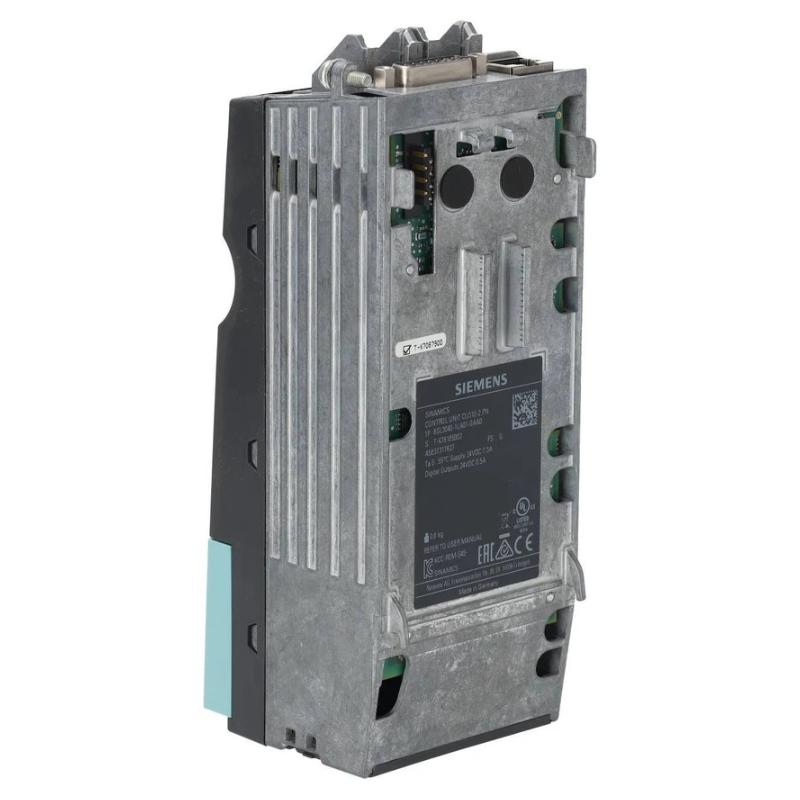
- 6AG1067-2AA00-0AB4
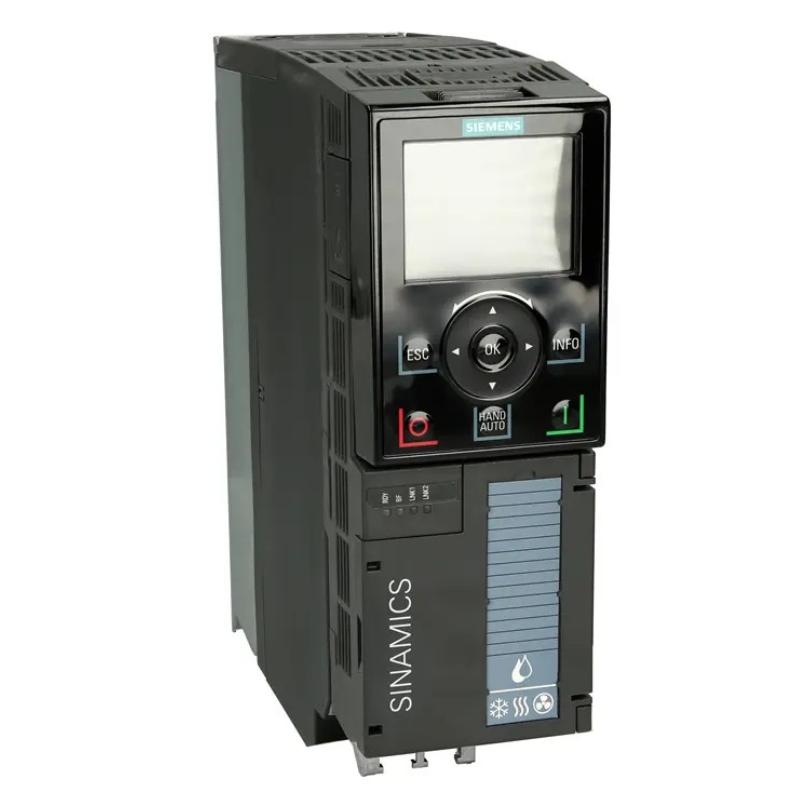
- SINAMICS S120 Control Unit CU310-2 PN
- Germany
- 290 × 470 × 300 mm
- 16.9kg
- Xiamen, China
- New & In Stock
- T/T, PayPal, Western Union
- 1 Year
- 1-3 Working Days
- DHL, UPS, TNT, FedEx and EMS.
- 24-Hour Service
- COO
- 6
Our advantage

Global Logistics
We have a 10-year logistics and express cooperation agreement, so our products can be shipped to any place in the world.

Brand new and original
Our products are imported in bulk from the place of origin. Because of the cooperative relationship, our products are all original and 100% new.

24-hour service
We provide 7*24 hours service to our customers. We will be there whenever you need us.

Price advantage
All our products are priced very favorably because we have our own warehouse and supply.
| Company Information | |||
| [email protected] | |||
| Mobile | +8615980777398 | ||
| +8615980777398 | |||
| 15980777398 |
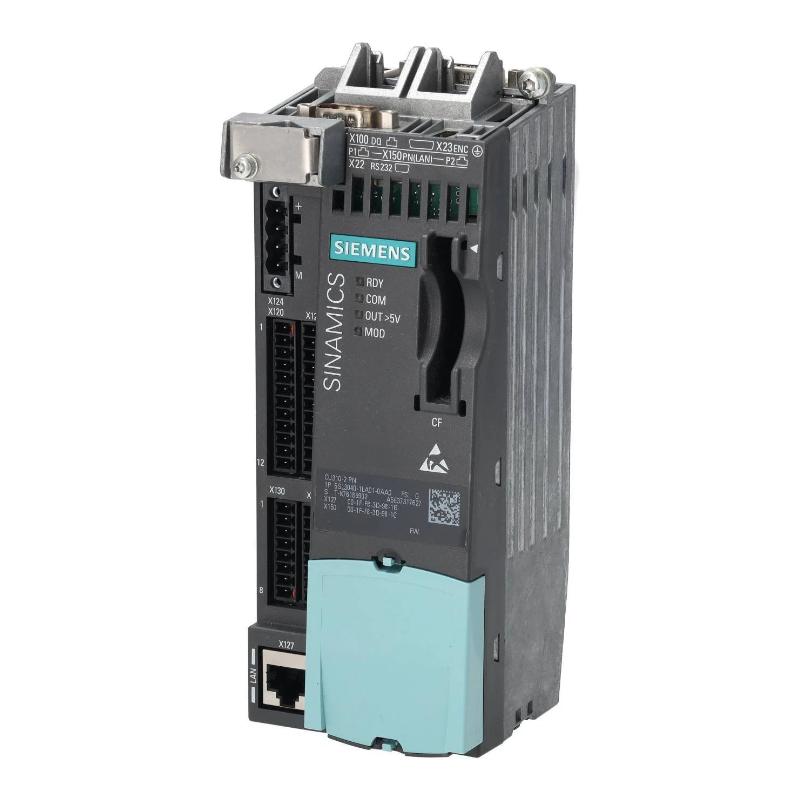
Siemens 6AG1067-2AA00-0AB4 — Product Overview, Technical Parameters, Applications, and Related Models
1. Product Overview
The 6AG1067-2AA00-0AB4 is a control-unit training component associated with the SINAMICS S drive-control platform. It corresponds to the CU310-2 PN control unit, which is designed for drive applications requiring PROFINET communication and coordinated control of a motor-drive system.
This part number belongs to a training and demonstration equipment family used to teach, demonstrate, and test industrial drive-control technology. It should not be confused with a complete frequency converter or a standalone motor drive: the control unit provides the control and communication functions, while the power stage and motor are separate parts of the overall drive system.
The equipment is particularly relevant to industrial automation training, commissioning practice, drive-system demonstrations, and laboratory exercises involving networked motion control.
2. Brand and Product Series
| Item | Details |
|---|---|
| Brand | Siemens |
| Product series | SINAMICS S drive-control training equipment |
| Product type | Control unit / training-case component |
| Model number | 6AG1067-2AA00-0AB4 |
| Associated control unit | CU310-2 PN |
| Main communication interface | PROFINET |
| Main purpose | Drive control, training, demonstration, and commissioning exercises |
| System category | Industrial motion control and drive automation |
| Standalone drive capability | Not a complete power-drive system by itself |
| Typical environment | Industrial training rooms, automation laboratories, technical workshops, and engineering departments |
The important distinction is that 6AG1067-2AA00-0AB4 identifies the training-equipment version of the control-unit component. The CU310-2 PN is the associated control-unit type, and the complete drive setup may also require a compatible power module, motor, suitable cabling, configuration software, and a PROFINET network connection.
3. Detailed Technical Parameters
The following table separates the specifications of the control-unit component from those of the training case in which it is used. This distinction matters because the dimensions and weight of a control unit are not the same as those of the complete training setup.
| Parameter | Technical details |
|---|---|
| Product model | 6AG1067-2AA00-0AB4 |
| Product description | CU310-2 PN control unit for SINAMICS S120 training equipment |
| Product category | Drive-control unit and training-system expansion component |
| Control-unit type | CU310-2 PN |
| Drive platform | SINAMICS S120 |
| Communication interface | PROFINET |
| Control function | Processes drive commands and coordinates supported drive functions |
| Application | Single-axis drive training, engineering, and demonstration |
| Power conversion | Performed by the compatible power module, not by the control unit alone |
| Motor connection | Through the compatible drive and power-stage arrangement |
| External communication | PROFINET-based communication with compatible automation equipment |
| Power supply | Depends on the control-unit configuration and installation arrangement; verify the hardware manual |
| Operating software | Requires compatible drive configuration and commissioning software |
| Installation type | Integrated into a compatible training case or drive-control assembly |
| Dimensions of the individual control unit | Exact dimensions not confirmed here |
| Weight of the individual control unit | Approximately 2.27 kg as a third-party-listed figure; confirm against the supplied hardware |
| Basic training-case dimensions | 560 × 695 × 325 mm (W × H × D), when installed in the corresponding basic case |
| Compact training-case dimensions | 420 × 695 × 325 mm (W × H × D), when installed in the corresponding compact case |
| Basic training-case weight | Approximately 28 kg |
| Compact training-case weight | Approximately 25 kg |
| Mounting and wiring | Use the specified mounting arrangement, connectors, and wiring instructions |
| Environmental requirements | Follow the limits stated in the applicable hardware documentation |
| Safety requirements | Use suitable isolation, protective grounding, and drive-system safety procedures |
Important: The 560 × 695 × 325 mm and 420 × 695 × 325 mm measurements describe the associated training cases, not the control unit by itself. The exact dimensions of the individual 6AG1067-2AA00-0AB4 component should be checked before designing a mounting plate or enclosure.
4. Product Introduction
The 6AG1067-2AA00-0AB4 is intended for use in a modular industrial drive-control training arrangement. Its central role is to provide the control and communication functions required to operate a compatible SINAMICS S120 drive configuration.
In an industrial drive system, the controller, power electronics, motor, feedback devices, and automation network each perform a different task. The control unit manages the drive’s control functions and exchanges information with the surrounding automation system. The power module supplies the electrical power required by the motor, while the motor converts that electrical energy into mechanical motion.
This division of responsibilities makes the product useful in training environments because technicians can study the control system separately from the power stage and motor. They can learn how the controller communicates with an automation network, how drive parameters are configured, and how control commands affect motor operation.
Modular system design
The product is associated with a modular training case, allowing the drive-control arrangement to be expanded or configured for different exercises. The control unit can be used as part of a prepared training assembly rather than requiring the user to construct every connection from scratch.
Depending on the complete training configuration, a setup may include a power module, a control unit, an operator interface, a motor, feedback equipment, and a simulator or training panel. The precise components supplied with a particular order should be confirmed, since the part number identifies the control-unit expansion rather than the entire training case.
PROFINET communication
The CU310-2 PN variant is intended for PROFINET-based communication. This provides a practical way to introduce trainees to the exchange of commands, operating states, and diagnostic information between a drive and compatible automation equipment.
For engineers, this is especially useful when learning how to integrate a drive into a networked machine architecture. For maintenance technicians, it provides a basis for understanding communication faults, configuration errors, and the relationship between controller commands and drive status.
Training-oriented application
Unlike a control unit purchased solely for a production machine, this training-equipment version is associated with a prepared educational or demonstration environment. It is suitable for structured exercises, classroom demonstrations, laboratory work, and commissioning practice.
Its greatest value is not simply the ability to control a drive, but the opportunity to learn the interaction between drive hardware, configuration software, communication interfaces, and motor behavior.
5. Main Applications
5.1 Industrial automation training
The product can be used in technical training courses covering industrial drive technology. Trainees can examine the relationship between a drive controller, power electronics, a motor, and an automation network.
Typical exercises include identifying the hardware components, reviewing wiring arrangements, configuring basic parameters, issuing operating commands, and interpreting drive status information.
5.2 Drive commissioning practice
Commissioning engineers can use a compatible training setup to practice the sequence of preparing a drive for operation. This can include checking hardware compatibility, establishing communication, configuring the drive, verifying motor data, and confirming that commands and feedback behave as expected.
Performing these exercises in a controlled environment helps technicians develop a repeatable commissioning procedure before working on an actual production machine.
5.3 PROFINET communication exercises
The PROFINET version is relevant to training that covers networked automation systems. It can be used to demonstrate the importance of device configuration, communication settings, network connectivity, and diagnostic information.
Such exercises help engineers distinguish between a drive-control problem and a communication problem. For example, a drive may have power available but fail to respond because its network configuration or control commands are incorrect.
5.4 Servo and motion-control laboratories
In a compatible SINAMICS S120 arrangement, the control unit can form part of a laboratory setup for learning drive-control principles and motion-related functions.
Possible topics include drive enable sequences, parameter management, motor behavior, feedback signals, and fault diagnosis. The exact functions available depend on the connected hardware, software configuration, and the capabilities of the complete system.
5.5 Technical demonstrations
The product is also suitable for demonstrations to engineering teams, students, maintenance personnel, or customers who need to understand the structure of a modular drive system.
A prepared training assembly allows the presenter to explain the control unit, power stage, motor, and communication path without using a complete production machine.
5.6 Maintenance and troubleshooting education
Maintenance teams can use a suitable training configuration to practice fault-finding procedures. Examples include checking network connections, reviewing fault messages, verifying drive parameters, and tracing the control sequence from an automation command to motor operation.
These exercises are particularly useful when several different faults can produce similar symptoms. A structured diagnostic process helps technicians avoid replacing components unnecessarily.
5.7 Engineering and integration testing
Before deploying a compatible drive arrangement, engineers may use a laboratory setup to review control logic, communication behavior, parameter settings, and basic operating sequences.
A training unit should not automatically be treated as a production-qualified drive installation. Suitability for continuous industrial operation depends on the actual hardware configuration, installation conditions, and relevant documentation.
6. Product Advantages
6.1 Modular architecture
The modular arrangement allows the control functions to be studied separately from the power electronics and motor. This makes the equipment easier to explain, test, and troubleshoot than a system in which every function is hidden inside one enclosure.
It also provides a useful learning structure: trainees can begin with basic control and communication exercises, then progress to more advanced commissioning and diagnostic work.
6.2 PROFINET connectivity
The PROFINET interface is useful for teaching networked drive integration. Engineers can practice the communication concepts used in many industrial automation environments and learn how drive devices interact with compatible controllers.
This is particularly beneficial when training needs to cover both drive technology and industrial networking.
6.3 Suitable for repeatable training
A prepared training arrangement makes it easier to repeat the same exercise across multiple classes or maintenance sessions. Instructors can establish a known starting configuration and guide trainees through a consistent procedure.
Repeatability is valuable when comparing results, assessing troubleshooting skills, and teaching a structured approach to commissioning.
6.4 Useful for fault diagnosis
The control unit provides a practical context for studying the relationship between control commands, communication states, drive parameters, and operating feedback.
Trainees can learn to check the simplest possible causes first, such as missing enables, incorrect settings, or communication interruptions, before moving on to more complex hardware investigations.
6.5 Supports hands-on learning
Drive technology can be difficult to understand through diagrams alone. A working training system lets users observe how parameter changes, control commands, and communication settings affect the system’s behavior.
This hands-on experience can make technical concepts easier to retain and apply later in the workplace.
6.6 Useful for engineering demonstrations
The product can help engineering teams demonstrate the basic architecture of a modular drive system. It can also support discussions about system integration, control responsibilities, network communication, and maintenance procedures.
6.7 Can fit into a wider training setup
The associated modular training equipment is designed around the idea of a configurable drive arrangement. Depending on the training case and the components installed, the setup can be adapted to different educational or demonstration requirements.
The available expansion options must be checked against the specific case version and hardware compatibility requirements.
7. Five Related Models
The following models are related to the same drive-training equipment family or to closely connected drive-control functions. Dimensions and weights are given for the associated complete training cases where known; they should not be interpreted as the dimensions of the individual control-unit components.
| Model | Product description | Main technical parameters | Dimensions (W × H × D) | Weight (kg) |
|---|---|---|---|---|
| 6AG1067-2AA00-0AB3 | CU310-2 DP control-unit training component | SINAMICS S120 control unit; PROFIBUS DP communication variant | Individual component dimensions not confirmed | Individual component weight not confirmed |
| 6AG1067-2AA00-0AB4 | CU310-2 PN control-unit training component | SINAMICS S120 control unit; PROFINET communication variant | Individual component dimensions not confirmed | Approx. 2.27 kg, third-party-listed figure |
| 6AG1067-2AA00-0AB5 | SIMOTION D410-2 training component | Motion-control platform; intended for compatible drive and automation training configurations | Individual component dimensions not confirmed | Not confirmed |
| 6AG1067-2AA00-0AA4 | Servo-module training component | Servo-drive training and demonstration; compatible loading and encoder equipment may be required | Individual component dimensions not confirmed | Not confirmed |
| 6AG1067-2AA00-0AA6 | SIMATIC-module training component | Adds programmable-controller training functions to compatible modular training equipment | Individual component dimensions not confirmed | Not confirmed |
These five models are not interchangeable replacements. Each represents a different function or communication option, and compatibility depends on the training case, drive hardware, software, and connection arrangement.
How to choose among the related models
– Choose 6AG1067-2AA00-0AB4 when the training requirement specifically involves the CU310-2 PN control unit and PROFINET communication.
– Consider 6AG1067-2AA00-0AB3 when a compatible configuration requires the PROFIBUS DP version instead.
– Consider 6AG1067-2AA00-0AB5 when the training objective focuses on the SIMOTION D motion-control platform.
– Consider 6AG1067-2AA00-0AA4 when the exercise requires a compatible servo module and its associated training hardware.
– Consider 6AG1067-2AA00-0AA6 when programmable-controller functions are required in a compatible modular training case.
Before ordering, verify the existing training-case version and the required interfaces. A similar model number does not guarantee that two components can be substituted directly.
8. Five Other Popular Models from the Same Brand
The following selection focuses on other industrial drive-training products. They are useful alternatives when the training objective is broader than the CU310-2 PN control unit.
| Model | Product series / description | Main technical parameters | Dimensions (W × H × D) | Weight (kg) |
|---|---|---|---|---|
| 6AG1067-2AA00-0AA0 | SINAMICS G120C training case | Compact drive demonstration set; 0.55 kW drive; 230 V AC single-phase supply; operator panels and asynchronous motor | 315 × 400 × 300 mm | Approx. 9 kg |
| 6AG1067-2AA00-0AA3 | SINAMICS G120 single-axis modular training case, basic version | 230 V AC single-phase supply; drive power module, control unit, operator panel, motor, and simulator panel | 560 × 695 × 325 mm | Approx. 28 kg |
| 6AG1067-2AA00-0AB8 | SINAMICS G120 single-axis modular training case, compact basic version | 230 V AC single-phase supply; compact modular training arrangement; compatible expansion options are configuration-dependent | 420 × 695 × 325 mm | Approx. 25 kg |
| 6AG1067-2AA00-0AC1 | SINAMICS G120X training case | 0.75 kW drive; PROFINET and EtherNet/IP communication; operator interface and asynchronous motor | 290 × 470 × 300 mm | Approx. 16.9 kg |
| 6AG1067-2AA00-0AC2 | SINAMICS G120XA training case | 0.75 kW drive; USS, Modbus RTU, and BACnet MS/TP communication; operator panels and asynchronous motor | 290 × 470 × 300 mm | Approx. 16.9 kg |
Note: The dimensions and weights in this table refer to the associated training cases. Actual delivered configurations and included accessories should be confirmed before purchase.
Overview of these alternatives
6AG1067-2AA00-0AA0 — Compact G120C training case
This is a useful option for introductory frequency-converter training. Its compact enclosure and integrated demonstration arrangement make it suitable for teaching basic drive setup, operating commands, and motor-speed control.
6AG1067-2AA00-0AA3 — G120 single-axis modular training case
This option is better suited to structured laboratory exercises where users need to study the relationship between a drive controller, power module, operator interface, and motor. Its modular format also supports certain expansions.
6AG1067-2AA00-0AB8 — Compact modular G120 training case
The compact version is useful where storage space or portability is important. It provides a smaller footprint than the basic case, although some expansion options are limited by the enclosure design.
6AG1067-2AA00-0AC1 — G120X training case
This model is useful when the training program includes drive applications using PROFINET or EtherNet/IP. It provides a way to demonstrate networked frequency-converter functions in a prepared training environment.
6AG1067-2AA00-0AC2 — G120XA training case
This option is relevant to training involving communication protocols such as Modbus RTU and BACnet MS/TP. It can be considered when the intended learning objectives concern network integration and drive applications beyond the specific SINAMICS S120 control-unit arrangement.
9. Installation and Maintenance Considerations
Verify the complete configuration
Before installation, confirm that the control unit matches the intended training case and drive hardware. The control unit alone does not provide the power required to run a motor.
The power module, motor, communication interface, and software configuration must all be compatible with the intended application.
Check the communication arrangement
For the PROFINET variant, verify the network connection and the settings required by the complete automation configuration. Device naming, addressing, controller configuration, and communication status may all affect commissioning.
Follow the correct wiring procedure
Drive systems can contain hazardous voltages and stored electrical energy. Installation, wiring changes, and maintenance must be performed by qualified personnel using the prescribed isolation and discharge procedures.
Confirm the enclosure dimensions
If the equipment is being installed into a cabinet, bench, or custom mounting panel, do not use the dimensions of the complete training case as the dimensions of the individual control unit.
Use the mechanical drawing for the exact hardware version and allow adequate space for connectors, cable routing, ventilation, and service access.
Check the supplied accessories
A training component may be supplied separately from the training case, power module, motor, and cabling. Confirm the contents of the specific order to avoid assuming that a complete working system is included.
Maintain configuration records
For training laboratories and engineering workshops, it is good practice to record the hardware version, software configuration, network settings, and any changes made during exercises. This helps users restore a known working state and makes troubleshooting more repeatable.
10. Final Assessment
The 6AG1067-2AA00-0AB4 is best understood as a CU310-2 PN control-unit component for a SINAMICS S120 drive-training arrangement. Its main value lies in enabling practical learning and demonstration of drive control, PROFINET communication, configuration, and troubleshooting.
It is particularly suitable when the training objective specifically calls for the PROFINET version of the CU310-2 control unit. If the requirement is instead for a complete motor-drive demonstration set, a full training-case model may be more appropriate.
The most important points to confirm before purchasing are the exact control-unit variant, compatibility with the existing training case, required power-stage and motor hardware, and the dimensions of the actual component. These checks help ensure that the selected part meets the intended training or engineering requirement.