

ProductPRODUCT
Featured products
Contact Us
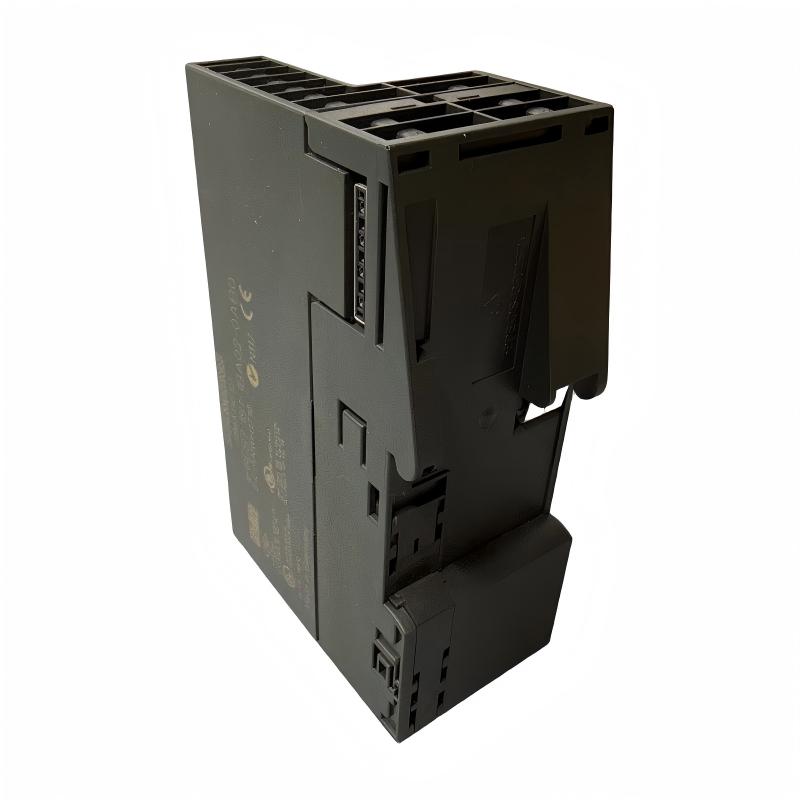
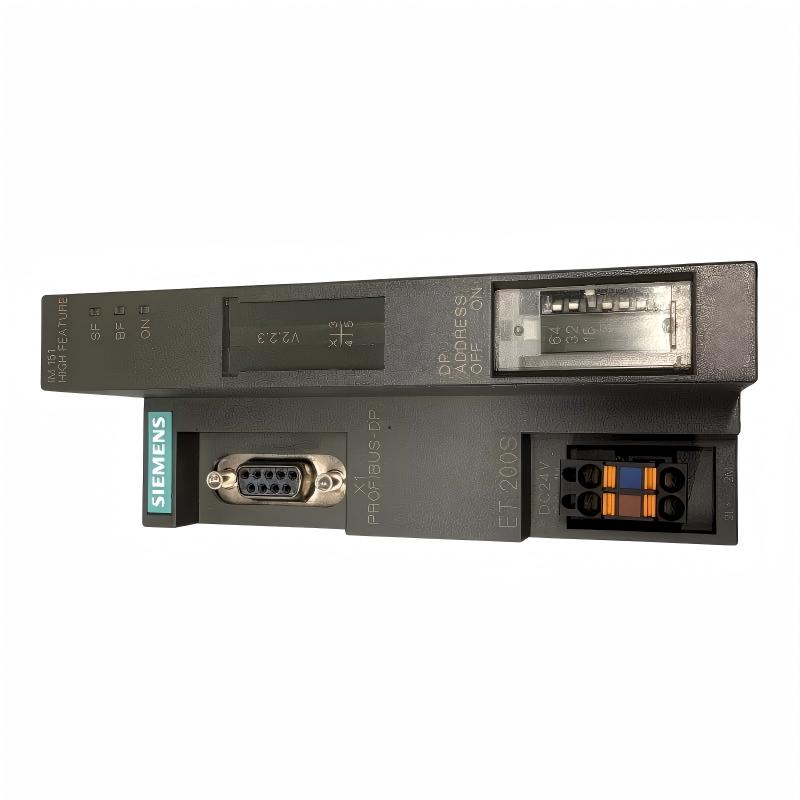
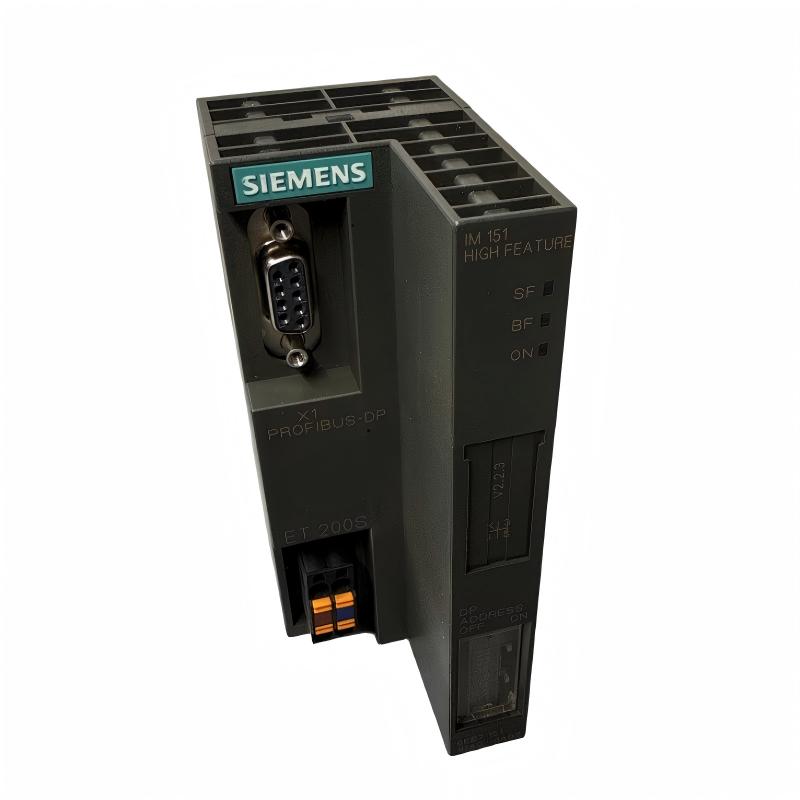
- Siemens
- 6AG1151-1BA02-2AB0
- SIPLUS ET 200S IM 151-1 Standard
- Germany
- 45 × 119.5 × 75 mm
- 0.18kg
- Xiamen, China
- New & In Stock
- T/T, PayPal, Western Union
- 1 Year
- 1-3 Working Days
- DHL, UPS, TNT, FedEx and EMS.
- 24-Hour Service
- COO
- 6
Our advantage

Global Logistics
We have a 10-year logistics and express cooperation agreement, so our products can be shipped to any place in the world.

Brand new and original
Our products are imported in bulk from the place of origin. Because of the cooperative relationship, our products are all original and 100% new.

24-hour service
We provide 7*24 hours service to our customers. We will be there whenever you need us.

Price advantage
All our products are priced very favorably because we have our own warehouse and supply.
| Company Information | |||
| [email protected] | |||
| Mobile | +8615980777398 | ||
| +8615980777398 | |||
| 15980777398 |
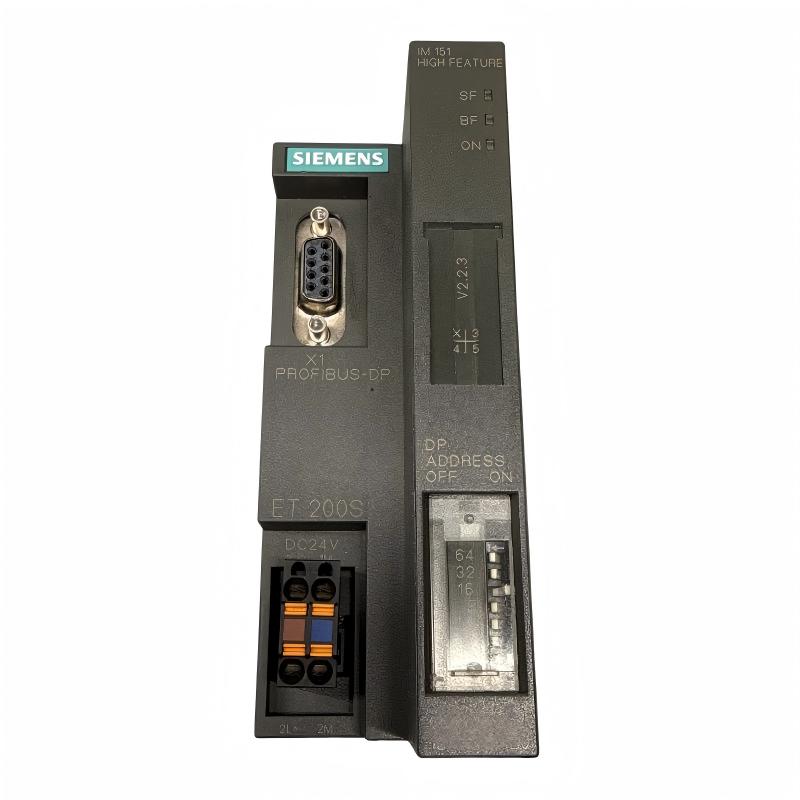
Siemens 6AG1151-1BA02-2AB0 — Product Profile, Technical Specifications and Applications
1. Product Overview
The Siemens 6AG1151-1BA02-2AB0 belongs to the SIPLUS ET 200S family of distributed automation components. It is an interface module designed to connect a distributed I/O station to a higher-level automation system, allowing the controller to exchange process data with sensors, actuators, and other field-level devices.
The ET 200S platform uses a modular design. Instead of placing every input and output directly inside the main PLC cabinet, engineers can install I/O modules close to the equipment they control. The interface module manages communication between the distributed station and the automation network, while the attached modules handle the individual signals.
The SIPLUS designation identifies a version intended for demanding environmental conditions within its specified operating limits. This makes the product relevant to industrial installations where environmental robustness is an important consideration alongside reliable communication and compact cabinet design.
Important specification note: I cannot independently verify the exact hardware revision and complete technical data for 6AG1151-1BA02-2AB0 without consulting a product catalogue. The details below distinguish the product’s general role in the ET 200S family from specifications that should be confirmed against the exact model before purchase or installation. Exact dimensions and weight are included in the tables, but are marked for verification rather than presented as confirmed values.
2. Brand and Product Series
| Item | Description |
|---|---|
| Brand | Siemens |
| Product model | 6AG1151-1BA02-2AB0 |
| Product family | SIPLUS |
| Automation platform | SIMATIC ET 200S |
| Product category | Distributed I/O interface module |
| Main function | Connects a distributed I/O station to a higher-level controller |
| Typical installation | Industrial control cabinet or distributed automation enclosure |
| System architecture | Modular distributed I/O |
| Primary purpose | Communication and integration of field-level I/O modules |
| Environmental design | SIPLUS variant; exact environmental ratings require confirmation |
| Dimensions | Must be verified for this exact order number |
| Net weight | Must be verified in kg for this exact order number |
The ET 200S series is designed for modular automation systems in which a single interface module can serve a collection of signal and function modules. This arrangement helps reduce long individual field-wiring runs, simplifies panel layout, and makes it easier to expand or maintain a machine.
The specific communication protocol, supported module combinations, station limits, and environmental ratings depend on the precise interface-module variant. They should not be inferred solely from the product-family name.
3. Detailed Technical Specifications
The model is the SIPLUS ET 200S IM 151 HF, based on the standard 6ES7151-1BA02-0AB0 interface module. The HF designation indicates the high-feature version, which supports advanced functions including isochronous operation.
3.1 General Parameters
| Parameter | Specification |
|---|---|
| Model number | 6AG1151-1BA02-2AB0 |
| Product designation | SIPLUS ET 200S IM 151 HF |
| Base model | 6ES7151-1BA02-0AB0 |
| Brand | Siemens |
| Series | SIPLUS ET 200S IM 151-1 |
| Device type | High-feature interface module |
| Product function | Distributed I/O station interface |
| Installation type | Modular distributed I/O system |
| Main communication interface | PROFIBUS DP |
| Maximum supported transmission rate | 12 Mbit/s |
| Maximum connected I/O modules | Up to 63, subject to system configuration |
| Input address area | 244 bytes |
| Output address area | 244 bytes |
| Isochronous mode | Supported |
| SYNC function | Supported |
| FREEZE function | Supported |
| Direct data exchange | Supported |
| Bus connection | 9-pin D-sub socket |
| Supply voltage | 24 V DC system supply |
| Maximum input current from 1L+ | 200 mA |
| Typical power loss | 3.3 W |
| Voltage-failure buffering | 20 ms |
| Operating temperature | -25°C to +60°C |
| Dimensions (W × H × D) | 45 × 119.5 × 75 mm |
| Approximate device weight | 0.150 kg |
| Approximate net weight for ordering/logistics | 0.180 kg |
| Included accessory | Termination module |
| Environmental design | SIPLUS version for specified demanding environments |
Weight clarification: The approximate hardware weight is listed as 0.150 kg in the technical data, while the net weight shown in product logistics information is 0.180 kg. These values can differ because of how the item is weighed or recorded. For freight calculations, use the ordering system’s net-weight value; for mechanical planning, confirm the final assembled configuration.
3.2 Communication Parameters
| Parameter | Specification |
|---|---|
| Fieldbus | PROFIBUS DP |
| Transmission method | RS-485 |
| Maximum baud rate | 12 Mbit/s |
| Connector type | 9-pin D-sub socket |
| Cyclic process data | Supported |
| Acyclic data exchange | Depends on supported DP functions and system configuration |
| SYNC operation | Supported |
| FREEZE operation | Supported |
| Direct slave-to-slave data exchange | Supported |
| Isochronous operation | Supported |
| Primary role | Interface between the controller and distributed I/O modules |
The module is designed for applications in which a central controller needs to communicate with I/O located away from the main control cabinet. PROFIBUS DP carries process data between the controller and the distributed station.
The maximum transmission rate of 12 Mbit/s allows the module to operate on a high-speed PROFIBUS network when the other network devices, cable layout, and installation conditions support that rate. Actual performance depends on the complete network configuration, including cable length, bus topology, connected devices, and the number of stations.
Isochronous operation is particularly useful when signal processing must follow a defined timing cycle. In suitable configurations, it can help synchronize data acquisition and output updates with a machine’s motion or control cycle. The overall timing capability still depends on the controller, network configuration, and connected modules.
3.3 Electrical Parameters
| Parameter | Specification |
|---|---|
| System supply | 24 V DC |
| Maximum current from 1L+ | 200 mA |
| Typical power loss | 3.3 W |
| Voltage-failure buffering | 20 ms |
| Bus interface current | Confirm exact value against the module’s electrical specification |
| Input process-data capacity | 244 bytes |
| Output process-data capacity | 244 bytes |
| Electrical interface | RS-485 for PROFIBUS DP |
| Protection and installation requirements | Follow the specified wiring, grounding, shielding, and cabinet requirements |
The interface module is part of a larger distributed I/O assembly. Its power requirements should therefore be considered alongside the current consumption of the connected signal modules, electronic modules, and other station components.
When calculating power capacity, do not use the interface module’s current rating as the total supply requirement for the entire station. The complete system needs sufficient capacity for all connected modules and field devices, with appropriate allowance for operating conditions and startup current where applicable.
3.4 Environmental and Mechanical Parameters
| Parameter | Specification |
|---|---|
| SIPLUS operating-temperature range | -25°C to +60°C |
| Width | 45 mm |
| Height | 119.5 mm |
| Depth | 75 mm |
| Approximate hardware weight | 0.150 kg |
| Approximate logistics net weight | 0.180 kg |
| Mounting concept | Modular ET 200S station assembly |
| Installation environment | Industrial automation enclosure or suitable control cabinet |
| Environmental suitability | Designed for specified demanding environmental conditions |
| Chemical, dust, and salt-mist resistance | Subject to the specified environmental classification and operating restrictions |
| Unused-interface protection | Supplied covers must remain fitted where required |
| Maintenance consideration | Inspect connectors, wiring, shielding, and station condition periodically |
The SIPLUS version is intended for environments that may be more demanding than ordinary indoor control cabinets. However, its environmental rating does not mean that it can be installed without considering moisture, condensation, chemical exposure, vibration, or enclosure protection.
For reliable operation, the module should be installed in accordance with the equipment’s mounting and environmental requirements. Unused interfaces should remain properly covered where specified, and the installation should prevent contamination or moisture from entering exposed connections.
4. Product Introduction
4.1 What Is the 6AG1151-1BA02-2AB0?
The 6AG1151-1BA02-2AB0 is a high-feature interface module for the ET 200S distributed I/O system. Its main task is to establish communication between the field-level I/O station and the controller through a PROFIBUS DP network.
In a conventional centralized control arrangement, many sensor and actuator cables must return to the main control cabinet. This can increase cable length, complicate wiring, and make machine expansion more difficult. A distributed I/O arrangement places signal modules closer to the machinery and connects them to the controller through a fieldbus.
The interface module provides the communication link that makes this architecture possible. It works with compatible modules in the ET 200S station, enabling the controller to read input signals and update output signals as part of the automation program.
4.2 Role Within the ET 200S System
A typical ET 200S station consists of an interface module, compatible I/O modules, a suitable terminal arrangement, and the necessary power and communication connections.
The interface module handles the network connection and the exchange of process data. The individual I/O modules perform their respective signal functions, such as reading digital sensors, reading analog measurements, or controlling outputs.
The exact capabilities of a completed station depend on the selected modules and the supported system configuration. The maximum of 63 connected modules should therefore be treated as a system limit rather than a guarantee that every possible module combination can be used in every installation.
4.3 Why the High-Feature Version Matters
The IM 151 HF variant supports isochronous operation, making it more suitable than a basic interface variant for applications with stricter timing and synchronization requirements.
This capability may be useful in machines that require predictable cyclic data exchange. For example, a controller may need to coordinate input acquisition and output updates with a motion-control cycle or another time-sensitive process.
The benefit depends on the complete automation system. Choosing a high-feature interface module alone does not automatically make an entire machine isochronous; the controller, network, and connected modules must also support the intended configuration.
5. Product Applications
5.1 Manufacturing Automation
The module can be used in manufacturing systems where sensors, actuators, and signal modules are distributed around a machine or production cell.
Typical tasks include reading limit switches, monitoring machine states, receiving signals from proximity sensors, and controlling compatible output devices. Locating I/O closer to the equipment can simplify field wiring and make the overall installation easier to organize.
5.2 Conveyor and Material-Handling Systems
Conveyor lines frequently have sensors and actuators distributed over a relatively large area. A distributed I/O station can gather signals from local equipment and transfer them to a central controller through PROFIBUS DP.
Potential applications include:
-
Monitoring the presence and position of products.
-
Reading photoelectric and proximity sensors.
-
Controlling compatible local output modules.
-
Monitoring transfer points and machine sections.
-
Integrating distributed stations into a coordinated production line.
The interface module communicates with the network; the actual field signals are handled by the compatible I/O modules installed in the station.
5.3 Packaging Machinery
Packaging equipment often combines several signal types and requires consistent sequencing between machine sections. A distributed I/O architecture can help organize the signals from conveyors, product sensors, actuators, and other devices.
Where the control system is designed to use synchronized data exchange, the high-feature module’s isochronous capability may be relevant. The suitability of this function depends on the cycle-time requirements and compatibility of the rest of the control system.
5.4 Process and Utility Equipment
The module may also be used in industrial utility systems and process-related machinery that use PROFIBUS DP and compatible ET 200S modules.
Possible applications include local monitoring and control of pumps, valves, fans, auxiliary equipment, and machine interlocks. The specific input and output functions are determined by the modules installed in the station.
It should not be assumed that the interface module itself provides analog measurement, motor protection, safety functions, or direct control of every field device. Those functions require appropriate supporting hardware and system configuration.
5.5 Existing PROFIBUS Installations
For an existing installation, the module may be relevant when maintaining or replacing an ET 200S station that uses the corresponding interface-module variant.
Before replacement, engineers should check the original part number, firmware and hardware compatibility where applicable, the station configuration, and the controller’s hardware configuration. A physically similar module may have different functions or different configuration requirements.
5.6 Machinery Operating in Demanding Environments
The SIPLUS version is intended for specified environmental conditions beyond those of a standard configuration. It may be considered for suitable industrial environments where temperature or exposure conditions make the environmental specification important.
The product should still be used within its stated limits. If the installation involves condensation, aggressive chemicals, salt mist, dust, or other severe conditions, the exact restrictions and installation requirements need to be reviewed before commissioning.
6. Product Advantages
6.1 Distributed I/O Architecture
The module supports a layout in which I/O can be placed closer to the equipment it serves. This can reduce the need to route every individual signal back to a central cabinet.
For large machines and production lines, this approach can improve cable organization and make the control-panel layout easier to maintain.
6.2 High-Speed PROFIBUS Communication
Support for transmission rates up to 12 Mbit/s allows the module to operate in appropriately configured high-speed PROFIBUS DP networks.
This is useful when the automation system needs regular exchange of input and output data between the controller and remote stations. The achieved performance depends on the network as a whole rather than the interface module alone.
6.3 High-Feature Operation
The support for isochronous operation distinguishes this high-feature variant from simpler interface modules that may not support the same timing functions.
In an appropriately engineered system, this can help support coordinated cyclic data exchange for time-sensitive machinery.
6.4 Large Process-Data Area
The module supports up to 244 bytes of input data and 244 bytes of output data.
This provides room for a substantial amount of cyclic process data within the supported configuration. The usable amount for a particular station depends on its selected modules and the controller and network configuration.
6.5 Modular Expansion
The ET 200S platform allows a station to be assembled from compatible modules to suit the application’s signal requirements.
A modular station can make maintenance and changes more manageable because individual functions are organized into distinct components. The supported module count and configuration limits must be observed when designing or expanding the station.
6.6 Environmental Robustness
The SIPLUS variant has an operating-temperature range of -25°C to +60°C and is designed for specified demanding environmental conditions.
This can be beneficial where a standard industrial module’s environmental limits would be unsuitable. The environmental advantage should always be assessed against the actual site conditions, including humidity, condensation, chemical exposure, and enclosure design.
6.7 Compact Mechanical Format
The stated dimensions are 45 × 119.5 × 75 mm. The relatively narrow form factor helps integrate the module into a modular control assembly.
When planning a panel, allow additional space for wiring, cable bend radius, connectors, access for maintenance, and any clearance required by the complete station.
6.8 Easier Maintenance of Distributed Stations
A distributed architecture makes it possible to group signals by machine section or functional area. This can help technicians identify which station or module is associated with a particular signal.
The practical benefit depends on clear labeling, correct documentation, accessible mounting, and a well-organized network layout.
7. Five Related Models in the Same Series or Related Automation Families
The following models are useful candidates for comparison. They do not all have identical functions, and they should not be treated as direct plug-in replacements without checking the station configuration and controller compatibility.
The dimensions and weights shown below are exact where confidently established; otherwise, they are explicitly marked for verification rather than estimated.
| Model | Product description | Main parameters | Dimensions (W × H × D) | Weight (kg) |
|---|---|---|---|---|
| 6ES7151-1BA02-0AB0 | ET 200S IM 151 HF interface module | Standard counterpart to the SIPLUS model; PROFIBUS DP; up to 12 Mbit/s; 244-byte input and output areas; isochronous mode | 45 × 119.5 × 75 mm | Approx. 0.150; verify ordering weight |
| 6AG1151-1AA06-7AB0 | SIPLUS ET 200S IM 151-1 ST | Standard-feature interface variant; PROFIBUS DP; suitable for compatible ET 200S distributed I/O configurations | 45 × 119.5 × 75 mm | Approx. 0.172 |
| 6ES7151-1AA06-0AB0 | ET 200S IM 151-1 ST | Standard ET 200S interface module; PROFIBUS DP; intended for compatible distributed I/O stations | 45 × 119.5 × 75 mm | Verify exact model data |
| 6ES7151-1BA02-0AB0 | ET 200S IM 151 HF | High-feature standard version; PROFIBUS DP; isochronous operation; up to 63 modules, subject to configuration | 45 × 119.5 × 75 mm | Approx. 0.150; verify ordering weight |
| 6ES7151-8AB01-0AB0 | ET 200S IM 151-8 PN/DP CPU | Integrated CPU variant with PROFINET and PROFIBUS-related capabilities; a different system role from a simple interface module | Verify exact model data | Verify exact model data |
Selection note: The closest technical comparison for 6AG1151-1BA02-2AB0 is 6ES7151-1BA02-0AB0, because it is the stated base model. The SIPLUS version’s environmental characteristics should be considered when comparing the two.
The ST and HF variants differ in their feature sets, so replacing an HF model with an ST model may remove functions needed by the original application. Likewise, a CPU-based variant has a different role and should not be selected solely because it belongs to the same general product family.
8. Five Popular Siemens Automation Models
These five models cover common automation needs such as PLC control, distributed I/O, power supply, and operator interface. They are related at the broader automation-system level, but they are not direct replacements for the 6AG1151-1BA02-2AB0.
| Model | Product series | Product type | Main parameters | Dimensions (W × H × D) | Weight (kg) |
|---|---|---|---|---|---|
| 6ES7214-1AG40-0XB0 | SIMATIC S7-1200 | PLC | Compact controller for machine automation; integrated I/O and communication features depend on the exact CPU variant | Verify exact model data | Verify exact model data |
| 6ES7511-1AK02-0AB0 | SIMATIC S7-1500 | PLC | Controller for more demanding automation tasks; system performance and interfaces depend on the CPU configuration | Verify exact model data | Verify exact model data |
| 6ES7155-6AU01-0BN0 | SIMATIC ET 200SP | Distributed I/O interface module | Interface for a modular distributed I/O station; compatible modules and network capabilities depend on the configuration | Verify exact model data | Verify exact model data |
| 6EP1333-2BA20 | SITOP | DC power supply | Industrial 24 V DC power supply; output-current capacity and protection features should be confirmed for the exact variant | Verify exact model data | Verify exact model data |
| 6AV2123-2GB03-0AX0 | SIMATIC HMI Basic Panel | Operator panel | Human-machine interface for displaying machine status, alarms, and operator controls; screen and interface specifications depend on the exact model | Verify exact model data | Verify exact model data |
These products are frequently considered as parts of a broader automation solution, but each has a different function. A PLC executes the control program, a distributed I/O interface connects field modules to a network, a power supply provides electrical power, and an HMI provides the operator interface.
For procurement or engineering use, the exact dimensions and weight of each recommended model should be taken from its individual product data. Giving unverified measurements for similar-looking devices could lead to incorrect cabinet planning or shipping calculations.
9. Installation and Configuration Considerations
9.1 Check the Complete Model Number
The complete order number matters. The standard ET 200S interface module and the SIPLUS version may share a base design, but their environmental specifications and ordering details can differ.
Before replacing an installed unit, compare the full part number, the hardware revision where relevant, and the technical requirements of the original system.
9.2 Confirm PROFIBUS Network Settings
The interface module must be configured as part of a compatible PROFIBUS DP network. The network configuration should account for the station address, transmission rate, bus termination, cable shielding, and the requirements of the other connected devices.
Incorrect termination or wiring can cause intermittent communication failures, particularly in larger networks.
9.3 Verify the I/O Module Configuration
The interface module’s maximum module count is not the only design limit. The actual station must also satisfy the restrictions of the selected I/O modules, process-data capacity, power supply, and controller configuration.
The final hardware configuration should be checked before commissioning.
9.4 Check Electrical Capacity
Confirm that the system supply has sufficient capacity for the interface module and all attached modules. Use the specified supply voltage and wiring requirements, and ensure that grounding and shielding are implemented correctly.
9.5 Consider Environmental Conditions
The operating-temperature range is -25°C to +60°C. The installation should also meet the applicable environmental requirements for humidity, condensation, chemical exposure, and protection of unused interfaces.
Environmental suitability should be evaluated for the complete installation, not just the module in isolation.
10. Model Selection Summary
| Requirement | Recommended direction |
|---|---|
| Existing station uses 6AG1151-1BA02-2AB0 | Retain the same model where practical, or verify an approved equivalent |
| Need a standard version of the same base design | Evaluate 6ES7151-1BA02-0AB0 |
| Need a standard-feature ET 200S interface | Compare the relevant IM 151-1 ST model |
| Need synchronized cyclic data exchange | Confirm that the selected interface, controller, and I/O modules support isochronous operation |
| Need a different distributed I/O platform | Evaluate the relevant ET 200SP interface module and verify system compatibility |
| Need a complete control solution | Select the PLC, I/O, power supply, and HMI according to their individual functions |
11. Final Product Assessment
The Siemens 6AG1151-1BA02-2AB0 is a SIPLUS ET 200S IM 151 HF interface module for distributed automation. Its key characteristics are PROFIBUS DP communication, transmission rates up to 12 Mbit/s, 244-byte input and output process-data areas, support for up to 63 connected modules subject to configuration, and isochronous operation.
Its principal strengths are the distributed I/O architecture, high-feature communication capabilities, compact mechanical format, and environmental design for specified demanding conditions. These features make it relevant to industrial machinery, manufacturing equipment, conveyor systems, packaging lines, and existing ET 200S installations.
The most important checks before purchase or replacement are the exact model number, required communication functions, controller compatibility, module configuration, environmental conditions, and mechanical fit. The stated dimensions are 45 × 119.5 × 75 mm. The approximate hardware weight is 0.150 kg, while the recorded net logistics weight is 0.180 kg.
For a direct comparison, start with 6ES7151-1BA02-0AB0, the base model identified for this SIPLUS variant. Other related models may be suitable for different system designs, but their functions, configuration requirements, and physical data should be confirmed individually before treating them as alternatives.