

ProductPRODUCT
Featured products
Contact Us
- Siemens
- 6AG1138-6DB00-2BB1
- SIPLUS ET 200S EM 1 Count Counter Module
- Germany
- 20 × 73 × 58 mm
- 0.05kg
- Xiamen, China
- New & In Stock
- T/T, PayPal, Western Union
- 1 Year
- 1-3 Working Days
- DHL, UPS, TNT, FedEx and EMS.
- 24-Hour Service
- COO
- 5
Our advantage

Global Logistics
We have a 10-year logistics and express cooperation agreement, so our products can be shipped to any place in the world.

Brand new and original
Our products are imported in bulk from the place of origin. Because of the cooperative relationship, our products are all original and 100% new.

24-hour service
We provide 7*24 hours service to our customers. We will be there whenever you need us.

Price advantage
All our products are priced very favorably because we have our own warehouse and supply.
| Company Information | |||
| [email protected] | |||
| Mobile | +8615980777398 | ||
| +8615980777398 | |||
| 15980777398 |
Siemens 6AG1138-6DB00-2BB1 — Product Description, Technical Parameters, Applications, and Related Models
1. Product Overview
The Siemens 6AG1138-6DB00-2BB1 is an order number in the SIPLUS industrial automation range. When selecting a technology module, it is important to distinguish pulse-generation functions from pulse-counting and encoder-position functions, because these modules serve different purposes within a control system.
The exact technical designation of this order number should be confirmed before it is used in a purchase specification or replacement project. I cannot reliably confirm every model-specific electrical rating, signal characteristic, dimension, or weight from the model number alone without checking the applicable product documentation. I will therefore distinguish general product-family information from values that require confirmation rather than inventing specifications.
The sections below explain the relevant automation context, the information needed for a reliable technical selection, common applications, and related models that may be useful when planning an industrial control system.
2. Brand and Product Series
| Item | Description |
|---|---|
| Brand | Siemens |
| Product range | SIPLUS |
| Automation platform | SIMATIC |
| Product-family context | ET 200SP distributed I/O and technology modules |
| Model number | 6AG1138-6DB00-2BB1 |
| Exact module designation | Confirm against the product label |
| Product category | Industrial automation technology module; exact function must be verified |
| Typical installation | Industrial control cabinet or compatible distributed I/O station |
| Intended role | Determined by the module’s confirmed signal and output functions |
Brand characteristics
Siemens automation products are used in machine control, manufacturing, packaging, material handling, and process automation. The portfolio includes programmable controllers, distributed I/O, operator panels, industrial power supplies, communication modules, and specialized technology modules.
The SIPLUS range is intended for applications that may require additional environmental protection. Depending on the individual product, this may include conformal coating or an extended specified operating temperature range. Such features should be checked against the precise order number rather than assumed to be the same across the entire range.
Product-series characteristics
The SIMATIC ET 200SP platform is a modular distributed I/O system. It allows compatible modules to be installed close to machinery, sensors, and actuators while exchanging information with a higher-level controller through a compatible interface.
A typical station may include an interface module, BaseUnits, digital or analog I/O modules, and specialized technology modules. Each module has its own signal requirements, electrical limits, configuration options, and installation conditions.
3. Detailed Technical Parameters
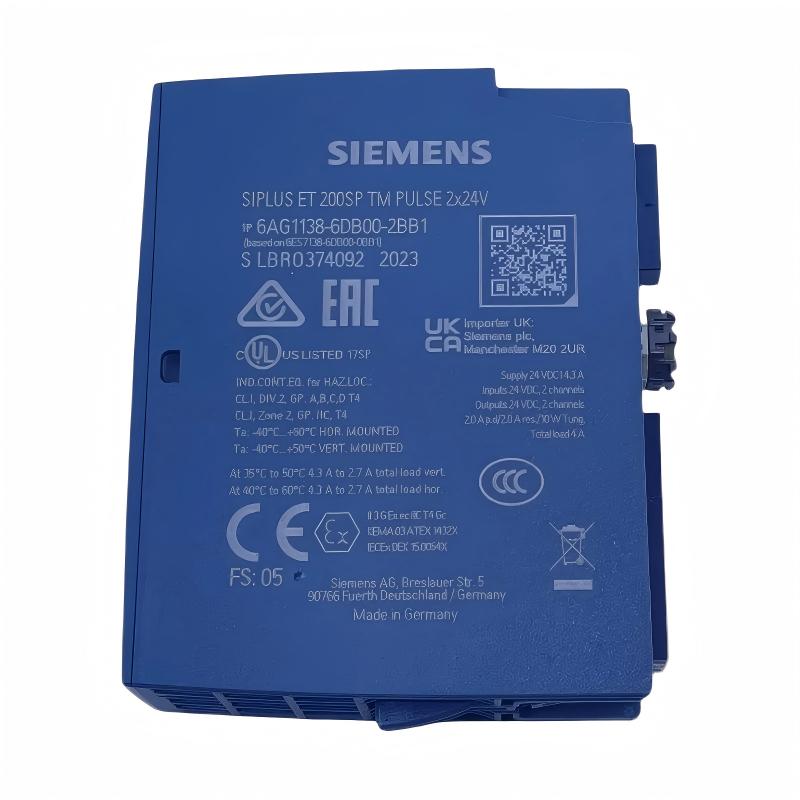
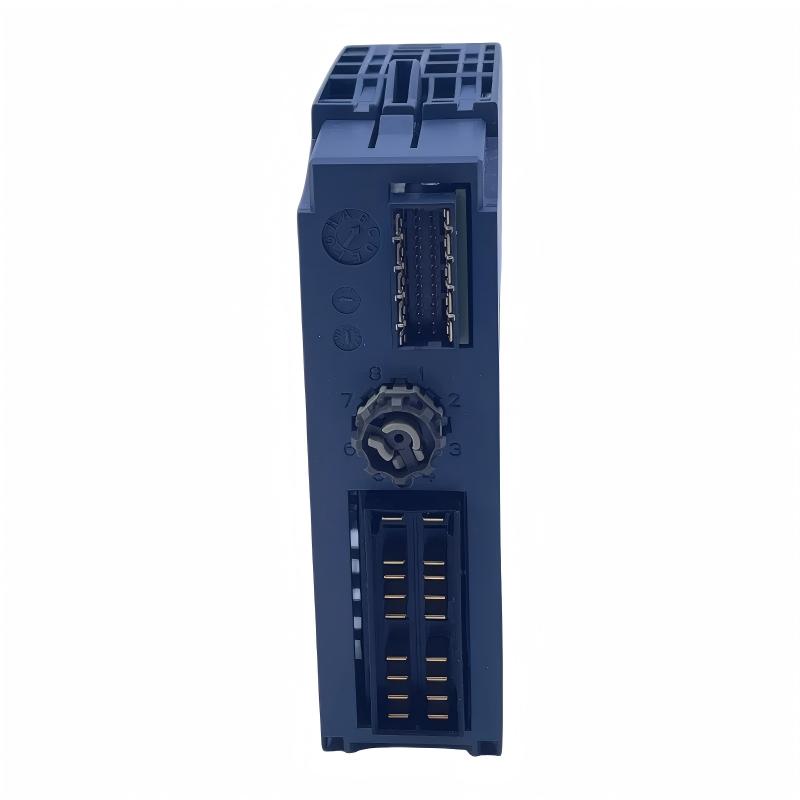
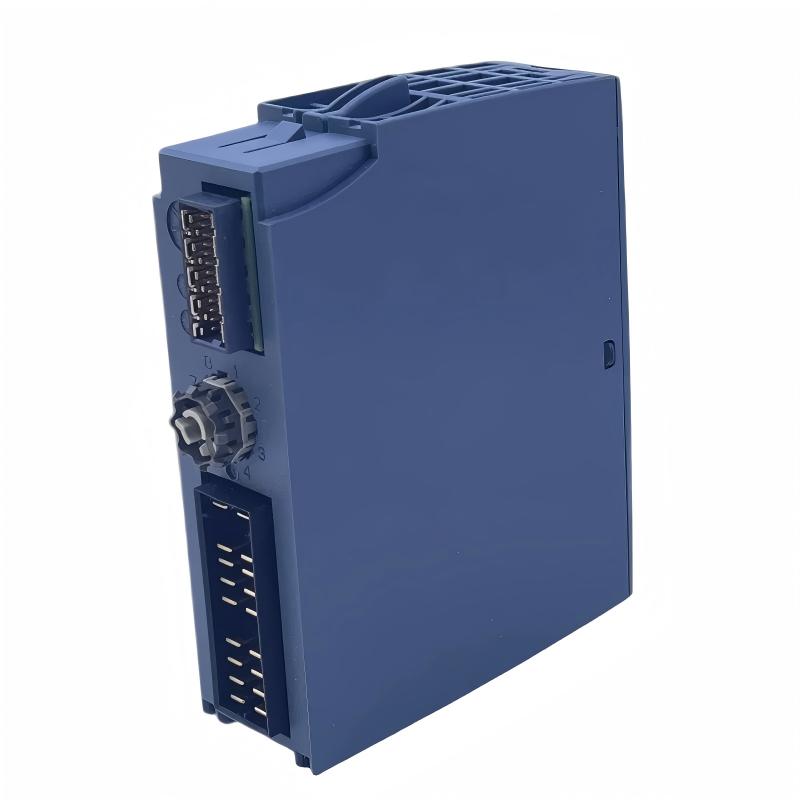
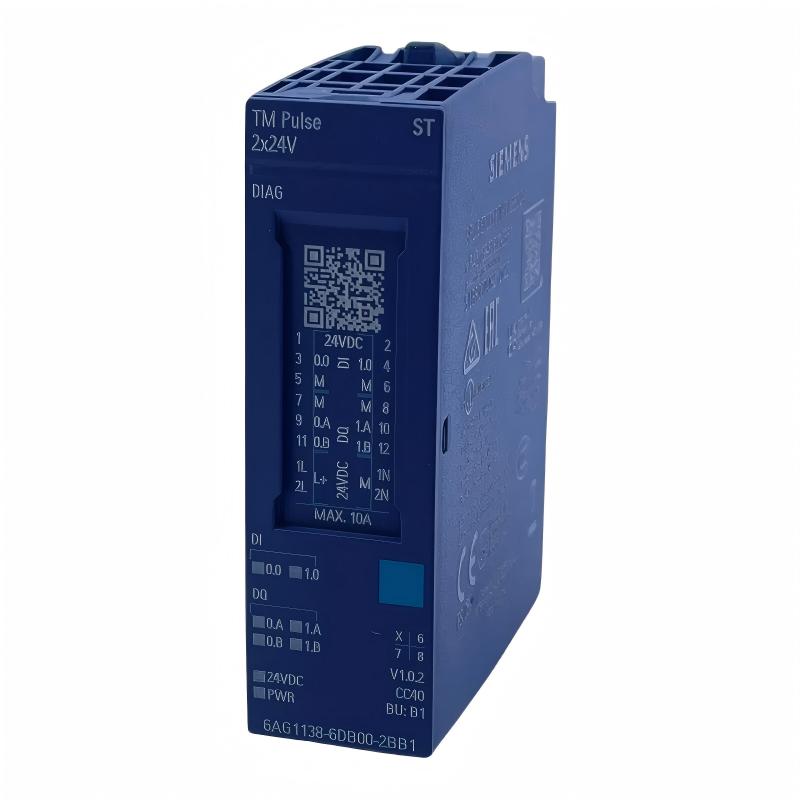
The 6AG1138-6DB00-2BB1 is the SIPLUS ET 200SP TM Pulse 2x24V pulse-output technology module. It provides two output channels for generating pulse signals and pulse-width modulation (PWM) signals, with applications including proportional-valve control and DC motor control.
The module is based on the standard 6ES7138-6DB00-0BB1 and is designed for compatible ET 200SP installations using a type B1 BaseUnit. Its SIPLUS version features conformal coating and a specified operating temperature range extending from -40°C to +60°C, subject to installation orientation and derating requirements.
3.1 General specifications
| Parameter | Specification |
|---|---|
| Model | 6AG1138-6DB00-2BB1 |
| Brand | Siemens |
| Product range | SIPLUS |
| Product series | SIMATIC ET 200SP |
| Product designation | TM Pulse 2x24V |
| Product type | Pulse-output technology module |
| Standard base model | 6ES7138-6DB00-0BB1 |
| Number of output channels | 2 |
| Number of digital outputs | 2, one per channel |
| Number of digital inputs | 2, one per channel |
| Rated load supply voltage | 24 V DC |
| Permissible load supply range | 19.2–28.8 V DC |
| Compatible BaseUnit | Type B1 |
| Maximum output current per channel | 2 A, subject to output mode and derating |
| Maximum total output current per module | 4 A |
| Maximum total output current per group | 4 A |
| Output switching type | P-switching and M-switching |
| Supported output functions | PWM, pulse output, frequency output, pulse train |
| Proportional-valve control | Supported |
| DC motor connection | Supported for compatible applications |
| Dithering function | Supported |
| Current measurement | Supported |
| Current control | Supported |
| Output short-circuit protection | Electronic/thermal protection |
| Reverse-polarity protection | Yes, against destruction |
| Firmware version | V1.0 for the documented configuration |
| Firmware update capability | Yes |
| Isochronous mode | Supported |
| Identification and maintenance data | I&M0 |
| Degree of protection | IP20 |
| Conformal coating | Yes |
| Module width | 20 mm |
| Module height | 73 mm |
| Module depth | 58 mm |
| Approximate module weight | 0.050 kg |
| Commonly listed net weight | Approximately 0.053 kg |
| Installation | Compatible ET 200SP station with type B1 BaseUnit |
Dimensions are expressed as width × height × depth. The approximate weight values refer to the module or product net weight, not the shipping package. Confirm the applicable value when preparing a formal bill of materials.
3.2 Electrical supply and power characteristics
| Parameter | Specification |
|---|---|
| Rated load supply | 24 V DC |
| Minimum permissible load voltage | 19.2 V DC |
| Maximum permissible load voltage | 28.8 V DC |
| Maximum module current consumption without load | 70 mA |
| Typical power loss | 1.7 W |
| Shared encoder/sensor supply | 24 V DC |
| Maximum shared supply output current | 300 mA |
| Shared supply short-circuit protection | Electronic, module-level |
| Reverse-polarity protection | Yes |
| Output voltage at logic “1” | Minimum 23.2 V, based on the specified supply conditions |
| Output voltage at logic “0” | Maximum 1 V |
| Maximum resistive-load current | 2 A per channel |
| Maximum total output current | 4 A per module |
| Parallel operation of outputs | Supported for current uprating under the specified conditions |
The module requires a suitable 24 V DC load supply. The actual voltage at the module and connected load should remain within the permitted operating range, including when the connected equipment starts or changes operating state.
The shared 24 V supply output has a maximum current rating of 300 mA. This rating is separate from the output-channel current rating and should not be confused with the maximum current available for the controlled load.
The two output channels can handle up to 2 A per channel under the applicable operating conditions. The maximum total current for the module is 4 A, and thermal or operating-mode derating may affect the usable current in a particular installation.
3.3 Pulse-output and PWM characteristics
| Parameter | Specification |
|---|---|
| PWM output | Supported |
| Pulse output | Supported |
| Frequency output | Supported |
| Pulse-train output | Supported |
| Maximum PWM channels | 2 |
| Maximum PWM cycle duration | 85 s |
| PWM duty-cycle range | 0% to 100% |
| Duty-cycle resolution | 0.0036%; for S7 analog format, minimum increment 20 ns |
| Minimum pulse duration, high-speed output | 1.5 µs |
| Minimum pulse duration, standard output | 10 µs |
| Pulse-duration accuracy, high-speed output | ±100 ppm ±0.5 µs |
| Pulse-duration accuracy, standard output | ±100 ppm ±9 µs |
| Maximum switching frequency, resistive load | 100 kHz in the high-speed mode; 10 kHz in standard mode |
| Maximum switching frequency, inductive load | 100 kHz in the high-speed mode; 10 kHz in standard mode |
| Maximum switching frequency, lamp load | 10 Hz |
| Output switching delay | Depends on output mode and load |
| Digital output functions | Parameterizable |
| Hardware enable for digital output | Supported through the associated digital input function |
| Freely usable digital input | Supported |
| Freely usable digital output | Supported |
The module can generate PWM signals with an adjustable duty cycle. This is useful when a control system needs to vary the average power delivered to a compatible load by adjusting the proportion of time that the output is active.
Pulse output and frequency output functions are suitable for other control tasks, including the generation of defined pulse sequences or frequency-related signals. The correct output mode must be selected for the intended load and control strategy.
The high-speed and standard output modes have different timing and load characteristics. High-speed operation supports shorter pulses and higher switching frequencies, but the permitted output current is reduced to 0.1 A in high-speed mode. The 2 A rating therefore should not be applied indiscriminately to every operating mode.
3.4 Digital input and output characteristics
| Parameter | Specification |
|---|---|
| Digital inputs | 2 |
| Digital outputs | 2 |
| Digital input rated voltage | 24 V DC |
| Input voltage for signal “0” | -30 V to +5 V |
| Input voltage for signal “1” | +11 V to +30 V |
| Permissible input voltage | -30 V to +30 V |
| Typical input current at signal “1” | 2.5 mA |
| Input characteristic | IEC 61131, Type 3 |
| Input delay | Parameterizable |
| Available input-delay settings | None, 0.05 ms, 0.1 ms, 0.4 ms, 0.8 ms, 1.6 ms, 3.2 ms, 12.8 ms, 20 ms |
| Digital input functions | Parameterizable |
| Digital output type | P-switching and M-switching |
| Digital output short-circuit protection | Electronic/thermal |
| Output current rating | 2 A per channel under applicable conditions |
| Output current-sinking capability | Supported |
| Output current-sourcing capability | Supported |
| Address area for inputs | 16 bytes, 8 bytes per channel |
| Address area for outputs | 24 bytes, 12 bytes per channel |
| Channel-to-channel isolation | No |
| Isolation between channels and backplane bus | Yes |
| Permissible potential difference between circuits | 75 V DC / 60 V AC, basic insulation |
The two digital inputs can be configured for associated control functions, including freely usable input operation and hardware enable for the corresponding output. The available configuration determines how these signals interact with the pulse-generation functions.
When connecting external sensors or control signals, check the signal voltage, input-delay setting, common reference, and wiring arrangement. For high-speed applications, unnecessary input filtering or an unsuitable signal configuration may affect the response of the overall system.
3.5 Environmental and installation specifications
| Parameter | Specification |
|---|---|
| Minimum operating temperature, horizontal installation | -40°C |
| Maximum operating temperature, horizontal installation | +60°C, subject to derating |
| Minimum operating temperature, vertical installation | -40°C |
| Maximum operating temperature, vertical installation | +50°C, subject to derating |
| Startup temperature | -25°C |
| Maximum specified installation altitude | 5,000 m, subject to atmospheric-pressure and temperature derating |
| Relative humidity | Up to 100% under specified condensation test conditions |
| Conformal coating | Yes |
| PCB coating classification | Class 2 under the applicable coating standard |
| Protection against fouling | Type 1 under the applicable classification |
| Resistance to certain chemical substances | Specified industrial environmental classes |
| Resistance to certain dust and sand conditions | Specified industrial environmental classes |
| Resistance to certain coolants and lubricants | Yes, under specified conditions |
| Degree of protection | IP20 |
| Enclosure requirement | Suitable cabinet or enclosure for the installation |
| Unused interface protection | Keep supplied connector covers in place where specified |
The SIPLUS version is designed for selected demanding industrial environments. The specified operating temperature depends on installation orientation and applicable derating conditions. At higher altitudes, the permissible temperature range may also need to be reduced.
The IP20 rating applies to the module in its intended installation. It does not provide protection against direct water exposure or immersion. Appropriate cabinet protection remains necessary, particularly where condensation, dust, oil mist, or corrosive substances may be present.
4. Product Introduction
The 6AG1138-6DB00-2BB1 SIPLUS ET 200SP TM Pulse 2x24V is a two-channel pulse-output module designed to generate control signals for compatible industrial loads. Its main applications include proportional-valve control, DC motor control, PWM output, frequency generation, and defined pulse sequences.
In an automated machine, the controller often needs to do more than switch an output on or off. Some devices require a rapidly changing signal whose frequency, pulse duration, or duty cycle can be adjusted. This type of output allows the control system to regulate a load or provide a pulse sequence suited to the process.
PWM is one example. The output repeatedly switches between active and inactive states. By changing the ratio between the active period and the complete cycle, the controller can adjust the signal’s duty cycle. When the connected device is designed for this method of control, the changing duty cycle can be used to regulate the device’s response.
The module supports two output channels, making it suitable for applications that require separate pulse signals for two compatible loads. Depending on the configuration, each channel can be used for a pulse-related function such as PWM, frequency output, or pulse-train generation.
For proportional valves, the module can generate suitable signals for a compatible valve-control arrangement. Depending on the valve and hydraulic or pneumatic system, additional control functions may be needed to achieve the required response. The module also supports dithering, which can be useful for certain proportional-valve applications where a small, controlled oscillation helps overcome friction-related effects.
For DC motor applications, the pulse-output functions can support suitable control arrangements. The correct electrical interface, current rating, switching mode, and protective components must be selected for the motor. A pulse-output module should not be treated as a universal motor drive or as a replacement for a dedicated drive when the application requires additional power conversion, feedback, or safety functions.
The module belongs to the ET 200SP distributed I/O platform. It can be installed alongside compatible modules in a distributed station, allowing pulse-generation functions to be located near the equipment they control. This can simplify the organization of the control system and keep related signals within a common modular architecture.
The SIPLUS variant adds conformal coating and an extended specified operating temperature range. These features can be valuable in industrial environments where ambient conditions are more demanding than those of a conventional indoor installation.
5. Product Applications
5.1 Proportional-valve control
Proportional valves are used in hydraulic and pneumatic systems when the flow, pressure, or movement of a controlled mechanism must be adjusted rather than simply switched fully on or off.
The module can generate PWM signals and supports functions such as dithering and current-related control for suitable applications. These functions can be used as part of a properly designed proportional-valve control arrangement.
Typical applications include:
-
Hydraulic flow control.
-
Pneumatic proportional-valve control.
-
Adjustable actuator movement.
-
Machine clamping and positioning.
-
Control of fluid-power equipment.
-
Industrial machinery requiring variable valve commands.
The valve’s electrical characteristics must be compatible with the module. In particular, the required current, coil resistance, switching mode, and control method should be checked before connection.
5.2 DC motor control
The module can provide pulse-output functions for compatible DC motor applications. Depending on the motor and control arrangement, PWM or pulse-related outputs may be used to support motor operation.
Potential applications include:
-
Small industrial positioning mechanisms.
-
Material-feed equipment.
-
Auxiliary drive functions.
-
Repetitive movement systems.
-
Automated adjustment mechanisms.
-
Compatible DC motor control tasks within production machinery.
The 2 A per-channel rating applies only under the relevant operating conditions. Motor startup current, inductive behavior, switching mode, and thermal limitations must be considered. Applications requiring higher power, speed feedback, advanced motion control, or safety-rated functions may require additional equipment.
5.3 Packaging machinery
Packaging equipment often needs accurate control of feeding, indexing, cutting, sealing, and transfer mechanisms. Pulse-generation functions can support the electrical control signals used by compatible actuators or other devices.
Examples include:
-
Controlling a compatible material-feed mechanism.
-
Generating pulse sequences for repetitive operations.
-
Supporting PWM-controlled auxiliary equipment.
-
Coordinating actuator commands with the production sequence.
-
Providing two separate output channels for related operations.
The module generates the configured electrical signals; the machine program and connected devices determine how those signals affect the actual production process.
5.4 Material handling and conveyor systems
Material-handling equipment may use controlled actuators or DC motor arrangements to move products, position stops, or operate auxiliary mechanisms.
The module can be considered for applications such as:
-
Controlling compatible DC motor mechanisms.
-
Operating proportional valves in handling equipment.
-
Generating pulse sequences for defined movements.
-
Providing separate signals for two controlled devices.
-
Supporting repeated movement operations in a production line.
The choice of output mode should be based on the requirements of the load. If the motor requires a dedicated drive, the pulse-output module may serve as part of the control architecture rather than directly powering the motor.
5.5 Industrial automation and machine building
Machine builders often need technology modules for functions that are not adequately handled by ordinary on/off outputs. A dedicated pulse-output module can help separate pulse generation from the main PLC program and provide a more structured way to configure the output behavior.
Possible uses include:
-
PWM control of compatible equipment.
-
Generation of defined pulse trains.
-
Frequency-output applications.
-
Output timing functions.
-
Coordinated control of two separate channels.
-
Integration of pulse functions into an ET 200SP station.
The module’s timing characteristics and operating modes should be checked against the required pulse frequency, pulse duration, and response time.
5.6 Industrial equipment operating in demanding environments
The SIPLUS version is intended for selected installations where environmental conditions may be more challenging than those encountered in a conventional indoor control cabinet.
Potential considerations include:
-
Temperature variation.
-
Certain chemically active substances.
-
Oil mist and specified industrial contaminants.
-
Humidity and condensation under the permitted conditions.
-
Installation in demanding industrial process environments.
Environmental suitability must be evaluated for the complete installation. The module’s coating does not eliminate the need for proper cabinet protection, thermal management, and correct mounting.
6. Main Product Advantages
6.1 Two independent pulse-output channels
The module provides two output channels, allowing two compatible loads or control functions to be served from one technology module. This can be useful when a machine has two related actuators or requires separate pulse-generation functions.
The channels can be configured according to the application, subject to the module’s supported operating modes and electrical limits.
6.2 Multiple output functions
PWM, pulse output, frequency output, and pulse-train generation are supported. This gives the module flexibility across applications that require different forms of digital control signals.
Rather than choosing a general-purpose output module and implementing all timing behavior in software, the designer can evaluate whether the dedicated technology functions better suit the required signal.
6.3 Suitable for proportional-valve applications
The module supports functions associated with proportional-valve control, including PWM and dithering. These capabilities can be useful when the controlled valve is designed for the relevant signal type and current range.
Dithering and current-control functions should be configured according to the valve manufacturer’s requirements and the characteristics of the hydraulic or pneumatic system.
6.4 Supports compatible DC motor applications
Pulse-output functionality can be used in suitable DC motor control arrangements. This is useful for selected auxiliary drives and mechanisms where the motor’s electrical and operating requirements fall within the module’s supported limits.
The module is not a universal substitute for a motor drive. Higher-power motors or applications needing advanced drive functions may require additional equipment.
6.5 Adjustable PWM duty cycle
The module supports a PWM duty-cycle range from 0% to 100%. This allows the active portion of the output cycle to be adjusted for compatible applications.
The practical control range depends on the load, switching frequency, output mode, electrical characteristics, and system configuration.
6.6 High-speed output capability
The module supports high-speed output operation, including a minimum pulse duration of 1.5 µs in the high-speed mode and a maximum switching frequency of 100 kHz for specified resistive and inductive loads.
High-speed operation is not equivalent to unrestricted high-current operation. The high-speed output current rating is lower than the standard-mode rating, so pulse timing and load current must be considered together.
6.7 Compact modular design
With a module width of 20 mm and approximate dimensions of 20 × 73 × 58 mm, the module can fit into a compact ET 200SP station.
This helps keep technology functions organized within the distributed I/O system, although the complete station layout must account for BaseUnits, interface modules, wiring, clearances, and cabinet requirements.
6.8 Environmental protection through the SIPLUS design
The conformal coating and extended specified operating temperature range are useful features for certain demanding installations. They may help improve suitability where temperature and environmental exposure need special consideration.
The module must still be installed within the permitted operating conditions, with the required protection against direct water exposure and other hazards.
6.9 Diagnostics and system integration
The module supports diagnostic functions, diagnostic alarms, supply-voltage monitoring, and short-circuit detection. The PWR and DIAG LEDs provide visual indications that can assist maintenance and troubleshooting.
It also supports isochronous operation, which may be useful when the automation application requires coordinated timing between the module and the wider control system.
7. Five Related Models to Consider
The following models are relevant to pulse generation, counting, position acquisition, weighing, or the ET 200SP distributed I/O platform. They serve different purposes, so they should be selected according to the actual control task rather than treated as interchangeable parts.
| Model | Product designation | Main parameters and function | Dimensions (W × H × D) | Weight (kg) |
|---|---|---|---|---|
| 6ES7138-6DB00-0BB1 | ET 200SP TM Pulse 2x24V, standard variant | Two-channel pulse-output module; PWM and pulse output; up to 2 A per channel under applicable conditions; standard environmental specification | 20 × 73 × 58 mm, verify installation drawing | Verify exact hardware specification |
| 6AG1138-6BA00-2BA0 | SIPLUS ET 200SP TM PosInput 1 | Position and counting module for compatible RS-422 incremental and SSI absolute encoders; 2 DI, 2 DQ; conformal coating | 15 × 73 × 58 mm | Approx. 0.045 |
| 6AG1138-6BA01-2BA0 | SIPLUS ET 200SP TM PosInput 1, related variant | Related encoder-position module; check the exact variant’s supported functions and configuration before substitution | 15 × 73 × 58 mm, verify exact revision | Verify exact hardware specification |
| 6AG1138-6AA00-2BA8 | SIPLUS ET 200SP SIWAREX WP321 ST | Single-channel weighing technology module for compatible strain-gauge load cells; 24 V DC supply; conformal coating | 15 × 73 × 58 mm | Approx. 0.030–0.031 |
| 6AG1155-6AU01-7BN0 | SIPLUS ET 200SP IM155-6PN ST | Distributed I/O interface module for a compatible ET 200SP station; network and station compatibility must be confirmed | Verify exact hardware specification | Verify exact hardware specification |
How to choose among these related models
6ES7138-6DB00-0BB1 — Standard TM Pulse 2x24V
This is the closest functional alternative because it is the standard version of the same pulse-output module. It is worth evaluating if the application does not require the SIPLUS variant’s additional environmental features.
Before replacing the SIPLUS model, confirm the operating temperature, environmental classification, wiring, BaseUnit, and system configuration.
6AG1138-6BA00-2BA0 — TM PosInput 1
This module is designed for encoder-based counting and position acquisition rather than generating output pulses. It may be appropriate when the application needs to receive position information from a compatible encoder.
6AG1138-6BA01-2BA0 — Related position-input variant
This model belongs to the related position-input family. The exact functions and compatibility should be checked before it is selected as an alternative.
6AG1138-6AA00-2BA8 — SIWAREX WP321 ST
This module serves weighing applications. It is relevant when the system needs load-cell measurement rather than pulse generation.
6AG1155-6AU01-7BN0 — ET 200SP interface module
An interface module is useful when planning or expanding the distributed I/O station. It has a different function from the pulse-output module and is selected according to network and station requirements.
Dimensions and weights marked for verification should be confirmed against the exact hardware specification before purchase or mechanical design.
8. Five Popular Siemens Models for Industrial Automation
These models cover common automation functions, including PLC control, distributed I/O, power supply, and operator interfaces. They may be useful when planning a wider system around the TM Pulse 2x24V, but none should be treated as a direct replacement for the pulse-output module.
| Model | Product series | Main parameters and application | Dimensions (W × H × D) | Weight (kg) |
|---|---|---|---|---|
| 6ES7214-1AG40-0XB0 | SIMATIC S7-1200 | Compact PLC for machine control; I/O and communication details depend on the exact CPU variant | Verify exact hardware specification | Verify exact hardware specification |
| 6ES7511-1AK02-0AB0 | SIMATIC S7-1500 | PLC for industrial control, program execution, and integration with compatible distributed I/O | Verify exact hardware specification | Verify exact hardware specification |
| 6ES7155-6AU01-0BN0 | SIMATIC ET 200SP | Distributed I/O interface module for connecting a compatible station to the automation network | Verify exact hardware specification | Verify exact hardware specification |
| 6EP1333-2BA20 | SITOP | Industrial power supply for 24 V DC control systems; verify output current and electrical characteristics for the exact version | Verify exact hardware specification | Verify exact hardware specification |
| 6AV2123-2GB03-0AX0 | SIMATIC HMI Basic Panel | Operator panel for machine status, process visualization, alarms, and operator input | Verify exact hardware specification | Verify exact hardware specification |
Role of each model in an automation system
6ES7214-1AG40-0XB0 — SIMATIC S7-1200
A PLC provides the central logic for a machine or smaller automation process. It evaluates inputs, executes the control program, and coordinates outputs. A compatible pulse-output technology module can provide specialized signal-generation functions within the wider control architecture.
6ES7511-1AK02-0AB0 — SIMATIC S7-1500
The S7-1500 family is used for industrial control applications with different performance and integration requirements. Selection depends on the program, communication architecture, required processing capability, and the intended distributed I/O arrangement.
6ES7155-6AU01-0BN0 — SIMATIC ET 200SP
A compatible interface module connects the distributed I/O station to the automation network. This is useful when the machine’s sensors, actuators, and technology modules are located near the process rather than directly beside the central controller.
6EP1333-2BA20 — SITOP
A suitable DC power supply provides the required operating voltage for the controller, distributed I/O, sensors, and other devices. The supply should be sized according to the total load, startup current, and any necessary reserve capacity.
6AV2123-2GB03-0AX0 — SIMATIC HMI Basic Panel
An HMI provides a user interface for viewing operating conditions, entering setpoints, acknowledging alarms, and interacting with the machine. The exact display, communication interfaces, and software compatibility should be confirmed for the selected variant.
The exact dimensions and weights of these additional models have not been filled in with estimates. Verify the precise hardware revision before using those values in a formal specification.
9. Installation and Configuration Considerations
Before installing or replacing the 6AG1138-6DB00-2BB1, review the following points.
| Check item | Requirement |
|---|---|
| Model identification | Confirm the complete order number on the module label |
| BaseUnit | Use a compatible type B1 BaseUnit |
| Load supply | Provide 24 V DC within 19.2–28.8 V DC |
| Load current | Confirm the current required by each connected device |
| Total output current | Keep within the 4 A module limit and applicable derating conditions |
| High-speed mode | Observe the lower 0.1 A output-current rating |
| Shared 24 V supply | Keep within the 300 mA maximum output-current rating |
| Output function | Select PWM, pulse, frequency, or pulse-train mode as required |
| Digital inputs | Confirm voltage levels, delay settings, and assigned functions |
| Load compatibility | Check motor or valve electrical characteristics before connecting |
| Output protection | Verify the application requirements for inductive loads and transient suppression |
| Environmental conditions | Confirm temperature, humidity, enclosure protection, and mounting orientation |
| Engineering configuration | Check controller, firmware, module configuration, and software compatibility |
| Replacement procedure | Follow the machine’s approved electrical isolation and maintenance procedure |
For a pulse-output application, the selected operating mode and the load characteristics must be evaluated together. A load that is suitable for standard output operation may not be suitable for high-speed operation at the same current.
Proportional valves and DC motors can have inductive characteristics. Correct wiring, current limits, protective arrangements, and the manufacturer’s load requirements should be reviewed before commissioning.
The module should also be configured with the appropriate engineering software and controller setup. The required address assignment, output parameters, diagnostic handling, and timing behavior depend on the complete automation project.
10. Summary
The Siemens 6AG1138-6DB00-2BB1 is a SIPLUS ET 200SP TM Pulse 2x24V technology module designed to generate PWM signals, pulse outputs, frequency outputs, and pulse trains for compatible industrial applications.
Its key features include two output channels, two digital inputs, a rated 24 V DC supply, up to 2 A per channel under applicable conditions, a maximum total output current of 4 A, support for proportional-valve and compatible DC motor applications, and diagnostic functions.
The module measures approximately 20 × 73 × 58 mm and has an approximate module weight of 0.050 kg, with a commonly listed net weight of approximately 0.053 kg. Its conformal coating and specified operating temperature range of -40°C to +60°C make it relevant for selected demanding industrial environments, subject to mounting orientation and derating requirements.
For an application requiring the same pulse-generation function without the SIPLUS environmental characteristics, the standard model 6ES7138-6DB00-0BB1 is the closest alternative to evaluate. For position acquisition, weighing, or network-interface functions, select the corresponding technology module according to the required task.
The final choice should be based on the output function, current requirements, pulse timing, connected load, environmental conditions, and compatibility with the existing ET 200SP installation.