

ProductPRODUCT
Featured products
Contact Us
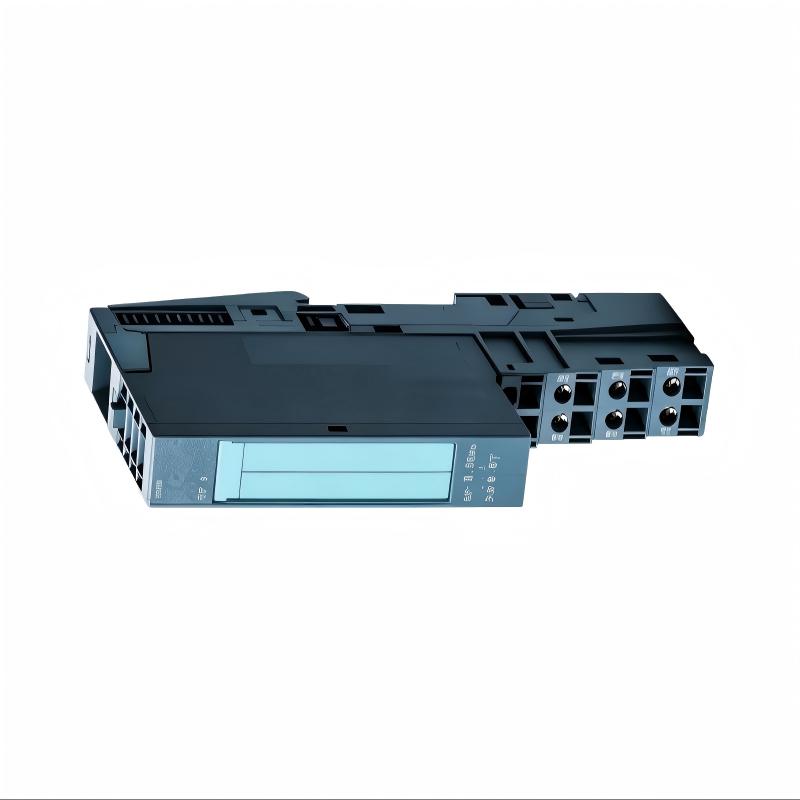
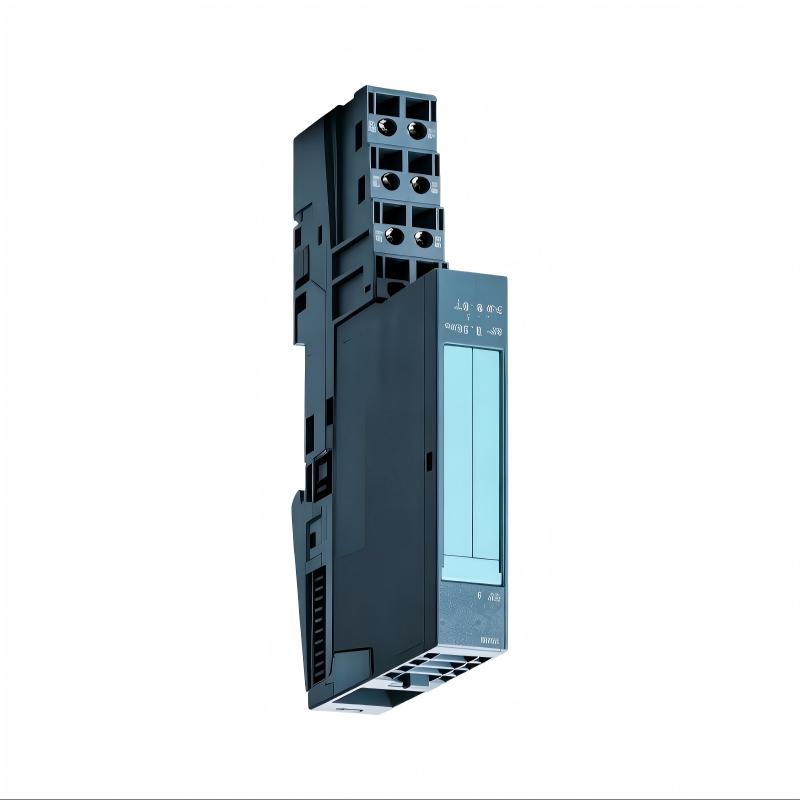
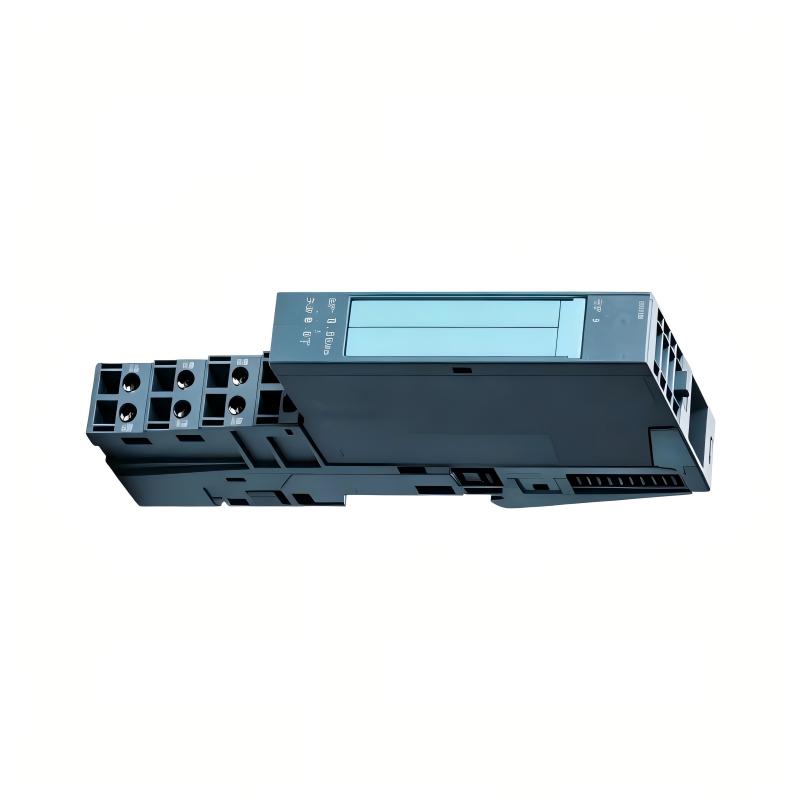
- Siemens
- 6AG1138-4DF01-7AB0
- SIPLUS ET 200S EM 1 Count Counter Module
- Germany
- 15 × 81 × 52 mm
- 0.05kg
- Xiamen, China
- New & In Stock
- T/T, PayPal, Western Union
- 1 Year
- 1-3 Working Days
- DHL, UPS, TNT, FedEx and EMS.
- 24-Hour Service
- COO
- 7
Our advantage

Global Logistics
We have a 10-year logistics and express cooperation agreement, so our products can be shipped to any place in the world.

Brand new and original
Our products are imported in bulk from the place of origin. Because of the cooperative relationship, our products are all original and 100% new.

24-hour service
We provide 7*24 hours service to our customers. We will be there whenever you need us.

Price advantage
All our products are priced very favorably because we have our own warehouse and supply.
| Company Information | |||
| [email protected] | |||
| Mobile | +8615980777398 | ||
| +8615980777398 | |||
| 15980777398 |
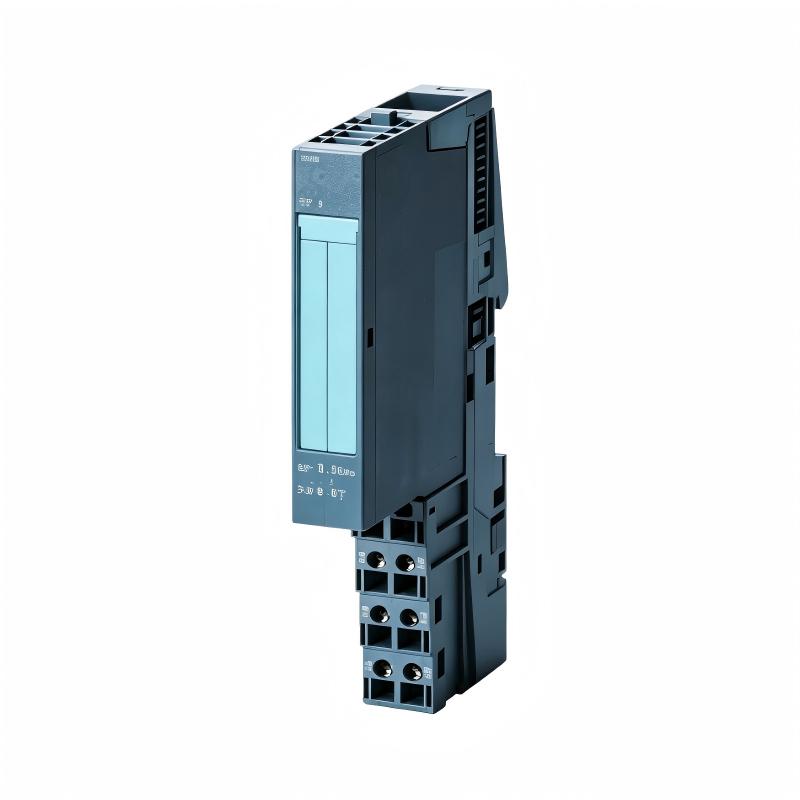
Siemens 6AG1138-4DF01-7AB0 — Product Introduction, Technical Specifications, Applications, Advantages, and Related Models
1. Product Overview
The Siemens 6AG1138-4DF01-7AB0 is associated with the SIPLUS industrial automation product range and the SIMATIC ET 200S distributed I/O platform. When selecting this module, it is important to distinguish its specific communication function from other ET 200S modules used for pulse generation, counting, or general-purpose digital input and output.
The ET 200S platform is a modular automation system designed to connect sensors, actuators, and specialized functional modules to a higher-level controller. Its modular construction allows engineers to select the functions required by a machine or process without installing unnecessary hardware.
The SIPLUS product range includes variants intended for demanding industrial environments. Depending on the exact model, these variants may provide an extended operating temperature range and protective coating. Such features can be valuable in industrial cabinets where temperature fluctuations or environmental stresses are more significant than in a conventional indoor installation.
Important model-specific note: I cannot reliably confirm every electrical rating, communication protocol, terminal assignment, dimension, or weight for ordering code 6AG1138-4DF01-7AB0 without its exact product specification. The information below therefore separates established platform-level characteristics from details that require verification. It does not assume that another ET 200S model with a similar number has identical specifications.
2. Basic Product Information
The exact product designation is SIPLUS ET 200S EM 1SI, a serial communication module based on the standard ET 200S module 6ES7138-4DF01-0AB0.
| Parameter | Specification |
|---|---|
| Brand | Siemens |
| Model | 6AG1138-4DF01-7AB0 |
| Product family | SIPLUS |
| Automation series | SIMATIC ET 200S |
| Module designation | EM 1SI |
| Product type | Serial communication interface module |
| Communication architecture | Point-to-point serial communication |
| Serial interfaces | RS232C, RS422, RS485 |
| Number of communication interfaces | 1 |
| Nominal load voltage | 24 V DC |
| Permissible supply voltage | 20.4–28.8 V DC |
| Typical power loss | 1.2 W |
| Maximum current from 3.3 V backplane bus | 10 mA |
| Maximum current from 24 V backplane bus | 80 mA |
| Supported communication modes | Freeport, 3964(R), USS, MODBUS RTU, subject to configuration |
| Maximum serial transmission rate | Up to 250 kbit/s, depending on protocol and interface |
| Maximum shielded RS232 cable length | 15 m |
| Maximum shielded RS422/RS485 cable length | Up to 1,200 m under supported conditions |
| Operating temperature | −25°C to +70°C |
| Protective coating | Conformal coating |
| Module width | 15 mm |
| Dimensions (W × H × D) | 15 × 81 × 52 mm |
| Weight (kg) | Approximately 0.050 kg |
| Mounting | Compatible SIMATIC ET 200S station |
| Typical application | Serial data exchange between a PLC and compatible external equipment |
| Product lifecycle consideration | Legacy product; check spare-part availability and system compatibility |
The dimensions refer to the module itself. The weight is approximately 50 g, although actual shipping weight and package dimensions may differ.
3. Detailed Technical Parameters
3.1 Electrical Specifications
| Parameter | Specification |
|---|---|
| Rated load voltage L+ | 24 V DC |
| Permissible supply voltage | 20.4–28.8 V DC |
| Maximum current from 3.3 V backplane bus | 10 mA |
| Maximum current from 24 V backplane bus | 80 mA |
| Typical current from 24 V backplane bus | 20 mA |
| Typical power loss | 1.2 W |
| Number of communication interfaces | 1 |
| Communication interface type | Serial |
| Dimensions (W × H × D) | 15 × 81 × 52 mm |
| Weight (kg) | Approximately 0.050 kg |
The module is designed to operate within an ET 200S station and receives its operating power through the compatible station arrangement. Its electrical requirements should be considered alongside the requirements of the interface module, power module, and other installed components.
The typical power loss of 1.2 W is useful when calculating the total thermal load of the control cabinet. Although the module is small, it still contributes to the station’s overall power consumption and heat generation.
3.2 Serial Communication Interfaces
| Parameter | Specification |
|---|---|
| RS232C | Supported |
| RS422 | Supported |
| RS485 | Supported |
| Number of serial interfaces | 1 |
| RS232C signal set | TxD, RxD, RTS, CTS, DTR, DSR, DCD, PE |
| RS422 signal set | TxD(A), RxD(A), TxD(B), RxD(B), PE |
| RS485 signal set | R/T(A), R/T(B), PE |
| Maximum shielded RS232 cable length | 15 m |
| Maximum shielded RS422/RS485 cable length | Up to 1,200 m |
| Communication type | Point-to-point serial communication |
| Dimensions (W × H × D) | 15 × 81 × 52 mm |
| Weight (kg) | Approximately 0.050 kg |
The module’s support for RS232, RS422, and RS485 makes it useful for connecting compatible devices with different serial communication requirements.
RS232 is commonly used for short-distance point-to-point connections. RS422 supports differential signalling and is useful where greater noise immunity or longer transmission distances are required. RS485 is widely used in industrial communication networks, including compatible multidrop arrangements.
The maximum cable lengths are dependent on interface type, cable quality, transmission rate, electromagnetic conditions, and the connected equipment. The stated maximum should not be interpreted as a guarantee that every protocol will operate reliably at that distance.
3.3 Communication Protocols and Software Functions
| Parameter | Specification |
|---|---|
| Freeport mode | Supported |
| 3964(R) | Supported |
| USS | Supported |
| MODBUS RTU | Supported, subject to configuration |
| Maximum transmission rate | Up to 250 kbit/s |
| Maximum frame length | Up to approximately 2 kbyte |
| Message buffer capacity | Up to approximately 4 kbyte |
| Standard communication blocks | Approximately 5,100 bytes in total |
| S_SEND block | Approximately 2,700 bytes |
| S_RCV block | Approximately 2,400 bytes |
| S_XON block | Approximately 2,600 bytes |
| S_RTS block | Approximately 2,600 bytes |
| S_V24 block | Approximately 2,700 bytes |
| S_VSTAT block | Approximately 1,800 bytes |
| S_VSET block | Approximately 1,800 bytes |
| Dimensions (W × H × D) | 15 × 81 × 52 mm |
| Weight (kg) | Approximately 0.050 kg |
The listed communication blocks are associated with different serial communication operations and configuration functions. The precise block requirements depend on the selected protocol and the automation software used in the installation.
The module’s maximum transmission rate is not the same as its guaranteed application throughput. Actual throughput depends on protocol overhead, message length, communication settings, the external device, and the PLC program.
3.4 Environmental and Mechanical Specifications
| Parameter | Specification |
|---|---|
| Product variant | SIPLUS |
| Operating temperature | −25°C to +70°C |
| Protective treatment | Conformal coating |
| Module width | 15 mm |
| Module height | 81 mm |
| Module depth | 52 mm |
| Dimensions (W × H × D) | 15 × 81 × 52 mm |
| Weight (kg) | Approximately 0.050 kg |
| Installation | Compatible ET 200S station |
| Protection class | IP20 for the module arrangement |
| Environmental suitability | Industrial environments within specified limits |
| Unused interface protection | Supplied protective covers should remain fitted where required |
| Cabinet design | Appropriate enclosure, grounding, and thermal management required |
The SIPLUS variant is designed for a wider operating temperature range than many standard indoor automation modules. Its conformal coating provides additional protection against specified environmental stresses.
Nevertheless, it is still an industrial electronic module intended for a suitable installation. It should not be treated as waterproof or installed without adequate protection against direct moisture, conductive contamination, or other conditions outside its specified limits.
4. Product Working Principle
The module provides a serial communication link between the ET 200S automation station and a compatible external device. It converts communication data managed by the automation system into serial transmissions and receives incoming serial data for use by the control program.
A typical communication sequence works as follows.
1. Hardware installation: The module is installed in a compatible ET 200S station.
2. Interface selection: The engineer selects the appropriate physical interface—RS232C, RS422, or RS485—according to the external device.
3. Protocol configuration: The required communication mode, transmission rate, data format, and other communication settings are configured.
4. Data transmission: The PLC program sends the required information through the serial communication functions.
5. Data reception: Incoming messages from the external equipment are received and made available for processing.
6. Application processing: The PLC interprets the received data and uses it for monitoring, control, recording, or process coordination.
7. Diagnostic handling: Communication status and error conditions are handled through the configured program and the available diagnostic functions.
Successful communication requires both ends of the connection to use compatible interface settings and protocol parameters. Even when the physical wiring is correct, mismatched baud rates, parity settings, addressing, or message formats can prevent reliable data exchange.
5. Product Applications
5.1 Communication with Serial Industrial Instruments
Many industrial instruments provide measurement results through serial communication rather than through ordinary digital inputs.
The module can be used to connect compatible equipment to a PLC-based control system.
Potential applications include:
-
Reading values from serial measurement devices.
-
Receiving status information from external instruments.
-
Transferring process values to the PLC.
-
Integrating older serial devices into an automation system.
-
Exchanging configuration or operating information with compatible equipment.
The instrument’s protocol, serial interface, and message structure must match the module’s supported configuration.
5.2 MODBUS RTU Communication
MODBUS RTU is commonly used in industrial applications for exchanging register-based data between compatible devices.
Where the required configuration is supported, the module can provide a serial communication interface for MODBUS RTU applications.
Examples include:
-
Reading measurement registers from a compatible device.
-
Acquiring operating status from an external controller.
-
Transferring process values between devices.
-
Connecting compatible serial field equipment to an existing PLC.
-
Integrating legacy equipment into a larger control system.
The physical interface, communication mode, addressing, data format, and software configuration must all be correct. The module does not automatically make an incompatible device MODBUS-compatible.
5.3 USS Communication with Compatible Drives
USS is a serial communication protocol used with compatible drive equipment.
In a suitable installation, the module can be used as part of a communication arrangement for transferring commands and receiving status or operating data.
Potential tasks include:
-
Sending supported operating commands.
-
Reading status information.
-
Exchanging selected operating parameters.
-
Integrating compatible drive equipment into an existing automation system.
The supported functions depend on the drive model, selected protocol configuration, and PLC program. Communication through this module should not be confused with a modern real-time motion-control network.
5.4 Connection to Legacy Serial Equipment
Many established industrial machines use serial communication interfaces that remain operational long after the original machine design has been completed.
The module can help preserve such equipment within a compatible ET 200S architecture.
Typical examples include older machine controllers, serial data terminals, industrial instruments, and other equipment that uses RS232, RS422, or RS485.
This can reduce the need to replace all the existing equipment at once, provided the legacy device remains supported and its communication requirements can be met.
5.5 Data Exchange with Barcode and Identification Equipment
Compatible barcode readers and identification devices may use serial communication to transmit decoded data or device status.
The module can be considered when a serially connected reader needs to exchange data with a PLC.
Possible applications include:
-
Reading product identification information.
-
Passing serial data into the machine control program.
-
Associating product codes with production steps.
-
Monitoring the communication state of a reader.
-
Integrating compatible serial identification equipment into an existing system.
The suitability of the module depends on the reader’s protocol, message format, transmission speed, and required response time.
5.6 Weighing and Measurement Equipment
Some industrial weighing systems and measurement instruments provide data through serial interfaces.
The module may be suitable for receiving or transmitting data where the instrument supports a compatible protocol and the application does not require a different dedicated interface.
Potential applications include reading weight values, acquiring measurement results, and transferring process information between instruments and the PLC.
The instrument’s documentation should be checked carefully because not every serial device uses the same communication protocol.
5.7 Production Data Collection
Serial communication can be used to exchange production-related information between a PLC and compatible external equipment.
Examples include transferring status values, reading machine counters, retrieving measurement results, or exchanging data with a local supervisory device.
This can be useful when an existing machine needs to communicate with external equipment without replacing its entire automation system.
5.8 Machine Integration and Retrofit Projects
In retrofit projects, older equipment may need to be connected to a newer supervisory process while retaining its existing field devices.
The module can provide a practical serial interface when the required protocol and communication characteristics are supported.
Before choosing this approach, engineers should evaluate the available communication documentation, the condition of the existing equipment, spare-part availability, and the long-term maintenance plan.
6. Main Product Advantages
6.1 Multiple Serial Interface Options
Support for RS232C, RS422, and RS485 provides flexibility when connecting different types of serial equipment.
This is useful for installations where multiple generations of devices use different physical interfaces.
The actual interface must be selected and wired correctly for each application.
6.2 Broad Protocol Support
The module supports several serial communication modes, including Freeport, 3964(R), USS, and MODBUS RTU, subject to the relevant configuration.
This gives engineers options when integrating compatible external equipment without requiring a separate communication module for every supported protocol.
6.3 Compact Design
The module is only 15 mm wide and has a body size of approximately 15 × 81 × 52 mm.
Its compact construction is valuable in control cabinets where the available rail space is limited.
6.4 Integration with ET 200S
The module is designed for use within the SIMATIC ET 200S distributed I/O platform.
This makes it relevant for maintenance and expansion projects where an ET 200S station is already installed and the automation architecture is being retained.
6.5 Extended Environmental Capability
The specified operating temperature range of −25°C to +70°C and the conformal coating are important features of the SIPLUS variant.
These characteristics can make the module suitable for installations exposed to wider temperature variations or specified environmental stresses.
The protection level of the complete installation still depends on the enclosure, wiring, mounting, and surrounding equipment.
6.6 Support for Legacy Equipment
Serial interfaces remain common in established industrial systems.
The module can help connect compatible older equipment to a PLC-based control system, reducing the need for an immediate full-system replacement.
This is particularly useful when the existing machine remains functional and only the communication arrangement needs to be maintained or extended.
6.7 Centralized PLC-Based Data Processing
Serial information received through the module can be processed by the PLC and used in the wider machine-control program.
This allows measurement data, status information, and operating values to be incorporated into the same control architecture used for the rest of the production system.
6.8 Defined Interface and Protocol Configuration
The module provides a dedicated location for serial communication within the ET 200S station.
A well-documented configuration can make it easier for maintenance personnel to understand which device is connected, which protocol is used, and how communication faults should be investigated.
6.9 Low Module Weight
The module weighs approximately 0.050 kg, making it lightweight and straightforward to handle during installation or replacement.
Its small physical footprint also helps reduce the space allocated to communication functions in the station.
7. Five Related Models to Consider
The following models are related to the ET 200S serial communication family or are relevant alternatives for similar industrial communication applications. The first two are the closest comparisons to the main model; the others provide related serial or distributed-I/O functionality.
| Model | Product series / type | Main parameters | Dimensions (W × H × D) | Weight (kg) |
|---|---|---|---|---|
| 6ES7138-4DF01-0AB0 | SIMATIC ET 200S EM 1SI | Standard counterpart; one serial interface; RS232C/RS422/RS485; multiple serial communication modes | 15 × 81 × 52 mm | Approx. 0.050 |
| 6AG1138-4DF11-7AB0 | SIPLUS ET 200S EM 1SI RS232/422 | SIPLUS serial module; RS232/RS422 interface variant; environmental protection depends on exact specification | 15 × 81 × 52 mm* | Approx. 0.050* |
| 6ES7138-4DF11-0AB0 | SIMATIC ET 200S EM 1SI RS232/422 | Standard serial-interface variant; intended for compatible serial communication applications | 15 × 81 × 52 mm* | Approx. 0.050* |
| 6AG1138-4DA04-2AB0 | SIPLUS ET 200S EM 1COUNT | High-speed counter and measurement module; 24 V signal interface; counting up to 100 kHz | Approx. 15 × 81 × 52 mm | Approx. 0.047 |
| 6AG1138-4DD01-7AB0 | SIPLUS ET 200S EM 2 Pulse | Two-channel pulse generation and timer module; 24 V DC nominal | 15 × 81 × 52 mm | Approx. 0.040 |
*The dimensions and weights marked with an asterisk are indicative and should be confirmed for the exact hardware variant. The dimensions of the main model are 15 × 81 × 52 mm, with a weight of approximately 0.050 kg.
Recommendations for Selecting a Related Model
– 6ES7138-4DF01-0AB0: The most direct comparison when considering the standard version of the EM 1SI serial communication module.
– 6AG1138-4DF11-7AB0: Worth considering when the required physical interface is specifically the RS232/422 variant. Check protocol and wiring requirements before selection.
– 6ES7138-4DF11-0AB0: A related standard serial-interface option for compatible ET 200S applications.
– 6AG1138-4DA04-2AB0: Appropriate when the application needs dedicated pulse counting or measurement rather than serial data exchange.
– 6AG1138-4DD01-7AB0: Relevant when pulse generation and timer functions are needed within the same wider automation platform.
The counter and pulse-generator models are not substitutes for a serial communication module. They are included as related functional modules for engineers evaluating the broader ET 200S system.
8. Five Popular Siemens Automation Models
The following models represent widely used product categories in industrial automation. They are complementary components rather than direct replacements for the EM 1SI serial communication module.
| Model | Product series | Main parameters | Dimensions (W × H × D) | Weight (kg) |
|---|---|---|---|---|
| 6ES7214-1AG40-0XB0 | SIMATIC S7-1200 | Compact PLC; integrated control and I/O functions; suitable for machine automation | Verify exact hardware revision | Verify |
| 6ES7511-1AK02-0AB0 | SIMATIC S7-1500 | PLC for industrial control; PROFINET communication; modular system expansion | Verify exact hardware revision | Verify |
| 6ES7155-6AU01-0BN0 | SIMATIC ET 200SP | Distributed-I/O interface; modular field-I/O station architecture | Verify exact configuration | Verify |
| 6EP1333-2BA20 | SITOP | Industrial 24 V DC power supply; used to power compatible automation equipment | Verify exact revision | Verify |
| 6AV2123-2GB03-0AX0 | SIMATIC HMI Basic Panel | Operator-interface panel; machine status display and operator input | Verify exact panel revision | Verify |
These products perform different roles within a complete automation installation.
A PLC executes the control program, distributed I/O connects field devices to the controller, a power supply provides the required DC power, and an HMI gives operators access to machine information and controls.
The exact dimensions and weights of the five models should be checked against the relevant hardware revision and configuration. Where the exact mechanical data has not been confirmed, the table deliberately identifies it as requiring verification rather than supplying an unsupported estimate.
9. Comparison: SIPLUS EM 1SI and the Standard EM 1SI
| Comparison item | 6AG1138-4DF01-7AB0 | 6ES7138-4DF01-0AB0 |
|---|---|---|
| Product family | SIPLUS ET 200S | SIMATIC ET 200S |
| Module designation | EM 1SI | EM 1SI |
| Main function | Serial communication | Serial communication |
| Serial interfaces | RS232C, RS422, RS485 | RS232C, RS422, RS485 |
| Number of interfaces | 1 | 1 |
| Supported modes | Freeport, 3964(R), USS, MODBUS RTU, subject to configuration | Supported modes depend on module specification and configuration |
| Nominal load voltage | 24 V DC | 24 V DC |
| Permissible supply voltage | 20.4–28.8 V DC | Verify exact specification |
| Typical power loss | 1.2 W | Verify exact specification |
| Operating temperature | −25°C to +70°C | Verify standard-module limits |
| Conformal coating | Included | Not equivalent to the SIPLUS coating specification |
| Dimensions (W × H × D) | 15 × 81 × 52 mm | 15 × 81 × 52 mm |
| Weight (kg) | Approx. 0.050 | Approx. 0.050 |
| Best suited to | Compatible ET 200S installations requiring SIPLUS environmental characteristics | Compatible ET 200S installations where standard environmental characteristics are sufficient |
The key distinction is the environmental design of the SIPLUS variant. Its extended operating temperature range and conformal coating can be useful in applications where the standard module’s environmental specification is insufficient.
The two models should still be checked for compatibility with the existing station and configuration. A similar module designation does not eliminate the need to confirm the exact ordering code and technical requirements.
10. Installation and Maintenance Considerations
10.1 Interface Selection
Choose RS232C, RS422, or RS485 according to the external device’s communication interface.
The interface wiring, signal assignment, and any required termination or biasing arrangements must be compatible with both ends of the connection.
10.2 Communication Settings
Confirm that the module and the connected device use matching communication settings, including transmission rate, data bits, parity, stop bits, and protocol-specific parameters.
For MODBUS RTU or USS applications, also verify the relevant device addressing and communication behavior.
10.3 Cable Length and Signal Quality
Keep cable length within the supported limits for the selected interface.
Use appropriate shielded industrial cable where required and follow good grounding and cable-routing practices. Electrical noise, poor grounding, and unsuitable cable characteristics can lead to communication errors even when the configured protocol is correct.
10.4 PLC Program and Diagnostics
The PLC program should include suitable handling of received messages, communication timeouts, invalid data, and failed transmissions.
For critical production information, define what the machine should do when communication is interrupted. A serial interface alone does not provide a complete fault-management strategy.
10.5 Environmental Conditions
The SIPLUS variant is designed for operation within its specified temperature range. Install the module in an appropriate enclosure and ensure that the surrounding station components can operate under the same conditions.
Unused interface openings should remain protected as required by the product design.
10.6 Lifecycle and Spare-Part Planning
The ET 200S family is an established platform. For maintenance and replacement projects, confirm the current availability of the exact module and consider the long-term support requirements of the installed system.
If the project is a new design, compare the costs and engineering implications of retaining ET 200S with those of migrating to a newer distributed-I/O architecture.
11. Final Recommendation
The Siemens 6AG1138-4DF01-7AB0 is a SIPLUS ET 200S EM 1SI serial communication module designed to exchange data between a compatible PLC-based automation system and external serial equipment.
Its principal characteristics include support for RS232C, RS422, and RS485, a nominal 24 V DC load voltage, a typical power loss of 1.2 W, an operating temperature range of −25°C to +70°C, and a compact module size of 15 × 81 × 52 mm. Its weight is approximately 0.050 kg.
The main advantages are its multiple serial interface options, support for several communication modes, compact installation, compatibility with a suitable ET 200S station, and SIPLUS environmental design.
For a direct comparison, 6ES7138-4DF01-0AB0 is the standard counterpart to evaluate first. For applications requiring a different serial interface configuration, the RS232/422 variant may be worth considering. For pulse counting or pulse generation, select the corresponding dedicated functional module instead.
Before purchasing or replacing the module, confirm the exact ordering code, communication protocol, electrical settings, cable requirements, station compatibility, dimensions, weight, and spare-part availability.