

ProductPRODUCT
Featured products
Contact Us
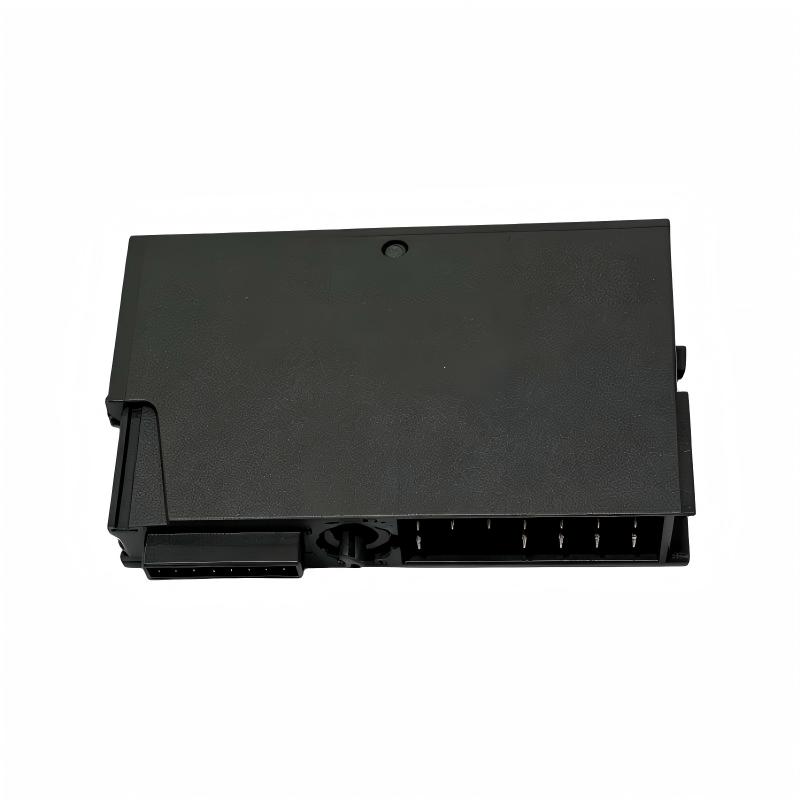
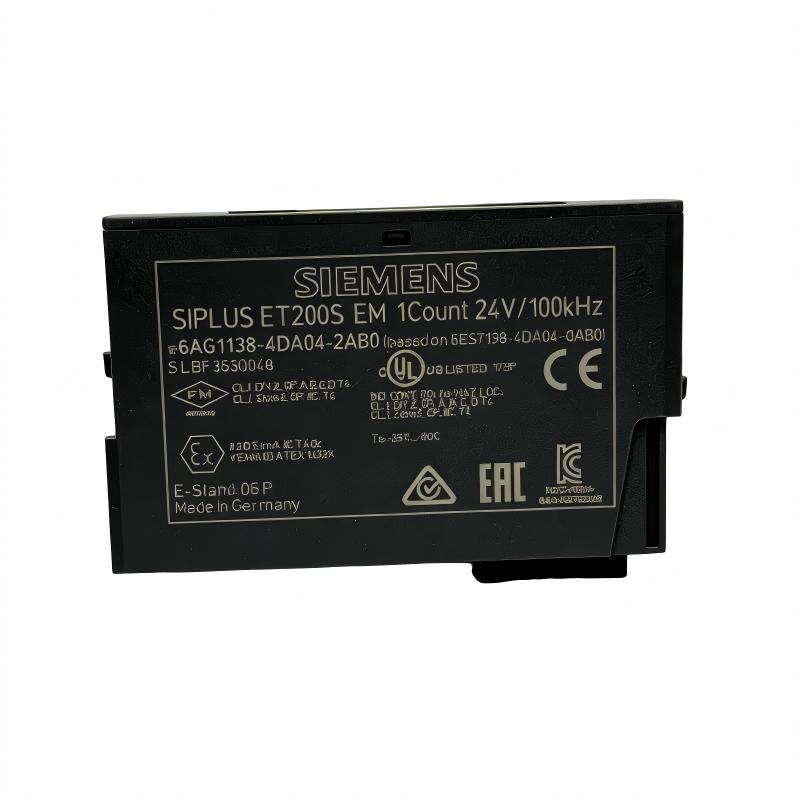
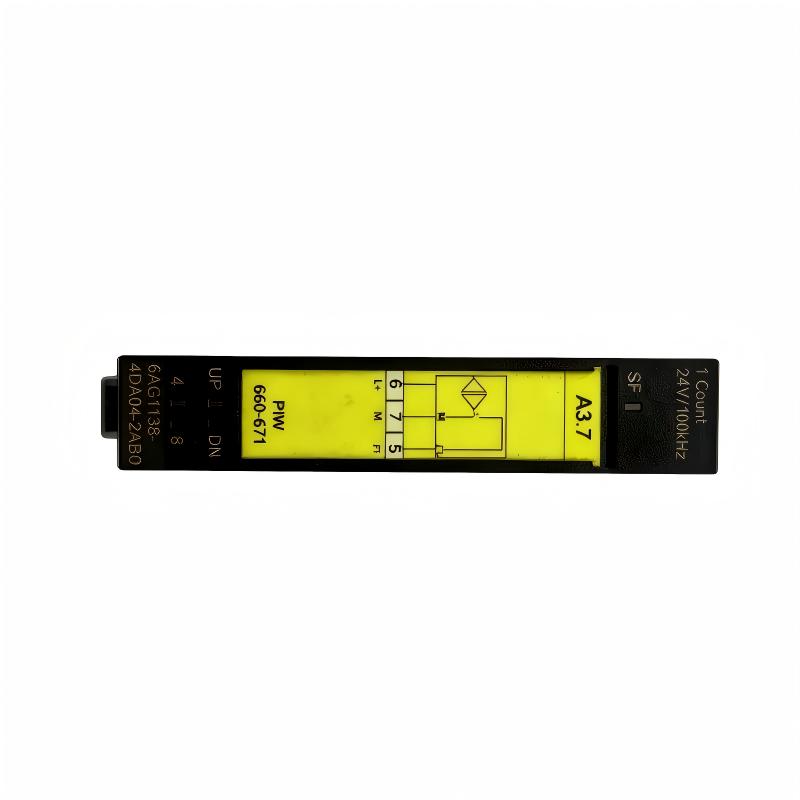
- Siemens
- 6AG1138-4DA04-2AB0
- SIPLUS ET 200S EM 1 Count Counter Module
- Germany
- 15 × 81 × 52 mm
- 0.04kg
- Xiamen, China
- New & In Stock
- T/T, PayPal, Western Union
- 1 Year
- 1-3 Working Days
- DHL, UPS, TNT, FedEx and EMS.
- 24-Hour Service
- COO
- 6
Our advantage

Global Logistics
We have a 10-year logistics and express cooperation agreement, so our products can be shipped to any place in the world.

Brand new and original
Our products are imported in bulk from the place of origin. Because of the cooperative relationship, our products are all original and 100% new.

24-hour service
We provide 7*24 hours service to our customers. We will be there whenever you need us.

Price advantage
All our products are priced very favorably because we have our own warehouse and supply.
| Company Information | |||
| [email protected] | |||
| Mobile | +8615980777398 | ||
| +8615980777398 | |||
| 15980777398 |
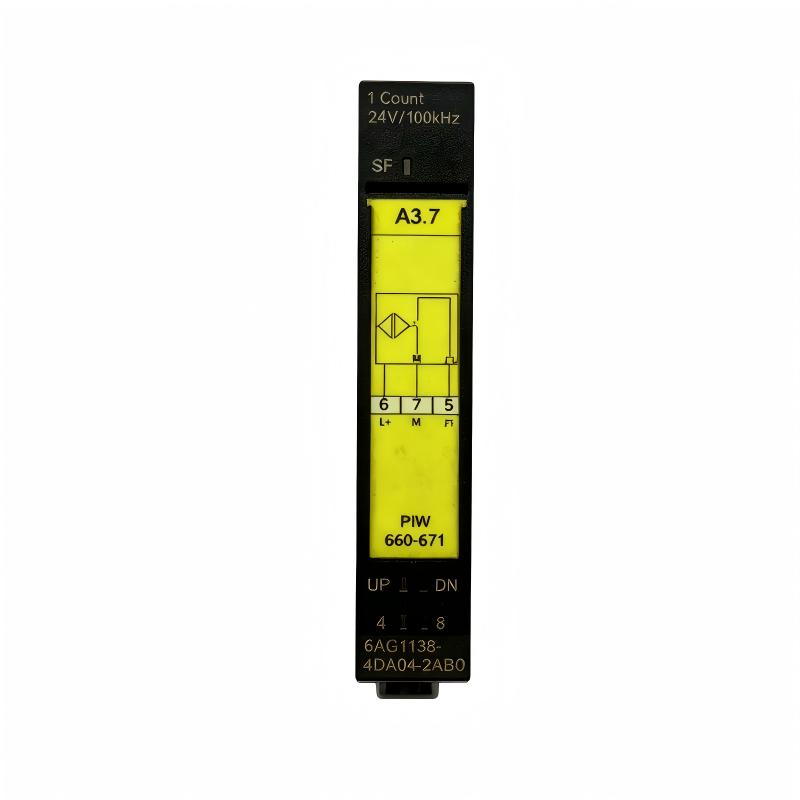
Siemens 6AG1138-4DA04-2AB0 — Product Overview, Technical Parameters, Applications, Advantages, and Related Models
1. Product Introduction
The Siemens 6AG1138-4DA04-2AB0 is a SIPLUS ET 200S EM 1COUNT 24V/100 kHz counter and measurement module designed for use in distributed industrial automation systems. It is based on the corresponding SIMATIC ET 200S electronic module and is intended for applications that need accurate pulse counting, frequency measurement, speed measurement, and time-period measurement.
The module is designed to process fast digital signals from industrial sensors and transmit the resulting information to a higher-level control system. Typical signal sources include incremental encoders, proximity sensors, pulse-generating devices, and other compatible 24 V signal sources.
The SIPLUS version is intended for a wider range of environmental conditions than the corresponding standard module. Its specified operating temperature range is −25°C to +60°C, and its construction includes protective coating intended to improve resistance to environmental stresses. This makes it useful in installations where temperature conditions or ambient exposure may be more demanding than those found in a conventional electrical cabinet.
The model is a compact functional module rather than a standalone PLC. It is installed within a compatible ET 200S station and operates as part of the wider automation system. It should therefore be evaluated together with the station’s interface module, terminal modules, wiring arrangement, controller, and configuration software.
2. Basic Product Information
| Parameter | Description |
|---|---|
| Brand | Siemens |
| Product model | 6AG1138-4DA04-2AB0 |
| Product family | SIPLUS |
| Automation platform | SIMATIC ET 200S |
| Product type | Electronic counter and measurement module |
| Module designation | EM 1COUNT 24V/100 kHz |
| Main function | High-speed pulse counting and measurement |
| Rated supply voltage | 24 V DC |
| Permissible supply voltage | 20.4–28.8 V DC |
| Maximum counting frequency | Up to 100 kHz |
| Counter resolution | 32-bit counter |
| Digital input | 1 |
| Digital output | 1 |
| Sensor supply | 24 V DC, maximum 500 mA |
| Typical power loss | Approximately 1 W |
| Operating temperature | −25°C to +60°C |
| Protective design | SIPLUS version with protective coating |
| Mounting arrangement | Compatible ET 200S station and rail-mounted assembly |
| Protection class | IP20 for the corresponding ET 200S module arrangement; confirm the assembled station’s specifications |
| Dimensions (W × H × D) | Approximately 15 × 81 × 52 mm |
| Weight (kg) | Approximately 0.047 kg |
| Typical application | Industrial pulse counting, frequency and speed measurement |
| Product status consideration | Legacy ET 200S family; verify current availability and compatibility before replacement or expansion |
The dimensions above refer to the module body. They do not represent the total space needed for wiring, terminal connections, adjacent modules, or maintenance access.
The weight is approximately 47 g. Packaging weight and shipping dimensions may be different from the dimensions and weight of the module itself.
3. Detailed Technical Parameters
3.1 Electrical and Power Parameters
| Parameter | Specification |
|---|---|
| Rated voltage | 24 V DC |
| Lower permissible voltage | 20.4 V DC |
| Upper permissible voltage | 28.8 V DC |
| Reverse-polarity protection | Yes |
| Maximum current from load voltage L+ without load | Approximately 42 mA |
| Maximum current from 3.3 V backplane bus | Approximately 10 mA |
| Sensor supply voltage | 24 V DC |
| Maximum sensor supply current | 500 mA |
| Typical power loss | Approximately 1 W |
| Dimensions (W × H × D) | 15 × 81 × 52 mm |
| Weight (kg) | Approximately 0.047 kg |
The module uses a 24 V DC industrial control supply. During installation, the supply voltage should remain within the specified range under normal operation, including during switching events and when connected sensors draw current.
The sensor supply can support compatible field devices, but the maximum permitted current must not be exceeded. The total load should include the current drawn by the connected sensor and any other device powered from the same supply point.
3.2 Counting and Measurement Functions
| Parameter | Specification |
|---|---|
| Number of counter inputs | 1 |
| Counter type | 32-bit |
| Maximum counting frequency | Up to 100 kHz |
| Frequency measurement range | Approximately 0.1 Hz to 100 kHz |
| Speed measurement range | Approximately 1 to 25,000 rpm |
| Period measurement | High-resolution period-duration measurement |
| Gate control | Supported |
| Synchronization | Supported |
| Latch function | Supported |
| Counting direction | Up/down counting functions, depending on configuration |
| Encoder compatibility | Compatible 24 V incremental encoders and pulse-generating sensors |
| Diagnostic indication | Status LEDs and fault indication |
| Dimensions (W × H × D) | 15 × 81 × 52 mm |
| Weight (kg) | Approximately 0.047 kg |
The module is intended for applications in which the PLC’s ordinary scan-based digital inputs may not provide the required pulse-processing performance. Its dedicated counting and measurement functions allow the automation system to process pulse signals at a higher rate than a typical general-purpose digital input.
Actual performance depends on the signal characteristics, wiring, selected operating mode, and the configuration of the complete ET 200S station.
3.3 Digital Input Parameters
| Parameter | Specification |
|---|---|
| Number of digital inputs | 1 |
| Nominal input voltage | 24 V DC |
| Signal level for logical 0 | Approximately −30 V to +5 V |
| Signal level for logical 1 | Approximately +11 V to +30 V |
| Maximum permissible quiescent current for logical 0 | Approximately 2 mA |
| Input type | IEC Type 2 characteristics |
| Main function | Pulse input and measurement signal acquisition |
| Supported functions | Counting, gate control, synchronization and latch functions |
| Dimensions (W × H × D) | 15 × 81 × 52 mm |
| Weight (kg) | Approximately 0.047 kg |
The input is intended for compatible industrial 24 V signals. Signal levels between the recognized logical states should be avoided because they may lead to unreliable signal interpretation.
For high-frequency applications, the sensor output type, switching speed, cable characteristics, grounding, shielding, and electrical noise level should be assessed before commissioning.
3.4 Digital Output Parameters
| Parameter | Specification |
|---|---|
| Number of digital outputs | 1 |
| Output type | Digital transistor output |
| Main use | Control or response output associated with configured module functions |
| Short-circuit protection | Supported according to the module specification |
| Maximum switching frequency with resistive load | Up to approximately 100 Hz |
| Maximum switching frequency with inductive load | Up to approximately 2 Hz |
| Maximum switching frequency for lamp load | Up to approximately 10 Hz |
| Dimensions (W × H × D) | 15 × 81 × 52 mm |
| Weight (kg) | Approximately 0.047 kg |
The digital output is not intended to replace a general-purpose high-current power output. Its use should follow the electrical ratings and the wiring instructions for the module.
Loads with substantial inrush current, inductive loads, or loads requiring electrical isolation may need an appropriate interface relay or additional protective circuitry.
3.5 Environmental and Installation Parameters
| Parameter | Specification |
|---|---|
| Product variant | SIPLUS |
| Operating temperature | −25°C to +60°C |
| Protective coating | Included in the SIPLUS variant |
| Mounting | Installation within a compatible ET 200S station |
| Enclosure protection | IP20 for the module arrangement |
| Intended environment | Industrial control cabinets and automation installations |
| Field wiring | Compatible 24 V sensors and associated control wiring |
| Dimensions (W × H × D) | 15 × 81 × 52 mm |
| Weight (kg) | Approximately 0.047 kg |
The protective coating and extended temperature range are important differences between this SIPLUS model and a conventional version of the same functional module. However, they do not mean that the module can be exposed directly to water, conductive dust, corrosive chemicals, or uncontrolled outdoor conditions.
The assembled installation still requires suitable cabinet protection, thermal management, grounding, cable routing, and environmental control.
4. Product Working Principle
The 6AG1138-4DA04-2AB0 receives pulse signals from a compatible sensor or encoder and processes them using its dedicated counting and measurement functions. The resulting values can then be used by the PLC program for monitoring, calculation, control, and production sequencing.
A typical operating sequence is as follows.
1. Signal generation: A sensor detects an object, rotating shaft, moving component, or other measurable event and generates a pulse signal.
2. Signal acquisition: The module receives the signal through its digital input.
3. Signal processing: The internal counter processes incoming pulses. Depending on the selected operating mode, the module can count pulses, measure frequency, determine speed, or measure the duration of a signal period.
4. Control-system communication: The measurement results are made available to the automation system through the ET 200S station.
5. Application logic: The PLC program uses the data to calculate production quantities, compare actual speed with a setpoint, identify abnormal conditions, or trigger a subsequent operation.
6. Output response: Where supported by the configured function, the module’s digital output can be used for a related control or response signal.
This arrangement is particularly useful when the control system must react to frequent sensor pulses without relying exclusively on the ordinary cyclic processing of standard digital inputs.
5. Product Applications
5.1 Production Quantity Counting
In automated production lines, the module can count pulse signals generated when products pass a sensor. The PLC can use these counts to determine production totals, monitor output against a target, and coordinate subsequent processes.
Examples include:
-
Counting products on conveyor belts.
-
Recording the number of parts produced by a machine.
-
Monitoring packaging and filling cycles.
-
Counting components supplied to an assembly station.
-
Tracking repeated machine operations.
For example, if a photoelectric sensor generates one pulse for each product, the module can count the pulses and make the resulting count available to the PLC. The PLC can then trigger a batch-complete signal when the configured quantity is reached.
The actual counting logic, reset conditions, and handling of missed or duplicated sensor signals must be defined in the PLC program.
5.2 Motor Speed Monitoring
The module can be used with a compatible pulse-generating speed sensor or incremental encoder to monitor rotating equipment.
Potential applications include:
-
Conveyor motor speed monitoring.
-
Rotating machinery speed measurement.
-
Fan and blower speed feedback.
-
Roller and winding equipment monitoring.
-
Production machinery running-speed checks.
When the sensor generates pulses proportional to shaft rotation, the module can measure the pulse frequency. The PLC can convert the measurement into revolutions per minute when the sensor’s pulse-per-revolution value is known.
For reliable results, the sensor resolution, maximum rotational speed, input signal frequency, and selected measurement mode must be considered together.
5.3 Frequency Measurement
The module can measure the frequency of compatible pulse signals over a broad range, making it useful where signal frequency corresponds to a physical process value.
Examples include:
-
Pulse-frequency monitoring from sensors.
-
Rotational speed feedback.
-
Monitoring periodic machine movements.
-
Detecting changes in the speed of a production process.
-
Evaluating pulse-generating devices during machine operation.
Frequency measurement is valuable when the PLC needs more information than a simple ON/OFF state. Instead of merely detecting that a sensor is active, the controller can evaluate how frequently the signal changes.
5.4 Time-Period Measurement
Period measurement determines the time between relevant signal transitions or recurring pulses. This is useful when the duration of a cycle is more meaningful than the total number of pulses.
Potential applications include:
-
Measuring the cycle time of repeated machine movements.
-
Monitoring the interval between sensor events.
-
Evaluating periodic mechanical processes.
-
Detecting changes in the timing of repetitive operations.
-
Comparing actual cycle duration against a configured target.
For example, a machine that normally produces one pulse every fixed interval can be monitored for abnormal timing. If the interval becomes longer or shorter than expected, the PLC program can issue a warning or adjust the process.
5.5 Conveyor and Material-Handling Systems
In conveyor applications, the module can support product counting and speed monitoring using suitable sensors.
Typical applications include:
-
Package counting.
-
Conveyor speed monitoring.
-
Material-feed verification.
-
Monitoring the rate of objects passing a station.
-
Coordinating product transfer between production stages.
The measured data can help a PLC coordinate the operation of conveyor sections and identify discrepancies between expected and actual material flow.
5.6 Packaging and Filling Machinery
Packaging equipment often depends on accurate counts, repeatable timing, and consistent movement. The module can provide pulse-based measurements for the control system.
Possible applications include:
-
Counting packages before carton sealing.
-
Monitoring the movement of packaging film.
-
Measuring repeated machine cycles.
-
Monitoring the rotation of rollers.
-
Tracking products through a packaging line.
The module does not itself provide a complete packaging control system. It supplies measurement functions that the PLC program can incorporate into the overall machine sequence.
5.7 Machine Condition and Process Monitoring
Pulse-frequency and period measurements can also be used to identify changes in machine operation.
For example, a change in pulse frequency may indicate that a conveyor has slowed down, while an unexpected absence of pulses may indicate a stopped shaft, a disconnected sensor, or a mechanical problem.
These interpretations depend on the sensor arrangement and application logic. The module is a measurement component, not a standalone predictive-maintenance or safety system.
6. Main Product Advantages
6.1 Dedicated High-Speed Counting
The module is designed for pulse processing up to 100 kHz. This makes it suitable for applications where a standard digital input may not be sufficient for the required counting rate.
Dedicated counting functionality reduces dependence on repeatedly checking the input state in the main PLC program.
6.2 Multiple Measurement Functions
The module supports more than basic pulse accumulation. Its counting, frequency measurement, speed measurement, period measurement, gate control, synchronization, and latch functions provide flexibility for different automation tasks.
This can help engineers use one functional module for several related measurement requirements, provided the selected operating modes and wiring meet the application’s needs.
6.3 Compact Installation
With a module-body width of approximately 15 mm, the unit can be integrated into a compatible ET 200S station with limited space requirements.
Its compact design is helpful in control cabinets where many input, output, and functional modules must be installed in a relatively small area.
6.4 Extended Temperature Range
The specified operating range of −25°C to +60°C gives the SIPLUS version additional flexibility in environments that may experience lower or higher temperatures than conventional indoor control cabinets.
This can be useful in industrial installations where temperature control is less consistent. The complete station must still comply with the temperature limitations of its other components.
6.5 Protective Coating
The SIPLUS version includes protective coating intended to improve resistance to environmental stresses. This is an advantage in installations where the ambient environment is more demanding than a standard, clean indoor cabinet.
The coating should not be interpreted as waterproofing or as permission to install the module without an appropriate enclosure.
6.6 Integration with an Existing Automation Platform
The module is designed for a compatible SIMATIC ET 200S distributed I/O arrangement. It can therefore form part of a larger automation architecture rather than requiring a separate standalone controller for its measurement task.
This is useful when a production machine already uses ET 200S modules and needs dedicated counting or measurement functionality.
6.7 Reduced Measurement Workload in the PLC Program
Dedicated hardware counting and measurement functions can simplify the PLC logic compared with constructing an equivalent solution from repeated software checks of a standard input.
The actual benefits depend on the PLC, configuration, program structure, and required response time.
6.8 Compact Weight and Size
At approximately 0.047 kg, the module is lightweight and occupies little space in the station. Its small size also makes it convenient for maintenance inventory and replacement planning.
6.9 Useful Diagnostic Indication
Status indicators can help technicians assess the operating condition of the module and its associated signals. Diagnostic indicators can make troubleshooting more efficient, although they do not eliminate the need to check wiring, sensor operation, configuration, and PLC diagnostics.
6.10 Suitability for Industrial Measurement Tasks
The combination of a 24 V interface, high-speed counting, and several measurement modes makes the module appropriate for pulse-based measurement tasks in industrial machinery.
Its main value is the combination of specialized measurement functionality and integration into a distributed automation station.
7. Recommended Related Models — Same Product Family or Similar Functions
The following five models are related to the ET 200S/SIPLUS functional-module category or are useful alternatives for similar automation tasks. The precise module function and electrical ratings must be checked against the intended application before ordering.
For legacy products, verify whether the exact SIPLUS version is still available and whether it is compatible with the existing station.
| Model | Product type / role | Main parameters | Dimensions (W × H × D) | Weight (kg) |
|---|---|---|---|---|
| 6ES7138-4DA04-0AB0 | Standard ET 200S 1COUNT module | 24 V DC; counting and measurement; up to 100 kHz; 32-bit counter | 15 × 81 × 52 mm | Approx. 0.040 |
| 6AG1138-4FA04-2AB0 | SIPLUS ET 200S functional electronic module | Related SIPLUS ET 200S module; verify the exact output function and ratings | Verify exact variant | Verify |
| 6AG1138-4FA05-2AB0 | SIPLUS ET 200S functional electronic module | Related ET 200S module; select according to the required output function and load | Verify exact variant | Verify |
| 6AG1138-4CA01-2AA0 | SIPLUS ET 200S module | Related distributed-I/O module; confirm the signal type and compatibility before selection | Verify exact variant | Verify |
| 6ES7138-4DF01-0AB0 | ET 200S functional module | Alternative functional-module option; exact functionality and operating limits depend on the selected configuration | Verify exact variant | Verify |
The first model, 6ES7138-4DA04-0AB0, is the closest functional comparison because it is the corresponding standard 1COUNT module. It shares the core counting and measurement concept, while the SIPLUS model adds the environmental design characteristics of that product variant.
The remaining models should be treated as related candidates rather than automatic drop-in replacements. Similar product-family membership does not guarantee identical functions, wiring, configuration parameters, or environmental ratings.
How to Choose Among These Related Models
– Choose 6AG1138-4DA04-2AB0 when the existing design requires the SIPLUS version of the 1COUNT 24 V/100 kHz module and its environmental specifications are appropriate.
– Consider 6ES7138-4DA04-0AB0 when the application requires the same basic counting and measurement functionality but does not require the SIPLUS environmental variant.
– Consider another functional module only after confirming its precise signal type, number of inputs and outputs, switching characteristics, and supported measurement functions.
– If the project is a new system rather than a repair of an existing ET 200S installation, compare the available ET 200SP or newer automation-platform options before committing to legacy hardware.
8. Five Widely Used Models from the Same Brand
The following table lists five representative automation models covering PLC control, distributed I/O, power supply, and operator-interface functions. They are not all direct substitutes for the 1COUNT module; they are relevant to the broader automation systems in which counting and measurement modules may be used.
Dimensions and weights can vary by hardware revision and supplied configuration. Where an exact figure is not confirmed here, it is marked for verification rather than estimated.
| Model | Product series / type | Main parameters | Dimensions (W × H × D) | Weight (kg) |
|---|---|---|---|---|
| 6ES7214-1AG40-0XB0 | SIMATIC S7-1200 PLC | CPU 1214C family; integrated digital I/O; compact machine control | Verify exact hardware revision | Verify |
| 6ES7511-1AK02-0AB0 | SIMATIC S7-1500 PLC | CPU 1511-1 PN family; programmable logic control; PROFINET communication | Verify exact hardware revision | Verify |
| 6ES7155-6AU01-0BN0 | SIMATIC ET 200SP interface module | Distributed I/O station interface; suitable for modular field-I/O architectures | Verify exact configuration | Verify |
| 6EP1333-2BA20 | SITOP power supply | 24 V DC industrial power supply; used to power compatible control equipment | Verify exact revision | Verify |
| 6AV2123-2GB03-0AX0 | SIMATIC HMI Basic Panel | Operator-interface panel; machine status display and operator input | Verify exact panel revision | Verify |
These models serve different purposes. A PLC executes the control program, a distributed-I/O interface connects field modules to the controller, a power supply provides the required DC supply, and an HMI provides a user interface. The 1COUNT module supplies specialized pulse measurement within a compatible ET 200S station.
The models in this table are examples of products within the wider automation portfolio, not a claim that they can all be connected directly to the specified ET 200S module without additional compatibility considerations.
9. Comparison of the Main Product and Its Alternatives
| Comparison item | 6AG1138-4DA04-2AB0 | 6ES7138-4DA04-0AB0 | Newer-platform alternative |
|---|---|---|---|
| Product family | SIPLUS ET 200S | SIMATIC ET 200S | Depends on the selected platform |
| Primary role | Counter and measurement | Counter and measurement | Select a compatible counter or technology module |
| Rated supply | 24 V DC | 24 V DC | Depends on the selected module |
| Maximum counting frequency | Up to 100 kHz | Up to 100 kHz | Verify the selected module |
| Counter resolution | 32-bit | 32-bit | Verify the selected module |
| Environmental variant | SIPLUS | Standard version | Depends on the selected variant |
| Temperature range | −25°C to +60°C | Verify standard-module limits for the application | Depends on the selected module |
| Module dimensions | 15 × 81 × 52 mm | 15 × 81 × 52 mm | Depends on the selected module |
| Weight (kg) | Approx. 0.047 | Approx. 0.040 | Depends on the selected module |
| Best suited to | Existing compatible ET 200S systems with SIPLUS requirements | Existing compatible ET 200S systems with standard environmental requirements | New designs or planned platform migration |
10. Installation and Selection Considerations
Before installing or replacing this module, the following points should be checked.
Station compatibility: Confirm that the existing ET 200S interface module, terminal arrangement, bus configuration, and configuration software support the selected module.
Signal compatibility: Verify that the sensor provides an appropriate 24 V pulse signal and that the signal frequency remains within the module’s supported range.
Electrical supply: Confirm that the 24 V DC supply remains within the permissible voltage range and that the sensor supply current does not exceed the permitted limit.
Wiring and shielding: Route signal wiring appropriately, keep it away from sources of electrical interference where practical, and apply the recommended grounding and shielding practices.
PLC configuration: Check the module’s operating mode, measurement settings, input configuration, and data interpretation in the PLC program.
Environmental conditions: Confirm that the installation temperature remains within the SIPLUS module’s specified range and that the enclosure protects the equipment from unsuitable exposure.
Maintenance and lifecycle: Because ET 200S is a legacy product family, verify current supply availability, spare-part arrangements, and the implications of any planned migration before purchasing multiple modules.
11. Final Recommendation
The Siemens 6AG1138-4DA04-2AB0 is best understood as a specialized high-speed counting and measurement module for a compatible ET 200S distributed-I/O station. Its principal capabilities are 24 V pulse acquisition, counting up to 100 kHz, frequency measurement, speed measurement, and period measurement. The SIPLUS variant is particularly relevant when the application requires its extended environmental specification.
For an existing installation, the first comparison should be the standard counterpart 6ES7138-4DA04-0AB0, followed by verification of the exact module revision and station compatibility. For a new automation design, it is worth comparing the cost and lifecycle implications of maintaining the ET 200S architecture against adopting a newer distributed-I/O platform.
The most important purchasing rule is to select the module according to its actual counting function, electrical interface, environmental requirements, and compatibility with the installed control system—not merely because another module shares the same product family.