

ProductPRODUCT
Featured products



Contact Us
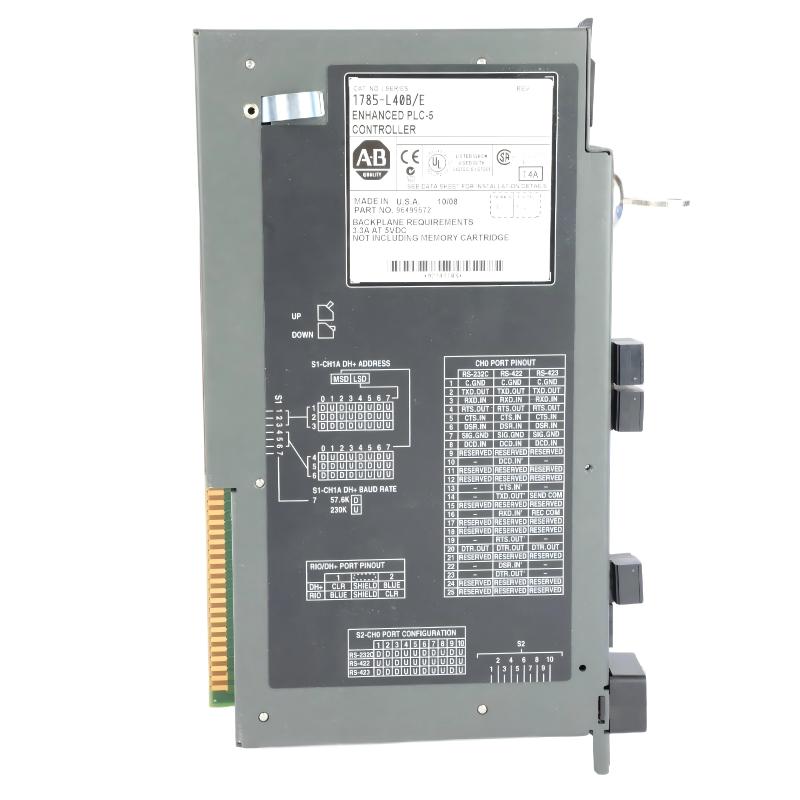
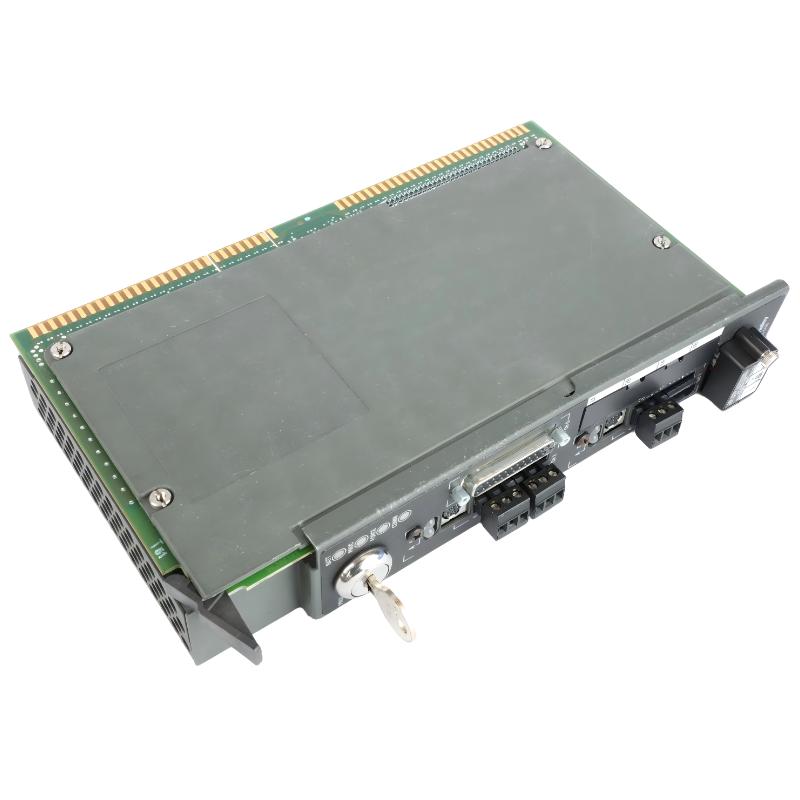
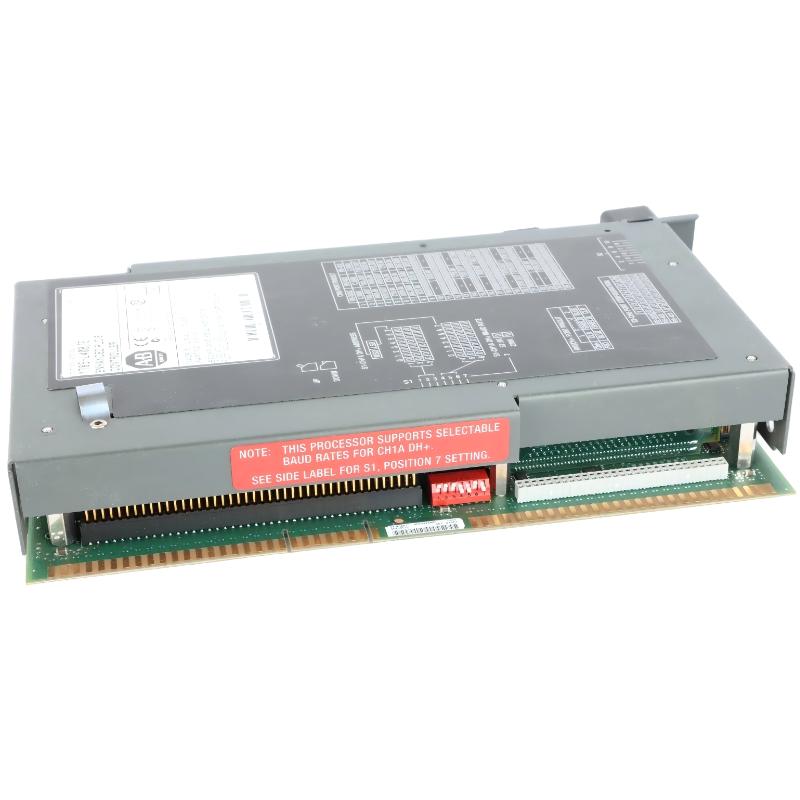
- Allen Bradley
- 1785-L40E
- PLC-5 EtherNet/IP PLC-5/40 Processor Module
- USA
- 50.2 × 16.9 × 14.5 cm
- 1.9kg
- Xiamen, China
- New & In Stock
- T/T, PayPal, Western Union
- 1 Year
- 1-3 Working Days
- DHL, UPS, TNT, FedEx and EMS.
- 24-Hour Service
- COO
- 5
Our advantage

Global Logistics
We have a 10-year logistics and express cooperation agreement, so our products can be shipped to any place in the world.

Brand new and original
Our products are imported in bulk from the place of origin. Because of the cooperative relationship, our products are all original and 100% new.

24-hour service
We provide 7*24 hours service to our customers. We will be there whenever you need us.

Price advantage
All our products are priced very favorably because we have our own warehouse and supply.
| Company Information | |||
| [email protected] | |||
| Mobile | +8615980777398 | ||
| +8615980777398 | |||
| 15980777398 |
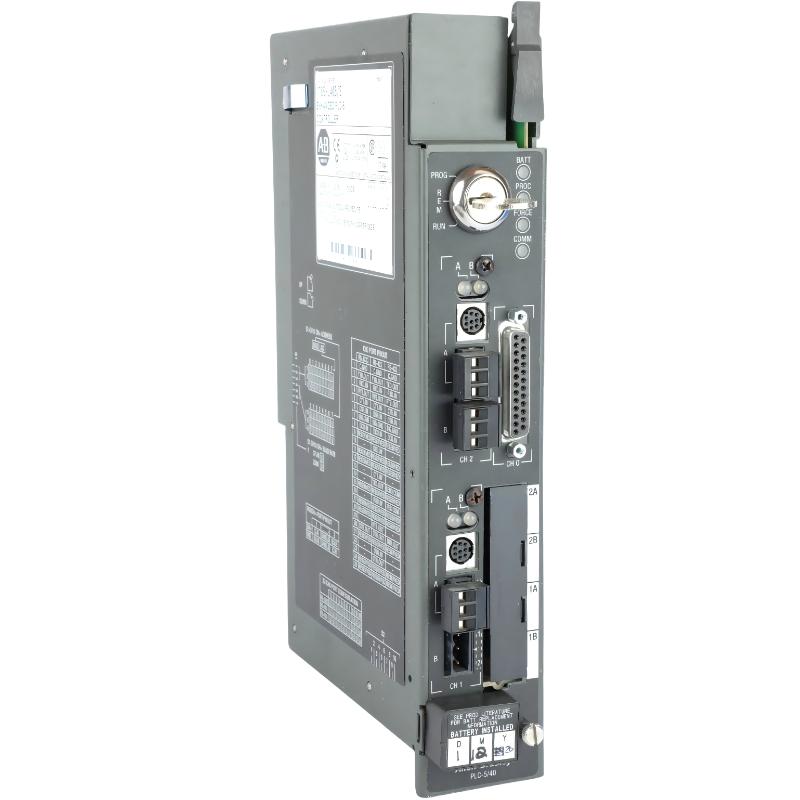
Allen-Bradley 1785-L40E PLC Processor
1. Product Overview
The Allen-Bradley 1785-L40E is associated with the PLC-5 family of programmable logic controllers (PLCs), a legacy industrial control platform used in manufacturing, process automation, material handling, and machine control.
The PLC-5 architecture was designed to execute control logic, monitor field inputs, operate outputs, and coordinate equipment through industrial communication networks. A processor in this family serves as the central control unit: it reads input data, executes the user program, updates outputs, and manages communication with compatible devices.
Important model identification note: The catalog number 1785-L40E should be checked against the nameplate before procurement or replacement. PLC-5 processor catalog numbers are similar, and the exact suffix can affect communication capabilities and compatibility. Do not assume that specifications for a related model such as 1785-L40B or another PLC-5 processor apply directly to the 1785-L40E.
The PLC-5 platform is a legacy product family. When maintaining an existing installation, the practical priorities are to confirm the exact processor, identify the installed communication interfaces, check the program and memory requirements, and ensure that any replacement is compatible with the existing chassis, I/O architecture, and communication network.
2. Detailed Technical Specifications
The 1785-L40E is a PLC-5/40E Ethernet processor designed for substantial I/O capacity and communication with compatible PLC-5 equipment. Its specifications make it suitable for maintaining established control systems that use 1771 I/O chassis and legacy industrial networks.
| Parameter | Specification |
|---|---|
| Brand | Allen-Bradley |
| Model | 1785-L40E |
| Product series | PLC-5 |
| Processor type | PLC-5/40E Ethernet programmable controller |
| Controller architecture | Rack-based, single-slot processor |
| User memory | 48K words |
| Maximum I/O capacity | 2,048 points in any mix, or up to 2,048 inputs plus 2,048 outputs in complementary configuration |
| Maximum I/O racks | 16 rack addresses, 0–17 |
| Maximum I/O chassis | 61 total, with up to 60 universal remote chassis under the applicable system configuration |
| Ethernet communication | 1 Ethernet channel |
| DH+ / Remote I/O ports | 2 channels, configurable for compatible adapter or scanner operation |
| Serial communication | 1 configurable serial port |
| Serial interfaces | RS-232-C, RS-423-A, and RS-422-A-compatible operation, subject to configuration |
| Typical communication applications | Ethernet messaging, DH+ communication, and Remote I/O |
| Backplane current load | Approximately 3.6 A at 5 V DC |
| Maximum power dissipation | Approximately 19 W |
| Operating temperature | 0–60°C |
| Storage temperature | −40–85°C |
| Relative humidity | Typically 5–95%, non-condensing; confirm the applicable hardware specification |
| Mounting | Compatible 1771 I/O chassis, in the processor position |
| Dimensions (W × H × D) | Exact mechanical dimensions should be confirmed from the hardware drawing; allow approximately 3.8 × 30.5 × 27.9 cm for preliminary planning only |
| Weight | Approximately 1.39 kg |
| Memory backup | Battery-backed RAM; backup and retention arrangements depend on the installed hardware and configuration |
| Programming environment | PLC-5 programming software compatible with the processor revision |
| Product status | Legacy product family; verify availability and support arrangements for the exact revision |
The I/O capacity and communication functions are important when considering a replacement. A processor with a similar physical appearance may have a different memory capacity, port arrangement, or I/O limit.
The dimensions above are preliminary estimates rather than verified mounting dimensions. Confirm the exact series and mechanical drawing before designing a panel, calculating clearances, or arranging a replacement.
3. Product Introduction
The Allen-Bradley 1785-L40E is an Ethernet-enabled PLC-5/40E processor intended for industrial automation systems that require reliable control logic execution, distributed I/O handling, and communication with other automation devices.
As the central processing component of a PLC-5 system, it executes the user program, monitors the status of connected inputs, processes internal data, and updates outputs according to the control logic. It can coordinate multiple machines or process stages through the supported communication interfaces.
One of its key characteristics is its combination of Ethernet communication with two DH+/Remote I/O channels and a configurable serial port. This arrangement makes the processor useful in legacy facilities where control equipment may use a mixture of Ethernet, Data Highway Plus, and Remote I/O networks.
The 1785-L40E supports up to 48K words of user memory and a substantial I/O configuration. It is therefore suited to larger machine-control applications than entry-level PLC-5 processors, particularly where many field signals and multiple remote I/O chassis must be managed.
The processor is installed in a compatible 1771 chassis and operates as part of a complete PLC system. The chassis, power supply, I/O modules, communication wiring, and programming software must all be compatible with the installed processor revision.
4. Main Product Functions
4.1 Control logic execution
The processor executes the programmed control logic used to operate industrial equipment. Typical tasks include machine sequencing, interlocking, timing, counting, alarm handling, and coordination between multiple operating stations.
For example, a packaging machine may use the processor to coordinate product feeding, filling, sealing, labeling, and discharge. The processor reads field conditions and determines when each operation should start or stop.
4.2 Digital and analog I/O management
The processor can manage a large number of input and output points through the compatible PLC-5 I/O architecture.
Digital inputs can represent sensor states, switch positions, and equipment-ready signals. Digital outputs can control suitable relays, solenoids, contactors, and other field devices. Compatible analog I/O can be used for measurements and variable control signals.
The processor’s maximum I/O capacity does not mean every application can use the maximum number of points in every configuration. Actual capacity depends on rack addressing, chassis arrangement, complementary I/O configuration, and other system limitations.
4.3 Ethernet communication
The integrated Ethernet channel allows the processor to communicate with compatible devices on an Ethernet network.
Depending on the system configuration, Ethernet can be used for controller messaging, data exchange, supervisory monitoring, and integration with other compatible control equipment.
The Ethernet interface should not automatically be treated as equivalent to the capabilities of newer EtherNet/IP controllers. Legacy network behavior, communication performance, and software compatibility must be evaluated for the actual application.
4.4 DH+ and Remote I/O communication
The two DH+/Remote I/O channels are important features of the PLC-5/40E architecture.
They allow the processor to participate in compatible legacy networks, communicate with other automation devices, and manage distributed I/O arrangements. Depending on the selected configuration, the channels may operate as scanners or adapters.
This is particularly useful in established factories where replacing the entire control network at once would be expensive or disruptive.
4.5 Serial communication
The processor includes a configurable serial communication port supporting compatible RS-232-C, RS-423-A, and RS-422-A interfaces.
This can support communication with compatible serial equipment and maintenance interfaces. The exact use depends on the port configuration, cable arrangement, and the protocol supported by the connected device.
4.6 Program and data storage
The processor has 48K words of user memory for the control program and associated data.
Memory planning is important when maintaining an existing system. The program, data tables, communication configuration, and processor revision should be documented before a replacement or migration is attempted.
5. Product Applications
5.1 Factory automation
The 1785-L40E can be used in factory automation systems that require coordinated control of production machinery, sensors, actuators, and distributed I/O.
A typical installation may include multiple processing stations, conveyors, pneumatic equipment, and operator controls. The processor reads input states, executes programmed sequences, and updates outputs to coordinate the equipment.
Its relatively large I/O capacity can be useful when a machine has many field devices and an established PLC-5 architecture.
5.2 Packaging and production lines
Packaging lines often involve several stages that must operate in a defined sequence. The processor can manage equipment status, timing, interlocks, product detection, and coordination between individual stations.
Ethernet and the DH+/Remote I/O interfaces can help connect the processor with compatible operator systems and distributed control equipment, depending on the network design.
5.3 Material handling and conveyor systems
Material-handling installations may include conveyors, transfer stations, sorting equipment, lifts, and accumulation zones.
The processor can collect status signals from these devices and use the programmed logic to coordinate their operation. Distributed I/O can reduce the need to route every field signal directly back to one central cabinet.
5.4 Automotive and assembly equipment
Assembly systems frequently use multiple stations with sensors, fixtures, actuators, and interlocks.
The 1785-L40E can execute the sequence logic and coordinate the equipment through compatible I/O and communication networks. Its suitability depends on the number of required points, network architecture, processing requirements, and installed program.
5.5 Process and utility control
Some industrial process and utility installations continue to use PLC-5 equipment to control pumps, valves, motors, and related equipment.
The processor can execute sequence logic and manage compatible analog and digital I/O. It can also communicate with other compatible devices over supported networks.
The actual measurement and control functions depend on the installed I/O modules, field instruments, and control program.
5.6 Legacy control-system maintenance
One of the most relevant applications for the 1785-L40E is the maintenance of existing PLC-5 systems.
A replacement processor may be needed when a processor fails, when a spare is required, or when a facility needs to restore an established machine to service.
Before replacing the unit, confirm the complete catalog number, hardware series, firmware, program backup, memory retention requirements, and network configuration. A physically similar processor is not necessarily a compatible replacement.
6. Product Advantages
6.1 Substantial memory capacity
The processor provides 48K words of user memory. This is useful for established applications with extensive ladder logic, data tables, timers, counters, interlocks, and equipment sequences.
Memory capacity alone does not determine whether a processor can run a particular program. The existing program structure, instructions, firmware, and data requirements must also be compatible.
6.2 High I/O capacity
The processor supports up to 2,048 I/O points in a standard mixed configuration, or a complementary configuration of up to 2,048 inputs and 2,048 outputs.
This capacity can accommodate machines and production systems with many field signals. The actual achievable arrangement depends on the I/O chassis layout and rack-addressing configuration.
6.3 Multiple communication interfaces
The combination of Ethernet, two DH+/Remote I/O channels, and a serial port allows the processor to support different communication requirements within a legacy automation system.
This can be especially useful when a facility contains several generations of equipment and cannot migrate all of its communications infrastructure at the same time.
6.4 Distributed I/O support
The Remote I/O capabilities allow the processor to communicate with compatible remote chassis.
This can reduce the amount of individual field wiring that must return to a central control cabinet and help organize large installations into manageable sections.
6.5 Suitable for established PLC-5 installations
The processor is particularly relevant where the existing application, spare parts, documentation, and maintenance procedures are already based on PLC-5 technology.
Keeping the established platform in service may avoid the immediate need to redesign the entire control system. However, the condition of the hardware, spare-part availability, and operational risks should be assessed as part of the maintenance strategy.
6.6 Industrial control functionality
The PLC-5 architecture supports conventional control tasks such as sequencing, interlocking, timing, counting, and equipment coordination.
These functions make the processor suitable for many long-established machine and process applications, provided the existing program and connected hardware remain compatible.
7. Brand and Product Series
| Item | Description |
|---|---|
| Brand | Allen-Bradley |
| Product family | PLC-5 |
| Model | 1785-L40E |
| Processor designation | PLC-5/40E |
| Product type | Ethernet-enabled programmable logic controller |
| User memory | 48K words |
| Maximum I/O | 2,048 points in a mixed configuration, or complementary input/output capacity as specified |
| Ethernet ports | 1 |
| DH+/Remote I/O channels | 2 |
| Serial ports | 1 configurable port |
| Chassis platform | Compatible 1771 I/O chassis |
| Main purpose | Industrial control logic execution and I/O coordination |
| Typical applications | Machine automation, production lines, material handling, and legacy process control |
The PLC-5 family is a legacy programmable controller platform. Its architecture differs from newer modular control systems, so compatibility should be assessed using the exact processor and chassis configuration rather than the brand name alone.
The 1785-L40E is the processor; it is not an I/O module, communication adapter, or power supply. It requires the appropriate supporting hardware to form a functioning control system.
8. Five Related Models
The following models are related to the PLC-5 family or share similar industrial control functions. Some are close alternatives within the PLC-5 family, while others have different memory, I/O, or communication capabilities.
| Model | Product type | Main parameters | Dimensions (W × H × D, approx.) | Weight (approx.) |
|---|---|---|---|---|
| 1785-L20E | PLC-5/20E processor | 16K words of memory; up to 512 I/O points in a mixed configuration; Ethernet, DH+, Remote I/O, and serial communication | Approx. 3.8 × 30.5 × 27.9 cm | 1.43 kg |
| 1785-L80E | PLC-5/80E processor | 100K words of memory; up to 3,072 I/O points in a mixed configuration; Ethernet, DH+/Remote I/O, and serial communication | Approx. 3.8 × 30.5 × 27.9 cm | 1.38 kg |
| 1785-L40B | PLC-5/40 processor | 48K words of memory; up to 2,048 I/O points in a mixed configuration; DH+/Remote I/O and serial communication; no integrated Ethernet port in the base model | Approx. 3.8 × 30.5 × 27.9 cm | Approx. 1.4 kg |
| 1785-L40L | PLC-5/40L processor | 48K words of memory; supports compatible PLC-5 control and extended-local I/O configurations; verify exact channel capabilities | Approx. 3.8 × 30.5 × 27.9 cm | Approx. 1.4 kg |
| 1785-L46B | PLC-5/46 processor | PLC-5 family processor with 48K-word memory class and high I/O capacity; communication and chassis configuration differ from the L40E | Approx. 3.8 × 30.5 × 27.9 cm | Approx. 1.4 kg |
Dimensions are preliminary estimates for comparison, not confirmed mechanical specifications for each catalog number. Weight figures for some related models are approximate. Confirm the exact hardware series and mechanical drawing before purchase or replacement.
Model selection guidance
– 1785-L20E: Consider for a smaller Ethernet-enabled PLC-5 application with lower memory and I/O requirements. It is not a direct substitute if the existing program exceeds its capacity.
– 1785-L80E: Consider when the application needs more memory or I/O capacity than the L40E can support. A change to this processor requires careful checking of program compatibility and system configuration.
– 1785-L40B: A related processor with a similar memory and I/O class, but it does not provide the same integrated Ethernet configuration as the L40E. Network requirements must be reviewed before selecting it.
– 1785-L40L: Relevant when maintaining a PLC-5 installation that uses the corresponding extended-local I/O architecture. It should not be selected solely because its model number is similar.
– 1785-L46B: Another PLC-5-family option for certain established control architectures. Check its communication interfaces, program compatibility, and rack configuration before considering a replacement.
9. Five Popular Models from the Same Brand
The following models cover common functions in industrial automation systems. They belong to different product families and should be considered complementary products or modernization options rather than direct replacements for the 1785-L40E.
| Model | Product type | Main parameters | Dimensions (W × H × D, approx.) | Weight (approx.) |
|---|---|---|---|---|
| 1756-L83E | ControlLogix controller | Controller for modular control systems; embedded Ethernet connectivity; memory and firmware depend on the exact revision | Approx. 3.5 × 14.5 × 11.2 cm | Approx. 0.3–0.6 kg |
| 1756-EN2T | EtherNet/IP communication module | Copper Ethernet interface; supports communication between compatible ControlLogix systems and networked devices | Approx. 3.5 × 14.5 × 11.2 cm | Approx. 0.3–0.5 kg |
| 1756-IB16 | Digital input module | 16-point DC digital input; collects ON/OFF signals from compatible field devices | Approx. 3.5 × 14.5 × 11.2 cm | Approx. 0.3–0.5 kg |
| 1756-OB16E | Digital output module | 16-point electronic DC digital output; controls compatible field loads within specified ratings | Approx. 3.5 × 14.5 × 11.2 cm | Approx. 0.3–0.5 kg |
| 1756-A13 | ControlLogix chassis | 13-slot chassis for compatible ControlLogix controllers and I/O modules; backplane load must remain within the system rating | Approx. 50.2 × 16.9 × 14.5 cm | Approx. 1.9 kg |
Dimensions and weights for the ControlLogix products are approximate planning values. Verify the exact model, revision, and mechanical specification before preparing a bill of materials or installation drawing.
How these models fit into an automation system
1756-L83E controller: Executes the control program in a newer ControlLogix architecture. It may be considered as part of a modernization project, but PLC-5 programs and hardware are not automatically interchangeable with ControlLogix systems.
1756-EN2T communication module: Provides Ethernet communication for compatible ControlLogix installations. Its role differs from the integrated Ethernet channel in the PLC-5/40E.
1756-IB16 digital input module: Collects discrete field signals such as sensor states, push-button signals, and equipment-ready contacts.
1756-OB16E digital output module: Sends discrete control signals to compatible field devices, subject to the module’s electrical ratings and load requirements.
1756-A13 chassis: Provides the mounting and backplane infrastructure for compatible ControlLogix modules. It is not a mechanical replacement for the 1771 chassis used by the PLC-5/40E.
These products can help illustrate a possible modernization architecture, but moving from PLC-5 to ControlLogix requires a system-level engineering review, including program conversion, I/O mapping, communications, wiring, and commissioning.
10. Installation and Maintenance Considerations
10.1 Verify the processor series
The complete catalog number and series letter should be checked before purchasing a replacement. Series revisions may have differences in functionality, firmware behavior, or compatibility.
A processor labeled 1785-L40E should not be assumed to be identical to a similarly numbered PLC-5 model with a different suffix.
10.2 Back up the program
Before removing an existing processor, preserve the user program and relevant configuration data wherever possible.
Document the program revision, data tables, communication settings, rack layout, and any special instructions. Confirm that the backup can be restored using the available programming environment.
10.3 Confirm the chassis and power arrangement
The processor is designed for a compatible 1771 chassis. Confirm the correct processor slot, chassis configuration, power supply, and installed I/O modules before replacement.
Do not attempt to install it in a ControlLogix chassis simply because the two product families use modular hardware.
10.4 Check communication settings
Review Ethernet addressing, DH+ network settings, Remote I/O configuration, serial port configuration, and any messaging relationships.
A processor may power up successfully but fail to communicate with the rest of the installation if these settings are not restored correctly.
10.5 Review obsolescence and spare-parts strategy
Because PLC-5 is a legacy family, maintenance planning should account for hardware condition, replacement availability, repair options, and the operational consequences of a processor failure.
For critical machinery, it may be appropriate to maintain a tested spare or develop a phased migration plan. The choice depends on downtime tolerance, system complexity, and the availability of engineering support.
10.6 Follow electrical safety procedures
Before removing or installing a processor, follow the plant’s isolation and lockout procedures. Confirm that the system is in a safe state and that connected equipment cannot move unexpectedly.
A replacement should be tested using the appropriate commissioning process before the machine is returned to normal operation.
11. Summary
The Allen-Bradley 1785-L40E is an Ethernet-enabled PLC-5/40E processor designed for legacy industrial control systems that require substantial memory, high I/O capacity, and multiple communication interfaces.
Its main characteristics include 48K words of user memory, support for up to 2,048 I/O points in a mixed configuration, one Ethernet channel, two DH+/Remote I/O channels, and one configurable serial port. These features make it relevant to established manufacturing systems, material handling, packaging machinery, and process-control installations built around the PLC-5 architecture.
The main advantages are its substantial I/O capacity, combination of communication interfaces, support for distributed I/O, and suitability for maintaining existing PLC-5 applications.
The related PLC-5 models listed above can help when comparing memory capacity, I/O requirements, and network arrangements. The newer ControlLogix models are more relevant to a potential modernization project and should not be treated as direct hardware replacements.
Before ordering or installing a 1785-L40E, confirm the complete catalog number, series revision, program compatibility, communication configuration, chassis requirements, physical dimensions, and weight. These checks are essential for avoiding an incorrect replacement and minimizing disruption to an established control system.