

ProductPRODUCT
Featured products



Contact Us
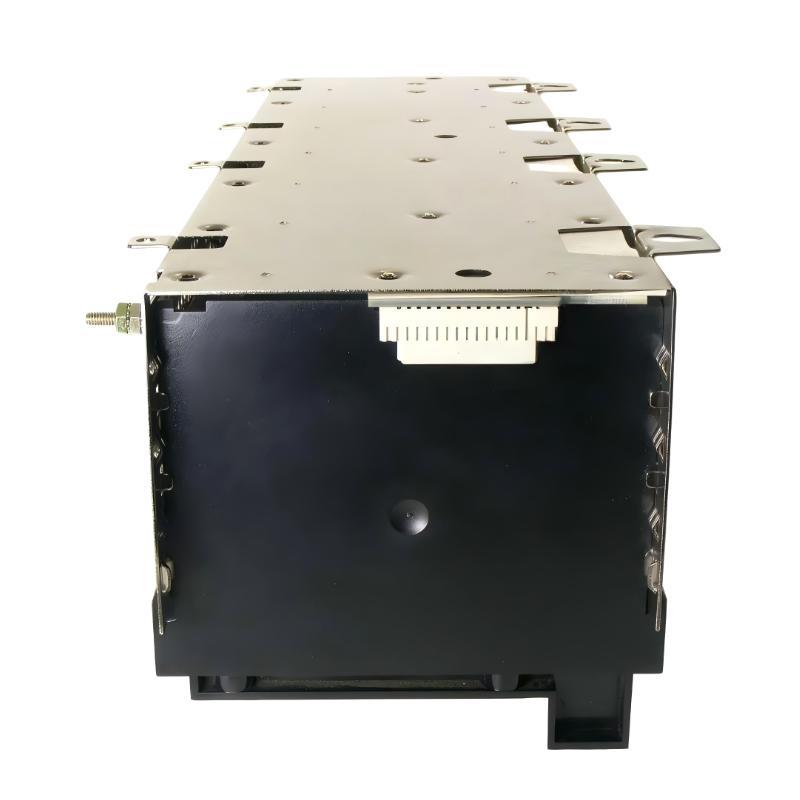
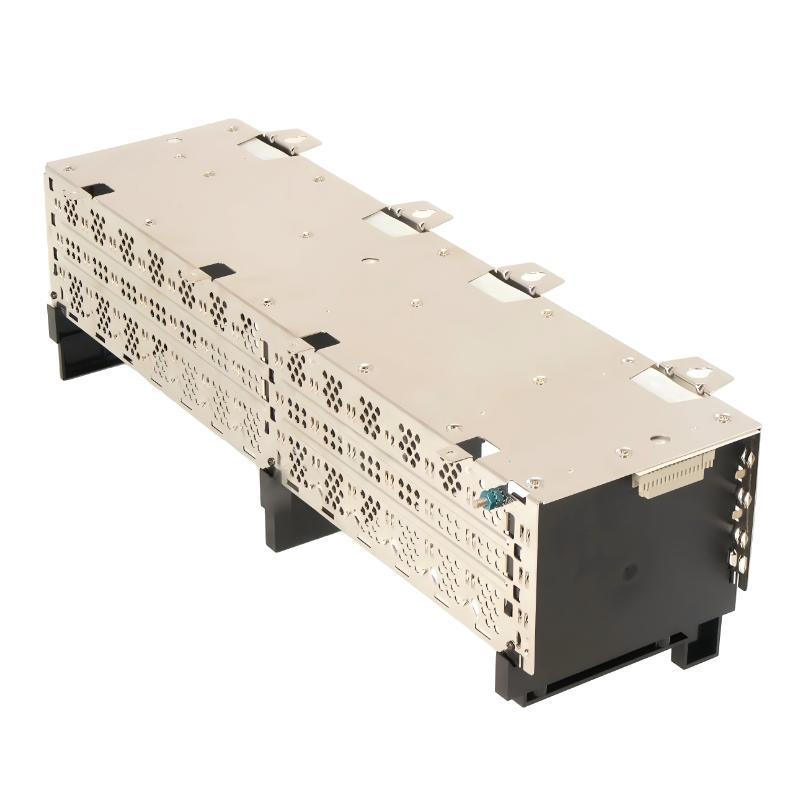
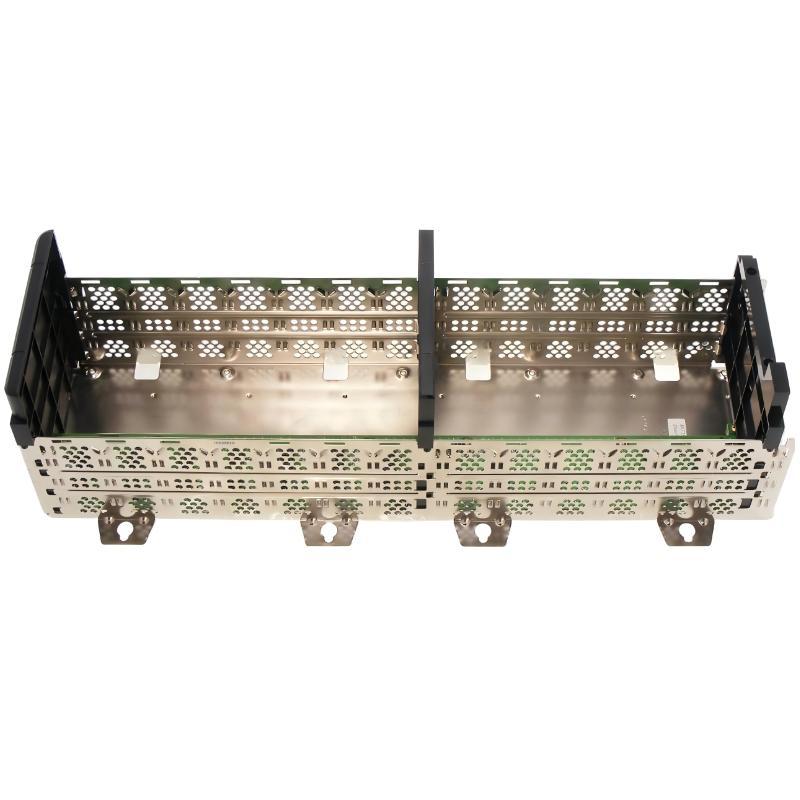
- Allen Bradley
- 1756-A13K
- ControlLogix 13 Slots Chassis
- USA
- 60.9 × 76.2 × 20.3 cm
- 1.9kg
- Xiamen, China
- New & In Stock
- T/T, PayPal, Western Union
- 1 Year
- 1-3 Working Days
- DHL, UPS, TNT, FedEx and EMS.
- 24-Hour Service
- COO
- 5
Our advantage

Global Logistics
We have a 10-year logistics and express cooperation agreement, so our products can be shipped to any place in the world.

Brand new and original
Our products are imported in bulk from the place of origin. Because of the cooperative relationship, our products are all original and 100% new.

24-hour service
We provide 7*24 hours service to our customers. We will be there whenever you need us.

Price advantage
All our products are priced very favorably because we have our own warehouse and supply.
| Company Information | |||
| [email protected] | |||
| Mobile | +8615980777398 | ||
| +8615980777398 | |||
| 15980777398 |
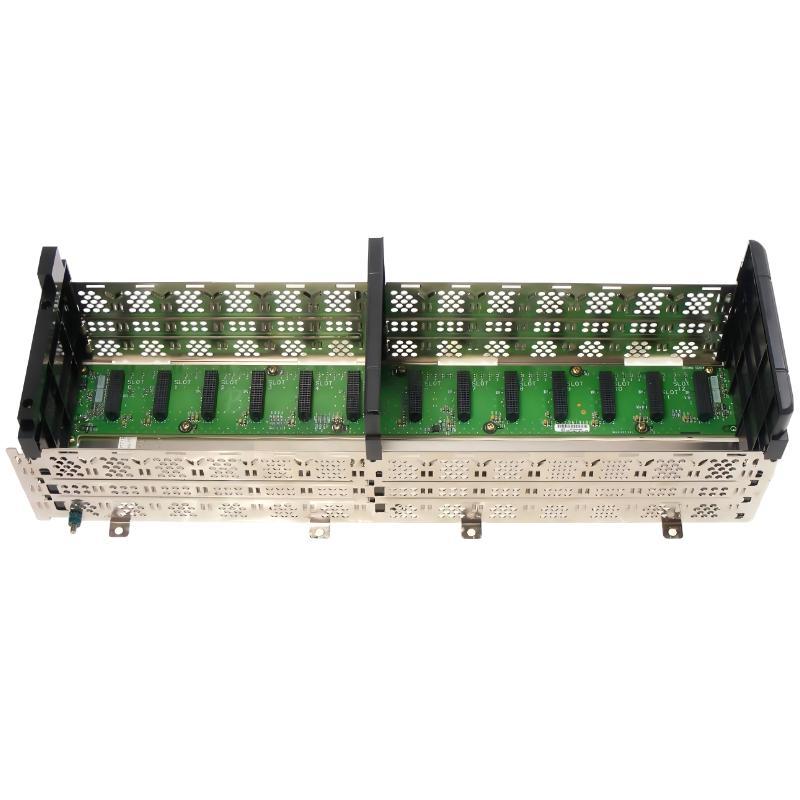
Allen-Bradley 1756-A13K ControlLogix Chassis: Technical Specifications, Product Description, Applications, Advantages, and Recommended Models
1. Product Overview
The Allen-Bradley 1756-A13K is a 13-slot chassis in the ControlLogix industrial automation product family. It provides the physical mounting structure and internal backplane connections required by compatible controllers, communication modules, digital I/O modules, analog I/O modules, and other control-system components.
The chassis is designed for modular industrial control applications in which several different functions need to be integrated into one control cabinet. Rather than placing all control functions in a single device, a ControlLogix system uses separate modules that can be selected according to the requirements of the machine or process.
The 1756-A13K is the conformally coated version of the 13-slot chassis configuration. Conformal coating provides additional protection against certain environmental contaminants, making this version worth considering for industrial installations where the specified environmental conditions justify the coated design.
The chassis itself does not execute control programs. Its main responsibilities are to support the installed modules, provide the backplane connections between them, and form a structured physical foundation for the overall control system.
2. Brand and Product Series
| Parameter | Specification |
|---|---|
| Model | 1756-A13K |
| Brand | Allen-Bradley |
| Product family | ControlLogix |
| Product series | 1756 ControlLogix chassis series |
| Product category | Modular industrial automation chassis |
| Chassis configuration | 13-slot chassis |
| Coating configuration | Conformally coated |
| Main function | Physical mounting and electrical backplane interconnection |
| System architecture | Modular programmable automation control |
| Typical installation | Industrial control cabinet |
| Compatible equipment | Compatible ControlLogix controllers, communication modules, and I/O modules |
| Controller functionality | Provided by an installed compatible controller, not by the chassis itself |
| Power distribution | Through the chassis backplane and compatible power supply |
| Dimensions (W × H × D) | Approximately 58.8 × 16.9 × 14.5 cm |
| Weight (kg) | Approximately 1.90 kg; verify the exact hardware revision |
| Environmental suitability | Determined by the specified chassis and installation requirements |
| Replacement considerations | Slot count, coating, dimensions, mounting, and system compatibility |
The 13-slot configuration provides more module capacity than smaller chassis models while requiring less physical space than a 17-slot version.
This makes the 1756-A13K a potential choice for control systems that need several communication interfaces and I/O modules but do not require the maximum capacity of the larger chassis.
3. Detailed Technical Specifications
The 1756-A13K is a conformally coated 13-slot ControlLogix chassis. Its principal function is to provide a common backplane and mounting structure for compatible modules.
The chassis supports modular system construction, but the actual capabilities of a completed control system depend on the installed controller, power supply, communication modules, and I/O modules.
3.1 General Parameters
| Parameter | Specification |
|---|---|
| Model | 1756-A13K |
| Brand | Allen-Bradley |
| Series | ControlLogix 1756 |
| Chassis type | Conformally coated modular chassis |
| Number of slots | 13 |
| Mounting method | Horizontal panel mounting |
| Backplane function | Internal communication and power distribution |
| Maximum chassis power dissipation | 5.4 W |
| Backplane current at 3.3 V DC | 4 A chassis maximum; 4 A per slot maximum |
| Backplane current at 5.1 V DC | 15 A chassis maximum; 6 A per slot maximum |
| Backplane current at 24 V DC | 2.8 A chassis maximum; 2.8 A per slot maximum |
| Backplane current at 1.2 V DC | No separate rating listed for this chassis configuration |
| Power supply | Compatible ControlLogix chassis power supply required |
| Isolation voltage | Determined by the installed power supply and modules |
| Operating temperature | 0°C to +60°C |
| Storage temperature | −40°C to +85°C |
| Relative humidity | 5% to 95%, non-condensing |
| Enclosure type | Open-style chassis; suitable enclosure required |
| Chassis dimensions (W × H × D) | Approximately 50.2 × 16.9 × 14.5 cm |
| Approximate weight (kg) | 1.90 kg |
| Minimum cabinet size (H × W × D) | Approximately 60.9 × 76.2 × 20.3 cm; confirm clearance requirements for the installation |
| Product construction | Industrial modular chassis with conformal coating |
| Primary application | ControlLogix-based industrial automation |
| Expansion capability | Depends on available slots, backplane power, and system architecture |
The chassis weight of approximately 1.90 kg refers to the chassis without the installed modules. The power supply, controllers, communication modules, wiring, and accessories increase the total installed weight.
3.2 Dimensions and Installation Space
| Measurement | Metric value | Imperial value |
|---|---|---|
| Chassis width | 50.2 cm | 19.76 in |
| Chassis height | 16.9 cm | 6.65 in |
| Chassis depth | 14.5 cm | 5.71 in |
| Approximate chassis weight (kg) | 1.90 kg | 4.19 lb |
| Minimum cabinet height | 60.9 cm | 24 in |
| Minimum cabinet width | 76.2 cm | 30 in |
| Minimum cabinet depth | 20.3 cm | 8 in |
The minimum cabinet dimensions are installation-planning values, not the dimensions of the chassis itself. Additional space may be required for wiring, ventilation, module insertion, grounding, and access during maintenance.
Before designing a new cabinet or replacing an existing chassis, check the mechanical drawing associated with the exact hardware revision.
3.3 Backplane Power and Module Capacity
The chassis backplane distributes power to installed modules and provides their internal communication path. Each module has its own current requirements, which must be considered when choosing the power supply.
| Electrical parameter | Chassis rating |
|---|---|
| Maximum power dissipation | 5.4 W |
| Backplane current at 3.3 V DC | 4 A |
| Maximum current per slot at 3.3 V DC | 4 A |
| Backplane current at 5.1 V DC | 15 A |
| Maximum current per slot at 5.1 V DC | 6 A |
| Backplane current at 24 V DC | 2.8 A |
| Maximum current per slot at 24 V DC | 2.8 A |
| Power supply isolation | Determined by installed equipment |
These ratings describe the chassis backplane limits. They should not be confused with the input voltage or output power rating of the separate chassis power supply.
A proper power-budget calculation should include the current required by every installed module at each applicable voltage. A 13-slot chassis does not necessarily support every possible combination of 13 modules without checking these limits.
4. Product Introduction and Operating Principle
4.1 Modular Control System Design
The 1756-A13K is intended for systems in which different automation functions are assigned to individual modules.
A typical installation may include a programmable automation controller, Ethernet communication modules, digital input modules, digital output modules, analog input modules, and analog output modules.
Each module is inserted into a designated chassis slot. The backplane provides the internal electrical connections and communication path between compatible modules.
This arrangement allows a control system to be configured around the needs of a particular machine or process rather than relying on a fixed collection of built-in interfaces.
4.2 Role of the Chassis Backplane
The backplane is central to the operation of the ControlLogix chassis.
When a compatible controller receives input information, it processes the control program and updates the relevant outputs. The installed modules communicate through the system’s backplane and external network connections as appropriate.
The chassis does not execute logic or directly control field equipment. Instead, it supplies the physical infrastructure required for the controller and installed modules to perform those tasks.
4.3 Conformal Coating
The K-designated configuration has conformal coating intended to provide additional protection against certain environmental contaminants.
This characteristic can be useful in industrial installations where humidity, airborne contaminants, or other environmental factors may affect electronic equipment.
Conformal coating is not equivalent to a sealed enclosure. The chassis must still be installed within the specified temperature and humidity limits and protected from unsuitable exposure to liquids, conductive dust, and aggressive chemicals.
4.4 Thirteen-Slot Configuration
The 13-slot format offers a balance between module capacity and cabinet space.
It is larger than the four-slot, seven-slot, and ten-slot chassis configurations, but smaller than the 17-slot version.
This makes it suitable for systems that require multiple I/O and communication modules without needing the full capacity of the largest standard chassis.
5. Product Applications
5.1 Factory Automation
The 1756-A13K can provide the chassis foundation for production-line control systems.
A typical application may include a controller, several digital I/O modules, analog measurement modules, and communication interfaces for other equipment.
The modular arrangement allows engineers to organize control functions according to the machine layout and the number of required signals.
5.2 Packaging and Material Handling
Packaging lines and material handling systems often require coordinated control of conveyors, sensors, motors, actuators, and operator interfaces.
A ControlLogix system can process the relevant input signals and execute the logic that coordinates the production sequence. The chassis provides space for the compatible modules needed to support that configuration.
The 13-slot capacity is useful when a machine requires several types of I/O and communication interfaces.
5.3 Automotive Manufacturing
Automotive production systems may contain multiple automated stations, robotic equipment, conveyors, and inspection devices.
A modular controller system can coordinate these operations through suitable I/O and communication modules. The chassis keeps the components organized within a common control cabinet.
The specific module arrangement depends on the number of field signals, network interfaces, control requirements, and applicable safety architecture.
5.4 Process Control
In water treatment, chemical processing, and other industrial process applications, controllers may need to monitor pressure, temperature, flow, level, and equipment status.
Compatible analog and digital I/O modules can collect process information and provide control outputs. The chassis provides the common mounting and backplane structure for these modules.
The conformally coated configuration may be appropriate for certain industrial environments, provided the actual exposure remains within the product’s specified limits.
5.5 Machine-Level Control
A standalone machine may require a controller, multiple I/O groups, a communication interface, and additional application-specific modules.
The 1756-A13K can accommodate a relatively extensive module arrangement within one chassis. This can help organize equipment and make the installed system easier to document and maintain.
5.6 Industrial Utilities
Pumping systems, ventilation equipment, utility skids, and auxiliary production systems may use modular controllers to coordinate field equipment.
The chassis can support the required compatible modules, subject to the electrical capacity and system design.
The final configuration should account for environmental conditions, power requirements, communication interfaces, and the consequences of equipment failure.
6. Main Advantages of the 1756-A13K
| Advantage | Detailed explanation |
|---|---|
| 13-slot capacity | Accommodates a relatively large number of compatible control modules. |
| Modular construction | Allows controllers, communication interfaces, and I/O functions to be configured separately. |
| Internal backplane | Provides electrical connections and communication paths between installed modules. |
| Conformal coating | Provides additional protection against certain environmental contaminants. |
| Flexible system configuration | Supports different combinations of compatible modules according to application requirements. |
| Centralized installation | Keeps related control-system components in one chassis. |
| Expansion potential | Unused slots can accommodate additional compatible modules when power and system limits permit. |
| Maintenance convenience | Provides clearly defined module positions for inspection, replacement, and troubleshooting. |
| Industrial temperature range | Supports operation from 0°C to +60°C under specified conditions. |
| Integration flexibility | Can be used with compatible ControlLogix controllers, I/O, and communication modules. |
6.1 High Module Capacity
The 13-slot configuration is useful when a control system requires several different module types.
For example, a machine may need a controller, an Ethernet communication module, digital input modules, digital output modules, and analog interfaces. The chassis provides a common mounting arrangement for these components.
This can simplify the physical organization of the control cabinet and provide additional room for future changes compared with a smaller chassis.
6.2 Flexible System Configuration
The modular architecture allows the system designer to select modules based on the application rather than purchasing a fixed combination of functions.
A machine that requires many digital signals can use a different module arrangement from a process-control system that requires numerous analog measurements.
This flexibility is particularly valuable when the control system must be adapted to different equipment configurations or production requirements.
6.3 Environmental Protection
The conformally coated construction is an advantage where the installation conditions justify additional protection against certain contaminants.
It should be considered as one part of the overall environmental protection strategy, alongside cabinet design, temperature control, grounding, and contamination management.
6.4 Organized Maintenance
Each module occupies a defined slot, making it easier to document its function and physical location.
When the cabinet drawings and module list are maintained accurately, technicians can identify individual components more quickly and reduce the risk of installing a replacement in the wrong position.
6.5 Efficient Cabinet Planning
A 13-slot chassis provides more capacity than smaller versions without requiring the full width of a 17-slot chassis.
For machine builders, this can be a useful compromise between the amount of installed hardware and the available cabinet space.
7. Five Recommended Models from the Same Series
The following five models are alternatives within the ControlLogix chassis family. The primary difference is the number of available module slots and the resulting physical size.
The K suffix identifies the conformally coated configuration. Where environmental protection is important, the standard and coated versions should not be treated as identical.
7.1 Technical Comparison Table
| Model | Product series | Number of slots | Maximum power dissipation | Dimensions (W × H × D) | Weight (kg) |
|---|---|---|---|---|---|
| 1756-A4K | ControlLogix | 4 | 4 W | Approx. 17.7 × 16.9 × 14.5 cm | 0.75 |
| 1756-A7K | ControlLogix | 7 | 4.5 W | Approx. 28.2 × 16.9 × 14.5 cm | 1.10 |
| 1756-A10K | ControlLogix | 10 | 5 W | Approx. 39.7 × 16.9 × 14.5 cm | 1.45 |
| 1756-A17K | ControlLogix | 17 | 6 W | Approx. 65.2 × 16.9 × 14.5 cm | 2.20 |
| 1756-A13 | ControlLogix | 13 | 5.4 W | Approx. 50.2 × 16.9 × 14.5 cm | 1.90 |
Dimensions refer to the chassis body with applicable mounting tabs. Weight is approximate and excludes installed modules.
7.2 1756-A4K — Four-Slot Chassis
The 1756-A4K is designed for compact control systems with a limited number of modules.
It may suit smaller standalone machines or auxiliary control applications where a controller and a few additional modules provide sufficient functionality.
Its smaller size helps conserve cabinet space. However, engineers should consider whether future changes may require more slots than the chassis can provide.
7.3 1756-A7K — Seven-Slot Chassis
The 1756-A7K provides more capacity than the four-slot version while retaining a relatively compact footprint.
It is suitable for applications that need several I/O or communication modules but do not require a large centralized chassis.
It may be a practical choice for a machine control cabinet with a moderate number of signals and a limited number of network interfaces.
7.4 1756-A10K — Ten-Slot Chassis
The 1756-A10K provides an intermediate capacity for applications requiring more modules than a smaller chassis can accommodate.
It can be considered for machine automation, packaging systems, and other applications where a controller, communication modules, and several I/O modules are required.
The ten-slot format can provide a useful balance between physical size and future expansion capacity.
7.5 1756-A17K — Seventeen-Slot Chassis
The 1756-A17K is the larger option in this group, providing 17 module slots.
It is suitable for systems with extensive I/O requirements, several communication interfaces, or a larger number of specialized modules.
Compared with the 1756-A13K, it offers four additional slots but requires more cabinet width. It is worth considering when the expected system expansion or installed module count justifies the additional space.
7.6 1756-A13 — Standard Thirteen-Slot Chassis
The 1756-A13 has the same nominal slot count as the 1756-A13K but is the standard, non-K configuration.
It may be suitable when a 13-slot chassis is required and the additional conformal coating is not necessary for the intended installation environment.
The two models should not be substituted without checking the environmental requirements and the exact configuration of the existing system.
8. Five Additional Popular Models from the Same Brand
The following products perform complementary functions in industrial automation. They are not direct chassis replacements, but they are relevant when building or expanding a compatible modular control system.
| Model | Product series | Product type | Main technical parameters | Dimensions (W × H × D) | Weight (kg) |
|---|---|---|---|---|---|
| 1756-L83E | ControlLogix | Programmable automation controller | Controller with embedded EtherNet/IP connectivity; memory and performance depend on the exact specification | Verify exact revision | Verify |
| 1756-EN2T | ControlLogix | Ethernet communication module | EtherNet/IP communication interface for compatible systems | Approx. 3.5 × 14.5 × 11.2 cm; verify revision | Verify |
| 1756-PA75 | ControlLogix | AC power supply | Supplies power to a compatible ControlLogix chassis backplane | Verify exact revision | Verify |
| 1756-IB16 | ControlLogix | Digital input module | 16-channel, 24 V DC digital input | Approx. 3.5 × 14.5 × 11.2 cm; verify revision | Verify |
| 1756-OB16E | ControlLogix | Digital output module | 16-channel, 24 V DC electronic digital output | Approx. 3.5 × 14.5 × 11.2 cm; verify revision | Verify |
Exact dimensions and weights should be confirmed for the specific module revision before use in a formal equipment catalog or cabinet layout.
8.1 1756-L83E — Programmable Automation Controller
The 1756-L83E is a programmable automation controller used to execute application logic and coordinate industrial equipment.
It can be used in production systems that require coordinated operation of motors, sensors, actuators, and other field devices.
The controller works with compatible communication and I/O modules to receive data, execute the control program, and update outputs. Its suitability depends on the program size, processing requirements, communication load, and software compatibility.
Relationship to the 1756-A13K: The controller is an active processing component installed as part of the control system, while the chassis provides the physical mounting and backplane infrastructure.
8.2 1756-EN2T — EtherNet/IP Communication Module
The 1756-EN2T provides an Ethernet communication interface for compatible ControlLogix systems.
It can be used to connect the control system to supported network devices, including remote I/O, industrial computers, and other compatible automation equipment.
The module is relevant when the application requires an Ethernet connection between the controller system and the wider industrial network.
Before installation, check the communication architecture, firmware compatibility, and required network functions.
8.3 1756-PA75 — AC Power Supply
The 1756-PA75 provides power for compatible ControlLogix chassis configurations.
Its role is to supply the required backplane power to the installed controller and modules. The correct supply must be selected according to the total current requirements of the actual module arrangement.
When designing a system, calculate the load at each relevant backplane voltage rather than relying only on the number of available chassis slots.
8.4 1756-IB16 — Digital Input Module
The 1756-IB16 is a 16-channel digital input module designed for compatible 24 V DC field signals.
It can receive signals from suitable sensors, switches, push buttons, and other field devices.
The controller uses the resulting input information to determine the appropriate control action. Correct wiring, signal compatibility, field power, and electrical protection are essential for reliable operation.
8.5 1756-OB16E — Digital Output Module
The 1756-OB16E is a 16-channel electronic digital output module for compatible 24 V DC applications.
It allows the controller to command compatible field devices through discrete output signals.
Potential applications include indicators, interface relays, and other loads within the module’s specified electrical ratings. The actual load current and protection requirements must be checked before the module is connected to field equipment.
9. Recommended Model Selection Guide
| Application requirement | Recommended model | Main reason |
|---|---|---|
| Compact control system with four slots | 1756-A4K | Small chassis for limited module requirements |
| Small system requiring seven slots | 1756-A7K | Moderate capacity and compact layout |
| Medium-sized modular control system | 1756-A10K | More slots without the full width of a 13-slot chassis |
| Existing 13-slot system requiring a standard chassis | 1756-A13 | Same nominal slot count; coating difference must be assessed |
| Larger system with extensive module requirements | 1756-A17K | Provides 17 slots |
| Controller-based machine automation | 1756-L83E | Executes the control program |
| Ethernet network integration | 1756-EN2T | Provides a compatible communication interface |
| Chassis power requirements | 1756-PA75 | Supplies compatible chassis backplane power |
| Monitoring field signals | 1756-IB16 | Provides 16 digital input channels |
| Controlling discrete field devices | 1756-OB16E | Provides 16 digital output channels |
The best model depends on the required functionality, module count, power budget, environmental conditions, and future expansion plans.
10. Installation and Maintenance Recommendations
10.1 Confirm the Exact Catalog Number
Check the nameplate before ordering or replacing the chassis. Confirm the full catalog number and hardware revision.
The K suffix is important when conformal coating is required. A standard chassis should not automatically be substituted for the coated version.
10.2 Calculate the Power Budget
Prepare a complete list of installed modules and calculate their current requirements at the applicable backplane voltages.
Confirm that the selected power supply has sufficient capacity for the installed configuration and that no chassis or per-slot limit is exceeded.
10.3 Allow Adequate Cabinet Space
The cabinet must accommodate the chassis, power supply, modules, wiring, and required maintenance clearances.
Avoid designing the enclosure around the chassis body dimensions alone. The actual installation must also provide adequate access for module insertion, cable routing, grounding, and ventilation.
10.4 Maintain Slot Documentation
Record each module’s model number, slot position, purpose, network connection, and field wiring.
A clear slot map can make troubleshooting faster and reduce errors during module replacement.
10.5 Inspect Environmental Conditions
The chassis is specified for operation from 0°C to +60°C and storage from −40°C to +85°C under the applicable conditions.
Conformal coating provides additional protection against certain contaminants, but it does not eliminate the need for suitable cabinet protection and environmental control.
10.6 Plan for Future Expansion
Before using every available slot, determine whether the system may need additional I/O, communication, or specialized modules later.
Expansion planning should consider both slot availability and backplane power capacity.
11. Final Product Summary
The Allen-Bradley 1756-A13K is a conformally coated, 13-slot chassis in the ControlLogix industrial automation family.
Its principal function is to provide a common mounting structure and internal backplane connections for compatible controllers, communication modules, and I/O modules. The chassis supports modular system construction and can be used in factory automation, packaging machinery, material handling, process control, and other industrial applications.
The principal specifications are:
| Parameter | Final specification |
|---|---|
| Model | 1756-A13K |
| Brand | Allen-Bradley |
| Product series | ControlLogix 1756 chassis |
| Number of slots | 13 |
| Construction | Conformally coated |
| Maximum power dissipation | 5.4 W |
| Mounting method | Horizontal panel mounting |
| Operating temperature | 0°C to +60°C |
| Storage temperature | −40°C to +85°C |
| Relative humidity | 5% to 95%, non-condensing |
| Dimensions (W × H × D) | Approximately 50.2 × 16.9 × 14.5 cm |
| Weight (kg) | Approximately 1.90 kg |
| Minimum cabinet size (H × W × D) | Approximately 60.9 × 76.2 × 20.3 cm |
| Main application | Modular industrial control systems |
The five related chassis models are 1756-A4K, 1756-A7K, 1756-A10K, 1756-A17K, and 1756-A13.
The five additional control-system models are 1756-L83E, 1756-EN2T, 1756-PA75, 1756-IB16, and 1756-OB16E.
When choosing a replacement or planning a new installation, the most important considerations are the number of required slots, the conformal coating configuration, the backplane power budget, the mechanical dimensions, and compatibility with the intended controller and modules. These checks help ensure that the chassis is suitable for the actual industrial application.