

ProductPRODUCT
Featured products



Contact Us
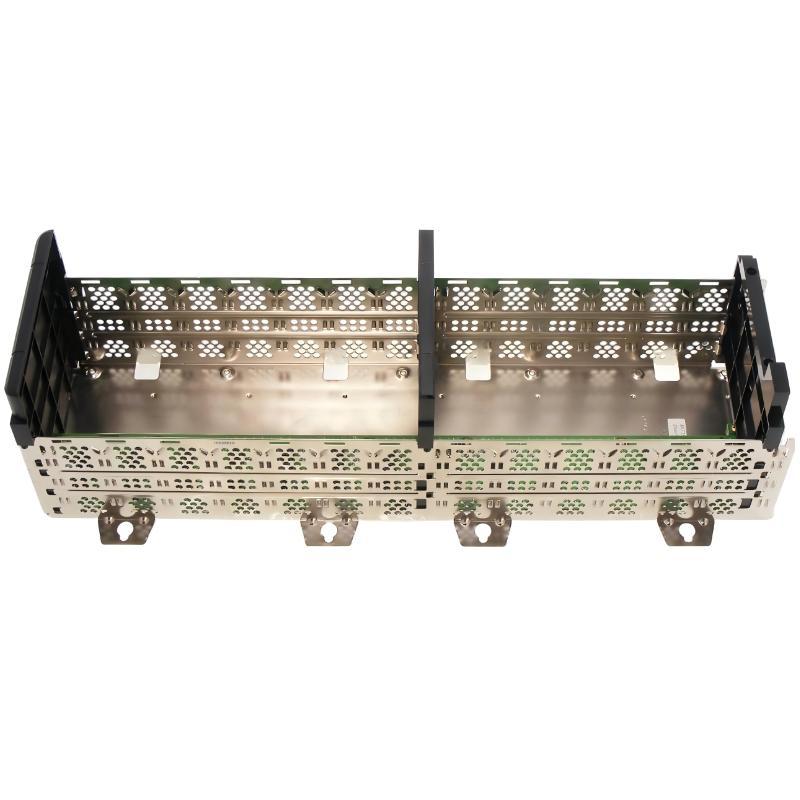
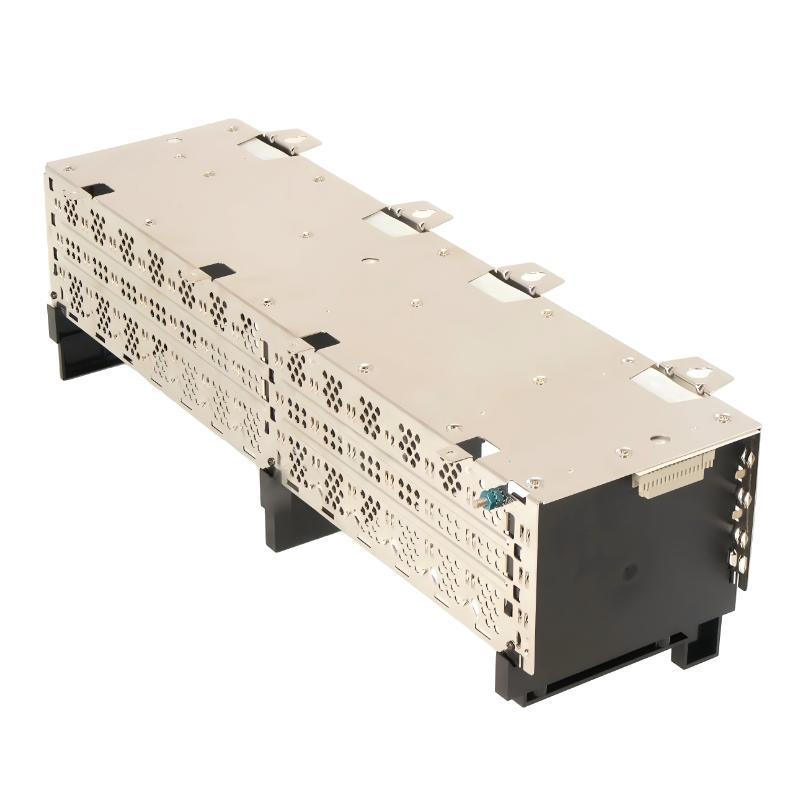
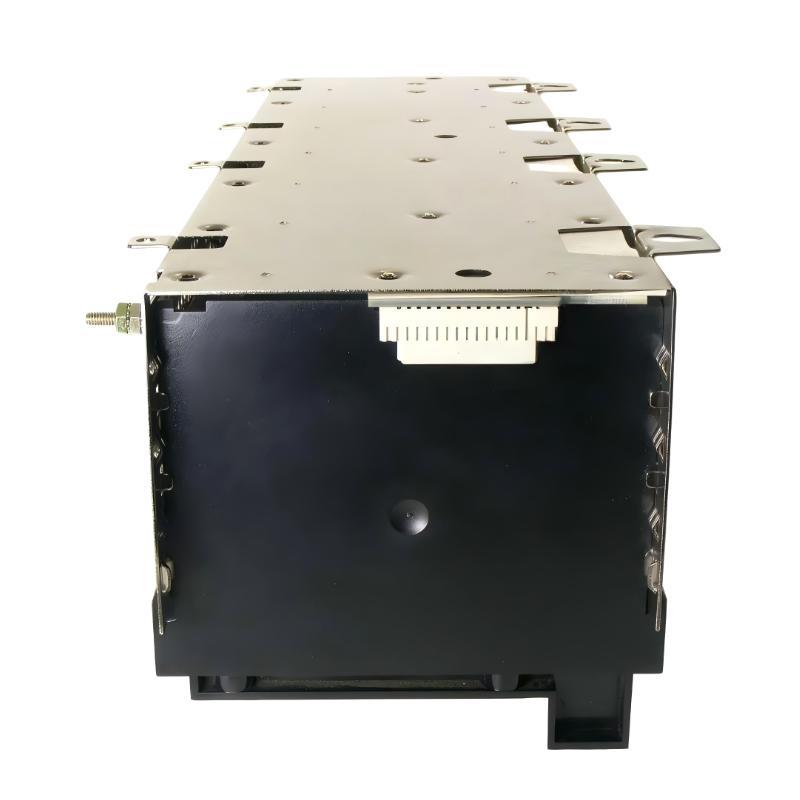
- Allen Bradley
- 1756-A17K
- ControlLogix Chassis Module
- USA
- 73.8 × 16.9 × 14.5 cm
- 2.2kg
- Xiamen, China
- New & In Stock
- T/T, PayPal, Western Union
- 1 Year
- 1-3 Working Days
- DHL, UPS, TNT, FedEx and EMS.
- 24-Hour Service
- COO
- 4
Our advantage

Global Logistics
We have a 10-year logistics and express cooperation agreement, so our products can be shipped to any place in the world.

Brand new and original
Our products are imported in bulk from the place of origin. Because of the cooperative relationship, our products are all original and 100% new.

24-hour service
We provide 7*24 hours service to our customers. We will be there whenever you need us.

Price advantage
All our products are priced very favorably because we have our own warehouse and supply.
| Company Information | |||
| [email protected] | |||
| Mobile | +8615980777398 | ||
| +8615980777398 | |||
| 15980777398 |
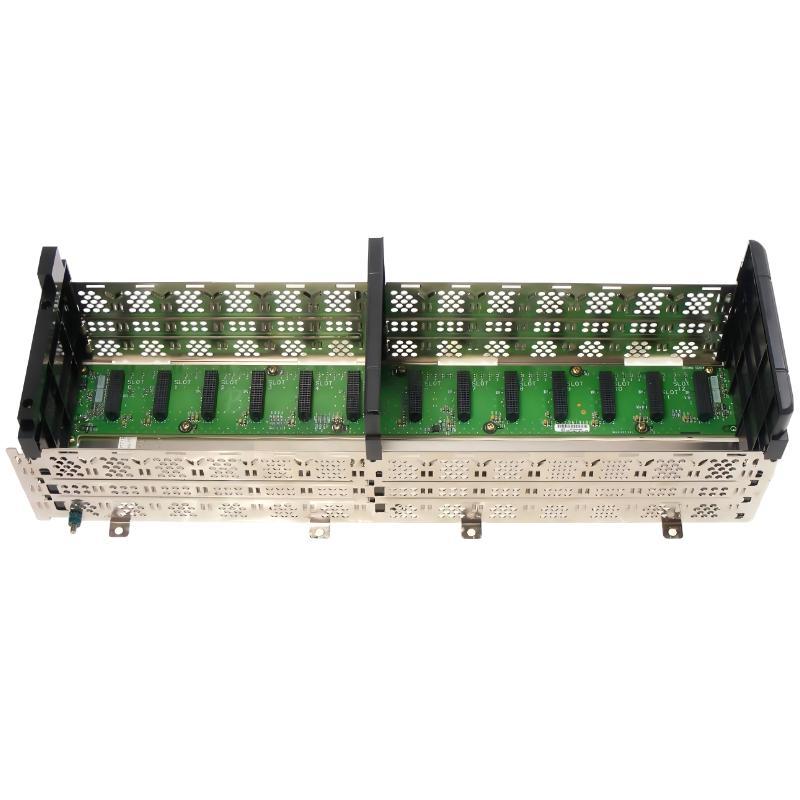
Allen-Bradley 1756-A17K ControlLogix Chassis: Product Specifications, Description, Applications, Advantages, and Recommended Models
1. Product Overview
The Allen-Bradley 1756-A17K is a catalog number that should be checked carefully before it is used in a purchasing specification or equipment replacement plan. The 1756 prefix is associated with the ControlLogix family of industrial automation products, particularly chassis, controllers, communication modules, and other modular control-system components.
The ControlLogix platform uses a modular architecture in which individual components are installed in a chassis. Depending on the system configuration, these components may include a programmable automation controller, communication modules, digital and analog I/O modules, and other specialized modules.
A chassis provides the physical mounting structure and electrical backplane connections required by compatible modules. It is therefore an important part of the overall control system, even though it does not perform the same processing functions as a controller.
Model identification: The exact designation 1756-A17K requires confirmation. It should not automatically be treated as interchangeable with the commonly recognized 1756-A17 ControlLogix chassis. The following product information distinguishes the general characteristics of the 1756-A17 chassis family from specifications that require confirmation for the exact suffix.
2. Brand and Product Series
| Parameter | Description |
|---|---|
| Model | 1756-A17K |
| Brand | Allen-Bradley |
| Product family | ControlLogix |
| Product series | 1756 ControlLogix chassis family |
| Product category | Modular industrial automation chassis, subject to catalog-number verification |
| Primary function | Physical mounting and backplane interconnection for compatible control-system modules |
| Typical installation | Industrial control cabinet |
| Main application | PLC-based machine control and industrial process automation |
| System architecture | Modular control system |
| Compatible equipment | Compatible ControlLogix controllers, communication modules, and I/O modules |
| Exact suffix identification | Requires confirmation against the equipment nameplate |
| Dimensions (cm) | Must be confirmed for the exact catalog number |
| Weight (kg) | Must be confirmed for the exact catalog number |
The ControlLogix platform is designed for applications in which control, communication, and I/O functions are distributed across compatible modules rather than integrated into a single fixed-function device.
This modular approach allows system designers to select the components needed for a particular machine or process, while providing a structured method for mounting and interconnecting those components.
3. Detailed Technical Specifications of the 1756-A17K
The 1756-A17K is a 17-slot ControlLogix chassis with conformal coating. The chassis provides a common mounting structure and backplane for compatible control-system modules.
The conformal coating is intended to provide additional protection to suitable electronic assemblies against certain environmental contaminants. It does not make the chassis waterproof, dustproof, or suitable for every corrosive environment.
3.1 Main Parameter Table
| Parameter | Specification |
|---|---|
| Model | 1756-A17K |
| Brand | Allen-Bradley |
| Product series | ControlLogix |
| Product type | 17-slot industrial control chassis |
| Construction | Conformally coated chassis |
| Number of module slots | 17 |
| Backplane function | Internal module communication and power distribution |
| Maximum chassis power dissipation | 6 W |
| Backplane current at 1.2 V DC | No separate chassis rating specified in the standard chassis data |
| Backplane current at 3.3 V DC | 4 A chassis maximum; 4 A per slot maximum |
| Backplane current at 5.1 V DC | 15 A chassis maximum; 6 A per slot maximum |
| Backplane current at 24 V DC | 2.8 A chassis maximum; 2.8 A per slot maximum |
| Power supply | A compatible chassis power supply is required |
| Isolation voltage | Determined by the installed power supply and modules |
| Mounting method | Horizontal panel mounting |
| Operating temperature | 0°C to +60°C |
| Storage temperature | −40°C to +85°C |
| Relative humidity | 5% to 95%, non-condensing |
| Enclosure classification | Open-style; install in a suitable enclosure |
| Chassis dimensions (W × H × D) | Approximately 73.8 × 16.9 × 14.5 cm |
| Minimum cabinet dimensions (W × H × D) | Approximately 91.4 × 76.2 × 20.3 cm |
| Weight (kg) | Approximately 2.20 kg |
| Product condition considerations | Check revision, coating condition, and compatibility when replacing an installed chassis |
The chassis dimensions and minimum cabinet dimensions are different measurements. The chassis occupies the space required by the physical assembly, while the cabinet allowance includes installation space and clearance requirements.
The 2.20 kg figure is an approximate chassis weight. The installed power supply, modules, wiring, and accessories add to the total weight of the assembled control system.
3.2 Backplane and Power Distribution
The backplane is a central part of the chassis design. It provides the internal electrical connections through which compatible modules exchange information and receive their required backplane power.
The chassis does not replace the power supply or controller. Instead, it provides the mounting and electrical infrastructure required for the installed modules to operate as a coordinated system.
When planning a chassis, engineers should calculate the power requirements of all installed modules and check the available backplane current at each required voltage. A chassis with sufficient physical slots may still be unsuitable if the installed power supply cannot support the complete module load.
3.3 Physical Dimensions and Weight
The approximate physical dimensions of the 1756-A17K are shown below.
| Measurement | Metric value | Imperial value |
|---|---|---|
| Width | 73.8 cm | 29.06 in |
| Height | 16.9 cm | 6.65 in |
| Depth | 14.5 cm | 5.71 in |
| Minimum cabinet width | 91.4 cm | 36 in |
| Minimum cabinet height | 76.2 cm | 30 in |
| Minimum cabinet depth | 20.3 cm | 8 in |
| Chassis weight (kg) | 2.20 kg | 4.85 lb |
The minimum cabinet dimensions should not be interpreted as a complete cabinet design. Actual clearance requirements depend on the installed power supply, modules, terminal housings, cable routing, ventilation, and maintenance access.
For a replacement project, use the mechanical drawing for the exact hardware revision before drilling mounting holes or modifying a cabinet.
4. Product Description and Working Principle
4.1 Modular Chassis Architecture
The 1756-A17K is designed for a modular automation architecture. Instead of combining every control function into a single device, the system uses individual modules installed in the chassis.
A typical configuration may include a controller, communication modules, digital input modules, digital output modules, analog I/O modules, and specialized interfaces.
Each module occupies a physical slot and connects to the chassis backplane. The controller executes the control program, while the other modules provide their respective communication, input, output, or application-specific functions.
The chassis makes it possible to organize these components within a common physical assembly.
4.2 Internal Communication
The chassis backplane provides a communication path between compatible installed modules.
For example, a controller may receive input information through an input module, execute its logic, and update an output module. The output module then controls the connected field equipment according to the program and the electrical characteristics of the output circuit.
The chassis itself does not make the control decisions. Its role is to provide the structural and electrical foundation on which the controller and other modules operate.
4.3 Conformal Coating
The K suffix identifies the conformally coated chassis configuration in this product family.
Conformal coating can improve protection against certain environmental contaminants when used within the specified operating conditions. This is particularly relevant in industrial facilities where humidity, airborne contaminants, or process-related residues may present additional maintenance challenges.
However, the protection offered by conformal coating has limits. The installation must still comply with the applicable temperature, humidity, enclosure, electrical, and contamination requirements.
4.4 Seventeen-Slot Capacity
The 17-slot configuration is intended for systems requiring a relatively large number of modules in one chassis.
It can accommodate a combination of controller, communication, and I/O modules, subject to their individual slot requirements and system compatibility.
The available slot count should be planned alongside the required power budget, controller configuration, communication architecture, and expected future expansion.
5. Main Applications
5.1 Factory Automation
The 1756-A17K can serve as the chassis foundation for a factory automation control system.
A production line may use a ControlLogix controller to coordinate motors, sensors, pneumatic equipment, machine interlocks, and operator commands. Communication and I/O modules installed in the chassis allow the controller to interact with the rest of the system.
A 17-slot chassis is especially useful where the application requires several I/O groups or multiple communication interfaces.
5.2 Automotive Manufacturing
Automotive production lines frequently contain conveyors, robotic workstations, automated assembly equipment, and inspection systems.
A modular control system can coordinate these devices through a combination of controller, communication, and I/O modules. The chassis provides a centralized mounting structure for the components assigned to the control cabinet.
The exact module configuration depends on the machine architecture, safety requirements, communication protocols, and number of field devices.
5.3 Packaging and Material Handling
Packaging equipment and material handling systems often require coordinated control of multiple motors, sensors, actuators, and operator interfaces.
A ControlLogix system installed in a 17-slot chassis can support applications in which the number of required modules exceeds the practical capacity of a smaller chassis.
Examples include conveyor control, pallet handling, automated sorting, product counting, and coordinated packaging operations.
5.4 Process Automation
Industrial processes such as water treatment, chemical production, and manufacturing utilities may require a mixture of digital I/O, analog measurement, communication, and control functions.
The chassis provides a common installation platform for compatible modules used to monitor process values and execute control strategies.
The suitability of a conformally coated chassis depends on the actual environmental conditions. Areas with aggressive chemical exposure or direct liquid contact may require additional protective measures.
5.5 Energy and Utility Systems
Industrial energy systems may use modular controllers to coordinate pumps, fans, auxiliary equipment, electrical monitoring, and facility utilities.
A 17-slot chassis provides space for a relatively extensive module configuration, subject to the electrical and functional requirements of the application.
Equipment installed in electrical or utility environments must be selected and installed according to the applicable electrical standards and site requirements.
5.6 Centralized Machine Control
A single machine may require multiple communication interfaces, digital inputs, digital outputs, and analog measurement channels.
The 1756-A17K can provide the physical platform for grouping these modules in one control cabinet. This may simplify cabinet organization, maintenance planning, and the identification of individual control functions.
6. Product Advantages
| Advantage | Detailed explanation |
|---|---|
| Large module capacity | Seventeen slots allow a relatively extensive collection of compatible control modules. |
| Modular architecture | Different control, communication, and I/O functions can be assembled in one chassis. |
| Internal backplane | Provides the required electrical and communication connections between compatible modules. |
| Conformal coating | Offers additional protection against certain environmental contaminants within the specified operating conditions. |
| Flexible system design | Allows engineers to select a module arrangement based on the application. |
| Centralized installation | Keeps related control components together in a common cabinet assembly. |
| Expandability | Unused slots may provide room for additional compatible modules, subject to power and system limits. |
| Maintenance convenience | A modular arrangement can simplify inspection and replacement of individual components. |
| Industrial temperature range | The specified 0°C to +60°C operating range supports many industrial control cabinet environments. |
| Integration potential | Supports compatible ControlLogix system architectures with suitable controllers, power supplies, and modules. |
6.1 High Module Density
A 17-slot chassis can reduce the need to divide a larger control system among several separate chassis when the application and system architecture permit a single-chassis arrangement.
This can simplify the physical organization of the control cabinet and make it easier to identify the relationship between the controller and its associated modules.
6.2 Better Organization of Control Equipment
Grouping modules in a chassis provides a consistent physical arrangement for control engineers and maintenance personnel.
When the cabinet drawings, slot assignments, module labels, and wiring documentation are kept up to date, technicians can more easily locate individual modules during troubleshooting.
6.3 Environmental Protection Through Coating
The conformally coated configuration can be advantageous in installations where the specified level of environmental protection is appropriate.
It should not be regarded as a substitute for a suitable enclosure, proper cabinet ventilation, contamination control, or environmental assessment.
6.4 Long-Term Maintenance Planning
A modular chassis makes it possible to plan the control system in terms of individual replaceable components.
Maintenance teams can document the installed module types, slot positions, power requirements, and communication connections. This improves the quality of maintenance records and helps reduce errors when components need to be replaced.
7. Five Recommended Models from the Same Series or Related Chassis Family
The following five models belong to the 1756 ControlLogix chassis family. They differ mainly in the number of module slots, physical dimensions, weight, and maximum chassis power dissipation.
The standard and K-designated variants should not be assumed to have identical environmental protection. Where conformal coating is required, confirm that the replacement has the correct suffix and coating specification.
| Model | Product series | Number of slots | Maximum power dissipation | Dimensions (W × H × D) | Weight (kg) |
|---|---|---|---|---|---|
| 1756-A4K | ControlLogix | 4 | 4 W | Approx. 26.3 × 16.9 × 14.5 cm | 0.75 |
| 1756-A7K | ControlLogix | 7 | 4.5 W | Approx. 36.8 × 16.9 × 14.5 cm | 1.10 |
| 1756-A10K | ControlLogix | 10 | 5 W | Approx. 48.3 × 16.9 × 14.5 cm | 1.45 |
| 1756-A13K | ControlLogix | 13 | 5.4 W | Approx. 58.8 × 16.9 × 14.5 cm | 1.90 |
| 1756-A17 | ControlLogix | 17 | 6 W | Approx. 73.8 × 16.9 × 14.5 cm | 2.20 |
Dimensions are approximate chassis measurements, including applicable mounting tabs. Weight values are approximate and exclude the installed modules.
7.1 1756-A4K — Four-Slot Chassis
The 1756-A4K is suitable for compact control systems that require only a small number of modules.
It can be considered for smaller standalone machines, auxiliary control systems, or applications where a controller and a limited number of I/O or communication modules are sufficient.
Its smaller physical footprint can reduce cabinet space requirements. However, engineers should allow for future expansion if the machine may later require additional communication interfaces or I/O capacity.
7.2 1756-A7K — Seven-Slot Chassis
The 1756-A7K provides additional module capacity while retaining a relatively compact chassis design.
It is suitable for small and medium-sized machine control applications where several module types are required but a 17-slot chassis would be unnecessarily large.
The additional slots provide flexibility for separating I/O functions, adding communication interfaces, or accommodating future system changes.
7.3 1756-A10K — Ten-Slot Chassis
The 1756-A10K is a useful option for control systems that need a moderate number of modules.
It can support applications requiring a combination of controller, communication, digital I/O, and analog I/O modules, provided the selected components are compatible and the power budget is adequate.
For machine builders, a 10-slot chassis can provide a balance between installation space and module capacity.
7.4 1756-A13K — Thirteen-Slot Chassis
The 1756-A13K provides greater capacity for applications with more extensive I/O and communication requirements.
It can be considered for production equipment with multiple functional areas or for systems requiring a larger combination of field interfaces.
The additional capacity can also provide room for planned expansion. Slot planning and backplane power calculations remain essential when selecting this chassis.
7.5 1756-A17 — Standard Seventeen-Slot Chassis
The 1756-A17 is the standard-coating counterpart to consider when a 17-slot ControlLogix chassis is required but the conformally coated configuration is not necessary.
It has the same nominal slot count and approximate physical dimensions as the 1756-A17K. The difference in coating configuration matters when selecting equipment for a specific environmental requirement.
The 1756-A17 should not be substituted for the K-designated version without confirming the environmental suitability of the application.
8. Five Additional Popular Models from the Same Brand
The following models complement a ControlLogix chassis and are commonly considered when building or expanding an industrial automation system. They perform different functions, so they should be selected according to the control architecture rather than treated as interchangeable chassis replacements.
| Model | Product series | Product type | Main technical parameters | Dimensions (H × W × D) | Weight (kg) |
|---|---|---|---|---|---|
| 1756-L83E | ControlLogix | Programmable automation controller | Controller with embedded EtherNet/IP connectivity; memory and performance depend on the exact controller specification | Verify exact revision | Verify |
| 1756-EN2T | ControlLogix | EtherNet/IP communication module | Ethernet communication interface for compatible ControlLogix systems | Approx. 14.5 × 3.5 × 11.2 cm; verify revision | Verify |
| 1756-PA75 | ControlLogix | AC power supply | Supplies power to a compatible ControlLogix chassis backplane | Verify exact revision | Verify |
| 1756-IB16 | ControlLogix | Digital input module | 16-channel 24 V DC digital input module | Approx. 14.5 × 3.5 × 11.2 cm; verify revision | Verify |
| 1756-OB16E | ControlLogix | Digital output module | 16-channel 24 V DC electronic digital output module with electronic protection features | Approx. 14.5 × 3.5 × 11.2 cm; verify revision | Verify |
Dimensions for the individual modules are preliminary planning figures where shown. Obtain the mechanical drawings and net weights for the precise catalog and revision before using them for cabinet design or shipment calculations.
8.1 1756-L83E — ControlLogix Controller
The 1756-L83E is a programmable automation controller intended for applications that require coordinated control logic, data processing, and industrial communication.
A controller of this type executes the application program and coordinates the operation of compatible I/O and communication modules installed in the control system.
Potential applications include production-line coordination, machine automation, process monitoring, and integrated control systems. The actual controller selection should account for program size, memory requirements, communication traffic, execution performance, and software compatibility.
Relationship to the 1756-A17K: The controller is an active processing component, whereas the chassis provides the mounting and backplane infrastructure. A compatible controller can be installed as part of an appropriately configured chassis system.
8.2 1756-EN2T — EtherNet/IP Communication Module
The 1756-EN2T provides Ethernet-based industrial communication for compatible ControlLogix systems.
It can be used to connect a controller system with supported Ethernet-enabled equipment, including remote I/O, other controllers, engineering workstations, and industrial devices.
Its suitability depends on the required communication topology, network traffic, firmware compatibility, and the specific communication functions needed by the application.
Relationship to the 1756-A17K: This module can occupy a compatible chassis slot and provide an external network connection, subject to system configuration and module compatibility.
8.3 1756-PA75 — AC Power Supply
The 1756-PA75 is an AC-powered supply for compatible ControlLogix chassis configurations.
Its function is to provide the required power to the chassis backplane so that the installed controller and other modules can operate.
When selecting a power supply, engineers must calculate the total current required by the installed modules at the applicable backplane voltages. The supply must have sufficient capacity for the actual configuration and operating conditions.
Relationship to the 1756-A17K: The chassis and power supply are complementary components. A 17-slot chassis does not, by itself, guarantee that every possible combination of 17 modules can be powered by one supply.
8.4 1756-IB16 — Digital Input Module
The 1756-IB16 is a 16-channel digital input module designed for compatible 24 V DC field signals.
Digital inputs allow a controller to receive information from equipment such as limit switches, proximity sensors, push buttons, and other devices that provide compatible on/off signals.
The module converts the state of its input channels into information that can be used by the controller program. Input wiring, field power, grounding, and signal characteristics must comply with the module specifications.
Relationship to the 1756-A17K: Installing a compatible input module in the chassis allows the controller system to monitor multiple field signals through a structured I/O arrangement.
8.5 1756-OB16E — Digital Output Module
The 1756-OB16E is a 16-channel digital output module for compatible 24 V DC control applications.
It allows a controller to command suitable external loads or interface devices according to the application logic.
Potential uses include controlling compatible indicators, interface relays, and other loads within the module’s electrical ratings. The actual load current, inductive characteristics, wiring, and protection requirements must be checked before installation.
Relationship to the 1756-A17K: The output module can form part of the chassis-based control system, allowing controller decisions to be translated into physical output signals.
9. Comparison of the Main Recommended Models
The following table summarizes the most important selection differences among the chassis alternatives and the additional control-system components.
| Model | Main role | Capacity or configuration | Best suited for | Direct replacement for 1756-A17K? |
|---|---|---|---|---|
| 1756-A4K | Chassis | 4 slots | Compact control systems | No |
| 1756-A7K | Chassis | 7 slots | Small control systems | No |
| 1756-A10K | Chassis | 10 slots | Medium-sized control systems | No |
| 1756-A13K | Chassis | 13 slots | Larger control systems | No |
| 1756-A17 | Standard chassis | 17 slots | Systems not requiring the K coating configuration | Conditional |
| 1756-L83E | Controller | Programmable control | Machine and process control | No |
| 1756-EN2T | Communication module | EtherNet/IP interface | Industrial network connectivity | No |
| 1756-PA75 | Power supply | AC input | Chassis backplane power | No |
| 1756-IB16 | Digital input module | 16 input channels | Field signal acquisition | No |
| 1756-OB16E | Digital output module | 16 output channels | Field device control | No |
The 1756-A17 is the closest alternative in terms of slot count and general chassis dimensions. However, the difference in coating configuration must be considered before it is used as a replacement.
The remaining models are components of the broader control-system architecture rather than direct chassis substitutes.
10. Installation and Maintenance Recommendations
10.1 Verify the Catalog Number
Before ordering, check the full model number on the equipment nameplate. Confirm the suffix, hardware revision, and any applicable series designation.
This is particularly important when the application requires conformal coating or when an existing system has been operating for many years.
10.2 Check the Chassis Power Budget
Prepare a list of every installed module and calculate the current required at each applicable backplane voltage.
The chassis power supply must support the total load, and the selected chassis must meet the installation’s electrical requirements. Slot availability alone is not sufficient to establish compatibility.
10.3 Allow for Cabinet Clearance
The chassis must be installed with sufficient room for module insertion, wiring, power supply access, ventilation, and maintenance.
Do not use the chassis body dimensions as the minimum cabinet dimensions. The enclosure must accommodate the entire assembly and the clearances required by the applicable installation instructions.
10.4 Inspect the Backplane and Connections
During maintenance, inspect the chassis and its connectors for visible contamination, physical damage, corrosion, or other conditions that could affect reliable operation.
Any removal or installation of modules should follow the equipment’s prescribed isolation and handling procedures.
10.5 Maintain Accurate Slot Documentation
Record the installed module model, slot number, network connection, and field wiring details.
An accurate slot map reduces troubleshooting time and helps prevent incorrect module replacement during maintenance.
10.6 Consider Environmental Conditions
The conformally coated chassis may provide additional protection against certain contaminants, but the installation still needs an appropriate enclosure and environmental controls.
Temperature, humidity, vibration, electrical noise, and potential chemical exposure should be assessed for the actual site.
11. Final Product Summary
The 1756-A17K is a 17-slot, conformally coated chassis in the ControlLogix industrial automation family. It provides the physical mounting structure and backplane connections required by compatible controllers, communication modules, and I/O modules.
Its principal advantages include a large module capacity, a structured modular architecture, centralized installation, and additional protection against certain environmental contaminants. These characteristics make it a candidate for industrial control cabinets used in factory automation, material handling, packaging, process control, and other applications requiring a relatively extensive modular control system.
The five recommended chassis alternatives are:
-
1756-A4K: Four-slot compact chassis.
-
1756-A7K: Seven-slot chassis.
-
1756-A10K: Ten-slot chassis.
-
1756-A13K: Thirteen-slot chassis.
-
1756-A17: Seventeen-slot standard chassis.
The five additional models cover complementary functions:
-
1756-L83E: Programmable automation controller.
-
1756-EN2T: EtherNet/IP communication module.
-
1756-PA75: AC chassis power supply.
-
1756-IB16: Sixteen-channel digital input module.
-
1756-OB16E: Sixteen-channel digital output module.
For the 1756-A17K, the approximate chassis dimensions are 73.8 × 16.9 × 14.5 cm, and the approximate weight is 2.20 kg. These figures describe the chassis itself rather than a fully assembled control system.
For purchasing, replacement, and engineering documentation, the final specification should include the exact catalog number, coating configuration, hardware revision, dimensions, weight, module compatibility, and power requirements. This helps ensure that the selected component fits the intended application and can be integrated into the existing control system without unnecessary changes.