

ProductPRODUCT
Featured products



Contact Us
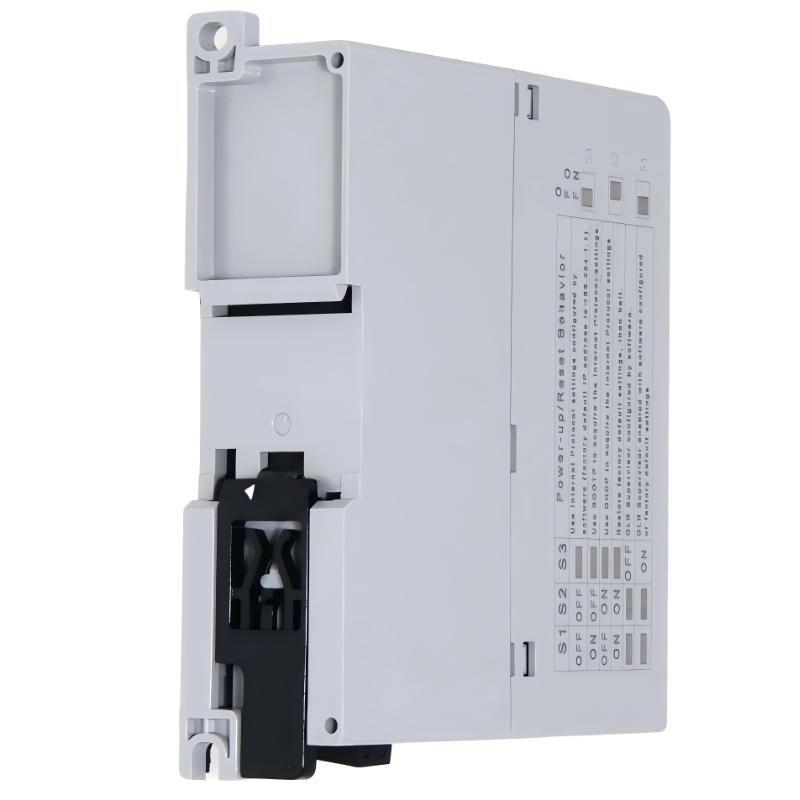
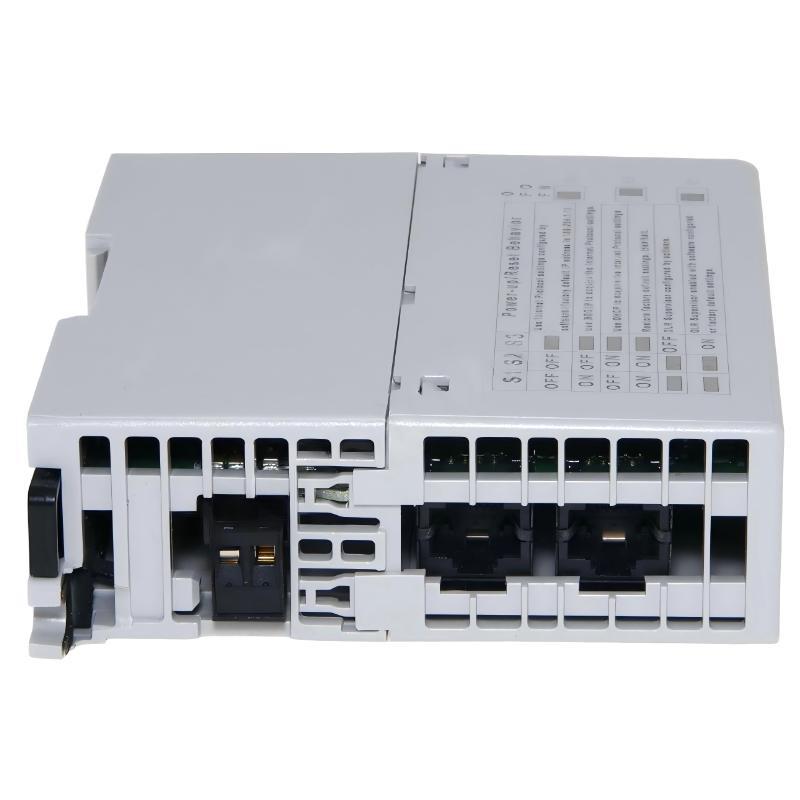
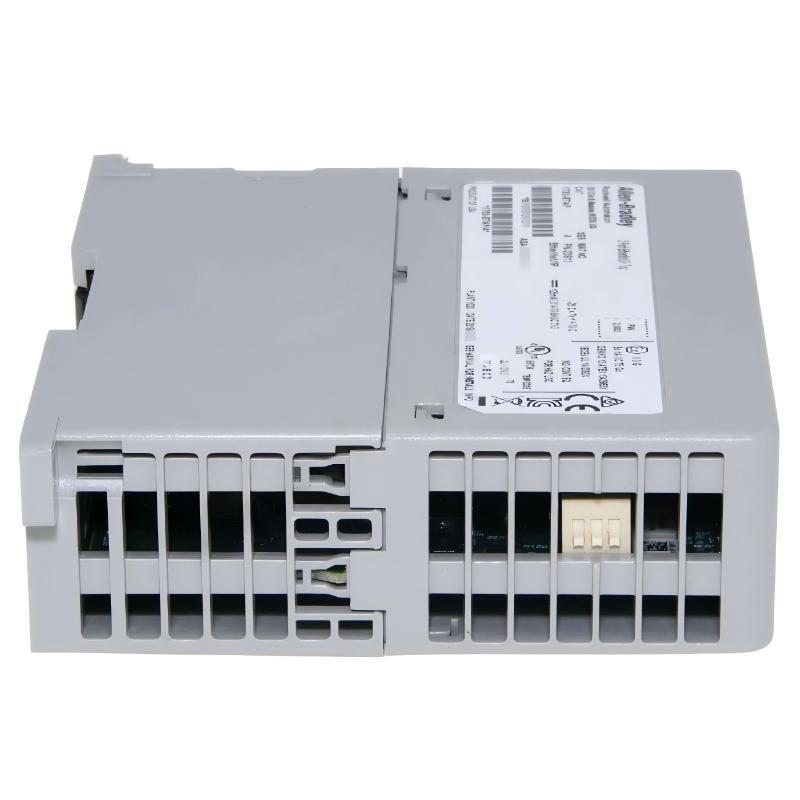
- Allen Bradley
- 1783-CMS20DP
- Stratix 5200 20 Port Switch
- USA
- 12.70 × 7.62 × 12.90 cm
- 1.27kg
- Xiamen, China
- New & In Stock
- T/T, PayPal, Western Union
- 1 Year
- 1-3 Working Days
- DHL, UPS, TNT, FedEx and EMS.
- 24-Hour Service
- COO
- 5
Our advantage

Global Logistics
We have a 10-year logistics and express cooperation agreement, so our products can be shipped to any place in the world.

Brand new and original
Our products are imported in bulk from the place of origin. Because of the cooperative relationship, our products are all original and 100% new.

24-hour service
We provide 7*24 hours service to our customers. We will be there whenever you need us.

Price advantage
All our products are priced very favorably because we have our own warehouse and supply.
| Company Information | |||
| [email protected] | |||
| Mobile | +8615980777398 | ||
| +8615980777398 | |||
| 15980777398 |
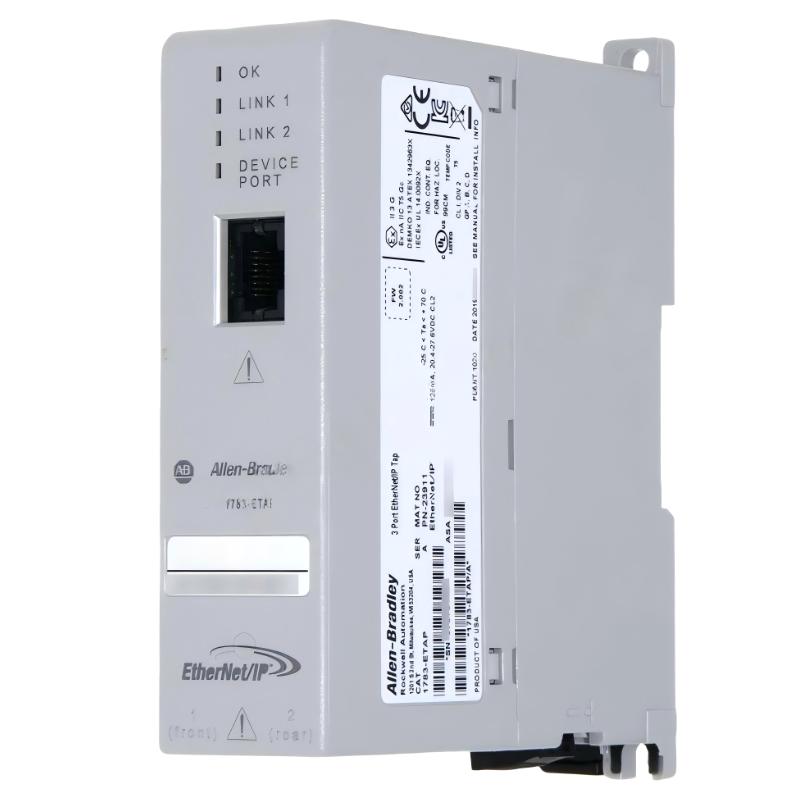
Allen-Bradley 1783-CMS20DP Industrial Ethernet Switch: Product Specifications, Features, Applications, Advantages, and Model Recommendations
1. Product Overview
The Allen-Bradley 1783-CMS20DP is a model designation associated with the industrial networking product family. When evaluating this model for an industrial automation project, the main considerations are Ethernet connectivity, network reliability, compatibility with automation equipment, installation requirements, and long-term maintenance.
Industrial Ethernet switches are commonly used to connect programmable logic controllers (PLCs), human-machine interfaces (HMIs), industrial computers, remote I/O modules, drives, sensors, and other network-enabled equipment. They provide a communication path between devices and help organize the network architecture of a production line or control system.
Important model identification note: The exact catalog designation 1783-CMS20DP should be verified against the equipment nameplate before ordering or designing a replacement. The specifications below distinguish general industrial Ethernet switch characteristics from details that cannot be confidently assigned to this exact catalog number without verification. Physical dimensions, weight, port configuration, and power requirements should not be treated as confirmed model-specific values.
2. Product Parameters and Technical Specifications
The following table provides a structured technical overview for product evaluation. Values marked as requiring verification should be confirmed using the exact product label or equipment documentation before procurement.
| Parameter | Description |
|---|---|
| Product model | 1783-CMS20DP |
| Brand | Allen-Bradley |
| Product category | Industrial networking equipment; exact model classification requires verification |
| Product series | The exact series assignment requires confirmation |
| Product type | Ethernet switch or industrial network device, subject to catalog verification |
| Primary function | Network connectivity for industrial automation equipment, if confirmed as an Ethernet switch |
| Network interface | Ethernet; exact port types and quantities require verification |
| Ethernet speed | Requires verification for the exact catalog number |
| Switching capacity | Requires verification |
| Forwarding performance | Requires verification |
| Network management | Managed or unmanaged functionality requires verification |
| Redundancy support | Requires verification |
| Power supply | Voltage range and power input arrangement require verification |
| Power consumption | Requires verification |
| Mounting method | DIN-rail or panel mounting must be confirmed |
| Operating temperature | Requires verification |
| Storage temperature | Requires verification |
| Relative humidity | Requires verification |
| Protection rating | Requires verification |
| Dimensions (W × H × D) | Not confirmed; measure or verify the exact model |
| Weight (kg) | Not confirmed; obtain the model-specific net weight |
| Installation environment | Industrial control cabinet or other approved installation environment, depending on the verified product specification |
| Typical connected equipment | PLCs, HMIs, industrial computers, drives, and network-enabled automation devices, where compatible |
| Maintenance requirements | Periodic inspection, connection checks, and network diagnostics as appropriate to the verified equipment |
| Replacement considerations | Catalog number, port layout, power requirements, mounting, and network functionality must match |
3. Detailed Product Description
3.1 Product Name and Series
The 1783-CMS20DP belongs to the Stratix 5200 industrial Ethernet switch family. It is a managed industrial switch designed for applications that require a relatively high number of network connections, Gigabit Ethernet communication, and integration with industrial automation networks.
The product is intended for use in control systems where multiple devices need to communicate through a common Ethernet infrastructure. Typical examples include PLC networks, production equipment, machine control systems, and plant-level industrial communication networks.
The 1783-CMS20DP has 20 Ethernet ports in total:
-
18 copper Ethernet ports supporting 10/100/1000 Mbps operation.
-
2 combo Ethernet ports supporting 10/100/1000 Mbps, with the exact copper and fiber interface options determined by the hardware configuration.
The model is associated with full-featured firmware and Device Level Ring (DLR) capabilities. These functions make it suitable for industrial network designs that require network management, equipment diagnostics, and ring-based communication recovery.
3.2 Operating Principle
The switch receives Ethernet frames from connected devices, examines their destination information, and forwards the frames through the appropriate network ports.
In an industrial control system, this allows a PLC to exchange data with remote I/O modules, HMIs, industrial computers, and other controllers without requiring every device to connect directly to every other device.
The switch also provides a centralized point for network configuration and monitoring. Depending on the implemented network design and firmware configuration, administrators can use managed-switch functions to organize traffic, diagnose communication faults, and maintain a more structured network environment.
3.3 Main Product Characteristics
| Characteristic | Detailed description |
|---|---|
| Model | 1783-CMS20DP |
| Brand | Allen-Bradley |
| Series | Stratix 5200 |
| Product category | Managed industrial Ethernet switch |
| Total Ethernet ports | 20 |
| Copper Gigabit ports | 18 |
| Combo Gigabit ports | 2 |
| Ethernet speed | 10/100/1000 Mbps |
| Firmware configuration | Full-featured firmware |
| Ring network capability | Device Level Ring (DLR) support |
| Primary purpose | Industrial Ethernet connectivity and network management |
| Typical installation | Industrial control cabinet |
| Approximate dimensions (H × W × D) | 12.70 × 10.92 × 12.90 cm |
| Approximate weight (kg) | 1.27 kg |
| Approximate power consumption | 36.7 W |
| DC power input | 12–48 V DC nominal range; verify installation requirements |
| Operating temperature | −40°C to +60°C under the specified operating conditions |
| Enclosure rating | IP30 for the applicable product configuration |
The dimensions and weight refer to the switch itself and may exclude removable connectors and the DIN-rail mounting bracket. Allow additional space for wiring, ventilation, and maintenance access.
4. Product Functions and Features
4.1 High-Density Ethernet Connectivity
The 20-port configuration provides connectivity for a substantial number of industrial devices within a single network segment.
In a production line, one switch can connect a PLC, multiple remote I/O stations, operator terminals, drives, industrial PCs, and additional Ethernet-enabled equipment. This reduces the need to install multiple smaller switches solely to provide enough physical ports.
The 18 copper Gigabit ports provide high-speed connections for compatible copper Ethernet devices. The two combo ports offer additional connection flexibility, depending on the interface and transceiver arrangement used.
This configuration is particularly useful when a control cabinet serves as the central communication point for a machine or production cell.
4.2 Managed Network Functions
As a managed industrial switch, the product is intended to support more than basic packet forwarding.
Managed switching can provide functions for network configuration, traffic organization, monitoring, and troubleshooting. The exact available functions depend on firmware, configuration, and the network architecture.
In practical applications, these capabilities help engineers identify disconnected devices, investigate communication interruptions, separate traffic where supported, and maintain a more predictable industrial network.
4.3 Device Level Ring Support
Device Level Ring is a ring-network technology used in compatible industrial Ethernet systems.
A ring topology provides an alternative communication path when a network connection fails. When the ring is correctly designed and supported by the connected equipment, traffic can recover through the remaining path instead of relying on a single uninterrupted cable route.
The actual recovery behavior depends on the supported ring configuration, the participating devices, firmware, and network design. DLR support should therefore be treated as a network-design capability rather than a guarantee that every possible cable or equipment failure will be interruption-free.
4.4 Gigabit Ethernet Communication
Gigabit Ethernet provides a nominal link speed of 1,000 Mbps, compared with 100 Mbps Fast Ethernet.
Higher link speeds can be useful when industrial networks carry a mixture of controller communications, engineering traffic, machine status information, and data from supervisory systems.
However, a Gigabit-capable switch does not automatically make every connected device operate at Gigabit speed. The negotiated link rate depends on the connected device, cabling, port configuration, and supported Ethernet standard.
4.5 Industrial Environmental Suitability
The Stratix 5200 family is designed for industrial networking applications, with specified environmental and electrical operating limits.
For the 1783-CMS20DP, the applicable operating temperature range is −40°C to +60°C under the specified conditions. This is useful for installations that experience a wider temperature range than a typical office networking environment.
The switch should still be installed in accordance with its electrical, thermal, clearance, grounding, and enclosure requirements. An IP30 rating does not mean that the unit is waterproof or suitable for direct exposure to dust, oil, or washdown operations.
5. Product Applications

5.1 Factory Automation
The switch can provide communication links between PLCs, HMIs, remote I/O systems, industrial computers, and other Ethernet-enabled equipment.
In a production line, it can serve as a local network aggregation point for a machine or group of machines. This helps engineers organize device connections and maintain a consistent network structure.

5.2 Conveyor and Material Handling Systems
Conveyor systems often contain multiple control devices distributed across different sections of a facility.
A managed switch can connect local controllers, operator interfaces, drive systems, and diagnostic computers. A correctly designed ring topology may also improve the resilience of the communication infrastructure.

5.3 Automated Assembly and Robotics
Automated assembly lines may require communication between controllers, robot cells, inspection equipment, and supervisory computers.
The switch provides the Ethernet connectivity needed to bring these devices into a coordinated network. Network segmentation and traffic management, where configured and supported, can help engineers organize communication between equipment groups.

5.4 Process Control Systems
In water treatment, chemical processing, and other process industries, controllers and monitoring equipment may be distributed across a large installation.
Industrial Ethernet switching allows compatible devices to exchange data with control and monitoring systems. Installation must account for the site’s electrical classification, environmental conditions, and applicable safety requirements.

5.5 Supervisory Monitoring and Data Collection
The switch can form part of a network connecting machine controllers, engineering workstations, monitoring computers, and data collection systems.
This is useful when production teams need to collect operating information, diagnose equipment faults, and exchange data between machine-level and supervisory-level systems.
6. Product Advantages
6.1 A Large Number of Ports in One Device
Twenty Ethernet ports allow multiple devices to be connected through a single switch. This can simplify cabinet layouts and reduce the number of separate network devices needed for a medium-sized automation cell.
6.2 Gigabit Connectivity
The 18 copper Gigabit ports and two combo Gigabit ports provide substantial bandwidth for compatible devices. This is beneficial when engineering computers, supervisory systems, and industrial equipment share the same network infrastructure.
6.3 Industrial Network Management
Managed functionality provides more control over network operation than a basic unmanaged switch. Engineers can use the supported management functions to configure the network, inspect device connectivity, and investigate communication issues.
6.4 Support for Ring-Based Network Design
DLR support allows the switch to participate in compatible ring-network architectures. With an appropriate design, a ring can provide an alternate communication path following certain link failures.
6.5 Suitability for Industrial Conditions
The specified operating temperature range supports use in demanding industrial environments when all other installation requirements are satisfied.
6.6 Integration with Automation Equipment
The Stratix family is designed for industrial Ethernet environments. Depending on the connected equipment and configuration, this can help simplify network engineering in systems using compatible controllers, I/O, and supervisory software.
6.7 Easier Fault Diagnosis
A managed switch can provide network status and diagnostic information that helps maintenance personnel narrow down communication problems.
This does not eliminate the need for troubleshooting, but it can make network-related faults easier to distinguish from controller, cabling, power, and application-level faults.
6.8 Support for Structured Network Expansion
The 20-port arrangement provides room for additional compatible devices within the planned port capacity. Engineers should still reserve capacity for future expansion, uplinks, redundancy, and network segmentation instead of allocating every port at the beginning of a project.
7. Installation and Selection Considerations
Before selecting the 1783-CMS20DP for a new installation or replacement, review the following points.
| Inspection item | Recommended check |
|---|---|
| Catalog number | Confirm that the equipment label reads 1783-CMS20DP |
| Port requirements | Confirm that 18 copper Gigabit ports and two combo ports suit the planned network |
| Power supply | Confirm the supported DC input range, wiring, current capacity, and protection |
| Power budget | Allow for the specified switch consumption and appropriate design margin |
| Network topology | Determine whether the application requires a ring, star, or other supported arrangement |
| Network management | Confirm the firmware and management features needed by the application |
| Ethernet cabling | Check cable category, length, routing, shielding requirements, and environmental suitability |
| Dimensions | Allow for the switch body, connectors, cables, and maintenance clearance |
| Weight | Allow approximately 1.27 kg for the switch itself, excluding applicable accessories |
| Operating environment | Verify ambient temperature, humidity, contamination, vibration, and enclosure requirements |
| Network security | Review access controls, configuration management, and segmentation requirements |
| Replacement compatibility | Check firmware, port functions, topology, configuration, and installed network dependencies |
For replacement projects, matching the number of ports alone is not sufficient. A suitable replacement must also support the required network functions, physical connections, power arrangement, and control-system integration.
8. Detailed Technical Parameter Table for 1783-CMS20DP
This table consolidates the principal specifications into a format suitable for product catalogs, purchasing documents, and engineering reference materials.
| Parameter | Specification |
|---|---|
| Model | 1783-CMS20DP |
| Brand | Allen-Bradley |
| Series | Stratix 5200 |
| Equipment classification | Managed industrial Ethernet switch |
| Total ports | 20 |
| Copper ports | 18 |
| Combo ports | 2 |
| Copper port data rate | 10/100/1000 Mbps |
| Combo port data rate | 10/100/1000 Mbps |
| Switching architecture | Ethernet frame switching |
| Firmware | Full-featured firmware configuration |
| Ring support | Device Level Ring (DLR) |
| Power input | 12–48 V DC nominal range |
| Maximum specified power consumption | Approximately 36.7 W |
| Operating temperature | −40°C to +60°C |
| Environmental protection | IP30, applicable configuration |
| Mounting | Industrial cabinet mounting; confirm bracket and rail requirements |
| Dimensions (H × W × D) | 12.70 × 10.92 × 12.90 cm |
| Dimensions (inches) | 5.00 × 4.30 × 5.08 in |
| Weight (kg) | Approximately 1.27 kg |
| Weight basis | Switch only; accessories may add weight |
| Intended environment | Industrial automation and control networks |
| Primary application | Network aggregation and managed Ethernet communication |
| Recommended use | Medium-sized industrial network installations |
| Replacement priority | Match port layout, firmware functions, power, dimensions, and topology |
9. Five Recommended Models from the Same Series or Closely Related Models
The following models belong to the Stratix 5200 family and provide alternatives for different port counts, network configurations, and installation requirements.
These are comparison candidates rather than automatic drop-in replacements. Physical dimensions and weights are listed where they can be identified confidently; the remaining values should be confirmed against the exact hardware revision before purchase.
9.1 Model Comparison
| Model | Series | Main configuration | Port characteristics | Power consumption | Dimensions (H × W × D) | Weight (kg) |
|---|---|---|---|---|---|---|
| 1783-CMS10DP | Stratix 5200 | Managed, full-featured firmware | 10 ports; 8 copper Gigabit ports and 2 combo Gigabit ports | Approx. 28 W | 12.70 × 7.62 × 12.90 cm | 1.04 |
| 1783-CMS20DB | Stratix 5200 | Managed switch, base firmware | 20 ports; 18 Fast Ethernet copper ports and 2 Gigabit combo ports | Approx. 36.7 W | 12.70 × 10.92 × 12.90 cm | 1.27 |
| 1783-CMS20DN | Stratix 5200 | Managed, full-featured firmware | 20 ports; 18 copper Gigabit ports and 2 combo Gigabit ports | Approx. 36.7 W | 12.70 × 10.92 × 12.90 cm | 1.27 |
| 1783-CMS10DN | Stratix 5200 | Managed, full-featured firmware | 10 ports; 8 copper Gigabit ports and 2 combo Gigabit ports | Approx. 28 W | 12.70 × 7.62 × 12.90 cm | 1.04 |
| 1783-CMS10B | Stratix 5200 | Managed switch, base configuration | 10 ports; exact interface allocation should be checked for the catalog revision | Approx. 17.7 W | 12.70 × 7.62 × 11.00 cm | 0.86 |
Dimensions are expressed as height × width × depth. Weight values are approximate switch-only values.
9.2 Recommendation 1: 1783-CMS10DP
The 1783-CMS10DP is worth considering when the network requires fewer connections than the 20-port model but still needs Gigabit Ethernet and full-featured firmware.
Its smaller port count can be advantageous for a compact machine, a dedicated production cell, or a control cabinet where space and network capacity must be balanced.
The 10-port model may also help reduce unused port capacity in smaller installations. However, it is not a direct substitute when a project needs more than ten ports or requires the same physical layout as the 1783-CMS20DP.
9.3 Recommendation 2: 1783-CMS20DB
The 1783-CMS20DB is a comparison candidate when the project requires 20 physical ports but does not necessarily require Gigabit copper connectivity on all 18 copper ports.
Its copper interfaces use Fast Ethernet, while the combo interfaces provide Gigabit connectivity. This difference is important for systems carrying large amounts of data or requiring Gigabit links to multiple connected devices.
The model should be selected only after checking the required firmware features and the bandwidth needs of the connected equipment.
9.4 Recommendation 3: 1783-CMS20DN
The 1783-CMS20DN is a close comparison candidate for the 1783-CMS20DP because both have a 20-port configuration with 18 copper Gigabit ports and two combo Gigabit ports.
It may be considered when evaluating alternative power-input or hardware configurations. The exact suffix-related differences must be checked before substitution, especially where redundant power arrangements, network topology, or installation requirements are important.
9.5 Recommendation 4: 1783-CMS10DN
The 1783-CMS10DN provides a smaller managed-switch configuration with Gigabit Ethernet and full-featured firmware.
It is suitable for consideration in a machine-level network with fewer endpoints, such as a standalone packaging machine, a smaller assembly station, or a local control cabinet.
Its smaller size may simplify installation, but engineers should verify the number of available ports and any special power or redundancy requirements before choosing it.
9.6 Recommendation 5: 1783-CMS10B
The 1783-CMS10B is an alternative to evaluate where a 10-port industrial managed switch is sufficient and lower power consumption is desirable.
It can be relevant to applications that do not require the same Gigabit port arrangement as the 1783-CMS20DP. Its actual suitability depends on the required link speeds, firmware capabilities, and connected equipment.
It should not be treated as equivalent to the target model simply because both products belong to the same series.
10. Five Additional Popular Allen-Bradley Models
The following products represent additional industrial Ethernet switch options from the same brand. They cover different network sizes and installation scenarios, including compact unmanaged switching and higher-capability managed switching.
The five products are related alternatives, not necessarily direct replacements for the 1783-CMS20DP. Exact port layouts, power ratings, dimensions, and weight vary by model. Where a precise value is not established here, it is marked for verification rather than estimated.
| Model | Product series | Main product type | Port configuration | Main application | Dimensions (cm) | Weight (kg) |
|---|---|---|---|---|---|---|
| 1783-US8T | Stratix 2000 | Unmanaged industrial switch | 8 copper Ethernet ports; confirm speed for the exact revision | Small machines and local device networks | Verify exact revision | Verify |
| 1783-US5T | Stratix 2000 | Unmanaged industrial switch | 5 copper Ethernet ports; confirm speed for the exact revision | Compact control cabinets and small equipment networks | Verify exact revision | Verify |
| 1783-BMS10CGA | Stratix 5700 | Managed industrial switch | 10-port configuration; confirm exact copper and fiber allocation | Machine networks requiring advanced management | Verify exact revision | Verify |
| 1783-BMS20CA | Stratix 5700 | Managed industrial switch | 20-port configuration; confirm exact interface allocation | Larger machine networks and production cells | Verify exact revision | Verify |
| 1783-BMS06TGA | Stratix 5700 | Managed industrial switch | 6-port configuration; confirm exact interface allocation | Compact managed networks and machine-level aggregation | Verify exact revision | Verify |
Selection note: The dimensions and weight fields marked “Verify” should be completed using the exact product’s mechanical drawing or technical specification before the information is used in a formal purchasing catalog. Different models may have different enclosures, mounting arrangements, and connector clearances.
10.1 1783-US8T — Compact Unmanaged Ethernet Switching
The 1783-US8T is an option to consider for a smaller network where basic Ethernet connectivity is sufficient.
An unmanaged switch can simplify installation because it generally requires less configuration than a managed switch. This can be useful for straightforward device connections where advanced traffic management, detailed diagnostics, and managed redundancy functions are not required.
The key trade-off is that an unmanaged switch does not provide the same level of network configuration and monitoring as a full-featured managed switch. The exact port speed and environmental requirements should be checked before use.
10.2 1783-US5T — Small Network Connectivity
The 1783-US5T is worth evaluating for applications with a limited number of connected devices.
Typical scenarios include a small machine, a local operator interface, or a simple group of network-enabled devices that require Ethernet communication without extensive management functions.
Its smaller port count can help keep the installation simple. However, available ports should be planned carefully if future expansion or redundant network paths may be required.
10.3 1783-BMS10CGA — Managed Industrial Networking
The 1783-BMS10CGA belongs to the Stratix 5700 family and is a candidate for applications requiring managed network functions.
Managed industrial switches are useful where engineers need greater visibility into network operation, more control over traffic, and structured fault diagnosis.
This model may be considered for a machine network or a local production network where the required port arrangement and firmware capabilities are compatible with the control system.
10.4 1783-BMS20CA — Higher-Port-Count Managed Switching
The 1783-BMS20CA is a model to evaluate when a larger managed network is required.
A higher port count can reduce the need to connect several smaller switches together. The appropriate selection depends on the actual port mix, required data rates, power arrangements, and supported network features.
Before replacing a Stratix 5200 switch with a Stratix 5700 model, engineers should also consider configuration differences, firmware compatibility, and the effect on existing network-management procedures.
10.5 1783-BMS06TGA — Compact Managed Switching
The 1783-BMS06TGA is a candidate for smaller applications where managed network functionality is needed but the number of connected devices is limited.
Potential uses include machine-level networking, local control panels, and compact industrial systems. Its usefulness depends on whether the available ports meet the required connection and uplink needs.
A compact managed switch can provide useful diagnostic and configuration functions without requiring a large port count. Exact physical and electrical specifications must still be checked against the planned installation.
11. How to Choose Between the Recommended Models
| Selection requirement | Suggested model direction | Reason |
|---|---|---|
| Twenty ports with 18 copper Gigabit connections | 1783-CMS20DP | Closely matches the target configuration |
| Ten-port managed network with Gigabit connections | 1783-CMS10DP or 1783-CMS10DN | Smaller port count with full-featured firmware |
| Twenty ports with Fast Ethernet copper connections | 1783-CMS20DB | May suit applications with lower copper-port bandwidth requirements |
| Simple network with limited configuration requirements | 1783-US5T or 1783-US8T | Unmanaged switching may be sufficient |
| Larger managed network using another industrial switch family | 1783-BMS20CA | A candidate for evaluating a higher-port-count managed platform |
| Compact managed network | 1783-BMS06TGA | A candidate where fewer managed ports are sufficient |
| Lower power demand in a smaller network | 1783-CMS10B | Lower specified power consumption than the 20-port target model |
The most important selection factors are not the model number alone. They are the required port count, port speed, management functions, power arrangement, physical dimensions, and compatibility with the existing automation architecture.
12. Product Summary
The Allen-Bradley 1783-CMS20DP is a Stratix 5200 managed industrial Ethernet switch with 20 ports, including 18 copper Gigabit Ethernet ports and two combo Gigabit ports.
Its principal strengths are high port density, Gigabit connectivity, managed network functions, and support for compatible Device Level Ring architectures. These features make it a candidate for industrial automation networks that connect multiple controllers, operator interfaces, industrial computers, and other network-enabled equipment.
The five closest comparison candidates are the 1783-CMS10DP, 1783-CMS20DB, 1783-CMS20DN, 1783-CMS10DN, and 1783-CMS10B. The additional alternatives include the 1783-US8T, 1783-US5T, 1783-BMS10CGA, 1783-BMS20CA, and 1783-BMS06TGA.
For procurement and engineering use, the 1783-CMS20DP’s approximate dimensions are 12.70 × 10.92 × 12.90 cm, and its approximate switch-only weight is 1.27 kg. Confirm the exact mechanical drawing, electrical requirements, and firmware capabilities before finalizing an installation or replacement.