

ProductPRODUCT
Featured products
Contact Us
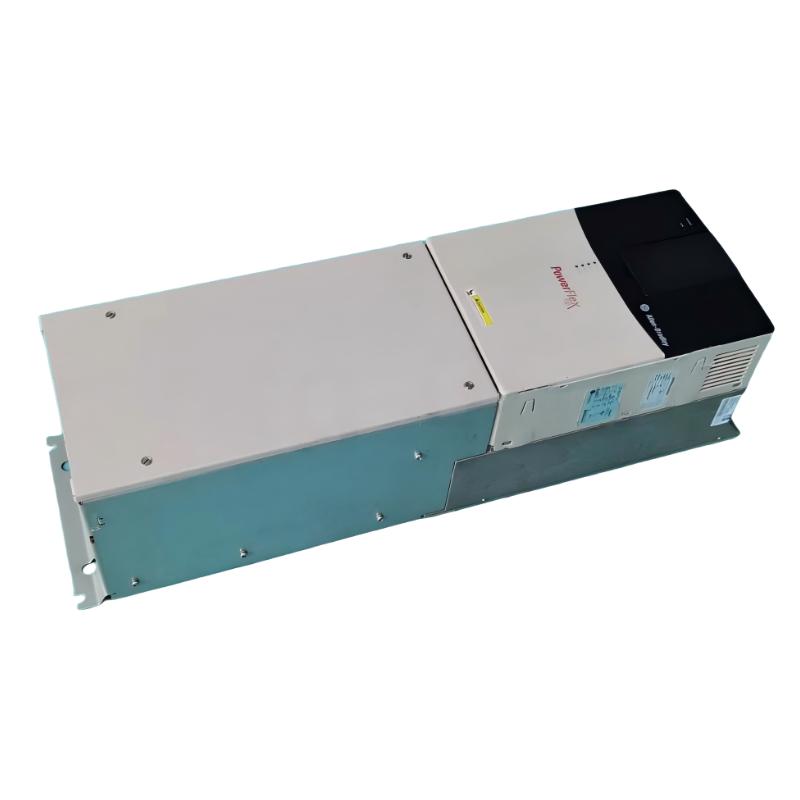
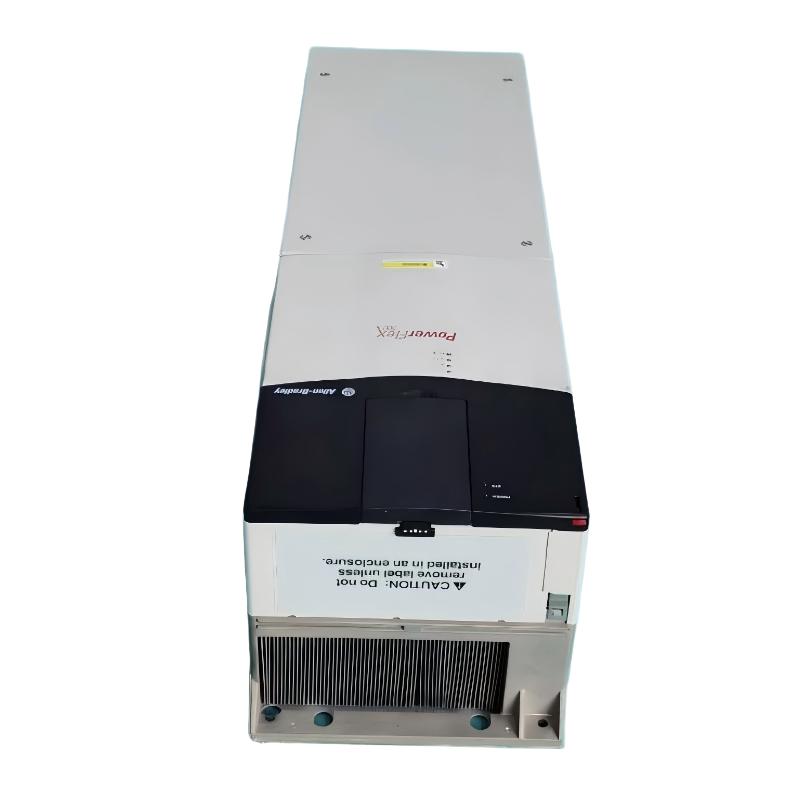
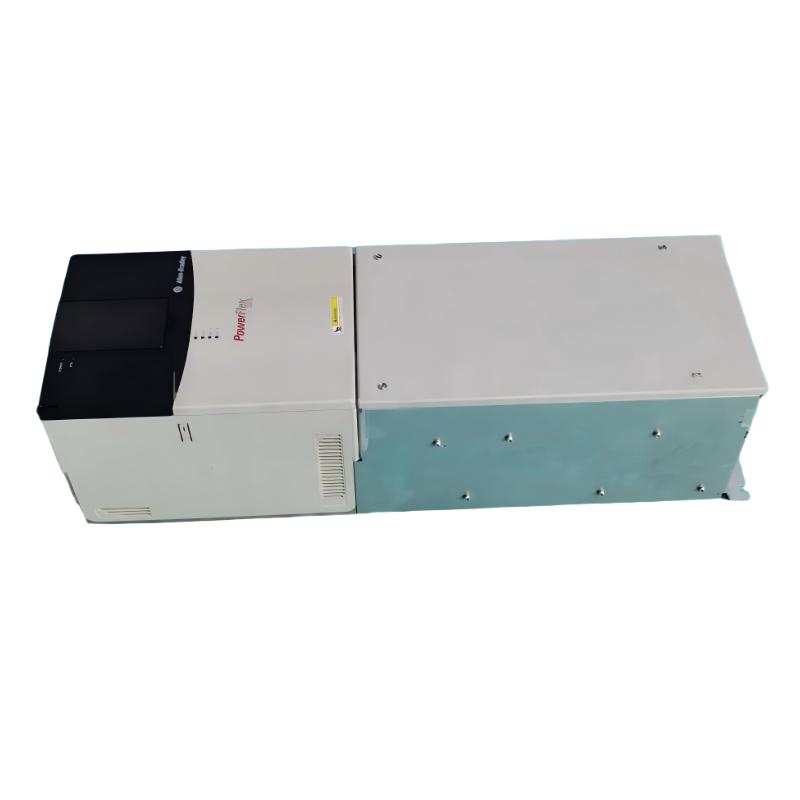
- Allen Bradley
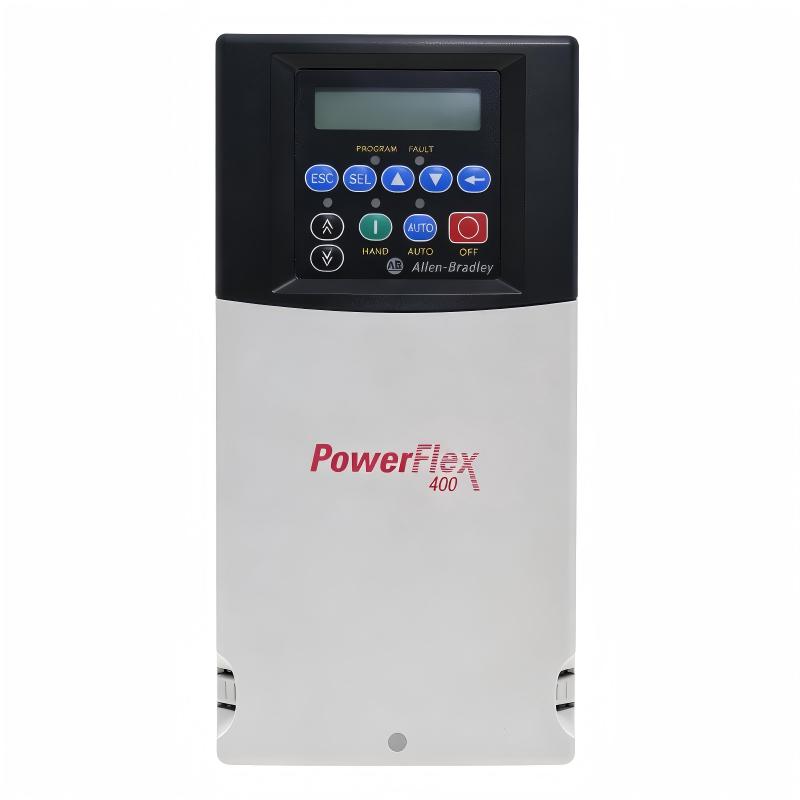
- 20BH105A0ANNANC0
- PowerFlex AC Drive
- USA
- 711.3 × 1,828.8 × 487.8 mm
- 229.07kg
- Xiamen, China
- New & In Stock
- T/T, PayPal, Western Union
- 1 Year
- 1-3 Working Days
- DHL, UPS, TNT, FedEx and EMS.
- 24-Hour Service
- COO
- 5
Our advantage

Global Logistics
We have a 10-year logistics and express cooperation agreement, so our products can be shipped to any place in the world.

Brand new and original
Our products are imported in bulk from the place of origin. Because of the cooperative relationship, our products are all original and 100% new.

24-hour service
We provide 7*24 hours service to our customers. We will be there whenever you need us.

Price advantage
All our products are priced very favorably because we have our own warehouse and supply.
| Company Information | |||
| [email protected] | |||
| Mobile | +8615980777398 | ||
| +8615980777398 | |||
| 15980777398 |
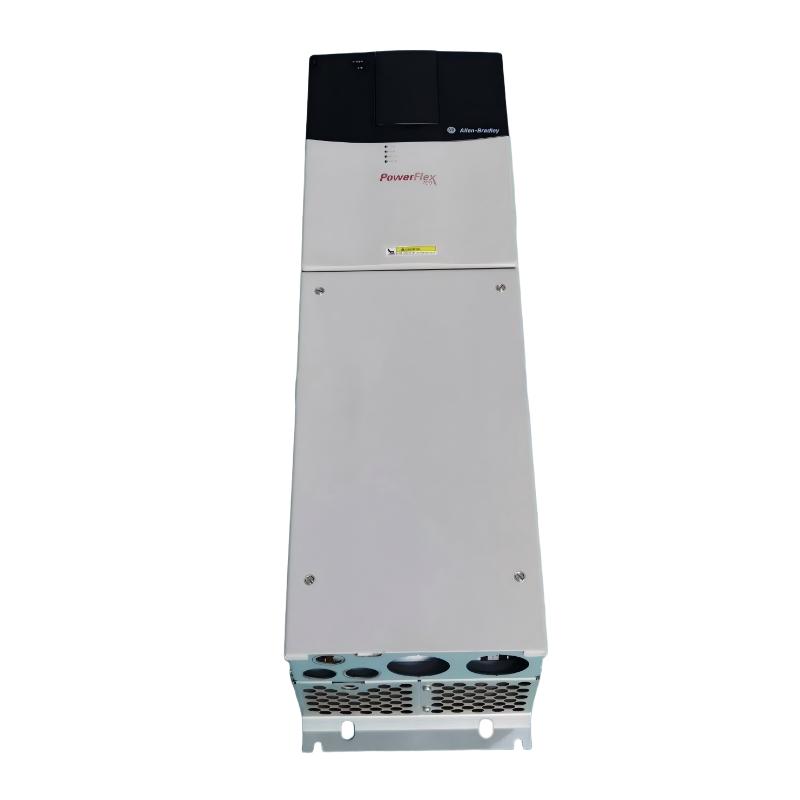
Allen-Bradley 20BH105A0ANNANC0 Industrial Product Specifications, Features, Applications, and Related Models
1. Product Overview
The Allen-Bradley 20BH105A0ANNANC0 is a model designation associated with the PowerFlex family of industrial variable-frequency AC drives. PowerFlex drives are designed to regulate the speed and torque of AC motors in industrial automation systems, allowing equipment to operate according to process requirements rather than running continuously at a fixed speed.
In industrial applications, a variable-frequency drive (VFD) adjusts the frequency and voltage supplied to an AC motor. This enables controlled acceleration, deceleration, motor speed regulation, and improved coordination between mechanical equipment and automated production processes.
The exact configuration represented by the complete catalog number 20BH105A0ANNANC0 should be verified against the original nameplate or the applicable technical documentation before purchase or installation. Detailed electrical ratings, enclosure dimensions, weight, and option codes can vary significantly between drive configurations. The tables below therefore distinguish general product-family characteristics from specifications that require model-specific confirmation.
2. Detailed Product Parameters
The following specifications describe the 20BH105A0ANNANC0 configuration. Electrical values should be checked against the actual drive nameplate before selecting replacement equipment or sizing a motor.
2.1 Basic Product Information
| Parameter | Specification |
|---|---|
| Model | 20BH105A0ANNANC0 |
| Brand | Allen-Bradley |
| Product series | PowerFlex 700 |
| Product category | Industrial AC variable-frequency drive |
| Product type | Variable-speed AC motor drive |
| Catalog family | Bulletin 20B |
| Rated output current | 105 A |
| Normal-duty power rating | 55 kW |
| Heavy-duty power rating | 45 kW |
| DC input voltage | 540 V DC nominal configuration |
| Input configuration | Three-phase AC supply to a DC-bus drive configuration, subject to the installed system |
| Output phases | Three-phase |
| Output voltage | 0 to rated motor voltage |
| Enclosure protection | IP20 / NEMA Type 1 |
| Control type | Vector control with 24 V I/O |
| Human interface module | No HIM; blank plate configuration |
| Internal braking transistor | Not included |
| Internal braking resistor | Not included |
| Communication module | No internal communication module specified |
| Motor feedback | No feedback option specified |
| EMC filtering | EMC filter with common-mode choke |
| PWM carrier frequency | Selectable 2, 4, 8, and 10 kHz |
| Typical rated-point efficiency | Approximately 97.5% |
| Maximum output frequency | 420 Hz |
| Operating temperature | Generally 0–50°C for the specified enclosure and applicable ratings |
| Relative humidity | 5–95%, non-condensing |
| Altitude | Up to 1,000 m without derating |
| Product condition | Verify lifecycle status and availability before procurement |
| Dimensions | Exact dimensions depend on the enclosure and mounting configuration |
| Weight (kg) | See the physical specification notes below |
2.2 Dimensions and Weight
Dimensions and weight are particularly important when replacing an existing drive in a control cabinet. The mounting position, cable entry points, ventilation space, and cabinet load must all be considered.
| Physical parameter | Specification |
|---|---|
| Product model | 20BH105A0ANNANC0 |
| Drive frame | Frame 5 |
| Standard enclosure designation | IP20 / NEMA Type 1 |
| Width, standalone IP54 / NEMA Type 12 configuration | Approximately 609.6 mm |
| Height, standalone IP54 / NEMA Type 12 configuration | Approximately 1,574.8 mm |
| Depth, standalone IP54 / NEMA Type 12 configuration | Approximately 450.7 mm |
| Weight (kg), standalone IP54 / NEMA Type 12 configuration | Approximately 154.68 kg, including packaging |
| IP20 enclosure dimensions | Must be confirmed for the exact mounting arrangement |
| IP20 net weight (kg) | Must be confirmed from the applicable mechanical drawing |
| Installation orientation | Follow the manufacturer’s specified mounting instructions |
| Cabinet clearance | Allow the required cooling and maintenance space |
| Cable clearance | Account for power cables, control wiring, and bending radius |
| Lifting requirements | Use an appropriate lifting method based on the verified installed weight |
Important: The dimensions and weight listed above apply to the specified standalone IP54/NEMA Type 12 configuration, not necessarily to the standard IP20 unit in the same catalog family. They should not be used as the confirmed shipping or installation dimensions of the exact IP20 drive without checking its mechanical drawing.
2.3 Electrical and Control Parameters
| Parameter | Specification |
|---|---|
| Rated output current | 105 A |
| Normal-duty output power | 55 kW |
| Heavy-duty output power | 45 kW |
| DC bus voltage configuration | 540 V DC nominal |
| Number of input phases | Three-phase supply configuration |
| Number of output phases | Three-phase |
| Output frequency range | Application-dependent; maximum specified frequency 420 Hz |
| Acceleration time | Programmable from 0 to 3,600 seconds |
| Deceleration time | Programmable from 0 to 3,600 seconds |
| Number of analog inputs | 2 |
| Number of analog outputs | 2 |
| Number of digital inputs | 6 |
| Number of digital outputs | 3 |
| Control I/O voltage | 24 V DC |
| Carrier frequency | 2, 4, 8, or 10 kHz |
| Typical rated-point efficiency | 97.5% |
| Displacement power factor | Approximately 0.98 across the specified speed range |
| Continuous heavy-duty output current | Approximately 85 A under the specified 540 V DC configuration |
| One-minute heavy-duty output current | Up to 128 A under specified conditions |
| Three-second heavy-duty output current | Up to 170 A under specified conditions |
| Feedback configuration | No feedback option specified |
| Dynamic braking | No internal braking IGBT or internal braking resistor |
| Communications | No internal communication module specified |
| Motor overload protection | Depends on the drive’s supported control mode, setup, and applicable configuration |
| Short-circuit protection | Determined by the installed protective device and applicable system rating |
The current and overload figures above are configuration-dependent ratings, not permission to operate a motor above its nameplate limits. The selected motor, operating duty, ambient temperature, installation altitude, and drive parameter settings must all be considered.
3. Product Introduction
The PowerFlex 700 is an industrial AC drive family intended for applications requiring adjustable motor speed, controlled torque, and coordinated operation with production machinery.
The 20BH105A0ANNANC0 is a high-current drive configuration designed for industrial equipment that requires substantial motor power. Its 105 A output-current rating and 55 kW normal-duty rating make it relevant to medium-to-large motor applications, depending on the motor voltage, load profile, and required overload capacity.
Unlike a conventional motor starter that primarily switches a motor on or off, a variable-frequency drive adjusts the electrical frequency and voltage supplied to the motor. The motor can therefore accelerate gradually, operate at different speeds, and decelerate according to the process requirements.
This type of control is useful in production environments where equipment must maintain a specific speed, coordinate with upstream and downstream machines, or adapt to changing process loads.
The vector-control configuration is intended to provide more sophisticated motor regulation than basic fixed-speed operation. Actual torque performance and low-speed characteristics depend on the selected control mode, motor data, commissioning procedure, and whether feedback devices are used.
The model has no built-in braking transistor or internal braking resistor specified in its configuration. Where rapid stopping or substantial regenerative energy is expected, the braking strategy must be assessed separately. Similarly, the absence of an internal communication module means that network connectivity should not be assumed without confirming the installed hardware and the intended control architecture.
The product is best evaluated as part of a complete motor-control system rather than as an isolated electrical component. Correct motor sizing, circuit protection, thermal management, grounding, wiring, and control integration are essential to dependable operation.
4. Main Product Features
4.1 Adjustable Motor Speed
The drive allows the motor to operate at different speeds according to the process demand. This can be useful for conveyors, pumps, fans, mixers, and other machinery where a fixed motor speed is not always appropriate.
Adjustable speed can also make it easier to coordinate several production stages. For example, a conveyor may need to slow down when a downstream machine is temporarily unable to accept additional material.
4.2 Vector-Control Capability
Vector control provides a more advanced method of regulating motor operation than simple voltage-to-frequency control. Depending on the implemented control mode and commissioning, it can support more precise speed regulation and improved torque response.
For applications with variable loads, this capability can help maintain a more consistent operating speed as the mechanical demand changes.
4.3 Programmable Acceleration and Deceleration
Independent acceleration and deceleration settings allow engineers to adapt motor ramps to the mechanical characteristics of the machine.
Gradual acceleration can reduce starting shock, belt tension changes, and sudden loading of couplings or gearboxes. Controlled deceleration can improve process repeatability and reduce abrupt stops.
The appropriate ramp time must still be determined from the application. A very short deceleration time may cause DC-bus overvoltage or require a separate braking solution.
4.4 Industrial I/O Integration
The specified configuration includes analog and digital I/O. These signals can be used to receive operating commands, monitor process references, and exchange basic status signals with external control equipment.
Typical examples include start and stop commands, speed references, run status, fault indication, and interlocking signals.
Because the configuration does not specify an internal communication module, network-based control should be treated as a separate design requirement rather than an assumed standard feature.
4.5 Industrial Enclosure Options
The catalog configuration specifies IP20/NEMA Type 1 protection. This is generally intended for installation within a suitable industrial electrical environment, such as an appropriately designed control cabinet or protected equipment room.
It should not be treated as a sealed, washdown-rated, or outdoor-ready unit. Dust, moisture, conductive contamination, and ambient temperature must be considered when choosing the installation location.
4.6 Configurable Switching Frequency
The selectable carrier-frequency settings provide flexibility when balancing motor-current characteristics, acoustic noise, and drive thermal performance.
A higher switching frequency may reduce audible motor noise in some applications, but it can also increase drive losses and thermal stress. The final setting should remain within the drive’s permitted operating conditions.
5. Product Applications
The 20BH105A0ANNANC0 is suitable for evaluation in industrial motor-control systems where its electrical ratings and control features match the application. The following examples describe typical uses of this class of drive; final suitability depends on the actual load and machine design.
5.1 Conveyor Systems


Conveyors are used in packaging plants, manufacturing facilities, material-handling systems, and distribution operations. Their operating requirements can vary according to production speed, product size, and material flow.
A variable-frequency drive can regulate conveyor speed and provide adjustable acceleration and deceleration. These functions are useful for reducing abrupt mechanical movement and coordinating conveyor sections.
Typical applications include:
-
Industrial assembly-line conveyors.
-
Packaging and carton-handling systems.
-
Material transfer equipment.
-
Manufacturing and processing lines.
-
Conveyor systems with variable throughput requirements.
For heavy conveyors, the engineer must evaluate starting torque, belt inertia, load variation, and stopping requirements before selecting the drive.
5.2 Pumps and Fluid-Handling Systems


Pumps often operate under changing flow and pressure requirements. A variable-frequency drive can adjust pump speed to suit the demand, provided the pump and process are designed for variable-speed operation.
Potential benefits include reduced throttling losses, smoother starts, and improved coordination with pressure or flow-control systems.
Typical applications include:
-
Industrial water circulation.
-
Process-fluid transfer.
-
Cooling-water systems.
-
General industrial pumping.
-
Fluid-handling systems with changing demand.
The suitability of a 55 kW drive depends on the pump motor’s rated voltage, current, operating point, and starting and overload requirements. Pump protection and minimum-flow requirements must also be addressed.
5.3 Fans and Ventilation Equipment


Fans used in industrial ventilation, exhaust systems, and process air handling may not need to run at full speed continuously.
Adjustable-speed control can help match airflow to production demand and reduce unnecessary energy consumption when operating conditions permit.
Applications include:
-
Factory ventilation.
-
Industrial exhaust systems.
-
Process air circulation.
-
Dust-collection systems.
-
Large air-handling equipment.
For fan applications, the drive should be selected according to motor current and the fan’s torque characteristics. Airflow requirements, minimum operating speed, and thermal limits should be checked.
5.4 Mixers and Agitators
Mixing equipment often requires controlled speed changes to accommodate different materials, viscosities, and production stages.
A variable-frequency drive can provide adjustable operating speed and programmable acceleration and deceleration, helping the process transition between operating conditions.
Typical applications include:
-
Industrial blending equipment.
-
Material-mixing systems.
-
Process tanks with motor-driven agitators.
-
Production equipment with changing mixing speeds.
The engineer should evaluate startup torque, shaft inertia, gearbox limitations, and the possibility of overload during mixing.
5.5 Industrial Machinery and Production Equipment


The drive may also be considered for general industrial machinery that requires adjustable AC motor speed.
Examples include selected machine tools, material-processing equipment, mechanical handling systems, and production machines that use three-phase AC motors.
For machinery with high positioning accuracy, rapid cyclic operation, or precise synchronization, a dedicated servo or specialized motion-control system may be more appropriate. The choice depends on the required speed range, torque response, and positioning accuracy.
6. Advantages of the 20BH105A0ANNANC0
6.1 High Current Capacity for Industrial Loads
The specified 105 A output-current rating makes this configuration relevant to substantial industrial motor loads. The 55 kW normal-duty and 45 kW heavy-duty ratings provide useful reference points when matching the drive to the motor and its operating duty.
The final selection must be based on rated motor current rather than power alone, because motors with different voltages and efficiency levels can require different currents at the same power rating.
6.2 Flexible Process-Speed Adjustment
Adjustable speed can help production equipment respond to changes in process demand. This is particularly useful when the machine does not need to operate continuously at full speed.
A suitable speed-control strategy may also improve coordination between connected machines and reduce unnecessary mechanical stress during transitions.
6.3 Controlled Starting and Stopping
Programmable ramp times allow the drive to start and stop a motor more gradually than a simple direct-on-line starter.
Depending on the mechanical system, this can help reduce belt shock, coupling stress, and abrupt changes in the transported material.
However, controlled deceleration is not equivalent to a complete braking system. Loads with high inertia or overhauling torque may require additional braking equipment.
6.4 Advanced Motor Regulation
Vector-control capability provides a useful option for applications that require better speed regulation and torque response than basic scalar control can deliver.
Its actual performance depends on motor identification, parameter tuning, load conditions, and the supported control mode.
6.5 Flexible Analog and Digital Control
The specified I/O arrangement supports conventional hardwired control and monitoring.
This can be useful for integrating the drive with push-button stations, programmable logic controllers, sensors, and machine interlocks, subject to the available I/O functions and electrical design.
6.6 Potential Energy Savings
Energy savings are possible when a motor’s speed can be reduced to match actual process demand.
For example, variable-speed control can be beneficial for suitable centrifugal pumps and fans. The actual savings depend on the load profile, control strategy, system resistance, and operating hours.
A variable-frequency drive does not automatically guarantee lower energy consumption in every application. The result should be assessed using the equipment’s real operating conditions.
6.7 Configurable Industrial Installation
The PowerFlex family offers different drive configurations and enclosure arrangements. This provides flexibility when specifying equipment for different cabinet and environmental requirements.
For this particular model, the standard IP20 configuration should not be confused with a standalone higher-protection enclosure. The complete installation must provide the required protection against environmental conditions.
7. Important Limitations and Selection Considerations
Before selecting, purchasing, or replacing this drive, consider the following points.
| Consideration | What to verify |
|---|---|
| Electrical supply | Confirm the actual supply arrangement and DC-bus requirements |
| Motor compatibility | Match rated voltage, current, power, and frequency |
| Duty rating | Determine whether normal-duty or heavy-duty operation applies |
| Control requirements | Verify vector-control settings and required I/O |
| Communication | Confirm whether a network interface is needed |
| Braking | Determine whether an external braking solution is required |
| Enclosure | Check the environmental protection needed at the installation site |
| Dimensions | Confirm the exact drive and enclosure drawing |
| Weight (kg) | Confirm net weight, packaged weight, and lifting requirements |
| Cooling | Check cabinet ventilation and allowable ambient temperature |
| Protection | Coordinate fuses or circuit breakers with the drive rating |
| Lifecycle | Verify serviceability, replacement options, and spare-parts availability |
| Commissioning | Check motor parameters, ramp times, limits, and interlocks |
The model belongs to an established industrial drive family, but a model designation alone is not enough to establish interchangeability. Even drives with similar power ratings may differ in input voltage, current, control hardware, braking options, enclosure, and communications.
8. Five Related Models from the Same PowerFlex 700 Series
The following five models are candidates for comparison within the PowerFlex 700 family. They cover different electrical configurations and application requirements. The exact suffix matters, so a similar-looking model should not be considered a direct replacement until its complete catalog number has been checked.
Physical dimensions and weights not independently confirmed for every listed configuration are explicitly marked as requiring verification. The values should not be assumed to match the main model.
| Model | Series / configuration | Electrical parameters | Power rating | Protection and control | Dimensions (W × H × D) | Weight (kg) |
|---|---|---|---|---|---|---|
| 20BH105A0ANNANC0 | PowerFlex 700, high-voltage DC-bus configuration | 105 A; 540 V DC nominal configuration | 55 kW normal duty / 45 kW heavy duty | IP20 / Type 1; vector control; 24 V I/O | Exact IP20 dimensions to verify | Exact IP20 net weight to verify |
| 20BH205A0ANNANA0 | PowerFlex 700, higher-current configuration | Exact current and power rating to verify | Verify exact catalog configuration | IP20 family; options to verify | 711.3 × 1,828.8 × 487.8 mm for the listed standalone IP54 / Type 12 configuration | 229.07 kg, including packaging, for the listed standalone configuration |
| 20BC105A0ANNANC0 | PowerFlex 700, 400 V class | 105 A; three-phase AC input | 55 kW normal duty / 45 kW heavy duty | IP20 / Type 1; vector control; 24 V I/O | Exact dimensions to verify | Exact weight to verify |
| 20BC105A0ANNANN0 | PowerFlex 700, 400 V class, alternative control configuration | 105 A; three-phase AC input | 55 kW normal duty / 45 kW heavy duty | IP20 / Type 1; standard control configuration; no feedback specified | Exact dimensions to verify | Exact weight to verify |
| 20BC105A0ANNANC0 with conformal-coating requirements reviewed | PowerFlex 700, 400 V class | 105 A; three-phase AC input | 55 kW normal duty / 45 kW heavy duty | Confirm coating and option suffix against the actual nameplate | Exact dimensions to verify | Exact weight to verify |
Selection notes: The fifth entry is a configuration-check candidate rather than a separate confirmed catalog number. If a distinct fifth replacement is required, choose it only after confirming the full catalog number. This avoids treating an unverified suffix variation as a separate product.
How to Choose Among These Models
– For an existing 540 V DC-bus installation: Start by checking the original 20BH model and its complete electrical configuration. Verify the bus arrangement before considering another voltage class.
– For a 400 V three-phase AC system: The 20BC105 family is worth evaluating, but its supply requirements must match the actual installation.
– For higher-current applications: A larger-current model may be appropriate, but the motor’s rated current, overload demand, and mechanical load must be checked.
– For control-system compatibility: Compare I/O, feedback, communication options, and control modes rather than relying on current and power ratings alone.
– For cabinet replacement: Obtain the mechanical drawing for the exact catalog number. The overall enclosure size and mounting arrangement can differ substantially between configurations.
9. Five Other Allen-Bradley Models Worth Considering
The following table broadens the comparison beyond the PowerFlex 700 series. These are related industrial automation products that may be useful when planning a drive replacement, a control-system upgrade, or a new machine.
The five models serve different purposes, so they are not all direct substitutes for the 20BH105A0ANNANC0. In particular, a programmable logic controller cannot replace a motor drive without a suitable drive being included in the system.
| Model | Product family | Main function | Key parameters to consider | Dimensions (W × H × D) | Weight (kg) |
|---|---|---|---|---|---|
| 20G11ND022AA0NNNNN | PowerFlex 755 | AC motor speed and torque control | Verify input voltage, current rating, frame size, control options, and braking requirements | Verify exact catalog configuration | Verify exact catalog configuration |
| 20F11NC022JA0NNNNN | PowerFlex 753 | Industrial AC motor drive | Verify voltage class, rated current, overload duty, enclosure, and communications | Verify exact catalog configuration | Verify exact catalog configuration |
| 25B-D024N104 | PowerFlex 525 | Compact AC motor drive | Verify voltage class, rated output current, motor power, I/O, and network options | Verify exact catalog configuration | Verify exact catalog configuration |
| 1769-L33ER | CompactLogix | Programmable automation controller | Verify controller capacity, Ethernet connectivity, supported I/O, and application requirements | Verify hardware revision and mounting arrangement | Verify exact hardware configuration |
| 1756-L81E | ControlLogix | Programmable automation controller | Verify controller capacity, communication requirements, chassis compatibility, and system architecture | Verify chassis and installed hardware arrangement | Verify installed configuration |
These model numbers are comparison candidates, not guaranteed current-production recommendations. Confirm the complete catalog number and hardware revision before ordering.
9.1 PowerFlex 755 — 20G11ND022AA0NNNNN
The PowerFlex 755 family is designed for industrial applications that need adjustable AC motor speed and more extensive drive-system integration.
It is worth considering for new or upgraded machinery where control functionality, system integration, and long-term maintainability are important.
Before selecting it as a replacement, compare:
-
Supply voltage and phase configuration.
-
Rated output current and motor power.
-
Normal-duty and heavy-duty ratings.
-
Feedback and control requirements.
-
Communication interfaces.
-
Braking arrangements.
-
Cabinet dimensions and installation clearances.
A PowerFlex 755 should not be assumed to be a drop-in replacement for a PowerFlex 700 simply because both are AC drives.
9.2 PowerFlex 753 — 20F11NC022JA0NNNNN
The PowerFlex 753 is another industrial drive family worth evaluating for motor-control applications.
It may be suitable when a project requires a different combination of drive features, control integration, and installation arrangements.
The critical comparison is not the series name alone. The electrical supply, motor current, overload duty, control requirements, and mechanical installation must all be compatible.
9.3 PowerFlex 525 — 25B-D024N104
The PowerFlex 525 is a compact drive family intended for a range of industrial motor-control applications.
Its compact form can make it attractive for smaller machinery, distributed drive installations, and equipment with limited panel space.
However, it should not be considered a direct substitute for the 105 A, 55 kW normal-duty main model without confirming the exact voltage and output-current ratings. A compact drive with a lower current rating may be unsuitable for the original motor.
9.4 CompactLogix — 1769-L33ER
CompactLogix is a programmable automation controller family rather than a power drive.
It may be relevant when a machine upgrade involves the drive and its control system together. A controller can coordinate start and stop commands, process logic, interlocks, sensor signals, and other automation tasks.
When evaluating this controller, check the existing PLC program, communication protocol, I/O requirements, and compatibility with the installed control hardware.
9.5 ControlLogix — 1756-L81E
ControlLogix is intended for industrial automation systems that require a controller-based architecture.
It may be relevant to a larger upgrade involving multiple drives, machine coordination, and centralized process control.
It is not a substitute for the main drive. Instead, it can form part of a wider system in which suitable motor drives execute the required motor-control functions.
10. Comparison of the Main Product and Related Options
| Evaluation criterion | 20BH105A0ANNANC0 | PowerFlex 700 alternatives | Other PowerFlex families | PLC models |
|---|---|---|---|---|
| Primary purpose | AC motor control | AC motor control | AC motor control | Automation logic and sequencing |
| Direct motor-power output | Yes | Yes | Yes | No |
| Adjustable motor speed | Yes | Configuration-dependent | Configuration-dependent | Only through suitable connected drives |
| Vector-control capability | Specified configuration supports vector control | Depends on model | Depends on model | Not a motor-drive function |
| Motor-current capacity | 105 A specified | Depends on model | Depends on model | Not applicable |
| Internal braking | No internal braking IGBT specified | Depends on model | Depends on model | Not applicable |
| Communication capability | No internal communication module specified | Depends on options | Depends on model and options | Depends on controller |
| Replacement suitability | Reference configuration | Must verify exact electrical and mechanical compatibility | Must verify power and control compatibility | Not a direct replacement |
| Dimensions | Confirm exact enclosure | Confirm model-specific drawing | Confirm model-specific drawing | Confirm hardware and mounting configuration |
| Weight (kg) | Confirm exact IP20 net weight | Confirm exact configuration | Confirm exact configuration | Confirm exact hardware configuration |
11. Recommended Selection Process
For an existing installation, the safest way to choose a related model is to work through the following sequence.
1. Identify the original drive configuration. Record the complete catalog number, input rating, output current, motor rating, enclosure, and installed options.
2. Check the motor nameplate. Confirm rated voltage, full-load current, frequency, speed, and duty requirements.
3. Confirm the supply arrangement. The 20BH configuration described here uses a DC-bus voltage designation. Do not assume that every drive in the same family accepts the same direct input supply.
4. Check control-system requirements. Determine whether the system uses hardwired I/O, an industrial communication network, encoder feedback, or an external controller.
5. Review braking and stopping requirements. A drive without an internal braking transistor or resistor may require additional equipment for applications with high inertia or rapid stopping.
6. Confirm physical compatibility. Obtain the mechanical drawing and verify dimensions, weight, mounting holes, cable clearances, and cooling requirements.
7. Check lifecycle and support requirements. For an older installation, consider spare-part availability, repair options, replacement engineering, and the cost of modifying the control system.
8. Commission the replacement correctly. Verify motor parameters, protection settings, acceleration and deceleration times, fault handling, and machine interlocks before returning the equipment to service.
12. Final Product Summary
The Allen-Bradley 20BH105A0ANNANC0 is a PowerFlex 700 industrial AC drive configuration with a specified 105 A output-current rating, 55 kW normal-duty rating, and 45 kW heavy-duty rating. Its listed configuration includes vector control, 24 V I/O, an IP20/NEMA Type 1 enclosure designation, and no internal braking IGBT or braking resistor.
Its main strengths are adjustable motor-speed control, programmable acceleration and deceleration, and industrial motor regulation. Potential applications include suitable conveyor systems, pumps, fans, mixers, and general manufacturing machinery.
The most important selection considerations are the electrical supply, motor current, overload requirements, braking needs, communications, and physical installation. The dimensions and weight of the exact IP20 configuration still need to be verified before cabinet planning, shipment, or replacement work.
For the five same-series comparisons, the PowerFlex 700 variants are the closest starting point. For broader upgrades, PowerFlex 755, PowerFlex 753, and PowerFlex 525 are worth evaluating according to the required motor capacity and application. CompactLogix and ControlLogix may be relevant to a larger automation upgrade, but they serve as controllers rather than motor drives.
The key purchasing rule is to verify the complete catalog number and the actual nameplate before treating any related model as an equivalent replacement. This is especially important for voltage class, current rating, enclosure, braking options, and dimensions and weight in kilograms.