

ProductPRODUCT
Featured products
Contact Us
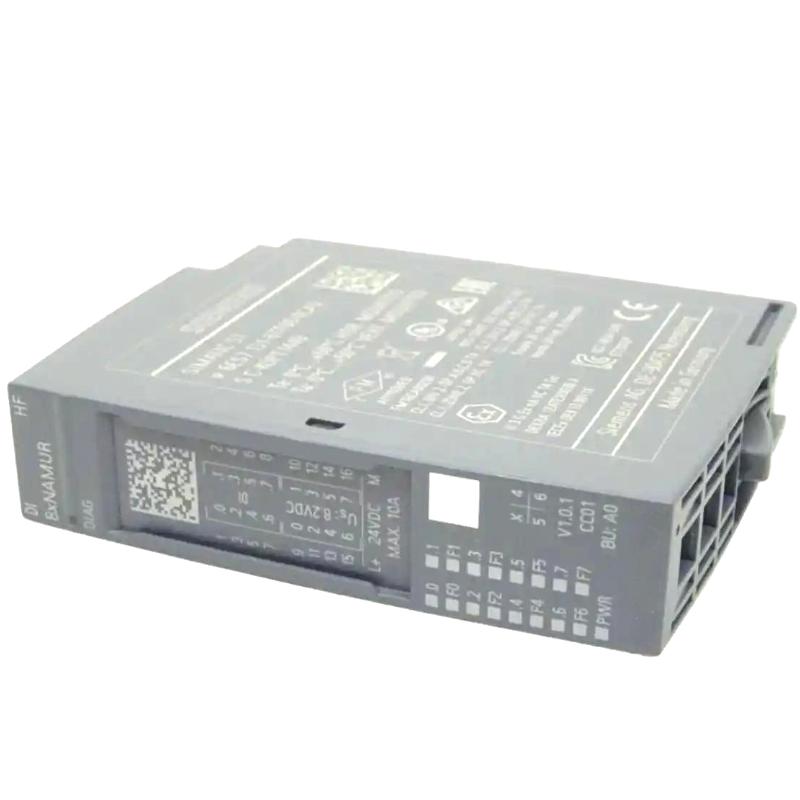
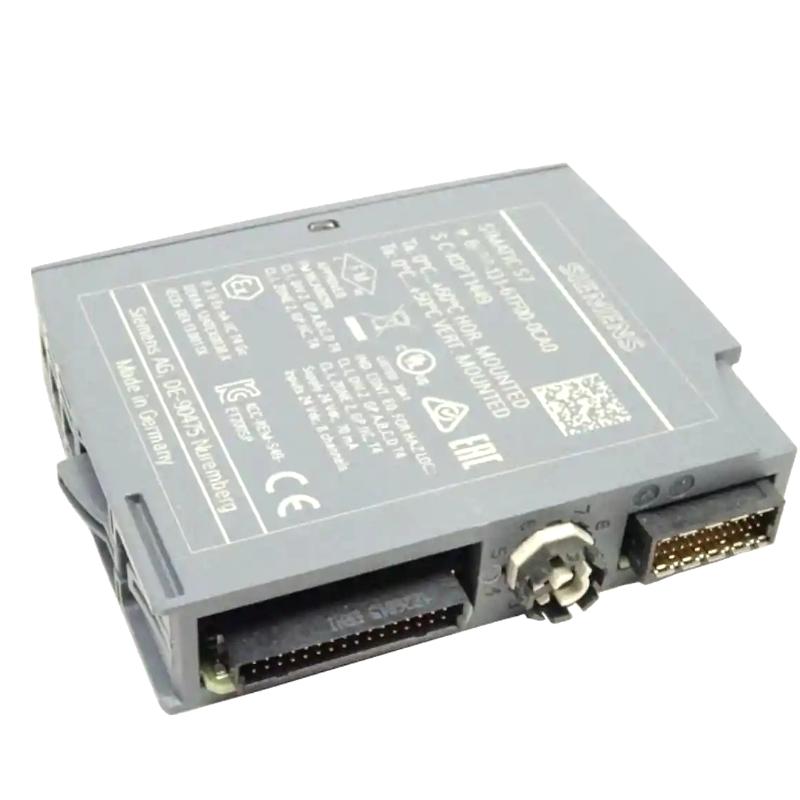
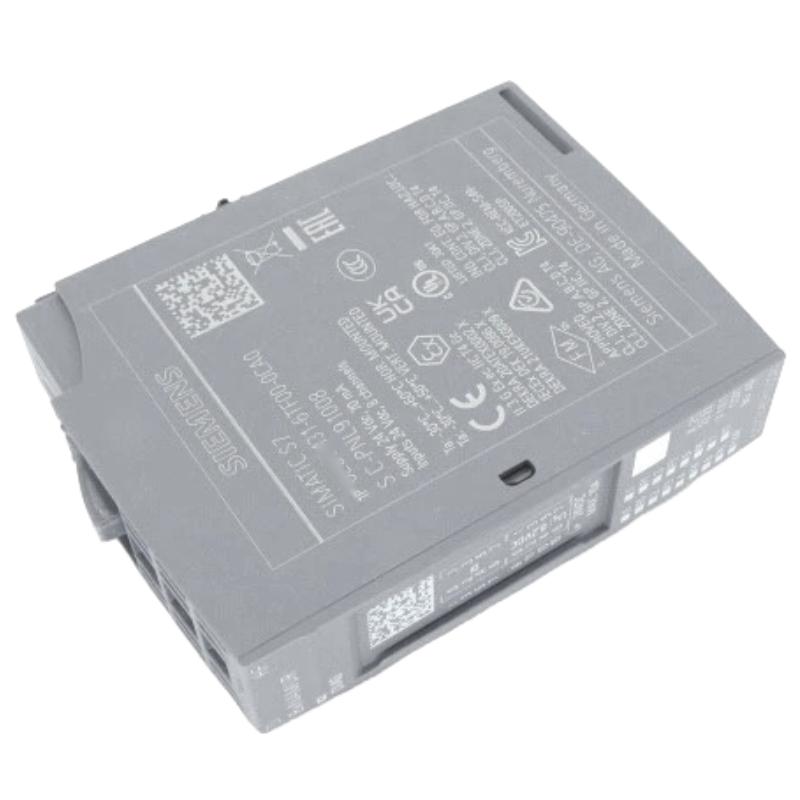
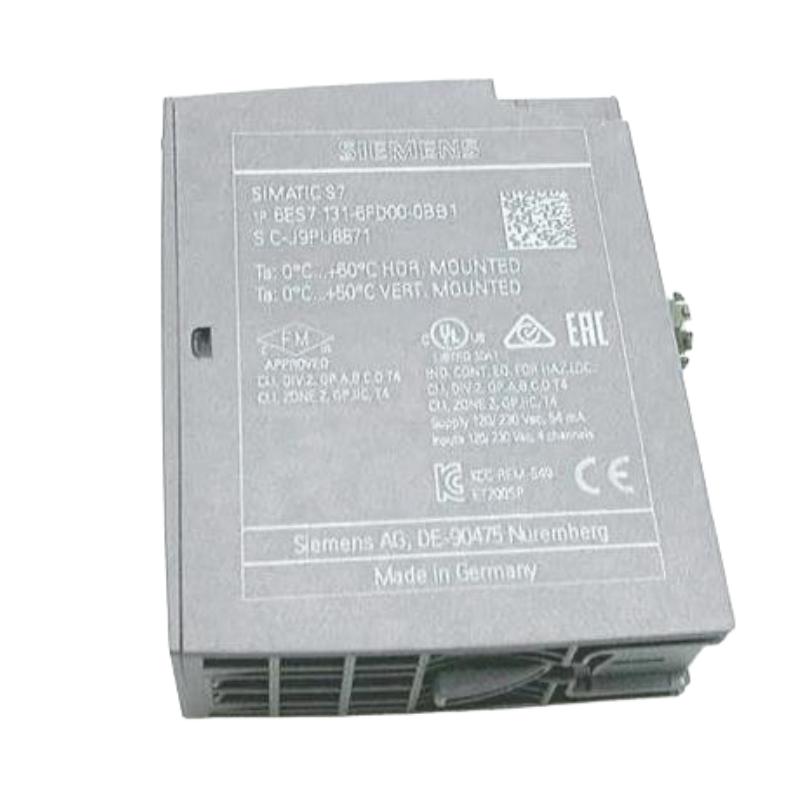
- Siemens
- 6AG2131-6TF00-4CA0
- Digital Input Module
- Germany
- 15 × 73 × 58 mm
- 0.042 kg
- Xiamen, China
- New & In Stock
- T/T, PayPal, Western Union
- 1 Year
- 1-3 Working Days
- DHL, UPS, TNT, FedEx and EMS.
- 24-Hour Service
- COO
- 8
Our advantage

Global Logistics
We have a 10-year logistics and express cooperation agreement, so our products can be shipped to any place in the world.

Brand new and original
Our products are imported in bulk from the place of origin. Because of the cooperative relationship, our products are all original and 100% new.

24-hour service
We provide 7*24 hours service to our customers. We will be there whenever you need us.

Price advantage
All our products are priced very favorably because we have our own warehouse and supply.
| Company Information | |||
| [email protected] | |||
| Mobile | +8615980777398 | ||
| +8615980777398 | |||
| 15980777398 |
Product Overview
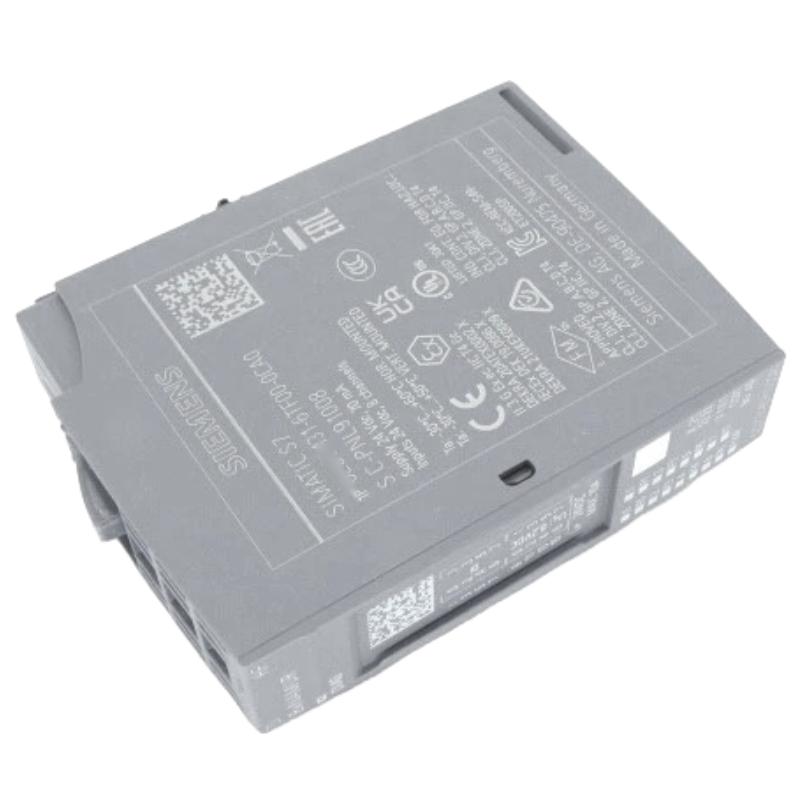
The Siemens 6AG2131-6TF00-4CA0 SIPLUS ET 200SP Digital Input Module is part of the SIPLUS range for industrial automation applications. It is associated with the SIMATIC ET 200SP distributed I/O platform, which allows field signals to be collected close to machines and production equipment while communicating with a higher-level controller.
Digital input modules connect discrete field devices to an automation system. Typical signals come from proximity switches, push buttons, limit switches, auxiliary contacts, and other devices that indicate an ON/OFF condition. The controller uses these signals to evaluate machine status, process conditions, interlocks, and operating sequences.
Within a distributed I/O station, the module works alongside the station’s interface and associated base components. It allows field-level switching information to enter the control program, where the signals can be processed by a PLC or other supported automation controller. The SIPLUS designation identifies the product as part of Siemens’ enhanced-environment product range, making the module relevant to applications that require environmental suitability beyond standard industrial configurations.
Technical Specifications
| Parameter | Specification |
|---|---|
| Brand | Siemens |
| Product Model | 6AG2131-6TF00-4CA0 |
| Product Family | SIPLUS ET 200SP |
| Product Type | Digital Input Module |
| Automation Platform | SIMATIC ET 200SP |
| Module Function | Acquisition of digital field signals |
| Signal Type | Discrete ON/OFF signals |
| System Architecture | Distributed I/O |
| Controller Interface | Via the ET 200SP station and its interface module |
| Typical Field Devices | Switches, sensors, push buttons, and auxiliary contacts |
| Control Application | Machine and process status monitoring |
| Installation Context | Industrial control cabinet or suitable enclosure |
| Dimensions | 15 × 73 × 58 mm |
| Weight | 0.042 kg |
Product Features
- Distributed signal acquisition: Collects discrete field signals at the machine or process level, reducing the need to route every field signal directly to a central PLC cabinet.
- Integration with ET 200SP: Operates within the SIMATIC ET 200SP distributed I/O architecture, where modules share a station with the relevant interface and base components.
- PLC-based signal processing: Makes field-state information available to the control program for logic evaluation, sequencing, and status monitoring.
- Support for automated equipment: Digital inputs can be used to monitor device states, operating limits, position indications, and interlock conditions.
- SIPLUS product range: Belongs to Siemens’ SIPLUS portfolio for applications with defined environmental requirements.
- Modular station design: Supports a distributed I/O arrangement in which individual modules can be organized according to the signal requirements of the equipment.
- Maintenance-friendly architecture: A modular station helps technicians identify the relevant I/O section when diagnosing signal faults or servicing control equipment.
Working Principle
The module receives discrete electrical signals from connected field devices. When a switch changes state or a sensor detects a target, the corresponding input circuit responds to the electrical condition presented at the channel.
The module processes the incoming signal and makes its state available through the ET 200SP station. The station’s interface module communicates the I/O data to the higher-level controller over the configured industrial network. The PLC program then evaluates the input state and determines the appropriate control response.
For example, a limit switch may indicate that a pneumatic cylinder has reached its end position. The digital input module acquires the switch state, and the controller uses that information to permit the next step in the machine sequence. Similarly, a push button can provide an operator command, while an auxiliary contact can indicate whether a motor starter has changed state.
Correct operation depends on suitable field wiring, compatible signal levels, proper module installation, and correct hardware configuration in the automation project. During troubleshooting, technicians typically compare the physical input state with the corresponding PLC value to determine whether a problem originates in the field device, wiring, module, station communication, or control logic.
Role in a Distributed I/O Control Architecture
| System Component | Role in the Architecture | Relationship to the Digital Input Module |
|---|---|---|
| Field Sensors and Switches | Detect machine positions, operating states, or process conditions | Provide the discrete signals acquired by the module |
| Digital Input Module | Collects discrete electrical signals | Converts field states into input data for the automation system |
| ET 200SP Base Unit | Provides the module’s mounting and electrical connection arrangement | Supports module installation and field wiring |
| ET 200SP Interface Module | Connects the distributed I/O station to the automation network | Transfers I/O data between the station and controller |
| SIMATIC PLC | Executes the control program | Processes input states and determines machine responses |
| Industrial Communication Network | Carries data between controllers and distributed stations | Provides the communication path for the input data |
| Engineering Software | Configures hardware and control logic | Defines the station configuration and input addressing |
| Control Cabinet | Houses and protects automation equipment | Provides the installation environment for the I/O station |
Industrial Applications
| Application | Digital Input Use | Role in Automation |
|---|---|---|
| Manufacturing Machinery | Reads limit switches, push buttons, and component-presence sensors | Supports machine sequencing and status detection |
| Material Handling Systems | Monitors conveyor sensors and position switches | Tracks equipment states and transfer conditions |
| Packaging Equipment | Acquires package-detection and mechanism-position signals | Coordinates individual steps in packaging cycles |
| Assembly Lines | Reads fixture, clamp, and part-position signals | Confirms machine conditions before the next operation |
| Process Equipment | Monitors discrete status contacts and operating limits | Supplies state information to the PLC |
| Utility Systems | Collects equipment-running and fault-contact signals | Supports centralized equipment monitoring |
| Automated Test Stations | Reads fixture switches and test-sequence status signals | Enables controller-based test coordination |
Installation and Maintenance
- Confirm the station configuration: Identify the ET 200SP station and verify that the module is intended for the installed hardware arrangement.
- Isolate the equipment: Switch off the relevant power supplies and follow the site’s electrical isolation procedure before handling the module or field wiring.
- Inspect the mounting location: Check the mounting rail, available installation space, and surrounding equipment for damage or contamination.
- Check the base unit: Confirm that the required ET 200SP base unit is installed and suitable for the module configuration.
- Install the module: Fit the module into its designated position according to the station’s assembly procedure and confirm that it is securely seated.
- Connect field wiring: Terminate the sensor and switch conductors according to the applicable wiring diagram and assigned input channels.
- Verify electrical connections: Check conductor identification, terminal security, polarity where applicable, and the separation of signal and power wiring.
- Inspect field devices: Confirm that connected switches and sensors operate mechanically and produce the expected electrical states.
- Configure the hardware: Set up the module and station in the engineering project, ensuring that the configured hardware corresponds to the installed equipment.
- Check input addressing: Confirm that each physical channel maps to the intended PLC input address and that the control program references the correct signals.
- Perform a functional test: Restore power under controlled conditions and operate each field device while monitoring the corresponding input state in the PLC or diagnostic interface.
- Record the results: Document wiring changes, channel assignments, diagnostic findings, and any corrective maintenance performed.
Compatible System Components
| Component | Function | Relationship to the Module |
|---|---|---|
| SIMATIC ET 200SP Interface Module | Connects the I/O station to the controller network | Provides communication between the station and PLC |
| ET 200SP Base Unit | Supports module mounting and electrical connections | Provides the required module installation interface |
| ET 200SP Digital Output Module | Sends control signals to actuators and other output devices | Complements input acquisition in the same distributed I/O architecture |
| ET 200SP Analog Input Module | Acquires continuous-value signals from compatible field instruments | Handles analog signals alongside discrete inputs |
| SIMATIC S7 PLC | Executes automation logic | Processes input data received from the distributed station |
| Proximity Switch | Detects the presence or position of a target | Supplies discrete status signals |
| Limit Switch | Detects a mechanical end position or operating condition | Provides a switching signal to an input channel |
| Engineering Software | Configures the hardware and PLC program | Supports setup, diagnostics, and signal verification |
Recommended Related Models
| Product or Component | Function | Relevance |
|---|---|---|
| Siemens SIPLUS ET 200SP Digital Input Modules | Acquire discrete field signals | Related modules for distributed signal acquisition |
| Siemens SIPLUS ET 200SP Digital Output Modules | Control discrete output devices | Complementary modules for field actuation |
| Siemens SIPLUS ET 200SP Analog Input Modules | Acquire analog process values | Suitable for applications requiring continuous measurement signals |
| Siemens SIPLUS ET 200SP Analog Output Modules | Provide analog control signals | Complementary option for controlling compatible devices |
| Siemens SIMATIC ET 200SP Interface Modules | Connect distributed I/O stations to the control network | Required according to the selected station architecture |
| Siemens SIMATIC S7-1500 Controllers | Execute machine and process control programs | Higher-level control option for compatible distributed I/O configurations |
Key Advantages
- Acquires discrete field signals for PLC-based control.
- Integrates into the modular SIMATIC ET 200SP distributed I/O architecture.
- Supports machine sequencing, interlocks, and equipment-status monitoring.
- Allows field signals to be processed close to the equipment they monitor.
- Supports structured troubleshooting through channel-level input checks and controller diagnostics.
- Forms part of the Siemens SIPLUS range for industrial applications with defined environmental requirements.
Technical FAQs
1. What is the main function of the Siemens 6AG2131-6TF00-4CA0?
It is identified as a SIPLUS ET 200SP digital input module. Its role is to acquire discrete signals from connected field devices and make the input states available to the automation controller through the distributed I/O station.
2. What field devices can be connected to a digital input module?
Typical applications include proximity sensors, limit switches, push buttons, auxiliary contacts, and other compatible devices that provide discrete electrical signals. The selected device must match the module’s electrical input requirements and wiring arrangement.
3. How does the module communicate with a PLC?
The module operates as part of an ET 200SP distributed I/O station. The station’s interface module transfers input data through the configured industrial communication network to the PLC, where the control program evaluates the signals.
4. What should be checked if a field signal does not appear in the PLC?
Check the field device, wiring, terminal connections, module seating, station diagnostics, hardware configuration, and PLC input address. Comparing the physical signal with the reported channel state can help isolate the source of the problem.