
NewsNEWCENTER
Featured products
Contact Us
GE Vernova Advances Power Plant Reliability with Gas Turbine Rotor Life Extension Services
2026-10-09GE Vernova is expanding its focus on long-term power generation reliability through a service agreement covering five 9F gas turbines at three power plants in Egypt. Announced on September 23, 2026, the agreement supports equipment longevity at the Kureimat, Nubaria, and Cairo North power plants, helping operators maintain generation assets while addressing the demands of an evolving electricity market.
The project highlights the growing importance of turbine maintenance, condition assessment, and lifecycle management in the power generation industry.
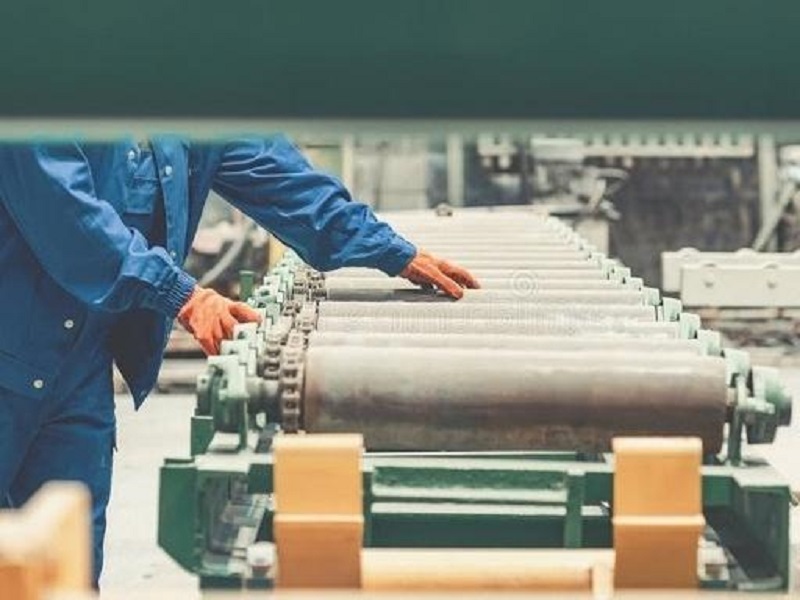
Extending the Service Life of Critical Turbine Equipment
Gas turbines are essential assets in power generation facilities. They must operate under demanding thermal and mechanical conditions while meeting requirements for availability, efficiency, and safe operation.
Over time, components can experience wear, thermal fatigue, and other forms of degradation. Replacing major equipment can require substantial investment and extended maintenance planning.
GE Vernova’s Rotor Life Extension services are intended to help assess and extend the service life of critical turbine components. For plant operators, lifecycle extension can provide an alternative to premature equipment replacement while supporting continued operation of existing generation capacity.
The Egypt agreement demonstrates how specialized maintenance services can support established power infrastructure as electricity demand and operating requirements change.
Why Turbine Condition Monitoring Matters
Effective turbine maintenance depends on understanding the condition of critical equipment rather than relying exclusively on fixed maintenance intervals.
Operators can use inspection findings, vibration measurements, temperature information, operating history, and maintenance records to evaluate equipment condition and identify developing issues.
Condition monitoring technologies help engineers recognize abnormal operating behavior and investigate potential mechanical problems before they lead to major failures.
For gas turbine installations, monitoring can support decisions about inspection schedules, component repairs, planned outages, and long-term maintenance investments.
The Role of Industrial Control Systems
Modern power plants rely on integrated control and instrumentation systems to manage turbine operation, monitor operating parameters, and coordinate auxiliary equipment.
These environments may include turbine control systems, PLC-based auxiliary controls, distributed control systems, protection devices, industrial networks, and operator interfaces.
Reliable instrumentation and control are essential because turbine performance depends on coordinated management of parameters such as temperature, pressure, speed, fuel flow, and vibration.
Although lifecycle extension focuses on the mechanical condition of turbine components, maintenance planning must also consider the availability and reliability of associated control and monitoring equipment.
A coordinated approach can help operators understand the relationship between equipment condition, operating history, and plant performance.
Supporting Planned Maintenance and Operational Availability
Unplanned outages can disrupt electricity supply and create significant financial consequences for power producers. Extending equipment life therefore requires careful coordination between maintenance teams, engineering specialists, and plant operators.
A structured lifecycle management strategy typically involves equipment inspections, condition assessment, maintenance planning, component repair or replacement, and post-maintenance verification.
By evaluating equipment condition and planning interventions in advance, operators can better coordinate maintenance activities with expected power demand and available generation capacity.
However, lifecycle extension must remain subject to engineering assessments and applicable operating requirements. Extending the service life of a component does not remove the need for inspection, testing, or replacement when degradation exceeds acceptable limits.
Implications for the Power Generation Industry
GE Vernova’s Egypt project reflects a broader industry priority: maintaining the reliability of existing power generation assets while managing capital expenditure and evolving electricity demand.
For operators of gas turbines and other critical rotating machinery, lifecycle services can complement predictive maintenance, industrial instrumentation, and digital monitoring systems.
The broader lesson also applies to other process industries. Compressors, pumps, motors, and generators all benefit from maintenance strategies that combine operating data with engineering assessments and planned interventions.
Conclusion
GE Vernova’s rotor life extension agreement for five 9F gas turbines in Egypt highlights the importance of lifecycle management in modern power generation.
By focusing on critical equipment longevity, the project aims to help power plant operators maintain existing generation assets and support long-term operational reliability.
For industrial automation professionals, the development reinforces the close relationship between mechanical maintenance, condition monitoring, turbine control, and plant availability. As power producers continue modernizing their facilities, combining sound engineering practices with reliable control and monitoring systems will remain essential to dependable electricity generation.