

ProductPRODUCT
Featured products
Contact Us
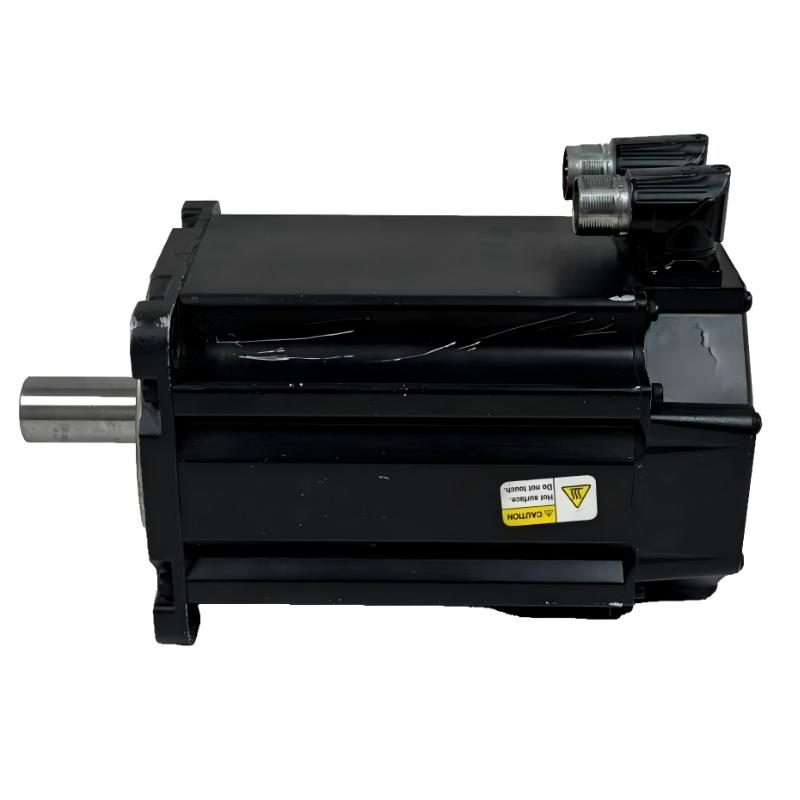
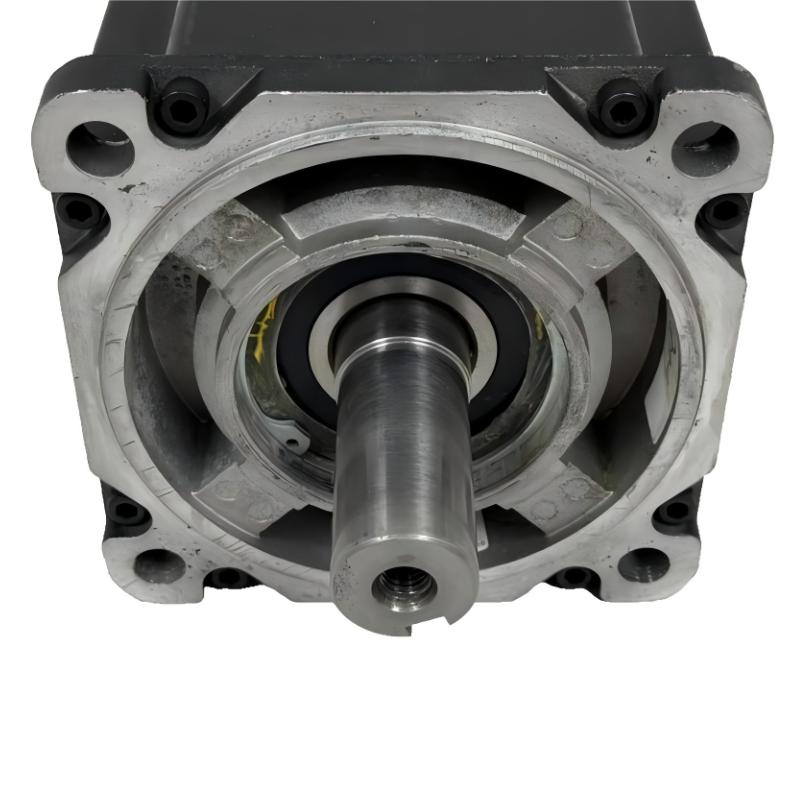
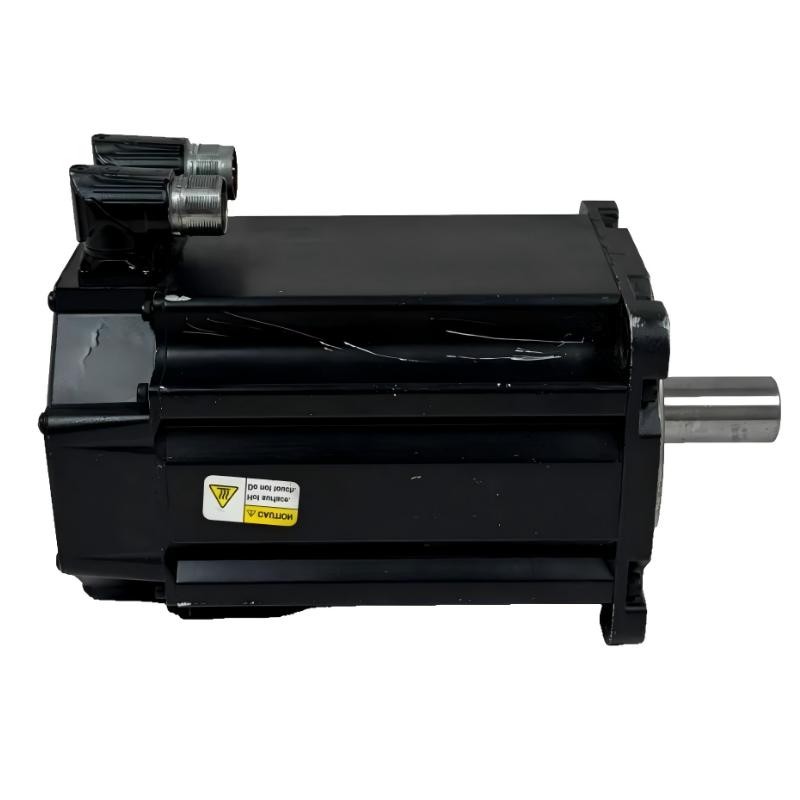
- Allen Bradley
- MPL-B960B-MJ74AA
- Low-Inertia Brushless Servo Motors Product
- USA
- 215 mm ×203.2 mm × 325 mm
- 42.7 kg
- Xiamen, China
- New & In Stock
- T/T, PayPal, Western Union
- 1 Year
- 1-3 Working Days
- DHL, UPS, TNT, FedEx and EMS.
- 24-Hour Service
- COO
- 9
Our advantage

Global Logistics
We have a 10-year logistics and express cooperation agreement, so our products can be shipped to any place in the world.

Brand new and original
Our products are imported in bulk from the place of origin. Because of the cooperative relationship, our products are all original and 100% new.

24-hour service
We provide 7*24 hours service to our customers. We will be there whenever you need us.

Price advantage
All our products are priced very favorably because we have our own warehouse and supply.
| Company Information | |||
| [email protected] | |||
| Mobile | +8615980777398 | ||
| +8615980777398 | |||
| 15980777398 |
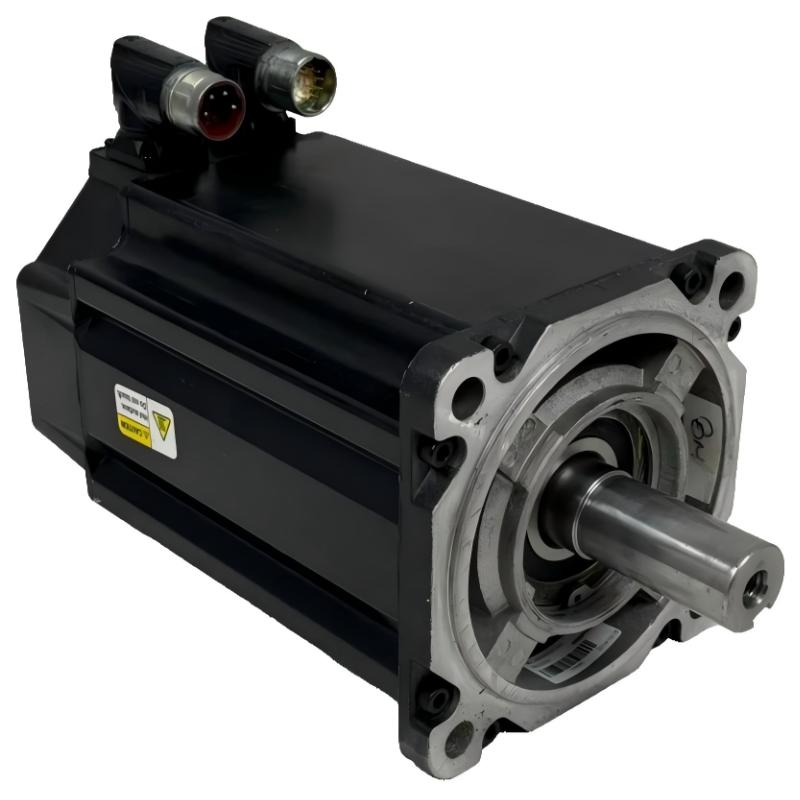
Allen-Bradley MPL-B960B-MJ74AA Servo Motor: Product Description, Technical Specifications, Applications, Advantages, and Related Models
1. Product Overview
The Allen-Bradley MPL-B960B-MJ74AA is a low-inertia brushless AC rotary servo motor designed for industrial automation systems that require controlled movement, repeatable positioning, and substantial torque. It belongs to the MP-Series MPL family and is intended to operate with a compatible servo drive and motion controller.
This motor combines a 460 V AC voltage-class configuration, multi-turn high-resolution absolute feedback, a keyed shaft extension, and a right-angle SpeedTEC DIN quick-connect connector that can be rotated through 180 degrees. Its defining configuration feature is the integrated 24 V DC holding brake, which can help hold a stationary shaft or load when the motor is not producing driving torque, subject to the brake’s specified operating limits.
The MPL-B960B-MJ74AA is associated with the B960B speed and torque configuration, commonly listed with approximately 12.7 kW rated output power and 130 N·m continuous stall torque. The nominal speed is commonly given as 1,200 RPM in the motor performance data; the exact catalog configuration should be confirmed against the motor-specific technical sheet before final engineering selection.
The multi-turn absolute encoder supplies position information across multiple revolutions, making this motor a candidate for rotary positioning systems and industrial axes that need position feedback. The integrated brake is particularly relevant where the machine needs a defined holding function, such as certain vertical axes or mechanisms subject to external forces.
The motor’s nominal frame designation is size 9, with a 300 mm frame dimension and a 152.4 mm magnet stack length. These are motor designations rather than the complete installed dimensions. The overall length, mounting-hole pattern, shaft projection, and brake-related clearance must be checked using the exact mechanical drawing.
2. Brand and Product Series
|
Item |
Description |
|---|---|
|
Model |
MPL-B960B-MJ74AA |
|
Brand |
Allen-Bradley |
|
Product family |
MP-Series |
|
Product series |
MPL low-inertia brushless servo motors |
|
Product type |
Industrial AC rotary servo motor |
|
Motor construction |
Brushless servo motor |
|
Voltage class |
460 V AC |
|
Nominal speed |
Commonly listed as 1,200 RPM; verify the exact motor specification |
|
Rated output power |
Approximately 12.7 kW |
|
Continuous stall torque |
Approximately 130 N·m |
|
Peak stall torque |
Approximately 231 N·m |
|
Feedback |
Multi-turn high-resolution absolute encoder |
|
Brake |
Integrated 24 V DC holding brake |
|
Shaft type |
Keyed shaft extension |
|
Connector |
Right-angle SpeedTEC DIN quick-connect |
|
Connector orientation |
Rotatable through 180° |
|
Frame designation |
Size 9 |
|
Nominal frame dimension |
300 mm (11.81 in.) |
|
Magnet stack length |
152.4 mm (6.0 in.) |
|
Mounting arrangement |
IEC metric, Type FF free mounting holes |
|
Overall dimensions |
Confirm from the exact mechanical outline drawing |
|
Approximate motor weight |
Approximately 62 kg as a reference for the B960B motor configuration; confirm the complete brake-equipped assembly’s weight before handling |
The MPL series is designed for closed-loop industrial motion control. The motor works with a compatible servo drive and controller to regulate speed, position, and acceleration in accordance with the machine’s programmed motion requirements.
The MJ74AA suffix is important because it identifies the multi-turn absolute feedback configuration and the 24 V DC brake option, alongside the keyed shaft and connector arrangement. A similar model with an MJ72AA suffix generally does not have the integrated brake, while an SJ suffix indicates a different feedback configuration.
When ordering or replacing the motor, use the complete catalog number. A difference in the final characters can affect feedback compatibility, brake wiring, installation dimensions, and commissioning requirements.
3. Detailed Technical Specifications
The following specifications provide a practical overview for product evaluation, replacement planning, and system design. Performance figures should be checked against the exact motor documentation and the selected drive.
|
Parameter |
Specification |
|---|---|
|
Model |
MPL-B960B-MJ74AA |
|
Brand |
Allen-Bradley |
|
Product family |
MP-Series |
|
Product series |
MPL low-inertia servo motors |
|
Motor type |
Brushless AC rotary servo motor |
|
Voltage class |
460 V AC |
|
Rated output power |
Approximately 12.7 kW |
|
Nominal speed |
Commonly listed as 1,200 RPM; verify the exact catalog configuration |
|
Continuous stall torque |
Approximately 130 N·m |
|
Peak stall torque |
Approximately 231 N·m |
|
Rotor inertia |
Approximately 0.0273 kg·m² |
|
Feedback device |
Multi-turn high-resolution absolute encoder |
|
Brake voltage |
24 V DC |
|
Brake configuration |
Integrated holding brake |
|
Shaft |
Keyed shaft extension |
|
Connector |
Right-angle SpeedTEC DIN quick-connect |
|
Connector adjustment |
Rotatable through 180° |
|
Frame designation |
Size 9 |
|
Nominal frame dimension |
300 mm (11.81 in.) |
|
Magnet stack length |
152.4 mm (6.0 in.) |
|
Mounting style |
IEC metric, Type FF free mounting holes |
|
Overall dimensions |
Confirm total length, width, height, shaft projection, and mounting-hole positions from the mechanical drawing |
|
Approximate weight |
Approximately 62 kg as a reference for the B960B configuration; verify the brake-equipped assembly |
|
Control method |
Closed-loop servo control using a compatible drive |
|
Typical applications |
Positioning axes, rotary mechanisms, material handling, packaging, and automated machinery |
Dimension and weight note: The 300 mm frame designation and 152.4 mm magnet stack length are not the complete external dimensions. Brake-equipped versions may have a longer overall envelope than comparable no-brake versions. Confirm the exact outline drawing and assembly weight before designing a mounting bracket, selecting lifting equipment, or planning a replacement.
Torque note: Continuous stall torque and peak stall torque are motor characteristics under specified conditions. They do not mean that the motor can provide the same torque continuously at every speed. Actual performance depends on the speed-torque curve, drive current limits, thermal conditions, load inertia, and operating cycle.
4. Product Introduction
The MPL-B960B-MJ74AA is intended for industrial equipment where the motor needs to respond to controlled commands rather than operate only at a fixed speed. It can form part of a servo axis that accelerates, decelerates, stops at a programmed position, or follows a coordinated motion profile.
In a typical installation, the controller generates motion commands and the servo drive regulates the electrical power supplied to the motor. The encoder returns position feedback, allowing the control system to compare commanded motion with actual motor position and adjust the response.
This arrangement is useful in production machinery where repeatability matters. For example, a rotary mechanism may need to move through a specified angle, pause for a processing operation, and then return to another position. A properly configured servo system can execute this sequence while maintaining feedback-based control.
The B960B configuration offers a relatively high continuous stall torque rating within the MPL family. This can make it worth considering for machinery where the torque demand is significant, especially during acceleration, deceleration, or controlled movement of a mechanical load. The motor must still be sized according to the actual torque and speed profile rather than stall torque alone.
The multi-turn absolute encoder provides position information across multiple revolutions within its supported range. This can be useful for axes that rotate through several turns or require absolute position information after a restart. The exact position-retention behavior depends on the encoder, drive, controller, and system configuration.
A major feature of the MJ74AA version is the integrated 24 V DC holding brake. It can help keep the shaft stationary when the motor is not driving the load. However, a holding brake is not automatically a safety-rated stopping device, and its ability to hold a particular load must be verified against the brake’s specifications and the machine’s requirements.
5. Main Product Features
5.1 Low-inertia brushless motor design
The MPL series uses a low-inertia design intended for responsive servo operation. This can be helpful in machinery that performs repeated starts, stops, acceleration changes, or positioning movements.
In a correctly sized system, responsive motor dynamics can help achieve consistent cycle times. The result depends on the total inertia of the motor, gearbox, coupling, and driven load, as well as the controller’s motion profile.
Low inertia alone does not guarantee a faster machine. The motor must still provide sufficient torque, and the mechanical system must be rigid enough to maintain the required accuracy without excessive vibration or overshoot.
5.2 Multi-turn absolute feedback
The multi-turn high-resolution absolute encoder provides rotor-position information across multiple revolutions. It is useful when the control system needs to determine position over a wider range than a single revolution.
This configuration may reduce reliance on a reference move in applications designed to use absolute position feedback. However, the behavior after power loss or restart depends on the encoder’s supported range and the way the drive and controller handle absolute position.
The encoder interface must be compatible with the selected drive. A motor with a different feedback type may require different drive parameters, wiring, or control-program changes.
5.3 Integrated 24 V DC holding brake
The brake is one of the main distinctions between the MPL-B960B-MJ74AA and a comparable no-brake model.
A motor-mounted brake can help hold the shaft when the motor is stationary, which may be useful in vertical axes or mechanisms exposed to external forces. The brake must be correctly wired and controlled according to its operating instructions.
A holding brake should not be assumed to be suitable for repeated dynamic stopping unless the specific motor documentation permits that use. If the application involves a suspended load, evaluate the need for additional mechanical protection and safety measures.
5.4 High torque capability
The motor’s approximately 130 N·m continuous stall torque and 231 N·m peak stall torque provide useful reference values when assessing demanding axes.
Peak torque is intended for limited operating conditions and should not be treated as a continuous rating. The required torque must be calculated for acceleration, steady movement, deceleration, and any short-duration overload conditions.
5.5 Keyed shaft extension
The keyed shaft provides a mechanical interface for compatible couplings, pulleys, gearboxes, and other transmission components.
Correct shaft matching is essential. The shaft diameter, keyway dimensions, coupling arrangement, allowable radial and axial loads, and alignment tolerances should be checked before installation.
Incorrect alignment can cause vibration, increase bearing loads, reduce positioning performance, and shorten service life.
5.6 Rotatable right-angle connector
The right-angle SpeedTEC DIN quick-connect connector can be rotated through 180 degrees. This allows some flexibility in cable routing when the motor is installed in a compact machine or near guards and other components.
The connector should be positioned so the cables are not sharply bent, pulled, or exposed to moving parts. Proper routing also makes inspection and future maintenance easier.
5.7 Industrial mounting arrangement
The frame and stack designations provide a starting point for mechanical comparison with other MPL models. The IEC metric mounting arrangement can help when evaluating integration into compatible machinery.
The exact flange, mounting holes, shaft extension, connector clearance, and overall length must still be confirmed using the motor-specific mechanical drawing.
6. Product Applications

6.1 Packaging and converting machinery
The motor can be evaluated for feed mechanisms, indexing units, cutting systems, and other controlled axes used in packaging and converting equipment. These applications often require repeatable movement and consistent acceleration and deceleration.
The motor’s speed, torque, feedback, and brake requirements should be assessed against the machine’s actual cycle and load profile.

6.2 Automated assembly systems
Assembly equipment often transfers components between workstations or rotates parts into a defined position. The motor can be considered for rotary indexers, positioning mechanisms, and other servo-controlled movements.
The multi-turn feedback can be useful where the position information must cover several revolutions. The brake may be helpful for holding a stationary load if the application and brake rating are suitable.

6.3 Material handling and transfer equipment
Servo motors are used in powered transfer units, rotary handling mechanisms, and selected positioning axes. The B960B configuration may be worth evaluating when the load requires substantial torque and controlled motion.
For vertical or gravity-loaded equipment, confirm that the integrated brake is appropriate for the required holding load and that the complete machine has suitable safety provisions.

6.4 Rotary tables and indexing mechanisms
Rotary tables may need to move through a defined angle, stop for a machining or assembly operation, and repeat the sequence many times. Multi-turn feedback can be useful where the axis must track position across multiple revolutions.
The motor, gearbox, table inertia, and controller should be selected together to achieve the required stopping accuracy and cycle time.

6.5 Machine tools and specialized production equipment
The motor may be suitable for selected rotary mechanisms, controlled feed axes, and automated machine functions. The final choice depends on the required speed-torque curve, mechanical stiffness, accuracy, and duty cycle.
Confirm the drive compatibility and complete mechanical envelope before considering it for a replacement installation.
These are representative application categories rather than a guarantee of suitability for every machine. Selection should be based on the actual load, required acceleration, operating cycle, mounting conditions, environmental limits, and safety requirements.
7. Product Advantages
7.1 High torque capability
The B960B motor configuration offers a substantial continuous stall torque rating and a higher peak stall torque rating. This makes it a candidate for applications that require significant motor torque during acceleration or controlled movement.
The torque figures must be assessed alongside the motor’s operating speed, duty cycle, and thermal limits. They should not be used as a substitute for the full speed-torque curve.
7.2 Multi-turn position feedback
The multi-turn absolute encoder can provide useful position information for mechanisms that rotate through several revolutions. This is particularly relevant when the machine needs to track position across a wider range than a single turn.
The practical benefit depends on the encoder’s range and the control system’s handling of absolute position.
7.3 Integrated holding brake
The 24 V DC brake can help hold a stationary shaft or load and is an important feature when evaluating the motor for applications where unintended movement must be controlled.
Brake suitability depends on the load, transmission ratio, required holding torque, duty cycle, and the machine’s safety design.
7.4 Closed-loop motion control
When paired with a compatible servo drive and controller, the motor can support feedback-based control of position and speed. This is useful in machinery where repeatable motion is needed from one production cycle to the next.
7.5 Flexible connector orientation
The rotatable right-angle connector offers flexibility when routing cables through a compact machine. Proper placement can help reduce cable strain and make the installation easier to service.
7.6 Defined mechanical configuration
The frame and stack designations provide a basis for comparing the B960B against other MPL motors. This is helpful during preliminary equipment design, motor replacement evaluation, and mechanical layout planning.
7.7 Integration into industrial automation systems
The motor is designed to operate as part of a compatible servo-control system. Where the drive, feedback interface, mechanical coupling, and control architecture are suitable, it can be considered for demanding industrial motion-control applications.
8. Model Number Explanation
The following table gives a practical overview of the main catalog-code sections.
|
Code section |
General meaning |
|---|---|
|
MPL |
MPL low-inertia brushless servo motor family |
|
B |
Voltage and motor configuration code |
|
960 |
Frame and magnet-stack size designation |
|
B |
Speed configuration code; verify nominal speed in the motor-specific data |
|
M |
Multi-turn high-resolution absolute feedback |
|
J |
Keyed shaft extension |
|
7 |
Right-angle SpeedTEC DIN connector, rotatable through 180° |
|
4 |
24 V DC brake configuration |
|
AA |
Additional catalog configuration designation |
The complete catalog number MPL-B960B-MJ74AA should be used for ordering, service, and replacement evaluation. A model that differs only in the final digits may have a different brake or feedback configuration and may not be a direct substitute.
9. Five Related Models in the MPL Series
The following models provide useful comparison options within the MPL family. Their suitability depends on the required speed, torque, feedback, brake, and mounting configuration.
|
Model |
Voltage class |
Nominal speed |
Continuous / peak stall torque |
Rated output power |
Feedback |
Brake |
Frame / stack length |
Approx. weight |
|---|---|---|---|---|---|---|---|---|
|
MPL-B960B-MJ72AA |
460 V AC |
1,200 RPM* |
130 / 231 N·m |
12.7 kW |
Multi-turn absolute |
No brake |
300 / 152.4 mm |
Approx. 62 kg |
|
MPL-B960B-SJ74AA |
460 V AC |
1,200 RPM* |
130 / 231 N·m |
12.7 kW |
Single-turn absolute |
24 V DC |
300 / 152.4 mm |
Confirm brake-equipped assembly |
|
MPL-B960C-MJ74AA |
460 V AC |
1,500 RPM |
124.3 / 226 N·m |
14.8 kW |
Multi-turn absolute |
24 V DC |
300 / 152.4 mm |
Confirm exact variant |
|
MPL-B960D-MJ74AA |
460 V AC |
2,000 RPM |
124.3 / 226 N·m |
15.0 kW |
Multi-turn absolute |
24 V DC |
300 / 152.4 mm |
Confirm exact variant |
|
MPL-B980B-MJ74AA |
460 V AC |
1,000 RPM |
162.7 / 278 N·m |
Approx. 15.2 kW |
Multi-turn absolute |
24 V DC |
300 / 203.2 mm |
Confirm exact variant |
*The B960B speed designation should be verified against the exact motor-specific technical sheet because published configuration descriptions may differ. Frame and stack values are nominal designations, not complete external dimensions. Brake-equipped weights should be confirmed for the exact catalog number.
Related-model selection notes
MPL-B960B-MJ72AA
This version retains multi-turn absolute feedback but does not include an integrated holding brake. It may be considered when the machine does not need a motor-mounted brake or already has a suitable external load-holding arrangement.
MPL-B960B-SJ74AA
This configuration combines single-turn absolute feedback with a 24 V DC brake. It may suit applications where single-turn position feedback is sufficient but a motor-mounted holding brake is required.
MPL-B960C-MJ74AA
The B960C is a 1,500 RPM configuration with different output-power and torque characteristics. It may be worth evaluating if the machine requires a higher nominal speed than the B960B while retaining substantial torque capability and a brake option.
MPL-B960D-MJ74AA
The B960D has a 2,000 RPM nominal speed configuration. It may be appropriate for applications with a higher required motor speed, provided the torque requirements and mechanical operating limits are satisfied.
MPL-B980B-MJ74AA
The B980B has a lower nominal speed configuration and higher torque ratings. Its longer magnet stack and overall mechanical envelope should be considered carefully before selecting it for an existing installation.
10. Five Other Allen-Bradley Servo Motor Models to Compare
The following MPL models provide additional combinations of speed, torque, power, and mechanical size. They can be used for preliminary comparison when selecting a motor for a new application or evaluating alternatives for existing equipment.
|
Model |
Voltage class |
Nominal speed |
Continuous / peak stall torque |
Rated output power |
Frame / stack length |
Approx. weight |
|---|---|---|---|---|---|---|
|
MPL-B860D-MJ72AA |
460 V AC |
2,000 RPM |
83 / 152.5 N·m |
12.5 kW |
265 / 152.4 mm |
67.5 kg |
|
MPL-B880D-MJ72AA |
460 V AC |
2,000 RPM |
110 / 147 N·m |
12.6 kW |
265 / 203.2 mm |
86.7 kg |
|
MPL-B960C-MJ72AA |
460 V AC |
1,500 RPM |
124.3 / 226 N·m |
14.8 kW |
300 / 152.4 mm |
76.0 kg |
|
MPL-B960D-MJ72AA |
460 V AC |
2,000 RPM |
124.3 / 226 N·m |
15.0 kW |
300 / 152.4 mm |
76.7 kg |
|
MPL-B980C-MJ72AA |
460 V AC |
1,500 RPM |
158.2 / 271 N·m |
16.8 kW |
300 / 203.2 mm |
67.3 kg |
Dimensions shown are nominal frame and magnet stack designations. Complete external dimensions and weights can vary with the exact motor configuration. Verify the mechanical drawing and technical data for the specific catalog number before installation.
Additional model comparison
MPL-B860D-MJ72AA
This model has a shorter magnet-stack designation and lower continuous stall torque than the B960B. It may be worth considering where the load requires less torque and a more compact motor configuration is preferred.
MPL-B880D-MJ72AA
The B880D is a 2,000 RPM configuration with a different speed-torque profile. It may be suitable for applications that require a higher nominal speed, provided its torque and duty-cycle limits meet the requirements.
MPL-B960C-MJ72AA
The B960C has a 1,500 RPM nominal speed configuration and a different output-power rating from the B960B. It is a useful comparison when the required speed falls between the B960B and B960D configurations.
MPL-B960D-MJ72AA
The B960D provides a 2,000 RPM nominal speed configuration and substantial torque capability. It may be evaluated for higher-speed axes, with final selection based on the complete speed-torque curve and drive compatibility.
MPL-B980C-MJ72AA
The B980C offers higher continuous and peak stall torque ratings than the B960B. Its stack length and mechanical envelope should be reviewed carefully if the motor is intended to replace an existing unit.
11. Installation and System Integration
11.1 Servo drive compatibility
The servo drive must support the motor’s voltage class, current requirements, feedback interface, and brake configuration. Confirm that the drive can operate the multi-turn absolute encoder and control the 24 V DC brake correctly.
A similar model number does not guarantee electrical or feedback compatibility. Before replacement, check the drive’s supported motor configurations, connection requirements, and parameter settings.
11.2 Mechanical mounting and dimensions
The 300 mm frame designation and 152.4 mm magnet stack length are not sufficient to confirm the motor’s fit in a machine. Check the complete outline drawing for total length, mounting-face dimensions, hole positions, shaft projection, keyway, and connector clearance.
The holding brake can affect the overall motor length. Allow enough space for the complete assembly and for cable access, inspection, and future maintenance.
11.3 Brake wiring and control
The integrated brake uses a 24 V DC configuration. Its supply, wiring, and control sequence should follow the applicable motor and drive instructions.
Confirm the brake’s holding capacity against the actual load and transmission ratio. Do not assume that the brake is suitable for repeated dynamic stopping unless its specifications explicitly allow it.
For vertical axes or suspended loads, the machine’s risk assessment should determine whether additional mechanical holding or safety measures are required.
11.4 Load and inertia calculations
Motor sizing should include the inertia of the driven equipment, gearbox, coupling, table, belt, or other transmission components. Assess the required torque during acceleration, steady motion, deceleration, and any overload conditions.
The motor’s rotor inertia is one input to this calculation. The total reflected load inertia and required cycle time are equally important when deciding whether the motor is suitable.
11.5 Cable routing and electrical installation
The right-angle connector can be rotated through 180 degrees to accommodate different installation layouts. Route cables so that they are not pulled, sharply bent, or exposed to moving machinery.
Follow the specified grounding, shielding, and cable-separation practices for the servo system. Poor electrical installation can lead to feedback faults or unreliable operation.
11.6 Commissioning
Before operating the machine at normal production speed, verify the mounting, shaft alignment, power and feedback connections, brake operation, drive configuration, and motion limits.
Test the motor’s direction, positioning response, acceleration, deceleration, and stopping behavior under controlled conditions. Confirm the machine’s response to power loss or drive faults, especially if the motor supports a load that could move under gravity.
12. Maintenance Recommendations
A planned maintenance routine can help identify problems before they cause equipment downtime.
Recommended checks include:
-
Inspect mounting bolts, couplings, and mechanical connections for looseness.
-
Check shaft alignment and investigate abnormal vibration or noise.
-
Inspect power, feedback, and brake wiring for damage or loose connections.
-
Review drive faults and investigate persistent feedback or motor-related alarms.
-
Keep the motor and surrounding installation within the specified operating conditions.
-
Check brake operation according to the appropriate maintenance procedure.
-
Verify that any external load-holding devices remain functional where the machine depends on them.
Maintenance intervals should reflect the actual duty cycle, environment, vibration, and machine requirements. Avoid disassembling or modifying the motor without the correct service procedure.
13. Frequently Asked Questions
What is the main difference between MPL-B960B-MJ74AA and MPL-B960B-MJ72AA?
The principal difference is the brake configuration. The MJ74AA version includes a 24 V DC brake, while the MJ72AA version does not. The feedback configuration is multi-turn absolute for both models, but the full catalog number and exact documentation should always be checked.
What type of feedback does the MPL-B960B-MJ74AA use?
It uses a multi-turn high-resolution absolute encoder. This provides position information across multiple revolutions within the encoder’s supported range and operating conditions.
What is the motor’s nominal speed?
The B960B performance configuration is commonly listed at 1,200 RPM. Because configuration descriptions may vary, verify the speed on the technical sheet for the exact catalog number before final selection.
What are the motor’s torque ratings?
The reference ratings are approximately 130 N·m continuous stall torque and 231 N·m peak stall torque. Actual operating torque depends on speed, drive limits, thermal conditions, and duty cycle.
What is the approximate weight?
Approximately 62 kg is a reference weight for the B960B motor configuration. The complete brake-equipped assembly may differ, so confirm the exact unit’s documented weight before lifting, mounting, or shipping.
What are the motor dimensions?
The nominal frame dimension is 300 mm and the magnet stack length is 152.4 mm. These do not represent the complete external dimensions. The full mechanical drawing is required to determine the motor’s overall length, mounting pattern, shaft projection, and connector clearance.
Is this motor suitable for a vertical axis?
It may be suitable if the torque, speed, feedback, and brake ratings meet the application’s requirements. The integrated brake can help hold a stationary load, but its holding capacity and operating limits must be verified. Additional mechanical safety measures may be necessary.
Can the motor replace another B960-series motor?
Not automatically. The speed configuration, brake option, feedback device, mounting dimensions, drive compatibility, and operating duty must all be checked before substitution.
14. Final Product Summary
The Allen-Bradley MPL-B960B-MJ74AA is a low-inertia brushless AC rotary servo motor in the MP-Series MPL family. Its key features include a 460 V AC voltage-class configuration, multi-turn high-resolution absolute feedback, a keyed shaft extension, a rotatable right-angle quick-connect connector, and an integrated 24 V DC holding brake.
Its torque capability and absolute feedback make it a candidate for industrial machinery requiring controlled movement, repeatable positioning, and substantial torque. Potential application areas include packaging machinery, automated assembly, material handling, rotary indexing, and selected machine-tool or specialized production axes.
The integrated brake is a major advantage where a defined holding function is needed, but its suitability must be assessed against the load and the machine’s safety requirements. The motor should not be selected solely on the basis of stall torque or nominal speed.
For related options, the MPL-B960B-MJ72AA provides a no-brake configuration, while the MPL-B960B-SJ74AA combines a brake with single-turn feedback. The B960C and B960D models offer different nominal speed configurations, and the B980B provides a higher torque option with a different stack length.
Before purchasing or installing the motor, confirm the complete catalog number, nominal speed, drive and encoder compatibility, brake requirements, overall dimensions, and actual assembly weight. These checks help ensure that the motor fits the intended machine and operates reliably under its specified conditions.