

ProductPRODUCT
Featured products
Contact Us
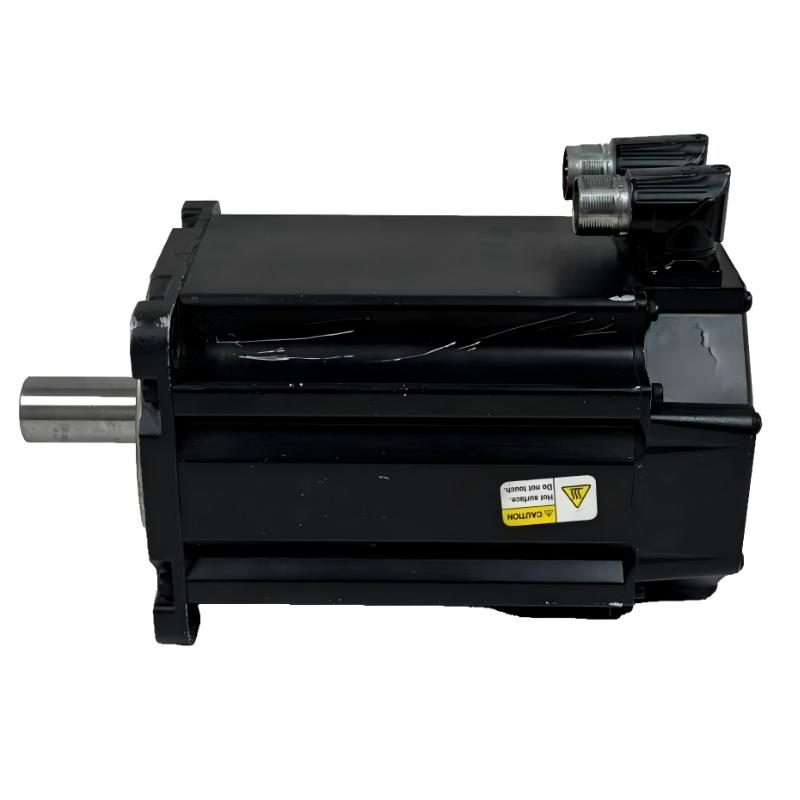
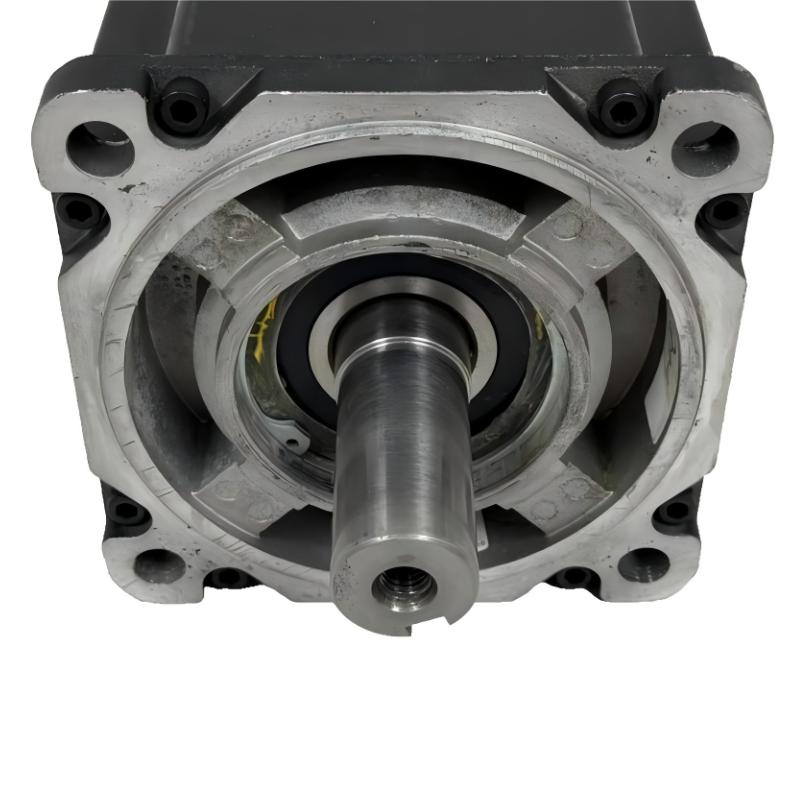
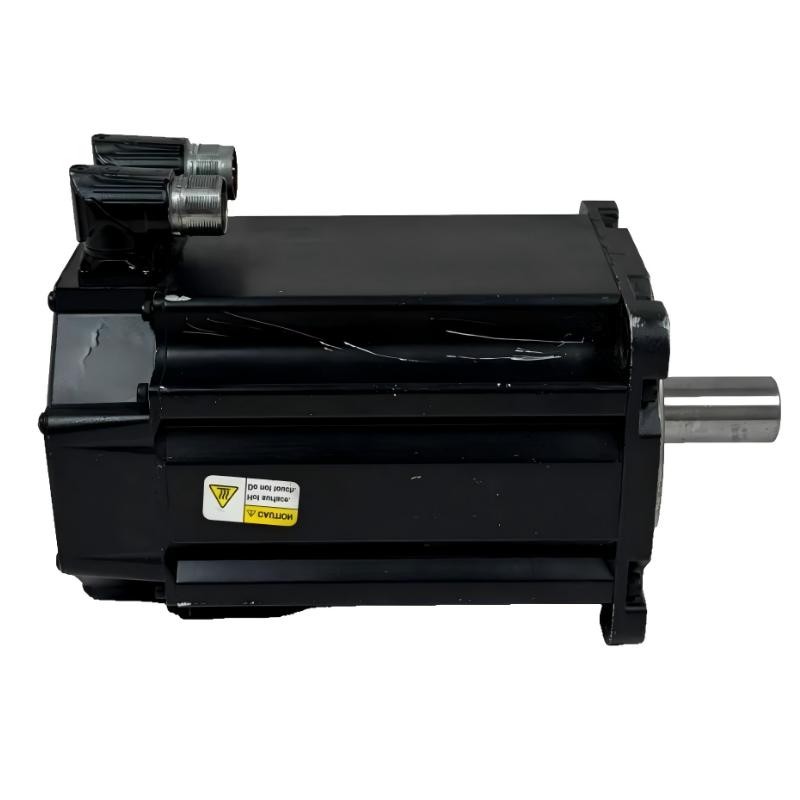
- Allen Bradley
- MPL-B880D-SJ72AA
- Low-Inertia Brushless Servo Motors Product
- USA
- 215 mm ×203.2 mm × 325 mm
- 42.7 kg
- Xiamen, China
- New & In Stock
- T/T, PayPal, Western Union
- 1 Year
- 1-3 Working Days
- DHL, UPS, TNT, FedEx and EMS.
- 24-Hour Service
- COO
- 7
Our advantage

Global Logistics
We have a 10-year logistics and express cooperation agreement, so our products can be shipped to any place in the world.

Brand new and original
Our products are imported in bulk from the place of origin. Because of the cooperative relationship, our products are all original and 100% new.

24-hour service
We provide 7*24 hours service to our customers. We will be there whenever you need us.

Price advantage
All our products are priced very favorably because we have our own warehouse and supply.
| Company Information | |||
| [email protected] | |||
| Mobile | +8615980777398 | ||
| +8615980777398 | |||
| 15980777398 |
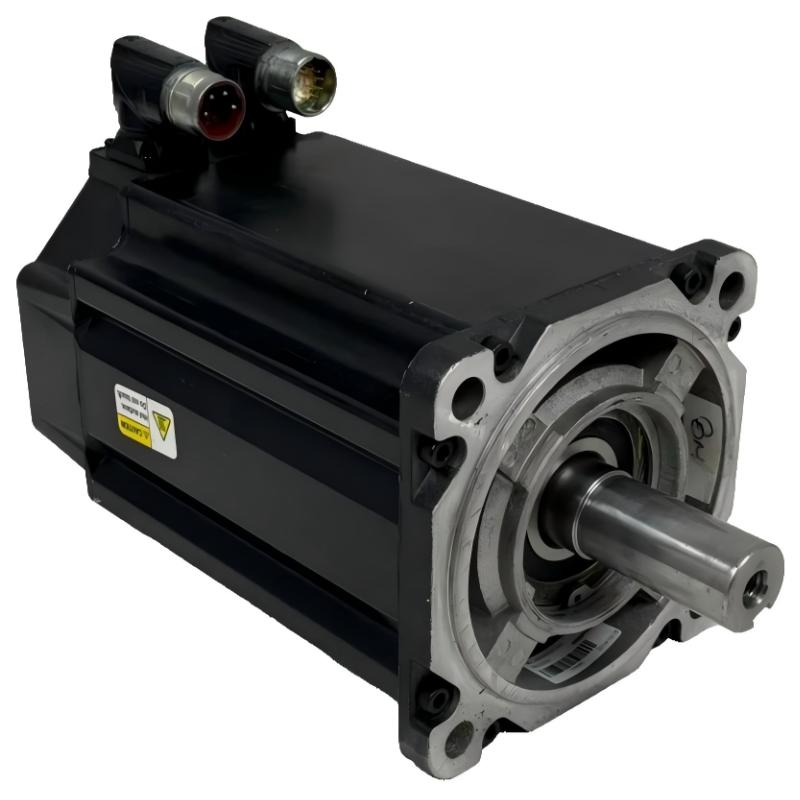
Allen-Bradley MPL-B880D-SJ72AA Servo Motor: Product Overview, Technical Specifications, Applications, Advantages, and Related Models
1. Product Overview
The Allen-Bradley MPL-B880D-SJ72AA is a low-inertia brushless AC rotary servo motor designed for industrial automation systems that require controlled motion, repeatable positioning, and reliable speed regulation. It belongs to the MP-Series MPL family and is intended to operate as part of a compatible servo drive and motion-control system.
This model is configured for a 460 V AC voltage class and a nominal speed of 2,000 RPM. It uses a single-turn high-resolution absolute encoder, a keyed shaft extension, and a right-angle SpeedTEC DIN quick-connect connector that can be rotated through 180 degrees. Unlike brake-equipped variants, this model has no integrated holding brake.
The motor is intended for applications where the controller needs feedback from the motor to regulate movement accurately. Typical uses include automated assembly equipment, packaging machinery, indexing mechanisms, material-handling systems, and selected machine-tool axes. The final application must be checked against the required torque, speed, duty cycle, mechanical load, and compatible drive.
Its frame-size designation is 8, corresponding to a nominal frame dimension of 265 mm, while the magnet stack length is 203.2 mm. These dimensions help identify the motor’s mechanical configuration, but they do not describe its complete external envelope. For installation or replacement, the full mechanical drawing is needed.
2. Brand and Product Series
|
Item |
Description |
|---|---|
|
Model |
|
|
Brand |
Allen-Bradley |
|
Product family |
MP-Series |
|
Product series |
MPL low-inertia brushless servo motors |
|
Product category |
Industrial AC rotary servo motor |
|
Motor construction |
Brushless servo motor |
|
Voltage class |
460 V AC |
|
Nominal speed |
2,000 RPM |
|
Feedback type |
Single-turn, high-resolution absolute encoder |
|
Brake configuration |
No integrated brake |
|
Shaft design |
Keyed shaft extension |
|
Connector |
Right-angle SpeedTEC DIN quick-connect |
|
Connector orientation |
Rotatable through 180° |
|
Frame designation |
Size 8; nominal frame dimension 265 mm |
|
Magnet stack length |
203.2 mm |
|
Mounting arrangement |
IEC metric, Type FF free mounting holes |
|
Overall dimensions |
Confirm from the exact mechanical outline drawing |
|
Approximate weight |
86.7 kg; verify the exact unit and configuration before handling |
The MPL series is intended for servo applications that require controlled acceleration, deceleration, and positioning rather than simple fixed-speed rotation. In a correctly configured system, the motor works with a servo drive and controller to deliver motion according to programmed commands.
The SJ72AA configuration distinguishes this model from versions that use multi-turn feedback or include a holding brake. Those differences can affect the control system, wiring, commissioning procedure, and suitability for a particular machine.
3. Detailed Technical Specifications
The table below provides the principal electrical, mechanical, and configuration details for the MPL-B880D-SJ72AA. The frame and stack dimensions are nominal designations; they should not be used as a substitute for the complete mechanical drawing.
|
Parameter |
Specification |
|---|---|
|
Model |
MPL-B880D-SJ72AA |
|
Brand |
Allen-Bradley |
|
Series |
MP-Series MPL |
|
Motor type |
Low-inertia brushless AC rotary servo motor |
|
Rated voltage class |
460 V AC |
|
Nominal speed |
2,000 RPM |
|
Maximum speed |
2,000 RPM |
|
Rated output power |
Approximately 12.6 kW |
|
Continuous stall torque |
Approximately 110 N·m |
|
Peak stall torque |
Approximately 147 N·m |
|
Feedback device |
Single-turn high-resolution absolute encoder |
|
Brake |
No integrated brake |
|
Shaft |
Keyed shaft extension |
|
Connector |
Right-angle SpeedTEC DIN quick-connect |
|
Connector adjustment |
Rotatable through 180° |
|
Frame size |
Size 8 |
|
Nominal frame dimension |
265 mm (10.43 in.) |
|
Magnet stack length |
203.2 mm (8.0 in.) |
|
Mounting arrangement |
IEC metric, Type FF free mounting holes |
|
Overall dimensions |
Confirm the full length, width, height, shaft projection, and mounting pattern from the mechanical drawing |
|
Approximate weight |
86.7 kg |
|
Cooling and operating conditions |
Follow the motor-specific installation and operating requirements |
|
Control method |
Closed-loop servo control with a compatible drive |
|
Typical role |
Positioning, indexing, speed control, and coordinated rotary motion |
Specification clarification: Continuous stall torque is a motor rating under specified conditions; it does not mean that the motor can provide 110 N·m continuously at every operating speed. The available torque depends on the speed-torque curve, drive limits, cooling, ambient conditions, and duty cycle.
The approximate weight is suitable for preliminary planning only. Confirm the exact motor’s weight before designing a mounting bracket, specifying lifting equipment, or calculating shipping weight.
4. Product Description and Operating Principle
The MPL-B880D-SJ72AA is designed for use in a servo system in which the motor’s movement is controlled by electronic commands rather than being limited to a fixed running speed. The controller defines the required position, speed, acceleration, or motion profile, and the servo drive supplies the electrical power needed to move the motor.
The encoder reports the rotor’s position to the control system. The drive uses feedback to regulate the motor’s response to the command. When the application requires a change in speed or position, the system adjusts the motor’s operation to help achieve the requested movement.
This feedback-based operation is useful in machinery that must repeat a movement accurately from one production cycle to the next. It can also support coordinated motion between multiple axes, provided that the controller and drive system are configured for that purpose.
The motor’s low-inertia design is intended to support responsive acceleration and deceleration. In applications involving frequent starts, stops, and direction changes, a properly sized servo motor can help the machine achieve consistent motion without relying on simple open-loop speed control.
The single-turn absolute encoder provides absolute position information within one revolution. This can be valuable for applications where the control system needs to identify the rotor’s angular position. However, single-turn feedback does not by itself provide multi-turn absolute position information across an unlimited number of revolutions. The machine’s homing, recovery, and restart behavior must be planned accordingly.
One important distinction is that this model has no integrated holding brake. If the application involves a vertical load, a suspended mechanism, or a shaft that must remain stationary when power is removed, the machine designer must determine whether a separate brake or other suitable load-holding arrangement is necessary.
5. Main Product Features
5.1 Low-inertia construction
The motor is part of the MPL low-inertia servo family. This construction is intended for applications where the motor needs to respond quickly to changing motion commands.
It can be useful in automated equipment that repeatedly accelerates, decelerates, indexes, or changes direction. The actual improvement in cycle time depends on the complete system, including the driven load, gearbox, coupling, mechanical stiffness, and controller settings.
Low motor inertia should not be considered in isolation. A heavy load or high transmission ratio can dominate the total reflected inertia, so an engineering calculation is still necessary when selecting the motor.
5.2 Single-turn high-resolution absolute encoder
The feedback device supplies high-resolution position information within a single revolution. This supports accurate rotor-position measurement and closed-loop motion regulation when paired with a compatible servo drive.
The single-turn configuration can be suitable for rotary mechanisms and axes whose position requirements are managed within a defined revolution or through a separate machine-reference procedure.
If the machine must retain absolute position information over multiple revolutions, the required feedback type should be reviewed carefully. A multi-turn encoder version may be more appropriate, depending on the controller and application.
5.3 2,000 RPM nominal speed
The 2,000 RPM nominal speed configuration is intended for machinery that requires a combination of speed and torque within the motor’s operating envelope.
The actual operating point should be determined from the required load torque, acceleration time, transmission ratio, and cycle profile. A motor should not be selected solely because its nominal speed matches the desired machine speed.
5.4 Keyed shaft extension
The keyed shaft provides a mechanical interface for compatible couplings and transmission components. When the mating component is correctly specified and installed, the key helps transfer torque between the motor shaft and the attached mechanism.
The shaft diameter, keyway dimensions, allowable radial and axial loads, coupling type, and alignment tolerances should all be checked before installation. Incorrect alignment can cause vibration, bearing wear, and reduced positioning performance.
5.5 Rotatable right-angle connector
The right-angle SpeedTEC DIN quick-connect connector can be rotated through 180 degrees. This gives the installer some flexibility when arranging motor power and feedback cables around nearby machine components.
Proper cable routing remains important. Avoid sharp bends, excessive strain, and interference with moving components. The connector should be positioned so that maintenance access and cable replacement remain practical.
5.6 No integrated holding brake
The no-brake configuration can be appropriate where the load does not need to be held by a motor-mounted brake, or where the machine provides a separate holding mechanism.
This configuration may simplify brake-related wiring and control, but it must not be chosen solely to reduce cost or complexity if the application needs to prevent unwanted shaft movement when the drive is disabled.
6. Product Applications

6.1 Packaging and production-line machinery
The motor may be used in selected feed mechanisms, rotary indexing stations, cutting equipment, and synchronized packaging axes. These systems often require repeatable movement and predictable acceleration and deceleration. The final choice should be based on the complete load profile and cycle requirements.

6.2 Automated assembly equipment
Assembly machines often move components between stations and perform repeated operations at specific positions. The motor can be evaluated for rotary transfer units, indexing mechanisms, and other controlled axes where feedback-based motion is needed.

6.3 Material handling systems
The motor can be considered for powered transfer units, rotary handling equipment, and positioning mechanisms. Where the load can move under gravity or external force when power is removed, the lack of an integrated brake must be addressed in the overall machine design.

6.4 Machine tools and specialized machinery
Servo motors are used in controlled feed mechanisms, rotary axes, and automated machine functions. For this model, confirm the required speed-torque performance, feedback compatibility, mechanical stiffness, and expected operating duty before installation.

6.5 Rotary indexing and positioning systems
Rotary tables and indexing units may need to move to a programmed angle, stop, and repeat the same operation many times. The motor’s feedback and compatible motion controller can support this operation when the table inertia, reducer, and positioning requirements are properly matched.
These are potential application categories, not a guarantee that the motor will meet every machine requirement. The motor should be selected only after confirming torque, speed, inertia, accuracy, duty cycle, mounting, and environmental conditions.
7. Product Advantages
7.1 Controlled and repeatable motion
The encoder and compatible servo drive allow the motor to operate within a closed-loop motion-control system. This is useful where a machine must repeat the same movement with consistent timing and positioning.
7.2 Responsive dynamic performance
The low-inertia motor design is intended to support rapid changes in speed and direction. This can be beneficial in production equipment with frequent indexing or short motion cycles, provided the complete mechanical system is appropriately sized.
7.3 Useful torque and power ratings
The approximately 110 N·m continuous stall torque, 147 N·m peak stall torque, and 12.6 kW rated output power provide useful initial reference points for motor selection. Final performance must be checked against the manufacturer’s speed-torque data and the selected drive’s limits.
7.4 Flexible cable installation
The rotatable right-angle connector can help accommodate different cable-routing arrangements. This is especially useful when the motor is installed in a compact machine or near guards, frames, or other equipment.
7.5 Standardized mechanical configuration
The frame-size and magnet-stack designations help engineers compare motors within the MPL family. They provide a starting point for replacement evaluation, although the complete mechanical drawing must be used to confirm fit.
7.6 No-brake configuration
For applications that do not require an integrated holding brake, this version avoids the need to incorporate a motor-mounted brake circuit into the system. If load holding is required, however, the machine must provide an appropriate alternative.
7.7 Suitable for integration into automated systems
The motor is intended to work with compatible servo drives and motion controllers. This allows it to be considered for machine axes that require programmed movement, feedback-based control, and coordinated operation with other equipment.
8. Model Number Interpretation
The catalog number identifies the principal configuration of the motor. The following table provides a practical interpretation of its major sections.
|
Code section |
General meaning |
|---|---|
|
MPL |
MPL low-inertia brushless servo motor family |
|
B |
460 V motor configuration |
|
880 |
Frame and magnet-stack size designation |
|
D |
2,000 RPM nominal speed configuration |
|
S |
Single-turn high-resolution encoder |
|
J |
Keyed shaft extension |
|
7 |
Right-angle SpeedTEC DIN connector, rotatable through 180° |
|
2 |
No integrated brake |
|
AA |
Additional catalog configuration designation |
When ordering or replacing the motor, use the full MPL-B880D-SJ72AA catalog number rather than relying on the B880D portion alone. Models with the same base designation can have different feedback devices, brake configurations, and connector arrangements.
9. Five Related Models in the MPL Series
The following models are useful comparison candidates because they share the MPL family or have closely related configurations. They are not automatically interchangeable with the MPL-B880D-SJ72AA.
|
Model |
Voltage class |
Nominal speed |
Continuous / peak stall torque |
Feedback |
Brake |
Frame / stack length |
Approx. weight |
|---|---|---|---|---|---|---|---|
|
MPL-B880D-MJ72AA |
460 V AC |
2,000 RPM |
110 / 147 N·m |
Multi-turn absolute |
No brake |
265 / 203.2 mm |
86.7 kg |
|
MPL-B880D-MJ74AA |
460 V AC |
2,000 RPM |
110 / 147 N·m |
Multi-turn absolute |
24 V DC |
265 / 203.2 mm |
Approx. 86.7 kg |
|
MPL-B880D-SJ74AA |
460 V AC |
2,000 RPM |
110 / 147 N·m |
Single-turn absolute |
24 V DC |
265 / 203.2 mm |
Approx. 86.7 kg |
|
MPL-B880C-MJ72AA |
460 V AC |
1,500 RPM |
110 / 203 N·m |
Multi-turn absolute |
No brake |
265 / 203.2 mm |
72.7 kg |
|
MPL-B860D-SJ72AA |
460 V AC |
2,000 RPM |
83 / 152.5 N·m |
Single-turn absolute |
No brake |
265 / 152.4 mm |
Approx. 67.5 kg |
Frame size and stack length are nominal dimensions in millimetres, not the complete external motor dimensions. Approximate weights should be confirmed against the exact catalog variant before use in mechanical or shipping calculations.
Related-model selection notes
MPL-B880D-MJ72AA is worth comparing when the application requires a multi-turn absolute encoder but does not require an integrated brake. Its feedback arrangement differs from the target model, so the drive configuration must be checked.
MPL-B880D-MJ74AA combines multi-turn absolute feedback with a 24 V DC brake. It may be worth evaluating if the machine needs both multi-turn position information and motor-mounted holding capability.
MPL-B880D-SJ74AA retains the single-turn feedback configuration but adds a 24 V DC brake. It may be a closer configuration match if the application’s main difference is the need for a holding brake.
MPL-B880C-MJ72AA has a 1,500 RPM nominal speed configuration and different peak-torque characteristics. It may be suitable for a different speed-torque profile, but its operating envelope should be compared with the required motion cycle.
MPL-B860D-SJ72AA has a shorter stack designation and lower torque ratings. It may be considered where the load requirements and available installation space allow a smaller motor configuration.
10. Five Other Allen-Bradley Servo Motor Models to Compare
These additional MPL models offer different combinations of speed, torque, and motor size. They are useful for initial comparison when choosing a servo motor for a new machine or reviewing alternatives for an existing system.
|
Model |
Voltage class |
Nominal speed |
Continuous / peak stall torque |
Rated output power |
Frame / stack length |
Approx. weight |
|---|---|---|---|---|---|---|
|
MPL-B680D-SJ72AA |
460 V AC |
2,000 RPM |
62.8 / 154.2 N·m |
Approx. 9.3 kW |
215 / 152.4 mm |
Approx. 40.4 kg |
|
MPL-B860D-SJ72AA |
460 V AC |
2,000 RPM |
83 / 152.5 N·m |
Approx. 12.5 kW |
265 / 152.4 mm |
Approx. 67.5 kg |
|
MPL-B960B-MJ72AA |
460 V AC |
1,200 RPM |
130 / 231 N·m |
Approx. 12.7 kW |
300 / 152.4 mm |
Approx. 62.0 kg |
|
MPL-B960D-MJ72AA |
460 V AC |
2,000 RPM |
124.3 / 226 N·m |
Approx. 15.0 kW |
300 / 152.4 mm |
Approx. 76.7 kg |
|
MPL-B980C-MJ72AA |
460 V AC |
1,500 RPM |
158.2 / 271 N·m |
Approx. 16.8 kW |
300 / 203.2 mm |
Approx. 67.3 kg |
Dimensions shown are nominal frame and stack designations. Confirm the full outline drawing for mounting, shaft, connector, and total-length dimensions. Weights are approximate and should be verified for the specific motor variant.
Additional model comparison
MPL-B680D-SJ72AA
This is a smaller MPL configuration with lower continuous stall torque and output power than the B880D. It may be worth considering for an application that needs servo control but does not require the same torque capacity. The smaller frame can be helpful where installation space and mass are important.
MPL-B860D-SJ72AA
This model offers a 2,000 RPM nominal speed configuration and a shorter magnet stack than the B880D. It can be evaluated when the load’s torque demand is lower and a shorter motor configuration may simplify installation.
MPL-B960B-MJ72AA
This 1,200 RPM configuration has a higher continuous stall torque rating than the B880D. It may be relevant where the application favors torque at a lower nominal speed, although the actual speed-torque curve and drive compatibility must be checked.
MPL-B960D-MJ72AA
This 2,000 RPM configuration has higher continuous and peak stall torque ratings than the B880D. It may be worth comparing for a more demanding load, but mechanical fit, drive sizing, and the required duty cycle must be reviewed before selecting it.
MPL-B980C-MJ72AA
This 1,500 RPM configuration has a higher continuous stall torque rating than the B880D. It may be a candidate for applications with different torque requirements, provided its speed, power, frame dimensions, and feedback configuration suit the machine.
11. Installation and Integration Considerations
11.1 Drive and feedback compatibility
Before installation, confirm that the selected servo drive supports the motor’s voltage class, feedback device, current requirements, and configuration. The single-turn encoder must be compatible with the drive and controller being used.
Do not assume that a motor can be connected to an existing drive simply because the voltage class and base model appear similar. Incorrect feedback or drive configuration can prevent commissioning or cause unexpected machine behavior.
11.2 Mechanical mounting and dimensions
The frame-size designation and magnet stack length are useful for initial comparisons, but they are not sufficient for installation planning. Confirm the mounting-face dimensions, hole spacing, shaft diameter, keyway, shaft projection, overall motor length, and connector clearance from the mechanical drawing.
The motor should be mounted on a sufficiently rigid structure. The coupling and driven mechanism must be aligned correctly to avoid excessive radial or axial loading and to maintain stable operation.
11.3 No-brake configuration and load holding
Because this model has no integrated brake, the machine design must account for any movement that could occur when the motor is stopped or the drive is disabled.
For a vertical axis, suspended load, or mechanism exposed to gravity or external forces, assess whether a separate brake, counterbalance, mechanical lock, or other suitable load-holding arrangement is needed. Any safety-related holding function must be designed according to the machine’s risk assessment and applicable requirements.
11.4 Cable routing and connector placement
Position the right-angle connector to provide enough clearance for the cables and nearby machine components. Avoid tight bends, pulling forces on the connector, and routing that exposes cables to moving parts, excessive heat, or mechanical damage.
Correct grounding, shielding, and cable separation are also important for reliable feedback and drive operation.
11.5 Commissioning
Before running the machine at full speed, inspect the mounting, shaft coupling, cable connections, grounding, and drive parameters. Confirm motor direction, encoder operation, motion limits, acceleration and deceleration behavior, and stopping performance under controlled conditions.
The commissioning process should also verify that the machine handles power loss and drive faults safely, particularly if a load could move when motor torque is removed.
12. Maintenance Recommendations
Regular inspection can help identify issues before they cause production interruptions. The maintenance plan should reflect the operating environment, duty cycle, vibration, contamination, and machine manufacturer’s requirements.
Recommended checks include:
-
Inspect the motor mounting and coupling for looseness, misalignment, or abnormal vibration.
-
Check the power and feedback cables for damage, loose connections, or excessive strain.
-
Keep the motor and surrounding installation free from contamination that could affect cooling or mechanical operation.
-
Investigate unusual noise, temperature, or vibration rather than allowing the motor to continue operating under uncertain conditions.
-
Confirm that the drive does not report persistent feedback, overcurrent, or other motor-related faults.
-
Recheck shaft alignment after maintenance that affects the motor, gearbox, or driven mechanism.
The motor should not be disassembled or modified without the appropriate service procedure. If the unit is being replaced, record the complete catalog number and inspect the mounting and connection details before removing the existing motor.
13. Frequently Asked Questions
What is the main difference between MPL-B880D-SJ72AA and MPL-B880D-MJ72AA?
The key difference is the feedback configuration. The SJ72AA version uses a single-turn high-resolution absolute encoder, while the MJ72AA version uses multi-turn absolute feedback. The correct choice depends on the position information required by the machine and the feedback supported by the drive.
Does the MPL-B880D-SJ72AA have a holding brake?
No. This model has no integrated brake. If the application needs the shaft or load to remain stationary when the drive is disabled, evaluate whether a separate holding arrangement is necessary.
What is the nominal speed?
The motor’s nominal speed configuration is 2,000 RPM. Actual operating speed and available torque depend on the motor’s operating limits, load, drive, and duty cycle.
What is the approximate weight?
The approximate weight used for preliminary planning is 86.7 kg. Verify the exact motor variant and its documentation before lifting, mounting, or shipping the unit.
Are the frame size and stack length the full dimensions?
No. The nominal frame dimension is 265 mm and the magnet stack length is 203.2 mm. These values do not specify the complete motor envelope, mounting-hole spacing, shaft projection, or connector clearance. The mechanical outline drawing is needed for those details.
Can another MPL motor replace this model?
Possibly, but the MPL series designation alone does not establish interchangeability. Compare the complete catalog number, voltage, speed, torque, feedback, brake configuration, shaft dimensions, mounting pattern, connector arrangement, motor weight, and drive compatibility.
14. Final Product Summary
The Allen-Bradley MPL-B880D-SJ72AA is a low-inertia brushless AC rotary servo motor in the MP-Series MPL family. It features a 460 V AC voltage class, 2,000 RPM nominal speed, approximately 110 N·m continuous stall torque, approximately 147 N·m peak stall torque, single-turn high-resolution absolute feedback, a keyed shaft, and a rotatable right-angle quick-connect connector.
Its main strengths are feedback-based motion control, a low-inertia design intended for responsive operation, and a defined mechanical configuration that can be evaluated for industrial automation equipment. Potential applications include packaging lines, automated assembly, rotary indexing, material handling, and selected machine-tool axes.
The absence of an integrated brake is an important selection consideration. For machines that require holding capability when the motor is stopped or power is removed, the overall system must provide an appropriate alternative.
For a close configuration comparison, the MPL-B880D-SJ74AA adds a holding brake while retaining single-turn feedback, whereas the MPL-B880D-MJ72AA changes to multi-turn feedback without a brake. The MPL-B860D-SJ72AA offers a shorter stack configuration, while the B960 and B980 models provide different torque and speed combinations for further evaluation.
Before purchasing or installing a replacement, verify the full catalog number, feedback compatibility, drive ratings, shaft and mounting dimensions, load-holding requirements, and actual motor weight. These checks help ensure that the selected motor is mechanically suitable and can be integrated into the intended motion-control system.