

ProductPRODUCT
Featured products
Contact Us
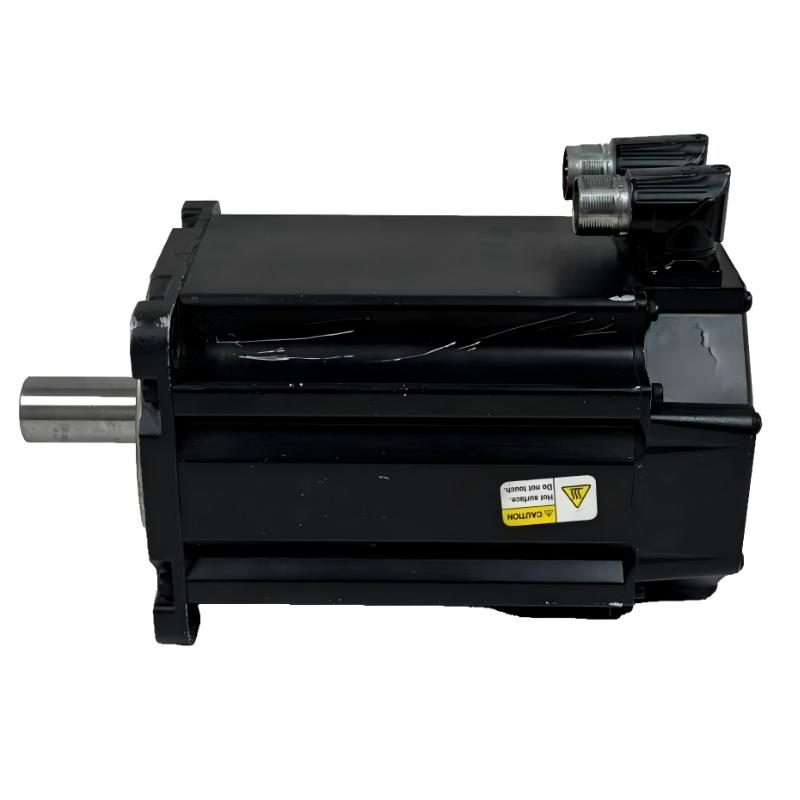
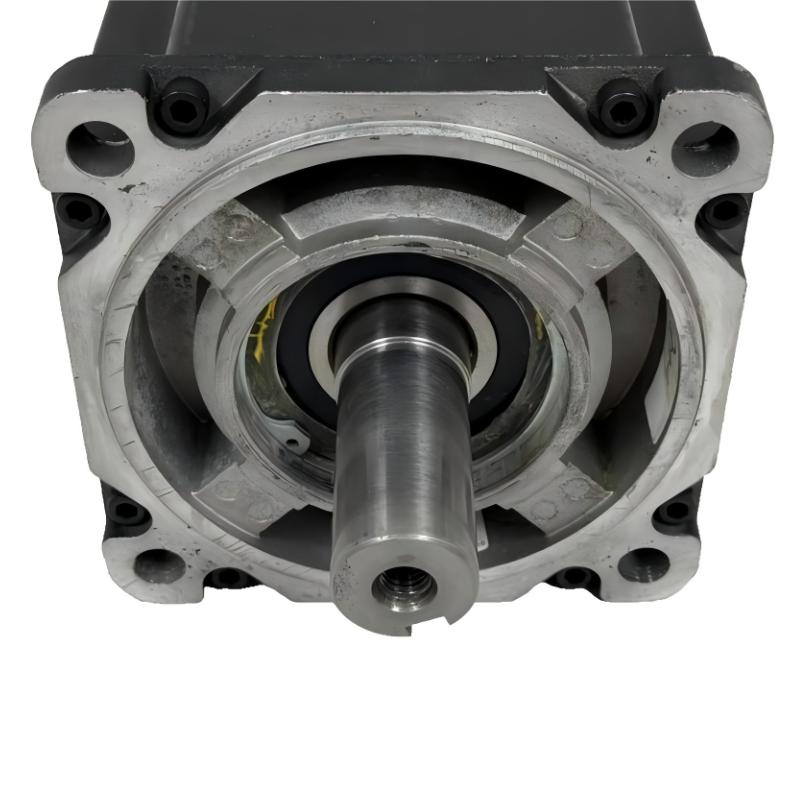
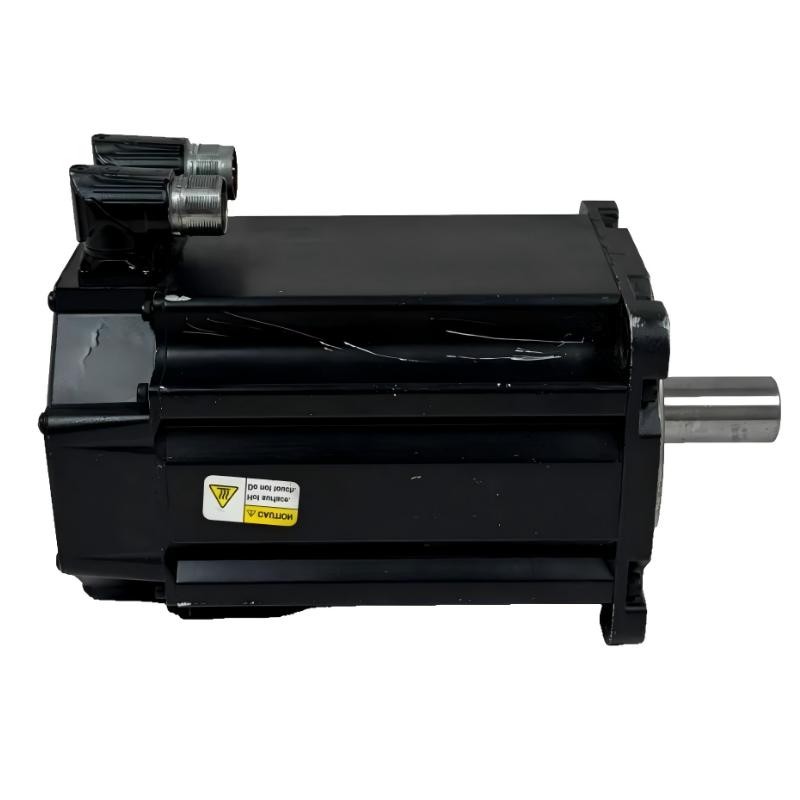
- Allen Bradley
- MPL-B680H-MJ72AA
- Low-Inertia Brushless Servo Motors Product
- USA
- 215 mm ×203.2 mm × 325 mm
- 42.7 kg
- Xiamen, China
- New & In Stock
- T/T, PayPal, Western Union
- 1 Year
- 1-3 Working Days
- DHL, UPS, TNT, FedEx and EMS.
- 24-Hour Service
- COO
- 3
Our advantage

Global Logistics
We have a 10-year logistics and express cooperation agreement, so our products can be shipped to any place in the world.

Brand new and original
Our products are imported in bulk from the place of origin. Because of the cooperative relationship, our products are all original and 100% new.

24-hour service
We provide 7*24 hours service to our customers. We will be there whenever you need us.

Price advantage
All our products are priced very favorably because we have our own warehouse and supply.
| Company Information | |||
| [email protected] | |||
| Mobile | +8615980777398 | ||
| +8615980777398 | |||
| 15980777398 |
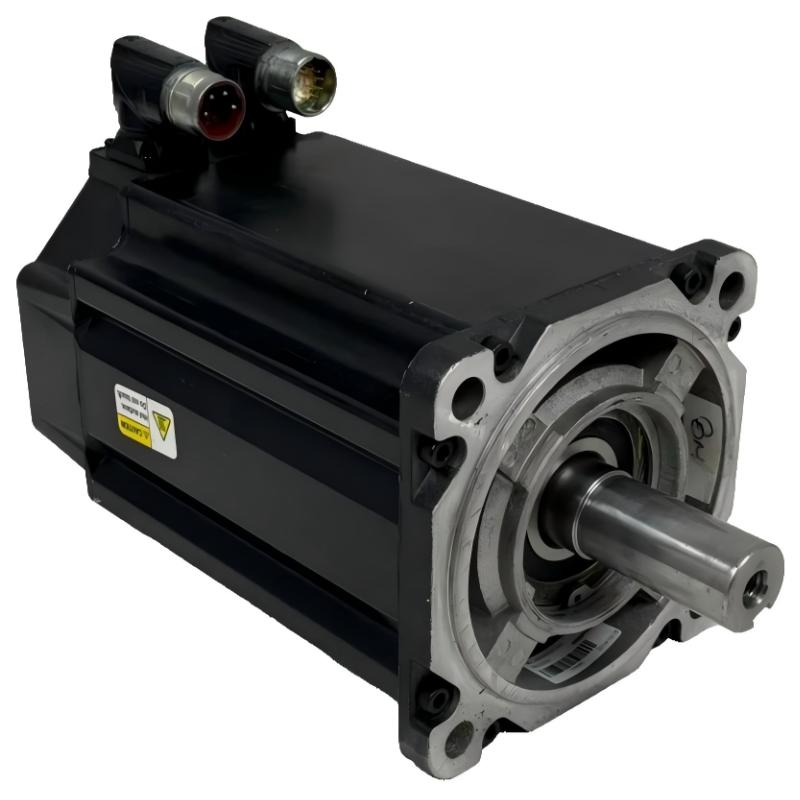
Allen-Bradley MPL-B680H-MJ72AA Servo Motor: Technical Specifications, Product Overview, Applications, Advantages, and Model Comparison
1. Product Overview
The Allen-Bradley MPL-B680H-MJ72AA is an industrial servo motor model within the MP-Series MPL low-inertia servo motor family. It is intended for automated machinery that requires controlled rotary motion, repeatable positioning, and coordinated operation with a compatible servo drive and motion controller.
Servo motors are commonly used in production systems where the motor must do more than rotate at a constant speed. They may need to accelerate rapidly, stop at a programmed position, reverse direction, or maintain a controlled position while other machine operations take place.
The MPL motor family is associated with brushless permanent-magnet technology and closed-loop motion control. These characteristics make it relevant to packaging equipment, automated assembly, indexing systems, material handling, and other industrial applications that require consistent motion.
The complete catalog number is important because its characters identify specific motor configurations. For the MPL-B680H-MJ72AA, the frame, speed class, feedback configuration, shaft arrangement, connector design, and brake option must all be considered when determining suitability for a particular machine.
Specification note: The detailed catalog-specific values, especially overall dimensions, rated torque, rated current, and weight, should be confirmed against the exact motor nameplate or technical drawing. The tables below distinguish nominal family characteristics from values that require confirmation, rather than treating estimated figures as verified specifications.
2. Detailed Technical Specifications
|
Parameter |
Specification |
|---|---|
|
Product model |
MPL-B680H-MJ72AA |
|
Brand |
Allen-Bradley |
|
Product family |
MP-Series |
|
Product series |
MPL Low-Inertia Servo Motors |
|
Product type |
Brushless AC rotary servo motor |
|
Motor technology |
Three-phase permanent-magnet synchronous motor |
|
Voltage class |
460 V AC |
|
Frame size |
Size 6 |
|
Frame dimension |
215 mm (8.46 in.) |
|
Magnet stack length |
203.2 mm (8.00 in.) |
|
Rated speed |
3,500 RPM |
|
Feedback configuration |
Multi-turn high-resolution absolute encoder |
|
Encoder family |
Hiperface-compatible feedback configuration |
|
Shaft configuration |
Keyed shaft extension |
|
Connector type |
SpeedTEC DIN connector |
|
Connector orientation |
Right-angle connector, rotatable through 180° |
|
Brake |
No integrated holding brake |
|
Mounting arrangement |
IEC metric, free mounting holes, FF type |
|
Cooling arrangement |
Totally enclosed, non-ventilated motor construction |
|
Motor poles |
Eight-pole design |
|
Continuous output power |
Approximately 7.5 kW under specified operating conditions |
|
Maximum continuous stall torque |
Approximately 60 Nm under the specified reference thermal conditions |
|
Maximum peak stall torque |
Approximately 146.9 Nm |
|
Maximum continuous stall current |
Approximately 51 A, drive-dependent |
|
Maximum peak stall current |
Approximately 140 A, drive-dependent |
|
Maximum operating speed |
3,500 RPM |
|
Overall length |
Confirm against the complete mechanical drawing |
|
Overall width |
Confirm against the complete mechanical drawing |
|
Overall height |
Confirm against the complete mechanical drawing |
|
Frame and stack dimensions |
215 mm frame; 203.2 mm magnet stack |
|
Product weight (kg) |
Approximately 40.45 kg reference value |
|
Shipping weight (kg) |
Approximately 42.7 kg reference value; packaging-dependent |
|
Control method |
Closed-loop servo control |
|
Typical use |
Industrial positioning, rotary motion, indexing and automated production |
The power, torque, and current figures above are reference specifications rather than a guarantee of performance under every installation condition. The actual continuous output available depends on the servo drive, ambient temperature, thermal mounting conditions, operating speed, and duty cycle.
The listed product weight is a reference value. For shipping, lifting, installation, or replacement work, confirm the actual motor and packaging weights rather than assuming they are identical across all production revisions.
3. Model Number Breakdown
The catalog number contains several useful configuration indicators. Understanding these helps distinguish the MPL-B680H-MJ72AA from other motors in the same family.
|
Catalog element |
Meaning |
|---|---|
|
MPL |
Low-inertia brushless servo motor series |
|
B |
460 V AC voltage class |
|
6 |
Frame size 6, corresponding to a 215 mm frame dimension |
|
80 |
Magnet stack length of 203.2 mm |
|
H |
3,500 RPM speed class |
|
M |
Multi-turn high-resolution absolute feedback |
|
J |
Keyed shaft extension |
|
7 |
SpeedTEC DIN connector configuration |
|
2 |
No integrated brake |
|
AA |
Factory-defined configuration and revision suffix |
The complete catalog number should always be retained when ordering a replacement. A motor with a similar frame size may have a different encoder, brake, connector, shaft, or speed configuration.
In particular, the MJ72AA configuration has multi-turn feedback and no integrated brake. It should not be confused with an otherwise similar motor whose catalog number includes a brake option.
4. Product Introduction
The MPL-B680H-MJ72AA is a low-inertia industrial servo motor designed for machines that need controlled movement, repeatable positioning, and rapid changes in rotational speed.
Unlike a standard induction motor that is often used for continuous-speed operation, a servo motor operates as part of a coordinated motion-control system. The controller issues movement commands, the servo drive supplies regulated electrical power, and the feedback device reports the motor’s position to support closed-loop control.
This operating principle makes the motor suitable for equipment that repeatedly accelerates, decelerates, reverses direction, or moves between defined positions.
The B680H configuration combines a large frame with a 3,500 RPM speed class. Its 215 mm frame dimension and 203.2 mm magnet stack length provide useful starting points for mechanical planning, while the actual torque and speed requirements determine whether the motor is suitable for a particular machine.
The motor’s multi-turn high-resolution absolute encoder is an important feature. It allows the motion-control system to obtain position information over multiple shaft revolutions, which can be useful for rotary positioning and other applications where the relationship between shaft position and machine position must be maintained.
The keyed shaft provides a conventional mechanical connection for compatible couplings, pulleys, gears, or other transmission components. Its right-angle, rotatable connector arrangement can also help with cable routing in machinery where space around the motor is limited.
The motor does not include an integrated holding brake. If the application involves a vertical axis, a suspended load, or a mechanism that could move when the motor is not energized, the machine designer must determine whether an external braking or load-holding arrangement is required.
5. Product Advantages
5.1 High-speed motion capability
The 3,500 RPM speed class makes the motor a candidate for machinery requiring relatively high rotational speed while retaining servo-controlled movement.
This can be useful for rotary mechanisms, indexing equipment, automated transfer systems, and production machines with frequent movement cycles.
The usable torque at the required speed must still be checked against the motor’s torque-speed curve. Maximum speed alone does not indicate how much load the motor can sustain continuously.
5.2 Multi-turn absolute feedback
The multi-turn high-resolution absolute encoder is one of the most significant features of this model.
It provides position information across multiple shaft revolutions, which can simplify position tracking in applications involving rotary axes, winding mechanisms, or mechanisms that use a transmission ratio between the motor and the machine.
The behavior following a power interruption depends on the feedback system and controller configuration. System designers should confirm the required position-retention and restart behavior before commissioning.
5.3 Low-inertia motor design
Low inertia helps a motor change rotational speed more readily for a given applied torque.
In a well-matched system, this characteristic can support rapid acceleration, controlled deceleration, and frequent direction changes. It is particularly relevant to machines that perform repeated positioning cycles.
The final response depends on the total reflected load inertia, coupling stiffness, gearing, drive tuning, and machine structure.
5.4 Strong torque capability
The B680H motor’s reference torque specifications make it relevant to demanding industrial motion applications.
The motor must be sized according to the continuous torque needed throughout the duty cycle and the peak torque required during acceleration or brief overload conditions.
A motor should not be selected solely on peak torque. Continuous thermal loading, operating speed, cycle duration, and cooling conditions are equally important.
5.5 Flexible mechanical integration
The keyed shaft and IEC metric mounting arrangement provide established mechanical interfaces for compatible industrial equipment.
The right-angle connector can make installation easier where straight cable routing would interfere with nearby machine components.
Nevertheless, a successful replacement requires checking the shaft dimensions, keyway, mounting-hole pattern, pilot diameter, shaft extension, and cable clearance.
5.6 Support for coordinated automation
When paired with a compatible servo drive and controller, the motor can participate in synchronized motion sequences.
This is useful when a production line must coordinate conveyor movement, product transfer, rotary indexing, and other machine operations.
The overall performance depends on the entire motion-control system rather than the motor alone.
5.7 Suitability for repeated production cycles
Industrial machinery often performs the same movement sequence throughout a shift. A correctly sized servo system can maintain consistent movement and positioning across repeated cycles.
This can help reduce motion-related variation and support more predictable machine operation, provided that the mechanical transmission, feedback system, and control parameters are properly configured.
6. Product Applications

6.1 Packaging and converting machinery
Packaging systems frequently require precise control of feeding rollers, cutting mechanisms, product spacing, and rotary indexing. A servo motor can synchronize movement with other machine axes, allowing each operation to occur at a programmed position and time.
The MPL-B680H-MJ72AA may be suitable where the calculated speed, torque, and duty cycle match the application’s requirements.

6.2 Automated assembly systems
Assembly machines often move workpieces between stations, align components, and coordinate multiple operations. Servo control helps manage the movement sequence and repeatability of these operations.
Multi-turn feedback can be useful where the motor’s angular position must be tracked over multiple revolutions.

6.3 Precision manufacturing
Automated machining and manufacturing systems may use servo motors for rotary positioning, material movement, tool positioning, or auxiliary machine axes.
Suitability depends on the machine’s positioning tolerance, load inertia, mechanical stiffness, and required speed range.

6.4 Material handling and transfer equipment
Servo motors can control the movement of transfer mechanisms, rotary platforms, and conveyor sections where programmed positioning is required.
If the mechanism operates vertically or carries a load that can move under gravity, the absence of an integrated brake must be addressed in the machine’s mechanical and safety design.

6.5 Rotary indexing and positioning systems
Rotary indexing equipment moves components between fixed operating positions. Servo control can provide programmable movement profiles and controlled stopping, while multi-turn feedback can help track angular position across multiple shaft revolutions.
The required accuracy also depends on gearbox backlash, coupling rigidity, mechanical tolerances, and the feedback arrangement.
Additional potential applications
The motor may also be considered for:
-
Automated inspection and testing machinery.
-
Printing and converting systems.
-
Industrial winding and unwinding equipment.
-
Rotary transfer mechanisms.
-
Electronic component production.
-
Automated machine tending.
-
Special-purpose manufacturing equipment.
-
Coordinated multi-axis production systems.
These are application categories, not a guarantee that this specific motor will meet every machine’s requirements. Proper sizing and compatibility checks are necessary before installation.
7. Brand and Series Information
|
Item |
Description |
|---|---|
|
Brand |
Allen-Bradley |
|
Product family |
MP-Series |
|
Product series |
MPL |
|
Series classification |
Low-Inertia Brushless Servo Motors |
|
Product category |
Industrial motion control |
|
Motor construction |
Permanent-magnet brushless AC motor |
|
Feedback type for this model |
Multi-turn high-resolution absolute encoder |
|
Speed class |
3,500 RPM |
|
Voltage class |
460 V AC |
|
Mechanical frame |
Size 6, 215 mm |
|
Magnet stack length |
203.2 mm |
|
Brake configuration |
No integrated brake |
|
Main purpose |
Controlled rotary motion and positioning |
The MPL series is designed for industrial motion-control systems that require controlled acceleration, repeatable positioning, and integration with compatible servo drives.
Other MP-Series motors may offer different inertia characteristics, frame sizes, feedback options, brake configurations, and environmental protection options. These differences are important when choosing a motor for a new machine or replacing an existing unit.
8. Five Recommended Models from the Same Series or Closely Related Variants
The following models provide useful comparison points within the MPL low-inertia servo motor family. They represent different speed classes, frame sizes, and feedback or brake configurations.
The target motor is the MPL-B680H-MJ72AA, with a 215 mm frame, 203.2 mm magnet stack, 3,500 RPM speed class, multi-turn absolute feedback, and no integrated brake.
8.1 Model comparison table
|
Model |
Series |
Voltage class |
Speed class |
Frame dimension |
Stack length |
Feedback / brake configuration |
Dimensions and weight (kg) |
|---|---|---|---|---|---|---|---|
|
MPL-B680H-SJ72AA |
MPL |
460 V AC |
3,500 RPM |
215 mm |
203.2 mm |
Single-turn feedback; no brake |
Frame 215 mm; stack 203.2 mm; weight not confirmed |
|
MPL-B680F-MJ72AA |
MPL |
460 V AC |
3,000 RPM |
215 mm |
203.2 mm |
Multi-turn feedback; no brake |
Frame 215 mm; stack 203.2 mm; weight not confirmed |
|
MPL-B680D-MJ72AA |
MPL |
460 V AC |
2,000 RPM |
215 mm |
203.2 mm |
Multi-turn feedback; no brake |
Frame 215 mm; stack 203.2 mm; weight not confirmed |
|
MPL-B680H-MJ74AA |
MPL |
460 V AC |
3,500 RPM |
215 mm |
203.2 mm |
Multi-turn feedback; 24 V DC brake |
Frame 215 mm; stack 203.2 mm; weight not confirmed |
|
MPL-B540K-SJ74AA |
MPL |
460 V AC |
4,000 RPM |
165 mm |
101.6 mm |
Single-turn feedback; 24 V DC brake |
Frame 165 mm; stack 101.6 mm; weight not confirmed |
Dimension and weight note: Frame dimensions and magnet stack lengths are not complete overall dimensions. Exact length, width, height, shaft dimensions, and model-specific weight must be checked against the corresponding mechanical drawing. The catalog suffixes must also be confirmed before ordering, particularly for brake and feedback configurations.
8.2 Individual model recommendations
1. MPL-B680H-SJ72AA
This model is a close mechanical and speed-class comparison to the target motor. It shares the B680H frame and 3,500 RPM class but uses a single-turn feedback configuration rather than the target model’s multi-turn feedback.
It may be worth considering where the control system requires only single-turn feedback and the application does not need the target model’s multi-turn configuration.
Recommended for: Machinery with compatible mounting and electrical requirements where single-turn feedback is sufficient.
2. MPL-B680F-MJ72AA
This model retains the B680 frame and multi-turn feedback arrangement but belongs to the 3,000 RPM speed class.
It can be considered when the required operating speed is lower than that of the B680H. The motor’s continuous and peak torque ratings must still be checked against the actual machine load.
Recommended for: Applications that need multi-turn feedback and a lower motor-speed class.
3. MPL-B680D-MJ72AA
The B680D variant provides another comparison within the same general frame and stack-length class, with a 2,000 RPM speed classification and multi-turn feedback.
It may be relevant when a machine’s required operating speed is lower, but its torque-speed performance should be checked rather than inferred from speed alone.
Recommended for: Rotary mechanisms and positioning systems with compatible drive requirements and a lower target speed.
4. MPL-B680H-MJ74AA
This is a particularly relevant comparison because it retains the B680H speed class and multi-turn feedback configuration while adding a holding brake.
The integrated brake can be useful when the machine needs shaft holding while stationary. However, its holding capacity and intended operating function must match the actual application.
Recommended for: Applications where the B680H motor configuration is suitable but an integrated holding brake is required.
5. MPL-B540K-SJ74AA
The B540K is a smaller-frame alternative with a shorter magnet stack and a different speed class.
It may be worth evaluating where installation space is restricted or where the calculated torque requirement allows a smaller motor. Its smaller frame does not make it a direct replacement for the B680H.
Recommended for: Compact positioning mechanisms and machinery requiring a smaller motor envelope, subject to load calculations.
9. Five Additional Allen-Bradley Servo Motor Models to Consider
The following five models broaden the selection beyond the B680H configuration. They cover different motor sizes, speed classes, and feedback arrangements within the MPL product family.
They are presented as representative alternatives for industrial motion-control projects, not as a verified sales ranking. A model’s suitability depends on the machine’s electrical, mechanical, and control-system requirements.
9.1 Technical comparison table
|
Model |
Product series |
Voltage class |
Speed class |
Frame dimension |
Stack length |
Feedback / brake |
Overall dimensions and weight (kg) |
|---|---|---|---|---|---|---|---|
|
MPL-B560F-MJ72AA |
MPL |
460 V AC |
3,000 RPM |
165 mm |
152.4 mm |
Multi-turn feedback; no brake |
Overall dimensions not confirmed; weight not confirmed |
|
MPL-B4540F-SJ72AH |
MPL |
460 V AC |
3,000 RPM |
130 mm |
101.6 mm |
Single-turn feedback; no brake |
Overall dimensions not confirmed; weight not confirmed |
|
MPL-B330P-MJ72AH |
MPL |
460 V AC |
5,000 RPM |
100 mm |
76.2 mm |
Multi-turn feedback; no brake |
Overall dimensions not confirmed; weight not confirmed |
|
MPL-A220T-EJ72AA |
MPL |
230 V AC |
6,000 RPM |
75 mm |
50.8 mm |
Encoder configuration to be confirmed; no brake indicated |
Overall dimensions not confirmed; weight not confirmed |
|
MPL-B540K-SJ74AA |
MPL |
460 V AC |
4,000 RPM |
165 mm |
101.6 mm |
Single-turn feedback; 24 V DC brake |
Overall dimensions not confirmed; weight not confirmed |
The model specifications in this comparison are preliminary selection references. Confirm each complete catalog number, feedback type, connector arrangement, brake configuration, rated torque, and weight before purchase.
9.2 Model selection notes
1. MPL-B560F-MJ72AA
The B560F model is worth evaluating for applications that require a 3,000 RPM speed class but have different mounting-space requirements from the B680H.
Its smaller frame and shorter magnet stack distinguish it mechanically from the target motor. The multi-turn feedback arrangement may be useful where shaft position needs to be tracked across multiple revolutions.
Potential applications: Automated packaging, rotary positioning, assembly equipment, and material transfer systems.
2. MPL-B4540F-SJ72AH
This model belongs to a smaller frame class and may be suitable for equipment where the B680H’s physical size is unnecessary.
The smaller motor should only be selected after checking continuous torque, peak torque, acceleration requirements, and load inertia.
Potential applications: Compact automation machinery, small rotary tables, and indexing mechanisms.
3. MPL-B330P-MJ72AH
The B330P configuration represents a higher-speed, smaller-frame comparison candidate.
Its 5,000 RPM speed class may be relevant to high-speed rotary equipment, provided the torque available at the required speed is sufficient.
Potential applications: Compact high-speed positioning, rotary mechanisms, and selected production-line operations.
4. MPL-A220T-EJ72AA
The A220T configuration is associated with a smaller frame and a 230 V AC voltage class.
It may be relevant to machinery designed around a compatible lower-voltage servo system. It should not be treated as electrically interchangeable with the 460 V-class B680H.
Potential applications: Compact industrial machinery, smaller positioning axes, and equipment with compatible 230 V servo drives.
5. MPL-B540K-SJ74AA
The B540K model provides a smaller-frame comparison with a 4,000 RPM speed class and a holding-brake configuration.
It may be worth considering when a machine needs a smaller installation envelope and the calculated torque requirements permit the change.
Potential applications: Rotary indexing equipment, positioning mechanisms, and compact automated machinery that requires a holding brake.
10. Engineering Considerations Before Selecting a Replacement
Choosing a servo motor involves more than matching the brand, series, or rated speed. The following factors should be reviewed before replacing the MPL-B680H-MJ72AA with another model.
|
Selection factor |
Required check |
Engineering significance |
|---|---|---|
|
Supply voltage |
460 V AC class or another compatible voltage class |
Determines drive compatibility |
|
Continuous torque |
Torque required during normal operation |
Prevents sustained thermal overload |
|
Peak torque |
Maximum torque required during acceleration |
Determines short-duration dynamic capability |
|
Rated speed |
Required operating speed |
Establishes whether the motor can meet the motion profile |
|
Torque-speed curve |
Available torque at the required speed |
Avoids selecting a motor that cannot maintain the required load |
|
Load inertia |
Reflected load inertia and motor inertia |
Influences acceleration, stability, and tuning |
|
Feedback |
Single-turn or multi-turn absolute feedback |
Determines position measurement and controller compatibility |
|
Holding brake |
Required holding force and brake operating conditions |
Important for stationary loads and gravity-loaded axes |
|
Shaft interface |
Shaft diameter, keyway, extension, and allowable loading |
Determines mechanical fit |
|
Mounting interface |
Frame, pilot, bolt pattern, and mounting orientation |
Prevents installation problems |
|
Connector arrangement |
Connector type, orientation, and cable clearance |
Ensures suitable wiring and installation |
|
Environment |
Ambient temperature, dust, moisture, and contamination |
Determines whether additional protection is needed |
|
Overall dimensions |
Full length, width, height, and shaft projection |
Confirms mechanical clearance |
|
Product weight (kg) |
Actual motor mass |
Required for handling, supports, and transport |
|
Drive compatibility |
Current ratings, feedback interface, and drive parameters |
Ensures the complete motion system operates correctly |
11. Dimensions and Weight: Installation Reference
For the target motor, the nominal frame and magnet stack dimensions are useful for initial mechanical planning. They are not a substitute for a full dimensional drawing.
|
Mechanical parameter |
MPL-B680H-MJ72AA |
|---|---|
|
Frame dimension |
215 mm |
|
Magnet stack length |
203.2 mm |
|
Overall motor length |
Not confirmed |
|
Overall motor width |
Not confirmed |
|
Overall motor height |
Not confirmed |
|
Shaft diameter |
Not confirmed |
|
Shaft extension length |
Not confirmed |
|
Mounting-hole spacing |
Not confirmed |
|
Product weight (kg) |
Approximately 40.45 kg reference value |
|
Shipping weight (kg) |
Approximately 42.7 kg reference value |
The frame dimension is not necessarily the same as the overall motor width or height. The final installation envelope depends on the mounting face, shaft extension, connector, and other mechanical features.
For replacement projects, compare the existing motor’s nameplate with the proposed model and confirm the shaft, mounting pattern, connector, feedback, and brake arrangements before installation.
12. Final Recommendation
The MPL-B680H-MJ72AA is best considered for industrial machinery that requires a 3,500 RPM low-inertia servo motor, multi-turn high-resolution absolute feedback, a keyed shaft, and a 460 V AC-class drive system, without an integrated holding brake.
The closest alternatives depend on the required change:
-
MPL-B680H-SJ72AA: Consider when single-turn feedback is sufficient.
-
MPL-B680F-MJ72AA: Consider when the same general frame and multi-turn feedback are needed with a lower speed class.
-
MPL-B680H-MJ74AA: Consider when an integrated holding brake is required.
-
MPL-B680D-MJ72AA: Consider when a lower motor-speed class better matches the application.
-
MPL-B540K-SJ74AA: Consider when a smaller frame and a different speed class may suit the machine.
The most important final checks are the exact overall dimensions, actual motor weight in kilograms, continuous and peak torque, rated current, feedback compatibility, and drive configuration. These details should be confirmed for the complete catalog number before a purchase or replacement is approved.