

ProductPRODUCT
Featured products
Contact Us
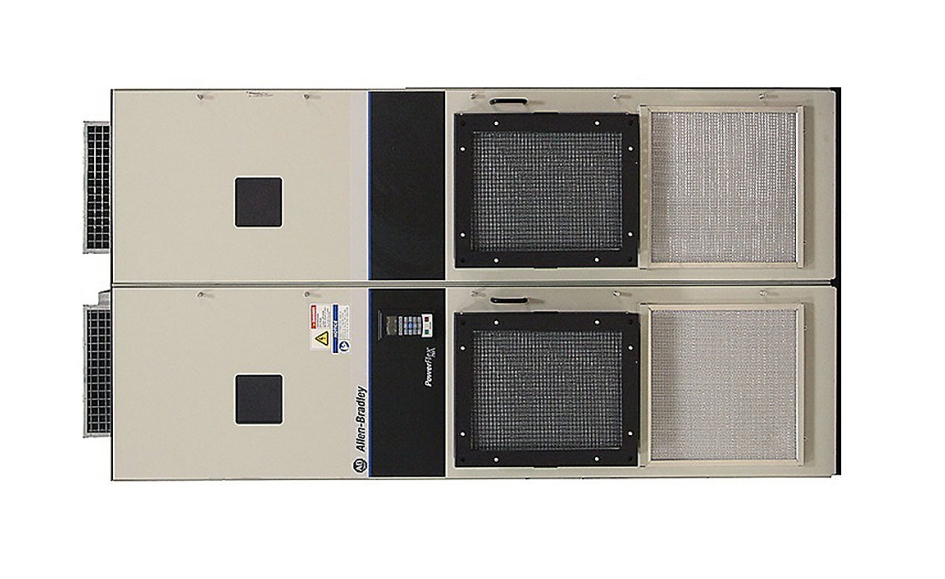
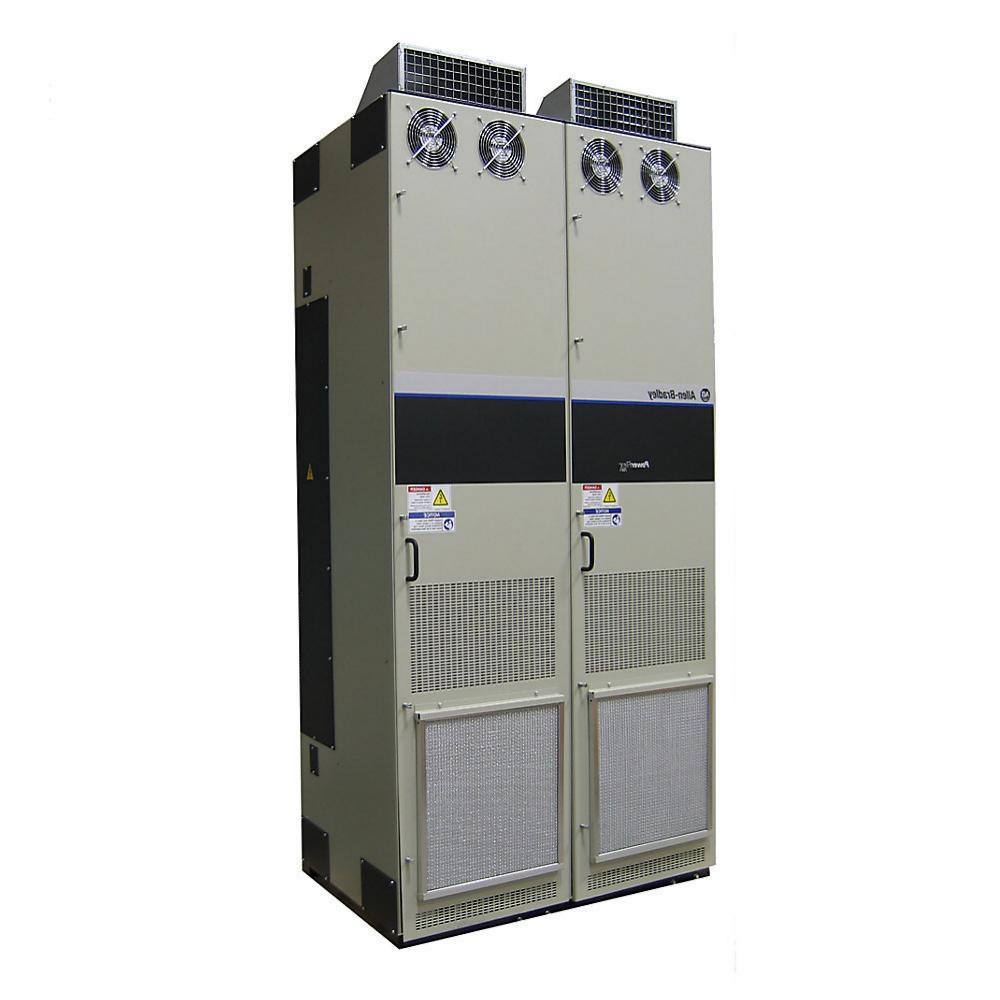
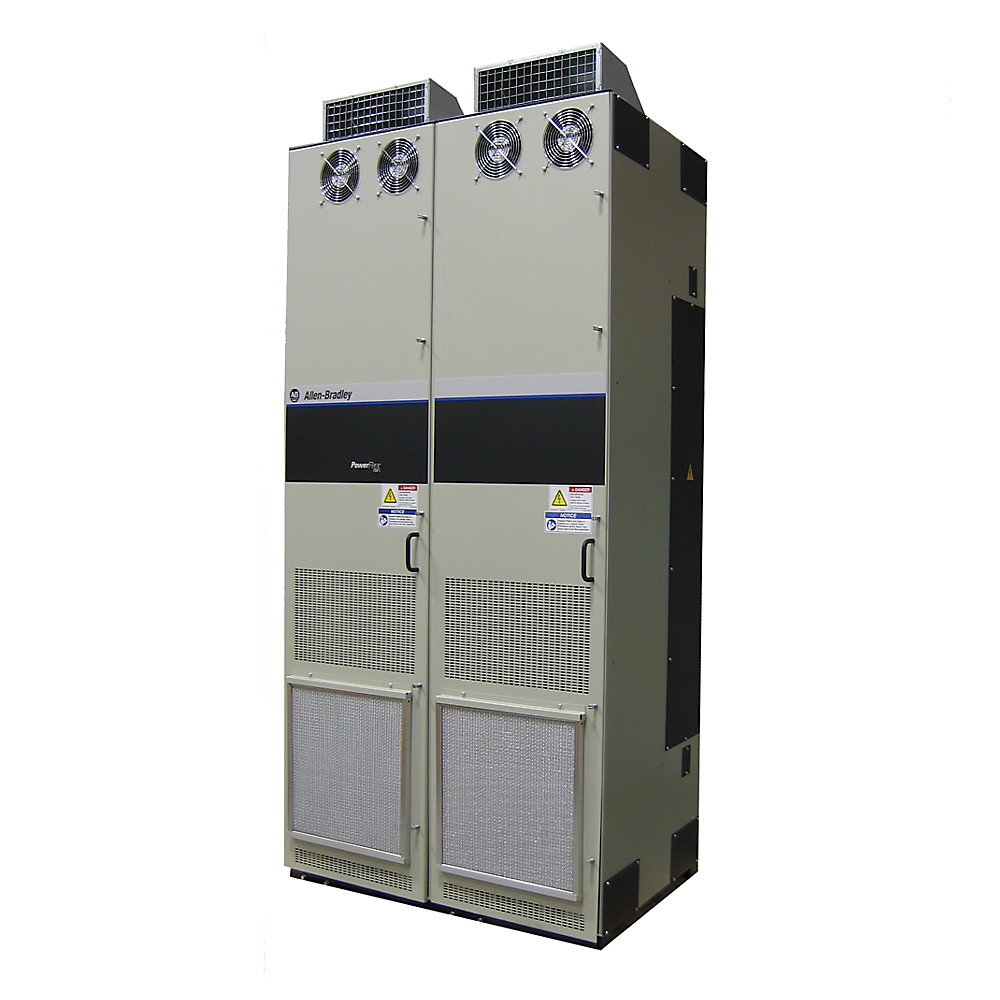
- Allen Bradley
- 20J1F3C1K0LNDNNNNN
- PowerFlex AC Drive
- USA
- 1,000–1,400 × 500–800 × 350–500 mm
- 180kg
- Xiamen, China
- New & In Stock
- T/T, PayPal, Western Union
- 1 Year
- 1-3 Working Days
- DHL, UPS, TNT, FedEx and EMS.
- 24-Hour Service
- COO
- 3
Our advantage

Global Logistics
We have a 10-year logistics and express cooperation agreement, so our products can be shipped to any place in the world.

Brand new and original
Our products are imported in bulk from the place of origin. Because of the cooperative relationship, our products are all original and 100% new.

24-hour service
We provide 7*24 hours service to our customers. We will be there whenever you need us.

Price advantage
All our products are priced very favorably because we have our own warehouse and supply.
| Company Information | |||
| [email protected] | |||
| Mobile | +8615980777398 | ||
| +8615980777398 | |||
| 15980777398 |
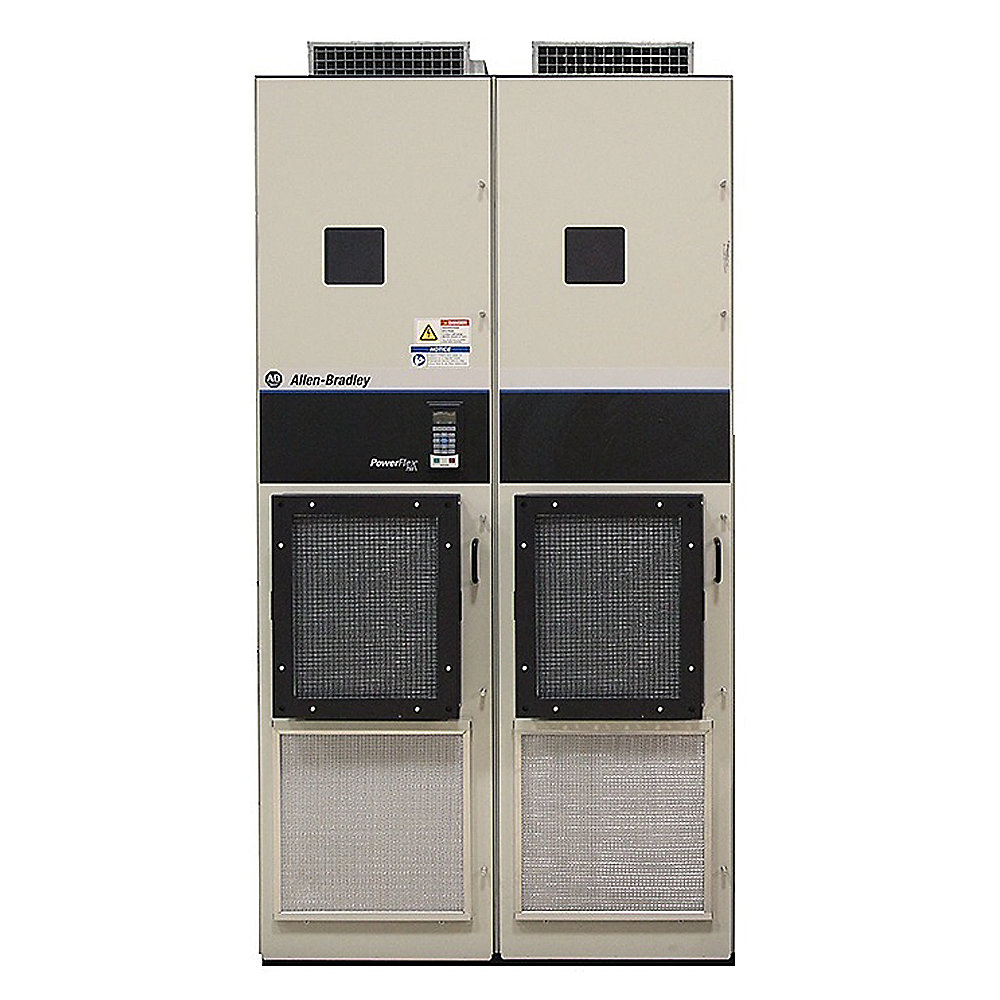
Allen-Bradley 20J1F3C1K0LNDNNNNN PowerFlex 750 Bus Supply
1. Product Overview
The Allen-Bradley 20J1F3C1K0LNDNNNNN is a PowerFlex 750 Bus Supply designed for industrial DC-bus power distribution and regeneration applications within high-performance drive systems.
This model is identified as an air-cooled 750 Bus Supply and uses an AFE regenerative input configuration. Its electrical input class is 400 V AC, making it suitable for industrial power systems where controlled DC-bus power, regenerative energy handling, and coordinated drive-system operation are required.
The unit belongs to the PowerFlex 750 architecture and is intended to operate as a bus-power component rather than as a conventional standalone motor-output inverter. This distinction is important when selecting the unit for an industrial system because the bus supply is normally integrated with compatible drive sections, DC-bus components, protection equipment, and system-level controls.
The 20J1F3C1K0LNDNNNNN is therefore best considered a high-power DC-bus supply and regenerative front-end component for industrial automation systems rather than a conventional motor drive.
The product is listed as discontinued, with the discontinuation date identified as December 20, 2021. A direct replacement identifier is listed as 20JEF3C1K0LNDNNNNN.
2. Basic Product Parameters
| Parameter | Specification |
|---|---|
| Brand | Allen-Bradley |
| Product Model | 20J1F3C1K0LNDNNNNN |
| Product Family | PowerFlex 750 |
| Product Type | PowerFlex 750 Bus Supply |
| Configuration | Air-Cooled 750 Bus Supply |
| Input Type | AFE Regenerative |
| AC Input Class | 400 V AC |
| Electrical Function | DC-bus power supply / regenerative front end |
| Cooling Method | Air cooled |
| Application Category | Industrial drive-system DC bus |
| Installation | Industrial cabinet / drive-system integration |
| Control Architecture | PowerFlex 750 architecture |
| Product Status | Discontinued |
| Discontinued Date | December 20, 2021 |
| Replacement Category | Direct replacement listed |
| Replacement Model | 20JEF3C1K0LNDNNNNN |
| Country of Origin Listed | United States |
| Dimensions | Approx. 1,000–1,400 mm H × 500–800 mm W × 350–500 mm D* |
| Approx. Weight | Approx. 100–180 kg* |
*The dimensional and weight figures above should be treated as engineering/planning estimates, not guaranteed nameplate values. The exact enclosure dimensions, shipping dimensions, and mass can vary with the complete configured assembly and installed options. For cabinet fabrication, lifting arrangements, transportation, and final mechanical clearance, the actual equipment drawing and nameplate should be used.
3. Product Series
The 20J1F3C1K0LNDNNNNN belongs to the PowerFlex 750 Bus Supply product family.
The PowerFlex 750 architecture was developed for demanding industrial drive applications requiring coordinated power conversion, advanced control, high-power motor systems, and system-level integration.
Within this architecture, the 20J1 series is associated with bus-supply equipment. Unlike a standard PowerFlex AC drive that directly produces a controlled motor output, a bus supply is primarily concerned with supplying and managing the DC bus used by connected drive equipment.
This makes the 20J1F3C1K0LNDNNNNN particularly relevant to applications involving multiple coordinated drives, common DC-bus systems, regenerative loads, and industrial machinery where recovered braking energy can be returned toward the incoming AC system.
4. Understanding the Product Function
A conventional AC drive normally receives AC power and converts it into controlled AC output power for a motor.
A regenerative bus supply has a different role.
The incoming three-phase AC power is processed through the active front-end architecture to establish and regulate the DC bus used by the connected drive system. During regenerative operation, energy generated by connected motors can be managed through the same active front-end structure rather than simply being dissipated as heat through braking resistors.
This operating principle is particularly valuable for machines that repeatedly accelerate, decelerate, lift, lower, unwind, rewind, or otherwise return mechanical energy to the electrical system.
The 20J1F3C1K0LNDNNNNN therefore serves as an important power-conversion building block in a coordinated PowerFlex 750 installation.
5. AFE Regenerative Input
One of the most important characteristics of this model is its AFE regenerative input configuration.
AFE means Active Front End.
An active front end uses controlled power semiconductor switching to regulate the relationship between the incoming AC supply and the DC bus. In regenerative operation, the power flow can also be reversed so that energy from the DC bus can be returned toward the AC supply.
This is different from a basic diode rectifier arrangement.
In applications with significant regenerative energy, an active front end can provide a more sophisticated method of handling power flow and can reduce the dependence on traditional resistor-based braking systems.
For large industrial machinery, this can be an important system-level advantage when energy recovery and coordinated power management are part of the machine design.
6. 400 V AC Electrical Class
The specified input class for the 20J1F3C1K0LNDNNNNN is 400 V AC.
This places the product in the common industrial low-voltage three-phase power range used throughout many manufacturing plants, process facilities, material-handling systems, and heavy machinery installations.
The actual plant supply should always be checked against the complete system design before installation.
Important items to verify include:
- Incoming line voltage.
- Line frequency.
- Available short-circuit current.
- Transformer capacity.
- Grounding arrangement.
- Input protection.
- Cable size.
- Bus configuration.
- Connected drive capacity.
- Regenerative energy requirements.
- Cabinet ventilation.
- Ambient operating conditions.
7. Air-Cooled Construction
The model is identified as an air-cooled 750 Bus Supply.
Air cooling is particularly practical for industrial installations because it avoids the additional plumbing, pumps, heat exchangers, and coolant-management equipment required by liquid-cooled systems.
The cooling system should nevertheless be treated as an important part of the installation design.
Adequate airflow must be maintained around the equipment.
The cabinet should not be installed in a location where dust, oil mist, corrosive vapor, excessive humidity, or restricted airflow can significantly reduce thermal performance.
For high-power equipment, cabinet ventilation should be considered together with the heat generated by adjacent drive modules, reactors, contactors, transformers, and other power components.
8. Main Applications
Heavy-Duty Material Handling
The PowerFlex 750 bus-supply architecture can be used in material-handling systems where several high-power motors operate as part of the same machine.
Typical examples include conveyors, transfer systems, lifting equipment, storage and retrieval machinery, and large automated material-handling installations.
Where multiple drives share a common DC bus, coordinated power management can simplify the overall power architecture.
Cranes and Hoisting Equipment
Cranes and hoists frequently generate regenerative energy during lowering and deceleration.
A regenerative bus-supply architecture can be particularly suitable for these operating conditions because the electrical system must deal with frequent changes in the direction of energy flow.
The 20J1F3C1K0LNDNNNNN can therefore be considered for high-power lifting and material-positioning systems where controlled regenerative operation is required.
Elevators and Vertical Transportation Machinery
Vertical-motion equipment can generate substantial regenerative energy during certain operating cycles.
When the motor transitions from motoring to generating operation, the DC bus receives energy rather than simply consuming it.
A regenerative front-end system provides a method of managing this energy within the overall drive architecture.
Test Stands
Industrial test benches and dynamometer systems often operate motors through repeated acceleration and deceleration cycles.
These systems may produce considerable regenerative energy.
A controlled DC-bus and regenerative front-end architecture can therefore be useful where energy recovery and four-quadrant operation are important design requirements.
Winding and Unwinding Machinery
Winding systems, roll-to-roll machinery, cable processing equipment, and similar production systems can involve rapid speed changes and torque reversals.
During deceleration or tension-control operations, the motor can return energy to the DC bus.
The PowerFlex 750 bus-supply concept is well suited to systems where this regenerative behavior needs to be managed at the power-system level.
Large Conveyor Systems
Long conveyors and high-inertia conveyor systems can contain multiple drive motors.
When several motors operate together, a shared DC-bus architecture can provide a coordinated method of handling electrical power between drive sections.
This can be useful in mining-related material handling, bulk-material processing, port equipment, and large manufacturing systems.
Process Machinery
High-power process machines can also benefit from centralized DC-bus architectures when several drive sections need to operate together.
Examples include large mixers, centrifuges, processing lines, machine tools, and other equipment where synchronized motion and regenerative energy management are important.
9. Main Advantages
Regenerative Energy Handling
The most significant feature of this model is its regenerative AFE architecture.
Instead of treating regenerated energy only as an unwanted braking load, the system can actively manage power flowing between the DC bus and AC supply.
This makes the architecture particularly attractive for machines with frequent braking and deceleration.
Suitable for Common DC-Bus Systems
The bus-supply concept is useful when several drive sections operate from a common DC-bus structure.
This can simplify the electrical architecture of a large machine and provide a coordinated source of DC-bus power for compatible drive sections.
High-Power Industrial Architecture
The PowerFlex 750 platform is intended for demanding industrial applications.
The 20J1F3C1K0LNDNNNNN is consequently better suited to large machinery and centralized power architectures than small standalone variable-frequency-drive applications.
Active Front-End Control
The AFE approach provides controlled power conversion between the AC supply and DC bus.
This is especially valuable when the machine must accommodate both motoring and regenerative operating conditions.
Reduced Dependence on Braking Resistors
For suitable regenerative applications, energy can be managed through the active front end rather than being converted primarily into heat through braking resistors.
The actual system benefit depends on the machine duty cycle, regenerated energy level, utility configuration, and complete system design.
System-Level Integration
The PowerFlex 750 architecture allows the bus supply to be integrated with compatible drive components and industrial control systems.
This is useful in machines where several motors must be coordinated through a centralized control architecture.
Air-Cooled Maintenance Concept
Air cooling avoids the additional maintenance requirements associated with liquid cooling.
For properly ventilated industrial cabinets, an air-cooled architecture can be straightforward to maintain and inspect.
10. Important Installation Considerations
The 20J1F3C1K0LNDNNNNN should not be selected based only on its model number.
A proper engineering review should consider the entire DC-bus system.
The following parameters are particularly important:
| Engineering Item | Recommended Check |
|---|---|
| Incoming Voltage | Confirm 400 V AC system compatibility |
| Frequency | Confirm plant frequency |
| Phase | Confirm three-phase industrial supply |
| AFE Requirement | Confirm regenerative front-end operation is required |
| DC Bus | Confirm compatible DC-bus voltage and connected equipment |
| Connected Drives | Verify compatibility with the PowerFlex architecture |
| Regenerative Load | Calculate maximum regenerated energy |
| Short-Circuit Current | Confirm system fault-current requirements |
| Protection | Select suitable upstream protection |
| Cabling | Size conductors for actual continuous and peak current |
| Cooling | Provide adequate airflow and heat removal |
| Cabinet | Allow sufficient clearance for installation and service |
| Grounding | Follow the complete system grounding design |
| Harmonics | Evaluate the plant power-quality requirements |
| EMC | Consider cable routing and electromagnetic compatibility |
| Maintenance | Provide service access around power components |
| Lifting | Verify equipment weight before handling |
| Dimensions | Confirm final mechanical drawing before cabinet fabrication |
11. Mechanical Dimensions and Weight
Exact mechanical data for this specific discontinued configuration should not be treated as interchangeable with the dimensions of another PowerFlex 750 component.
For preliminary cabinet planning, a reasonable engineering estimate is:
| Mechanical Parameter | Planning Value |
|---|---|
| Height | Approx. 1,000–1,400 mm |
| Width | Approx. 500–800 mm |
| Depth | Approx. 350–500 mm |
| Estimated Equipment Weight | Approx. 100–180 kg |
| Cooling | Air cooled |
| Mounting | Industrial cabinet / equipment enclosure |
| Service Clearance | Allow additional front and top clearance |
| Transportation | Use suitable industrial lifting equipment |
These values are intended only for preliminary system planning.
For final enclosure construction, shipping preparation, floor loading, lifting-point selection, and mechanical integration, the exact configuration drawing should be used.
This is particularly important because options, enclosure arrangements, bus connections, protective components, and system-level accessories can change the final dimensions and weight.
12. Model Number
The complete model number is:
20J1F3C1K0LNDNNNNN
The complete catalog number should be retained when ordering, identifying replacement equipment, preparing maintenance records, or checking compatibility.
Do not assume that a similar-looking model number has identical electrical characteristics.
Within the PowerFlex family, small changes in the catalog-number structure can represent different voltage classes, current ranges, configurations, enclosure arrangements, options, or bus-supply characteristics.
13. Five Related PowerFlex 750 Bus Supply Models
The following models are closely related PowerFlex 750 bus-supply configurations and are useful when comparing alternative configurations or replacement possibilities. Several of these are listed as air-cooled 750 Bus Supply models.
| Model | Product Type | Configuration | Voltage / Electrical Class | Cooling | Application |
|---|---|---|---|---|---|
| 20J1F3C1K4LNDNNNNN-C1 | PowerFlex 750 Bus Supply | Air-cooled | 400 V AC class | Air cooled | High-power DC-bus systems |
| 20J1F3C302LNANNNNN | PowerFlex 750 Bus Supply | Air-cooled | 400 V AC class | Air cooled | Industrial DC-bus applications |
| 20J1F3C540LNANNNNN | PowerFlex 750 Bus Supply | Air-cooled | 400 V AC class | Air cooled | Regenerative drive systems |
| 20J1F3C770LNANNNNN-P17 | PowerFlex 750 Bus Supply | Air-cooled | 400 V AC class | Air cooled | Large regenerative systems |
| 20J1F3D1K0LNDNNNNN-C1-P17 | PowerFlex 750 Bus Supply | Air-cooled | Higher-power configuration | Air cooled | Large industrial drive systems |
The exact current and DC-bus ratings of these related catalog numbers should be checked against the individual product documentation before substituting one for another.
Their model-number similarity does not by itself guarantee electrical interchangeability.
14. Five Same-Brand Models Commonly Encountered in the PowerFlex Range
The following models are useful comparison points when selecting equipment within the same Allen-Bradley PowerFlex ecosystem.
| Model | Product Family | Product Type | Main Electrical Class | Cooling / Construction | Typical Use |
|---|---|---|---|---|---|
| 20G1G4F565MNDNNNNN | PowerFlex 755 | AC Packaged Drive | 690 V AC class | Air cooled | Heavy-duty motor control |
| 20G1G4F650MNDNNNNN | PowerFlex 755 | AC Packaged Drive | 690 V AC class | Air cooled | Large industrial motors |
| 20G1G4F735MNDNNNNN | PowerFlex 755 | AC Packaged Drive | 690 V AC class | Air cooled | High-power process machinery |
| 20G1G4F920MNDNNNNN | PowerFlex 755 | AC Packaged Drive | 690 V AC class | Air cooled | Very large industrial drives |
| 20F11GD034AA0NNNNN | PowerFlex 753 | AC Packaged Drive | Industrial AC drive class | Air cooled | General industrial motor control |
The PowerFlex 755 F-series models listed above are identified as air-cooled PowerFlex 755 packaged drives, while the PowerFlex 753 model represents a related high-performance AC-drive family.
15. Comparison: Bus Supply vs. Conventional AC Drive
It is important to understand that the 20J1F3C1K0LNDNNNNN is not simply another version of a conventional AC motor drive.
| Feature | 20J1F3C1K0LNDNNNNN | Conventional AC Drive |
|---|---|---|
| Primary Function | DC-bus power supply | Direct motor control |
| AC Input | Yes | Yes |
| DC Bus | Primary system output | Internal intermediate stage |
| Motor Output | Not the primary function | Yes |
| Regenerative Operation | Central design feature | Depends on drive architecture |
| Common DC Bus | Highly relevant | May be supported |
| Multi-Drive System | Highly suitable | Depends on architecture |
| Application | Large coordinated drive systems | Individual motor control |
| Energy Recovery | Active-front-end based | Application dependent |
| System Complexity | Higher | Generally lower |
| Engineering Requirement | System-level | Drive-level |
The 20J1F3C1K0LNDNNNNN should therefore be evaluated as part of a complete drive system rather than as an isolated VFD.
16. Advantages in Large Industrial Systems
For large machinery, the biggest advantage of a bus-supply architecture is the ability to treat the electrical system as a coordinated power network.
Instead of every motor drive operating as an independent power-conversion unit, several drive sections can be organized around a common DC-bus architecture.
This can be particularly useful where different motors have different operating cycles.
For example, one motor may be accelerating while another is decelerating.
In such a system, energy generated by one section can potentially become useful DC-bus energy for another section, while the active front end manages the relationship between the DC bus and the incoming AC supply.
17. Regenerative Applications
Regeneration is especially relevant in machines with large amounts of stored mechanical energy.
Typical examples include:
- Hoists.
- Cranes.
- Elevators.
- Centrifuges.
- Test stands.
- High-inertia conveyors.
- Winders.
- Unwinders.
- Roll-forming machinery.
- Large machine tools.
- Material-handling systems.
- High-speed production machinery.
- Vertical lifting systems.
In these applications, selecting the bus supply requires an analysis of both continuous power and regenerative power.
Peak regeneration can be just as important as normal motoring power.
18. Maintenance Considerations
Because this is a high-power industrial power-conversion component, maintenance should be planned as part of the machine lifecycle.
The cooling path should be inspected regularly.
Air filters, cabinet ventilation openings, fans, heat sinks, and surrounding equipment should be kept clean enough to maintain the required airflow.
Electrical connections should be inspected according to the applicable maintenance procedure.
Particular attention should be given to power terminals, bus connections, grounding connections, and signs of overheating.
The DC bus should always be treated as a hazardous-energy source.
Before service work begins, the complete system must be isolated according to the applicable electrical safety procedure, and the DC bus must be verified to be discharged before personnel access is permitted.
19. Replacement Considerations
The original 20J1F3C1K0LNDNNNNN is listed as discontinued.
A direct replacement identifier is listed as 20JEF3C1K0LNDNNNNN.
However, replacement should not be performed solely by matching the basic catalog-number appearance.
A replacement review should confirm:
- Input voltage.
- Input frequency.
- Regenerative requirements.
- DC-bus voltage.
- Connected drive compatibility.
- Control architecture.
- Communication requirements.
- Cabinet dimensions.
- Cooling requirements.
- Protection requirements.
- Busbar arrangement.
- Mechanical mounting.
- Firmware and control-system compatibility.
- Required certifications.
- Existing machine safety requirements.
20. Product Selection Summary
| Selection Item | 20J1F3C1K0LNDNNNNN |
|---|---|
| Brand | Allen-Bradley |
| Series | PowerFlex 750 |
| Product Category | Bus Supply |
| Product Description | PowerFlex 750 Bus Supply |
| Construction | Air cooled |
| Input Architecture | AFE regenerative |
| Input Voltage | 400 V AC |
| Main Purpose | DC-bus power conversion |
| Regenerative Capability | Yes, AFE architecture |
| Intended Environment | Industrial |
| Typical System | Multi-drive / common DC-bus |
| Product Status | Discontinued |
| Replacement Reference | 20JEF3C1K0LNDNNNNN |
| Approx. Dimensions | 1,000–1,400 × 500–800 × 350–500 mm* |
| Approx. Weight | 100–180 kg* |
*Planning estimates only; verify the final mechanical configuration before procurement or installation.
21. Practical Engineering Description
In practical terms, the 20J1F3C1K0LNDNNNNN can be viewed as the high-power electrical interface between the incoming 400 V AC industrial supply and the DC-bus architecture of a PowerFlex 750 drive system.
Its active-front-end design is particularly relevant when the machine must handle power in both directions.
During normal motoring operation, electrical energy flows from the AC supply toward the DC bus and then toward the connected drive sections.
During regenerative operation, energy can flow back from the drive system toward the DC bus and then through the active front end toward the AC system.
This makes the unit especially appropriate for machinery where acceleration and deceleration occur frequently and where regenerated energy represents a meaningful portion of the machine’s operating cycle.
22. Final Product Summary
The Allen-Bradley 20J1F3C1K0LNDNNNNN is a PowerFlex 750 Bus Supply designed for high-power industrial drive-system architectures.
Its defining characteristics are the 400 V AC input class, AFE regenerative architecture, and air-cooled PowerFlex 750 bus-supply construction.
Rather than functioning as a conventional standalone motor inverter, the unit is intended to participate in a larger drive-system architecture where DC-bus power distribution, coordinated motor control, and regenerative energy management are important.
It is particularly relevant to large material-handling machines, cranes, hoists, elevators, winding equipment, test stands, conveyors, process machinery, and other applications where several high-power drive sections operate together.
The product is discontinued, so it is especially important to distinguish the original catalog number from current replacement equipment and to verify electrical, mechanical, and control compatibility before making a substitution.
For engineering records, the most important identification information is:
Brand: Allen-Bradley
Series: PowerFlex 750
Product: PowerFlex 750 Bus Supply
Model: 20J1F3C1K0LNDNNNNN
Input Type: AFE Regenerative
Input Class: 400 V AC
Cooling: Air Cooled
Primary Function: DC-bus power supply and regenerative front-end operation
Product Status: Discontinued
Listed Direct Replacement: 20JEF3C1K0LNDNNNNN