

ProductPRODUCT
Featured products
Contact Us
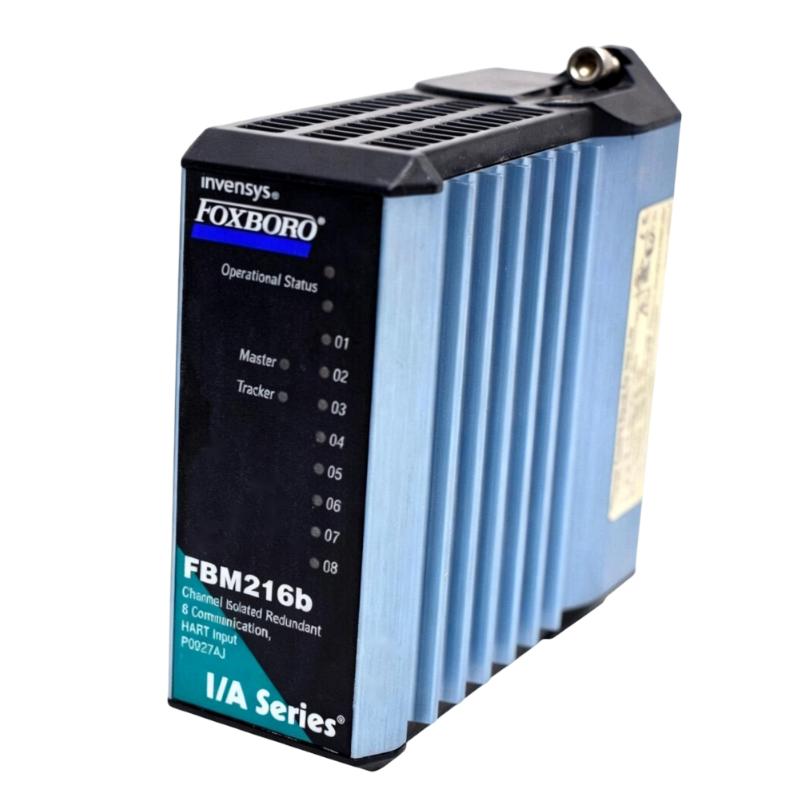
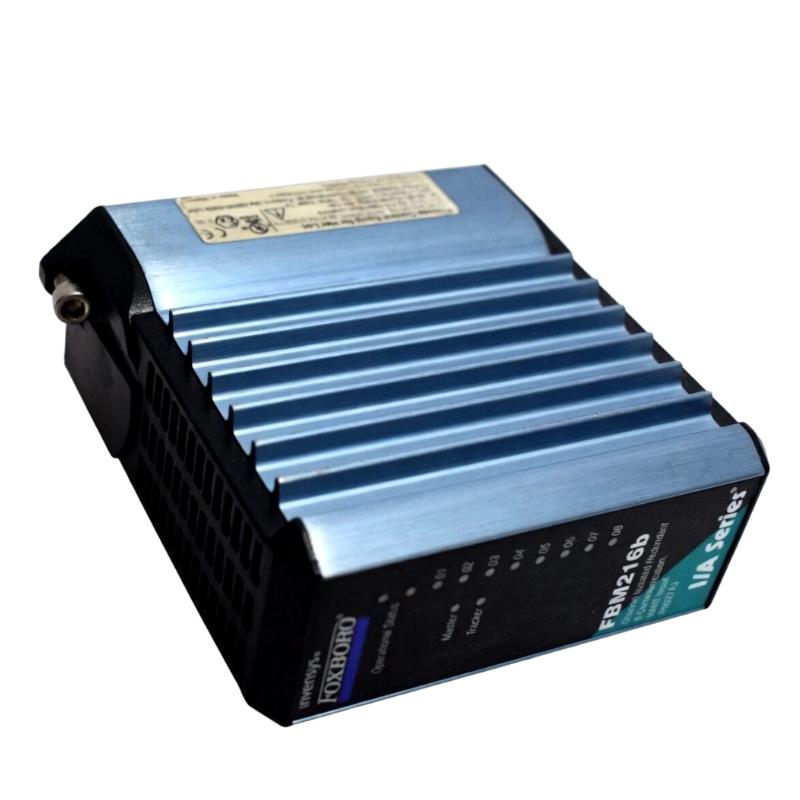
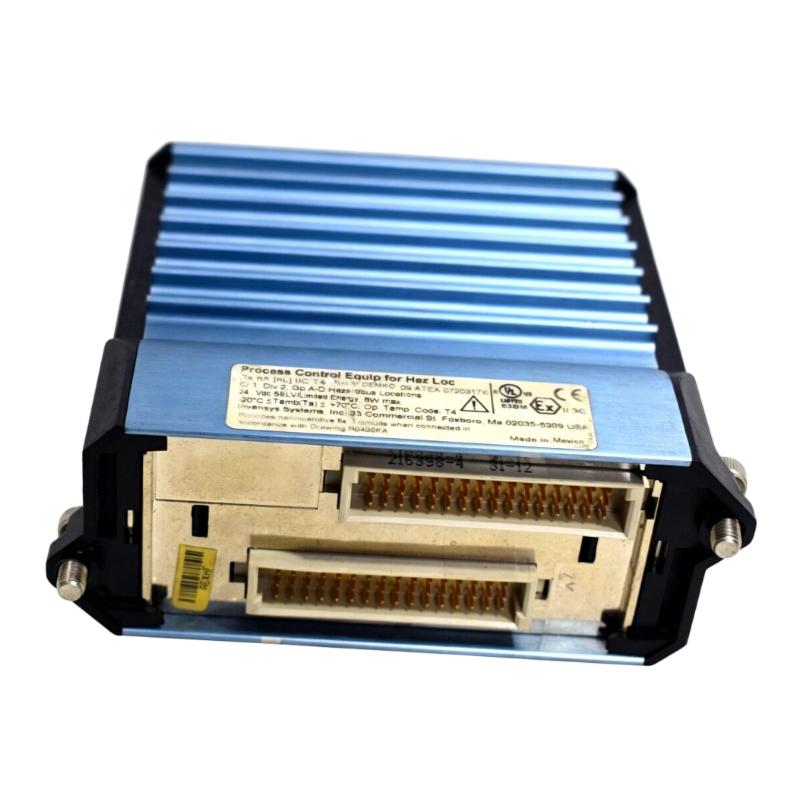
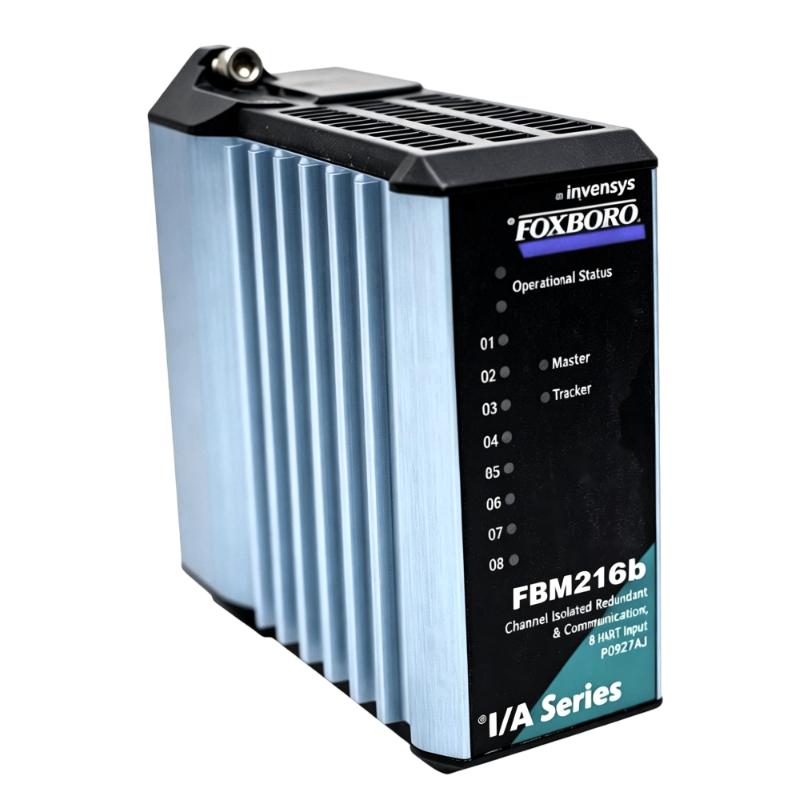
- Foxboro
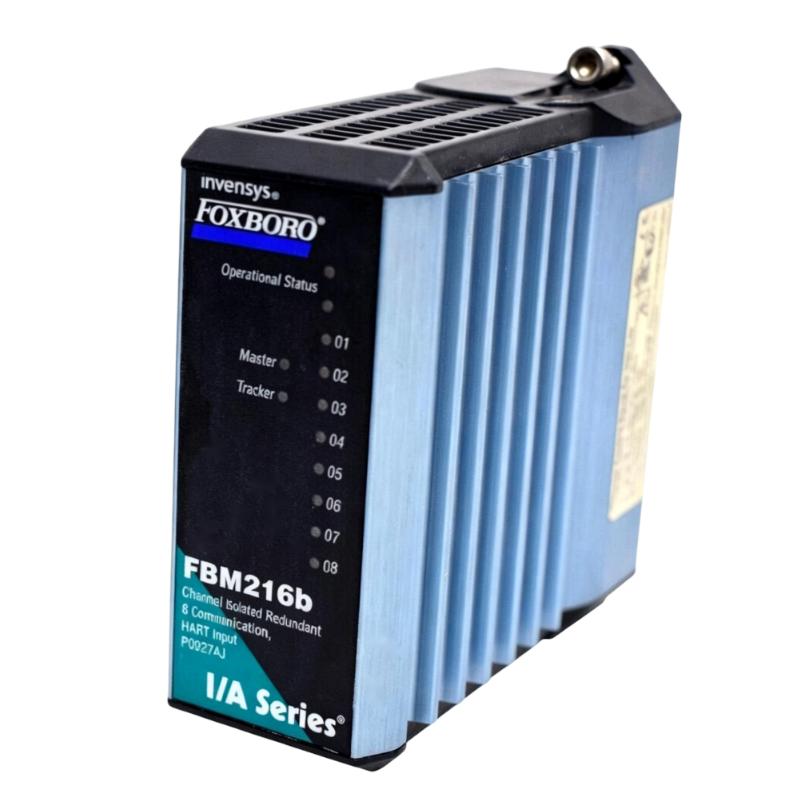
- FBM216b P0927AJ
- HART Communication Redundant Input Module
- USA
- 114 × 45 × 104 mm
- 0.284 kg
- Xiamen, China
- New & In Stock
- T/T, PayPal, Western Union
- 1 Year
- 1-3 Working Days
- DHL, UPS, TNT, FedEx and EMS.
- 24-Hour Service
- COO
- 4
Our advantage

Global Logistics
We have a 10-year logistics and express cooperation agreement, so our products can be shipped to any place in the world.

Brand new and original
Our products are imported in bulk from the place of origin. Because of the cooperative relationship, our products are all original and 100% new.

24-hour service
We provide 7*24 hours service to our customers. We will be there whenever you need us.

Price advantage
All our products are priced very favorably because we have our own warehouse and supply.
| Company Information | |||
| [email protected] | |||
| Mobile | +8615980777398 | ||
| +8615980777398 | |||
| 15980777398 |
Product Overview
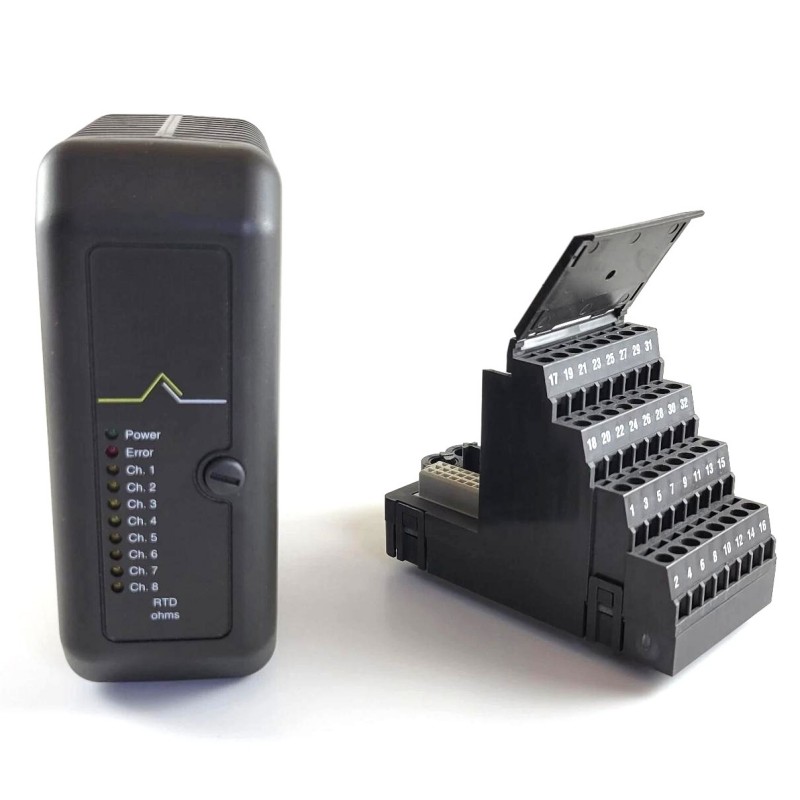
The Foxboro FBM216b P0927AJ is an I/A Series HART communication redundant input module used to connect compatible field instrumentation with the Foxboro control system. It serves at the field I/O layer, receiving process signals and making the associated HART communication information available to the control architecture.
The module is particularly suited to installations where field devices use HART communication and where redundant I/O architecture is required. In a process plant, instruments such as transmitters can be connected through the field wiring to the FBM216b, while the module provides the interface between those field signals and the higher-level Foxboro control system.
Its role extends beyond simple signal termination. HART-enabled field instruments can carry both the primary process measurement and additional digital device information. This makes the module useful for applications where operators and maintenance personnel need access to instrument information while the control system continues to use the process measurement for monitoring and control.
As part of an I/A Series installation, the FBM216b works with the associated termination and mounting infrastructure, system communication path, and control processors. Proper module selection, redundant configuration, field wiring, and HART device compatibility should be considered together during system design or replacement.
Technical Specifications
| Parameter | Specification |
|---|---|
| Product Model | FBM216b P0927AJ |
| Product Type | HART Communication Redundant Input Module |
| Product Family | I/A Series |
| Series | Foxboro I/A Series |
| Module Type | Redundant Input Module |
| Signal Type | HART-Compatible Field Instrument Signals |
| Communication | HART Communication |
| Primary Function | Field Signal Acquisition and HART Device Communication |
| Redundancy | Redundant I/O Architecture |
| System Integration | Foxboro I/A Series Control System |
| Field Interface | Process Instrumentation |
| Application | Process Measurement and Control |
| Installation | I/O Subsystem / Field Interface Assembly |
| Dimensions | 114× 45× 104 mm |
| Weight | 0.284 kg |
Product Features
- I/A Series input module for HART-enabled field instrumentation.
- Supports redundant input architecture for process control installations.
- Combines field signal acquisition with HART communication functionality.
- Provides an interface between field instruments and the Foxboro control system.
- Suitable for process transmitters and other compatible HART field devices.
- Allows digital HART information to complement the primary process measurement.
- Supports integration into structured Foxboro I/O architectures.
- Useful for applications requiring both process signal monitoring and access to field-device information.
- Suitable for system expansion, maintenance, and replacement of compatible I/A Series modules.
- Works with the associated termination, mounting, communication, and control-system infrastructure.
Working Principle
1. Field instrument connection
Compatible HART field instruments are connected to the input-side field wiring associated with the module. The field device supplies its process measurement while HART communication provides additional digital information.
2. Signal acquisition
The FBM216b receives the field signal and interfaces it to the I/A Series I/O architecture. The process measurement can then be passed toward the control system for monitoring, alarming, display, or control functions.
3. HART communication
Along with the primary measurement, HART communication allows compatible field-device information to be exchanged through the signal interface. Depending on the field instrument and system configuration, this can include device-related information useful for commissioning, diagnostics, and maintenance.
4. Redundant operation
The redundant I/O arrangement provides an additional path within the control architecture. The associated system configuration determines how redundancy is implemented and managed during normal operation and fault conditions.
5. Control-system integration
The acquired field information is transferred through the I/A Series architecture to the appropriate control-system functions. Operators can use the process data for control and monitoring, while maintenance personnel can use available HART information when diagnosing connected field devices.
Role in an I/A Series Process Control Architecture
The FBM216b P0927AJ operates at the field I/O level between HART-compatible instrumentation and the Foxboro control system. It connects field measurement with the system’s processing and monitoring functions while supporting a redundant I/O arrangement.
| Architecture Layer | Main Function | Relationship to FBM216b P0927AJ |
|---|---|---|
| Field Instruments | Measure process conditions | Supplies compatible HART process signals |
| Field Wiring | Carries instrument signals | Connects field devices to the I/O interface |
| FBM216b Module | Acquires input signals and handles HART communication | Provides the primary I/O interface for connected instruments |
| Redundant I/O Architecture | Maintains an additional I/O path | Supports the configured redundant system arrangement |
| I/A Series Communication | Transfers I/O information | Carries acquired data toward the control system |
| Control Processor | Executes control and monitoring functions | Uses the received process information |
| Operator / Maintenance Layer | Provides monitoring and diagnostic access | Uses process and available HART device information |
Industrial Applications
| Application | Typical Use |
|---|---|
| Process Measurement | Acquisition of measurements from HART-compatible field instruments |
| Oil and Gas | Integration of field transmitters into process control systems |
| Chemical Processing | Monitoring process variables through intelligent field instrumentation |
| Power Generation | Connecting compatible process instruments to the control architecture |
| Water and Wastewater | Field measurement acquisition and instrument diagnostics |
| Refining | Process monitoring with HART-enabled instrumentation |
| Pharmaceutical Processing | Integration of intelligent field devices into automated process systems |
| General Process Automation | Signal acquisition and field-device communication within I/A Series installations |
Installation and Maintenance
- Verify the complete model number — Confirm FBM216b P0927AJ before installation or replacement to ensure the intended module variant is being used.
- Check system compatibility — Verify that the module is appropriate for the existing Foxboro I/A Series hardware and configured I/O architecture.
- Confirm the redundancy arrangement — Check the control-system design and redundant I/O configuration before replacing or adding the module.
- Inspect the termination interface — Verify that the associated termination and field wiring infrastructure is compatible and securely installed.
- Check field wiring — Inspect instrument connections for loose terminals, damaged conductors, incorrect connections, or signs of deterioration.
- Verify HART device compatibility — Confirm that the connected field instrumentation and its communication requirements are suitable for the intended I/O configuration.
- Check module installation — Make sure the module is correctly seated in its designated mounting position and that the associated connections are secure.
- Review system configuration — Confirm that the control-system configuration identifies the correct module and intended input arrangement before returning it to service.
- Check signal behavior — After installation, verify that the expected process measurements are being received correctly by the control system.
- Verify HART communication — Where HART information is required, confirm that the system can communicate with the connected field device as expected.
- Monitor diagnostic information — Review module and system diagnostics for communication errors, channel-related problems, or abnormal device behavior.
- Use controlled replacement procedures — When replacing a module in an operating process system, follow the site’s approved isolation, redundancy, configuration, and commissioning procedures.
Related Components
| Component | Function |
|---|---|
| Foxboro I/A Series Control Processor | Processes acquired field information and executes control functions |
| Foxboro I/O Communication Infrastructure | Transfers I/O data between field modules and the control system |
| I/A Series Termination Assembly | Provides the field wiring interface for connected instrumentation |
| HART Field Transmitter | Supplies process measurement and digital device information |
| Field Wiring | Carries process and communication signals between instruments and the I/O subsystem |
| Redundant I/O Infrastructure | Supports the configured redundant signal path |
| I/A Series Mounting Assembly | Provides the physical installation interface for the I/O module |
| Engineering / Maintenance Station | Supports configuration, monitoring, and troubleshooting activities |
Recommended Related Models
| Model | Product Type | Typical Application |
|---|---|---|
| Foxboro FBM216 P0922VV | I/A Series Input Module | Process signal acquisition |
| Foxboro FBM214b RH927AH | I/A Series Input Module | Process instrumentation interface |
| Foxboro FBM214 P0922VT | I/A Series Input Module | Field signal integration |
| Foxboro FBM211 RH914TN | I/A Series Input Module | Process input applications |
| Foxboro FBM207c P0917GY | I/A Series Input Module | Field signal acquisition |
| Foxboro FBM207c RH917GY | I/A Series Input Module | I/A Series process I/O |
| Foxboro FBM203 RH914SV | I/A Series Input Module | Process measurement interface |
Key Advantages
- HART communication capability for compatible intelligent field instruments.
- Redundant input architecture for process-control installations.
- Integrates field measurement into Foxboro I/A Series systems.
- Supports access to additional field-device information through HART communication.
- Suitable for process monitoring, control, commissioning, and maintenance applications.
- Useful for replacement and expansion of compatible I/A Series I/O systems.
Technical FAQs
What is the main function of the FBM216b P0927AJ?
The FBM216b P0927AJ provides a HART-compatible input interface between field instrumentation and the Foxboro I/A Series control system. It handles field signal acquisition while supporting communication with compatible intelligent field devices.
Why is HART communication useful in a process control system?
HART allows digital information from compatible field instruments to be exchanged alongside the primary process measurement. This can provide additional device information useful for configuration, diagnostics, commissioning, and maintenance.
What should be checked when replacing an FBM216b module?
The exact module model, I/A Series compatibility, redundant I/O arrangement, termination assembly, field wiring, system configuration, and connected HART instrumentation should all be checked. The replacement should be commissioned according to the existing system architecture rather than treated as an isolated hardware swap.
What can cause a HART communication problem even when the process signal is present?
Possible causes include field-device configuration, wiring problems, communication-path issues, incompatible device settings, or problems elsewhere in the I/O architecture. Troubleshooting should first distinguish between the primary process measurement path and the HART digital communication path.