

ProductPRODUCT
Featured products
Contact Us
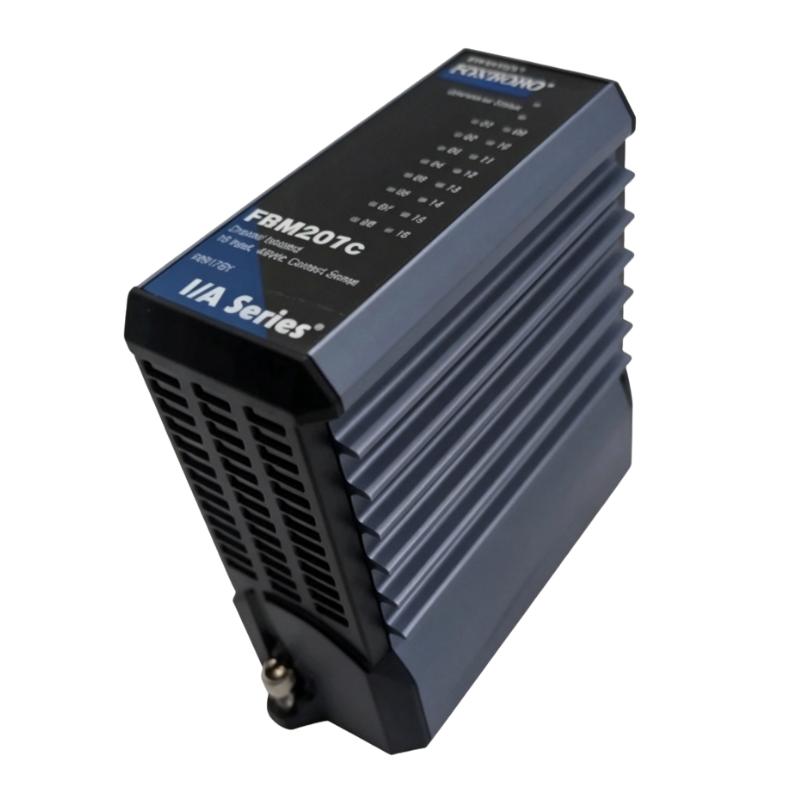
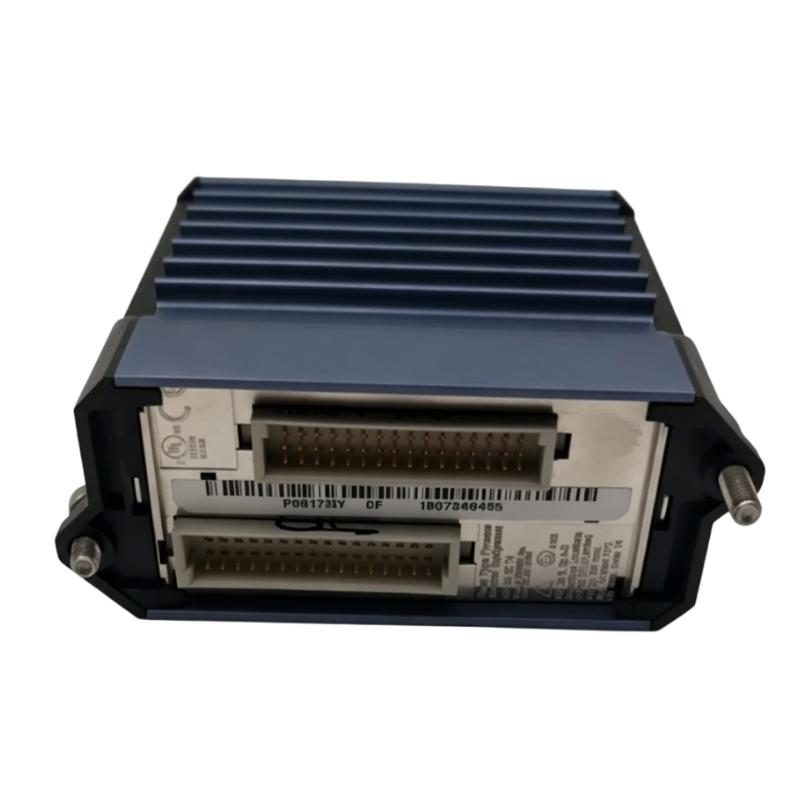
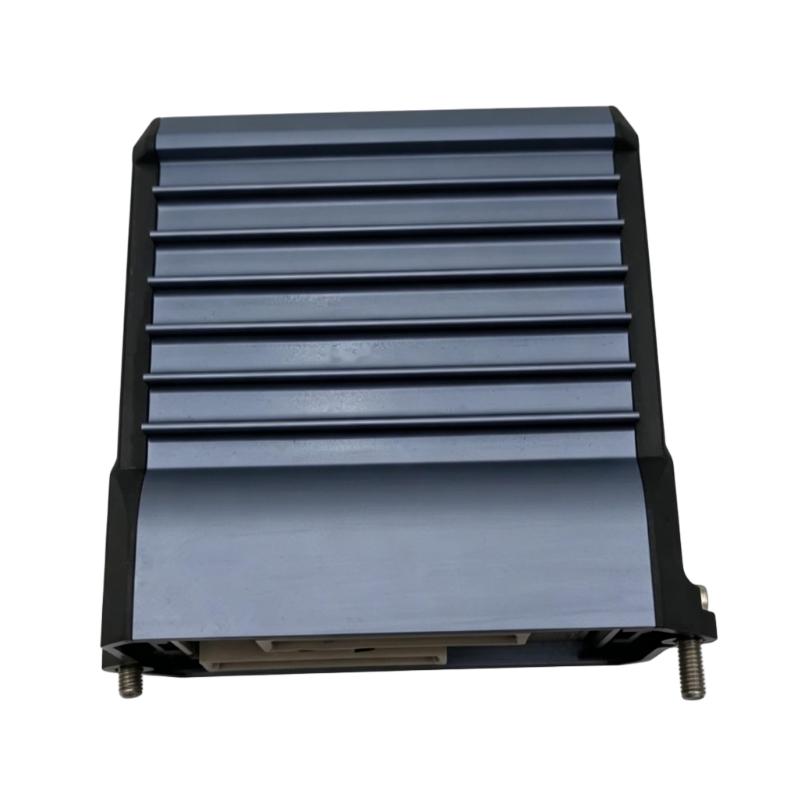
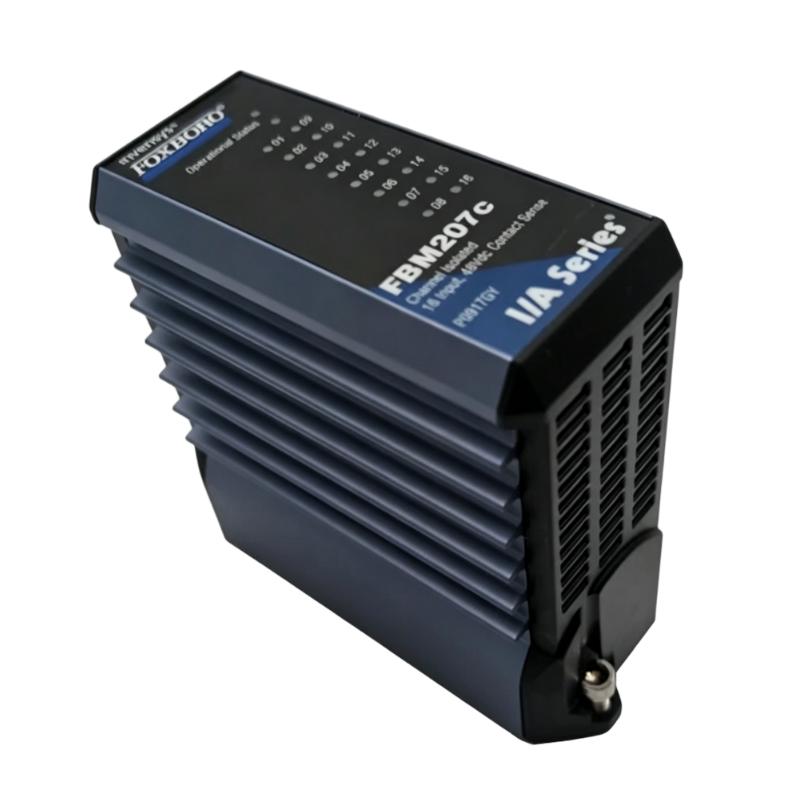
- Foxboro
- FBM207c RH917GY
- Channel Isolated Contact Sense Input Interface Module
- USA
- 114 × 45 × 104 mm
- 0.284 kg
- Xiamen, China
- New & In Stock
- T/T, PayPal, Western Union
- 1 Year
- 1-3 Working Days
- DHL, UPS, TNT, FedEx and EMS.
- 24-Hour Service
- COO
- 4
Our advantage

Global Logistics
We have a 10-year logistics and express cooperation agreement, so our products can be shipped to any place in the world.

Brand new and original
Our products are imported in bulk from the place of origin. Because of the cooperative relationship, our products are all original and 100% new.

24-hour service
We provide 7*24 hours service to our customers. We will be there whenever you need us.

Price advantage
All our products are priced very favorably because we have our own warehouse and supply.
| Company Information | |||
| [email protected] | |||
| Mobile | +8615980777398 | ||
| +8615980777398 | |||
| 15980777398 |
Product Overview
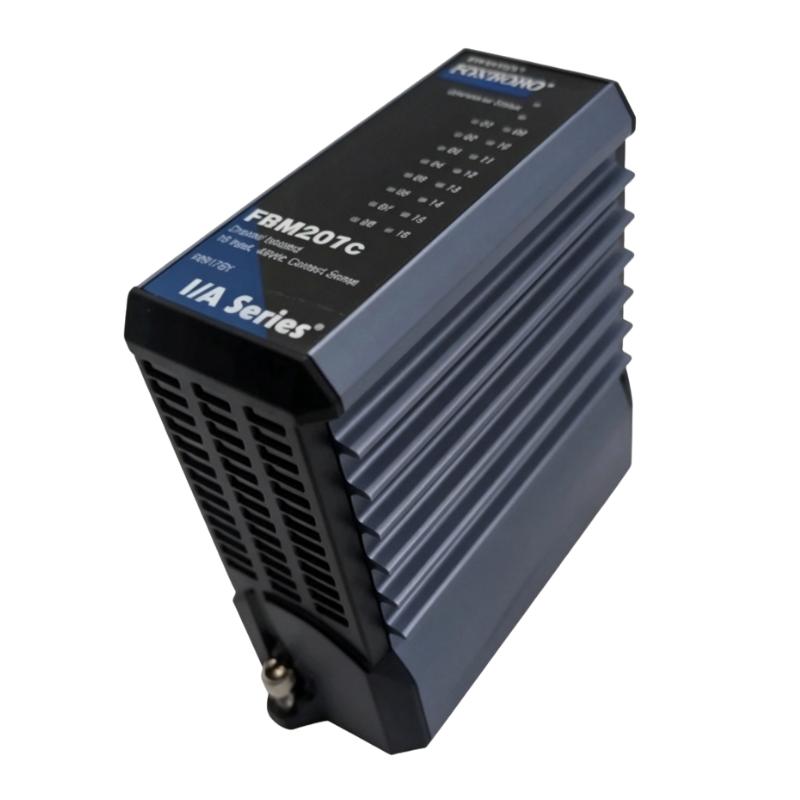
The Foxboro FBM207c RH917GY is a channel isolated contact sense input interface module for Foxboro I/A Series control systems. It provides the field-level interface needed to acquire discrete contact states from switches, relay contacts, limit devices, and other contact-based field signals.
In a typical control installation, the module sits between the field wiring and the control-system I/O architecture. Individual contact signals are brought into the module, where the input channels detect their states and provide the corresponding information to the control system. This allows equipment status and discrete process conditions to become available for monitoring, sequencing, alarming, and interlock logic.
The channel-isolated arrangement is particularly useful where separate field circuits need to be handled independently. The module can therefore serve as an interface point for distributed field contacts without placing the contact devices directly at the control processor.
Technical Specifications
| Parameter | Specification |
|---|---|
| Product Model | RH917GY |
| Product Type | Channel Isolated Contact Sense Input Interface Module |
| Product Family | Foxboro Fieldbus Module (FBM) |
| Series | Foxboro I/A Series |
| Module Type | Discrete Input Interface Module |
| Input Type | Contact Sense Input |
| Input Configuration | Channel Isolated |
| Signal Type | Discrete / Contact Status |
| Application | Field Contact Monitoring |
| System Integration | Foxboro I/A Series Control System |
| Field Interface | Discrete Field Wiring |
| Signal Function | Contact State Detection |
| Isolation Function | Channel-Level Input Isolation |
| Installation | Distributed I/O Architecture |
| Dimensions | 114 × 45 × 104 mm |
| Weight | 0.284 kg |
Product Features
- Provides a dedicated interface for contact-based discrete input signals.
- Channel isolation separates individual field input circuits within the I/O interface.
- Suitable for monitoring switches, relay contacts, limit devices, and equipment status contacts.
- Interfaces field-level discrete information with the Foxboro control system.
- Supports equipment status, permissive, interlock, and sequence feedback applications.
- Fits into distributed I/O architectures where field signals are collected away from the main controller.
- Allows individual contact states to be handled as separate control-system input points.
- Suitable for industrial process and machinery monitoring applications.
Working Principle
The FBM207c RH917GY functions as the interface between physical field contacts and the Foxboro control system. Its job is to detect the state of each connected contact circuit and make that state available to the control application.
1. Field condition changes
A switch, relay contact, limit device, or other field component changes state in response to the monitored process or equipment condition.
2. Contact signal enters the module
The resulting contact signal travels through the field wiring to the corresponding input channel of the FBM207c.
3. Channel isolation
The input circuitry maintains separation between individual channels. This helps prevent unwanted interaction between separate field circuits.
4. Input state detection
The module determines the state of the incoming contact signal and converts the field condition into a usable discrete input status.
5. I/O data transfer
The acquired input information is transferred through the Foxboro I/O architecture so that the control system can access the corresponding status.
6. Control-system action
The application logic can use the input state for equipment indication, alarms, permissives, sequencing, or interlock functions according to the configured control strategy.
Role in a Foxboro I/A Series Control Architecture
The FBM207c RH917GY occupies the field I/O interface layer of a Foxboro I/A Series control architecture. It provides the connection between discrete field contacts and the control-system processing layer.
| Architecture Layer | Main Function | Relationship to FBM207c |
|---|---|---|
| Field Device | Generates contact status | Provides the physical input condition |
| Field Wiring | Carries the contact signal | Connects field devices to the module |
| FBM207c | Detects and isolates contact inputs | Acquires field contact states |
| I/O Communication Layer | Transfers I/O information | Carries input data toward the control system |
| Control Processor | Executes application logic | Uses the acquired input states |
| Operator Interface | Displays system information | Shows equipment and process status |
Industrial Applications
| Application | Typical Use |
|---|---|
| Process Equipment Monitoring | Monitoring equipment running and stopped conditions |
| Valve Position Feedback | Receiving open/closed or limit-switch signals |
| Motor Status Monitoring | Acquiring auxiliary contact information |
| Pump Systems | Monitoring running, fault, and permissive contacts |
| Interlock Systems | Collecting discrete permissive and interlock feedback |
| Industrial Machinery | Monitoring travel switches and equipment status |
| Process Instrumentation | Acquiring discrete contact conditions |
| Distributed Control Systems | Bringing field contact information into the Foxboro architecture |
Installation and Maintenance
- Confirm that the FBM207c RH917GY is appropriate for the required contact-sense input application.
- Verify the module identification and control-system configuration before connecting field circuits.
- Check field wiring against the applicable system drawings before commissioning.
- Ensure that all field terminals and connectors are securely installed.
- Maintain clear identification between each field contact and its corresponding control-system input point.
- Inspect wiring for loose terminals, damaged insulation, corrosion, or other signs of deterioration.
- Keep field signal wiring properly separated from high-energy power conductors where required by the installation.
- Verify that the configured I/O point corresponds to the correct physical field device.
- During commissioning, operate each field contact and confirm the expected status change in the control system.
- For an unexpected input state, check the field device, wiring, terminals, and individual module channel before changing control logic.
- Periodically inspect the module and connected wiring for contamination, loose connections, or abnormal conditions.
- Before replacing the module, record channel assignments and configuration information to simplify recommissioning.
Related Components
| Component | Function |
|---|---|
| Foxboro FBM I/O Module | Provides field signal acquisition |
| Field Terminal Assembly | Provides field wiring termination |
| Field Contact / Switch | Generates the discrete signal |
| Limit Switch | Provides position or travel feedback |
| Auxiliary Relay Contact | Supplies equipment status information |
| Foxboro Control Processor | Processes acquired input information |
| I/O Communication Interface | Transfers I/O data within the control architecture |
| Operator Interface | Displays equipment and process status |
Recommended Related Models
| Model | Product Type | Typical Relationship |
|---|---|---|
| Foxboro FBM201 P0914SQ | Fieldbus Module | Related Foxboro discrete I/O module |
| Foxboro FBM202 P0914SY | Fieldbus Module | Related discrete input interface |
| Foxboro FBM203 P0914SV | Fieldbus Module | Related Foxboro I/O interface module |
| Foxboro FBM204 P0914TD | Fieldbus Module | Related discrete I/O module |
| Foxboro FBM205 P0914WF | Fieldbus Module | Related Foxboro field I/O module |
Key Advantages
- Dedicated interface for discrete contact sensing.
- Channel isolation helps separate individual field circuits.
- Suitable for equipment status and process-condition monitoring.
- Integrates contact information into Foxboro I/A Series control systems.
- Supports permissive, interlock, alarm, and sequence feedback applications.
- Suitable for distributed industrial I/O installations.
- Provides a clear interface between field contacts and control-system logic.
Technical FAQs
What is the primary function of the FBM207c RH917GY?
It provides a field I/O interface for acquiring discrete contact states and making those states available to the Foxboro control system.
What types of devices can provide signals to the module?
Typical sources include switches, limit contacts, relay contacts, equipment auxiliary contacts, and other discrete field devices that provide a contact-based status.
What should be checked if one input channel does not change state?
Check the physical field device first, followed by the field wiring, terminal connections, and corresponding module channel. The control-system point configuration should also be verified to ensure the correct channel is being monitored.
How can the module be used in an equipment interlock?
A contact from a field device can be acquired by the module and passed into the control system. Application logic can then use that status as a permissive or interlock condition for the relevant equipment sequence.