

ProductPRODUCT
Featured products
Contact Us
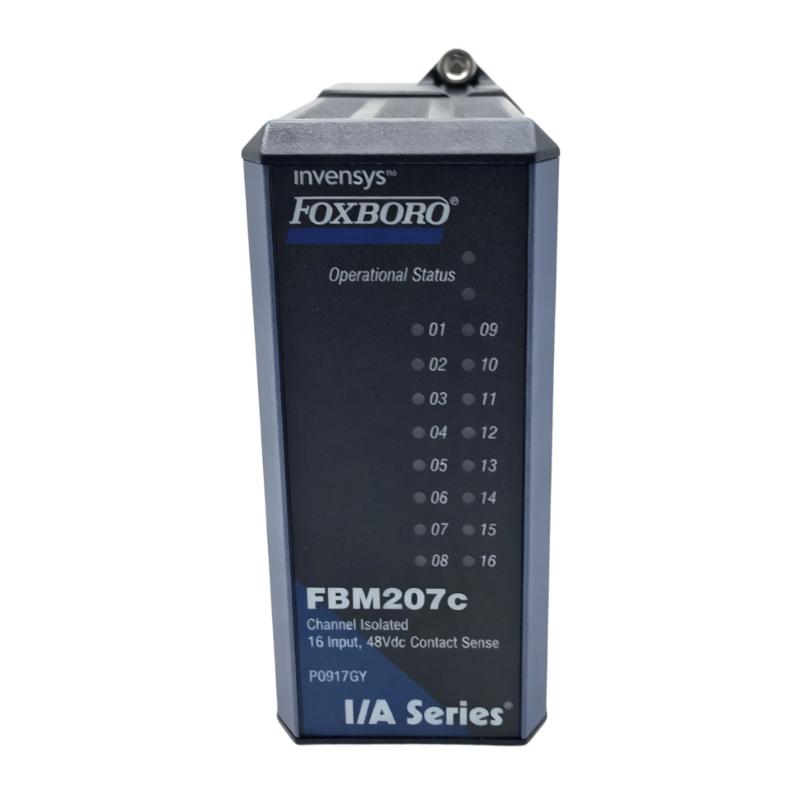
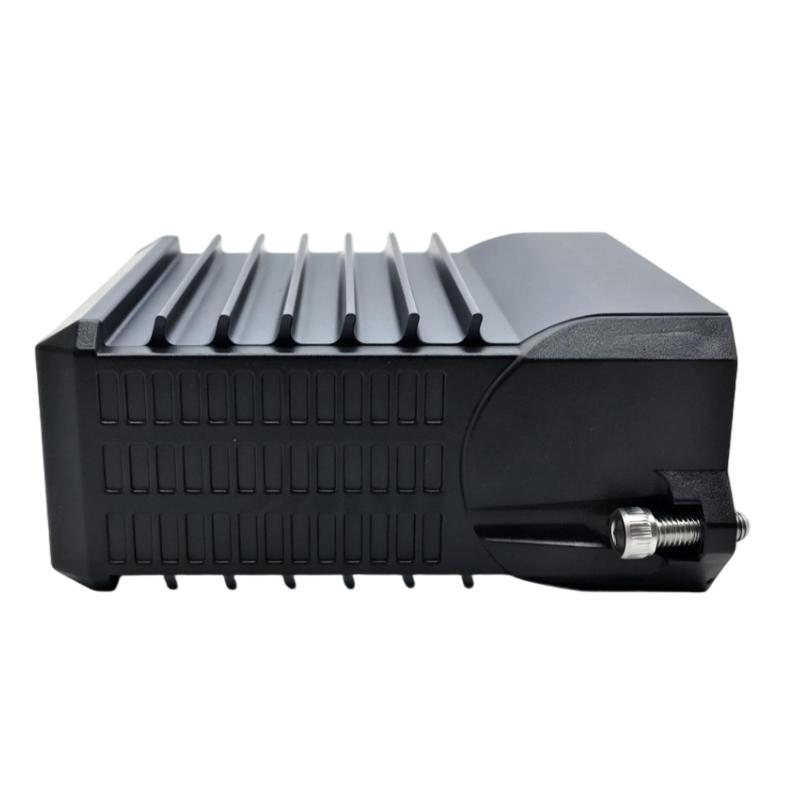
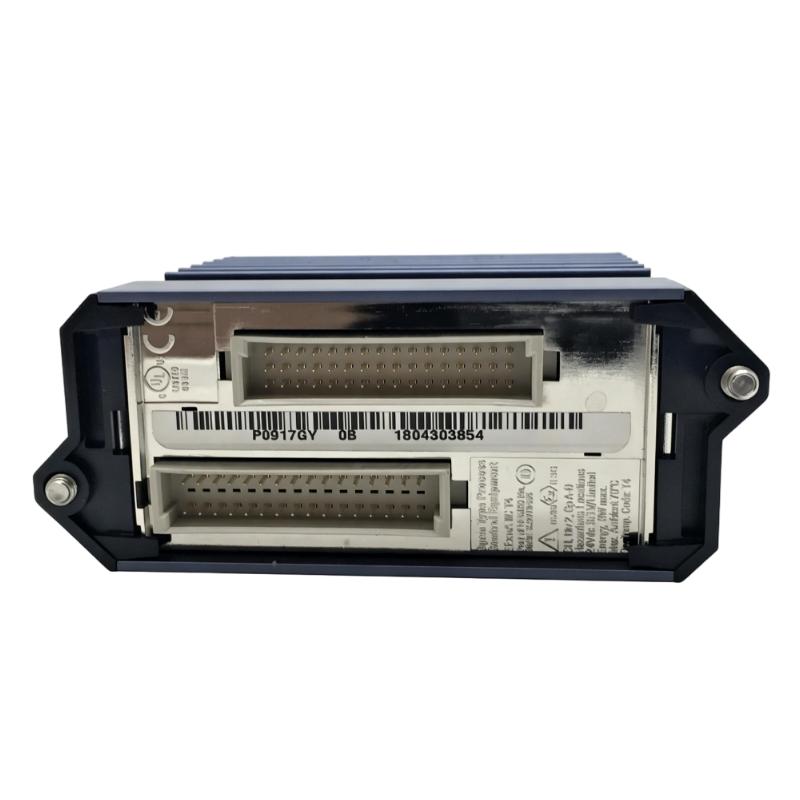
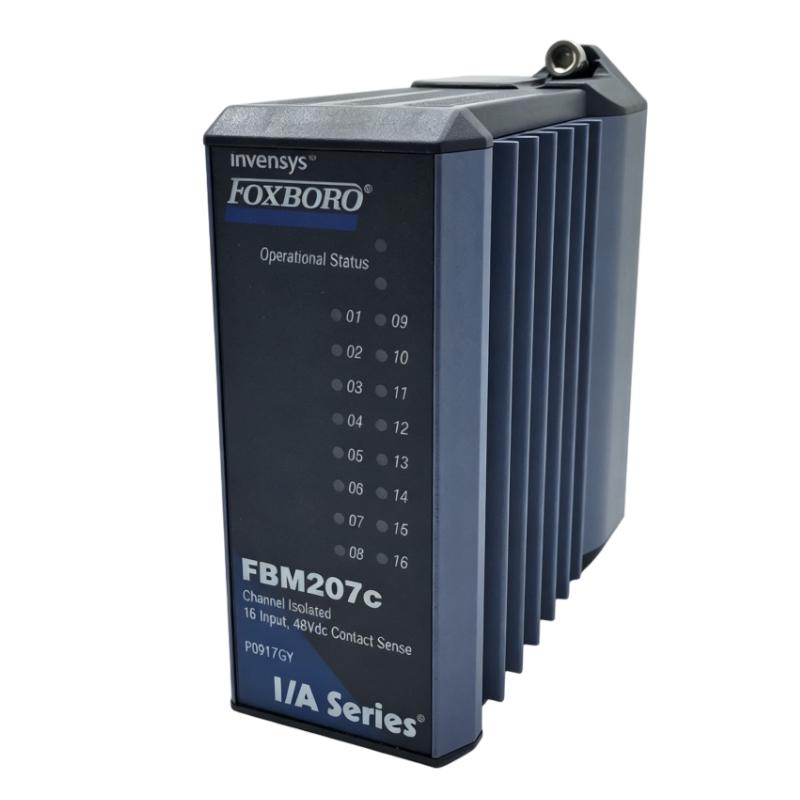
- Foxboro
- FBM207c P0917GY
- Channel Isolated Contact Sense Input Interface Module
- USA
- 114 × 45 × 104 mm
- 0.284 kg
- Xiamen, China
- New & In Stock
- T/T, PayPal, Western Union
- 1 Year
- 1-3 Working Days
- DHL, UPS, TNT, FedEx and EMS.
- 24-Hour Service
- COO
- 4
Our advantage

Global Logistics
We have a 10-year logistics and express cooperation agreement, so our products can be shipped to any place in the world.

Brand new and original
Our products are imported in bulk from the place of origin. Because of the cooperative relationship, our products are all original and 100% new.

24-hour service
We provide 7*24 hours service to our customers. We will be there whenever you need us.

Price advantage
All our products are priced very favorably because we have our own warehouse and supply.
| Company Information | |||
| [email protected] | |||
| Mobile | +8615980777398 | ||
| +8615980777398 | |||
| 15980777398 |
Product Overview
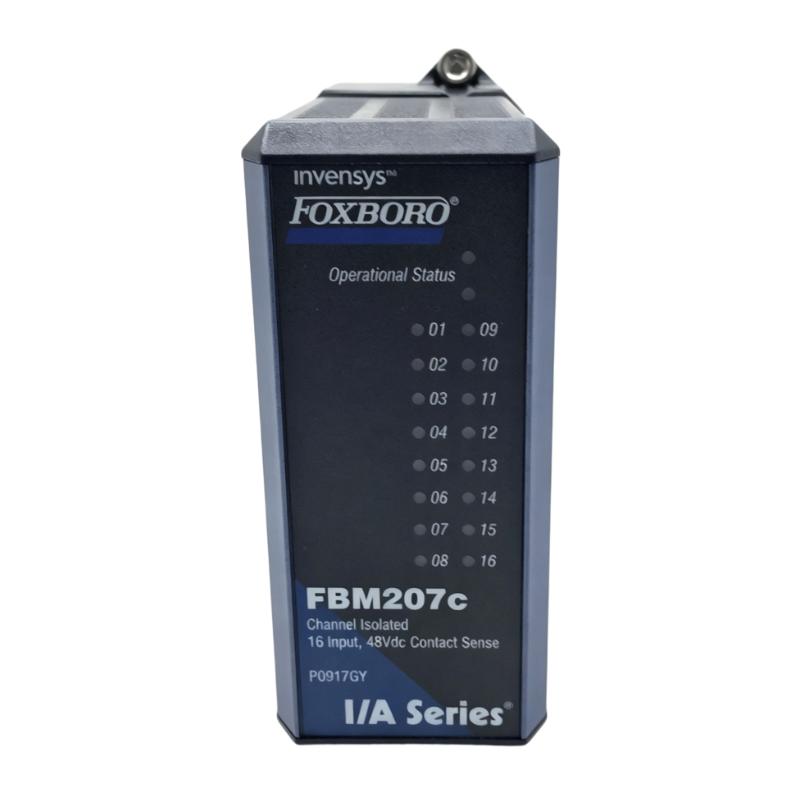
The Foxboro FBM207c P0917GY is a channel isolated contact sense input interface module used in Foxboro I/A Series control and instrumentation systems. It provides an interface between discrete field contacts and the control system, allowing the host system to monitor the operating state of field devices.
The module is suited to applications where individual contact inputs need to be electrically isolated and monitored as separate field signals. Typical field devices can include switches, status contacts, relay outputs, limit devices, and other discrete signals used for process monitoring and equipment status.
In a typical installation, field contact signals enter the FBM207c through its field wiring interface. The module conditions and isolates the input signals before passing their status to the control-system electronics. This gives the control application access to field contact information without requiring the controller to connect directly to every individual field device.
Technical Specifications
| Parameter | Specification |
|---|---|
| Product Model | P0917GY |
| Product Type | Channel Isolated Contact Sense Input Interface Module |
| Product Family | Foxboro Fieldbus Module (FBM) |
| Series | Foxboro I/A Series |
| Module Type | Discrete Input Interface Module |
| Input Type | Contact Sense Input |
| Input Configuration | Channel Isolated |
| Signal Type | Discrete / Contact Status |
| Application | Field Contact Monitoring |
| System Integration | Foxboro I/A Series Control System |
| Field Interface | Discrete Field Wiring |
| Signal Function | Contact State Detection |
| Isolation Function | Channel-Level Input Isolation |
| Installation | Control System I/O Architecture |
| Dimensions | 114 × 45 × 104 mm |
| Weight | 0.284 kg |
Product Features
- Provides a dedicated interface for monitoring field contact signals.
- Channel isolation helps separate individual input circuits within the I/O interface.
- Suitable for discrete status monitoring in industrial control applications.
- Interfaces field switches, contacts, and relay-derived status signals with the control system.
- Supports integration within Foxboro I/A Series control architectures.
- Separates field-level contact sensing from higher-level control logic.
- Useful for equipment status, limit detection, interlock feedback, and process condition monitoring.
- Can be incorporated into distributed I/O arrangements where field signals are collected close to the process.
Working Principle
The FBM207c operates as an interface between field contact devices and the Foxboro control system. Its primary task is to acquire discrete contact states and make the corresponding status available to the control application.
1. Field contact operation
A connected field device changes its contact state according to the physical condition being monitored. This may represent equipment running or stopped, a valve position, a limit condition, or another discrete machine or process state.
2. Input signal reception
The field wiring carries the contact-sense signal into the corresponding input channel of the FBM207c. Each channel handles its assigned field signal independently.
3. Channel isolation
The module provides channel-level isolation within the input interface. This helps prevent unwanted electrical interaction between individual field circuits and supports cleaner signal separation within the I/O architecture.
4. Signal conditioning
The incoming contact state is interpreted by the module’s input circuitry so that the field condition can be represented as a discrete input status for the control system.
5. Control-system communication
The resulting input status is passed through the Foxboro I/O architecture toward the control system. The control application can then use the information for indication, sequencing, interlocking, alarming, or other programmed functions.
6. Process response
Once the contact status is available to the control application, the system can respond according to the configured logic. For example, a change in equipment status may initiate an alarm, permit another sequence step, or provide confirmation that a machine action has occurred.
Role in a Foxboro I/A Series Control Architecture
The FBM207c operates at the field I/O interface layer of the Foxboro I/A Series architecture. It connects discrete field contacts with the control-system environment while keeping field signal acquisition separate from the application logic.
| Architecture Layer | Main Function | Relationship to FBM207c |
|---|---|---|
| Field Device | Produces contact status | Supplies the discrete field condition |
| Field Wiring | Carries the contact signal | Connects field devices to the module |
| FBM207c | Acquires and isolates input signals | Interfaces field contacts with the control system |
| I/O Communication Layer | Transfers acquired data | Carries input status toward the control system |
| Control Processor | Executes application logic | Uses the input status for programmed functions |
| HMI / Operator Station | Displays process information | Presents contact status, alarms, and equipment conditions |
Industrial Applications
| Application | Typical Use |
|---|---|
| Process Equipment Monitoring | Detecting equipment running, stopped, or status conditions |
| Valve Position Monitoring | Receiving open/closed or limit-switch feedback |
| Motor Status Monitoring | Monitoring auxiliary contacts and operating-state signals |
| Pump Systems | Monitoring running, fault, or permissive contacts |
| Interlock Systems | Acquiring discrete permissive and interlock feedback |
| Industrial Machinery | Monitoring limit switches and machine status contacts |
| Process Instrumentation | Collecting discrete contact information from field devices |
| Distributed Control Systems | Bringing isolated discrete field states into the Foxboro control architecture |
Installation and Maintenance
- Confirm that the FBM207c is the correct I/O interface for the required contact-sense application before installation.
- Verify the module identification and system configuration before connecting field wiring.
- Check each field contact circuit against the applicable wiring documentation before energizing the input channels.
- Ensure that field terminals and connectors are properly seated and secured.
- Keep individual field circuits correctly identified so that each contact is associated with the intended control-system point.
- Inspect field wiring for loose connections, damaged insulation, corrosion, or signs of electrical stress.
- Avoid routing sensitive signal wiring together with high-energy power conductors where the installation arrangement could introduce unwanted interference.
- Verify that the configured input point corresponds to the correct field device and control-system tag.
- During commissioning, operate the field contact and confirm that the corresponding input status changes correctly in the control system.
- Investigate unexpected input changes by checking the field contact, wiring, terminal connections, and module channel rather than assuming a software fault.
- Periodically inspect the module and associated field wiring for loose connections, contamination, or abnormal operating conditions.
- Before replacing the module, document the existing channel assignments and system configuration so that the replacement can be commissioned without losing point mapping.
Related Components
| Component | Function |
|---|---|
| Foxboro FBM I/O Module | Provides field signal acquisition within the control architecture |
| Field Terminal Assembly | Provides the physical termination point for field wiring |
| Field Contact / Switch | Generates the discrete status signal |
| Limit Switch | Provides equipment position or travel feedback |
| Auxiliary Relay Contact | Supplies isolated equipment status information |
| Foxboro Control Processor | Executes control logic using acquired input data |
| I/O Communication Interface | Transfers I/O data between field modules and the control system |
| Operator Interface | Displays equipment and process status |
Recommended Related Models
| Model | Product Type | Typical Relationship |
|---|---|---|
| Foxboro FBM201 P0914SQ | Fieldbus Module | Related Foxboro discrete I/O module |
| Foxboro FBM202 P0914SY | Fieldbus Module | Related discrete input interface |
| Foxboro FBM203 P0914SV | Fieldbus Module | Related Foxboro I/O interface module |
| Foxboro FBM204 P0914TD | Fieldbus Module | Related discrete input/output module |
| Foxboro FBM205 P0914WF | Fieldbus Module | Related field I/O module |
Key Advantages
- Provides a dedicated interface for field contact sensing.
- Channel isolation supports separation of individual input circuits.
- Suitable for discrete equipment and process-status monitoring.
- Integrates field contact information into the Foxboro I/A Series architecture.
- Supports applications involving switches, contacts, limits, and interlocks.
- Keeps field signal acquisition separate from higher-level control logic.
- Suitable for distributed industrial I/O installations.
Technical FAQs
What type of field signals can the FBM207c interface?
The FBM207c is intended for contact-sense input applications, allowing discrete field contact states to be acquired by the Foxboro control system.
Why is channel isolation useful for contact inputs?
Channel isolation helps electrically separate individual input circuits. This is useful when field devices have different circuit conditions or when the application requires better separation between individual contact channels.
How should an unexpected contact input be troubleshot?
Start with the field device and work toward the control system: verify the physical contact state, field wiring, terminals, module channel, and configured I/O point. This helps determine whether the problem originates in the field circuit or the control-system interface.
Can the FBM207c input status be used for interlocks?
Yes. Once the contact state has been correctly acquired and mapped into the control system, the application logic can use the input as part of equipment status, permissive, sequencing, or interlock functions.