

ProductPRODUCT
Featured products



Contact Us
- Schneider
- BMENOC0321
- Communication Module
- France
- 32 x 100 x 87.5 mm
- 0.2 kg
- Xiamen, China
- New & In Stock
- T/T, PayPal, Western Union
- 1 Year
- 1-3 Working Days
- DHL, UPS, TNT, FedEx and EMS.
- 24-Hour Service
- COO
- 35
Our advantage

Global Logistics
We have a 10-year logistics and express cooperation agreement, so our products can be shipped to any place in the world.

Brand new and original
Our products are imported in bulk from the place of origin. Because of the cooperative relationship, our products are all original and 100% new.

24-hour service
We provide 7*24 hours service to our customers. We will be there whenever you need us.

Price advantage
All our products are priced very favorably because we have our own warehouse and supply.
| Company Information | |||
| [email protected] | |||
| Mobile | +8615980777398 | ||
| +8615980777398 | |||
| 15980777398 |
Product Overview
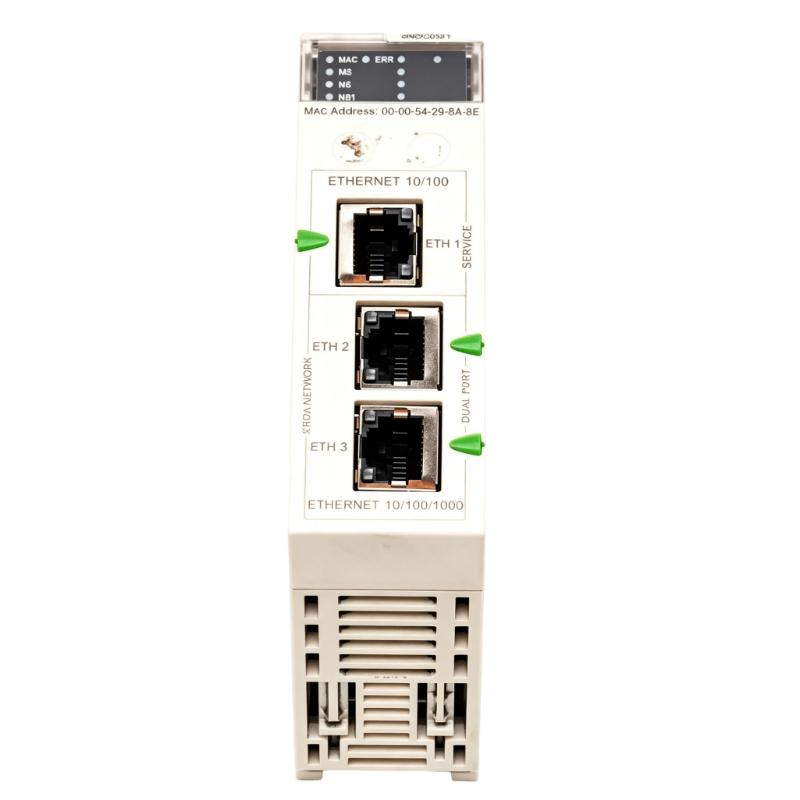
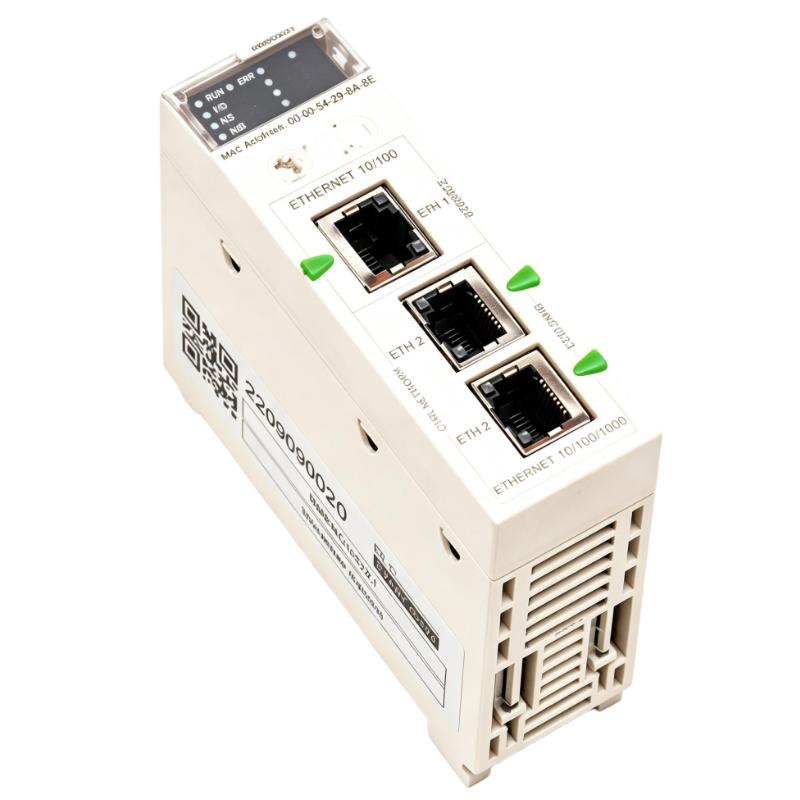
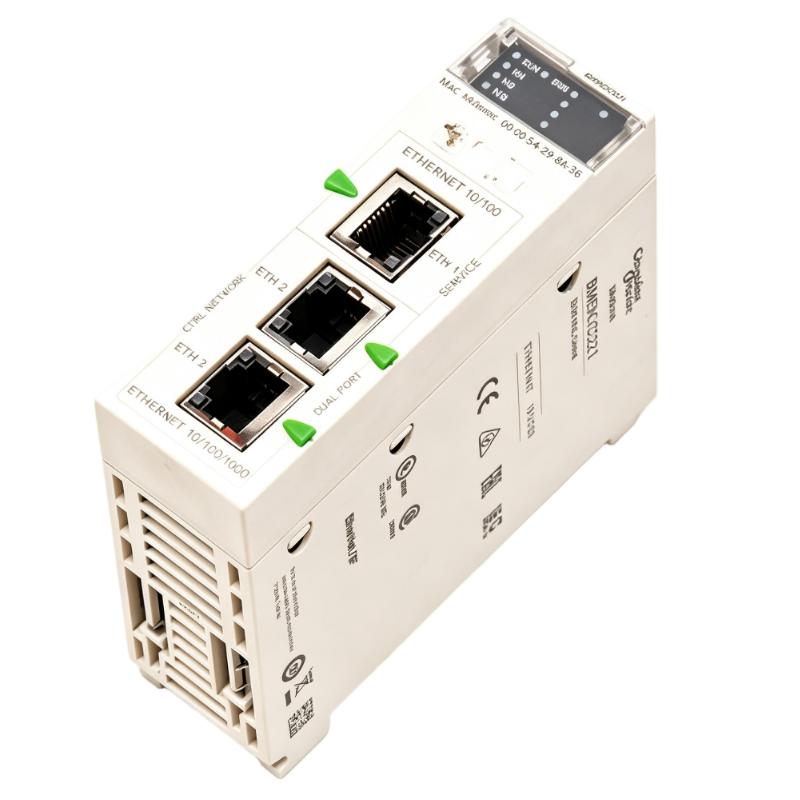
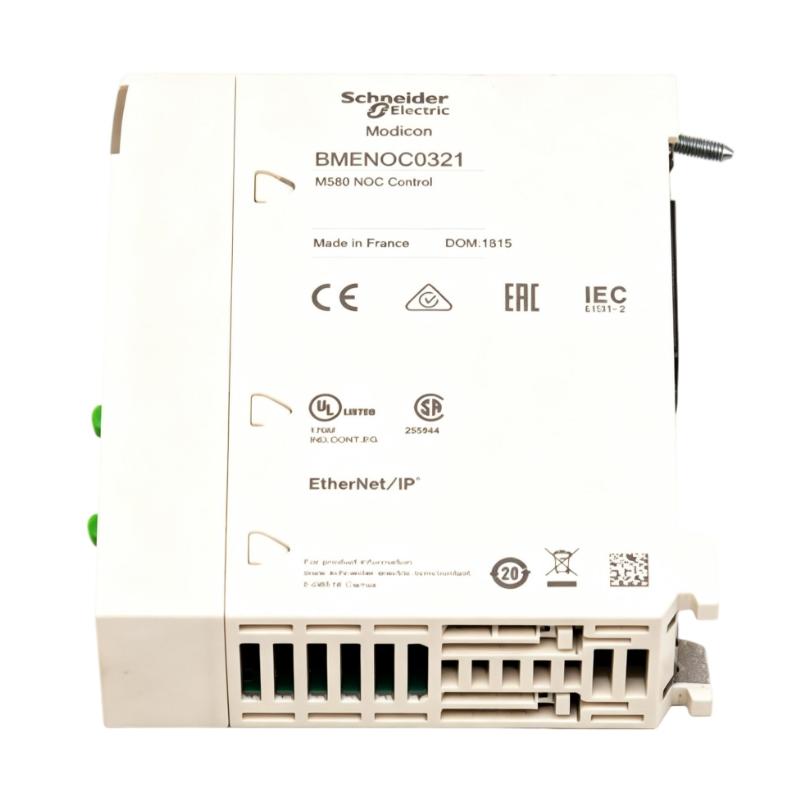
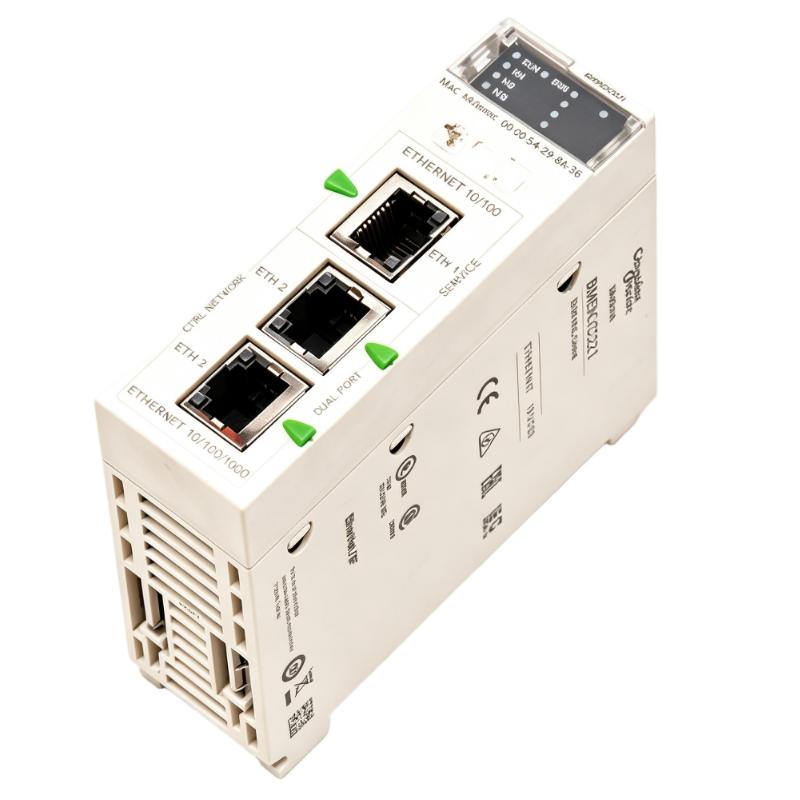
The Schneider BMENOC0321 Communication Module is an industrial automation communication component designed to provide network connectivity and data exchange within a Schneider Electric control system. Communication modules are essential in modern automation architectures because they allow controllers, remote I/O systems, field devices, drives, HMIs, SCADA platforms, and other intelligent equipment to exchange operational information.
The BMENOC0321 can be integrated into an industrial control architecture where reliable communication between the controller and networked automation devices is required. By providing a dedicated communication interface, the module helps separate network communication functions from the primary control-processing tasks of the automation system.
In a typical industrial installation, the communication module forms part of the connection between the control platform and Ethernet-based automation equipment. Depending on the configured system, network communication may be used for process data, device diagnostics, control commands, status information, engineering access, and supervisory monitoring.
The supplied physical specifications for the Schneider BMENOC0321 are 32 × 100 × 87.5 mm, with a weight of 0.2 kg. Its compact form factor is suitable for automation cabinets and modular control-system installations where available space must be managed carefully.
Exact communication protocols, port configuration, network performance, supported architectures, firmware functions, addressing capabilities, and system limitations should be verified against the applicable Schneider Electric documentation for the specific BMENOC0321 configuration.
Technical Specifications
| Parameter | Specification |
|---|---|
| Manufacturer | Schneider Electric |
| Model | BMENOC0321 |
| Product Type | Communication Module |
| Primary Function | Industrial Network Communication |
| Application | Industrial Automation and Control |
| System Role | Communication / Network Interface |
| Dimensions | 32 × 100 × 87.5 mm |
| Weight | 0.2 kg |
| Installation | Modular Industrial Control System |
| Typical Applications | PLC Networking, Process Automation, Machine Control, SCADA Integration |
The dimensions and weight above are based on the product information supplied for this article. Detailed electrical and communication characteristics should be confirmed for the intended hardware revision and system architecture.
What Is the Schneider BMENOC0321?
The Schneider BMENOC0321 is identified as a Communication Module used to provide network communication capabilities within an industrial automation system.
Industrial automation equipment increasingly depends on communication networks rather than isolated point-to-point connections. Controllers must exchange information with I/O stations, drives, HMIs, supervisory computers, intelligent instruments, and other controllers.
A communication module provides the network interface required for this type of architecture.
A simplified automation communication structure can be represented as:
PLC / Controller → BMENOC0321 → Industrial Network → Remote Devices / HMI / SCADA
The actual topology and connected devices depend on the application and Schneider Electric control platform.
Communication Module Working Principle
The basic role of a communication module is to transfer information between the control system and networked devices.
Data Transmission
The module provides the interface through which automation data can be exchanged with connected network devices.
Typical information may include:
- Process measurements
- Equipment status
- Control commands
- Alarm information
- Diagnostic information
- Device parameters
- Production data
Network Coordination
In an industrial network, multiple devices may communicate simultaneously. The communication architecture determines how devices exchange information and how network traffic is organized.
The BMENOC0321 can therefore contribute to the communication layer of the automation system.
Controller Integration
The communication module works together with the host controller or automation platform.
The controller executes application logic, while the communication interface provides the required data exchange path to networked equipment.
Diagnostic Communication
Industrial communication networks can also provide diagnostic information.
This can help maintenance personnel identify:
- Device communication problems
- Network interruptions
- Configuration errors
- Connection issues
- Network-device status
Role in Industrial Automation
The BMENOC0321 can serve as an important communication component in a centralized or distributed automation architecture.
A typical system can be represented as:
Field Devices → I/O → Controller → Communication Module → Industrial Network → Supervisory and Distributed Devices
This architecture allows process information to move between different levels of the automation system.
For example, a production machine may use network communication to exchange information between the controller and several variable-speed drives. At the same time, an HMI may retrieve operating information from the control system while a supervisory system collects production and diagnostic data.
A dedicated communication module helps organize these communication functions within the automation architecture.
Industrial Applications
Process Automation
Industrial process systems frequently contain distributed controllers, I/O stations, instruments, drives, and supervisory equipment.
Communication modules allow these devices to exchange information as part of a coordinated control architecture.
Typical applications include:
- Water treatment
- Chemical processing
- Manufacturing
- Energy systems
- Utility systems
- Industrial production
Factory Automation
Manufacturing plants often require communication between PLCs, remote I/O, HMIs, drives, robots, and production equipment.
The communication layer allows these devices to exchange status and control information.
Machine Automation
Automated machines may contain multiple intelligent devices that must operate together.
Network communication can be used for:
- Device status
- Control commands
- Machine diagnostics
- Parameter management
- Production monitoring
SCADA Systems
Supervisory control systems require access to process and equipment information.
The communication architecture can provide a path between the control system and supervisory monitoring platform.
Distributed I/O Systems
When I/O equipment is physically distributed throughout a plant, industrial networking reduces the need for extensive point-to-point wiring and allows remote equipment to communicate with the main control system.
Industrial Network Architecture
The BMENOC0321 can participate in an automation network containing multiple layers.
| System Component | Typical Communication Role |
|---|---|
| Main Controller | Executes control logic |
| BMENOC0321 | Provides communication interface |
| Remote I/O | Exchanges field data |
| Variable-Speed Drive | Exchanges motor-control information |
| HMI | Displays and controls process data |
| SCADA System | Supervisory monitoring |
| Engineering Station | Configuration and diagnostics |
| Industrial Network | Provides data transmission |
The exact network topology depends on the control platform, application requirements, and connected devices.
Network Topology Considerations
Industrial communication systems can use different physical and logical architectures.
Depending on the overall system design, network arrangements may include:
- Point-to-point connections
- Line or daisy-chain arrangements
- Star networks
- Ring architectures
- Distributed network structures
The appropriate topology depends on factors such as:
- Number of connected devices
- Required availability
- Cable routing
- Network distance
- Redundancy requirements
- Maintenance strategy
- System architecture
The BMENOC0321 should always be installed according to the communication architecture supported by the host system.
PLC and HMI Integration
Communication modules are particularly important when PLC controllers need to exchange information with operator interfaces.
An HMI may use network communication to display:
- Motor status
- Process values
- Alarm conditions
- Equipment states
- Production information
- Diagnostic messages
Operators can also send commands through the HMI, which are then processed by the controller.
This creates a communication path such as:
Operator → HMI → Industrial Network → Communication Module → Controller → Field Equipment
The exact protocol and configuration should be verified for the specific Schneider Electric system.
SCADA Integration
SCADA systems require reliable access to industrial process information.
A communication module can help provide the network path through which supervisory systems obtain:
- Process measurements
- Equipment status
- Alarm information
- Production data
- Diagnostic information
This allows plant operators and engineers to monitor equipment without directly accessing individual field devices.
SCADA integration also supports centralized data collection and historical analysis when the complete automation architecture is configured accordingly.
Installation Guidelines
Proper installation is important for reliable network communication.
Verify Product Identification
Before installation, confirm the complete model:
Schneider BMENOC0321
Check the product label and system documentation before inserting the module into the automation system.
Confirm Physical Dimensions
The supplied dimensions are:
32 × 100 × 87.5 mm
The cabinet or rack should provide sufficient space for installation, wiring, ventilation, and maintenance access.
Check Network Connections
Before commissioning, inspect all communication cables and connectors.
Check for:
- Loose connections
- Damaged cables
- Incorrect port connections
- Poor cable routing
- Excessive mechanical stress
Separate Network and High-Power Wiring
Where applicable, communication cables should be routed appropriately away from high-power switching conductors to reduce electromagnetic interference.
Commissioning Procedure
A structured commissioning process can help prevent network configuration problems.
Step 1: Inspect the Module
Check the BMENOC0321 for physical damage before installation.
Step 2: Verify System Compatibility
Confirm that the communication module is intended for the specific Schneider Electric automation platform.
Step 3: Install the Module
Install the module according to the applicable system installation procedure.
Ensure that it is correctly seated and mechanically secured.
Step 4: Connect the Network
Connect the communication network according to the intended topology.
Inspect all connectors and cables.
Step 5: Configure Network Parameters
Configure the required network parameters according to the system architecture.
Depending on the application, configuration may involve addressing, communication settings, device assignments, and network management parameters.
Step 6: Verify Communication
Check communication between the controller and connected devices.
Diagnostic indicators and engineering software can be used to identify communication problems.
Step 7: Test the Application
Once communication is confirmed, test actual process data and control commands.
Verify that information is transmitted correctly between the controller and networked devices.
Troubleshooting the BMENOC0321
Communication faults should be investigated systematically because a network problem may originate from the module, cable, configuration, connected device, or controller.
No Network Communication
Possible causes include:
- Incorrect module installation
- Network cable problem
- Incorrect configuration
- Network addressing issue
- Connected-device problem
- Module hardware fault
Check the complete communication path before replacing the module.
Intermittent Communication
Intermittent communication may be caused by:
- Loose connectors
- Damaged network cables
- Electromagnetic interference
- Network configuration problems
- Unstable connected devices
- Environmental conditions
Monitoring network diagnostics can help identify the source.
Connected Device Cannot Be Reached
If a specific network device cannot communicate with the control system, inspect:
- Device power
- Network cable
- Connector
- Addressing
- Device configuration
- Network topology
- Controller configuration
- Communication diagnostics
A communication-module replacement should not be the first troubleshooting step unless other causes have been eliminated.
Communication Errors After Configuration Changes
Configuration changes can create mismatches between the engineering project and the physical network.
Verify that:
- Hardware configuration is correct
- Network parameters are consistent
- Device assignments are correct
- The correct application configuration is active
- Connected devices are operating normally
Preventive Maintenance
Communication systems benefit from regular inspection.
Inspect Network Cables
Check cables for:
- Mechanical damage
- Excessive bending
- Connector stress
- Poor routing
- Environmental deterioration
Check Network Diagnostics
Review communication diagnostics periodically to identify recurring errors.
Maintain Cabinet Conditions
Keep the control cabinet clean and properly ventilated.
Secure Connections
Loose network connections can cause intermittent communication faults and should be corrected promptly.
Maintain Configuration Backups
Keep current network and automation configurations available for recovery and maintenance.
Replacement Considerations
When replacing a Schneider BMENOC0321 Communication Module, verify the complete model designation rather than relying only on physical appearance.
Important checks include:
- Complete model number
- Hardware revision
- Host automation platform
- Network architecture
- Communication configuration
- Firmware compatibility
- Associated controller
- Connected network devices
- Configuration software
The supplied physical specifications are:
Dimensions: 32 × 100 × 87.5 mm
Weight: 0.2 kg
A module with similar dimensions may have completely different communication functions and should not automatically be treated as a replacement.
Physical Dimensions and Weight
The supplied physical specifications of the BMENOC0321 are summarized below.
| Physical Parameter | Value |
|---|---|
| Dimensions | 32 × 100 × 87.5 mm |
| Weight | 0.2 kg |
These dimensions can assist engineers with:
- Cabinet layout
- Module spacing
- Installation planning
- Replacement preparation
- Spare-parts management
- Equipment transportation
The exact mounting arrangement and connector clearances should be confirmed before mechanical design.
Engineering Best Practices
Use an Organized Network Architecture
Industrial networks should be designed with clear device organization and appropriate segmentation where required.
Maintain Consistent Configuration
The physical network should match the engineering configuration.
Label Communication Cables
Clear cable identification simplifies commissioning and future troubleshooting.
Protect Network Cables
Avoid unnecessary mechanical stress, sharp bends, and routing conditions that may increase the risk of cable damage.
Monitor Communication Diagnostics
Recurring communication errors may indicate developing cable, connector, configuration, or equipment problems.
Maintain Backup Configurations
Network and controller configuration files should be backed up according to site maintenance procedures.
Compatible Automation Components
Depending on the overall system architecture, the BMENOC0321 may be integrated with:
- Schneider Electric Controllers
- Schneider I/O Modules
- Remote I/O Systems
- Industrial Ethernet Devices
- Schneider HMI Systems
- Variable-Speed Drives
- Servo Drives
- Process Instruments
- SCADA Systems
- Engineering Stations
- Industrial Network Infrastructure
Actual compatibility should be confirmed against the specific Schneider Electric platform and communication architecture.
Recommended Related Schneider Product Categories
| Product Category | Typical Function |
|---|---|
| Schneider Communication Modules | Industrial network connectivity |
| Schneider PLC Controllers | Control logic processing |
| Schneider Remote I/O | Distributed field signal acquisition |
| Schneider Analog I/O Modules | Process signal handling |
| Schneider Digital I/O Modules | Discrete control signals |
| Schneider HMI Systems | Operator interface |
| Schneider Variable-Speed Drives | Motor control |
| Schneider SCADA Solutions | Supervisory monitoring |
These categories are related to industrial communication and automation but should not be considered direct substitutes for the BMENOC0321 without verifying compatibility.
Key Advantages
Dedicated Communication Function
The BMENOC0321 is designed as a dedicated communication component within an industrial automation architecture.
Modular Automation Integration
Its compact form factor supports integration into modular industrial control systems.
Centralized Data Exchange
A communication module can provide the network path needed to exchange information between controllers and distributed automation equipment.
Support for Distributed Architectures
Industrial networking allows field devices and control equipment to be distributed while maintaining communication with the central automation system.
Compact Construction
The supplied dimensions of 32 × 100 × 87.5 mm make the module suitable for applications where cabinet space must be managed efficiently.
Lightweight Design
With a supplied weight of 0.2 kg, the module can be handled conveniently during installation, maintenance, and replacement.
Technical FAQs
What is the Schneider BMENOC0321?
The Schneider BMENOC0321 is a Communication Module intended to provide network communication functionality within an industrial automation system.
What is the primary purpose of a communication module?
Its primary role is to provide a communication interface through which controllers and networked automation devices can exchange data.
What are the dimensions of the BMENOC0321?
The supplied dimensions are 32 × 100 × 87.5 mm.
How much does the BMENOC0321 weigh?
The supplied weight is 0.2 kg.
Where can the BMENOC0321 be used?
Communication modules can be used in factory automation, process control, machine automation, distributed I/O systems, SCADA architectures, and other industrial networking applications.
What can cause communication problems?
Possible causes include incorrect configuration, damaged cables, loose connectors, network addressing problems, electromagnetic interference, connected-device faults, or hardware problems.
Should the module be replaced immediately when communication fails?
No. The network cable, connectors, device configuration, controller configuration, network parameters, and connected devices should be checked before replacing the communication module.
Can another Schneider communication module replace the BMENOC0321?
Not automatically. Compatibility depends on the host controller, communication architecture, supported protocols, firmware, configuration, and physical installation requirements.
Why is network diagnostics important?
Network diagnostics can help maintenance personnel identify communication interruptions, configuration problems, device faults, and other network-related issues more efficiently.
Conclusion
The Schneider BMENOC0321 Communication Module is an industrial automation communication component designed to support data exchange between a control system and networked automation equipment. Communication modules play an important role in modern industrial architectures by connecting controllers with distributed I/O, drives, HMIs, SCADA systems, intelligent field devices, and other networked equipment.
The supplied physical specifications are 32 × 100 × 87.5 mm, with a weight of 0.2 kg. These compact dimensions make the module suitable for modular control cabinets and automation installations where space efficiency is important.
Reliable operation depends on correct network architecture, accurate configuration, suitable cabling, secure connections, compatible system hardware, and proper commissioning. When troubleshooting communication problems, the complete communication path should be evaluated rather than assuming that the module itself is defective.
For installation or replacement, the complete BMENOC0321 model designation should be verified together with the host Schneider Electric automation platform, network configuration, connected devices, and applicable technical requirements.