

ProductPRODUCT
Featured products
Contact Us
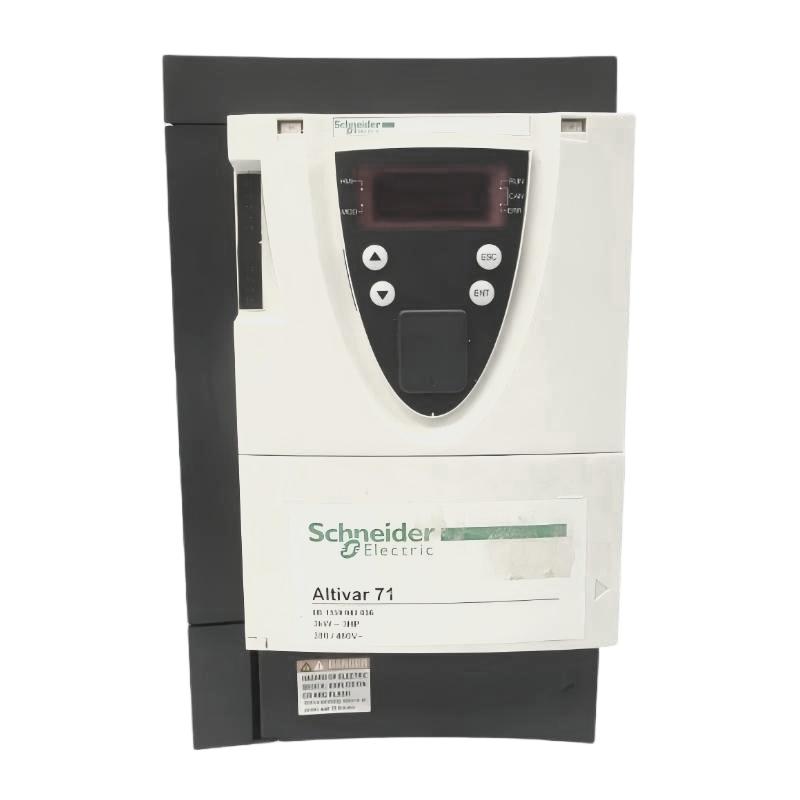
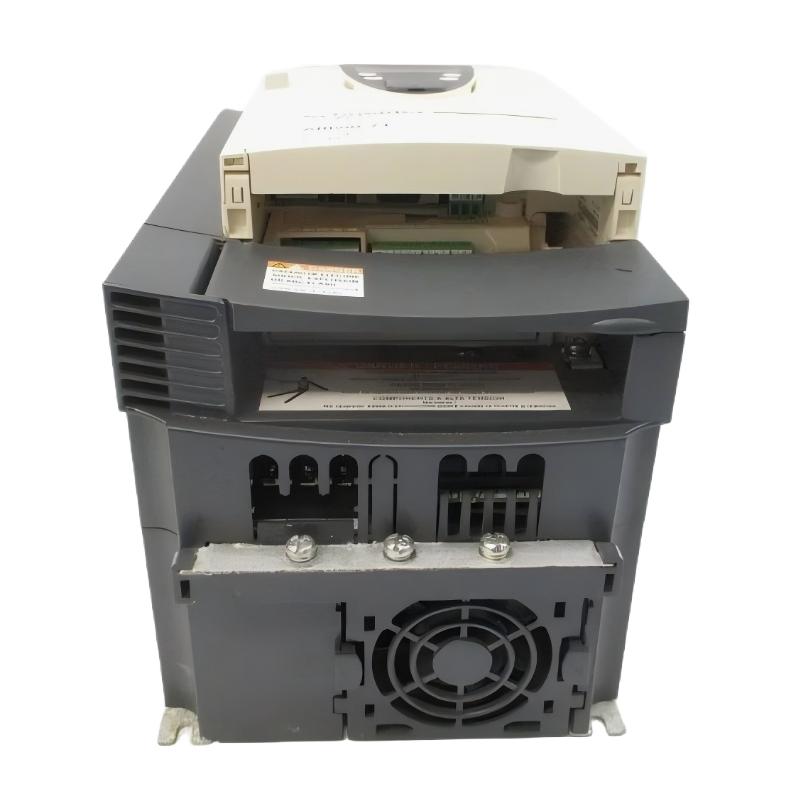
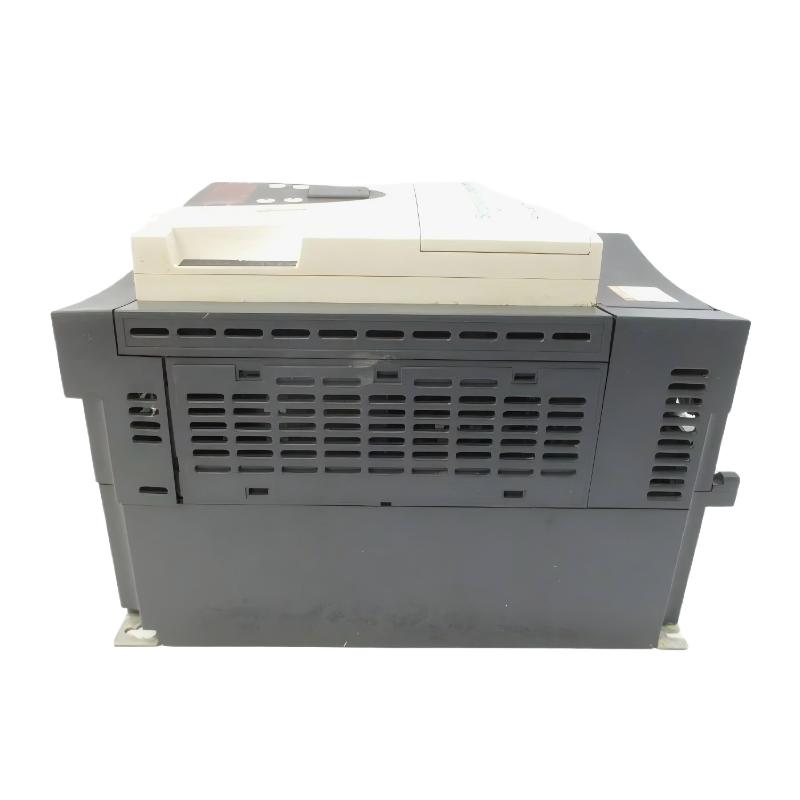
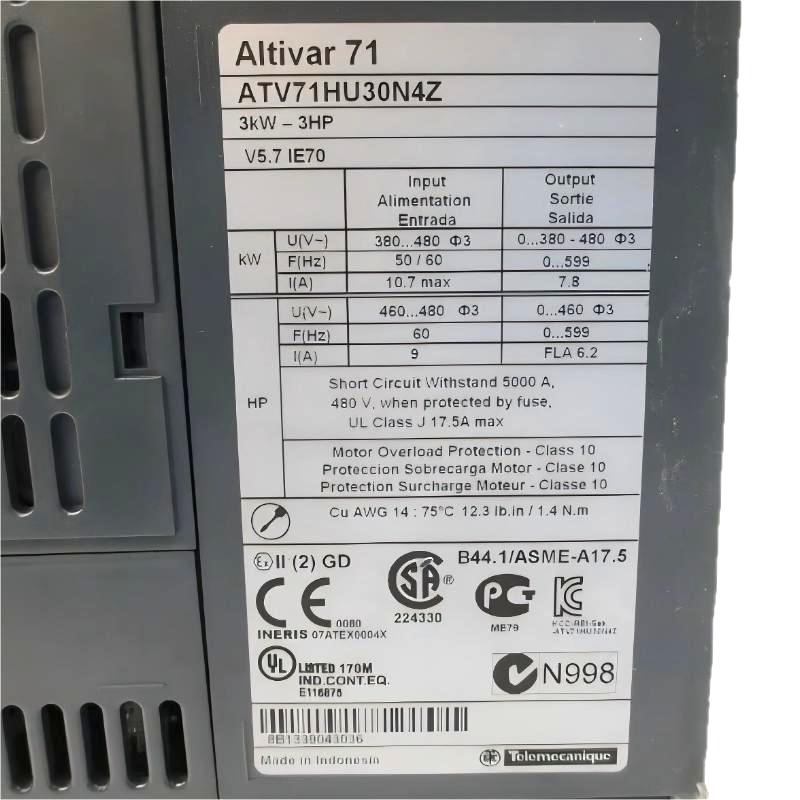
- Schneider
- ATV71HU30N4Z
- Variable Speed Drive
- France
- 260 x 187 x 155 mm
- 4 kg
- Xiamen, China
- New & In Stock
- T/T, PayPal, Western Union
- 1 Year
- 1-3 Working Days
- DHL, UPS, TNT, FedEx and EMS.
- 24-Hour Service
- COO
- 5
Our advantage

Global Logistics
We have a 10-year logistics and express cooperation agreement, so our products can be shipped to any place in the world.

Brand new and original
Our products are imported in bulk from the place of origin. Because of the cooperative relationship, our products are all original and 100% new.

24-hour service
We provide 7*24 hours service to our customers. We will be there whenever you need us.

Price advantage
All our products are priced very favorably because we have our own warehouse and supply.
| Company Information | |||
| [email protected] | |||
| Mobile | +8615980777398 | ||
| +8615980777398 | |||
| 15980777398 |
Product Overview
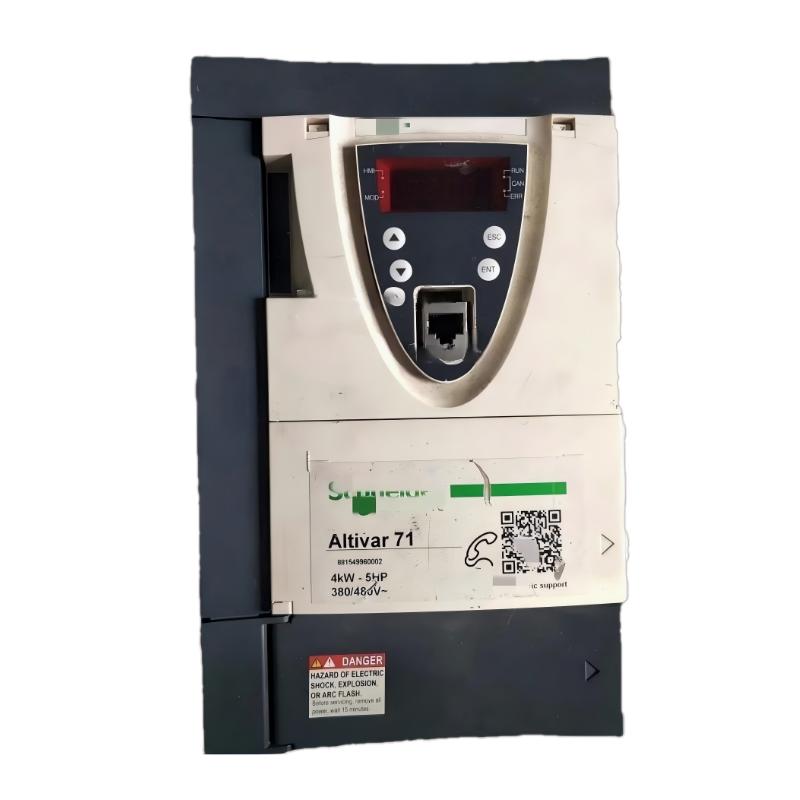
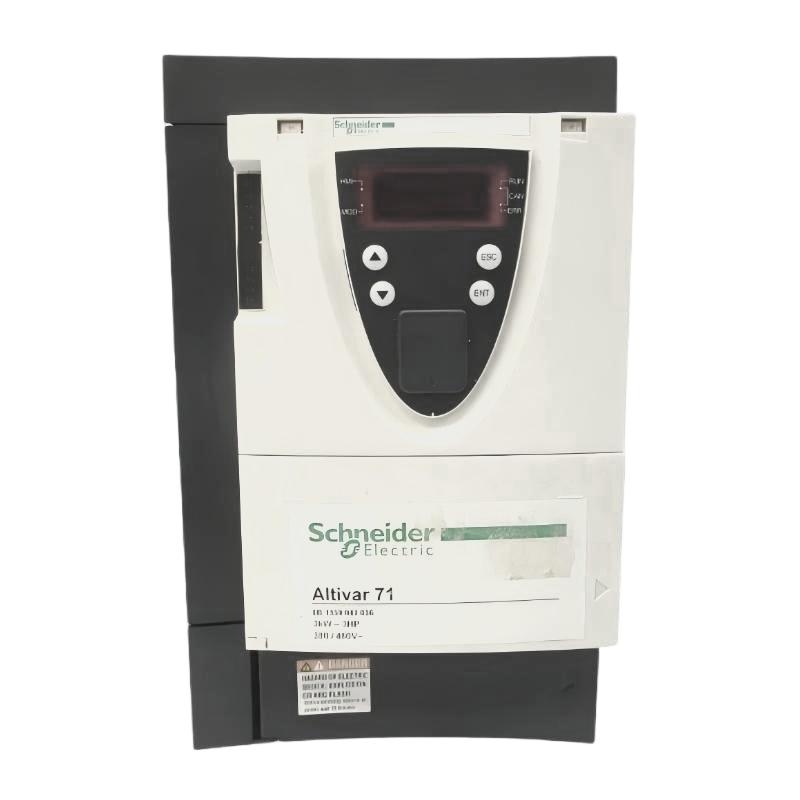
The Schneider ATV71HU30N4Z Variable Speed Drive is an industrial AC motor control device designed to provide adjustable speed, controlled acceleration and deceleration, and flexible motor operation in automated machinery and industrial equipment. It belongs to the Schneider Electric Altivar 71 series, a family of variable speed drives developed for demanding motor-control applications.
A variable speed drive allows an AC motor to operate according to the requirements of the machine rather than simply running at a fixed speed. By controlling the motor’s electrical output, the drive can support smoother starting and stopping, adjustable operating speed, and improved coordination between the motor and the surrounding automation system.
The ATV71HU30N4Z is suitable for integration into industrial electrical cabinets and machine control panels. The user-provided physical dimensions are 260 × 187 × 155 mm, with a listed weight of 4 kg.
In a typical automation installation, the drive operates between the electrical power system and the motor, while a PLC, HMI, sensors, or other control equipment can provide operating commands and process information.
Technical Specifications
| Parameter | Specification |
|---|---|
| Manufacturer | Schneider Electric |
| Model | ATV71HU30N4Z |
| Product Series | Altivar 71 |
| Product Type | Variable Speed Drive |
| Primary Function | AC Motor Speed and Drive Control |
| Application | Industrial Automation and Machine Control |
| Dimensions | 260 × 187 × 155 mm |
| Weight | 4 kg |
| Installation | Industrial Electrical Control Cabinet |
| Motor Application | Compatible AC Motor Systems |
| Control Role | Motor Speed, Acceleration and Deceleration Management |
| Typical Integration | PLC, HMI, Sensors, Motor Control Panels and Industrial Automation Systems |
Exact electrical ratings, motor current, overload characteristics, control terminals, communication options, and other configuration-dependent specifications should be confirmed against the identification label and documentation for the exact ATV71HU30N4Z hardware configuration.
What Is the Schneider ATV71HU30N4Z?
The Schneider ATV71HU30N4Z is a variable speed drive designed to control the operation of compatible AC motors.
Instead of supplying the motor with a fixed operating condition, the drive provides controlled electrical output so that motor behavior can be adjusted according to machine requirements.
A simplified control architecture can be represented as:
Power Supply → ATV71HU30N4Z → AC Motor → Mechanical Load
The control architecture can be expanded to:
Sensors / PLC / HMI → Drive Command → ATV71HU30N4Z → Motor → Machine
This arrangement makes the drive an important component in automated machinery where motor speed and operating behavior need to be coordinated with other parts of the production system.
Function and Working Principle
The ATV71HU30N4Z performs several important functions within an industrial motor-control system.
Variable Speed Regulation
The drive can adjust motor operating speed according to the configured reference and control strategy.
This allows equipment such as conveyors, pumps, fans, and other rotating machinery to operate at different speeds according to process requirements.
Controlled Acceleration
Rather than applying full operating conditions immediately, the drive can provide controlled acceleration according to configured parameters.
Controlled acceleration can help reduce mechanical shock and improve machine starting behavior.
Controlled Deceleration
The drive can also manage motor deceleration. This is useful where sudden stopping could place excessive stress on mechanical components or affect product handling.
Motor Protection and Monitoring
The drive can monitor operating conditions and identify abnormal conditions according to its configured protection and diagnostic functions.
This information can assist maintenance personnel when investigating motor-control problems.
External Command Processing
The ATV71HU30N4Z can be incorporated into a broader control architecture where operating commands are generated by external automation equipment.
Depending on the system configuration, these commands may include:
- Run
- Stop
- Speed reference
- Direction
- Reset
- Operating mode
- Process-related control commands
Role in Industrial Automation
In a modern machine-control system, a variable speed drive is more than a power conversion device. It provides an interface between motor operation and the machine’s control logic.
A typical arrangement may look like:
Process Sensors → PLC → ATV71HU30N4Z → Motor → Mechanical Equipment
The PLC determines what the machine needs to do, while the drive controls the motor according to the command.
An HMI can provide operators with access to machine status, operating parameters, alarms, and other information supported by the system configuration.
This architecture is particularly useful when the motor must operate at different speeds during different stages of production.
Industrial Applications
The Schneider ATV71HU30N4Z can be used in industrial applications where its electrical and motor-control characteristics match the requirements of the equipment.
Conveyor Systems
Conveyors often require adjustable speed to coordinate material movement with upstream and downstream equipment.
A variable speed drive can provide controlled acceleration, deceleration, and operating speed.
Material Handling
Automated material-handling systems can use variable speed motor control to coordinate movement and reduce abrupt mechanical changes.
Pumps
Where process requirements vary, adjustable motor speed can be used to support changes in flow or operating conditions.
Fans and Blowers
Variable speed control can allow ventilation and air-moving equipment to respond to changing system requirements.
Packaging Machinery
Packaging machines may require controlled motor operation during feeding, positioning, conveying, or other machine sequences.
Manufacturing Equipment
Industrial machinery can use drives to coordinate motor speed with production processes and automated machine cycles.
Process Equipment
The drive can also be incorporated into process equipment where motor speed needs to be controlled as part of an automated operating sequence.
PLC, HMI and Control-System Integration
The ATV71HU30N4Z can form part of a complete automation system consisting of several interconnected devices.
| Component | Function |
|---|---|
| PLC | Executes machine and process control logic |
| HMI | Provides operator control and status visualization |
| ATV71HU30N4Z | Controls compatible AC motor operation |
| Motor | Provides mechanical power |
| Sensors | Provide process or machine feedback |
| Safety System | Manages required safety-related functions |
| Electrical Protection | Protects the power circuit |
| Control Cabinet | Houses and protects automation equipment |
The actual connection method depends on the machine architecture and installed options.
During system design, engineers should distinguish between the drive’s power circuit, control signals, feedback signals, and communication interfaces.
Installation and Cabinet Integration
The user-provided dimensions of the ATV71HU30N4Z are:
260 × 187 × 155 mm
The listed weight is:
4 kg
These values should be considered when designing the control cabinet and selecting an appropriate mounting arrangement.
Cabinet Space
The enclosure should provide adequate space for:
- Drive mounting
- Power connections
- Motor cables
- Control wiring
- Communication wiring
- Cooling airflow
- Maintenance access
Additional equipment installed near the drive should not obstruct its cooling system.
Thermal Management
Variable speed drives generate heat during operation. Cabinet design should therefore account for heat dissipation and ambient operating conditions.
The following factors should be considered:
- Cabinet temperature
- Ventilation
- Heat generated by nearby equipment
- Airflow path
- Dust accumulation
- Installation density
The drive should be installed according to the applicable Schneider Electric installation requirements.
Power and Motor Connection
The general electrical arrangement can be represented as:
Incoming Electrical Supply → Protection / Isolation → ATV71HU30N4Z → Motor
The actual power connections must be made according to the applicable drive configuration and electrical installation requirements.
Before energizing the system, technicians should verify:
- Input power connections
- Motor connections
- Protective grounding
- Control wiring
- Interlock circuits
- Emergency stop circuits
- Communication wiring
- Cable routing
Motor cables should be routed appropriately to reduce unwanted electromagnetic interference with sensitive control and communication circuits.
Commissioning Procedure
A systematic commissioning process helps identify wiring and configuration problems before the machine enters normal production.
1. Confirm Product Identification
Verify that the installed drive is the correct:
ATV71HU30N4Z
Check the product label and system documentation before applying power.
2. Inspect Mechanical Installation
Confirm that the drive is securely mounted and that the cabinet provides sufficient clearance and ventilation.
3. Check Electrical Wiring
Inspect incoming power, motor output, grounding, control, and communication connections.
4. Enter Motor Data
Motor nameplate information should be entered into the drive configuration where required.
Only actual motor data should be used.
5. Configure the Control Strategy
Select and configure the appropriate motor-control and command arrangement for the application.
6. Perform an Initial Motor Test
Run the motor under controlled conditions and verify:
- Correct direction
- Smooth acceleration
- Smooth deceleration
- Appropriate speed response
- Stop command operation
- Absence of abnormal vibration or noise
7. Verify PLC or HMI Control
If the drive is controlled by a PLC or HMI, confirm that commands and status information behave as expected.
8. Monitor the Machine
After initial startup, monitor motor behavior and drive status before allowing the machine to operate continuously.
Troubleshooting the ATV71HU30N4Z
When a problem occurs, the drive should be treated as part of the complete motor-control system rather than automatically assumed to be the failed component.
Drive Will Not Start
Possible causes include:
- Missing run command
- Incorrect control configuration
- Active interlock
- Emergency stop condition
- Incorrect wiring
- Drive fault
- Motor-related problem
- Incorrect parameter settings
Check the drive status and external command signals first.
Motor Does Not Rotate
If the drive is powered but the motor does not rotate, inspect:
- Motor wiring
- Run command
- Speed reference
- Drive status
- Motor parameters
- External interlocks
- Mechanical load
A mechanical blockage can produce symptoms similar to an electrical problem.
Motor Speed Is Incorrect
Incorrect speed may be associated with:
- Incorrect reference value
- PLC output
- HMI setting
- Drive parameter configuration
- Communication command
- Motor configuration
Compare the requested speed reference with the value actually received by the drive.
Drive Overheating
Possible causes include:
- Insufficient cabinet ventilation
- Excessive ambient temperature
- High motor load
- Blocked airflow
- Incorrect enclosure design
- High operating duty
Thermal problems should be corrected at the system level rather than simply replacing the drive.
Intermittent Operation
Intermittent motor behavior can be caused by:
- Loose electrical connections
- Control wiring problems
- Communication instability
- External interlocks
- Motor problems
- Mechanical conditions
- Electrical noise
A complete inspection of the system is recommended before replacing the drive.
Preventive Maintenance
Regular inspection can help extend the operating life of a variable speed drive and reduce unexpected downtime.
Clean the Cabinet
Excessive dust can affect airflow and thermal performance. The control cabinet should be kept in an appropriate condition for the installed equipment.
Inspect Connections
Power and control connections should be checked according to the maintenance schedule.
Check Motor Cables
Inspect motor cables for insulation damage, loose connections, overheating, or mechanical wear.
Monitor Operating Trends
Where the automation system supports trend monitoring, changes in motor current, speed behavior, temperature, or fault frequency can help identify developing problems.
Review Fault Records
Repeated faults should be investigated rather than repeatedly reset without identifying the underlying cause.
Replacement and Spare-Part Considerations
When replacing an ATV71HU30N4Z, technicians should verify the complete model designation.
Important checks include:
- Full model number
- Electrical supply
- Motor power and current requirements
- Control configuration
- Installed accessories
- Communication requirements
- Motor type
- Cabinet dimensions
- Wiring arrangement
- Existing parameter configuration
The physical dimensions provided for the ATV71HU30N4Z are:
260 × 187 × 155 mm
The listed weight is:
4 kg
A physically similar drive should not automatically be considered interchangeable. Electrical and functional compatibility must be confirmed before installation.
Physical Handling and Installation Planning
The compact physical design of the ATV71HU30N4Z can be useful when planning machine control cabinets.
Dimensions
260 × 187 × 155 mm
Weight
4 kg
When handling the unit, technicians should protect terminals, connectors, and electronic components from mechanical impact.
The cabinet mounting structure should provide adequate support and allow sufficient access for wiring and maintenance.
Compatible Automation Components
Depending on the application, the ATV71HU30N4Z may be integrated with:
- Schneider Electric PLC systems
- Schneider Electric HMI systems
- Industrial sensors
- Motor protection devices
- Circuit breakers
- Contactors
- Safety circuits
- Industrial communication equipment
- AC motors
- Machine control panels
- Supervisory monitoring systems
The exact compatibility depends on the drive configuration, installed accessories, and overall control architecture.
Related Schneider Electric Variable Speed Drive Models
| Model Family | Product Type | General Application |
|---|---|---|
| ATV71 | Altivar Variable Speed Drive | Industrial machinery and motor control |
| ATV61 | Altivar Variable Speed Drive | Variable speed applications |
| ATV630 | Altivar Process Drive | Process and utility applications |
| ATV650 | Altivar Process Drive | Industrial process equipment |
| ATV930 | Altivar Process Drive | Advanced industrial motor control |
These product families have different electrical characteristics and application targets. They should not be treated as direct substitutes for the ATV71HU30N4Z without checking the complete system requirements.
Key Advantages
Adjustable Motor Operation
The ATV71HU30N4Z provides variable speed control for compatible AC motor applications.
Controlled Acceleration and Deceleration
Configurable motor ramp behavior can help provide smoother machine operation.
Automation System Integration
The drive can operate as part of a larger PLC, HMI, sensor, and motor-control architecture.
Flexible Industrial Applications
Its variable speed function makes the drive suitable for various automated machinery and process-related applications when correctly sized.
Compact Physical Form
The listed 260 × 187 × 155 mm dimensions provide useful information for cabinet planning and equipment replacement.
Practical Installation Weight
At 4 kg, the drive can be accommodated in appropriately designed industrial control cabinets while allowing for normal service and replacement procedures.
Technical FAQs
What is the Schneider ATV71HU30N4Z?
The Schneider ATV71HU30N4Z is an Altivar 71 series variable speed drive used to control compatible AC motors in industrial automation and machine-control applications.
What is the main purpose of the ATV71HU30N4Z?
Its primary purpose is to provide controlled motor operation, including adjustable speed and managed acceleration and deceleration.
What are the dimensions of the ATV71HU30N4Z?
The supplied dimensions are 260 × 187 × 155 mm.
What is the weight of the ATV71HU30N4Z?
The supplied weight is 4 kg.
Can the ATV71HU30N4Z be integrated with a PLC?
Yes. A compatible control architecture can connect the variable speed drive with a PLC so that motor operation becomes part of the machine’s automated control sequence.
What applications can use this variable speed drive?
Potential applications include conveyors, material-handling systems, pumps, fans, packaging machinery, manufacturing equipment, and other industrial machines requiring variable motor operation.
What should be checked before commissioning?
Technicians should verify the drive model, electrical wiring, motor information, control configuration, grounding, interlocks, and external command signals before operating the motor.
What can cause an ATV71HU30N4Z fault?
Potential causes include incorrect parameters, wiring problems, motor problems, excessive load, thermal conditions, control-command errors, communication issues, or external machine interlocks.
Can another Altivar model directly replace the ATV71HU30N4Z?
Not automatically. A replacement must be checked for electrical, motor, control, communication, mechanical, and application compatibility.
Conclusion
The Schneider ATV71HU30N4Z Variable Speed Drive is an industrial AC motor-control device designed to provide adjustable motor operation within suitable automated machinery and industrial equipment. As a member of the Altivar 71 series, it can serve as the motor-control layer between an electrical power system and the mechanical equipment driven by the motor.
The supplied physical specifications are 260 × 187 × 155 mm with a weight of 4 kg, making these values important considerations for control-panel design, equipment replacement, storage, and maintenance planning.
For reliable operation, the ATV71HU30N4Z should be correctly matched with the motor, installed in an appropriate electrical environment, configured using accurate motor information, and integrated correctly with the PLC, HMI, sensors, safety circuits, and other automation equipment. Proper commissioning and preventive maintenance can further improve system reliability and reduce unexpected motor-control downtime.