

ProductPRODUCT
Featured products
Contact Us
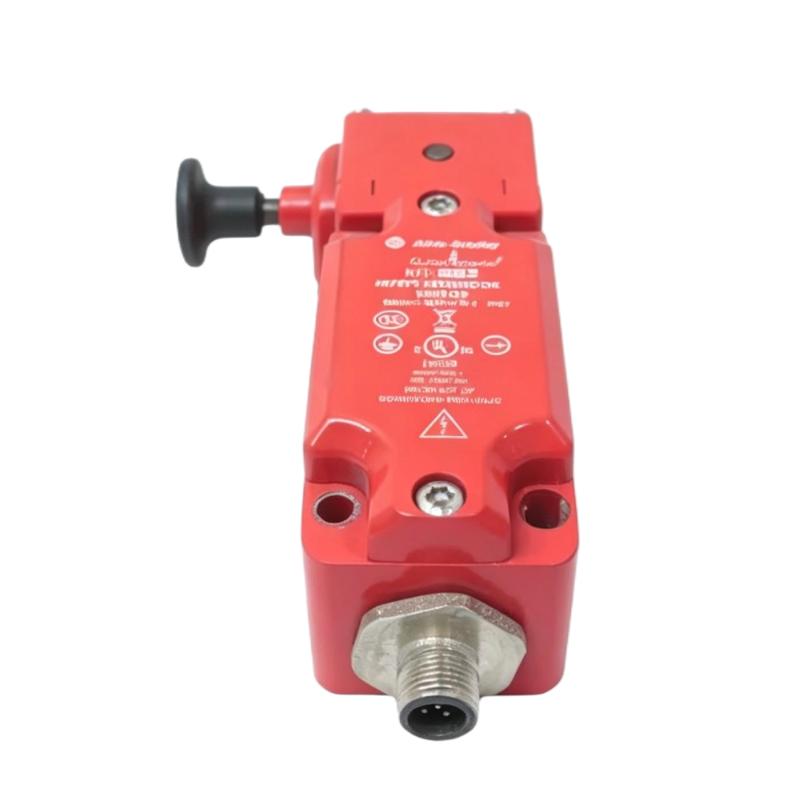
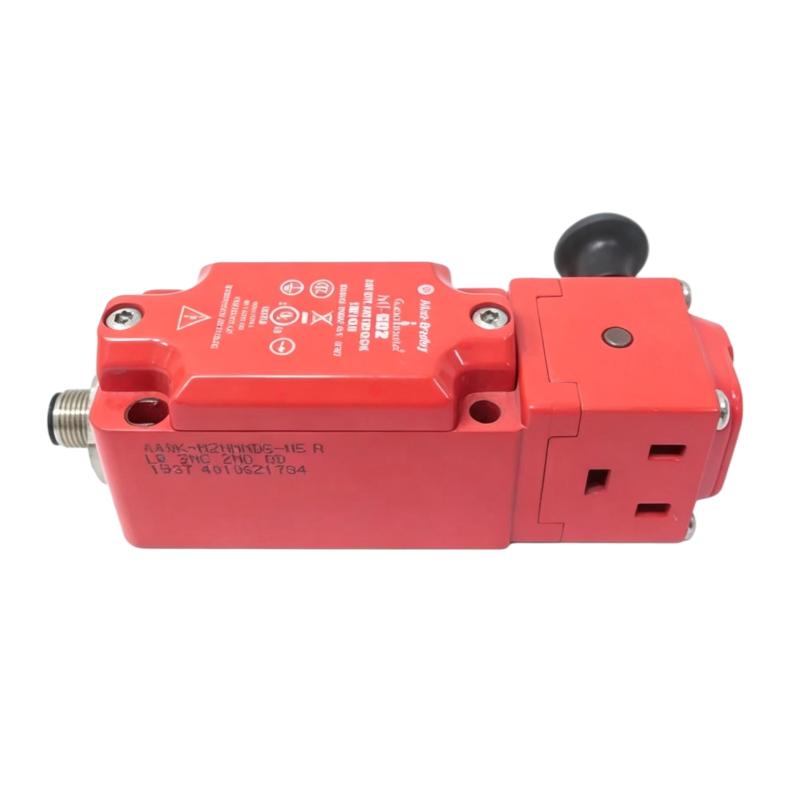
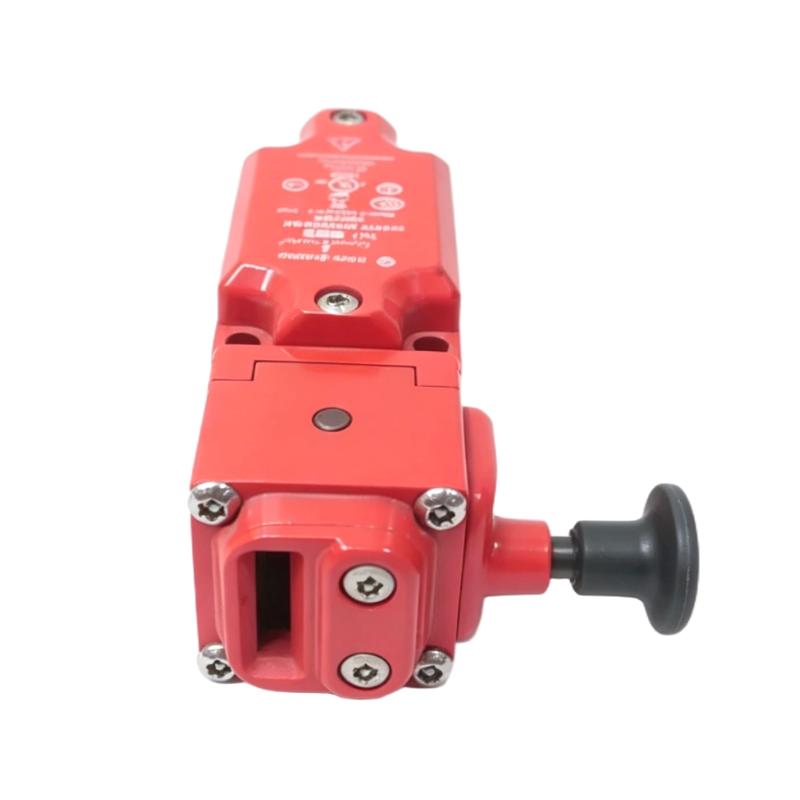
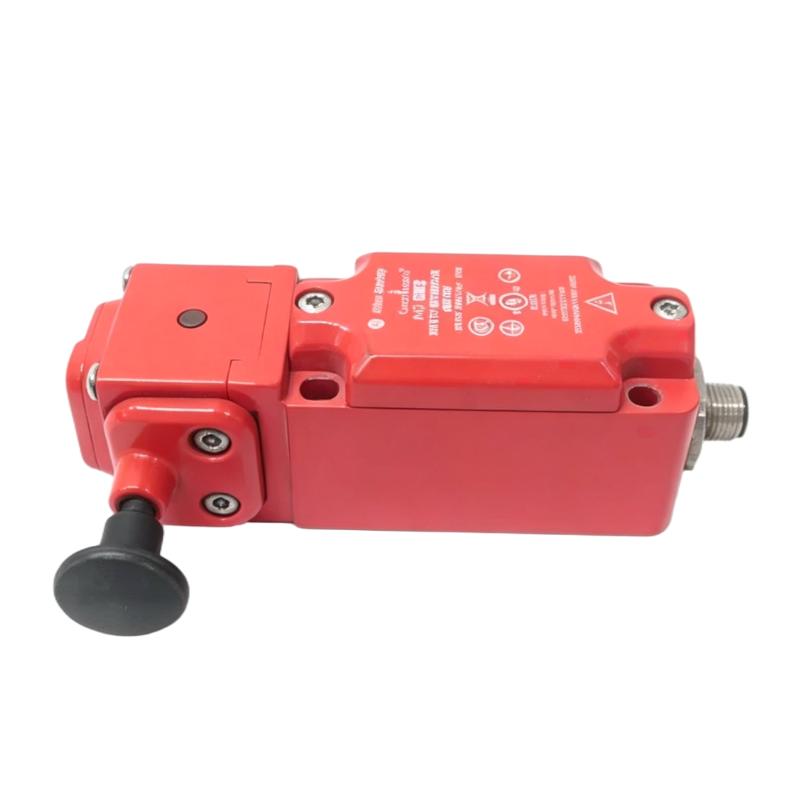
- Allen Bradley
- 440K-M2NNNDS-N5
- Tongue Interlock
- USA
- 75 × 25 × 29 mm
- 0.06 kg
- Xiamen, China
- New & In Stock
- T/T, PayPal, Western Union
- 1 Year
- 1-3 Working Days
- DHL, UPS, TNT, FedEx and EMS.
- 24-Hour Service
- COO
- 4
Our advantage

Global Logistics
We have a 10-year logistics and express cooperation agreement, so our products can be shipped to any place in the world.

Brand new and original
Our products are imported in bulk from the place of origin. Because of the cooperative relationship, our products are all original and 100% new.

24-hour service
We provide 7*24 hours service to our customers. We will be there whenever you need us.

Price advantage
All our products are priced very favorably because we have our own warehouse and supply.
| Company Information | |||
| [email protected] | |||
| Mobile | +8615980777398 | ||
| +8615980777398 | |||
| 15980777398 |
Product Overview
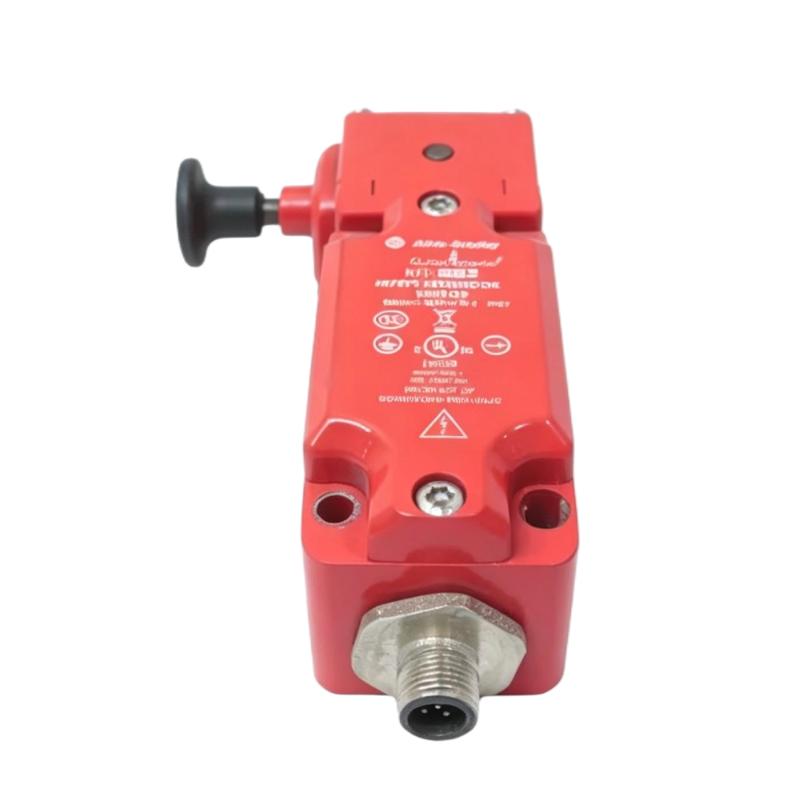
The Allen Bradley 440K-M2NNNDS-N5 Guardmaster MT-GD2 Tongue Interlock is a machine safety interlock used to monitor movable guards, access doors, and protective covers. It provides an electrical safety signal based on the position of the associated guard, allowing the machine safety system to respond when the guard is opened.
The tongue-operated mechanism links the physical movement of the guard to the interlock body. When the guard is closed, the actuator enters the switch and establishes the intended operating state. Opening the guard withdraws the tongue and changes the internal switching condition.
This type of interlock is commonly applied to automated machinery, production equipment, packaging systems, machine tools, and other installations where hazardous movement must be monitored at a physical access point.
Technical Specifications
| Parameter | Value |
|---|---|
| Manufacturer | Allen Bradley |
| Model / Part Number | 440K-M2NNNDS-N5 |
| Product Type | Guardmaster MT-GD2 Tongue Interlock |
| Series | Guardmaster MT-GD2 |
| Application | Machine guard and access-door interlocking |
| Dimensions | 75 × 25 × 29 mm |
| Weight | 0.06 kg |
Product Features
- Guardmaster MT-GD2 tongue-operated safety interlock.
- Monitors movable machine guards and access doors.
- Uses a tongue-style actuator linked to the guard mechanism.
- Provides a switching interface for the machine safety circuit.
- Suitable for machinery with hazardous motion behind physical guarding.
- Can be integrated with safety relays, safety controllers, and safety I/O.
- Suitable for automated machinery, packaging equipment, and production systems.
- Provides a compact field-level solution for guard position monitoring.
Working Principle
The 440K-M2NNNDS-N5 operates by mechanically coupling the guard to the interlock through a tongue actuator. With the guard closed, the tongue is inserted into the interlock body and the internal switching mechanism remains in its intended state.
When the guard is opened, the tongue withdraws from the interlock. The resulting change in contact state is transmitted to the connected safety control circuit, which can then initiate the required protective response.
A typical signal path is:
Movable Guard → Tongue Actuator → MT-GD2 Interlock → Safety Input → Safety Relay / Controller → Machine Stop
During commissioning, the guard should be opened and closed repeatedly while verifying both the mechanical engagement and the electrical response. The complete safety circuit should be tested rather than evaluating the interlock independently.
Role in a Machine Safety Control Architecture
The MT-GD2 operates at the field level of a machine guarding system. Its purpose is to detect the position of a physical guard and provide that information to the safety control layer.
Machine Guard → Tongue Actuator → 440K-M2NNNDS-N5 → Safety Controller / Relay → Machine Stop Function
| System Element | Function |
|---|---|
| Machine Guard | Physically restricts access to the hazardous area |
| Tongue Actuator | Transfers guard movement to the interlock mechanism |
| 440K-M2NNNDS-N5 | Detects the guard position through the tongue mechanism |
| Safety Relay / Controller | Evaluates the interlock signal |
| Contactor / Drive Safety Circuit | Performs the required machine stopping or energy-control action |
| PLC / HMI | Provides standard machine control and status information where applicable |
| Machine Actuators | Remain controlled according to the defined safety state |
The interlock should be integrated into a complete safeguarding architecture based on the machine’s risk assessment. The interlock itself does not replace the safety controller, stopping device, guard construction, or validation of the complete safety function.
Industrial Applications
| Application | Typical Use |
|---|---|
| Production Machinery | Monitoring movable access guards around machine mechanisms |
| Packaging Machines | Interlocking doors and covers around moving components |
| Automated Assembly | Detecting opening of operator access points |
| Machine Tools | Monitoring protective doors around machining areas |
| Robotic Systems | Monitoring physical access doors around automated motion |
| Material Handling | Guard monitoring around conveyors and moving mechanisms |
| Processing Equipment | Preventing normal operation when protected access points are opened |
Installation and Maintenance
- Select the correct mounting location
Install the interlock so the tongue actuator aligns naturally with the guard movement. - Align the tongue actuator
Proper alignment reduces mechanical loading and helps maintain consistent switching operation. - Secure the switch body
Ensure the interlock is firmly mounted and cannot shift during repeated guard operation. - Check guard movement
Confirm that the guard opens and closes without forcing or bending the tongue actuator. - Verify full actuator engagement
When the guard is closed, make sure the tongue reaches the required position within the interlock mechanism. - Check the electrical wiring
Verify all connections against the machine electrical drawings and the configured safety circuit. - Test guard opening
Open the protected guard and confirm that the safety circuit changes to the intended state. - Verify machine restart behavior
Confirm that opening the guard produces the required machine response and does not permit an unintended restart. - Inspect the actuator
Look for bending, deformation, looseness, or excessive wear on the tongue. - Keep the mechanism free from debris
Remove accumulated dirt and process material that could interfere with actuator movement. - Test the complete safety function
Verify the signal path from the interlock through the safety controller or relay to the final machine stopping function. - Record periodic safety checks
Maintain records of functional tests, inspections, and corrective actions according to the machine’s safety procedures.
Compatible System Components
| Component | Role in the System |
|---|---|
| Allen Bradley Guardmaster Safety Relays | Evaluate the interlock signal and control safety outputs |
| Allen Bradley Safety Controllers | Process guard-monitoring signals and coordinate safety functions |
| Allen Bradley Safety I/O Modules | Provide safety-related field interfaces |
| Allen Bradley Contactors | Control machine energy within the safety circuit |
| Allen Bradley PowerFlex Drives | Can participate in machine stopping functions when supported by the selected safety architecture |
| Machine Guard Assemblies | Provide physical protection around hazardous machine areas |
| PLC / HMI Systems | Provide standard control, status, and diagnostic functions where applicable |
Recommended Related Models
| Model | Product Type | Typical Relationship |
|---|---|---|
| Allen Bradley 440K-M2NNNDS | Guardmaster MT-GD2 Tongue Interlock | Related MT-GD2 configuration |
| Allen Bradley 440K-M2NNNDS-N5 | Guardmaster MT-GD2 Tongue Interlock | Same product family and function |
| Allen Bradley 440K Series | Guardmaster Safety Interlock Switch | Related machine guard interlock family |
| Allen Bradley 440K-MT Series | Guardmaster Tongue Interlock | Related tongue-operated safety interlock |
| Allen Bradley 440R Series | Guardmaster Safety Relay | Used to evaluate safety interlock signals |
| Allen Bradley 440E Series | Guardmaster Cable Pull Switch | Used for cable-operated emergency-stop protection |
Key Advantages
- Provides direct monitoring of movable machine guards.
- Uses a simple tongue-operated mechanical interface.
- Suitable for access doors and protective covers around hazardous machinery.
- Can be incorporated into Guardmaster safety control architectures.
- Compact solution for machine guard position monitoring.
- Supports clear separation between physical guarding and safety control functions.
Technical FAQs
What is the purpose of the 440K-M2NNNDS-N5?
It is a Guardmaster MT-GD2 tongue interlock used to monitor the position of a movable machine guard or access door and provide the corresponding switching signal to the machine safety circuit.
How does the tongue mechanism operate?
The tongue actuator enters the interlock when the guard is closed. When the guard opens, the tongue withdraws and changes the internal switching state, allowing the connected safety system to detect the guard position.
What should be checked if the guard opens but the safety system does not respond?
Inspect the tongue alignment and mechanical movement first. Then check the wiring, contact state, safety relay or controller inputs, and available diagnostics to determine where the signal path is interrupted.
Is the 440K-M2NNNDS-N5 sufficient by itself for machine safety?
No. It provides the guard-position sensing function but forms only one part of the complete safety system. Appropriate safety control equipment, stopping devices, guard construction, and system validation are also required.