

ProductPRODUCT
Featured products
Contact Us

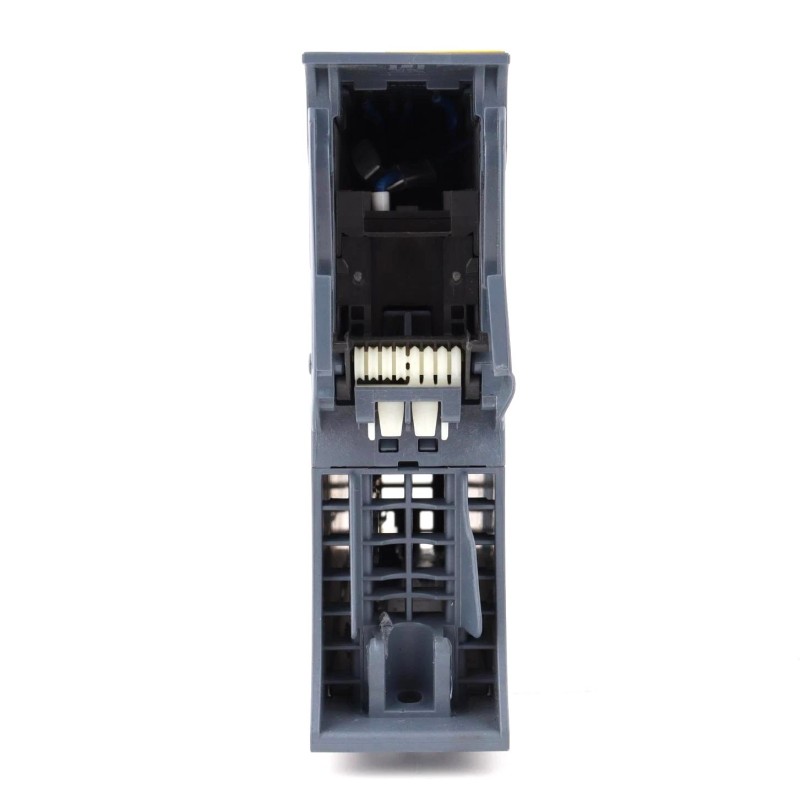
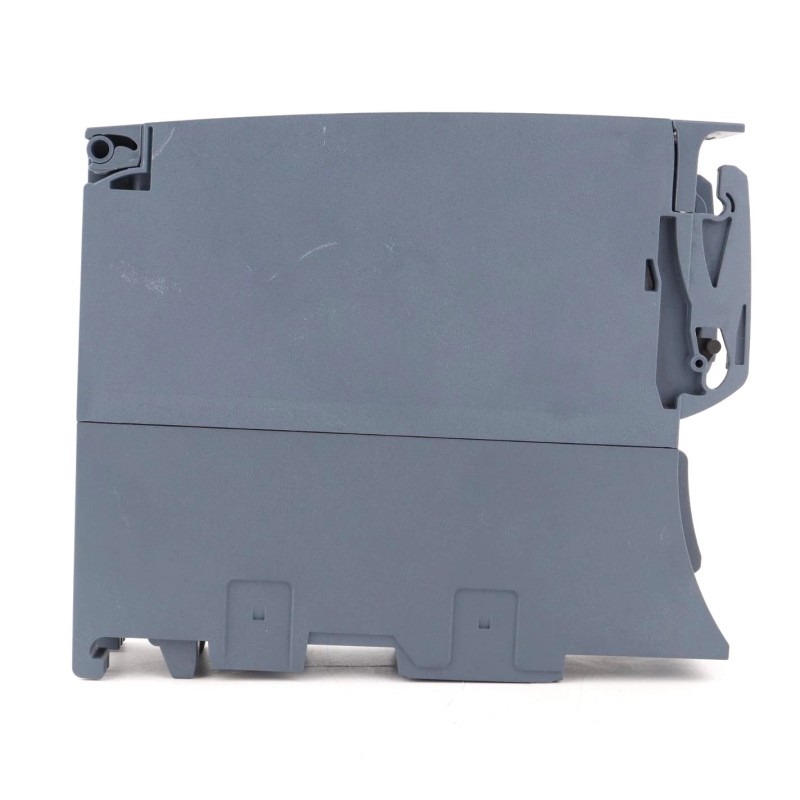

- Siemens
- 6AG1521-1BH00-7AB0
- Digital Input Module
- Germany
- 35 × 147 × 129 mm
- 0.278 kg
- Xiamen, China
- New & In Stock
- T/T, PayPal, Western Union
- 1 Year
- 1-3 Working Days
- DHL, UPS, TNT, FedEx and EMS.
- 24-Hour Service
- COO
- 2
Our advantage

Global Logistics
We have a 10-year logistics and express cooperation agreement, so our products can be shipped to any place in the world.

Brand new and original
Our products are imported in bulk from the place of origin. Because of the cooperative relationship, our products are all original and 100% new.

24-hour service
We provide 7*24 hours service to our customers. We will be there whenever you need us.

Price advantage
All our products are priced very favorably because we have our own warehouse and supply.
| Company Information | |||
| [email protected] | |||
| Mobile | +8615980777398 | ||
| +8615980777398 | |||
| 15980777398 |
Product Overview
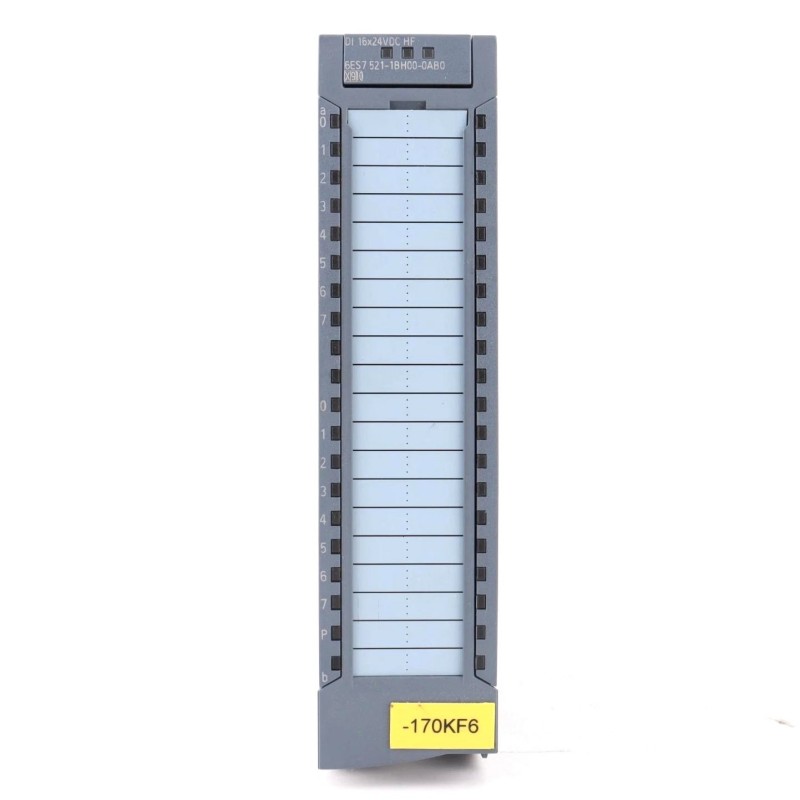
The Siemens 6AG1521-1BH00-7AB0 SIPLUS S7-1500 Digital Input Module is used to acquire binary signals from field devices and make those signals available to the central controller. It forms part of the S7-1500 I/O architecture and provides the interface between discrete field conditions and the control program.
Typical input signals come from devices such as proximity switches, limit switches, pushbuttons, auxiliary contacts, and other two-state sensors. The module receives the electrical state of each connected input and transfers the corresponding process information to the CPU for logic processing.
In a machine-control application, the module can be used for status detection, sequence conditions, interlocks, equipment feedback, and alarm-related signals. Its role is particularly important where numerous discrete field signals need to be organized and processed as part of a centralized or distributed automation system.
As a SIPLUS S7-1500 component, the module can be incorporated into automation installations requiring the environmental characteristics associated with the SIPLUS product family. It works together with the CPU, system components, field wiring, and other I/O modules to form the complete control architecture.
Technical Specifications
| Parameter | Value |
|---|---|
| Manufacturer | Siemens |
| Model / Part Number | 6AG1521-1BH00-7AB0 |
| Product Type | SIPLUS S7-1500 Digital Input Module |
| Series | SIPLUS S7-1500 |
| Application | Digital signal acquisition and discrete status monitoring |
| Dimensions | 35 × 147 × 129 mm |
| Weight | 0.278 kg |
Product Features
- Digital input module for the Siemens SIPLUS S7-1500 automation platform.
- Acquires binary field signals from connected sensors and switching devices.
- Transfers discrete process states to the central S7-1500 controller.
- Suitable for machine status detection, interlocks, sequencing, and alarm inputs.
- Can be integrated with other S7-1500 signal modules and system components.
- SIPLUS configuration for industrial applications requiring the corresponding environmental characteristics.
- Suitable for centralized and distributed automation architectures.
Working Principle
The 6AG1521-1BH00-7AB0 receives binary electrical signals from connected field devices. When a field device changes state, the corresponding input channel detects the change and converts the electrical condition into process data that can be evaluated by the S7-1500 controller.
The CPU then uses the input information within the configured control program. Depending on the application, a detected input state can initiate a machine sequence, permit or inhibit an operation, indicate equipment status, or contribute to an alarm condition.
A typical signal path is:
Field Switch / Sensor → 6AG1521-1BH00-7AB0 Digital Input Module → S7-1500 CPU → Control Logic → Output / Actuator
The module therefore provides the electrical interface between discrete field devices and the software-based control logic running in the CPU.
Role in a SIPLUS S7-1500 Control Architecture
The 6AG1521-1BH00-7AB0 functions at the I/O level of the SIPLUS S7-1500 architecture. It collects discrete field information and makes the resulting input states available to the central controller.
Field Devices → 6AG1521-1BH00-7AB0 → S7-1500 CPU → Control Logic → Actuators
| System Element | Function |
|---|---|
| Field Sensors / Switches | Generate discrete ON/OFF process signals |
| 6AG1521-1BH00-7AB0 | Acquires and transfers digital input states |
| SIPLUS S7-1500 CPU | Processes the input information according to the control program |
| Communication System | Exchanges process data with other automation devices |
| Output Modules | Convert control decisions into output signals |
| Actuators | Perform the commanded machine or process operation |
This arrangement allows individual field conditions to become part of the CPU’s control logic without requiring every field device to be directly connected to the controller.
Industrial Applications
| Application | Typical Use |
|---|---|
| Production Machinery | Detecting machine states, limit positions, and operating conditions |
| Conveyor Systems | Monitoring sensors, end positions, and equipment status |
| Packaging Machines | Receiving discrete signals for sequence and interlock control |
| Material Handling | Monitoring switches, proximity sensors, and safety-related process conditions |
| Assembly Equipment | Detecting component positions and machine-cycle conditions |
| Process Equipment | Acquiring binary status signals from valves, switches, and auxiliary devices |
Installation and Maintenance
- Verify Module Identification
Confirm the 6AG1521-1BH00-7AB0 order number before installation and compare it with the project hardware configuration. - Check System Compatibility
Verify that the module is intended for the planned SIPLUS S7-1500 system and connected controller architecture. - Prepare the Installation Area
Ensure that the mounting location and surrounding cabinet area are clean and suitable for the automation hardware. - Install the Module Correctly
Mount the module according to the applicable S7-1500 installation procedure and ensure that it is mechanically secured. - Check Field Wiring
Confirm that each digital input is connected to the intended field device and that the wiring arrangement matches the control project. - Verify Signal Polarity and Reference
Check the applicable wiring and reference connections before applying field signals to the module. - Review the Hardware Configuration
Ensure that the module is correctly represented in the engineering project and assigned to the intended input addresses or process variables. - Test Individual Inputs
Activate each connected field device during commissioning and confirm that the corresponding input state is correctly recognized by the controller. - Check Diagnostic Information
Review available diagnostic information if an input remains in an unexpected state or communication with the controller is interrupted. - Inspect Terminals and Connections
Periodically check field wiring and terminals for looseness, corrosion, contamination, or mechanical damage. - Monitor Field Devices
When an input behaves abnormally, verify the connected sensor or switch before assuming that the input module itself has failed. - Maintain Configuration Backups
Keep an updated copy of the hardware configuration and control project so that the I/O system can be restored efficiently after maintenance.
Compatible System Components
| Component | Role in the System |
|---|---|
| Siemens SIPLUS S7-1500 CPU | Processes digital input information and executes the control program |
| Siemens SIPLUS S7-1500 Digital Output Modules | Provide discrete control signals to field devices |
| Siemens SIPLUS S7-1500 Analog Modules | Handle continuous process signals within the same automation architecture |
| Siemens S7-1500 System Components | Provide the supporting system infrastructure |
| Field Sensors and Switches | Generate binary process signals for acquisition |
| Siemens HMI Systems | Display process states and allow operator interaction |
Recommended Related Models
| Model | Product Type | Typical Relationship |
|---|---|---|
| Siemens 6AG1521-1BH00-7AB0 | SIPLUS S7-1500 Digital Input Module | Primary digital input module |
| Siemens 6AG1521-1BL00-7AB0 | SIPLUS S7-1500 Digital Input Module | Related digital input configuration |
| Siemens 6AG1521-1FH00-7AB0 | SIPLUS S7-1500 Digital Input Module | Related SIPLUS digital input module |
| Siemens 6AG1522 Series | SIPLUS S7-1500 Digital Output Module | Complementary digital output category |
| Siemens SIPLUS S7-1500 Analog I/O Modules | Analog I/O Modules | Related signal-acquisition components |
Key Advantages
- Provides a direct interface between discrete field devices and the S7-1500 control system.
- Converts binary field conditions into process information for CPU processing.
- Supports machine sequencing, interlocks, status monitoring, and alarm functions.
- Integrates with the broader SIPLUS S7-1500 I/O architecture.
- Suitable for centralized and distributed automation applications.
- SIPLUS platform configuration for demanding industrial environments.
Technical FAQs
What types of field devices can be connected to a digital input module?
Typical devices include proximity sensors, limit switches, pushbuttons, auxiliary contacts, and other equipment that provides a compatible binary signal. The exact electrical characteristics of the connected device should be checked against the module requirements.
How does the 6AG1521-1BH00-7AB0 communicate input states to the CPU?
The module acquires the connected field signals and makes their states available to the S7-1500 CPU through the system’s I/O architecture. The CPU then uses those states within the configured control program.
What should be checked if one digital input does not change state?
First inspect the field device, wiring, terminals, and associated power or reference connections. If the field signal is correct but the input state remains unchanged, the module configuration and available diagnostic information should then be checked.
Can this module be combined with other S7-1500 I/O modules?
Yes. Digital input modules can be combined with other appropriate S7-1500 system and I/O components to build an automation architecture containing digital inputs, digital outputs, analog signals, communication functions, and central processing.