

ProductPRODUCT
Featured products

Contact Us
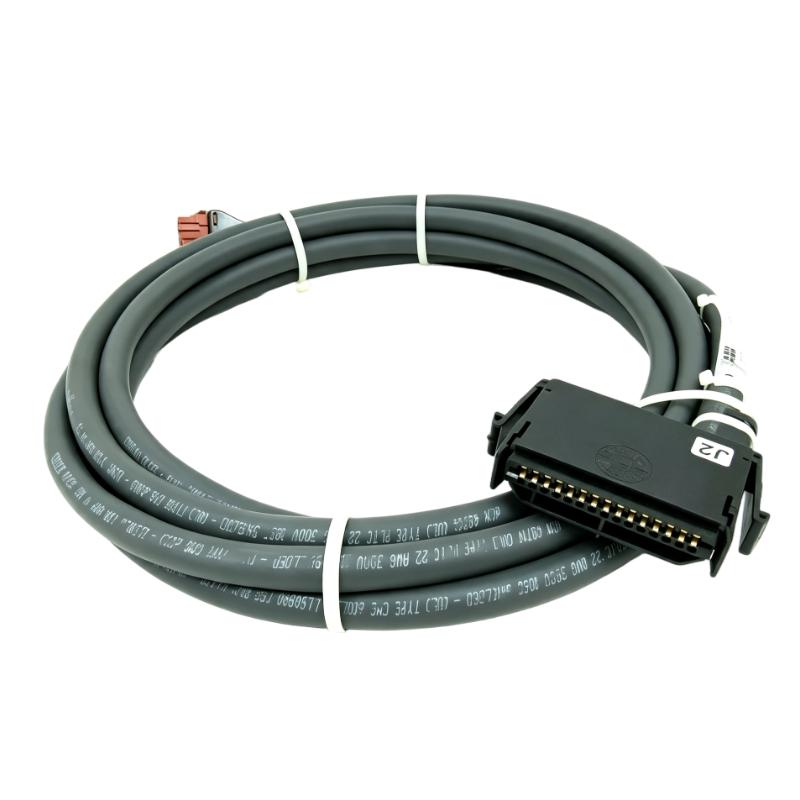
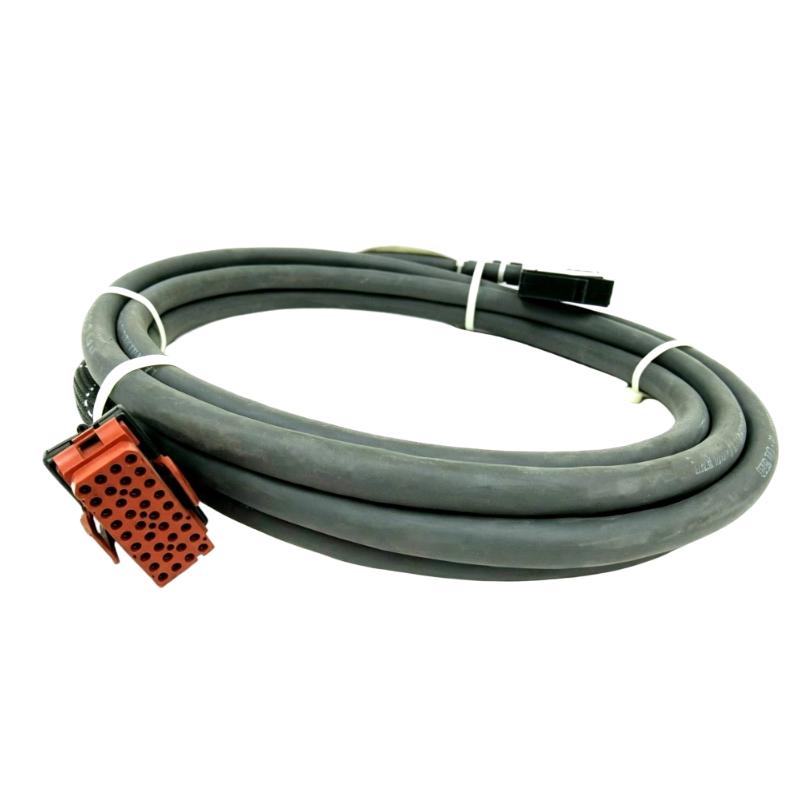
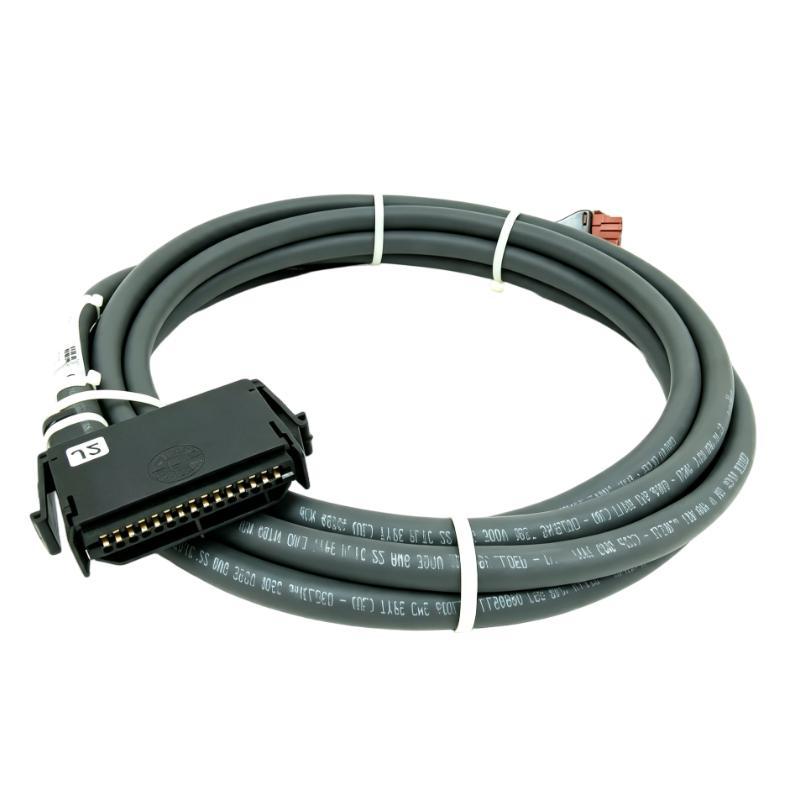

- ABB Bailey
- NKTU11-15 I/O
- Module to Terminal Unit Cable
- Sweden (SE)
- 15 feet
- 3 kg
- Xiamen, China
- New & In Stock
- T/T, PayPal, Western Union
- 1 Year
- 1-3 Working Days
- DHL, UPS, TNT, FedEx and EMS.
- 24-Hour Service
- COO
- 40
Our advantage

Global Logistics
We have a 10-year logistics and express cooperation agreement, so our products can be shipped to any place in the world.

Brand new and original
Our products are imported in bulk from the place of origin. Because of the cooperative relationship, our products are all original and 100% new.

24-hour service
We provide 7*24 hours service to our customers. We will be there whenever you need us.

Price advantage
All our products are priced very favorably because we have our own warehouse and supply.
| Company Information | |||
| [email protected] | |||
| Mobile | +8615980777398 | ||
| +8615980777398 | |||
| 15980777398 |
Product Overview
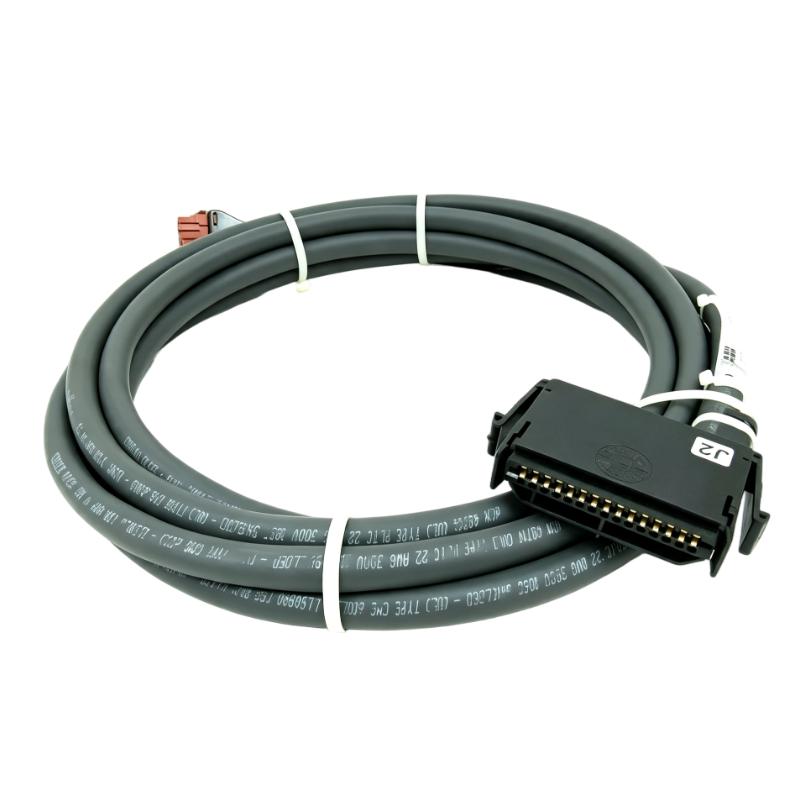
The ABB Bailey NKTU11-15 I/O Module to Terminal Unit Cable is an industrial automation cable designed to provide the electrical interconnection between a compatible I/O module and terminal unit within an ABB Bailey control system. It forms part of the signal path between control electronics and field termination hardware, helping transfer process-related signals through an organized and structured automation architecture.
With a specified cable length of 15 feet, the NKTU11-15 is suitable for installations where the I/O module and terminal unit are positioned with a moderate physical separation. The cable helps simplify cabinet wiring while providing a defined connection between the electronic I/O layer and the terminal-unit layer.
The NKTU11-15 is an interconnection component rather than an independent controller or I/O device. Its correct operation depends on the associated I/O module, terminal unit, connectors, system configuration, and installation environment. For replacement applications, technicians should verify the complete part number and connection arrangement before installation.
Technical Specifications
| Parameter | Specification |
|---|---|
| Manufacturer | ABB Bailey |
| Model | NKTU11-15 |
| Product Type | I/O Module to Terminal Unit Cable |
| Cable Length | 15 feet |
| Shipping Weight | 3 kg |
| Primary Function | I/O module-to-terminal-unit interconnection |
| Application | Industrial Control and Process Automation |
| System Role | Signal and interface connection |
| Installation | Compatible ABB Bailey control equipment |
| Connection Type | I/O module and terminal-unit interconnection |
| Typical Use | Industrial I/O signal routing and control-system integration |
What Is the ABB Bailey NKTU11-15?
The ABB Bailey NKTU11-15 is an I/O Module to Terminal Unit Cable used within compatible ABB Bailey industrial automation systems.
In a typical control architecture, field instruments and actuators are connected to terminal units. The terminal unit provides an organized interface between field wiring and the electronic I/O system. The NKTU11-15 provides the cable connection between these two system layers.
A simplified signal architecture can be represented as:
Field Devices → Field Wiring → Terminal Unit → NKTU11-15 → I/O Module → Controller
For output applications, the signal direction can operate in the opposite functional direction:
Controller → I/O Module → NKTU11-15 → Terminal Unit → Field Device
The exact signal configuration depends on the associated ABB Bailey hardware and system design.
I/O Module to Terminal Unit Cable Working Principle
The NKTU11-15 does not execute control logic or process signals independently. Instead, it provides the physical electrical path required between an I/O module and a terminal unit.
The terminal unit generally acts as the field-side connection point, while the I/O module provides the electronic interface to the control system.
The cable connects these two layers so that process signals can travel between the field and control electronics.
Its basic functional chain can be understood as:
Process Equipment
↓
Field Instrumentation / Actuator
↓
Terminal Unit
↓
NKTU11-15 Cable
↓
I/O Module
↓
Control Processor
This architecture helps separate field wiring from control electronics and makes industrial control cabinets easier to organize and maintain.
Role in ABB Bailey Automation Systems
I/O modules are responsible for acquiring or delivering process signals, while terminal units provide practical connection points for field wiring. The cable between them is therefore an important part of the overall signal path.
The NKTU11-15 can support:
- I/O module and terminal-unit interconnection
- Organized signal routing
- Field I/O integration
- Control cabinet wiring
- System commissioning
- Maintenance and troubleshooting
- Replacement of existing interconnection assemblies
A properly matched cable helps preserve the intended architecture of the ABB Bailey control system.
Why I/O-to-Terminal Cabling Matters
Industrial automation systems depend on reliable connections between field equipment and electronic control hardware. A problem in the interconnection cable can affect the availability or quality of associated I/O signals even when both the terminal unit and I/O module are functioning correctly.
Reliable cabling contributes to:
Signal Continuity
A secure electrical connection allows signals to travel between the terminal unit and I/O module as intended.
System Availability
Cable faults can interrupt multiple associated signals. Correct cable installation helps reduce avoidable downtime.
Easier Maintenance
A defined cable assembly makes the signal path easier to identify and trace during troubleshooting.
Structured Cabinet Design
Using the intended cable length helps maintain a clean connection between terminal units and I/O assemblies.
15-Foot Cable Length and Installation Planning
The specified cable length of the ABB Bailey NKTU11-15 is 15 feet.
This length can provide installation flexibility when the terminal unit and I/O module are not located immediately adjacent to one another.
During system design, the cable should be routed along a practical path while allowing sufficient service clearance. It should not be installed under unnecessary mechanical tension.
Important planning considerations include:
- Location of the I/O module
- Location of the terminal unit
- Connector orientation
- Cabinet dimensions
- Cable-routing channels
- Service access
- Separation from power wiring
- Future maintenance requirements
Excess cable should be managed neatly without creating sharp bends or obstructing cabinet ventilation.
Industrial Automation Applications
Process I/O Systems
The NKTU11-15 can be used as part of an I/O architecture where process signals are collected through terminal units and transferred to electronic I/O modules.
Distributed Control Systems
In a distributed control environment, structured connections between field termination and I/O electronics are essential for maintaining reliable process signal transmission.
Power Generation
Industrial power-generation control systems can contain extensive instrumentation and control cabinets. I/O-to-terminal connections provide an important interface between field equipment and control electronics.
Chemical Processing
Chemical plants require continuous monitoring and control of process variables. Proper I/O cabling helps maintain communication between field instruments, terminal interfaces, and control electronics.
Water and Wastewater
Water-treatment systems use numerous instruments and actuators for flow, pressure, level, valve, and pump control. Reliable I/O connections support these automated processes.
Manufacturing
Industrial manufacturing systems use I/O modules to monitor sensors and control field devices. Terminal-unit cables help organize the connection between the field side and automation hardware.
Integration with Industrial Control Architecture
The NKTU11-15 fits into the physical signal architecture between terminal units and electronic I/O modules.
A typical arrangement may be:
Field Sensor / Actuator
↓
Field Wiring
↓
Terminal Unit
↓
NKTU11-15
↓
I/O Module
↓
Controller
↓
HMI / SCADA
This architecture allows field signals to be organized before reaching the electronic processing layer.
For input signals, field information travels toward the I/O module. For output signals, control commands travel from the I/O system toward the field equipment.
Installation Guidelines
Verify the Exact Model
Before installation, confirm the cable identification:
ABB Bailey NKTU11-15
The complete part number should be compared with the existing cable and system documentation.
Inspect the Cable
Before installation, examine the cable for:
- Jacket damage
- Cuts or abrasion
- Crushing
- Excessive bending
- Connector damage
- Contamination
- Signs of overheating
Verify Both Connection Points
Confirm that the cable is being connected between the intended I/O module and terminal unit.
Incorrect connection can result in missing or incorrectly assigned process signals.
Check Connector Condition
Inspect connector contacts and housings before mating the cable. Contamination or mechanical damage can create intermittent connections.
Secure the Cable
Route the cable so that connectors are not exposed to excessive mechanical loading.
Cabinet Installation and Cable Management
A 15-foot cable provides considerable routing flexibility, but good cabinet organization remains important.
The NKTU11-15 should be routed away from unnecessary sources of heat and mechanical interference.
Where appropriate, maintain separation between signal cables and:
- Motor power cables
- High-current conductors
- Contactors
- Switching power supplies
- Variable frequency drives
- Other high-noise equipment
Avoid sharp bends, excessive loops, and locations where cabinet doors or moving assemblies could damage the cable.
Cable identification should remain visible and accessible for future maintenance.
EMC and Signal Integrity
Industrial control cabinets can contain multiple sources of electromagnetic interference. Drives, motors, contactors, relays, switching supplies, and power conductors can all contribute to electrical noise.
The NKTU11-15 should therefore be installed according to the EMC practices applicable to the complete ABB Bailey system.
Recommended practices include:
- Keep signal cables separated from high-power wiring where practical.
- Avoid unnecessary parallel routing with motor conductors.
- Maintain secure connector connections.
- Follow the host system’s grounding and shielding requirements.
- Avoid damaged cable sections.
- Keep cable routing organized and consistent.
EMC performance depends on the complete installation rather than the cable alone.
Commissioning the NKTU11-15
After installing the cable, commissioning should verify the complete I/O signal path.
Step 1: Confirm Cable Identification
Verify that the installed cable is the intended NKTU11-15.
Step 2: Verify Connections
Confirm that both ends are connected to the correct I/O module and terminal unit.
Step 3: Inspect Cable Routing
Make sure the cable is not pinched, stretched, sharply bent, or exposed to excessive heat.
Step 4: Check I/O Diagnostics
Review the associated control-system diagnostics for abnormal I/O conditions.
Step 5: Verify Process Signals
Check that the expected input or output signals are correctly detected by the control system.
Step 6: Perform Functional Testing
Operate the relevant field devices under controlled conditions and verify that the expected signals reach the appropriate control-system points.
Troubleshooting the ABB Bailey NKTU11-15
No I/O Signal
If the expected I/O signal is missing, inspect the complete signal path.
Check:
- I/O module
- NKTU11-15 connections
- Terminal unit
- Field wiring
- Field device
- Controller diagnostics
- Associated power supplies
A cable problem should not be assumed until the surrounding components have been checked.
Intermittent Signal
Intermittent I/O behavior can result from:
- Loose connectors
- Damaged cable conductors
- Connector contamination
- Mechanical vibration
- Cable strain
- Terminal-unit connection problems
- Electrical interference
Physical inspection combined with system diagnostics can help isolate the problem.
Multiple Channels Affected
If several I/O points fail simultaneously, investigate components shared by those signals.
Potential areas include:
- Terminal unit
- NKTU11-15 cable
- I/O module
- Common connection
- Associated power
- Controller-side interface
A simultaneous multi-channel problem can indicate a common connection issue rather than multiple independent field-device failures.
Signal Noise
Unexpected signal fluctuations may be related to electrical interference, poor connections, damaged wiring, or problems elsewhere in the field signal path.
Cable routing should be inspected before replacing electronic components.
Preventive Maintenance
Preventive maintenance should include the complete I/O-to-terminal connection.
Cable Inspection
Inspect the cable jacket and connectors during scheduled maintenance.
Connector Inspection
Look for contamination, corrosion, loose connections, or mechanical damage.
Cable Routing
Confirm that the cable remains protected from excessive heat, vibration, and mechanical stress.
Signal Monitoring
Unexpected changes in I/O behavior can provide an early indication of a connection problem.
Documentation
Maintain records showing which I/O modules and terminal units are connected by each cable.
Spare-Part Management
For critical control systems, maintaining a correctly identified spare NKTU11-15 can simplify maintenance planning.
Replacement Considerations
When replacing an ABB Bailey NKTU11-15, technicians should verify the complete connection requirements rather than selecting a cable solely based on length.
Important information includes:
- Full model number
- I/O module model
- Terminal-unit model
- Connector arrangement
- Cable length
- System configuration
- Existing cable routing
- Associated control equipment
The specified cable length is 15 feet.
The supplied shipping weight is 3 kg.
These values are useful for identifying and planning the replacement part, but electrical and mechanical compatibility should be verified separately.
Physical Length and Shipping Information
The NKTU11-15 has a specified cable length of 15 feet.
Its supplied shipping weight is 3 kg.
Shipping weight is useful for:
- Warehouse planning
- Spare-parts inventory
- Transportation arrangements
- Packaging calculations
- Maintenance logistics
- Replacement planning
The shipping weight should not automatically be interpreted as the actual installed cable weight because packaging and shipping materials may contribute to the stated value.
Compatible System Components
The NKTU11-15 can form part of a larger ABB Bailey control-system architecture containing:
| Component | Typical Function |
|---|---|
| Field Sensors | Measure process variables |
| Field Actuators | Perform physical process actions |
| Terminal Unit | Provides field-side signal termination |
| NKTU11-15 | Connects I/O module to terminal unit |
| I/O Module | Acquires or delivers process signals |
| Controller | Executes control logic |
| Communication Interface | Transfers system information |
| HMI | Provides operator monitoring |
| SCADA System | Provides supervisory process control |
The exact compatible equipment depends on the installed ABB Bailey system.
Recommended Related ABB Bailey Components
| Component Type | General Function |
|---|---|
| Bailey I/O Modules | Process signal acquisition and output |
| Bailey Terminal Units | Field signal termination and distribution |
| Bailey Controller Modules | Execute control strategies |
| Bailey Interface Assemblies | Connect system-level components |
| Bailey Communication Modules | Provide system communication |
| Bailey Power Components | Supply and distribute system power |
| Bailey Control-System Accessories | Support installation and maintenance |
These components may exist within the same automation architecture, but they should not be considered direct substitutes for the NKTU11-15 without confirming system compatibility.
Engineering Best Practices
Verify the Complete Part Number
Always use NKTU11-15 when identifying the replacement cable.
Match Both Ends
The cable must match the intended I/O module and terminal-unit connection.
Maintain Signal Separation
Keep I/O cabling appropriately separated from high-power conductors.
Label Connections
Clearly identify both ends of the cable to simplify future maintenance.
Avoid Mechanical Stress
Do not allow cable weight or cabinet components to place excessive stress on connectors.
Document the Installation
Record the I/O module, terminal unit, cable model, and connection location.
Test Before Returning to Service
Verify all relevant I/O signals before the control system is returned to normal operation.
Key Advantages
- 15-foot cable length provides flexible I/O-to-terminal-unit routing.
- Designed specifically as an I/O Module to Terminal Unit Cable.
- Supports structured ABB Bailey control-system architecture.
- Provides a defined connection between electronic I/O and field termination.
- Helps simplify industrial control cabinet wiring.
- Supports systematic commissioning and troubleshooting.
- Useful for distributed process-control installations.
- 3 kg shipping weight supports spare-parts and logistics planning.
- Can simplify maintenance by providing a dedicated cable assembly.
Technical FAQs
What is the ABB Bailey NKTU11-15?
The ABB Bailey NKTU11-15 is an I/O Module to Terminal Unit Cable used to connect compatible I/O electronics with a terminal unit in an industrial control system.
What is the cable length?
The specified cable length is 15 feet.
What is the shipping weight of the NKTU11-15?
The supplied shipping weight is 3 kg.
What does the NKTU11-15 connect?
It is designed to provide the interconnection between a compatible I/O module and terminal unit.
Is the NKTU11-15 an I/O module?
No. The NKTU11-15 is a cable assembly, not an I/O module or controller.
What is the purpose of a terminal unit?
A terminal unit generally provides an organized interface between field wiring and control-system electronics, making it easier to connect field devices to I/O hardware.
Can any 15-foot cable replace the NKTU11-15?
No. Cable length alone does not establish compatibility. The complete part number, connector arrangement, I/O module, terminal unit, and system configuration should be verified.
What causes an I/O signal to disappear?
Potential causes include cable connection problems, damaged conductors, terminal-unit faults, I/O-module issues, field wiring problems, field-device faults, or controller-side problems.
How should the NKTU11-15 be maintained?
Inspect the cable, connectors, routing, and connection points periodically. Protect the cable from excessive bending, heat, vibration, contamination, and mechanical stress.
Why is cable identification important?
Industrial control systems often contain multiple cables with similar appearances. Correct identification helps prevent incorrect connections and reduces troubleshooting time.
Conclusion
The ABB Bailey NKTU11-15 I/O Module to Terminal Unit Cable is an important interconnection component for compatible ABB Bailey industrial automation systems. It provides the physical connection between an electronic I/O module and a terminal unit, supporting the transfer of process signals between field wiring and control-system electronics.
With a specified 15-foot cable length, the NKTU11-15 provides useful installation flexibility for control cabinets and distributed automation architectures. Its role is particularly important in systems where organized separation between field termination and electronic I/O simplifies installation, commissioning, and maintenance.
The key supplied specifications are a 15-foot cable length and 3 kg shipping weight. For replacement applications, technicians should verify the complete NKTU11-15 model designation, associated I/O module, terminal unit, connector arrangement, and system configuration. Proper cable routing, secure connections, suitable EMC practices, and complete I/O testing help maintain reliable operation of the connected ABB Bailey control system.