

ProductPRODUCT
Featured products
Contact Us
- Emerson
- VE4002S1T2B5 KJ3204X1-BA1+KJ4001X1-CJ1
- Output Module with Terminal Blocks
- USA
- 107 x 41 x 105 mm
- 0.181 kg
- Xiamen, China
- New & In Stock
- T/T, PayPal, Western Union
- 1 Year
- 1-3 Working Days
- DHL, UPS, TNT, FedEx and EMS.
- 24-Hour Service
- COO
- 3
Our advantage

Global Logistics
We have a 10-year logistics and express cooperation agreement, so our products can be shipped to any place in the world.

Brand new and original
Our products are imported in bulk from the place of origin. Because of the cooperative relationship, our products are all original and 100% new.

24-hour service
We provide 7*24 hours service to our customers. We will be there whenever you need us.

Price advantage
All our products are priced very favorably because we have our own warehouse and supply.
| Company Information | |||
| [email protected] | |||
| Mobile | +8615980777398 | ||
| +8615980777398 | |||
| 15980777398 |
Product Overview
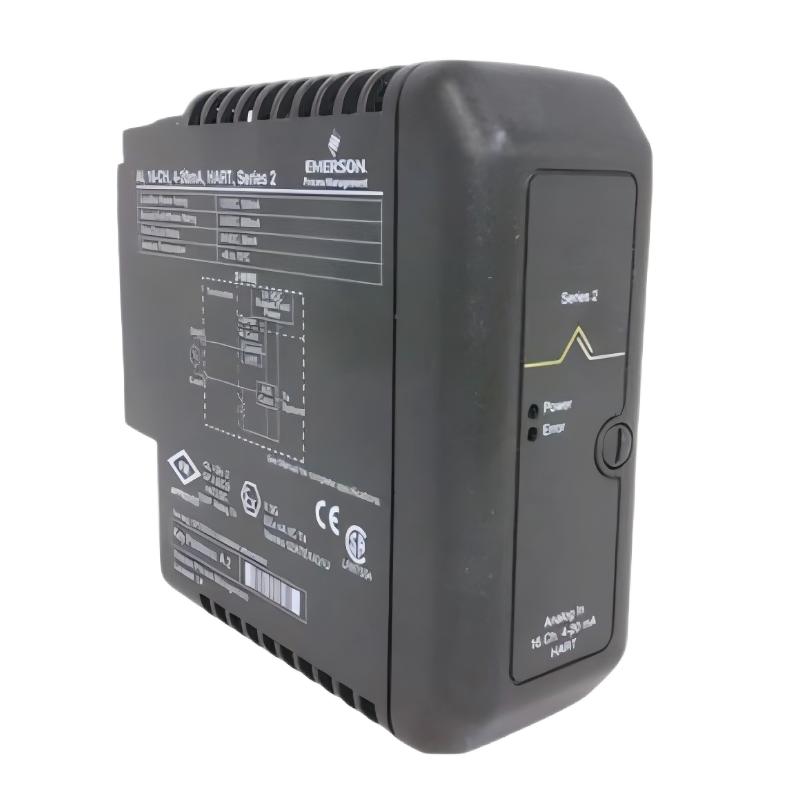
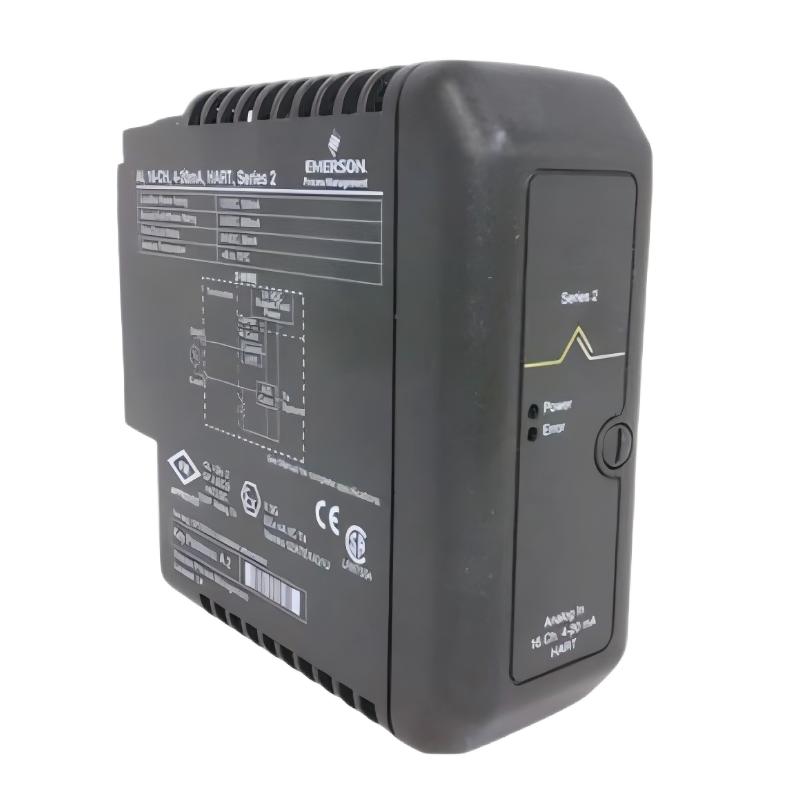
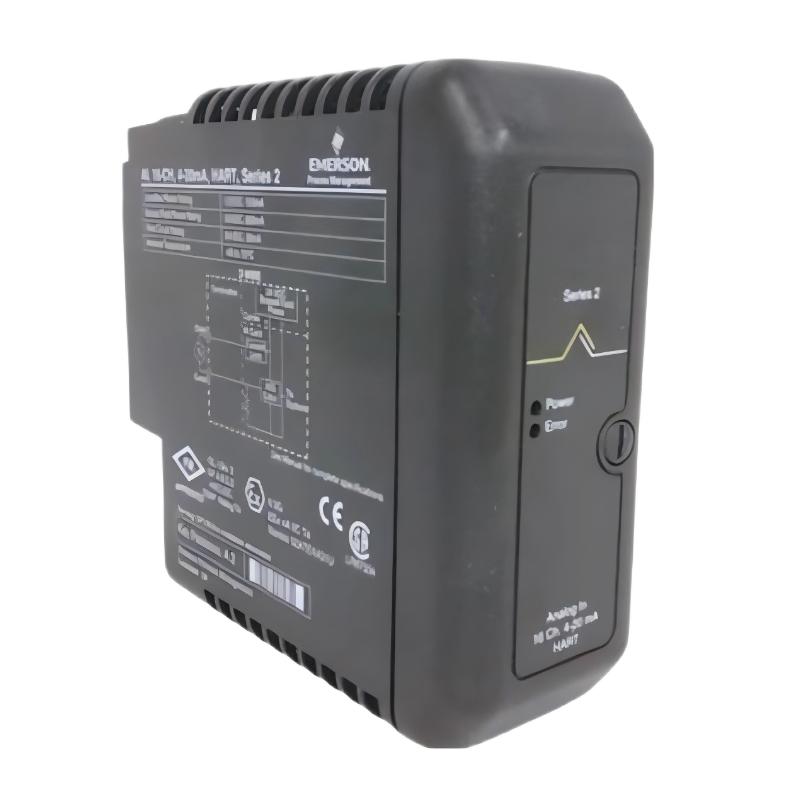
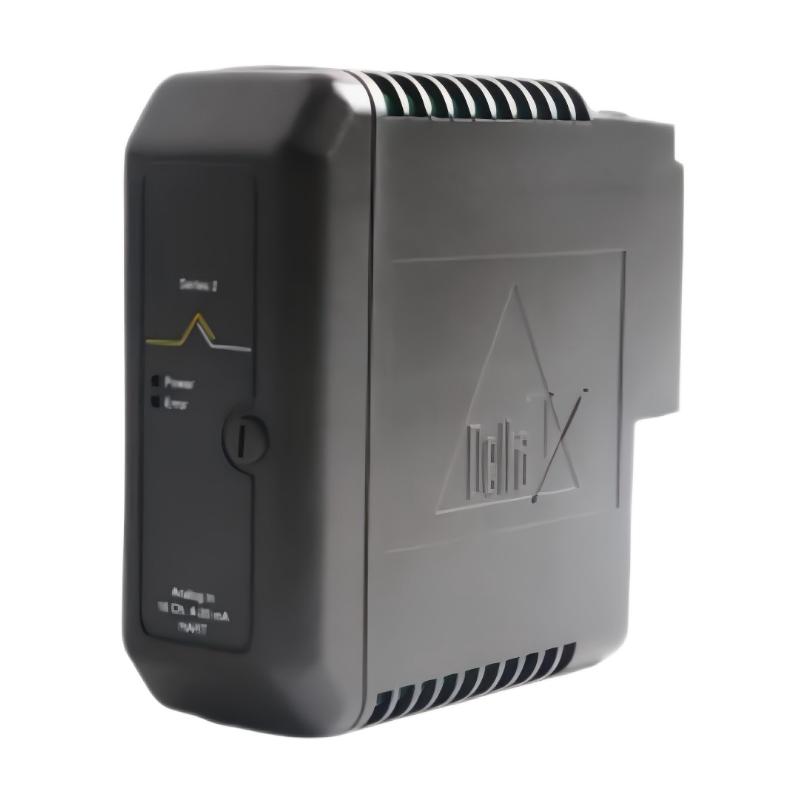
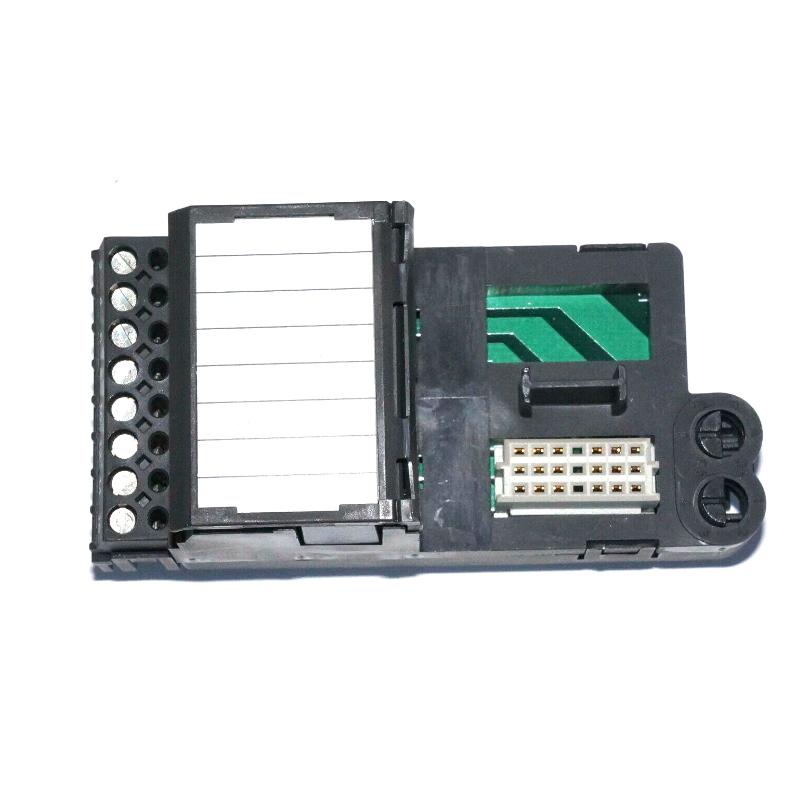
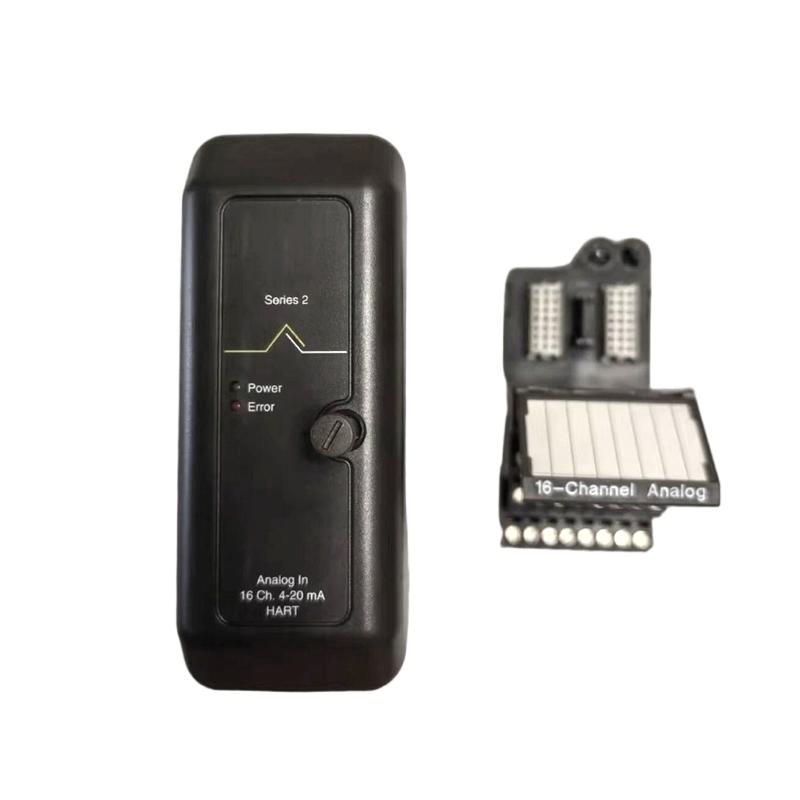
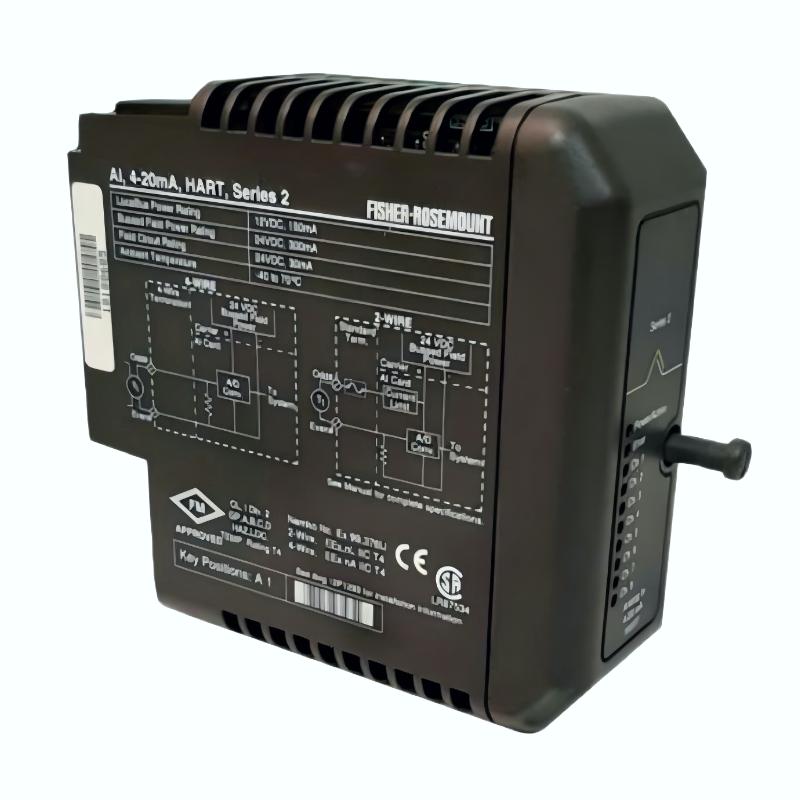
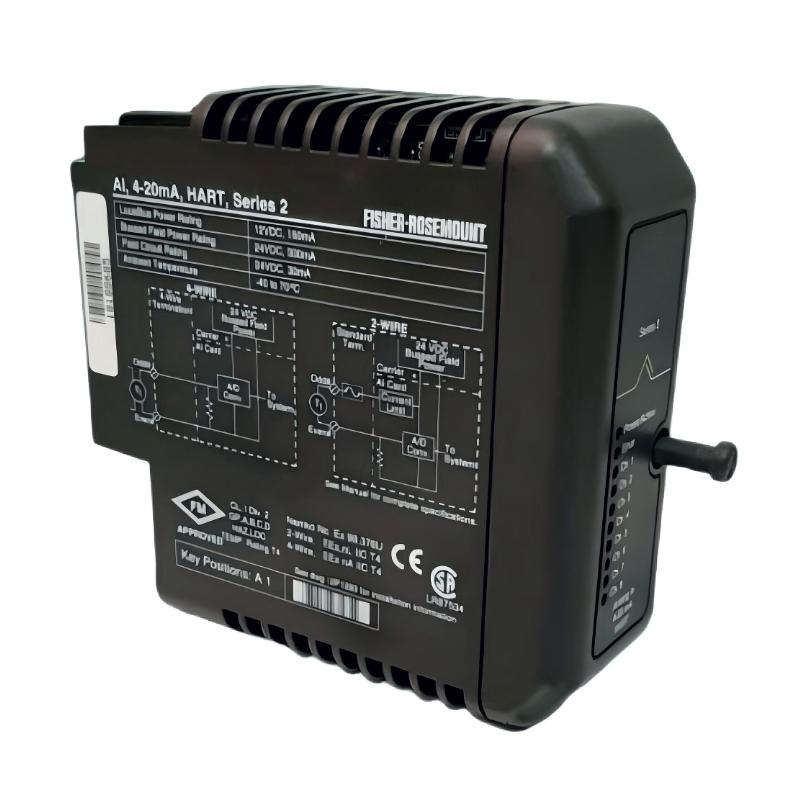
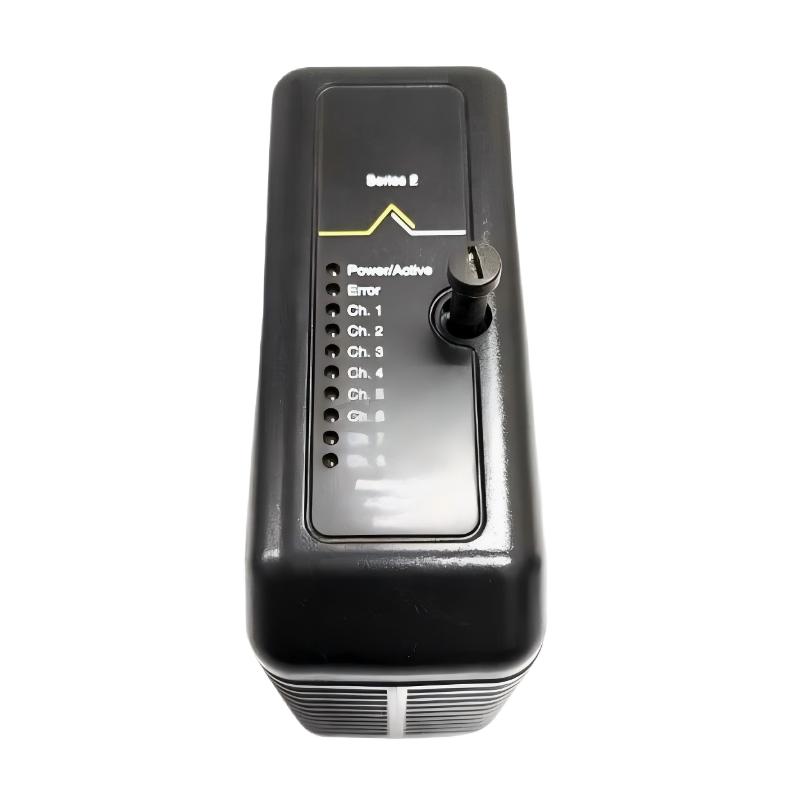
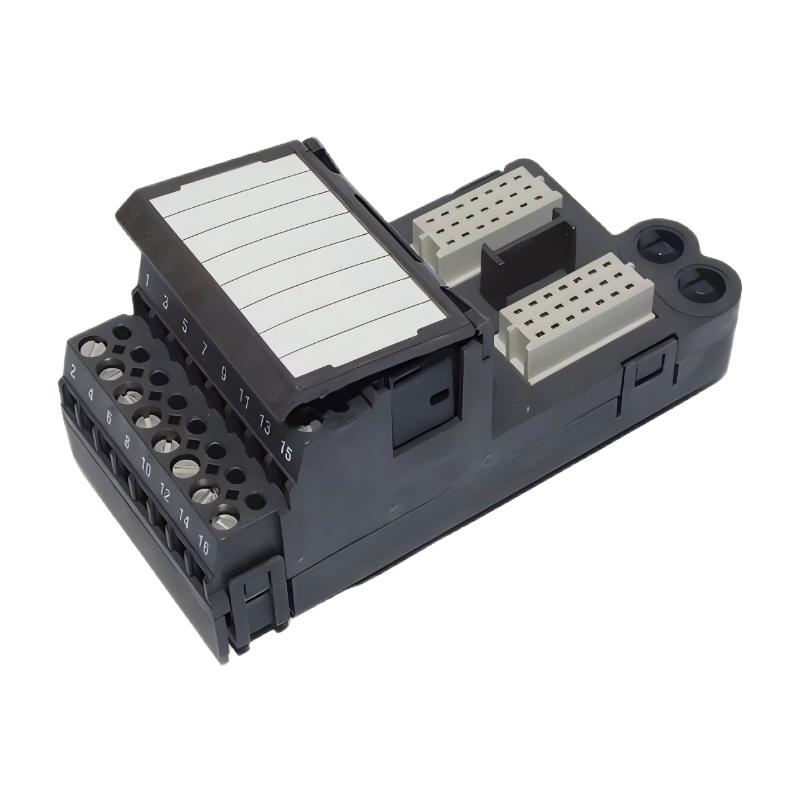
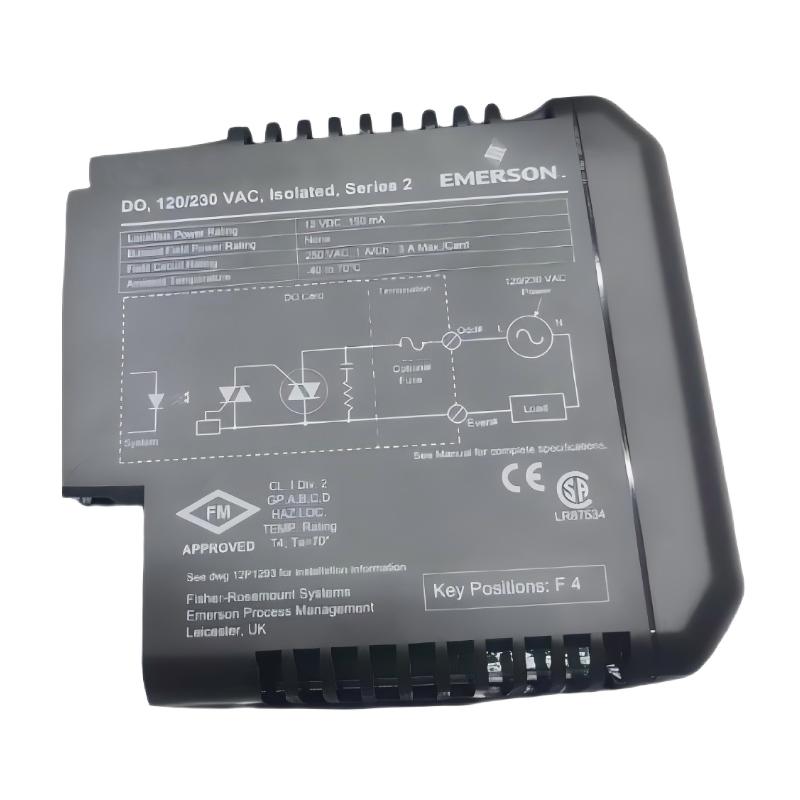
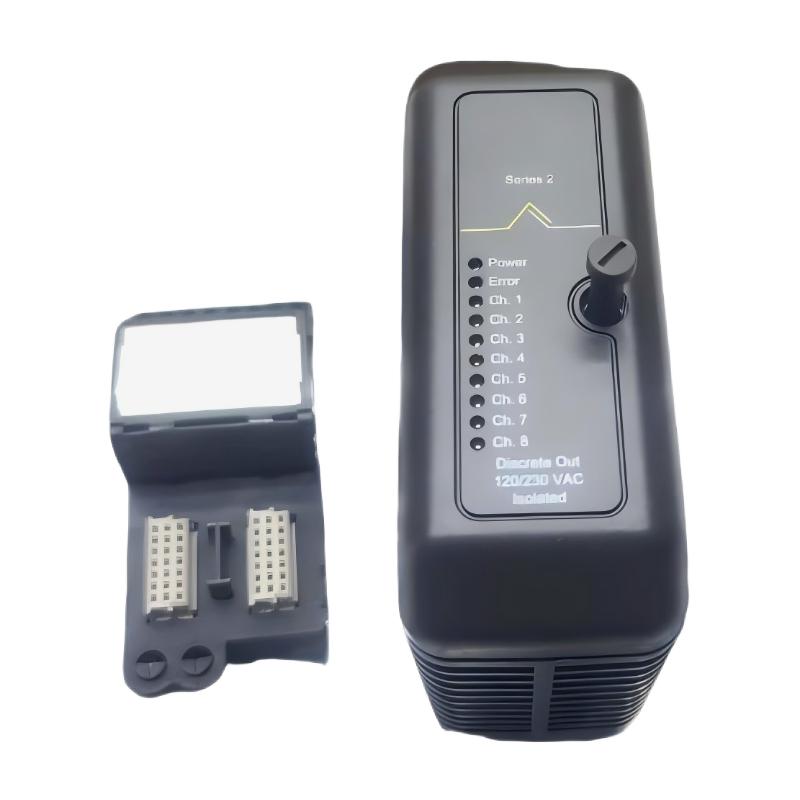
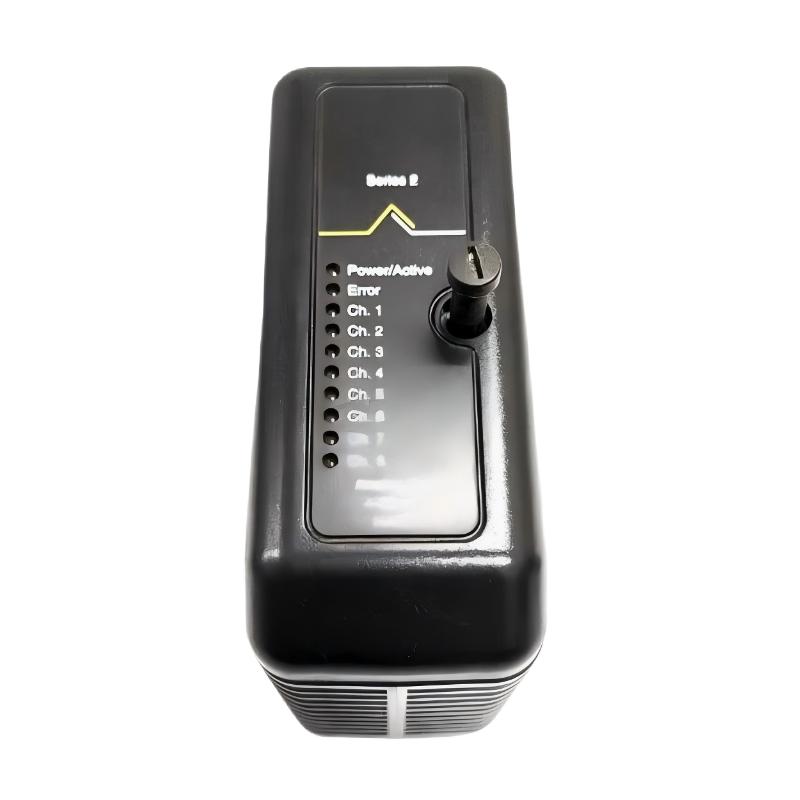
The Emerson VE4002S1T2B5 KJ3204X1-BA1+KJ4001X1-CJ1 Output Module with Terminal Blocks is an industrial discrete output assembly designed to provide a dependable interface between an Emerson process control system and field-level devices. The assembly combines the VE4002S1T2B5 output module with the associated KJ3204X1-BA1 and KJ4001X1-CJ1 termination hardware, creating an organized connection between control-system output signals and external equipment.
Discrete output modules are essential in process automation because many industrial operations require binary commands rather than continuously variable signals. Valves may need to open or close, alarms may need to activate, relays may need to change state, and equipment may need to receive start, stop, enable, or inhibit commands. The VE4002S1T2B5 forms part of the I/O layer that transfers these commands toward the field.
The supplied physical dimensions of the Emerson VE4002S1T2B5 assembly are 107 × 41 × 105 mm, with a weight of 0.181 kg. Its compact construction makes it suitable for modular control cabinets where numerous process I/O components must be installed while maintaining clear wiring and service access.
Technical Specifications
| Parameter | Specification |
|---|---|
| Manufacturer | Emerson |
| Model | VE4002S1T2B5 |
| Associated Module | KJ3204X1-BA1 |
| Terminal Block | KJ4001X1-CJ1 |
| Product Type | Output Module with Terminal Blocks |
| I/O Type | Discrete / Digital Output |
| Primary Function | Field-device output control |
| Application | Industrial Process Automation |
| Signal Category | Binary control signal |
| Installation | Modular process-control I/O architecture |
| Dimensions | 107 × 41 × 105 mm |
| Weight | 0.181 kg |
| Typical Applications | Valves, relays, alarms, interlocks, actuator interfaces, equipment control |
Engineering note: Exact channel count, output electrical characteristics, current capability, load type, isolation, terminal assignments, and other electrical specifications should be verified against the applicable hardware revision and installed Emerson system configuration before operation.
Understanding the VE4002S1T2B5
The VE4002S1T2B5 represents a discrete output module used for transferring control commands from an industrial automation system toward field equipment.
The complete designation includes three important identification elements:
- VE4002S1T2B5 – output-module identification
- KJ3204X1-BA1 – associated module/interface hardware
- KJ4001X1-CJ1 – terminal-block component
This complete part combination is particularly useful for maintenance and spare-parts management. Industrial control systems often depend on a specific combination of I/O electronics and termination hardware, so identifying only a generic “digital output card” may not be sufficient when selecting a replacement.
The assembly should therefore be treated as a complete I/O interface when planning installation, replacement, or system modification.
Function and Working Principle
The VE4002S1T2B5 operates as part of the output side of an industrial process-control architecture.
The basic control sequence begins in the controller. Control logic evaluates process conditions, operator commands, equipment status, timers, permissives, and interlocks. When the logic determines that a particular field device must change state, an output command is generated.
That command is transferred through the I/O architecture to the output module.
The VE4002S1T2B5 then provides the discrete output interface associated with the configured field circuit. The connected terminal hardware provides the physical termination point for field wiring, allowing the command to reach the external device.
A simplified signal path is:
Controller → I/O Subsystem → VE4002S1T2B5 → KJ3204X1-BA1 → KJ4001X1-CJ1 → Field Wiring → Field Device
The actual system architecture may vary depending on the Emerson control platform and installation design.
Why Discrete Output Modules Matter
Industrial automation systems contain a large number of devices that only require two basic states.
Typical examples include:
- Open / closed
- On / off
- Start / stop
- Enable / disable
- Energized / de-energized
- Active / inactive
Discrete output modules are designed for this type of control.
Instead of sending a continuously variable process value, the output subsystem communicates a defined binary state. This makes discrete I/O particularly suitable for equipment such as solenoid valves, relay interfaces, alarm circuits, interlocks, and external control inputs.
The VE4002S1T2B5 therefore serves as a practical bridge between programmed process logic and physical plant actions.
Industrial Applications
The Emerson VE4002S1T2B5 can be incorporated into different industrial process-control applications where discrete outputs are required.
Valve and Solenoid Applications
On/off valves and solenoid-operated devices are common throughout process plants.
A discrete output can be used within the control architecture to command equipment associated with:
- Process isolation
- Utility systems
- Pneumatic actuators
- Fluid handling
- Gas systems
- Cooling systems
- Chemical processes
The exact electrical interface must be matched to the field device and system design.
Alarm and Indication Systems
Discrete outputs can also be used to control alarm-related equipment.
Applications may include:
- Audible alarms
- Warning indicators
- Equipment status lights
- Shutdown annunciation
- Process condition notification
- External alarm interfaces
When an alarm condition occurs, the controller can command the appropriate output according to the configured control strategy.
Equipment Enable and Interlock Functions
Many industrial machines and process units use permissive and interlock logic.
A discrete output may be used to enable equipment only when the required operating conditions are satisfied.
For example, an equipment-start sequence could depend on:
- Correct valve position
- Sufficient process level
- No active shutdown condition
- Equipment availability
- Operator authorization
- Required permissive signals
The output module then forms one part of the complete control chain.
Pump and Motor-Control Interfaces
The VE4002S1T2B5 may also participate in control systems involving pumps and motors by providing commands to suitable external interfaces.
The output card should not automatically be assumed to directly switch motor power. High-power equipment generally requires appropriate starters, relays, contactors, drives, or other dedicated power-control equipment.
Integration into Process Automation Architecture
A discrete output card normally operates as part of a larger automation system.
A typical process-control installation may contain:
- Process controllers
- I/O interface hardware
- Discrete input modules
- Discrete output modules
- Analog input modules
- Analog output modules
- Terminal blocks
- Communication interfaces
- Operator stations
- Engineering workstations
- Field instruments
- Actuators
- Valves
- Motor-control equipment
The output module provides the link between controller logic and field action.
For example, a process controller may determine that a cooling-water valve must open. The controller generates the corresponding command, the I/O subsystem transfers it to the output module, and the field interface delivers the appropriate signal to the valve-control circuit.
This modular architecture makes the control system easier to organize and maintain.
Installation Guidelines
Before installing the Emerson VE4002S1T2B5 KJ3204X1-BA1+KJ4001X1-CJ1, verify that the complete assembly matches the existing system configuration.
Important checks include:
- Correct model number
- Correct hardware revision
- I/O location
- Associated termination hardware
- Field-device compatibility
- Channel assignment
- Controller configuration
- Wiring documentation
- Cabinet environmental conditions
The supplied physical dimensions are 107 × 41 × 105 mm.
When planning cabinet installation, engineers should provide adequate room for:
- Module installation
- Connector access
- Field wiring
- Ventilation
- Inspection
- Removal and replacement
The module should be installed in the appropriate Emerson I/O architecture and handled using suitable electrostatic-discharge precautions.
Field Wiring and Terminal Block Installation
The KJ4001X1-CJ1 terminal-block component is an important part of the specified assembly because it provides the field termination interface.
Before connecting field conductors, compare the actual wiring with the approved electrical drawings.
Recommended practices include:
- Confirm every channel identification.
- Label field conductors clearly.
- Check terminal connections.
- Inspect connectors before installation.
- Verify external circuit power.
- Perform continuity checks where appropriate.
- Keep control and high-power wiring appropriately separated.
- Follow the plant grounding and shielding strategy.
- Verify the connected load before activating outputs.
A loose terminal or incorrect field connection can produce symptoms that closely resemble a failed output module.
Commissioning Procedure
Commissioning should be performed systematically and according to the plant’s approved operating and safety procedures.
Hardware Verification
Confirm that the installed assembly is the required VE4002S1T2B5 KJ3204X1-BA1+KJ4001X1-CJ1 configuration.
Inspect the hardware for visible signs of damage, contamination, corrosion, or mechanical problems.
Configuration Verification
Confirm that the controller configuration corresponds to the installed I/O hardware.
Check the appropriate:
- I/O address
- Module position
- Channel assignment
- Output logic
- Equipment tag
- Interlock logic
- Alarm configuration
Field Circuit Verification
Verify field wiring before applying output commands.
Particular attention should be given to circuits connected to moving equipment, process valves, rotating machinery, or other equipment that can create hazardous conditions.
Controlled Functional Test
Where permitted, activate individual output points under controlled conditions.
Confirm that the software indication corresponds to the expected physical response.
Final Process Test
After individual I/O verification, confirm the module’s operation under normal process sequences and interlocks.
Troubleshooting the VE4002S1T2B5
Troubleshooting should follow the complete signal path instead of immediately assuming that the output module has failed.
Output Does Not Activate
If a connected field device does not respond, investigate:
- Controller logic
- Output command
- I/O configuration
- Module status
- Terminal connections
- External power
- Field wiring
- Field device
If the controller is not generating the command, the problem may exist in the control strategy rather than the output hardware.
Single Output Point Is Inactive
When only one output appears to be affected, inspect the individual circuit carefully.
Potential causes include:
- Loose terminal connection
- Damaged field conductor
- Incorrect channel configuration
- External fuse or protection
- Failed actuator
- Relay/interface problem
- Channel-specific hardware fault
A known-good circuit can sometimes be used as a comparison during controlled maintenance testing.
Multiple Outputs Stop Working
If several outputs become inactive simultaneously, investigate common system components first.
Possible causes include:
- I/O subsystem power
- Common field supply
- Communication problems
- Carrier or backplane connection
- Configuration mismatch
- Common terminal hardware
- Environmental conditions
Multiple simultaneous failures should generally be investigated at the system level before replacing individual cards.
Software Shows Output Active but Device Does Not Respond
This condition indicates that the problem may exist downstream of the controller.
Inspect:
- Field power
- Terminal block
- Wiring
- External relays
- Fuses
- Solenoid
- Actuator
- Equipment permissives
The diagnostic objective is to determine exactly where the output signal path stops functioning.
Preventive Maintenance
Preventive maintenance can reduce unexpected I/O failures and improve process availability.
Visual Inspection
During planned maintenance, inspect the module for:
- Overheating
- Discoloration
- Corrosion
- Physical damage
- Contamination
- Connector damage
- Loose connections
Cabinet Condition
The surrounding cabinet should remain clean and appropriately ventilated.
Excessive heat can accelerate electronic component aging, while moisture and conductive contamination can increase the risk of electrical faults.
Terminal Inspection
Terminal connections should be checked periodically according to plant maintenance procedures.
Loose connections can create intermittent faults that are difficult to reproduce during normal troubleshooting.
Configuration Backup
Keep current control-system configuration information available.
This is particularly useful when an output module must be replaced following an unexpected hardware failure.
Replacement and Spare-Parts Management
For critical process-control systems, accurate spare-parts identification is essential.
When replacing the VE4002S1T2B5, record the complete designation:
VE4002S1T2B5 KJ3204X1-BA1+KJ4001X1-CJ1
Do not select a replacement solely because another output card appears mechanically similar.
The following should be verified:
- Full model number
- Hardware revision
- Associated interface hardware
- Terminal-block configuration
- I/O position
- Channel assignment
- Controller configuration
- Field wiring
Maintaining the correct spare assembly can reduce troubleshooting and recovery time during an unexpected plant shutdown.
Physical Dimensions and Weight
The supplied physical specifications for the Emerson VE4002S1T2B5 assembly are:
| Physical Parameter | Value |
|---|---|
| Height | 107 mm |
| Width | 41 mm |
| Depth | 105 mm |
| Overall Dimensions | 107 × 41 × 105 mm |
| Weight | 0.181 kg |
The compact dimensions make the module practical for dense industrial I/O cabinets.
The relatively low 0.181 kg weight also simplifies handling, storage, transportation, and replacement activities.
Engineering Best Practices
Several engineering practices can improve the reliability of a discrete output installation.
Maintain Accurate Drawings
I/O drawings should clearly identify each output channel, field device, terminal connection, and controller address.
Keep Spare Hardware
For process-critical applications, a correctly identified spare VE4002S1T2B5 can reduce equipment downtime.
Protect the Cabinet Environment
Maintain appropriate temperature, humidity, cleanliness, and ventilation.
Use Controlled Testing
Output testing should be performed under approved maintenance procedures to prevent unintended equipment operation.
Document Hardware Changes
Record module replacements, revisions, wiring changes, and configuration modifications in the plant maintenance documentation.
Troubleshoot from Controller to Field
Following the signal path systematically prevents unnecessary replacement of functioning modules.
Related Process-Control Components
The VE4002S1T2B5 can operate alongside different categories of Emerson process-control hardware, depending on the system architecture.
Typical related hardware may include:
- Discrete input modules
- Discrete output modules
- Analog input modules
- Analog output modules
- Event-sequence input modules
- Terminal blocks
- I/O carrier assemblies
- Controller modules
- Communication modules
- Interface modules
- Field transmitters
- Solenoid valves
- Relay interfaces
- Actuators
The correct combination depends on the process requirements, I/O architecture, field devices, and installed hardware configuration.
Key Advantages
The Emerson VE4002S1T2B5 KJ3204X1-BA1+KJ4001X1-CJ1 provides several practical advantages for industrial process automation:
- Discrete output control functionality
- Integrated terminal-block arrangement
- Compact 107 × 41 × 105 mm dimensions
- Lightweight 0.181 kg construction
- Suitable for modular process-control architectures
- Supports binary field-device commands
- Useful for valve and solenoid control
- Suitable for alarm and indication circuits
- Can participate in equipment interlocks
- Suitable for external relay and motor-control interfaces
- Practical for industrial maintenance and replacement
- Organized field termination and system integration
Technical FAQs
What is the Emerson VE4002S1T2B5?
The Emerson VE4002S1T2B5 is a discrete output module used within industrial process-control systems to provide binary control signals to field-level equipment.
What are the associated components?
The specified assembly includes KJ3204X1-BA1 and KJ4001X1-CJ1 terminal hardware.
What type of signals does the module handle?
It is designed for discrete or digital output control rather than continuously variable analog output.
What are the dimensions of the VE4002S1T2B5?
The supplied dimensions are 107 × 41 × 105 mm.
What is the weight?
The supplied weight is 0.181 kg.
What equipment can a discrete output module control?
Depending on the system design and electrical interface, discrete outputs can be used for valves, solenoids, relays, alarms, interlocks, equipment enable signals, and external control interfaces.
Can the VE4002S1T2B5 directly control a motor?
A discrete output card should not automatically be treated as a direct motor-power switching device. Motor applications normally require an appropriate external starter, relay, contactor, drive, or other power-control interface.
What should be checked when an output fails?
Start with the controller command and I/O configuration, then inspect the module, terminal block, field wiring, external power, and connected field device.
Why is the complete part number important during replacement?
The VE4002S1T2B5 is specified together with KJ3204X1-BA1+KJ4001X1-CJ1. Verifying the complete assembly helps prevent compatibility problems caused by using an incorrect interface or terminal arrangement.
Conclusion
The Emerson VE4002S1T2B5 KJ3204X1-BA1+KJ4001X1-CJ1 Output Module with Terminal Blocks is a compact industrial I/O assembly designed to provide discrete output control within process automation systems. It creates an organized interface between controller-generated commands and field devices such as valves, solenoids, alarms, relays, interlocks, and equipment-control circuits.
With supplied dimensions of 107 × 41 × 105 mm and a weight of 0.181 kg, the assembly is suitable for compact modular control cabinets and industrial process-control installations where efficient use of cabinet space is important.
For reliable operation, the VE4002S1T2B5 should be installed as part of the appropriate Emerson I/O architecture, with correct terminal connections, configuration, field wiring, and commissioning procedures. When troubleshooting, engineers should follow the complete signal path from the controller through the output module and terminal hardware to the field device.
The combination of VE4002S1T2B5, KJ3204X1-BA1, and KJ4001X1-CJ1 provides a practical discrete output interface for industrial automation applications requiring organized field termination, dependable control-system integration, and straightforward maintenance.