

ProductPRODUCT
Featured products
Contact Us
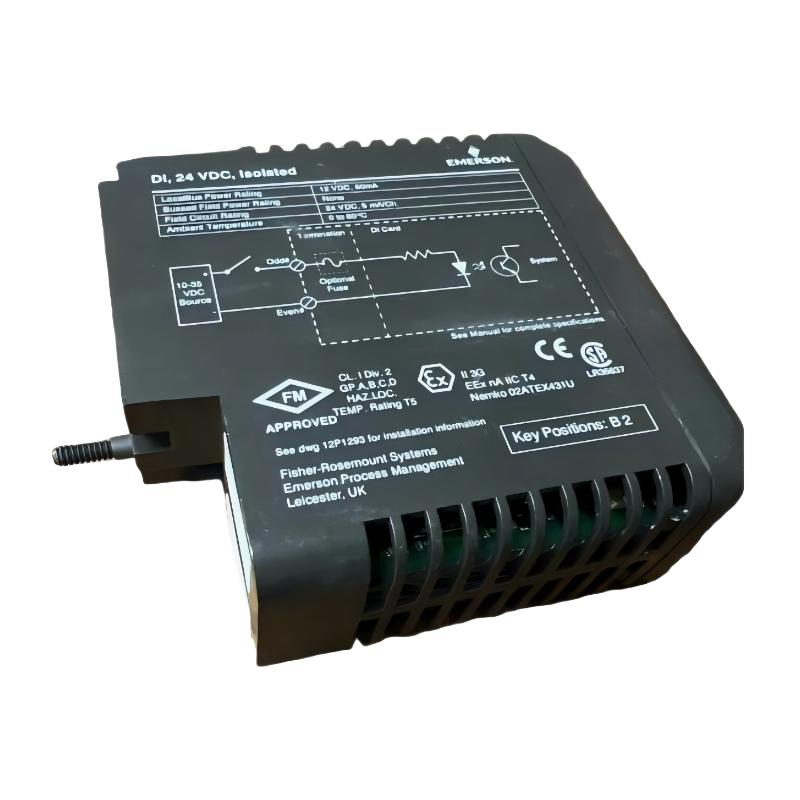
- Emerson
- VE4001S5T2B4
- Event Sequence Input Card
- USA
- 107 x 41 x 105 mm
- 0.25 kg
- Xiamen, China
- New & In Stock
- T/T, PayPal, Western Union
- 1 Year
- 1-3 Working Days
- DHL, UPS, TNT, FedEx and EMS.
- 24-Hour Service
- COO
- 4
Our advantage

Global Logistics
We have a 10-year logistics and express cooperation agreement, so our products can be shipped to any place in the world.

Brand new and original
Our products are imported in bulk from the place of origin. Because of the cooperative relationship, our products are all original and 100% new.

24-hour service
We provide 7*24 hours service to our customers. We will be there whenever you need us.

Price advantage
All our products are priced very favorably because we have our own warehouse and supply.
| Company Information | |||
| [email protected] | |||
| Mobile | +8615980777398 | ||
| +8615980777398 | |||
| 15980777398 |
Product Overview
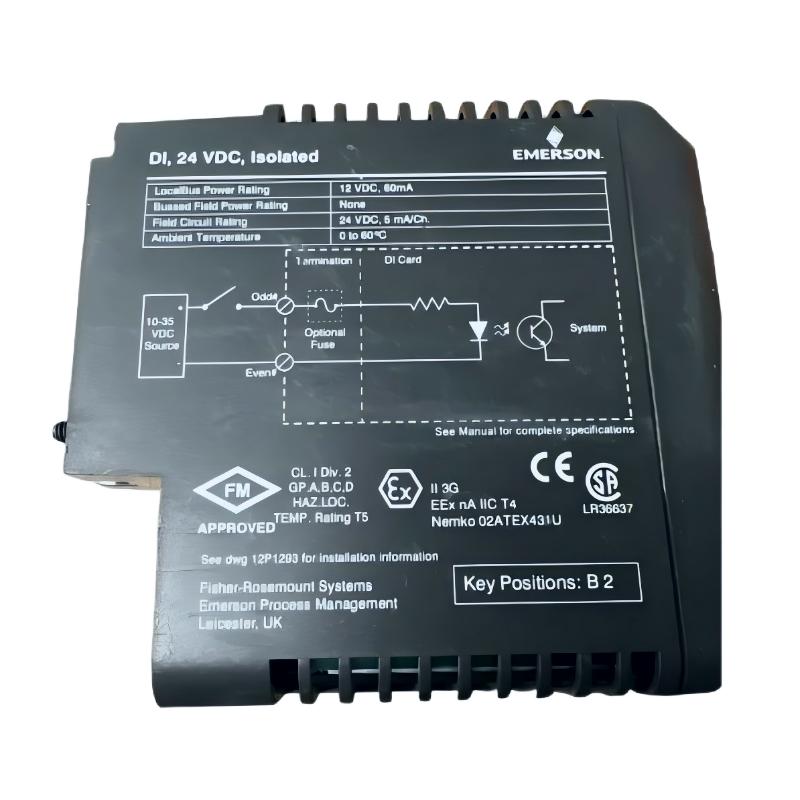
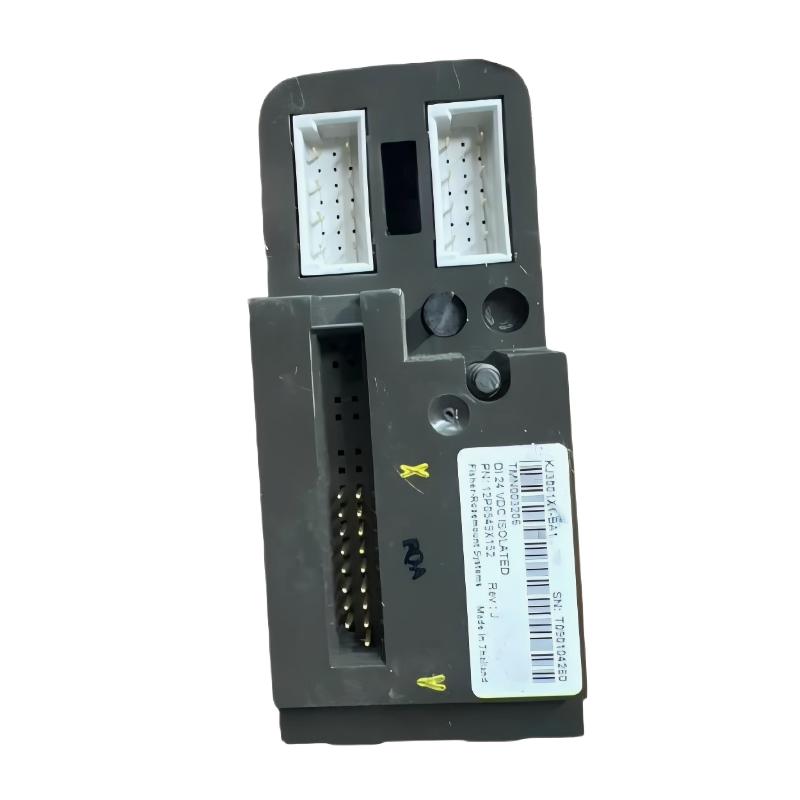
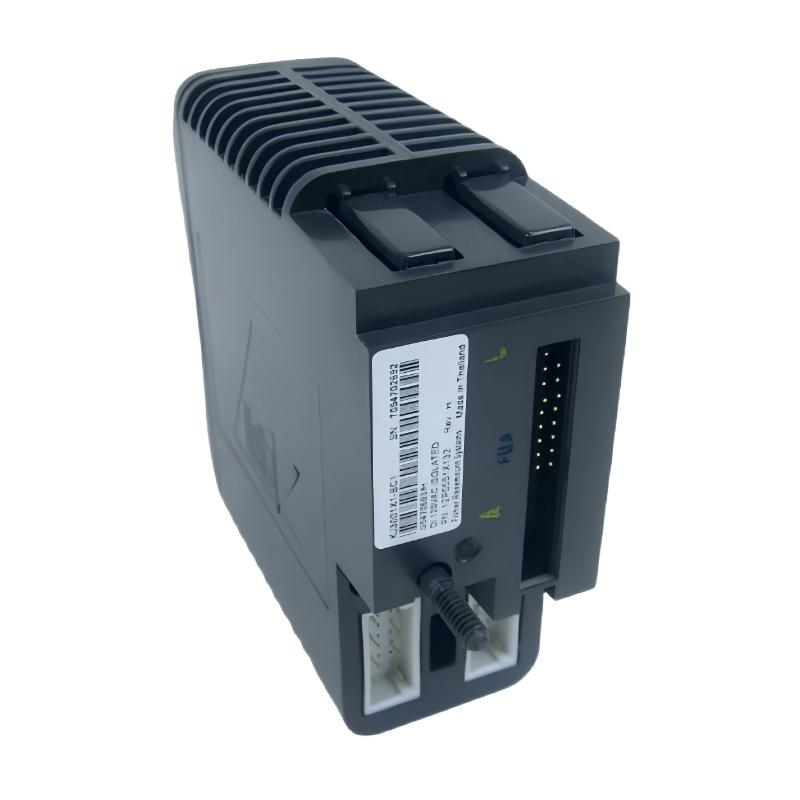
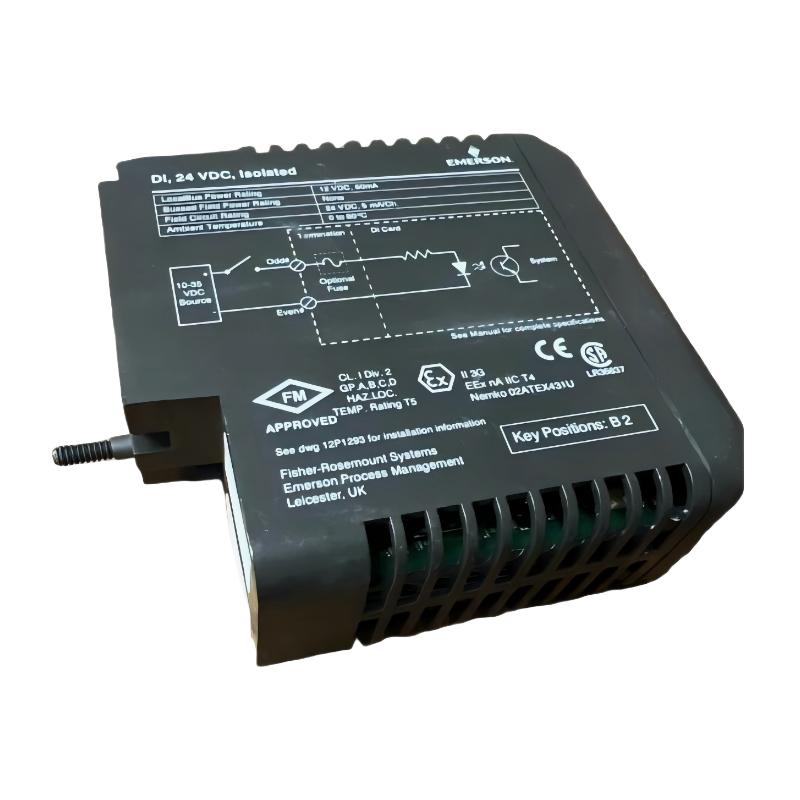
The Emerson VE4001S5T2B4 Event Sequence Input Card is an industrial process automation I/O component designed for applications where discrete field events must be detected and recorded with accurate timing information. Unlike a conventional discrete input used mainly to determine whether a device is ON or OFF, an event sequence input is intended for applications in which the order and timing of individual field-state changes are important for process analysis, alarm investigation, equipment diagnostics, and sequence-of-events monitoring.
The VE4001S5T2B4 is particularly valuable in industrial control environments where several field devices may change state within a short period. By capturing discrete transitions as events, the control system can provide engineers and operators with a clearer understanding of what happened before, during, and after a process disturbance. This can be especially useful when diagnosing trips, equipment failures, unexpected shutdowns, and abnormal operating sequences.
With specified dimensions of 107 × 41 × 105 mm and a weight of 0.25 kg, the Emerson VE4001S5T2B4 provides a compact form factor suitable for industrial control-system installations. Its relatively small physical size helps support organized I/O arrangements while allowing maintenance personnel to handle and replace the module efficiently.
Event sequence recording is particularly important in process industries because many incidents are not caused by a single isolated signal. Instead, several conditions may occur in rapid succession. Determining which signal changed first can be critical when investigating the root cause. The VE4001S5T2B4 is therefore designed for a class of applications where the chronological relationship between discrete events matters.
Technical Specifications
| Parameter | Details |
|---|---|
| Manufacturer | Emerson |
| Model | VE4001S5T2B4 |
| Product Type | Event Sequence Input Card |
| Product Family | VE4001S Series |
| Primary Function | Discrete event acquisition and sequence monitoring |
| Signal Category | Digital / Discrete |
| Main Application | Sequence-of-events monitoring |
| System Role | Field event interface |
| Dimensions | 107 × 41 × 105 mm |
| Weight | 0.25 kg |
| Typical Field Devices | Switches, relay contacts, equipment status contacts and discrete process devices |
| Typical Functions | Event detection, sequence analysis, alarm investigation and equipment-status monitoring |
| Installation | Industrial control-system I/O architecture |
| Application Areas | Process automation, utilities, power-related systems and industrial equipment |
Exact electrical ratings, channel characteristics, timing resolution, isolation specifications, terminal assignments, and system configuration should be verified against the applicable hardware revision and control-system design before installation.
What Is the Emerson VE4001S5T2B4?
The VE4001S5T2B4 is an Event Sequence Input Card intended to acquire discrete changes from field equipment and support applications in which the chronological sequence of those changes is important.
A conventional digital input answers a basic question:
“What is the current state?”
An event sequence input is concerned with a broader question:
“What changed, and in what sequence did the changes occur?”
This distinction becomes extremely important during abnormal events.
Imagine that several pieces of equipment are involved in a process shutdown:
- A pump stops.
- A pressure switch changes state.
- A protective relay operates.
- A valve changes position.
- A shutdown condition is generated.
If all of these signals are available only as general status information, determining the initiating event can be difficult. Sequence-of-events information provides a chronological record that can help engineers reconstruct the incident.
The VE4001S5T2B4 therefore has an important role in event monitoring and post-event analysis.
Event Sequence Monitoring Principle
The general operating concept can be represented as:
Field Condition → Discrete Transition → Event Detection → Time-Ordered Record → Control System Analysis
When a monitored field signal changes state, the input system detects the transition and associates it with an event record according to the configured system architecture.
Typical events may include:
- Contact closure
- Contact opening
- Equipment trip
- Motor status change
- Valve-position transition
- Protection-device operation
- Process switch activation
The chronological information can then be used by operators and engineers to understand the progression of an abnormal process condition.
Why Sequence of Events Matters
Industrial processes often contain hundreds or thousands of discrete signals.
During normal operation, these signals may change relatively predictably. During an upset or equipment trip, however, many inputs can change almost simultaneously.
The difference between:
Event A → Event B → Event C
and
Event C → Event A → Event B
may completely change the interpretation of what caused the disturbance.
For this reason, sequence-of-events functionality is valuable for:
- Root-cause analysis
- Trip investigation
- Equipment diagnostics
- Process-event reconstruction
- Protection-system analysis
- Alarm investigation
- Maintenance planning
- Operational improvement
The VE4001S5T2B4 can therefore contribute information that goes beyond ordinary ON/OFF monitoring.
Role in Process Control Architecture
The VE4001S5T2B4 operates at the interface between field equipment and the control-system environment.
A simplified architecture is:
Field Devices
↓
Discrete Wiring
↓
Terminal / I/O Interface
↓
VE4001S5T2B4 Event Sequence Input Card
↓
Control-System Processing
↓
Event / Alarm Information
↓
Operator and Engineering Analysis
This architecture allows discrete field changes to become useful operational information.
The card may be associated with equipment status, protection signals, process switches, alarm contacts, and other discrete events that engineers need to analyze.
Typical Applications
Process Equipment Trips
When a major piece of process equipment trips unexpectedly, several signals may change within a short period.
Sequence information can help determine which event occurred first.
This can assist engineers in distinguishing between:
- Primary equipment failure
- Protective-device operation
- Process-condition abnormality
- Control-system response
- Secondary equipment reaction
Motor and Pump Monitoring
Motor systems often contain multiple status signals.
These may include:
- Running status
- Stopped status
- Trip status
- Protection status
- Starter feedback
- Permissive status
When several signals change during a motor trip, event sequence information can help reconstruct the operating sequence.
Valve and Actuator Systems
Valve movement can also generate multiple discrete events.
For example:
Open Command → Valve Movement → Open Limit → Process Response
If the expected sequence does not occur, the event history can help identify where the sequence diverged.
Protection and Shutdown Systems
Protective devices can produce important discrete events.
Examples include:
- Relay operation
- Breaker status changes
- Equipment protection
- Emergency shutdown conditions
- Process trip contacts
Accurate event information can improve post-trip investigation.
Event Sequence Input vs. Conventional Discrete Input
Although both technologies deal with discrete signals, their engineering purpose can be different.
| Function | Conventional Discrete Input | Event Sequence Input |
|---|---|---|
| Current ON/OFF status | Yes | Yes |
| Basic equipment monitoring | Yes | Yes |
| Alarm input | Yes | Yes |
| Sequence reconstruction | Limited | Primary application |
| Chronological event analysis | Limited | Important |
| Trip investigation | Useful | Highly useful |
| Root-cause analysis | Possible | Stronger application |
| Rapid state-change analysis | Limited | Important |
The VE4001S5T2B4 is therefore particularly useful when engineers need to understand not only the state of a signal but also its relationship to other events.
Industrial Applications
The Emerson VE4001S5T2B4 can be considered for a variety of industrial automation applications.
Oil and Gas
Potential uses include monitoring:
- Pump trips
- Compressor status
- Valve-position changes
- Protection contacts
- Shutdown events
Chemical Processing
Event sequence information can support investigation of:
- Equipment trips
- Process interlocks
- Valve operations
- Protective conditions
- Abnormal process transitions
Water and Wastewater
Typical applications include:
- Pump status
- Motor trips
- Valve feedback
- Level-switch transitions
- Equipment protection
Power-Related Industrial Systems
Sequence monitoring is particularly valuable where multiple protection and equipment-status signals can operate within a short period.
Manufacturing
Discrete event information can be useful for:
- Machine-state transitions
- Equipment faults
- Interlocks
- Production sequences
- Protective-device operation
Installation Guidelines
Correct installation of the Emerson VE4001S5T2B4 is essential for reliable event acquisition.
Before installation, confirm:
Model: VE4001S5T2B4
The replacement card should be verified against the existing system configuration rather than selected only according to physical appearance.
Mechanical Inspection
Before installation:
- Inspect the card for physical damage.
- Check connectors.
- Confirm the correct mounting position.
- Inspect the associated carrier or interface.
- Verify that the installation area is clean.
- Follow appropriate ESD handling procedures.
The module should be seated correctly without excessive mechanical force.
Field Wiring
Because sequence-of-events applications depend heavily on correct signal transitions, field wiring quality is particularly important.
Check:
- Correct terminal assignment
- Signal identification
- Cable continuity
- Terminal tightness
- Contact condition
- Wiring polarity where applicable
- Common connections
- Cable shielding and grounding practices where required
A loose contact can produce a false transition, while a damaged cable can prevent a genuine event from being detected.
Either situation can compromise the accuracy of event analysis.
Commissioning Procedure
Commissioning should verify both the hardware and the event-monitoring function.
Step 1: Verify Hardware
Confirm the correct card model, installation position, connectors, and associated hardware.
Step 2: Check System Status
Verify that the control system recognizes the installed hardware correctly.
Step 3: Verify Field Signals
Operate selected field devices according to the approved commissioning procedure.
Step 4: Confirm Event Detection
Verify that the expected state transition is detected.
Step 5: Confirm Event Identification
Check that the event is associated with the correct signal or software tag.
Step 6: Verify Event Ordering
Where applicable, generate controlled test events and confirm that their order is correctly represented by the system.
Step 7: Test Alarm and Logic Functions
If the input is associated with alarms, interlocks, or sequences, verify the associated control response.
Troubleshooting the VE4001S5T2B4
Troubleshooting an event sequence input card requires attention to both signal state and event timing/ordering.
A useful diagnostic model is:
Field Device → Wiring → Input Card → System Configuration → Event Processing
Each layer should be checked systematically.
Fault 1: Expected Event Is Missing
If a field transition occurs but no corresponding event appears, possible causes include:
- Field device failure
- Open circuit
- Loose terminal
- Damaged cable
- Incorrect input assignment
- Configuration problem
- Input-channel problem
- System-level processing issue
Start by confirming that the field device actually changed state.
Then verify whether the corresponding electrical signal reached the input interface.
Fault 2: False Events
Unexpected event records may be caused by:
- Contact bounce
- Loose wiring
- Electrical interference
- Vibration
- Aging field switches
- Poor connector contact
- Unstable field equipment
False events should not automatically be attributed to the input card.
The field device and wiring should be investigated first.
Fault 3: Incorrect Event Sequence
If events are detected but appear to have an unexpected order, investigate:
- Input mapping
- Signal identification
- System configuration
- Timestamping architecture
- Field-device behavior
- Wiring errors
- Incorrect software tag assignment
Engineers should compare the recorded event history with the actual equipment operation.
Fault 4: Intermittent Events
Intermittent events are particularly difficult because they may occur only under specific operating conditions.
Potential causes include:
- Vibration
- Loose contacts
- Aging switches
- Cable movement
- Electromagnetic interference
- Mechanical instability
- Connector problems
If an event occurs repeatedly during equipment startup or shutdown, compare the event with the physical operating sequence.
Troubleshooting Methodology
A structured troubleshooting process can be divided into five levels.
Level 1 – Verify the Physical Event
Did the equipment or field device actually change state?
Level 2 – Verify the Electrical Signal
Did the expected electrical transition occur at the input interface?
Level 3 – Verify Card Detection
Did the VE4001S5T2B4 detect the transition?
Level 4 – Verify System Processing
Was the signal correctly associated with the appropriate software point?
Level 5 – Verify Event Analysis
Was the event recorded and interpreted correctly?
This method helps separate hardware faults from configuration and application problems.
Importance of Accurate Time Information
For sequence-of-events applications, timing information is especially important.
If multiple devices change state within a short period, engineers need to know which transition occurred first.
For example:
10:15:03.100 – Pump Running = OFF
10:15:03.120 – Motor Protection = TRIP
10:15:03.180 – Valve Position = CLOSED
The order of these events can provide valuable information during troubleshooting.
The exact timing resolution and timestamping behavior should be evaluated according to the specific system architecture and hardware configuration rather than assumed solely from the product name.
Preventive Maintenance
Preventive maintenance should focus on preserving both electrical signal integrity and event reliability.
Recommended activities include:
- Inspect terminals.
- Check field wiring.
- Inspect connectors.
- Monitor recurring false events.
- Review unexpected state transitions.
- Check critical field switches.
- Maintain clean control cabinets.
- Investigate vibration-related faults.
- Maintain accurate I/O documentation.
- Periodically test important event signals.
If a specific input generates unexplained events repeatedly, the field device should be inspected before the card is replaced.
Replacement Considerations
Before replacing a VE4001S5T2B4, maintenance personnel should confirm that the problem is actually associated with the input card.
Recommended verification includes:
- Check the field device.
- Check the field wiring.
- Check terminal connections.
- Check the input channel.
- Review system diagnostics.
- Check configuration.
- Compare the event history.
- Confirm the hardware revision and compatibility.
Replacing a card without identifying the actual fault source can result in unnecessary maintenance costs while leaving the original problem unresolved.
Spare-Part Management
For critical process systems, spare-card planning can reduce equipment downtime.
The importance of keeping a spare VE4001S5T2B4 depends on:
- Installed quantity
- Process criticality
- Equipment availability
- Historical failure rate
- Replacement lead time
- Operational consequences of lost event monitoring
The spare should be clearly identified and stored under suitable environmental conditions.
Recommended storage practices include:
- Dry environment
- Protection against contamination
- Protection against mechanical impact
- ESD precautions
- Clear model identification
The model should be recorded as:
Emerson VE4001S5T2B4 Event Sequence Input Card
Relationship With Alarms and Events
Event sequence information can complement conventional alarm management.
An alarm tells an operator that a condition requires attention.
An event sequence can help explain how that condition developed.
For example:
Equipment Status Change
↓
Protection Signal
↓
Process Variable Alarm
↓
Shutdown Command
↓
Equipment Stopped
By examining the order of these conditions, engineers can obtain a clearer picture of the incident.
This makes sequence-of-events data valuable for post-event analysis as well as real-time monitoring.
Engineering Best Practices
Maintain Consistent Tagging
Every monitored event should have an unambiguous tag and description.
Verify Field Device Behavior
A field contact that bounces or changes state unexpectedly can create misleading event information.
Preserve Event History
Historical event records can be extremely valuable during root-cause investigations.
Distinguish Events From Alarms
Not every event represents a fault. An event may simply document a normal state transition.
Investigate the First Abnormal Event
During an equipment trip, engineers should pay particular attention to the earliest abnormal transition rather than focusing only on the final shutdown condition.
Maintain Accurate Documentation
I/O drawings, field-device lists, tag databases, and event definitions should remain synchronized.
Physical Dimensions and Weight
The Emerson VE4001S5T2B4 is specified with the following physical characteristics:
Dimensions: 107 × 41 × 105 mm
Weight: 0.25 kg
The compact 107 × 41 × 105 mm form factor is suitable for densely organized industrial automation equipment. At 0.25 kg, the card can also be handled relatively easily during maintenance and replacement.
For cabinet planning, the card dimensions should be considered together with the associated carrier, terminal assemblies, connectors, wiring clearance, and ventilation requirements.
Key Advantages
The Emerson VE4001S5T2B4 offers several benefits for applications requiring event-oriented discrete signal monitoring:
- Designed for event sequence input applications
- Supports discrete field-state acquisition
- Useful for chronological event analysis
- Helps investigate equipment trips
- Supports root-cause analysis
- Useful for alarm and event investigation
- Suitable for equipment-status monitoring
- Compact industrial form factor
- 107 × 41 × 105 mm dimensions
- 0.25 kg weight
- Suitable for integration into industrial process-control architectures
Its greatest value is the ability to support a more detailed understanding of how discrete process conditions change over time.
Frequently Asked Questions
What is the Emerson VE4001S5T2B4?
The Emerson VE4001S5T2B4 is an Event Sequence Input Card designed for acquiring discrete field events in industrial process-control applications.
What is the difference between an event sequence input and a standard discrete input?
A standard discrete input is generally used to determine the current state of a field signal. An event sequence input is particularly useful when the timing and chronological order of signal changes need to be analyzed.
What types of devices can generate events?
Typical sources include switches, relay contacts, motor status contacts, valve-position contacts, protection devices, limit switches, and other discrete field equipment.
What are the dimensions of the VE4001S5T2B4?
The specified dimensions are 107 × 41 × 105 mm.
What is the weight?
The specified weight is 0.25 kg.
Why is event sequence information useful?
It helps engineers reconstruct the order in which process and equipment conditions changed, which can be valuable during trip analysis and root-cause investigations.
Can the card be used for equipment alarms?
Discrete events can be associated with alarm and monitoring functions when correctly configured within the overall control system.
What should be checked when events are missing?
Check the field device, wiring, terminal connections, input channel, hardware status, configuration, and system event-processing path.
What can cause false events?
Common possibilities include contact bounce, loose wiring, vibration, electrical interference, unstable switches, and connector problems.
Is every event a fault?
No. An event simply records a state transition. Many events occur during normal equipment operation and are not alarms or faults.
Conclusion
The Emerson VE4001S5T2B4 Event Sequence Input Card is designed for industrial applications where understanding the chronological sequence of discrete field events is important. By connecting field switches, equipment-status contacts, protection devices, and other discrete sources with the process-control environment, the card can support event monitoring, equipment diagnostics, trip investigation, alarm analysis, and root-cause evaluation.
Its specified 107 × 41 × 105 mm dimensions and 0.25 kg weight provide a compact solution for industrial control-system installations. More importantly, its event-oriented role makes it valuable in applications where several process conditions can change within a short period and engineers need to determine which event occurred first.
For reliable operation, the complete signal path must be considered